


| Contents |
|---|

Introduction
Historical seat of the Duchy of Lorraine, Nancy (pop. 105,000; metropolitan area 511,000) is a gem of 18th-century urban planning. The magnificent Place Stanislas, a UNESCO World Heritage site, represents one of Europe's finest examples of classical architecture and city design. The city's rich heritage stems from its role as the capital of the Duchy of Lorraine, evident in its ornate baroque buildings, gilded ironwork by Jean Lamour, and the seamless integration of three historic squares connected by elegant arcades. Visitors can explore the remarkable Art Nouveau movement that flourished here at the turn of the 20th century, with the École de Nancy leaving behind stunning examples of decorative arts, glasswork, and furniture design. The city's museums house exceptional collections ranging from fine arts to the famous Daum crystal works, whilst its well-preserved old town offers charming medieval streets lined with Renaissance mansions and the imposing Ducal Palace that chronicles centuries of regional history.
Interesting Facts about Nancy
- Nancy was the capital of the Duchy of Lorraine until the mid-18th century.
- The city boasts three UNESCO World Heritage Sites: Place Stanislas, Place de la Carrière, and Place d'Alliance.
- Nancy is renowned as the birthplace of the Art Nouveau movement, with the famous École de Nancy artists like Emile Gallé and Louis Majorelle.
- The city hosts an annual tribute to its patron saint, St Nicholas, on 6 December, featuring a parade and distribution of sweets to children.
- Nancy is home to one of France's first and most important technopoles, Nancy-Brabois, which houses over 300 businesses.
- The region around Nancy has been settled since 800 BCE, thanks to easily mined iron ore in the Meurthe River.
- Nancy is France's second-largest student city, with approximately 50,000 students making up one-fifth of its population.
- The city's architectural heritage spans three main periods: Medieval/Renaissance, 18th century, and Art Nouveau.
- Nancy was significantly expanded after the Franco-German War of 1870-71, becoming a refuge for French-speaking emigrants from Alsace and Metz.
- The famous Battle of Nancy in 1477 saw the defeat and death of Charles the Bold, Duke of Burgundy, by Duke René II of Lorraine.
History
The region of Nancy was settled as early as 800 BCE, thanks to the easily mined iron ore in the Meurthe River. No major settlement existed in ancient times though.
The first small fortified town was built by Duke Gerard of Lorraine around 1050, and named Nanciacum (Nancy). In 1218, Nancy was burnt to the grounds by Emperor Frederick II in the War of Succession of Champagne. The city was rebuilt, enlarged, and endowed with a new castle.
In 1477, Charles the Bold, Duke of Burgundy, was defeated and killed in the Battle of Nancy, opposing him to Duke Renald (René) II of Lorraine. Renald II also built the first ducal palace, as well as several churches. The city expands and becomes a major cultural centre under Dukes Charles III (1543-1608) and Leopold I (1679-1729).
Duke Francis III of Lorraine (1708-1765), born in Nancy, would become Holy Roman Emperor Francis I. By his marriage to Maria-Theresa of Habsburg (1717-1780), Queen of Bohemia and Hungary and sovereign Archduchess of Austria, Francis would found the line of Habsburg-Lorraine, which would give three more Holy Roman Emperors (until the last one in 1806), four Austro-Hungarian Emperors (until the last one in 1918), the sole Emperor of Mexico, and several sovereign Italian Dukes (Tuscany, Modena, Parma).
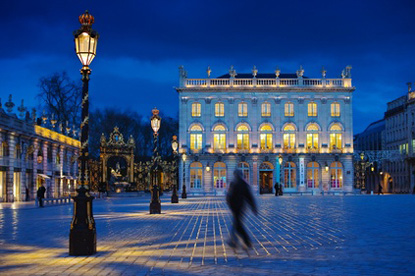
Stanislas Leszczynski (1677-1766), forced to abdicate the throne of the Polish-Lithuanian Commonwealth in 1734, receives the Duchy of Lorraine from his son-in-law Louis XV of France in 1737. The agreement was that upon his death the duchy would be incorporated to the Kingdom of France. Stanislas ruled as an enlightened monarch, and creates the magnificent Place Stanislas, now on the UNESCO World Heritage List.
In 1778, the bishopric of Toul is moved to Nancy. During the French Revolution, as unrest surfaced within the French armed forces, a full-scale mutiny took place in Nancy in the summer 1790. A few reliable units lay siege to the town and shot or imprisoned the mutineers.
After the Franco-Prussian War (1870-1), Nancy remains French while Metz and the Alsace are ceded to Imperial Germany. Numerous people from the annexed territory refused the German nationality and moved to Nancy, among whom many intellectuals and industrials.
At the turn of the 20th century, it is from Nancy that starts the French Art Nouveau movement. The School of Nancy counts such artists as Émile Gallé, Antonin Daum, Louis Majorelle, Victor Prouvé or Eugène Vallin.
Amongst the most famous people born in Nancy, let's cite Edmond de Goncourt (1822-1896), the founder of the literary Académie Goncourt; the mathematician Henri Poincaré (1854-1912); the biologist François Jacob (born in 1920), Nobel Prize in Medicine in 1965.
Main Attractions
Nancy can be divided in several neighbourhoods, each belonging to a different historical period. The Old Town (Ville-Vieille) dates from the 12th to the 16th century and is located in the northern half of the city centre. The southern half is the New Town (Ville-Neuve), built by Duke Charles III in the 17th century.
The two parts are separated by Stanislas Square (Place Stanislas) and Rue Sainte Catherine. West of the centre, the Quartier Saint-Léon was built at the turn of the 19th and 20th centuries, and possess quite a few Art Nouveau buildings from the Nancy School, such as the Villa Majorelle, the Chamber of Commerce and Industry, or the BNP building.
Stanislas Square

The main town square of Nancy was named after Stanislas Leszczynski (see History above), who commanded the works. The perfectly harmonious square was designed in the neoclassical style by the court architect Emmanuel Héré de Corny (1705-1763), and constructed between 1751 and 1760. The square, now fully pedestrianasied, separates the old medieval town from the newer 17th-century town.
It was originally called "Royal Square" (Place Royale) and had a statue of Louis XV standing in the middle, which was removed during the French Revolution. The square was renamed Place du Peuple, then Place Napoléon, before acquiring its present name in 1831.
Measuring 125 meters in length on 106 meters in width, Stanislas Square is entirely paved with light stones interlaced with darker ones forming a cross design. The magnificent gilded iron gates are the work of Jean Lamour.
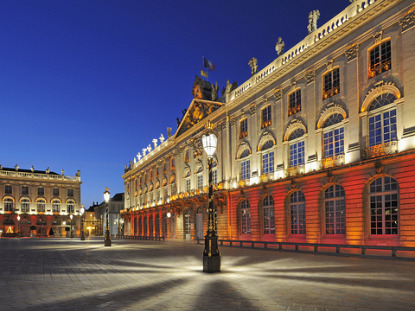
Stanislas Square is surrounded by 7 pavilions. The largest of them (southern side) houses the City Hall of Nancy (Hôtel de Ville), which has a few noteworthy living rooms (the Salon Carré, the Grand Salon, and the Salon de l'Impératrice).

The other pavilions are occupied by the Préfecture of Meurthe-et-Moselle in south-east corner, the Opéra-Theâtre (the former Episcopal Palace) and the Grand Hôtel (originally the Hôtel de la Reine) on the eastern side, as well as the Fine Arts Museum (Musée des Beaux Arts, originally the Collège de Médecine) and the Pavillon Jacquet on the western side. The northern side was constructed lower for defensive purposes.
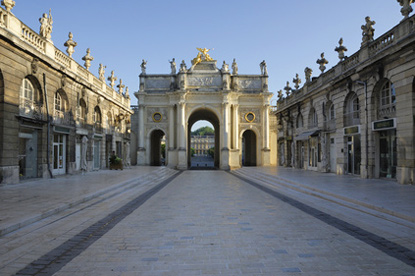
In front of the City Hall, take Rue Héré to reach the Triumphal Arch (Porte Héré), built between 1754 and 1756 in the honour of Louis XV.
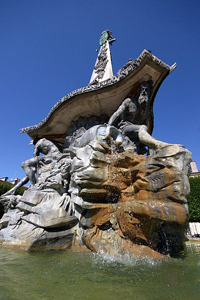
On the other side of the arch is the long Place de la Carrière, with its two superb fountains, its double tree-lined avenue, and its symmetrical buildings facing each other down its length.
At the northern extremity of Place de la Carrière stands the Government Palace (Palais du Gouvernement), the old residence of the governors of Lorraine.
The entrance to the Parc Zoo de la Pépinière is on the right when facing the palace. It comprises an English-style park, a rose garden, and a small zoological garden.
Ducal Palace
Standing at the corner of Place de la Carrière and the Grande Rue (the main axis of the old town), the Ducal Palace (Palais Ducal) dates back the 13th century. Renald II rebuilt it in a mixture of Flamboyant Gothic and Renaissance styles from 1502. The construction continued under his son, Anthony, who added notably the Porterie and the Galerie des Cerfs.
Most of the palace was dismantled by Duke Leopold, who intended to replace it by a bigger one that could rival with the Louvre. However, this project was never completed due to financial problems. Duke Stanislas used the foundations of this new palace to build the Palais du Gouvernement and its gardens.
The Ducal Palace now houses the Historical Museum of Lorraine (Musée Historique Lorrain), an extraordinary museum covering the whole local history from the prehistory. Exhibits range from the Celtic, Gallo-Roman and Frankish periods to medieval religious art, to military equipment, to folkloric costumes, as well as fine arts or musical instruments.
Next to the palace stands the 15th-century Église des Cordeliers, with its single nave. Of interest are the tomb of Renald II, and especially the recumbent effigy of his wife Philippa of Guelders. The adjoining Ducal Chapel (built from 1607) is the burial place of almost all the dukes of Lorraine. The older tombs were moved from Saint-Georges Collegiate Church (destroyed 300 years ago), where they were previously interred. The convent of the ducal chapel houses the small Museum of Popular Arts and Traditions.
The Old Town
Not far from the Ducal Palace, the Neo-Gothic Saint-Epvre Basilica is one of the newest churches in Nancy, despite its impressive size. Its construction was financed by donations from Poland and Austria.
One of the most important remains of the medieval fortifications is the 14th-century Craffe Gate (Porte de la Craffe), the main city gate in the north of the medieval town. 100 metres further north is the 16th-century Citadel Gate (Porte de la Citadelle).
A few townhouses require a special mention in the old town, such as the Renaissance-style Hôtel d'Haussonville (9, Rue Trouillet), the Hôtel de Lillebonne (12, Rue de la Source), as well as the 18th-century Hôtel de Fontenoy (6, Rue Haut-Bourgeois) andHôtel Ferrari (29, Rue Haut-Bourgeois). Also note the Art Nouveau Maison Weissenburger at 1, Boulevard Charles (just east of Citadel Gate).
The New Town
One hundred metres east of Stanislas Square, Alliance Square (Place d'Alliance) was originally built in homage to Stanislas Leszczynski. Its name commemorates the alliance between France and Austria signed on 1 May 1756, and marked by the marriage of the future King Louis XVI with Marie-Antoinette of Habsburg. Like Stanislas Square, it was designed by Héré.
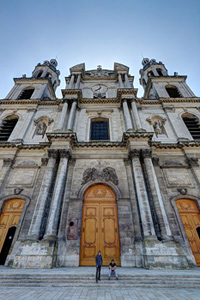
South of Alliance Square, the Nancy Cathedral (Cathédrale Notre-Dame-de-l'Annonciation de Nancy) was consecrated as the new seat of the diocese of Nancy-Toul in 1778. It is one of the few neoclassical cathedrals in France.
On Rue Sainte Catherine, Nancy's Museum of Zoology is composed of a tropical aquarium on the ground floor, and a natural history museum on the first floor.
Other attractions
The oldest building in Nancy is the 12th-century Tour de la Commanderie Saint-Jean-du-Vieil-Aître. It owes its name to the commandery of the Knights Hospitaller, who erected a tower near the old Merovingian "Aître" cemetery. It is located outside the city centre, some 400m west of the train station, on Impasse Clérin, at the end of Avenue Foch.
Among other notable churches in town, let's note the 18th-century Église Notre-Dame-de-Bonsecours (where Stanislas Leszczynski is inhumed), the Baroque-style Église Saint-Sébastien, or the Église Saint-Nicolas. Nancy also has a Protestant temple and a synagogue.
Top Museums
Musée des Beaux-Arts de Nancy
Located on the prestigious Place Stanislas, a UNESCO World Heritage site, the Musée des Beaux-Arts de Nancy is one of France's oldest and most respected art museums. Established in 1793, it houses an impressive collection of European paintings from the 14th to the 20th century, featuring works by artists such as Perugino, Caravaggio, Rubens, and Delacroix. The museum also includes a significant collection of sculptures and graphic arts, as well as a gallery dedicated to Jean Prouvé, a renowned designer from Nancy. Additionally, it showcases a remarkable collection of Daum glasswork, highlighting Nancy's contribution to the art of glassmaking.
Musée de l'École de Nancy
This museum is dedicated to the Art Nouveau movement, specifically the École de Nancy, which was a pivotal artistic movement in the early 20th century. Situated in the former house of Eugène Corbin, a major patron of the movement, the museum exhibits a wide range of Art Nouveau pieces, including furniture, glassware, ceramics, and textiles. It features an extensive collection of works by Émile Gallé, one of the leading figures of the École de Nancy, with over 400 pieces of his glasswork on display. The museum offers a unique insight into the artistic techniques and innovations of the period, showcasing the diversity and technical virtuosity of the artists involved.
Villa Majorelle
Although not strictly a museum, the Villa Majorelle is an iconic example of Art Nouveau architecture in Nancy. Built between 1901 and 1902 for Louis Majorelle, a prominent Art Nouveau artist, the villa is a masterpiece of the style, featuring intricate ironwork and floral motifs. It was restored and reopened in 2020, offering visitors a glimpse into the artistic and architectural innovations of the École de Nancy. The villa's design reflects the movement's emphasis on natural forms and organic shapes, making it a must-visit for anyone interested in Art Nouveau.
Musée Lorrain (Palais Ducal de Nancy)
Located in the historic Ducal Palace of Nancy, the Musée Lorrain is dedicated to the history and culture of Lorraine from prehistoric times to the early 20th century. The museum features a diverse collection of artifacts, including Gallo-Roman and Merovingian relics, medieval sculptures, and Renaissance art. Notable works include pieces by Georges de la Tour and Jacques Callot. The museum provides a comprehensive overview of Lorraine's rich cultural heritage and its historical significance.
Aquarium Museum
The Aquarium Museum of Nancy combines natural history with scientific and technical culture. It houses a variety of zoological and paleontological collections, along with living aquatic exhibits. The museum includes several galleries, such as the Nautilus and Calypso galleries, and hosts temporary exhibitions of contemporary art. It is an interesting blend of science and art, offering something for both nature enthusiasts and art lovers.
Nancy also hosts other museums, such as the Iron Museum and the Espace Animalier, each offering unique insights into different aspects of science, history, and culture. These museums contribute to Nancy's vibrant cultural landscape, making it a city with a rich and diverse heritage to explore.
Local Cuisine
Nancy is a paradise for food lovers, offering a rich tapestry of culinary delights that reflect its vibrant history and culture. The city is famed for its Quiche Lorraine, a savoury tart made with eggs, cream, and bacon lardons, which has become a hallmark of French cuisine. Sweet treats are equally celebrated, with Nancy macarons, soft almond biscuits, and Bergamot candies, translucent yellow sweets flavoured with bergamot essence, being local favourites. The Mirabelle plum, Lorraine’s golden fruit, features prominently in desserts like the Tout Nancy, an ice cream creation with crushed macarons and mirabelle coulis. For a regal touch, indulge in the Tokaji wine baba, a dessert inspired by Stanislas Leszczynski, or enjoy the flambéed Vaute crepe topped with mirabelle ice cream. Pair these delights with regional wines or the famous mirabelle plum brandy for an authentic gastronomic experience.
Shopping
The city centre features indoor shopping malls like Centre Commercial Saint Sébastien, which houses popular stores such as Micromania, Sephora, H&M, and Pimkie. For outdoor shopping, Rue Saint-Jean offers sneaker and clothing chain stores. The covered Nancy Central Market, with around 65 stalls, sells quality produce, local specialities, and flowers. Several markets operate throughout the week, including a bio and local market on Fridays. For those interested in vintage items and antiques, the Marché aux Puces de la Vieille Ville flea market takes place monthly in the old town. Shoppers can also find designer boutiques, concept stores, and shops specialising in local crafts and Art Nouveau pieces. Most shops in Nancy are closed on Sundays.
Nature in and around Nancy
The city boasts numerous parks, including the Parc de la Pépinière, a serene urban oasis in the heart of Nancy featuring beautiful gardens and tranquil lakes. Nature enthusiasts can explore the Jean-Marie Pelt Botanical Garden in nearby Villers-lès-Nancy, which showcases diverse plant life and lush landscapes. For those seeking a peaceful retreat, Saint Mary Park provides enchanting scenery and a tranquil atmosphere. The Dominique Alexandre Godron Garden offers a botanical paradise perfect for relaxation and exploration. Along the Meurthe River, visitors can enjoy scenic walks or bike rides on the Banks of La Meurthe trail, a popular route for locals and tourists alike. The Parc Blondlot provides another option for experiencing nature, with its lush landscapes and serene paths along the river. These natural attractions offer a refreshing contrast to Nancy's urban environment and provide ample opportunities for outdoor activities and leisurely strolls.
Getting There & Around
Getting to and around Nancy is quite straightforward. The city is well-connected by train, with TGV services from Paris taking just 90 minutes to reach Nancy's centrally-located station. For those driving, Nancy is accessible via the A4 and A31 motorways from Paris, Strasbourg, Brussels, Luxembourg, and Dijon. Once in the city, public transport is efficient and affordable. The network comprises 29 bus and tram services, including 4 tram lines and 11 bus routes. Notably, public transport is free on weekends for all riders. Cycling is another excellent option, with about 130 km of safe bike routes and a bike rental system called VélOstan. For shorter distances, walking is ideal as the city centre is compact and pedestrian-friendly. Taxis and car rental services are also available for those preferring more flexibility in their travels.
Best Time to Visit
The best time to visit Nancy is from May to September, when the weather is particularly favourable. During these months, the city enjoys mild temperatures, ranging from 15°C to 24°C, making it ideal for outdoor activities such as strolling through the city parks or exploring the numerous museums. Summer, especially July and August, is the sunniest period, with long days and pleasant temperatures. If you prefer fewer crowds, consider visiting in May or September, when the weather remains pleasant but the city is less busy. Alternatively, autumn offers a picturesque landscape with changing foliage, while winter provides a magical atmosphere, especially during the Christmas season. Each season has its charm, so the best time to visit depends on your personal preferences.
| Travel destinations in Lorraine | ||||||||||||||
|---|---|---|---|---|---|---|---|---|---|---|---|---|---|---|
|
|
|
|
| ||||||||||
|
|
|
|
| ||||||||||


