


| Contents |
|---|
Introduction
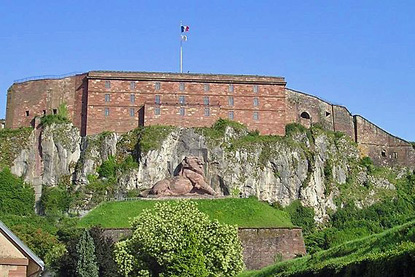
Cut off from Alsace in 1871, Belfort (pop. 50,000) is the capital of the smallest French département. Its main attraction is its red citadel and castle.
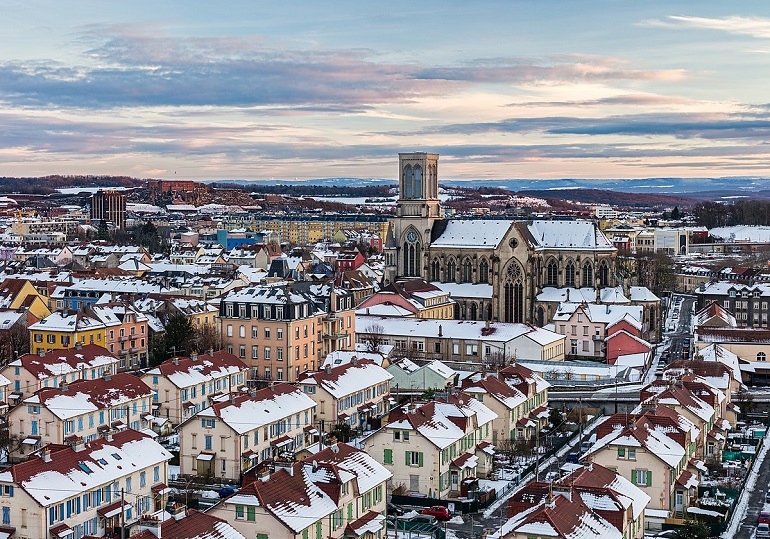
Belfort is a fortified town and the capital of the Territoire de Belfort in the Bourgogne-Franche-Comté région of eastern France, strategically positioned in the natural gap between the Vosges and Jura Mountains along the Savoureuse River. With origins dating back to Gallo-Roman times, the town was first recorded in the 13th century as a possession of the counts of Montbéliard before passing to Austria and finally to France in 1648 under the Treaty of Westphalia. The town's defining moment came during the Franco-Prussian War of 1870-1871, when it withstood a 103-day siege, an act of resistance commemorated by Frédéric Bartholdi's monumental Lion of Belfort sculpture, carved from local sandstone. Today, Belfort combines its rich military heritage, centred around Vauban's 17th-century citadel and fortress system, with a well-preserved old town featuring Alsatian-influenced architecture, the neoclassical St. Christopher's Cathedral from 1727, and a thriving industrial economy based on electrometallurgical production.
Interesting Facts about Belfort
- Belfort sits in the strategic Belfort Gap between the Vosges and Jura, a natural corridor that has channelled armies and trade for centuries.
- The city’s imposing citadel was reworked by the famed military engineer Vauban, helping make Belfort notoriously hard to capture.
- Frédéric-Auguste Bartholdi, the sculptor of the Statue of Liberty, created the monumental Lion of Belfort to honour the town’s heroic resistance in 1870–71.
- Belfort withstood a 103–104 day siege during the Franco–Prussian War, a stand that cemented its reputation for resilience.
- Once under the Habsburgs, Belfort became French by the Treaty of Westphalia-era settlements in 1648, reflecting its shifting borderland history.
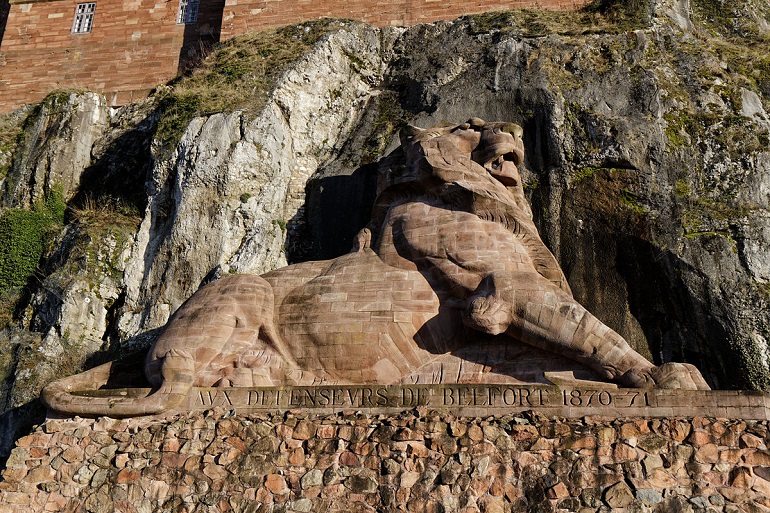
- The Lion of Belfort measures about 11 metres high and 22 metres long, carved in pink sandstone beneath the citadel’s ramparts.
- Belfort is the prefecture of the Territoire de Belfort, one of France’s smallest departments by area.
- The old town clusters along the Savoureuse River, with the citadel and ramparts dominating the skyline.
- Belfort nurtures a lively cultural scene, including the long-running International University Music Festival (FIMU) each spring.
- Once a stronghold guarding the route into eastern France, Belfort today is known for engineering and energy industries alongside growing tourism.
History
Early Settlement and Medieval Development
Belfort's remarkable history stretches back to Gallo-Roman times when its strategic position in the natural gap between the Vosges and Jura mountains, along the route connecting the Rhine and Rhône rivers, attracted early human settlement. During the Germanic migrations, the area was heavily settled by Burgundian peoples who displaced the earlier Gallo-Roman inhabitants. The town first emerged as a significant medieval settlement when it was recorded in the 13th century as a possession of the counts of Montbéliard, who granted Belfort its charter in 1307. A castle was built in 1226, establishing Belfort as a fortified place that would withstand seven sieges throughout the Middle Ages. Previously an Austrian possession, Belfort was transferred to France by the Treaty of Westphalia in 1648, which ended the Thirty Years' War, and subsequently came under the ownership of Cardinal Mazarin through Louis XIV. The town's strategic importance led to extensive fortification development by the renowned military architect Vauban for Louis XIV, and the impressive Hôtel de Ville was completed in 1724.
The Franco-Prussian War and the Heroic Siege
Belfort's most defining moment came during the Franco-Prussian War when the town endured the legendary Siege of Belfort from 3 November 1870 to 18 February 1871, a gruelling 103-day military assault by Prussian forces. Under the command of Colonel Pierre Philippe Denfert-Rochereau, merely 17,000 defenders, of whom only 3,500 were military personnel, successfully resisted 40,000 Prussian troops led by General August von Werder. The intransigent French resistance prevented the Germans from completing an effective encirclement of the city, and despite attempts at relief by General Charles Denis Bourbaki's army, which was repelled at the Battle of the Lisaine River in January 1871, Belfort held firm. The garrison finally surrendered on 18 February 1871, marching out with full military honours and taking their weapons and baggage, only after the armistice between France and Germany obligated French forces to abandon the stronghold. In recognition of this heroic defence, Belfort and its surrounding area were not handed over to Germany under the Treaty of Frankfurt, unlike the remainder of Alsace, and instead formed the unique Territoire de Belfort that exists to this day.
Modern Commemoration and Legacy
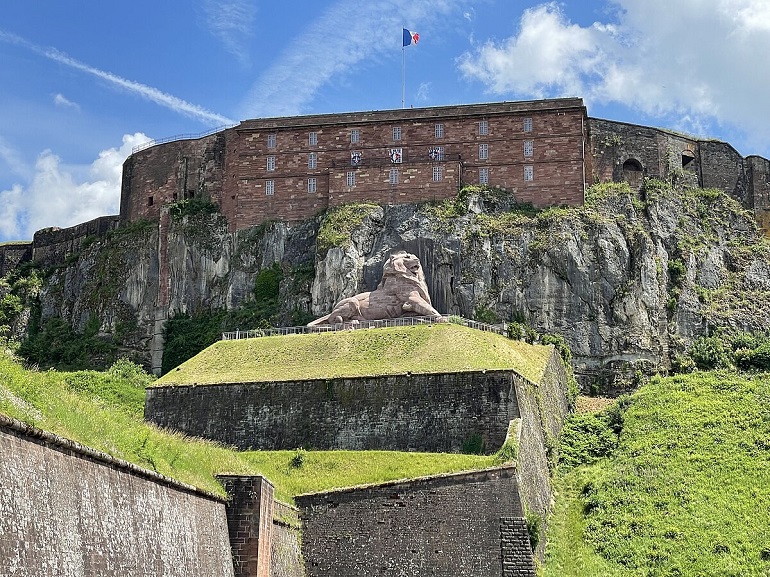
The heroic siege is immortalised by the magnificent Lion of Belfort, a monumental sculpture created between 1875 and 1880 by Frédéric Auguste Bartholdi, the same sculptor who designed the Statue of Liberty. This colossal work, measuring 22 metres in length and 11 metres in height, is carved entirely from pink sandstone from the Vosges and dominates the local landscape from its position against the limestone cliff below Belfort castle. Originally intended to face defiantly eastward towards Prussia, Bartholdi was asked to modify the design to avoid diplomatic tensions with the German Empire; he cleverly responded by turning the lion westward while placing an arrow beneath its front paw that points back towards the German border. The Lion of Belfort has become France's largest stone sculpture and serves as both a symbol of resistance and a guardian of the town. After 1872, Alsatians who refused to live under German rule and sought French citizenship made significant contributions to Belfort's industrial development, including the establishment of the Société Alsacienne de Constructions Mécaniques. Smaller editions of Bartholdi's lion now stand in Place Denfert-Rochereau in Paris and Dorchester Square in Montreal, spreading Belfort's legacy of heroic resistance across the world.
Main Attractions
Lion of Belfort
The Lion of Belfort is a monumental sculpture carved from red sandstone, standing 22 metres in length and 11 metres in height—making it the largest stone statue in France. Created by the renowned sculptor Frédéric-Auguste Bartholdi between 1875 and 1880, it commemorates the city’s heroic defence during the 103-day Prussian siege in the Franco-Prussian War (1870–1871). Led by Colonel Denfert-Rochereau, Belfort’s defenders held out, ensuring the city remained French when surrounding areas were annexed. Bartholdi’s design symbolises not victory, but the steadfast courage, rage subdued by honour, and resilience of the city’s people. Originally intended to face eastward in defiance of Prussia, diplomatic concerns turned the lion’s gaze westward, its tail toward the German border. Today, the Lion of Belfort is a powerful emblem of local identity, celebrated in souvenirs and the city’s nickname, “La Cité du Lion.”
Belfort Citadel
Dominating the city’s skyline, the Belfort Citadel is a masterpiece of military architecture, designed primarily by Vauban—Louis XIV’s famed engineer—and later enhanced by General Haxo. Built atop a sheer rocky outcrop, the citadel offers panoramic views over Belfort and its plains, sometimes stretching to the distant Vosges mountains. Its multiple layers of ramparts, towers, and fortified gates reflect centuries of adaptation, from medieval roots to cutting-edge 19th-century defences. Inside, visitors explore the Brisach Gate, medieval walls, and atmospheric passageways that reveal stories of siege, resistance, and daily garrison life. For those interested in the interplay of stones, landscape, and history, the citadel is a memorable highlight—an exemplar of French defensive genius, and a testament to Belfort’s enduring strategic importance.
Old Town and Place d’Armes
The heart of Belfort’s daily life is its Old Town, centred around the spacious Place d’Armes. Here, colourful façades, lively terraces, and historic market halls—such as those on Rue Frery and Place des Bourgeois—form an inviting urban tableau. Arcades, fountains, and independent shops add charm, while the square itself hosts markets, open-air concerts, and seasonal festivals that capture the city’s convivial spirit. A stroll through these ancient lanes reveals decorative stonework, cheerful floral displays, and the architectural legacy of a city that has resisted time and turmoil. It is a place to linger, appreciate local craftsmanship, and experience the authentic rhythm of Belfort life.
Lac de Malsaucy
Located a short drive from Belfort’s centre, Lac de Malsaucy is a large, tranquil lake rimmed by meadows and wooded hills. It serves as a year-round destination for walking, cycling, boating, and birdwatching, drawing visitors seeking quiet communion with nature. The gentle paths around the water are ideal for family outings, while the open shoreline is a popular spot for picnics and relaxation. In summer, the lake comes alive with pedal boats and the internationally known Eurockéennes music festival, showcasing Belfort’s blend of pastoral calm and cultural vibrancy. Whether seeking outdoor recreation or a peaceful escape, Lac de Malsaucy offers scenery and serenity in equal measure.
Etang des Forges
To the city’s edge, the Etang des Forges extends over 34 hectares, its calm waters framed by lush woods and rustic paths. It is a favoured retreat for anglers, walkers, and those seeking moments of quiet reflection along benches that overlook the pond. The changing seasons bring new moods: spring blossoms, summer greens, autumn foliage, and the stillness of winter. Its peaceful atmosphere makes the Etang a natural counterpoint to Belfort’s more dramatic landmarks, offering a slower, contemplative experience in harmony with the surrounding countryside.
Top Museums
Citadel of Belfort and Its Museums
At the heart of Belfort stands the Citadel, a monumental complex originating in the seventeenth century and continuously fortified by influential engineers such as Vauban and Denfert-Rochereau. Not only does the citadel offer breathtaking city panoramas and trench walks, but it is also home to several key museums that recount Belfort’s storied past.
Musée d’Histoire de la Citadelle
This museum occupies the former barracks within the citadel and features a threefold collection:
- Archaeological section (basement): Unearths local ancestry from prehistoric, Gallo-Roman, Merovingian, and medieval periods. Finds range from daily utensils and funerary relics to fragments of ancient trade and war.
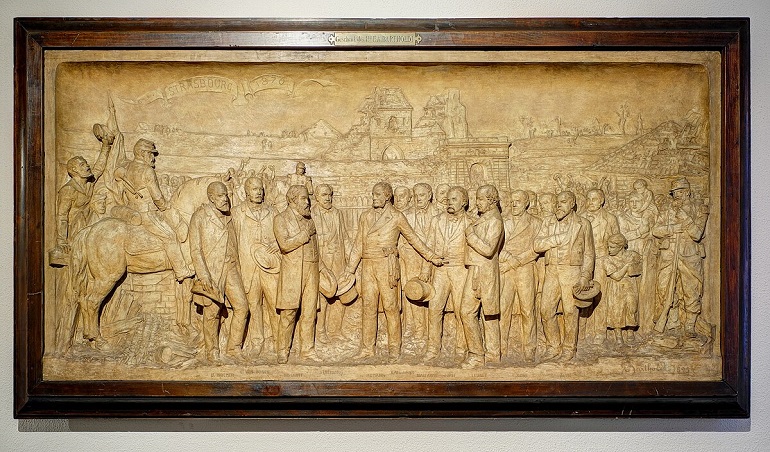
- Bartholdi-Lefèvre rooms (ground floor): Dedicated to Frédéric-Auguste Bartholdi, creator of the Lion of Belfort and the Statue of Liberty, and Camille Lefèvre, an influential donor. Their sculptures, sketches, engravings, and photographs beautifully illustrate the city’s artistic legacy.
- Military history section (first floor): Recounts Belfort’s strategic role from Vauban’s fortifications through the Franco-Prussian War, with memorabilia such as weapons, uniforms, and engravings associated with the heroic defence of Belfort during the 1870-1871 siege. Special attention is given to Colonel Aristide Denfert-Rochereau, renowned for his resistance and leadership.
Throughout, the museum extends to industrial heritage and the development of Belfort’s community, weaving together themes of technology, war, art, and memory. Visitors can also discover temporary exhibitions, such as retrospectives on Denfert-Rochereau and Camille Lefèvre.
Art Museums
Musée des Beaux-Arts (Tour 41)
Moving to Tour 41, a bastion designed to Vauban’s specifications, visitors encounter the Musée des Beaux-Arts. This gallery traces the evolution of art from medieval religious iconography, through romantic and realist periods, to twentieth-century innovation. Its highlights include:
- Paintings by Gustave Courbet, Eugène Carrière, Utrillo, Signac, and Doré
- Masterful sculptures and drawings in bronze, marble, and wood
- Thematic exhibitions on allegory, nature, human society, and portraiture
- Special spaces commemorate Camille Lefèvre, linking local talent to the wider French artistic tradition.
Visitors are struck by comparative displays which juxtapose works addressing the same motif or subject but executed in different artistic styles and historical contexts.
Musée d’Art Moderne – Donation Maurice Jardot
A testament to twentieth-century innovation, the Musée d’Art Moderne stands apart as an elegant mansion-turned-gallery. It showcases pivotal works from the Kahnweiler Collection, donated by Maurice Jardot:
- Paintings, sculptures, and drawings by Pablo Picasso, Juan Gris, Georges Braque, Fernand Léger, and André Masson
- An overview of cubism and surrealism, exploring the revolution in visual art that marked modernity
- The collection reflects early experiments in abstraction, geometry, and expressive line, representing the significant French and international artists who shaped the modern era.
Rural Life and Craftsmanship
Musée de l'Artisanat Rural
Situated in a reconstructed nineteenth-century farmhouse outside Belfort, the Musée de l’Artisanat Rural celebrates rural craftsmanship and daily life:
- Exhibits display disappearing skills such as weaving, woodworking, and blacksmithing
- Tools, household objects, and religious artefacts flow through rooms that recreate the lifestyle of southern Territoire de Belfort’s peasants
- Architectural features allow visitors to experience the atmosphere of a traditional Sundgau house, intertwined with stories of work, celebration, and community.
Military Architecture
The Vauban Museum
Located at the Brisach Gate, the Vauban Museum delves into architectural and military history:
- Multimedia exhibits introduce Sébastien Le Preste, Marquis de Vauban, and his legacy in fortress design
- Interactive presentations include raised-relief plans, construction techniques, busts, and dioramas
- A spotlight on the last fortification built by Vauban—Neuf-Brisach—offers valuable insights into defensive innovation from the seventeenth century onward.
Additional Sites and Cultural Events
Beyond permanent museums, Belfort offers additional exhibition rooms and seasonal cultural programming:
- Temporary displays in Tour 46 and the Citadel introduce local history, contemporary art, and scientific discovery
- Belfort’s planetarium appeals to science enthusiasts and families
- The city’s programme of concerts, events, and workshops, especially “Un été sous les murailles”, brings vibrancy to museum spaces and historic sites throughout the year.
Local Cuisine
The city's restaurants proudly serve Comté cheese, the region's golden treasure aged in local caves, alongside saucisse de Montbéliard, a distinctive smoked sausage with its characteristic curved shape and protected designation of origin. Local charcuterie boards feature Morteau sausage and jambon de Franche-Comté, whilst traditional dishes include tête de veau sauce gribiche and coq au vin jaune, prepared with the region's prized yellow wine from the nearby Jura vineyards. The proximity to Germany and Switzerland adds delightful touches such as baeckeoffe (a hearty casserole) and various tarte flambée variations, creating a unique gastronomic identity that perfectly captures Belfort's position at the crossroads of three culinary cultures.
Getting There
By train Belfort is well connected by rail: high-speed TGV services on the Rhine–Rhône line arrive at Belfort-Montbéliard TGV station, with a frequent shuttle to the centre, while TER regional trains run directly to Belfort-Ville from cities such as Paris, Strasbourg, Mulhouse and Lyon.
By coach Long-distance coaches operated by companies like FlixBus and BlaBlaCar Bus converge on Belfort’s coach station beside the SNCF building, linking the town to Paris, Lyon, Strasbourg and Basel, and the Optymo bus network offers straightforward onward travel across the Territoire de Belfort.
By car Drivers reach Belfort via the A36 motorway (exit 13) which threads through the Belfort Gap between the Vosges and the Jura, or along the scenic D465 over the Ballon d’Alsace; clear signposting directs vehicles to spacious, secure car parks flanking the compact historic centre.
| Travel destinations in Franche-Comté | ||||||||||||||
|---|---|---|---|---|---|---|---|---|---|---|---|---|---|---|
|
|
|
|
| ||||||||||
|
|
|
| |||||||||||


