


Introduction
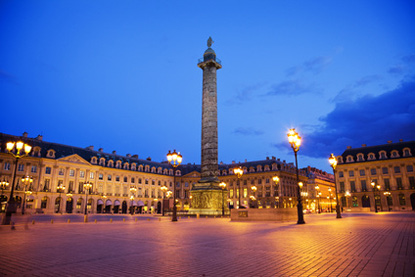
Located between the Tuileries and the Opera, Place Vendôme is a gorgeous octagonal square located in the middle of Paris' most expensive neighbourhood and is home to the Hôtel Ritz. Designed by architect Jules Hardouin-Mansart in 1699 under the reign of Louis XIV as part of French classical urban planning, it was originally called Place des Conquêtes and later renamed Place Louis le Grand before taking its current name from César de Vendôme, the illegitimate son of Henri IV, the square was conceived to honour the monarchy and showcase royal power. The site replaced the former Hôtel de Vendôme and its gardens, and the uniform façades of the surrounding private mansions were built according to Mansart's strict architectural plan, most of which are now listed as historic monuments. At its centre stands the 44-metre Vendôme Column, erected by Napoleon in 1810 to commemorate the Battle of Austerlitz and cast from 1,200 captured enemy cannons, topped with a statue of Napoleon as Caesar. Since the Second Empire, Place Vendôme has established itself as the epicentre of Parisian luxury, housing prestigious jewellers, haute couture houses, leather goods boutiques, and the famous Ritz hotel, whilst also serving as home to the Ministry of Justice at the Hôtel de Bourvallais.
Interesting Facts about Place Vendôme
- Commissioned by Louis XIV and designed by Jules Hardouin-Mansart, Place Vendôme’s uniform façades create an elegant octagon that set the tone for Parisian classicism.
- The square’s centrepiece, the Vendôme Column, was erected by Napoleon I to commemorate the Battle of Austerlitz and is clad in bronze reliefs inspired by Trajan’s Column.
- Once known as Place Louis-le-Grand and Place des Conquêtes, the square has borne several names reflecting France’s shifting political tides.
- The original equestrian statue of Louis XIV was toppled during the French Revolution, signalling the end of royal iconography in the square.
- The Vendôme Column was pulled down in 1871 during the Paris Commune and later rebuilt, making it both a monument and a witness to upheaval.
- Place Vendôme is synonymous with haute joaillerie, hosting legendary jewellery and watch maisons along with couture flagships.
- The Ritz Paris, one of the world’s most storied hotels, anchors the square and has welcomed literary and artistic luminaries.
- Coco Chanel kept a residence at the Ritz and drew inspiration from the square’s restrained geometry for her timeless aesthetics.
- Frédéric Chopin spent his final days at No. 12 Place Vendôme, adding a poignant musical note to the square’s history.
- Approached by Rue de la Paix and set near the Tuileries and La Madeleine, the square sits at the heart of Parisian elegance and urban planning.
History
Place Vendôme stands as one of Paris's most magnificent royal squares, created through a remarkable tale of failed speculation and royal ambition. The site originally housed the hôtel of César de Bourbon, Duke of Vendôme, the illegitimate son of Henry IV and his mistress Gabrielle d'Estrées. In 1677, a group of speculators led by architect Jules Hardouin-Mansart (who had worked on Versailles) conceived the first plans for the square, inspired by the successful Place des Vosges. However, financial difficulties scuttled this initial project. The venture was later taken over by Louis XIV's Minister of Finance, Louvois, who purchased the land in 1685 with grand plans for public buildings including a royal library, mint, and academies. When Louvois encountered his own financial troubles and died, King Louis XIV himself acquired the plot and commissioned Hardouin-Mansart to design the distinctive octagonal square we see today. The project was completed by 1720, just as financier John Law's Mississippi bubble burst, adding another layer to the square's economically tumultuous origins.
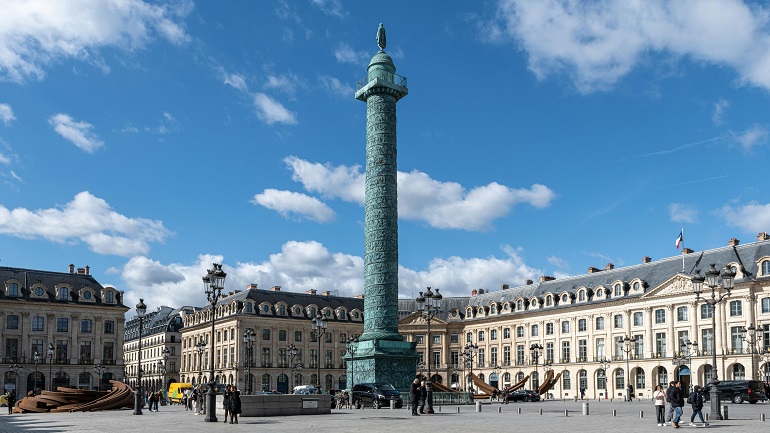
The square underwent several dramatic transformations and name changes that mirror France's turbulent political history. Originally called Place des Conquêtes (Conquest Square), it was hastily renamed Place Louis le Grand when France's military fortunes reversed. An impressive over-life-size equestrian statue of Louis XIV by François Girardon, believed to be the first large modern equestrian statue cast in a single piece, dominated the centre from 1699. During the French Revolution, the square was renamed Place des Piques, and the royal statue was destroyed. Napoleon I replaced it in 1806-1810 with the iconic Vendôme Column, modelled after Trajan's Column in Rome to commemorate his victory at Austerlitz. The column's 425 spiralling bronze relief plates were crafted from cannons captured from European armies, though Napoleon's propaganda claim of 1,200 cannons was vastly exaggerated—only 180 were actually taken at Austerlitz. The column topped with a statue of Napoleon dressed as a Roman emperor was designed by Pierre-Nolasque Bergeret and executed by a team of 30 sculptors.
The Vendôme Column itself became a symbol of political upheaval, suffering destruction and reconstruction multiple times. After Napoleon's exile, the Bourbon Restoration saw his statue removed and melted down, with the bronze used to recast the statue of Henry IV on Pont Neuf. Louis-Philippe later erected a replacement statue showing Napoleon in modern dress, which was subsequently replaced by Napoleon III with a more classical version. The most dramatic episode occurred during the Paris Commune of 1871, when revolutionaries including the anarchist painter Gustave Courbet pulled down the entire column, viewing it as a symbol of Napoleonic barbarism and militarism. Courbet was condemned to pay for its restoration at his own expense. The current column, restored in 1873 with Auguste Dumont's statue of Napoleon, has remained in place ever since. Throughout these political upheavals, the square's elegant façades by Hardouin-Mansart remained largely preserved, with most now listed as historic monuments. Since the Second Empire, Place Vendôme has evolved into the epicentre of Parisian luxury, housing prestigious jewellers, couturiers, and the famous Ritz hotel at number 15, whilst number 12 was once home to composer Frédéric Chopin, who died there in 1849.
Description
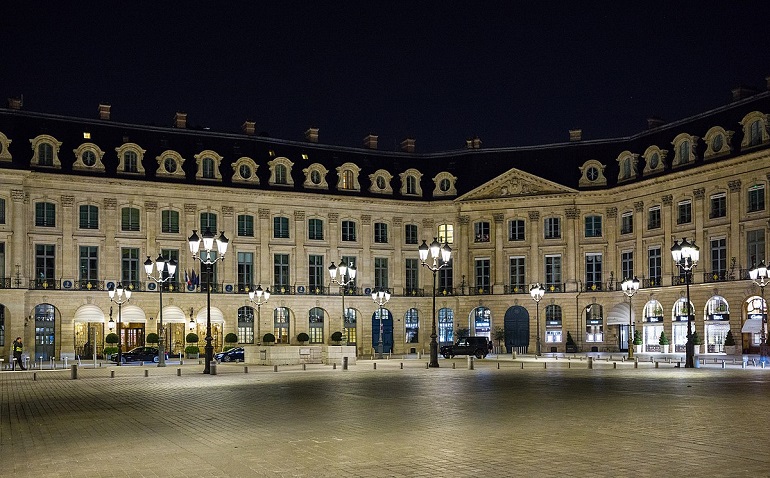
Nestled in the heart of Paris's elegant 1st arrondissement, Place Vendôme exudes refined sophistication and architectural harmony. The square is lined with tall, cream-coloured façades punctuated by ornate wrought-iron balconies and mansard roofs. Each building follows the uniform architectural rhythm established by Jules Hardouin-Mansart, creating a grand yet balanced frame around the central axis of the square.
At its centre stands the soaring Vendôme Column, clad in spiralling bronze reliefs and crowned by a statue that reaches skyward, lending a sense of monumentality to the space. The column's warm metallic sheen catches the soft Parisian light, offering a striking contrast against the pale stone of the surrounding buildings.
The Architecture of Luxury
The octagonal plaza showcases one of the most cohesive examples of classical French architecture in the capital. Each of the eight sides presents a carefully orchestrated symphony of stone, where massive ground-floor arcades give way to elegant piano nobile windows, their pediments alternately triangular and curved. The rooflines bristle with dormer windows and chimney stacks, their slate surfaces gleaming after rain and creating dramatic silhouettes against changeable Parisian skies.
The façades themselves tell stories through their carved details—elaborate mascarons peer down from window lintels, whilst garlands of stone fruit and flowers cascade along the building corners. Pilasters march in stately procession across each elevation, their Corinthian capitals catching shadows that shift throughout the day. The warm honey-coloured limestone develops different personalities as the light changes, appearing almost golden at sunset and taking on cooler, silvery tones during overcast afternoons.
A Temple to Luxury
Luxury boutiques and ateliers occupy the ground floors of the square's pavilions, beckoning discerning visitors with gleaming window displays. Renowned names in haute joaillerie, haute couture and horology sit cheek by jowl—diamonds set beside delicate silk scarves, and high-precision timepieces showcased in discreet glass vitrines. The intimate courtyards behind these shopfronts conceal private salons and workshops, where master artisans continue centuries-old crafts.
The shop windows themselves are masterpieces of visual merchandising, each one a carefully curated tableau. Cartier's famous red boxes nestle amongst cascades of pearls, whilst Chanel's quilted handbags are displayed like precious sculptures against sumptuous velvet backdrops. Van Cleef & Arpels presents delicate butterfly brooches that seem poised to take flight, their gemmed wings catching every available photon of light.
Behind these theatrical displays, the boutiques extend into plush interior worlds. Thick carpets muffle footsteps, whilst crystal chandeliers cast prismatic rainbows across mirrored surfaces. Private viewing rooms, upholstered in the finest silks, offer intimate spaces where clients can examine rare pieces away from the bustle of the square. The air inside these sanctuaries carries the faint scent of fine leather, French polish, and occasionally, a whisper of expensive perfume.
The Rhythm of Daily Life
Café terraces spill onto the pavement, their crisp white tablecloths and polished brass service trays inviting guests to sip rich espresso or a glass of chilled champagne as they watch well-heeled passers-by negotiate the cobblestones. Attentive waitstaff weave gracefully between tables, offering subtle hospitality that feels both welcoming and discreet.
The square's inhabitants change with the hours like actors in a carefully choreographed ballet. Morning brings purposeful figures in impeccably tailored suits, their polished shoes clicking authoritatively across the stones as they head to business appointments or private banking meetings. Mid-morning sees the arrival of elegantly dressed women, often accompanied by small dogs with diamond-studded collars, who pause to examine window displays with practised eyes.
Lunchtime transforms the atmosphere into something more animated, as café terraces fill with diners enjoying perfectly prepared salads niçoise or delicate sole meunière. Conversations flow in multiple languages—French naturally predominates, but one hears snippets of English, Italian, Russian, and Arabic as international clientele discuss everything from art acquisitions to yacht charters.
As afternoon settles over the square, a more languid pace takes hold. Shoppers emerge from boutiques carrying distinctive bags and boxes, their purchases carefully wrapped in tissue paper and sealed with elegant ribbons. The afternoon light, filtering through the leaves of the carefully manicured trees that dot the plaza's perimeter, dapples the stone with shifting patterns of gold and green.
Sensory Impressions
The acoustics of Place Vendôme create their own unique soundscape. The octagonal shape seems to capture and concentrate sound, so that conversations at café tables mix with the gentle hum of expensive car engines, the soft closing of boutique doors, and the rhythmic click of heels on stone. Church bells from nearby Saint-Roch occasionally add their bronze voices to the symphony, whilst the fountain's gentle splash provides a constant, soothing undertone.
The air itself seems different here—cleaner somehow, perhaps due to the reduced traffic, or maybe it's simply the psychological effect of being surrounded by such beauty. On warm days, the scent of fresh coffee mingles with the fragrance of seasonal flowers from the nearby Tuileries, whilst in winter, the aroma of roasted chestnuts from street vendors just beyond the square's boundaries adds a note of warmth to the crisp air.
Evening Transformation
In the glow of early evening, the façades of Place Vendôme are gently illuminated, lending a soft golden hue to the stonework. Shadows play across the elaborately carved keystones and pilasters, emphasising the sculptural detail that characterises each elevation. The air carries a faint echo of quiet conversation, punctuated by the soft click of high heels on stone.
As darkness falls, the square undergoes perhaps its most magical transformation. Discrete spotlighting brings the architectural details into sharp relief, creating dramatic interplays of light and shadow. The boutique windows become glowing jewel boxes, their contents seeming to float in pools of carefully directed illumination. The Vendôme Column, now floodlit, takes on an almost ethereal quality, its bronze reliefs telling their stories in deep shadow and bright highlight.
Restaurant terraces extend their outdoor seasons with the aid of elegant heating lamps, their warm glow creating intimate pools of light where diners can enjoy late suppers while wrapped in cashmere throws provided by attentive staff. The gentle clink of crystal glasses and the soft murmur of conversation create an atmosphere of refined conviviality that extends well into the night.
The Connecting Streets
The square's entrances, positioned at each corner and side, create carefully framed vistas that draw the eye inward toward the central column. Rue de la Paix opens onto the square like a stage curtain, revealing the full drama of the architectural ensemble in a single, breathtaking moment. From rue Saint-Honoré, the approach is more gradual, allowing the majesty of the place to unfold step by step.
Each entrance offers its own unique perspective on the square's geometry, and visitors often find themselves pausing at these thresholds, cameras in hand, attempting to capture the perfect angle that will convey the place's singular beauty. The surrounding streets, whilst not possessing the square's unified grandeur, maintain the same spirit of luxury and refinement, their shop windows and café fronts creating elegant preludes to the main performance.