


Introduction
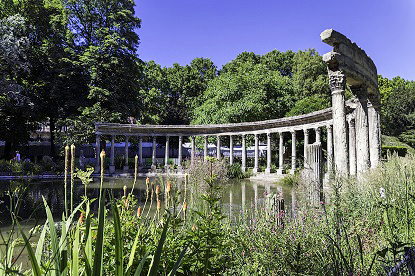
Parc Monceau is a 20-acre English-style public park located in the 8th arrondissement of Paris, originally created in 1778 by Philippe d'Orléans, Duke of Chartres and cousin of King Louis XVI. The park began as an extravagant garden of architectural follies designed by artist Louis Carrogis Carmontelle, featuring eclectic elements including an Egyptian pyramid, Roman colonnade, Dutch windmill, Turkish tents, and various antique statues scattered throughout the grounds. Following the French Revolution and subsequent municipal ownership in 1860, the park was redesigned under Haussmann to create wider paved paths and formal gardens whilst retaining many original features, including the distinctive Naumachie—a circular basin surrounded by Corinthian columns. Today, the park serves as a popular retreat for both locals and visitors, featuring manicured lawns, extensive flower beds, mature trees including a spectacular 30-metre sycamore maple planted in 1853, and numerous statues commemorating famous French writers and composers such as Chopin, Maupassant, and Alfred de Musset.
Interesting Facts about Parc Monceau
- Parc Monceau was created in 1778 by Philippe d’Orléans, Duke of Chartres, as a whimsical English-style garden dotted with architectural follies like a pyramid and colonnade.
- The park inspired Claude Monet, who painted several views of Parc Monceau in the 1870s.
- In 1797, André-Jacques Garnerin made the world’s first silk parachute descent here, landing in the park after a balloon ascent.
- Parc Monceau’s Naumachie, an oval pond bordered by a classical colonnade, evokes ancient Roman water spectacles.
- A rotunda by architect Nicolas Ledoux marks the main entrance on Boulevard de Courcelles, recalling the old Farmers General tax wall.
- The garden blends exotic trees, meandering paths and playful “follies,” making it notably different from formal French designs.
- Statues of cultural figures such as Frédéric Chopin, Guy de Maupassant and Alfred de Musset are scattered through the grounds.
- During the Paris Commune in 1871, the park witnessed tragic events linked to the suppression of the uprising.
- Gabriel Davioud later added elegant iron gates and features like a small Venetian-style bridge.
- Covering about 8 hectares, the park remains a beloved local retreat with children’s play areas and peaceful lawns.

History
The Aristocratic Origins and 18th Century Splendour
Parc Monceau's fascinating history begins in 1778, when Philippe d'Orléans, the Duke of Chartres and cousin to King Louis XVI, commissioned the creation of an extraordinary private garden on what was then the edge of Paris. The duke, who was a lover of all things English and a close friend of the Prince of Wales, enlisted the talents of artist Louis Carrogis Carmontelle to design an ambitious English-style garden that would defy French gardening conventions. The original 20-hectare estate was conceived as a fantastical "garden of follies", featuring an eclectic array of architectural curiosities including a miniature Egyptian pyramid, a Roman colonnade, antique statues, Turkish tents, a Dutch windmill, a temple of Mars, an Italian vineyard, and an enchanted grotto. This whimsical collection was designed to surprise and amaze visitors with its diversity and exoticism, creating what Carmontelle described as a "land of illusions".
Revolutionary Upheaval and Imperial Transformation
The French Revolution dramatically altered the park's destiny when the Duke of Chartres was executed in 1793, causing the garden to revert to public ownership. After the monarchy was restored, the property was returned to the ducal family, but during the Second Empire, financial pressures led them to sell lots within the park to real estate developers who constructed luxurious mansions, effectively halving the park's original size. The remaining portion was purchased by the City of Paris in 1860, marking a pivotal moment in its transformation from private folly to public amenity. Under the direction of Baron Haussmann and landscape architect Adolphe Alphand, the park underwent extensive redesign as part of Napoleon III's grand modernisation of Paris, opening to the public in August 1861 as the first new public park created under Haussmann's urban renewal programme.
Haussmann's Legacy and Artistic Recognition
The Haussmannian redesign fundamentally reimagined the space whilst preserving key original elements, including the water lily pond, stream, and several architectural follies such as the famous Egyptian pyramid. Two main tree-lined alleys were laid out from east to west (Allée de la Comtesse de Ségur) and north to south (Allée Ferdousi), meeting in the centre of the park, with paths widened and paved to accommodate carriages. The architect Gabriel Davioud enhanced the surviving Pavillon de Chartres with a graceful classical dome and replaced Carmontelle's original Chinese bridge with one modelled after Venice's Rialto Bridge. Haussmann enriched the redesigned park with exotic trees and flowers from around the world, creating the harmonious blend of French formal garden design and English landscaping that visitors enjoy today. The park's artistic significance was immortalised between 1876 and 1878 when Claude Monet created five renowned impressionist paintings of Parc Monceau, cementing its place not only in Parisian history but in the annals of art history as well.
Description
Landscape and Gardens
The park unfolds across gently rolling terrain, tracing a subtle interplay of open lawns and intimate groves that feel more like a countryside estate than an urban green space. Meandering tarmac trails wind beneath a magnificent canopy of plane trees, ancient ginkgos, and towering sycamores, guiding visitors through graceful enclaves of meticulously maintained greenery. The design is intentionally informal, evoking the charm of an English landscape garden rather than rigid French formality—a testament to the Duke of Orléans' anglophile sensibilities.
At the heart of the park stands a remarkable sycamore maple, planted in 1853 and now soaring thirty metres into the Parisian sky—quite possibly the oldest and tallest specimen of its kind in the entire city. Its massive trunk and spreading branches create a natural cathedral, beneath which generations of visitors have found respite and contemplation.
A series of sinuous waterways weaves through the grounds, fed by an artificial cascade that tumbles from a dramatic limestone cliff formation. These streams meander past carefully arranged flower beds bursting with seasonal colour before culminating in the park's crown jewel—a broad oval basin where water lilies drift serenely upon the surface, their leaves creating intricate patterns that shift with the changing light.
Architectural Follies and Curiosities
Parc Monceau's whimsical spirit finds its fullest expression through an extraordinary ensemble of architectural follies—each one a delightful surprise that transforms a simple stroll into an adventure of discovery. At the main entrance along Boulevard de Courcelles, the Pavilion de Chartres stands as both sentinel and welcome, its neoclassical rotunda crowned by a distinctive dome added in the 19th century. This elegant structure, designed originally by Claude-Nicolas Ledoux as a tollhouse for the Fermiers Généraux wall, features a peristyle of sixteen fluted columns that once housed customs offices below and provided the Duke with a garden-view apartment above.
The park's most photographed feature, the Naumachie, curves gracefully around the central pond—a magnificent Roman-style colonnade of Corinthian columns that creates the illusion of ancient ruins reflected in tranquil waters. This oval arrangement, inspired by classical amphitheatres used for naval battles, provides an unexpectedly grand backdrop for the park's aquatic centrepiece.
Tucked away on a secluded lawn stands the Egyptian Pyramid, a miniature yet faithful replica of the Great Pyramid of Giza, complete with carved pharaohs flanking its entrance. Built between 1769 and 1773, it once housed a statue of the goddess Isis, though this has long since vanished, leaving only the mysterious structure to capture imaginations.
Near the pyramid, the weathered remains of a Dutch Windmill rise from a gentle hillock, its sails removed but its rustic charm intact. The original also featured Turkish Tents and a Temple of Mars, though these have not survived the centuries. What does remain is a sense of global wandering, as if the park were a collection of souvenirs from the Duke's travels across continents and through time.

The Grotto and Water Features
One of Parc Monceau's most enchanting secrets lies hidden behind the park's dramatic waterfall—an artificial grotto carved into Jura limestone to resemble a natural cave system. The current formation, created for the 1889 Universal Exhibition, replaced an earlier version that featured fake stalactites and multiple chambers. Today, this rocky outcropping serves as both a geological curiosity and a giant flower bed, its exposed limestone faces providing a striking contrast to the lush plantings that cascade down its surfaces.
The clear mountain-stream water that tumbles from the grotto feeds the network of brooks that wind throughout the park, creating a gentle soundtrack of flowing water that enhances the sense of rural tranquillity. These streams are crossed by several ornamental stone bridges, their elegant balustrades and arched spans designed more for aesthetic pleasure than practical necessity. Each crossing offers a new perspective on the park's carefully orchestrated landscape, where every vista has been composed with an artist's eye.
Statues and Literary Monuments
Scattered throughout Parc Monceau are numerous bronze and marble tributes to France's cultural luminaries, transforming the park into an open-air gallery of national achievement. The most emotionally resonant is undoubtedly the Chopin Monument, where the Polish-French composer sits at a sculpted piano, his concentration intense as a draped female figure reclines beside him in musical reverie. Behind them, a relief of an angel with outstretched wings adds a spiritual dimension to this celebration of musical genius.
The elegant Guy de Maupassant Memorial depicts the master of the short story in contemplative repose, leaning against a rough-hewn pedestal that contrasts beautifully with the refined carving of his figure. Nearby, a marble bust honours Charles Gounod, creator of "Faust" and one of the greatest exponents of French Romantic opera, the work of sculptor Antonin Mercié dating from 1902.
Additional monuments celebrate the composer Ambroise Thomas, the poet Alfred de Musset, and the dramatist Édouard Pailleron, each positioned with careful attention to its surroundings. These sculptures rest upon velvety lawns or nestle against clusters of flowering shrubs, creating intimate spaces where art and nature converge in perfect harmony. The attention to sculptural detail and the thoughtful siting of each monument invite leisurely study and contemplation.
Family Attractions and Recreation
Parc Monceau reveals its most charming face in its provision for families and children. Two well-appointed playgrounds feature modern equipment including swings, slides, springers, and climbing frames, all set within safe, fenced areas that allow parents to relax while children explore. The equipment is regularly maintained and designed to blend harmoniously with the park's overall aesthetic.
The park's crown jewel for young visitors is undoubtedly the Carousel dedicated to Jules Verne—considered one of the most beautiful merry-go-rounds in all of Paris. Rather than traditional horses, this whimsical ride features the Nautilus submarine, a bright yellow tram, a red fire engine, and a fantastical spaceship, each lovingly crafted and painted in vivid colours. The carousel's vintage organ provides a melodic soundtrack that can be heard throughout the surrounding area, adding to the park's atmospheric charm.
For those seeking a more traditional equestrian experience, pony rides are available on selected afternoons, allowing children to clip-clop along the park's pathways atop gentle, well-trained ponies. This attraction, popular with both locals and tourists, provides an enchanting way for young visitors to explore the park from a different perspective.
Dining and Amenities
The Monceau Snack Chalet, strategically positioned near the carousel and main playground areas, serves as the park's social hub. This charming kiosk offers an array of refreshments perfectly suited to park life: aromatic coffee, delicate crêpes, artisanal ice cream, and light snacks. During warmer months, the chalet also stocks children's toys, buckets and spades, and colourful balloons shaped like various animals and characters, adding to the festive atmosphere.
Free Wi-Fi extends throughout much of the park, making it possible for visitors to work outdoors or students to study beneath the spreading trees. Numerous water fountains provide fresh drinking water, while public restrooms are conveniently and discreetly located to ensure comfort for all visitors. The park's benches, ranging from traditional wrought-iron designs to more modern seating, are positioned to take advantage of both sunny and shaded spots, accommodating preferences throughout the day and seasons.
Flora and Seasonal Splendour
Parc Monceau's horticultural richness ensures year-round interest, with each season bringing its own particular magic. The park's mature plane trees form cathedral-like arches over the main avenues, their dappled shade providing relief during summer's heat. Magnificent weeping willows drape the pond margins with curtains of green, their trailing branches creating intimate spaces perfect for quiet contemplation.
The park's exotic plantings include Japanese maples that burst into scarlet and gold each autumn, magnolia trees that herald spring with clouds of pink and white blossoms, and ancient ginkgo trees whose fan-shaped leaves turn brilliant yellow before carpeting the paths in autumn gold. Herbaceous perennial beds provide waves of seasonal colour, from spring tulips and daffodils through summer's roses and lavender to autumn's chrysanthemums and asters.
English-style mixed borders showcase a sophisticated palette of flowering shrubs and perennials, their informal arrangements creating the cottage garden atmosphere that the Duke of Orléans so admired. These plantings attract a surprising diversity of urban wildlife, supporting an ecosystem that thrives despite—or perhaps because of—its central location.
Wildlife and Natural Harmony
Within this cultivated haven, an unexpectedly rich tapestry of urban wildlife flourishes. Songbirds including blackbirds, robins, wrens, and various species of tits flit among the branches, their morning chorus providing a natural symphony. The park's water features attract waterfowl such as mallard ducks, moorhens, and the occasional visiting heron, while the pond itself supports populations of goldfish and water insects.
Butterflies dance above the flower beds during warmer months, with species ranging from common cabbage whites to more exotic varieties drawn by the park's diverse plantings. Dragonflies patrol the water's surface, their iridescent wings catching the light as they hunt for prey. Even the humble urban bee finds sanctuary here, with numerous flowering plants providing nectar throughout the growing season.
The careful balance between managed landscape and natural habitat creates a unique environment where city dwellers can reconnect with nature without leaving the urban core. Early morning visitors might spot squirrels gathering acorns beneath the oak trees or catch glimpse of the various birds that have made the park their permanent home.
Gates and Architectural Details
The park's boundaries are defined by magnificent wrought-iron fencing designed by Gabriel Davioud in the Louis XV style, their black framework highlighted with golden details that catch the light throughout the day. The main gates, true works of art in their own right, feature intricate scrollwork and decorative elements that speak to the park's refined heritage. These barriers serve not only as functional boundaries but as integral elements of the park's overall aesthetic, framing views and creating anticipation for the delights that lie within.
Artistic Heritage and Cultural Significance
Parc Monceau holds a special place in art history, having served as inspiration for some of the most celebrated painters of the 19th century. Claude Monet created a series of six paintings here in the late 1870s, capturing scenes of wealthy Parisians relaxing beneath the trees with the luxury townhouses of the surrounding neighbourhood visible in the distance. Art historians consider these works pivotal in Monet's development of the bold, two-dimensional style that would characterise his later masterpieces.
Gustave Caillebotte also immortalised the park in his paintings, documenting the leisurely pursuits of Parisian bourgeois society against the backdrop of the park's carefully composed landscapes. These artistic connections add another layer of cultural significance to a visit, allowing contemporary visitors to see the park through the eyes of master painters and understand its enduring appeal.
Atmosphere and the Rhythm of Parisian Life
The very air within Parc Monceau carries a sense of cultivated calm that reflects the rhythms of authentic Parisian life. In the early morning, dedicated joggers stride along the tarmac trails, their quiet footfalls mixing with the sound of awakening birds. By mid-morning, the park fills with young mothers pushing prams, their older children running ahead to explore the playgrounds and follies.
Midday brings office workers seeking a peaceful lunch break, picnickers spreading blankets upon the emerald lawns, and tourists discovering this lesser-known gem. Couples linger arm in arm beside the Naumachie's waters, while solitary visitors find contemplation on secluded benches. Artists—both amateur and professional—set up their easels to capture the interplay of light and shadow, continuing a tradition that stretches back to the Impressionists.
As afternoon progresses into evening, families gather for elaborate picnics, complete with proper tablecloths and multiple courses—a quintessentially Parisian approach to outdoor dining. The carousel's music provides a festive soundtrack while parents chat and children play, creating scenes that seem unchanged since the park's earliest days.
When twilight finally arrives, elegant lamplights flicker to life along the pathways, casting warm glows upon the colonnade and pavilion. The park gradually empties of families and sightseers, leaving behind a profound quietude that invites reflection and appreciation for this extraordinary urban refuge. At every turn, in every season, Parc Monceau offers visitors a harmonious blend of art, architecture, and horticulture—a refined pocket of tranquillity that embodies the very best of Parisian sophistication and charm.