


Introduction
Housed in a former Beaux-Arts railway station constructed from 1898 to 1900, the Musée d'Orsay is dedicated to French art dating from 1848 to 1915, including paintings, sculptures, furniture, and photography. It houses the world's largest collection of Impressionist and post-Impressionist masterpieces, featuring works by renowned artists including Claude Monet, Édouard Manet, Edgar Degas, Pierre-Auguste Renoir, Paul Cézanne, Georges Seurat, Paul Gauguin, and Vincent van Gogh, with nearly 1,100 Impressionist and post-Impressionist paintings in its collection of over 3,650 works. The museum welcomed 3.2 million visitors in 2022, making it the sixth-most-visited art museum globally and the second-most-visited in France after the Louvre.
Interesting Facts about the Musée d’Orsay
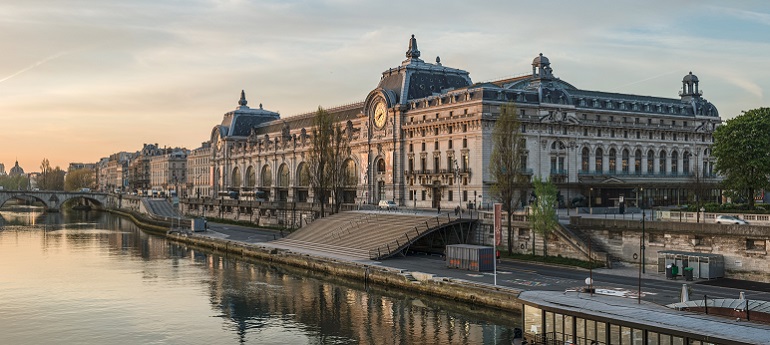
- Housed in a grand Beaux-Arts building, the Musée d’Orsay occupies the former Gare d’Orsay railway station, built for the 1900 Exposition Universelle.
- It holds the world’s largest collection of Impressionist and Post-Impressionist masterpieces, including works by Monet, Degas, Renoir, Cézanne, and Van Gogh.
- The museum focuses on art from 1848 to 1914, bridging the gap between the Louvre’s earlier collections and the Centre Pompidou’s modern holdings.
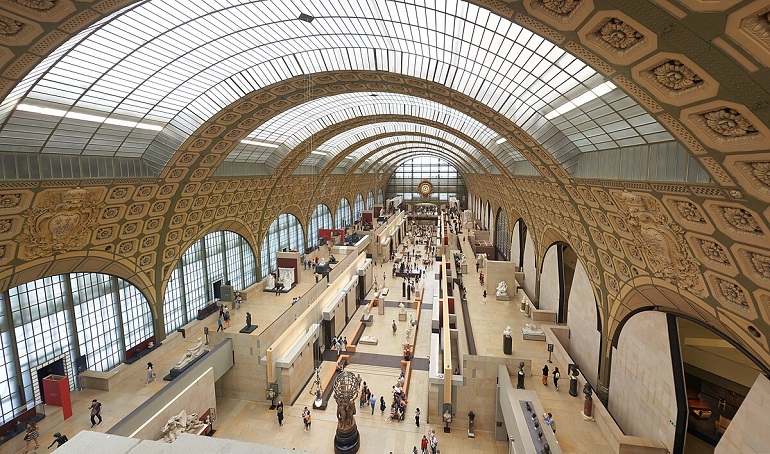
- Its monumental iron-and-glass barrel vault floods the central nave with natural light, a striking legacy of its railway-station origins.
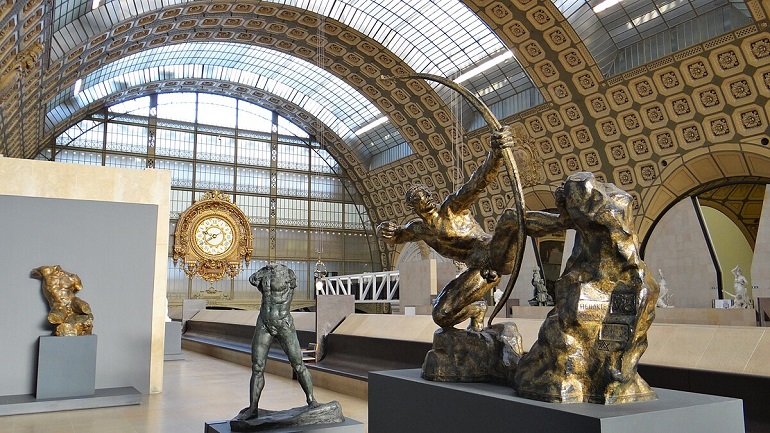
- The giant station clocks still preside over the galleries, offering one of Paris’s most iconic interior views.
- Opened as a museum in 1986 after an ambitious conversion, it preserved the building’s ornate façade while reimagining the platforms as galleries.
- It ranks among Europe’s largest art museums and is consistently one of France’s most visited cultural institutions.
- Photography is a recognised part of its collections, reflecting the 19th-century birth of the medium alongside painting, sculpture, and decorative arts.
- The station became obsolete for long-distance trains by 1939, later serving varied uses before plans for demolition were halted in favour of preservation.
- Italian architect Gae Aulenti led the interior design of the museum’s transformation, creating multi-level galleries around the luminous central hall.
History
The Musée d'Orsay occupies the remarkable former Gare d'Orsay railway station, which was specifically constructed for the 1900 Universal Exhibition in Paris. Built on the site of the earlier Palais d'Orsay, the station was designed by a team of three architects - Victor Laloux, Lucien Magne, and Émile Bénard - in the elegant Beaux-Arts style. The station represented a groundbreaking achievement as the world's first electrified urban railway terminal, featuring modern innovations such as electric trains, passenger elevators, ramps for luggage, and an innovative iron-and-glass barrel vault roof. The building served as the terminus for railways to southwestern France, including destinations like Bordeaux, Toulouse, and Nantes, whilst also housing a 370-room luxury hotel at its southwestern corner.
By 1939, the station had become obsolete for mainline services due to its short platforms being unsuitable for the longer trains that had come into use. The building subsequently served various purposes throughout the mid-20th century, functioning as a mail depot during World War II, a prisoner exchange centre, and later as a film set for productions including Orson Welles' adaptation of Kafka's "The Trial". It also housed the Renaud-Barrault Theatre Company, served as a temporary auction house whilst the Hôtel Drouot was being rebuilt, and was even used as a city parking lot. The building's architectural significance was recognised when it was classified as a Monument Historique on 20th March 1978.
The transformation into a museum began in the early 1970s when talks commenced about converting the largely vacant building into an art museum. The project was championed by President Valéry Giscard d'Estaing, who secured the financing and put the proposal to a successful vote in 1977. The renovation was undertaken by the ACT architecture group, with the interior designed by renowned architect Gaetana Aulenti, who preserved the building's original features including 12,000 tonnes of metalwork and 35,000 square metres of glazing. The museum's collection was assembled from various French institutions, including overflow from the Louvre, works from the overcrowded Jeu de Paume museum, and pieces from the National Museum of Modern Art. The Musée d'Orsay officially opened on 1st December 1986, inaugurated by dignitaries including past, present, and future French presidents François Mitterrand, Jacques Chirac, and Valéry Giscard d'Estaing. Today, it houses the
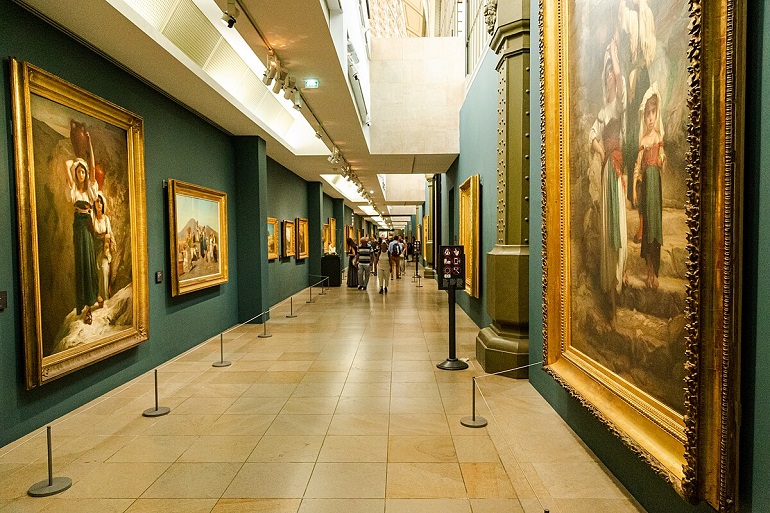
Upon entering, the grandeur of the main hall unfolds in spectacular fashion. Bathed in natural light streaming through roof skylights and immense arched windows, the central nave boasts an airy, almost cathedral-like volume. The cavernous space highlights the museum’s architectural legacy whilst providing a dramatic setting for its treasures. Marble floors glisten, echoing with the gentle footsteps of visitors moving past the monumental station clocks that keep silent watch over the scene. The museum is thoughtfully arranged across several levels, connected by broad staircases and sleek glass lifts. Galleries are spacious yet intimate, inviting guests to pause, reflect and absorb the atmosphere. Each vantage point reveals fresh perspectives—from sweeping views down the grand central aisle to peaceful corners adorned with sculpture and decorative arts. Signage is subtle, allowing art and architecture to speak for themselves, and windowed alcoves frame glimpses of Paris beyond. At the heart of the Musée d’Orsay lies its unparalleled collection of French art spanning the years 1848 to 1914. The Impressionist and Post-Impressionist masterpieces are an undisputed highlight, drawn from the golden age of painting. Sun-lit rooms are devoted to the canvases of Monet, Renoir and Sisley; their watery landscapes and garden scenes shimmer with deft, expressive brushwork. Comfortable benches punctuate the galleries, encouraging leisurely exploration. Next, the Post-Impressionist rooms reveal dramatic stylistic shifts. Van Gogh’s evocative paintings are displayed with reverence, their swirling skies and vibrant colours amplified by soft gallery lighting. Cézanne’s geometric compositions, Degas’s ballet dancers and Gauguin’s intense tropical visions enrich this artistic journey, alongside lesser-known gems by artists such as Toulouse-Lautrec and Redon. Sculpture is no less prominent, occupying dedicated wings awash with daylight. Works by Rodin are displayed alongside sculptures by Camille Claudel and Carpeaux, ranging from the romantic to the symbolist. Plinths are arranged to allow close-up appreciation from every angle; the interplay between solid form and streaming sunlight lends these works a life of their own. The museum’s scope encompasses not only painting and sculpture but also a remarkable array of decorative arts. Art Nouveau is richly represented in elegant showcases filled with sinuous furniture, stained glass, porcelain and silverware. Ornamental details and organic shapes echo the creative energy of the era, enticing enthusiasts of design and craftsmanship. In addition to its permanent holdings, the Musée d’Orsay curates a lively programme of temporary exhibitions. These occupy a dramatic gallery at the building’s western extremity, beneath the original ironwork roof—a striking setting which accentuates each show’s theme and display. Exhibitions range from retrospectives of individual artists to explorations of specific movements, styles or connections between art and contemporary life. Amenities are integrated with care and sophistication. The mezzanine café provides a welcoming vantage above the central hall, with views over the galleries and towards the Seine. Additional lounge spaces and a well-stocked bookshop offer restful interludes, while the museum’s refined restaurant serves French cuisine in Belle Époque surroundings. Throughout, the Musée d’Orsay delivers an experience of grace and intellectual stimulation. Wide corridors, soft colours and thoughtful arrangement create a gentle rhythm, balancing the monumentality of the building with the intimacy of viewing. Visitors can expect to spend hours immersed in sublime art, the hum of the city receding into the background within this world of visual poetry and innovation. A visit to the Musée d’Orsay is not merely a tour through artistic achievement—it is a sensory journey in an environment where beauty, light and history converge. It stands as a fitting tribute to Paris’s enduring role as a centre of creative exploration, and remains an essential destination for anyone seeking both inspiration and serenity.
Description
Gallery Ambience and Layout
Permanent Collections
Decorative Arts and Special Exhibitions
Facilities and Experiences