


Introduction
The Louvre Museum is the world's largest art museum. Housed within the former Louvre Palace, the museum first opened to the public in 1793 and today its permanent collection is organised across eight curatorial departments. The collection comprises approximately 36,000 objects, from prehistoric artefacts to paintings and sculptures dated up to 1848. Among its most recognised works are Leonardo da Vinci's Mona Lisa, the Venus de Milo, and the Winged Victory of Samothrace. The museum's main entrance is located beneath the glass pyramid in its central courtyard, giving access to over 72,000 square metres of exhibition space.
Interesting Facts about the Louvre
- The Louvre began as a 12th‑century fortress under Philip II before becoming a royal palace and, later, a public museum in 1793.
- It is the world’s largest art museum, displaying tens of thousands of works across more than 60,000 m² of galleries.
- The museum’s most famous resident, the Mona Lisa, was stolen in 1911 and is now protected behind bulletproof glass.
- The Louvre was briefly renamed the Musée Napoléon during Napoleon’s rule, when its collections expanded dramatically through imperial campaigns.
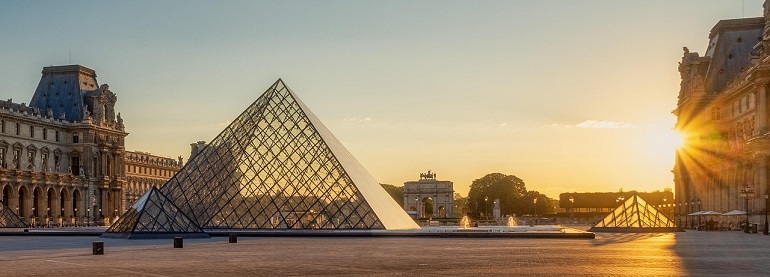
- The iconic glass pyramid entrance, inaugurated in 1989, channels natural light into the underground lobby and sits amid additional smaller pyramids.
- Two of its best‑known ancient sculptures are incomplete masterpieces: the armless Venus de Milo and the headless Winged Victory of Samothrace.
- Remnants of the original medieval fortress can still be seen in the museum’s basement, revealing the site’s defensive past.
- The Louvre welcomed about 8.7 million visitors in 2024, maintaining its status among the world’s most visited museums.
- Its collections span eight departments, from Egyptian and Near Eastern Antiquities to Paintings and Prints & Drawings, covering prehistory to the 21st century.
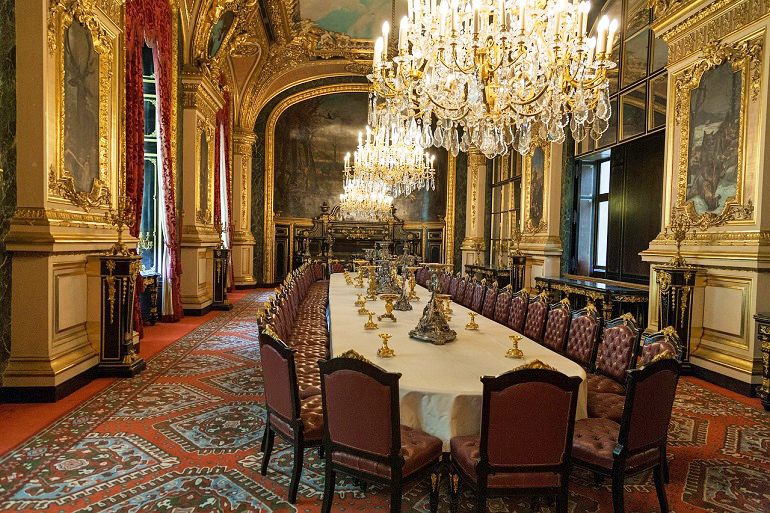
- Napoleon III’s opulent 19th‑century apartments, preserved in the Richelieu wing, offer a glimpse of Second Empire grandeur within the museum.
History
The Louvre's transformation from medieval fortress to world-renowned museum spans over eight centuries of French history. Originally constructed around 1190 as a fortress during the reign of Philip Augustus, the Louvre evolved into a royal residence in the 14th century before becoming the magnificent palace we recognise today. King Francis I, the French Renaissance monarch, initiated major renovations in 1546, having the old fortress razed and commissioning architect Pierre Lescot to build a new royal residence. Each successive French monarch contributed to the palace's expansion, with significant additions made during the reigns of Louis XIII and Louis XIV in the 17th century, including the famous Colonnade designed by Claude Perrault, Louis Le Vau, and Charles Le Brun. The Louvre ceased to be a royal residence in 1682 when Louis XIV moved his court to Versailles, leaving the vast complex to fall into relative disrepair.
The French Revolution marked the Louvre's historic transformation into a public institution, with the National Constituent Assembly declaring in May 1791 that it would become "a place for bringing together monuments of all the sciences and arts". On 10 August 1793, exactly one year after Louis XVI's imprisonment, the museum opened as the Muséum central des Arts de la République with an inaugural exhibition of 537 paintings and 184 objects of art. Three-quarters of these works derived from royal collections, whilst the remainder came from confiscated émigré and Church property. The museum initially provided free access to the public three days per week, which was considered a remarkable democratic achievement. However, structural problems forced the museum to close from 1796 until 1801, when it reopened with improved chronological arrangement and new lighting.
The Napoleonic era brought dramatic expansion to the Louvre's collections and prestige, with Napoleon appointing scholar Vivant Denon as the museum's first director in 1802 and renaming it Musée Napoléon in July 1803. Through military campaigns and treaties such as the Treaty of Tolentino, the collection grew substantially with acquisitions of Spanish, Austrian, Dutch, and Italian masterpieces. Many of these works were returned to their original owners after Napoleon's defeat at Waterloo in 1815, though significant pieces remained. The Second Empire under Napoleon III proved transformational, adding 20,000 new artefacts to the collections between 1852 and 1870, including the prestigious Campana collection of 11,835 artworks. The building itself underwent massive architectural changes during this period, with architects Louis Visconti and Hector Lefuel creating new spaces around the Cour Napoléon. Today, the Louvre houses approximately 500,000 objects, displays 35,000 works of art across eight curatorial departments, and covers over 60,600 square metres, making it the world's largest museum.

Description
A shimmering emblem of artistic achievement and architectural splendour, the Louvre stands as a focal point for travellers eager to immerse themselves in centuries of creative brilliance. Sprawling across three principal wings—Denon, Sully and Richelieu—the museum houses an unparalleled array of masterpieces in painting, sculpture and decorative arts spread across more than 652,300 square feet of galleries. Visitors chart a path from the intimate allure of Leonardo da Vinci's Mona Lisa to the formidable presence of ancient sphinxes, all within the vast labyrinth of 35,000 artworks displayed from a collection of over 380,000 objects. Beyond its famed collection, the Louvre offers serene courtyards, subterranean passageways and amenities that transform a mere visit into a holistic cultural experience. The interplay of historic palace ambience and modern exhibition design ensures that every corridor reveals fresh wonders for both seasoned connoisseurs and first-time museum-goers alike.
Architectural Grandeur and Museum Layout
Covering more than 72,735 square metres of exhibition space, the Louvre is meticulously organised across three interconnecting wings that emanate from a central courtyard across five distinct levels. The museum's architecture tells a story of evolution from medieval fortress to royal residence to cultural institution, with each layer of construction preserved and integrated into the visitor experience.
The Denon Wing, aligned with the Seine, captivates visitors with its grand staircases and houses some of the most celebrated paintings in the world. This southern wing extends from rooms 160 to 187 on the ground floor through rooms 700 to 734 on the first floor, creating a natural progression through Italian Renaissance masterpieces, Spanish paintings, and French works from the late 18th and early 19th centuries.
To the east, the Sully Wing conceals remnants of the medieval fortress beneath its floors, offering glimpses of ancient foundations and vaulted underground spaces in its lower ground floor (rooms 130-137). The wing encompasses rooms 300 to 348 on the ground floor and extends to rooms 600 to 663 on the first floor and 900 to 952 on the second floor, creating a comprehensive journey through ancient civilisations and classical antiquities.
Northward, the Richelieu Wing unfolds majestic sculpture courtyards and galleries dedicated to decorative arts, creating a quieter atmosphere for in-depth contemplation. This wing spans from rooms 100 to 106 on the ground floor through rooms 200 to 236 on the first floor and up to rooms 500 to 564 on the second floor, housing French sculptures, decorative arts, and the opulent Napoleon III Apartments.
All paths converge on the luminous Cour Napoléon, where I.M. Pei's glass pyramid serves as both a modern icon and an entrance to the museum's subterranean lobby. The central reception area on Level -2 connects all wings through underground passages, whilst the Pavillon de l'Horloge serves as an orientation centre, helping visitors understand the museum's history and collection organisation.
Collections and Curatorial Highlights
Within the Louvre's soaring halls lie eight curatorial departments, each charting a distinct trajectory of artistic endeavour spanning from the 7th millennium BCE to the 1850s. The Department of Paintings presents more than 7,000 works, organised by school to guide the viewer through Italian Renaissance masters, the nuanced chiaroscuro of Dutch painters and the bold innovations of 19th-century French artists. Sculpture enthusiasts will discover a continuum from classical marble carvings to 19th-century bronzes in galleries that celebrate form, movement and material virtuosity.
The decorative arts wings reveal intricate tapestries, opulent furniture and finely wrought ceramics, evoking the opulence of royal courts and aristocratic salons. Meanwhile, the Prints and Drawings department offers an intimate setting for sketches and works on paper, where delicate lines speak volumes of artistic process. The Islamic Art collection, housed on levels -1 and 0 of the Denon Wing, showcases seven centuries of artistic achievement from across the Islamic world, whilst the Medieval Louvre section on the lower ground floor reveals archaeological treasures from the original fortress.
Denon Wing Masterpieces
The Denon Wing is the most frequented sector of the museum, drawing visitors into a series of grand salons and gallery spaces that follow a carefully orchestrated route. Beginning on the ground floor with Greek and Roman antiquities, including the celebrated "Borghese Gladiator" and exquisite ceramics, visitors can trace the evolution of classical art through early Christian and Coptic works.
The ascent to the first floor via the majestic Daru Staircase presents one of the museum's most dramatic moments, where the Winged Victory of Samothrace dominates the landing with her dynamic marble form. This Hellenistic masterpiece, discovered on the island of Samothrace, captures a moment of divine triumph, her missing head and arms only adding to the sculpture's mystique and sense of movement.
The jewel of the collection, Leonardo da Vinci's Mona Lisa, resides in the Salle des États (Room 711), her enigmatic smile protected behind a climate-controlled glass case. The strategic placement within this grand gallery allows for crowd management whilst maintaining the intimate experience of encountering perhaps the world's most famous painting. Adjacent stands Paolo Veronese's monumental Wedding Feast at Cana, its sweeping canvas measuring 70 square feet and enveloping the viewer in a panorama of Venetian colour and theatrical narrative that serves as a perfect complement to da Vinci's intimate portrait.
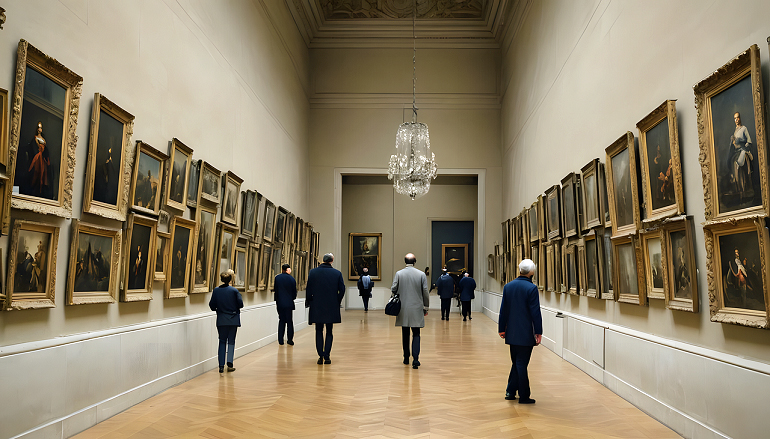
The Grande Galerie stretches along the Seine-facing facade, creating one of the world's most impressive museum corridors. This vast hallway houses Italian paintings arranged chronologically, allowing visitors to witness the evolution from medieval religious works through Renaissance innovation to Baroque grandeur. Works by Raphael, Titian, and Caravaggio line the walls, each masterpiece given space to breathe whilst contributing to a greater narrative of artistic development.
Department of Egyptian Antiquities
Through a discrete corridor off the Sully Wing, visitors enter the Department of Egyptian Antiquities, where over 50,000 artefacts chronicle the breadth of Nile civilisations across multiple gallery spaces. The department occupies significant portions of both the ground and lower ground floors, creating an immersive journey through ancient Egypt that rivals the collections of Cairo's Egyptian Museum.
The Great Sphinx of Tanis, carved from rose granite during the reign of Amenhopis II, presides over the central gallery with its imposing 4.8-metre length. This colossal guardian invites contemplation before one encounters the celebrated Seated Scribe, whose lifelike painted limestone and inlaid crystal eyes create an uncanny sense of presence. The scribe's alert posture and naturalistic features represent the pinnacle of Old Kingdom artistry, capturing not just physical form but psychological intensity.

The collection extends through thematically arranged galleries that guide visitors from Early Dynastic pottery and ceremonial palettes through the monumental statues of New Kingdom pharaohs. The Crypte Osiris houses mummies and funerary equipment, including intricately decorated sarcophagi whose hieroglyphic inscriptions narrate the deceased's journey through the afterlife. Papyrus scrolls display the evolution of Egyptian writing, from pictographic beginnings to the complex religious and administrative texts that governed ancient society.
A dedicated gallery showcases everyday objects—cosmetic containers, furniture, jewellery, and tools—that illuminate the daily rituals of ancient Egyptian life. These artefacts, ranging from humble pottery vessels to golden amulets, provide intimate glimpses into a civilisation that flourished for over three millennia. The department's ambient lighting and careful layout ensure that each relic is presented with both reverence and clarity, whilst multilingual explanatory panels provide historical context and cultural significance.
Near Eastern and Islamic Arts
Turning northward into the Near Eastern Antiquities galleries, visitors traverse an expanse of early urban marvels and imperial grandeur that chronicles the rise of civilisation from Mesopotamia to Persia. The collection encompasses over 120,000 objects spanning five millennia, making it one of the most comprehensive assemblages of ancient Near Eastern art outside the region itself.
Finely inscribed cuneiform tablets from Ur and Babylon narrate the dawn of written language, their wedge-shaped impressions preserving everything from Epic of Gilgamesh fragments to mundane business transactions that reveal the complexity of ancient urban life. The Code of Hammurabi, carved in black basalt, stands as a monumental testament to early legal systems, its 282 laws establishing principles of justice that influenced civilisations for millennia.
Glazed ceramics from the Achaemenid period demonstrate the sophisticated techniques employed by Persian craftsmen, their lustrous surfaces decorated with mythical creatures and geometric patterns that would later influence Islamic art. Metalwork from various periods showcases the technical mastery of ancient smiths, from delicate silver vessels inlaid with gold to monumental bronze reliefs that once adorned royal palaces.
Progressing into the Islamic Art department, housed in the striking contemporary galleries designed by Rudy Ricciotti, visitors encounter seven centuries of artistic achievement from across the Islamic world. The collection spans from Spain to India, encompassing the diverse cultural traditions that flourished under Islamic rule. Mamluk enamelled glass, Iznik ceramics, and Persian manuscript illuminations demonstrate the refinement achieved by Islamic artists in various media.
The Baptistère de Saint Louis, created by Muhammad ibn al-Zain in the early 14th century, represents the pinnacle of Mamluk metalwork. Its brass surface, inlaid with silver and gold, depicts courtly scenes and calligraphic inscriptions that blend Islamic and Christian iconography, reflecting the complex cultural exchanges of medieval Mediterranean societies.
Geometric tilework and carved stucco panels reveal the mathematical precision underlying Islamic decorative arts, whilst Qur'anic calligraphy demonstrates how religious devotion inspired artistic innovation. The galleries are arranged to reveal the dialogue between art and faith, with mosque-inspired architectural elements framing displays of ceramics, textiles, and manuscripts that span the breadth of the Islamic world.
Greek, Etruscan and Roman Antiquities
The Greek, Etruscan and Roman Antiquities section occupies prime real estate across multiple levels of the Sully Wing, creating a comprehensive survey of classical civilisation that serves as foundation for understanding Western artistic tradition. The collection encompasses over 65,000 objects, from monumental sculptures to delicate jewellery, chronicling the evolution of classical art from Archaic Greek beginnings through the late Roman Empire.
The marble silhouette of the Venus de Milo, discovered on the island of Milos in 1820, exudes the grace and poise emblematic of Hellenistic sculpture. Standing 2.02 metres tall and carved from Parian marble, this masterpiece demonstrates the technical virtuosity achieved by Greek sculptors in their portrayal of the human form. Her missing arms, rather than detracting from the work's impact, enhance its mystery and allow viewers to imagine various poses and attributes.
The Galerie des Antiques houses an extraordinary array of Roman portraits, their realistic features contrasting with the idealised beauty of Greek works. These marble heads, once adorning private villas and public spaces throughout the Roman Empire, preserve the faces of emperors, philosophers, and citizens whose individual personalities shine through despite the passage of millennia.
A separate gallery displays the Borghese Gladiator, whose dynamic pose captures a warrior in combat, every muscle tensioned for action. This Roman copy of a Greek original demonstrates the reverence Roman artists held for their Hellenic predecessors whilst showcasing their own technical innovations in marble carving.
The collection also encompasses an impressive array of ancient pottery, from severe Archaic Greek vessels with their geometric patterns to the sophisticated red-figure and black-figure ceramics that chronicle mythological narratives and daily life. The Campana Gallery houses over 3,000 Greek vases, their painted scenes offering insights into ancient religious rituals, athletic competitions, and theatrical performances that formed the cultural fabric of classical society.
Decorative Arts and Royal Splendour

Descending into the lower levels and ascending to the upper floors of the Richelieu Wing, visitors discover the Decorative Arts galleries, where opulent objects reflect the splendour of European courts from the Middle Ages through the 19th century. This department houses over 8,000 objects that demonstrate the highest achievements in furniture making, goldsmithery, ceramics, and textile arts.
The Napoleon III Apartments occupy the first floor of the Richelieu Wing, their preserved rooms offering an authentic glimpse into Second Empire luxury. The Grand Salon, with its coffered ceiling painted by Charles-Raphaël Maréchal, demonstrates the opulent aesthetic favoured by the imperial court. Crystal chandeliers cast rainbow reflections across gilded surfaces, whilst period furniture upholstered in silk and velvet creates an atmosphere of refined luxury.
The State Dining Room preserves the grandeur of imperial entertaining, its massive table set with Sèvres porcelain and silver services that once graced state banquets. The adjacent Emperor's Study provides a more intimate setting, its leather-bound volumes and personal effects revealing the private side of imperial power.
Sèvres porcelain galleries showcase the technical innovations achieved by royal manufactories, their pieces adorned with intricate cobalt and gold motifs that demonstrate the highest levels of ceramic artistry. The famous Marly Rose service, created for Louis XV, exemplifies the rococo aesthetic with its delicate floral patterns and sophisticated colour palette.
The collection of medieval and Renaissance objets d'art includes the Sainte-Chapelle Reliquary, whose Gothic architecture in miniature demonstrates the sophisticated metalworking techniques employed by medieval craftsmen. Limoges enamels, ivory diptychs, and illuminated manuscripts chronicle the evolution of decorative arts through the medieval period.
Royal regalia and ceremonial objects occupy dedicated galleries, where sceptres, crowns, and court jewels reveal the material culture of monarchical power. The Galerie d'Apollon houses the French Crown Jewels, including the Regent Diamond and other gems that once adorned French royalty. The gallery itself, with its painted ceiling by Charles Le Brun, serves as a Baroque masterpiece that complements the precious objects it contains.
Extended Wing-by-Wing Navigation
The Sully Wing: Archaeological Foundations and Ancient Civilisations
The Sully Wing offers perhaps the most comprehensive journey through human civilisation, beginning with the Medieval Louvre on the lower ground floor. Here, archaeological excavations have revealed the foundations of Philippe Auguste's 12th-century fortress, including the base of the original keep and sections of the medieval wall. Interactive displays explain the transformation from defensive structure to royal residence, whilst preserved stonework allows visitors to touch the very foundations of French royal power.
The Egyptian Antiquities section extends across multiple floors, creating thematic groupings that illuminate different aspects of ancient Egyptian civilisation. The Coptic Collection demonstrates the transition from pharaonic to Christian Egypt, whilst the Roman Egypt galleries show how Nilotic traditions adapted to imperial rule. Temporary exhibition spaces within the wing regularly showcase new archaeological discoveries and scholarly research that continues to expand our understanding of ancient Egypt.
The Greek Antiquities galleries on the ground floor are arranged chronologically, beginning with Cycladic idols from the 3rd millennium BCE and progressing through Archaic, Classical, and Hellenistic periods. The Salle des Caryatides, named for its architectural supports sculpted by Pierre Lescot, provides a majestic setting for larger Greek sculptures whilst its Renaissance architecture creates a dialogue between classical and early modern artistic traditions.
The Richelieu Wing: French Artistic Heritage
The Richelieu Wing serves as a shrine to French artistic achievement, its sculpture courtyards providing natural lighting for monumental works whilst creating peaceful oases within the museum complex. The Marly Courtyard houses sculptures originally created for the gardens of Louis XIV's château de Marly, their classical forms contrasting with the contemporary glass roof designed by I.M. Pei.
The Puget Courtyard displays the dramatic works of Pierre Puget, whose Baroque sensibility brought Italian influences to French sculpture. His Milo of Crotona Devoured by a Lion demonstrates the emotional intensity that characterised late 17th-century French art, whilst his Perseus and Andromeda showcases the mythological themes that dominated courtly taste.
The French Paintings galleries on the first floor chronicle the evolution of French art from medieval illumination through 19th-century romanticism. The Salon Carré, historically used for official exhibitions, now houses masterpieces by Nicolas Poussin, whose classical compositions influenced generations of French artists. Claude Lorrain's luminous landscapes demonstrate the French interpretation of Italian pastoral traditions, whilst Antoine Watteau's fêtes galantes capture the refined pleasures of 18th-century aristocratic society.
The Northern European Paintings section includes exceptional works by Flemish and Dutch masters. Vermeer's The Lacemaker demonstrates the intimate domestic scenes that characterised Dutch Golden Age painting, whilst works by Peter Paul Rubens showcase the dynamic energy of Flemish Baroque art. The gallery arrangement allows for direct comparison between Northern and Southern European artistic traditions.
Specialised Collections and Hidden Treasures
The Galerie d'Apollon: Royal Magnificence
The Galerie d'Apollon represents one of the finest examples of French decorative arts, its 60-metre length serving as a prototype for the Hall of Mirrors at Versailles. Charles Le Brun's ceiling paintings narrate the myth of Apollo, whilst the elaborate décor demonstrates the grandeur that characterised Louis XIV's reign. The gallery houses the French Crown Jewels, including historic pieces that survived the Revolution and 19th-century acquisitions that rebuilt the royal collection.
The Hope Diamond, the Regent Diamond, and the crown of Louis XV demonstrate the highest achievements in gemstone cutting and precious metalwork. Each piece represents not merely artistic accomplishment but political power, their creation and acquisition reflecting the wealth and ambitions of French monarchs.
Prints and Drawings: Intimate Artistic Expression
The Department of Prints and Drawings occupies discrete galleries throughout the museum, its light-sensitive collection displayed in rotating exhibitions that reveal the creative process behind finished masterpieces. Preparatory drawings by Leonardo da Vinci demonstrate his scientific method, whilst sketches by Watteau capture fleeting gestures and expressions that informed his painted compositions.
The collection encompasses over 200,000 works on paper, from medieval illuminated manuscripts to 19th-century lithographs. Dürer's prints demonstrate the technical possibilities of graphic arts, whilst Rembrandt's etchings reveal his mastery of light and shadow in linear form. These intimate works provide insights into artistic thinking that complement the museum's painted and sculptural holdings.
Planning Your Extended Visit
Strategic Route Planning
For visitors with limited time, the museum offers several suggested itineraries based on duration and interest. The two-hour highlights tour focuses on the most celebrated works: the Mona Lisa, Venus de Milo, Winged Victory of Samothrace, and a selection from the Napoleon III Apartments. This route provides a sampling of the museum's diverse holdings whilst ensuring encounters with its most famous masterpieces.
A half-day exploration allows for more comprehensive coverage, beginning with Egyptian Antiquities in the morning when natural light is optimal for viewing ancient objects. The route progresses through Greek and Roman sculptures before tackling the Italian paintings, including the inevitable pilgrimage to the Mona Lisa. The afternoon concludes with French masterpieces, which typically see fewer crowds later in the day.
Full-day visitors can adopt a more leisurely approach, dedicating morning hours to the Denon Wing's Italian and French collections, followed by lunch in one of the museum's restaurants. The afternoon explores the Sully Wing's ancient civilisations, whilst the closing hours provide optimal conditions for appreciating the Richelieu Wing's decorative arts and royal apartments.
Navigational Aids and Technology
The museum's colour-coded signage system and numbered room layout create logical pathways through the collections, whilst the official Louvre mobile application provides interactive maps and audio commentary. Digital kiosks throughout the galleries offer detailed information about specific works and their historical context, with content available in multiple languages.
Audio guides are available in various formats, from traditional narrated tours to thematic explorations focusing on specific periods or artistic movements. The museum also offers tactile tours for visually impaired visitors and sign language interpretation for special exhibitions.
Visitor Amenities and Practical Considerations
Dining and Rest Facilities
The Café Marly, situated within the museum's Richelieu Wing, offers upscale dining with views over the Cour Napoléon and Pyramid. Its menu features contemporary French cuisine designed by renowned chefs, creating a culinary experience that complements the artistic journey. The café's interior, designed by Olivier Gagnère, provides a sophisticated respite from gallery exploration.
The Carrousel du Louvre food court, located in the underground shopping area, provides more casual dining options with international cuisine and quick service suitable for families and budget-conscious visitors. Multiple cafés throughout the wings offer lighter refreshments, allowing visitors to recharge without leaving the museum proper.
Rest areas are strategically placed throughout the galleries, with cushioned seating that encourages contemplation whilst providing necessary breaks from walking. Many galleries feature benches positioned to provide optimal viewing angles for major works, creating opportunities for extended observation and reflection.

Shopping and Cultural Extensions
The Librairie-Boutique du Musée du Louvre extends far beyond typical museum gift shops, offering scholarly publications, high-quality reproductions, and unique items designed exclusively for the Louvre. The bookstore houses one of the world's finest collections of art history publications, whilst the gift sections provide everything from postcards to luxury items inspired by the collection.
Multiple smaller boutiques throughout the museum offer specialised merchandise related to specific departments or exhibitions. The Chalcographie du Louvre sells original prints created from historic plates, allowing visitors to acquire authentic examples of graphic arts.
Accessibility and Inclusive Experience
The Louvre's commitment to accessibility extends beyond physical accommodation to encompass cognitive and sensory needs. Wheelchairs are available for loan, whilst all galleries provide step-free access via lifts and ramps. Tactile tours allow visually impaired visitors to experience sculpture through touch, whilst descriptive audio provides detailed verbal portraits of paintings and decorative objects.
Family-friendly amenities include interactive educational materials designed for children, whilst baby-changing facilities and pram-friendly routes ensure that families with young children can navigate the museum comfortably. The museum also provides quiet spaces for visitors who may need sensory breaks during their exploration.
Sign language interpretation is available for guided tours, whilst the museum's website provides detailed accessibility information to help visitors plan their experience according to individual needs. Staff members throughout the museum receive training in disability awareness, ensuring that all visitors receive appropriate assistance when needed.
The Louvre's boundless collections and grand architectural setting create an immersive journey through the milestones of human creativity that rewards both brief visits and extended exploration. From the brushstroke subtleties of Renaissance masters to the sculptural majesty of ancient civilisations, every gallery embodies a chapter of human expression. The museum's seamless blend of historic palace ambience with contemporary gallery design invites visitors to engage with art in a setting that is itself a masterpiece. Comprehensive amenities and interpretive resources ensure that the experience remains accessible and engaging, whether savouring a moment of quiet reflection or sharing discoveries beneath the glass pyramid. A visit to the Louvre offers more than a glance at iconic artworks; it is an invitation to trace the evolving narrative of artistry across millennia whilst participating in the ongoing dialogue between past and present that defines cultural heritage.