


Introduction
Boulevard Haussmann, stretching 2.5 kilometres through Paris's 8th and 9th arrondissements, stands as one of the capital's most significant commercial arteries and a testament to 19th-century urban planning. Named after Baron Georges-Eugène Haussmann, the prefect who orchestrated Napoleon III's dramatic transformation of Paris between 1853 and 1870, the boulevard was constructed between 1857 and 1926 as part of a comprehensive modernisation programme that replaced medieval streets with wide, tree-lined thoroughfares. The avenue is renowned worldwide for housing two of Paris's most famous grands magasins - Galeries Lafayette, which moved to its spectacular Art Nouveau flagship store with its iconic glass dome in 1905, and Printemps, which became directly connected to the Metro system in 1904, establishing the boulevard as one of the world's premier shopping destinations. Beyond retail, the street holds considerable cultural significance as the former residence of Marcel Proust at number 102, where he wrote much of À la recherche du temps perdu in his cork-lined bedroom from 1906 to 1919, whilst number 158 houses the notable Musée Jacquemart-André. The boulevard exemplifies Haussmann's architectural vision with its uniform five-storey limestone buildings featuring characteristic wrought-iron balconies and represents a pivotal achievement in urban design that continues to define Paris's distinctive streetscape today.
Interesting Facts about Boulevard Haussmann
- Boulevard Haussmann stretches about 2.53 km across the 8th and 9th arrondissements, forming one of Paris’s grand, tree-lined avenues shaped during Baron Haussmann’s 19th-century transformation under Napoleon III.
- Named in 1864 for Georges-Eugène Haussmann, the boulevard showcases uniform limestone façades, wrought-iron balconies and regulated cornice heights that define classic Haussmannian architecture.
- It is home to the grands magasins Galeries Lafayette and Printemps, whose domed halls and lavish window displays make the street a Parisian shopping landmark.
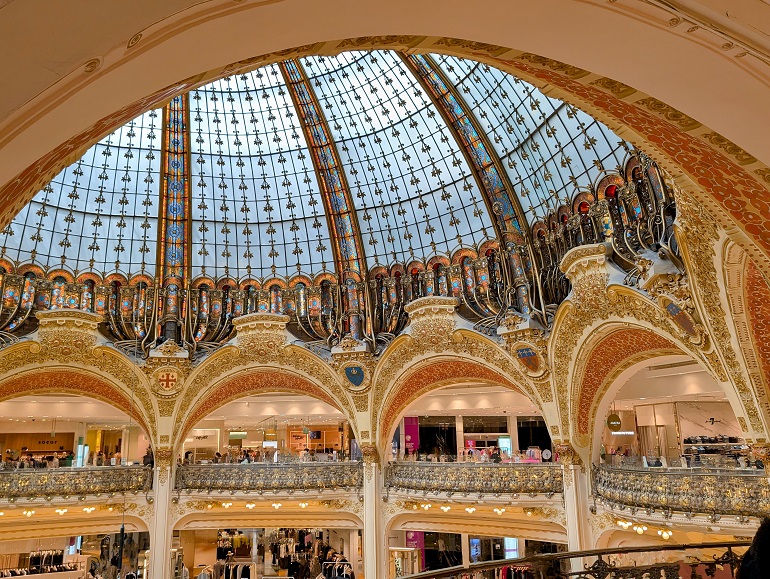
- Galeries Lafayette Haussmann is famed for its neo-Byzantine glass dome and seasonal spectacles that draw millions of visitors each year.
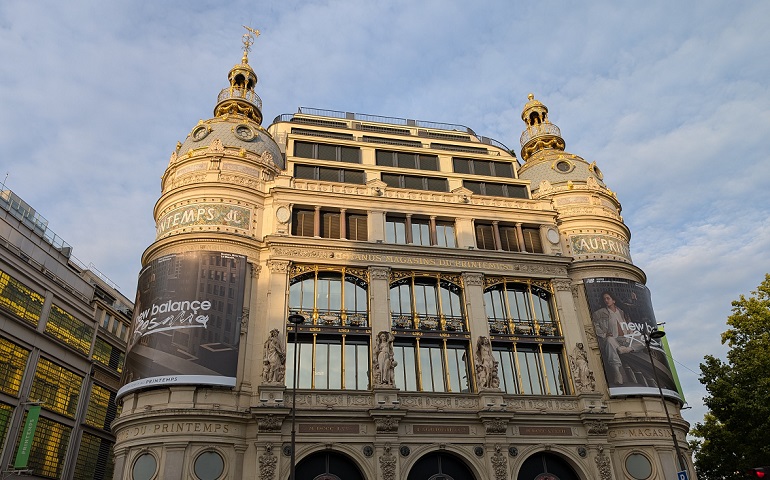
- Printemps Haussmann complements its neighbour with historic façades and a celebrated dome, reinforcing the boulevard’s reputation for luxury retail.
- The boulevard links Boulevard des Italiens to Avenue de Friedland, threading through elegant districts near the Opéra and major bank headquarters.
- Marcel Proust lived at No. 102 from 1906 to 1919, writing much of In Search of Lost Time in a cork-lined bedroom now displayed at the Musée Carnavalet.
- The Jacquemart-André Museum at No. 158 offers a grand 19th-century mansion experience just off the shopping thoroughfare.
- Haussmann’s urban overhaul that produced the boulevard introduced wide avenues, modern sanitation and uniform façades, reshaping Paris at unprecedented scale.
- Marks & Spencer opened its first continental European store on Boulevard Haussmann in 1975, highlighting the street’s enduring international appeal.

History
Boulevard Haussmann stands as one of Paris's most magnificent thoroughfares, a testament to the revolutionary urban planning vision of Emperor Napoleon III and his Prefect of the Seine, Baron Georges-Eugène Haussmann. Construction of this grand boulevard began in 1857, stretching an impressive 2.53 kilometres through the elegant 8th and 9th arrondissements. Named after Haussmann himself in 1864, the avenue was designed with a generous 30-metre width and tree-lined sidewalks that brought light and air to previously dark medieval streets. The project represented the crown jewel of Haussmann's comprehensive transformation of Paris, connecting Richelieu-Drouot to Avenue de Friedland and creating one of the capital's most important commercial arteries. Under Haussmann's revolutionary building regulations, all new constructions were limited to five stories with consistent façades, mandatory balconies on the second and fifth floors, creating the uniform cream-coloured limestone buildings with wrought iron balconies that define Parisian architecture today.
The boulevard became synonymous with luxury shopping through the establishment of the legendary grands magasins, which revolutionised commerce in 19th-century Paris. Galeries Lafayette, founded by Théophile Bader, opened its magnificent flagship store at 40 Boulevard Haussmann in 1912, featuring an iconic 43-metre Art Nouveau dome designed by Ferdinand Chanut with stained glass by master craftsman Jacques Gruber. The store's grand staircase, inspired by the Paris Opera House, showcased ironwork by Louis Majorelle, creating what Bader envisioned as a "luxury bazaar" where golden light filtered through the dome would illuminate the merchandise below. Au Printemps, another iconic department store, established itself on the boulevard as part of the grand magasin movement that began in the 1860s. These establishments benefited enormously from Baron Haussmann's redevelopment programme, which demolished cramped medieval blocks to create capacious boulevards lined with pristine white-fronted buildings.
The grands magasins of Boulevard Haussmann became pioneers of modern retail innovation, introducing concepts that remain fundamental to shopping today. These department stores popularised satisfaction guarantees, the possibility of exchanging items, trying on clothes before purchasing, and France's famous bi-annual sales periods. By 1887, Le Bon Marché had grown to cover 52,000 square metres, employed 1,788 people (at least one-fifth of whom were women), and generated 77 million francs annually, making it the largest retail business in the world. The architectural grandeur of these establishments, with their soaring iron and glass structures designed by ambitious architects including Gustave Eiffel, transformed shopping into a leisure activity for Paris's growing middle class. Beyond commerce, these stores served as catalysts for social change, providing women with new employment opportunities and purchasing power whilst disseminating bourgeois values throughout French society. Today, Boulevard Haussmann continues to attract 37 million visitors annually, maintaining its status as Paris's premier luxury shopping destination and a living monument to 19th-century urban planning excellence.
Description
Boulevard Haussmann winds for almost 2.7 km between the leafy elegance of the 8th arrondissement and the vivacious streets of the 9th, its broad pavements shaded by regimented rows of plane trees and flanked by uniform limestone façades with wrought-iron balustrades and mansard roofs. The boulevard’s sheer breadth gives it an airy, ceremonial quality, yet the steady flow of commuters, shoppers and theatre-goers ensures a lively, unmistakably Parisian buzz.
The Grand Magasins: Retail Theatres of Light and Glass
Galeries Lafayette Haussmann
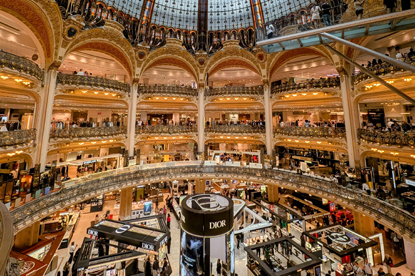
Set beneath a 43-metre-high Belle Époque glass dome in swirling Art Nouveau hues, Galeries Lafayette feels more cathedral than department store. Twelve levels radiate around a central atrium, with gilded balconies and carved floral balustrades looking down onto seasonal installations—gigantic suspended flowers in spring, a sparkling fir tree at Noël.
- Women’s, Men’s and Children’s Fashion: From couture salons showcasing Chanel or Dior to pop-ups for emerging designers.
- Beauty Coupole: Hundreds of fragrance houses surround the ground-floor rotunda, complemented by private treatment cabins and skin-analysis studios.
- Maison & Gourmet: Fine linens, Limoges porcelain and a cavernous épicerie stocking foie gras, confitures and single-estate chocolates.
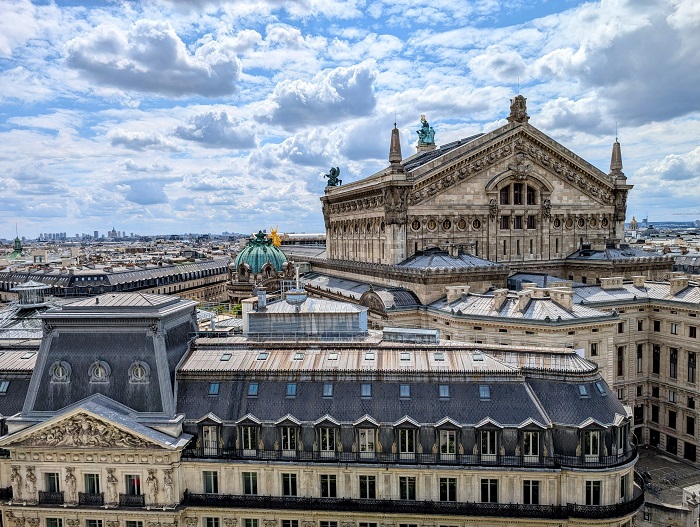
A glass walkway—La Galerie des Galeries—spans the atrium at the fourth level for vertigo-inducing selfies, while the rooftop terrace serves panoramic views from the Opéra Garnier to the distant Sacré-Cœur.
Printemps Haussmann
A few steps west, Printemps occupies three interlinked buildings crowned by a copper-green dome and gilded statuary. An Art Nouveau façade of mosaics and stained glass hints at the treasures inside:
- Mode & Accessoires: Seven floors of prêt-à-porter, with personal-shopping lounges tucked behind mirrored doors.
- Printemps du Goût: The ninth-floor gourmet hall brings together Michelin-lauded chefs, counters for oysters shucked to order and a cellar specialising in biodynamic Champagne.
- Beauty & Well-being: Entire floors dedicated to clean beauty, niche perfumery and an on-site spa.
The Le Perchoir Printemps rooftop bar offers signature cocktails at sunset, and an exterior escalator—rare in Paris—whisks visitors directly from pavement to panorama.
Architectural Flourishes and Urban Rhythm
Even without stepping inside, Boulevard Haussmann rewards close inspection. Ornate mascarons peer from keystones, and uniform cornices align perfectly across entire blocks, a hallmark of Baron Haussmann’s strict building codes. Between the Grand Magasins, polished arcades conceal silk-lined glove shops, vintage postcard dealers and pâtisseries where trays of mille-feuilles glisten in the window.
Street-level life shifts through the day: early-morning joggers, mid-morning bankers queuing for noisette coffees, tour groups clustering by the Galeries Lafayette dome for architectural explanations, and late-night theatre crowds spilling from the Théâtre Michel and the Opéra Comique just off the boulevard.
Museums, Galleries and Quiet Diversions
- Musée Jacquemart-André: A short stroll toward Parc Monceau, this 19th-century mansion showcases Renaissance art, Tiepolo frescoes and a marbled winter garden.
- Galerie des Nouvelles Images: An intimate contemporary space exhibiting photography and illustration.
- Private Salons: Many Haussmannian apartments house invitation-only showrooms for couture presentations and art-book launches, a reminder that commerce and culture intermingle seamlessly here.
Gastronomic Stop-offs
Beyond the épiceries inside the department stores, diners find:
- Café Pouchkine: Baroque pastries—think caramelised honey Medovik—served under frescoed ceilings.
- Brasserie Printemps: A domed glass roof and oyster platters piled high on crushed ice.
- Bleu Coupole: Galeries Lafayette’s seafood restaurant encircled by the dome’s blue stained glass, ideal for plateau de fruits de mer and a chilled Sancerre.
Kerbside kiosks dispense roasted chestnuts in winter and chilled bottles of Orangina in summer, while side-street wine bars pour natural Beaujolais alongside rillettes on crusty baguette.
Services for the Savvy Shopper
Tax-refund lounges streamline VAT paperwork, and courier desks arrange same-day worldwide shipping for fragile treasures. Multilingual concierges can secure theatre tickets or make last-minute restaurant reservations, and both department stores run fashion masterclasses—from silk-scarf-tying workshops to fragrance-layering tutorials.
Atmosphere After Dark
As evening falls, façades glow under soft uplighting, and the Grand Magasins’ windows transform into theatrical vignettes—kinetic sculptures, animated puppets and haute couture gowns rotating slowly behind glass. Jazz drifts from rooftop bars, mingling with the distant rumble of boulevard traffic, while shoppers carry glossy bags that flash silver under streetlights.
In its melding of architectural rigour, retail artistry and understated Parisian glamour, Boulevard Haussmann offers far more than a day’s shopping: it delivers a multisensory immersion into contemporary French style, framed by stone façades that have been curated as meticulously as the designer collections within.