| Contents |
|---|
Introduction
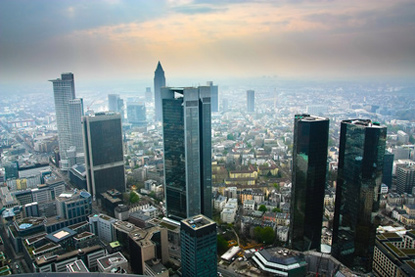
Situated on the Fulda River, Kassel (pop. 200,000) was named after a castle of the Chatti, an ancient Germanic tribe from the region of Hesse. The city is renowned for hosting the quinquennial documenta, the world’s leading contemporary art exhibition, it also bears the titles “Documenta City,” “City of the Brothers Grimm” and “Capital of the German Fairy Tale Route,” reflecting its connections to the famed folklorists Jacob and Wilhelm Grimm. At its western edge lies the UNESCO World Heritage–listed Bergpark Wilhelmshöhe, crowned by the 70 metre-high Hercules monument with its cascading water displays. Home to the University of Kassel, which enrolls around 25,000 students, the city combines a rich cultural heritage with extensive green spaces and efficient rail links to major German centres.
Interesting Facts about Kassel
- Kassel is home to the world’s first permanent theatre building, the Ottoneum, now functioning as a natural history museum.
- The city was the long-time residence of the Brothers Grimm, who wrote many of their fairy tales there, and today hosts the GRIMM WORLD museum.
- Bergpark Wilhelmshöhe in Kassel is the largest hillside park in Europe and a UNESCO World Heritage Site, featuring the iconic statue of Hercules.
- The documenta, one of the world’s leading exhibitions of contemporary art, takes place every five years in Kassel and has been held since 1955.
- Kassel was almost entirely destroyed during the Second World War, with the city centre rebuilt in the 1950s, giving it a distinctive mixture of post-war modernism and restoration.
- During the 18th century, Kassel became wealthy from providing “Hessian” soldiers to the British during the American Revolutionary War.
- Bergpark Wilhelmshöhe’s water features, where torrents cascade down from the Hercules monument without pumps, have operated since the early 18th century and are illuminated on special evenings.
- The city’s Fridericianum is one of Europe’s oldest public museums and now functions as a venue for international contemporary art.
- Kassel is the starting point for the German Fairy Tale Route, connecting sites important to Germany’s folklore and the Grimm brothers.
- Kassel was once the capital of the state of Hesse-Kassel and boasts an impressive legacy of palaces and baroque architecture.
- The 7,000 Oaks art project by Joseph Beuys, planted as part of documenta 7 in 1982, has become a permanent living artwork spread throughout the city.
- Kassel is among Germany’s greenest cities, with extensive parks and surrounding forests, notably Karlsaue and the nearby Reinhardswald.
History
Kassel's origins trace back to 913 CE when it was first mentioned in historical documents as a fortified settlement called Chasella or Chassalla, strategically positioned at a bridge crossing the Fulda River. The settlement gained city rights by 1189, though the exact date remains unknown, and the first castle was constructed in 1277. The city's significance grew dramatically in 1567 when the Landgraviate of Hesse was divided among four sons, with Kassel becoming the capital of Hesse-Kassel and establishing itself as a major centre of Calvinist Protestantism in Germany. Strong fortifications were erected to protect this Protestant stronghold, and in 1685, Kassel became a refuge for 1,700 French Huguenots fleeing religious persecution. During this period, Landgrave Charles ordered the construction of the iconic Oktogon (Hercules monument) and the Orangerie, whilst the late 18th century saw Hesse-Kassel gain notoriety for selling Hessian mercenaries to the British Crown to help suppress the American Revolution.
The 19th century brought significant political upheaval and industrial transformation to Kassel. In 1807, Napoleon annexed the city, making it the capital of the Kingdom of Westphalia with Germany's first constitution and parliament. The famous Brothers Grimm lived in Kassel during the early 1800s, collecting and writing most of their beloved fairy tales in the region. Following the city's incorporation into Prussia in 1866, Kassel rapidly industrialised, with the renowned Henschel & Son company establishing major locomotive works that would eventually build 12,000 steam engines. The population swelled to over 100,000 residents as elegant residential areas developed westward from the centre. During the Franco-Prussian War, Napoleon III was held prisoner at Wilhelmshöhe Palace above the city in 1870, and the same palace later served as German military headquarters during World War I.
The 20th century proved catastrophic yet transformative for Kassel. The city became a prime target during World War II due to its strategic importance as a manufacturing and railway hub, housing the Henschel facilities that produced Tiger tanks. Between February 1942 and March 1945, Kassel endured over 40 Allied bombing raids, with the most devastating attack occurring on 22-23 October 1943, when 569 bombers dropped more than 1,800 tonnes of bombs, killing at least 6,000 people and destroying the vast majority of the city centre. The population plummeted from 236,000 in 1939 to just 50,000 when American forces captured the city on 3 April 1945. Rather than reconstructing the historic old town, post-war planners created a modern, car-friendly city, though several monumental buildings like the Museum Fridericianum and Orangerie were carefully restored. The city's cultural renaissance began in 1955 with the first documenta contemporary art festival, organised by local teacher Arnold Bode to display artworks previously deemed 'degenerate' by the Nazis, which has since become one of the world's most important art exhibitions.
Main Attractions
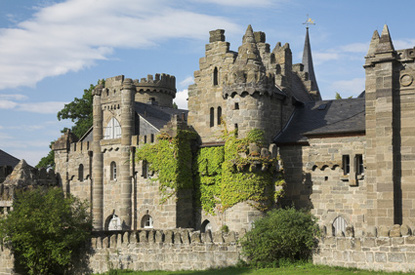
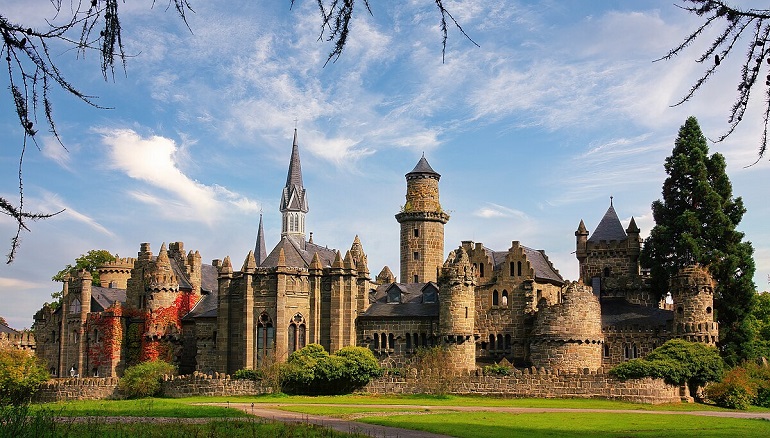
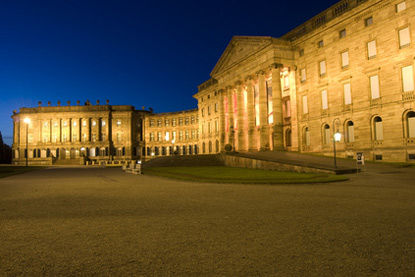
Once a beautiful city, Kassel was flattened by air raids in WWII and scarred by inept postwar reconstruction. Most of the sights are nested in Bad Wilhelmshöhe, on the edge of the Habichtswald Nature Park, a few km west of the centre. There you will find the grand neoclassical Wilhelmshöhe Palace, housing the Museumslandschaft Hessen Kassel, renowned for its Old Masters Gallery. Proudly overlooking the city, the Hercules monument was erected in 1701-17 at the park's highest point on Karlsberg (526 m above sea level) as a symbol of the region's strength. At the other end of the park is Schloss Löwenburg, a neo-gothic castle of Scottish inspiration.
Bergpark Wilhelmshöhe
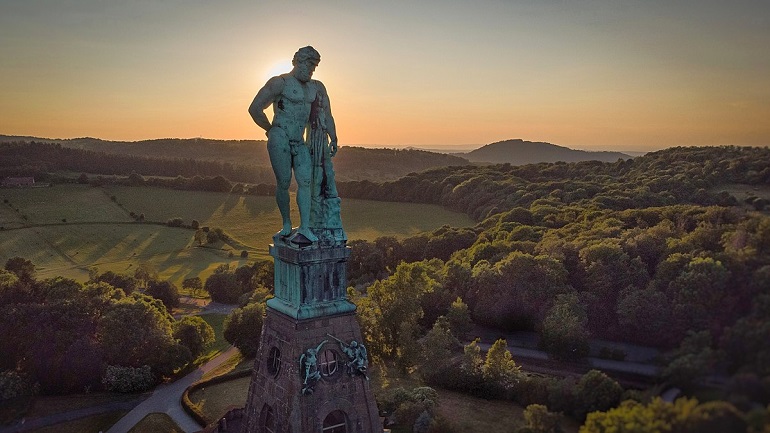
A designated UNESCO World Heritage site, Bergpark Wilhelmshöhe is a monumental Baroque park spread across 240 hectares on a hillside, making it the largest of its kind in Europe. The park's design integrates dramatic water features with landscape gardening, culminating in the iconic Hercules monument at its highest point. Its vast grounds offer extensive walking paths through forests and past carefully constructed architectural follies, providing a unique blend of formal gardens and natural landscapes.
Hercules Monument
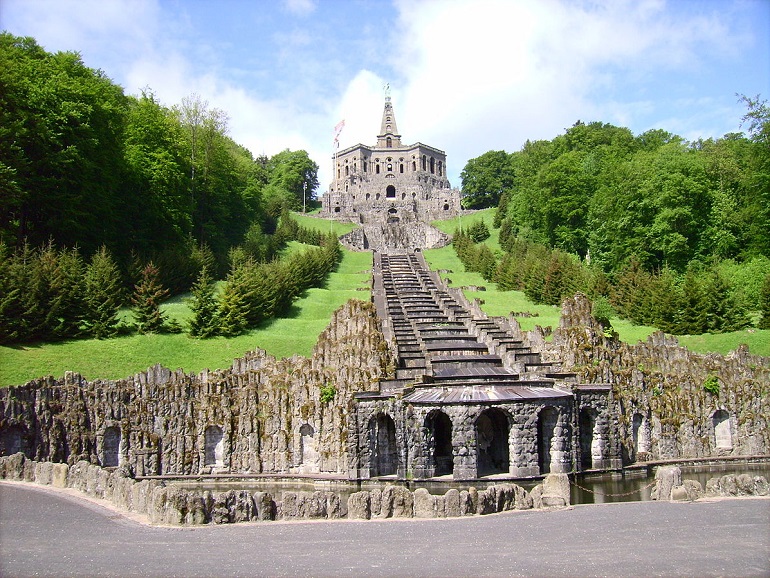
Positioned at the summit of a 526-metre-high hill within Bergpark Wilhelmshöhe, the Hercules Monument is Kassel's most prominent landmark. This colossal copper statue of the Greek demigod stands on an octagonal stone base, from which a 350-metre-long cascade begins. Visitors can climb the monument for panoramic views over the city and the surrounding parklands, making it a focal point for both its historical significance and its impressive vantage point.
Water Features (Wasserspiele)
The water features at Bergpark Wilhelmshöhe are a masterpiece of Baroque engineering, operating entirely on gravity. From May to October, water flows from the base of the Hercules monument down a series of cascades, waterfalls, and aqueducts, culminating in a spectacular fountain that shoots water 50 metres into the air. This display, which has been in operation for over 300 years, follows a specific route through the park, attracting large crowds to witness the spectacle at various points along its path.
Löwenburg (Lion’s Castle)
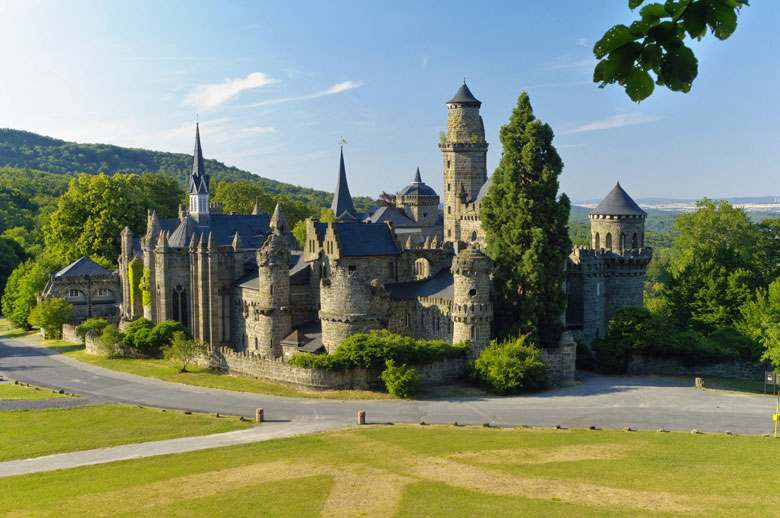
Disguised as a romantic medieval ruin, Löwenburg Castle is an 18th-century folly located within Bergpark Wilhelmshöhe. Built between 1793 and 1801 for Landgrave Wilhelm IX, it was designed as a picturesque retreat rather than a fortification. The castle's interiors are furnished to reflect different historical periods, containing a collection of armour, tapestries, and medieval furniture, alongside a chapel that holds the tomb of its founder.
Karlsaue Park
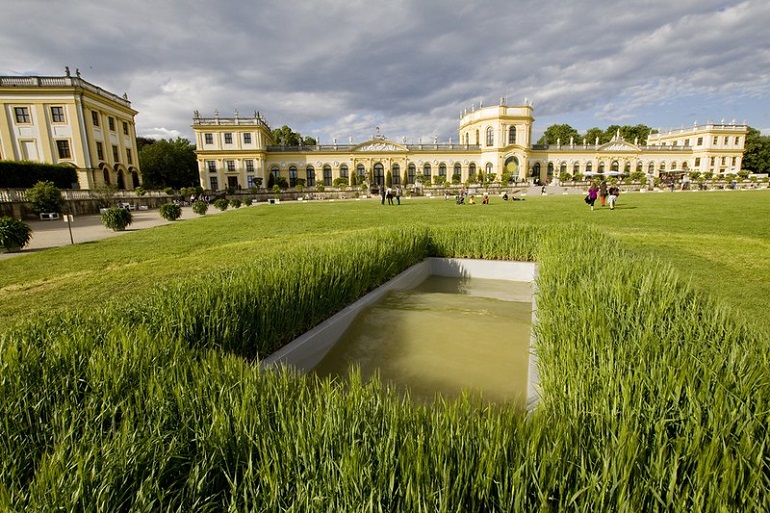
Situated on the flat plains of the Fulda River, Karlsaue Park is a sprawling 150-hectare Baroque park that offers a more formal and tranquil alternative to the dramatic inclines of Bergpark Wilhelmshöhe. Originally designed in the 16th century, it was later transformed into an English-style landscape garden. The park features a geometric network of canals and straight avenues, leading to the grand Orangerie Palace at its northern end, and provides ample space for leisurely walks and relaxation.
Orangerie Palace
The Orangerie is a striking Baroque palace that serves as the architectural centrepiece of Karlsaue Park. Completed in 1710, it was originally used to house delicate citrus plants during the winter months. Today, the building is used for events and exhibitions, and it also contains an astronomy and physics exhibition, including a planetarium, making it a cultural hub within the park.
Siebenbergen Island
Located within Karlsaue Park, Siebenbergen is an artificial island meticulously designed as a botanical garden. Created in the 18th century, it is accessible via a small bridge and features a diverse collection of rare and exotic plants from around the world. The island is particularly vibrant in spring and summer when its rhododendrons, azaleas, and other flowers are in full bloom, offering a colourful and fragrant retreat.
Marble Baths (Marmorbad)
Housed in a modest pavilion next to the Orangerie, the Marble Baths are a preserved example of late-Baroque opulence. Built in the 1720s, this former bathing house features elaborate marble statues and reliefs depicting scenes from classical mythology. It was intended not for actual bathing but as a lavish grotto and a symbol of the Landgrave's wealth and appreciation for the arts.
City Centre
Königsplatz
Serving as the central hub of Kassel's city centre, Königsplatz is a large, circular public square surrounded by shops, department stores, and cafés. An obelisk from a past Documenta exhibition stands at one of its entrances, and a distinctive flight of steps leads up to the main pedestrianised shopping street. The square is a primary meeting point and a key transport interchange for the city's tram network.
Martinskirche (St Martin’s Church)
The Martinskirche is a significant Gothic church whose twin towers are a defining feature of the Kassel skyline. Dating back to the 14th century, the church was heavily damaged during the Second World War and subsequently rebuilt with a more modern interior. It remains an active Protestant parish church and is also frequently used as a venue for organ recitals and concerts.
Documenta
Although an event rather than a permanent attraction, Documenta has a profound and lasting impact on the city's landscape. Held every five years since 1955, it is one of the world's most important exhibitions of contemporary art. Many artworks from past exhibitions have been purchased by the city and remain as permanent public installations, turning Kassel into an open-air museum with notable pieces like the "Man Walking to the Sky" and the "7,000 Oaks" project.
Street Art and KolorCubes
Beyond the formal installations of Documenta, Kassel has a vibrant urban art scene. The "KolorCubes" project invites street artists to paint murals on designated building facades, particularly in the Schillerviertel district. These colourful and often large-scale artworks contribute to the city's modern cultural identity, offering a visual contrast to its historic parks and palaces.
Obelisk (Wimmel Monument)
Officially titled "The Strangers," this monument by artist Olu Oguibe was a central piece of Documenta 14 in 2017. Located on Königsplatz, the 16-metre-high obelisk is inscribed with the Bible verse "I was a stranger, and you took me in" in German, English, Arabic, and Turkish. It serves as a powerful statement on global migration and hospitality.
Around Kassel
Schloss Wilhelmsthal
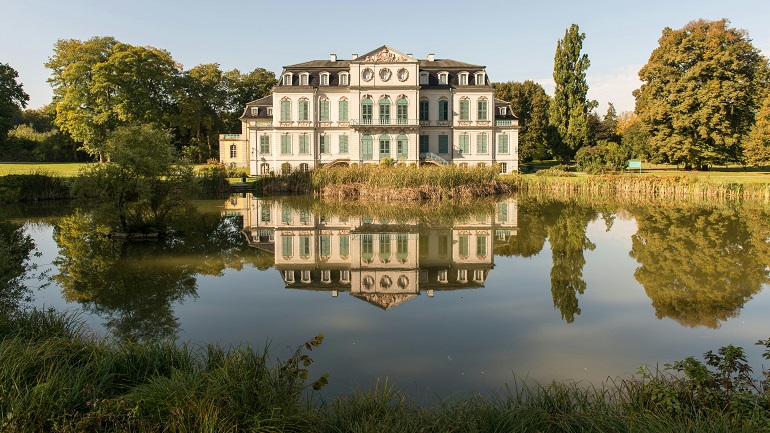
Located in the nearby municipality of Calden, Schloss Wilhelmsthal is considered one of Germany's finest Rococo palaces. Constructed in the mid-18th century as a summer pleasure palace for Landgrave Wilhelm VIII, it is set within a serene landscape park with a lake and grotto. The palace is renowned for its exquisitely preserved interiors, including the "Gallery of Beauties" featuring portraits of court ladies, offering a glimpse into the aristocratic lifestyle of the era.
Bismarckturm Kassel
This historic observation tower, one of many "Bismarck Towers" built across Germany in the early 20th century, is situated on the Brasselsberg hill. It offers another perspective on the city and the Habichtswald forest that surrounds it. The stone tower is a monument to the first German Chancellor, Otto von Bismarck, and provides a destination for hikers exploring the trails in the area.
Top Museums
Art Galleries and Exhibitions
Fridericianum
One of Europe’s earliest public museums, the Fridericianum was inaugurated in 1779 by Landgrave Friedrich II. to house the Hessian state library, princely art collections and scientific curiosities. After various transformations—including a stint as Germany’s first parliamentary chamber under Jérôme Bonaparte—it has, since 1988, hosted rotating exhibitions of contemporary art and serves as the heart of Kassel’s quinquennial documenta festival.
Neue Galerie
Housed in a late 19th-century building near Schöne Aussicht, the Neue Galerie focuses on 19th- and 20th-century art. Its encyclopaedic collection spans Romanticism through Impressionism to contemporary works, with highlights including Joseph Beuys’s The Pack and significant holdings in German Expressionism and post-war art.
Gemäldegalerie Alte Meister
Residing in Schloss Wilhelmshöhe, this gallery showcases over 1,700 European masterpieces from late Gothic to early Classicism. Particularly strong in 17th-century Dutch and Flemish painting, it presents iconic works by Rembrandt (including Jacob’s Blessing and portraits of Saskia), as well as Rubens, Frans Hals, Dürer and other luminaries of the Baroque and Renaissance.
Caricatura – Galerie für Komische Kunst
Located within the KulturBahnhof, Caricatura is Germany’s premier gallery for comic art. Since 1995 it has celebrated graphic humour in all forms—original cartoons, satirical illustrations and sequential art—offering both changing exhibitions and themed retrospectives on national and international cartoonists.
documenta-Halle
Erected as a multifunctional exhibition space for documenta, the documenta-Halle hosts major temporary shows, fairs and cultural events between editions of the festival. Its versatile halls accommodate large-scale installations and experimental projects, reflecting Kassel’s role as an epicentre of contemporary art.
History and Culture
Grimmwelt Kassel
More than a conventional museum, the Grimmwelt is an immersive “exhibition house” dedicated to Jacob and Wilhelm Grimm’s life and legacy. Split into 25 themed zones named after entries in their German Dictionary, it combines original manuscripts and fairy-tale artefacts with interactive multimedia displays, emphasising linguistic scholarship as much as the Brothers’ folkloric treasures.
Museum für Sepulkralkultur
Unique in Germany, this specialist museum investigates death, burial customs and memorial culture from the Middle Ages to the present. Spread across a restored Henschel-Villa outbuilding and a modern 1992 extension, its permanent displays juxtapose historical coffins, hearses and funerary art with contemporary artistic explorations of mortality.
Stadtmuseum Kassel
Occupying the former Karlshospiz at Ständeplatz, the Stadtmuseum presents Kassel’s urban narrative from medieval beginnings through Enlightenment expansion, wartime destruction and post-war reconstruction. Its modernised galleries feature interactive models, period artefacts and thematic exhibits on trade, industry and daily life.
Science and Nature
Ottoneum – Museum of Natural History
Originally erected in 1606 as Germany’s first permanent theatre, the Ottoneum now embraces natural history. Its signature exhibit is the Goethe Elephant skeleton—once studied by Johann Wolfgang von Goethe—alongside vivid reconstructions of Kassel-region fossils, dioramas of Ice Age fauna and displays tracing 400 million years of geological change.
Local Cuisine
Food lovers will relish specialties such as Ahle Wurscht, a traditional air-dried pork sausage with a robust flavour, and Weckewerk, a spicy meat spread made from pork and bread rolls. Another regional classic is Grüne Soße (Green Sauce), a refreshing herb sauce typically enjoyed with boiled eggs and potatoes. The city also features Schmandkuchen, a luscious sour cream cake, while Kasseler, cured and smoked pork, pairs perfectly with tangy sauerkraut and potatoes. No meal is complete without tasting the local apple wine, known as Ebbelwoi, which captures the zest of Kassel’s culinary heritage.
Shopping
Kassel’s city centre is anchored by Königsstraße, a pedestrianised high street lined with around 600 specialist and brand outlets spanning three shopping galleries—City Point, Königs-Galer and the Atrium—served by tram and bus links to the main station and supported by approximately 10 000 parking spaces. Germany’s first planned pedestrian zone, Treppenstraße, connects Obere Königsstraße with Friedrichsplatz and features independent concept stores and cafés. For fresh regional produce, the Markthalle on Wildemannsgasse offers some 70 stalls Thursday to Saturday, while the DEZ Einkaufszentrum on Frankfurter Straße houses over 80 shops, dining options and extensive parking.
Nature in and around Kassel
Just west of the city, Bergpark Wilhelmshöhe spans 2.4 km² on the slopes of the Habichtswald and features cascading waterworks, the Herkules monument and landscaped terraces, earning it UNESCO World Heritage status in 2013. Directly adjoining this park, the Naturpark Habichtswald covers roughly 474 km² of deciduous forest, basalt summits and small lakes, offering over 450 km of marked footpaths and the premium “Habichtswaldsteig” hiking trail. Closer to the city centre, the Staatspark Karlsaue lies along the Fulda River, encompassing baroque-style gardens, expansive lawns and the Aueteich pond with its neoclassical Swan Island temple.
Park Schönfeld
This is a peaceful public park known for its botanical garden and the Schönfeld Palace, a small neoclassical building. It provides a relaxed setting with walking trails that wind through landscaped gardens and past a small lake. The park is a popular spot for locals seeking a quiet escape and is valued for its horticultural displays, especially its collection of peonies and magnolias.
Fuldaaue
The Fuldaaue is a large recreational area that runs alongside the Fulda River, connecting with Karlsaue Park. It is a popular destination for outdoor activities and sports, featuring a large lake, the "Buga-See," which is used for swimming, sailing, and windsurfing. The area is equipped with extensive cycling paths, sports fields, and barbecue spots, and it regularly hosts events like regattas and open-air festivals during the summer.
Dönche Nature Reserve
The Dönche is one of Europe's largest inner-city nature reserves, covering 173 hectares of open fields, pastures, and small wooded areas. Located in the southwest of Kassel, it is a protected landscape that has remained largely undeveloped. The reserve is popular for walking and wildlife observation, providing a habitat for various bird species, deer, and the sheep that graze there to help maintain the landscape.
Getting There & Around
By train Kassel is well connected by rail, with regular direct Intercity Express (ICE) services arriving at Kassel-Wilhelmshöhe station from major German and European cities. Most journeys are comfortable and efficient, offering convenient options for both long-distance and regional travellers. Once at Kassel-Wilhelmshöhe, city centre connections are easily accessible by bus or tram.
By coach or bus Numerous coach and long-distance bus routes serve Kassel, with providers such as FlixBus connecting the city to a range of destinations across Germany and Europe. Most services arrive at the central bus station near Kassel-Wilhelmshöhe, making onward local transport straightforward.
By car Thanks to Kassel’s position at the heart of Germany, motorway access is excellent. Arrivals from the north or east typically use the A7 and should take the Kassel-Nord exit, from the south via the A49 (exit Kassel Auestadion), and from the west using the A44, switching to the A49 and exiting at Kassel Auestadion. This network makes Kassel a convenient destination whichever direction you’re coming from.
Best Time to Visit
The best time to visit Kassel is during the late spring and summer months, particularly from May to September, when the city enjoys mild temperatures and blooming parks. This period offers ideal weather for exploring Kassel’s renowned landscapes, including the Bergpark Wilhelmshöhe, and for participating in outdoor festivals and events, such as Documenta, which takes place every five years. The longer daylight hours and vibrant city atmosphere make it a delightful time for sightseeing, leisurely strolls, and enjoying the region’s cafés and outdoor terraces.