



| Contents |
|---|
Introduction
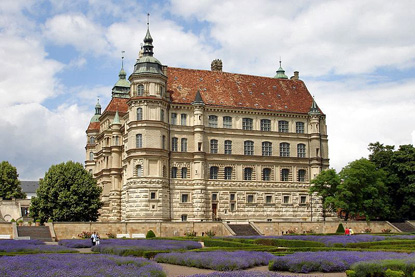
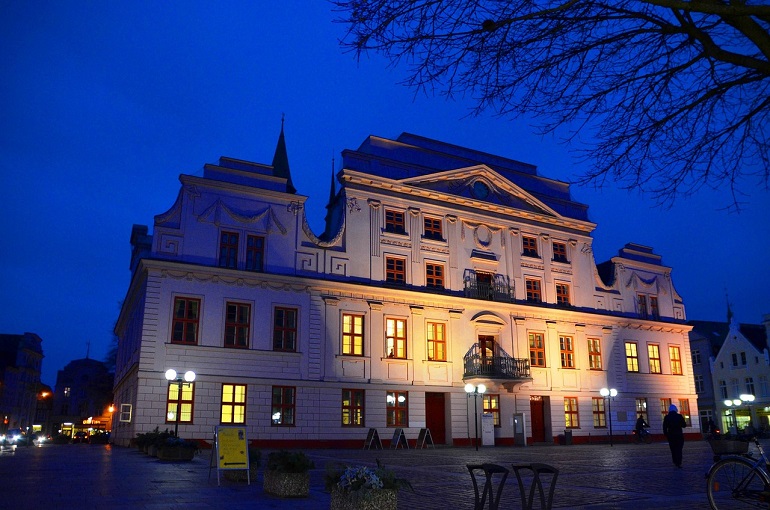
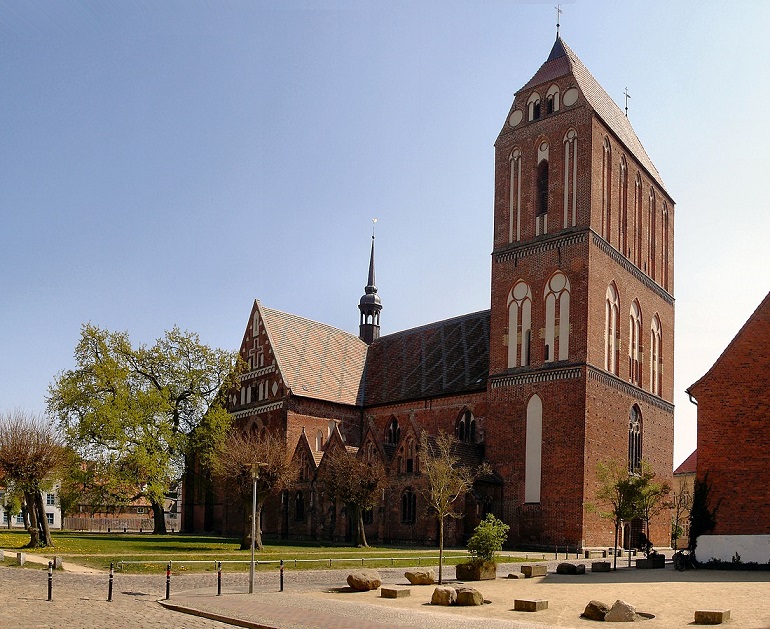
Güstrow (pop. 30,000) is an agreeable Brick Gothic town mostly known for its Renaissance castle (built in 1589), which was the home of expressionist sculptor Ernst Barlach for 28 years. This earned the town the moniker of "Barlachstadt" since 2006. The Brick Gothic cathedral was constructed between 1226 and 1335. Inside is the most famous work of Ernst Barlach, the so-called Schwebende Engel ("Hovering Angel"), created in 1926 as a tribute to the victims of World War I. The white town hall was rebuilt around 1800 in the neoclassical style.
Interesting Facts about Güstrow
- The town is renowned for its Renaissance Güstrow Palace and brick-Gothic cathedral housing Ernst Barlach’s celebrated Floating Angel sculpture.
- Chartered in 1228, Güstrow developed from a settlement near a Wendish fortress into a key market and commercial centre.
- From 1520 to 1695, it served as the seat of the dukes of Mecklenburg-Güstrow.
- During 1628–1629 in the Thirty Years’ War, Güstrow briefly became the capital of Wallenstein’s duchy of Mecklenburg.
- The palace, begun in 1558 for Duke Ulrich and shaped by Italian architect Franciscus Pahr, fuses Italian, French and German Renaissance influences.
- Güstrow lies about 45 km south of Rostock on the Nebel river, with a tourist-used canal link via the Bützow–Güstrow Canal to the Warnow.
- Five lakes—Inselsee, Sumpfsee, Parumer See, Grundloser See and Gliner See—form a scenic green belt around the town.
- The palace’s Baroque gatehouse and bridge were added in the 17th century under Duke Gustav Adolf with architect Charles Philippe Dieussart.
- Today the palace functions as a museum and cultural centre and is considered among northern Germany’s most important Renaissance castles.
History
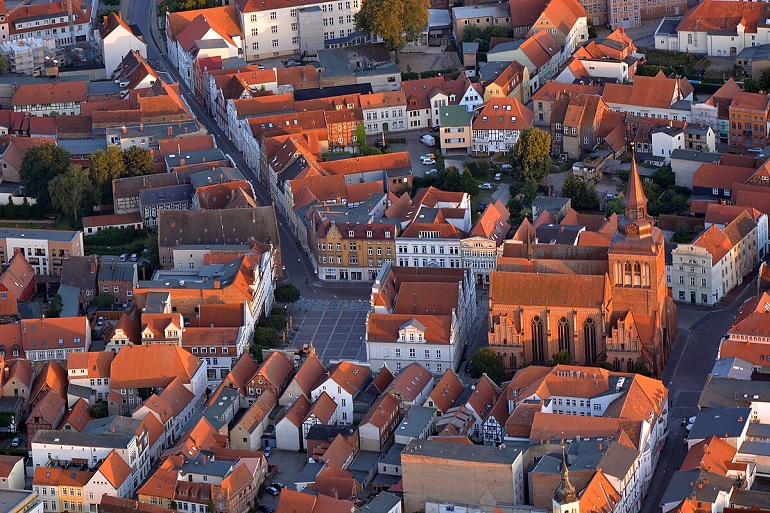
Güstrow, whose name derives from the Polabian Guščerov meaning "lizard place," traces its origins to the early 13th century when Duke Heinrich Borwin II, grandson of Henry the Lion, established the settlement between 1219 and 1226. The town developed around a Wendish castle built in 1219, where the magnificent Renaissance palace now stands, and received its municipal charter in 1228. From its earliest days, Güstrow demonstrated significant religious and administrative importance—the cathedral was founded as a collegiate church in 1226 by Duke Heinrich Borwin II and Bishop Brunward of Schwerin, and the town quickly became an agricultural market and commercial centre. Tragically, the town witnessed the devastating host desecration trial of 1330, which resulted in the burning of 23 Jews and the destruction of the synagogue, on whose site the Chapel of the Holy Blood was subsequently erected.
Throughout the medieval and early modern periods, Güstrow served as a prestigious ducal residence that shaped regional politics and culture. From 1235 to 1436, it housed the Wendish princes of Werle, establishing its status as a seat of noble power. Following the division of Mecklenburg in 1520, Güstrow became the capital of the Duchy of Mecklenburg-Güstrow, serving as the primary residence for the dukes from 1520 to 1695. The town's most dramatic political episode occurred during the Thirty Years' War when the Catholic general Albrecht von Wallenstein briefly ruled the short-lived duchy of Mecklenburg from Güstrow between 1628 and 1629, after Emperor Ferdinand II stripped the original dukes of their territories. However, the town faced considerable challenges during this period, suffering devastating fires in 1503, 1508, and 1512, followed by the palace burning down in 1556.
The cultural and architectural legacy of Güstrow's ducal period remains magnificently preserved today, particularly through its Renaissance palace and Gothic cathedral. The current palace, rebuilt between 1558 and 1564 following the fire, represents one of the most important Renaissance buildings in the Baltic Sea region and Northern Europe. When the last duke of Mecklenburg-Güstrow died in 1695, the duchy ceased to exist and Güstrow became part of the Duchy of Mecklenburg-Schwerin. The town's cultural significance continued into the 20th century when the renowned expressionist sculptor Ernst Barlach settled there in 1910, living and working in Güstrow until his death in 1938, earning the town its modern honorific title of "Barlachstadt". The cathedral houses Barlach's most famous work, the Schwebende Engel (Hovering Angel), created in 1926 as a tribute to the victims of World War I.
Main Attractions
Güstrow Palace (Schloss Güstrow)
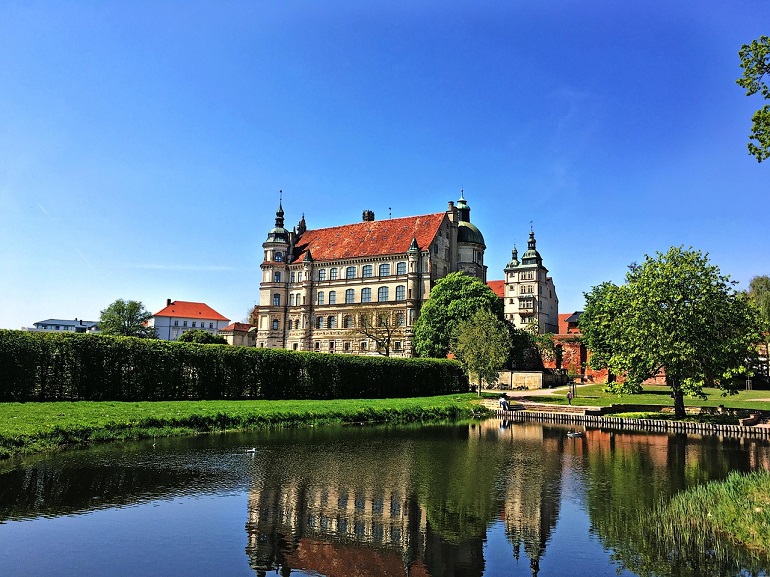
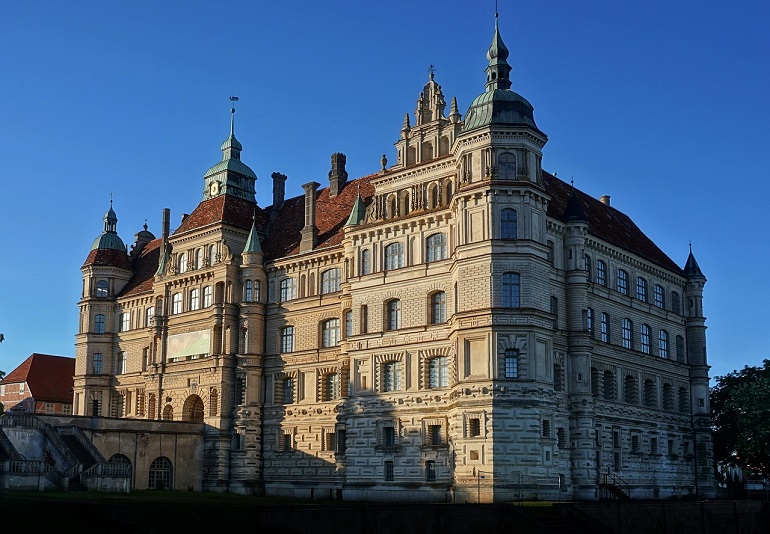
Güstrow Palace stands as one of the most important Renaissance palaces in Northern Europe, representing a masterful fusion of Italian, French, and German architectural styles. Built between 1558 and 1589 for Duke Ulrich of Mecklenburg on the site of a medieval fortress, the quadrangular palace was designed by Italian architect Franciscus Pahr and later enhanced by Dutch architect Philipp Brandin. The castle's magnificent stucco ceilings, particularly in the ballroom with its exotic hunting scenes adapted from Dutch copper engravings, are considered among the most remarkable in Germany. During the Thirty Years' War, even the formidable general Wallenstein chose this palace as his seat of power. The castle houses an impressive collection of medieval artifacts, Renaissance and Baroque art, and hunting weapons, whilst the carefully restored Renaissance garden, first mentioned in 1570, offers visitors beautifully landscaped grounds with lavender beds and peaceful walkways. Currently undergoing extensive renovation work, access to the castle's interior may be limited, though the gardens remain freely accessible to the public.
Market Square (Markt)
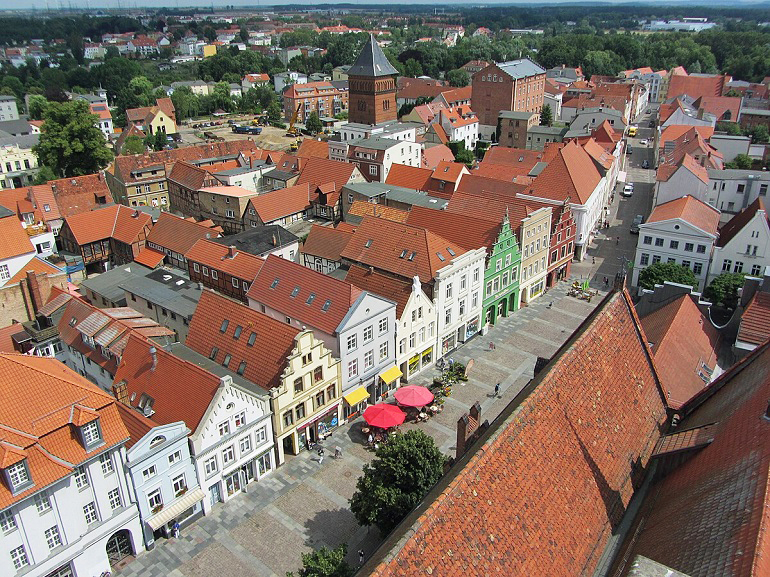
The Market Square in Güstrow stands as one of the most beautiful squares of its kind in the whole of Mecklenburg-Vorpommern. This impressive space serves as the beating heart of the historic town centre, where centuries of architectural heritage converge in harmonious splendour. Surrounded by elegant classicist buildings and charming medieval gabled houses, the square offers a striking example of the once-proud self-confidence of Güstrow's merchant citizenry. The cobbled square regularly hosts weekly markets on Saturdays, where local producers display their wares, and seasonal events such as Christmas markets transform the space into a festive wonderland. The varied architectural styles create a picturesque backdrop for leisurely strolls, outdoor dining, and people-watching, making it an essential stop for anyone seeking to understand the social and commercial life of this historic Mecklenburg town.
Town Hall (Rathaus)
The Güstrow Town Hall represents the architectural showpiece of the market square, its magnificent neoclassical façade serving as a testament to the town's civic pride and prosperity. Originally built in the 13th century, the current impressive structure was rebuilt around 1798, with its elegant façade extending gracefully over four historic gabled houses. The building's distinguished exterior features striking pilaster columns and delicate garland decorations that characterise this splendid classicist design. Following extensive restoration work completed in 2002, visitors can admire the building's crowning glory—the large audience hall with its wonderfully designed stucco ceiling, which stands as one of the finest examples of period craftsmanship in the region. The town hall continues to serve as the seat of local government whilst remaining a symbol of Güstrow's enduring civic tradition and architectural heritage.
Güstrow Cathedral (Dom zu Güstrow)
Dom zu Güstrow stands as one of the most impressive churches in Northern Germany. Constructed from brick in the Gothic style between 1226 and 1335, the cathedral is recognised not only for its imposing architecture but also its rich artistry inside. Here you will discover a late Gothic high altar around 1500, as well as the tombs of Duke Ulrich III and his wives, dating from the 16th century. The cathedral houses the renowned “Hovering Angel” sculpture by Ernst Barlach, created in 1926 as a memorial to victims of the First World War. With its lofty vaulted ceilings and tranquil atmosphere, the cathedral offers a unique insight into the spiritual and artistic life of Güstrow’s people. Accessibility features allow both wheelchair and hearing-impaired visitors to enjoy the historic interiors in comfort.
Armesünder Turm
Armesünder Turm rises along Turmstraße as a symbol of the town’s medieval past. Historically, the tower was linked with penitence and served various roles, potentially as part of the old fortifications. Today it stands as an architectural monument, offering a window into Güstrow’s history of urban and social development from the Middle Ages to the present day. Well-suited for families, the site provides an evocative backdrop for tales of bygone eras and enables visitors to trace the evolution of the town’s defences and civic structures.
Steinkistengrab Güstrow
The Steinkistengrab Güstrow represents one of the most intriguing remnants of prehistoric activity in the region, dating back to the Neolithic period when early megalithic cultures flourished across Northern Europe. This stone cist grave, constructed from large stone slabs arranged in a box-like formation, would have originally served as a burial chamber for important members of ancient communities who lived in Mecklenburg-Vorpommern thousands of years before recorded history began. Such megalithic monuments were typically part of larger burial landscapes and often accompanied by ritual activities, reflecting the sophisticated spiritual beliefs and social structures of these early peoples.
Borwinbrunnen
The Borwinbrunnen, found on Pferdemarkt in the centre of Güstrow, is more than a decorative fountain—it is a gathering place steeped in local legend and communal spirit. Surrounded by busy market activity, picturesque medieval buildings, and pavement cafés, this wheelchair-accessible feature is a favourite meeting point for residents and tourists. Dogs are welcome, and the area is generally lively throughout the year, making the Borwinbrunnen the heart of Güstrow’s outdoor social life.
Fuchs und Igel
Fuchs und Igel is a charming bronze fountain that has graced Güstrow since 3rd July 1908, positioned on Bleicherstraße below the Pferdemarkt. This delightful monument was erected to honour John Brinckman, the celebrated Low German storyteller and poet who penned the beloved 1854 novella "Voss un Schwinegel" (Fox and Hedgehog). Born in Rostock in 1814, Brinckman spent his final years in Güstrow after securing a position at the local Realgymnasium in 1849, and he built his residence on Hansenstraße in 1860. The fountain was a gift from Brinckman's eldest son and was crafted by Wilhelm Wandschneider, a sculptor from Plau. The memorial features a granite stele topped with a portrait medallion of the poet, whilst the bronze figures of the fox and hedgehog below bring his famous tale to life.
Wildpark-MV
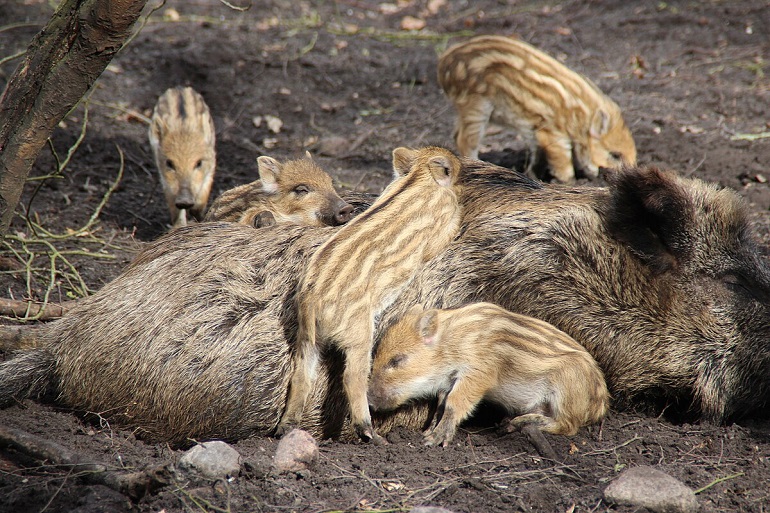
Wildpark-MV in Primerburg is a haven for families, nature lovers, and adventurers alike. Spanning 200 hectares of woodland and meadow, the park invites visitors to observe animals native to Mecklenburg, such as wolves, bears, lynxes, wild cats, and deer, in naturalistic enclosures. Interactive experiences include show feedings, action paths, underground wolf caves, climbing trails, and ‘WiesenWelten’, an exhibit celebrating meadow biodiversity complete with giant spider’s webs and oversized insects. The AQUA tunnel lets visitors walk amid native fish and river landscapes, while regular diving displays add to the sense of wonder. Younger visitors enjoy the petting zoo, playgrounds, and child-focused facilities, from birthday party packages to kid-friendly menus. Embedded within the park's landscape, picnic tables, ample parking, and accessibility enhancements ensure comfort for all.
Top Museums
Güstrow Palace (Schloss Güstrow)
This Renaissance castle is not just an architectural marvel but also houses museum collections of exceptional breadth. Formerly the seat of the Dukes of Mecklenburg, its rooms are sumptuously decorated, with displays ranging from medieval artefacts and Renaissance and Baroque paintings to fine crafts and hunting weaponry from the ducal collection. Güstrow Palace transports visitors back to a time of grandeur, power, and courtly culture and continues to captivate with its combination of history, art, and lavish interiors.
Ernst Barlach Museen Güstrow
Dedicated to one of the leading figures in German Expressionism, the Ernst Barlach Museums are located in both his historic studio house and the beautiful Gertrudenkapelle. Here lies the world’s largest, most comprehensive estate of Ernst Barlach’s works, spanning sculptures, graphics, and written texts. Barlach's moving, human-centred expressionist art was mostly created in Güstrow, where he lived from 1910. The museums’ permanent and changing exhibitions capture the profound emotional range and timelessness of his creations. The institution serves not only as a storehouse of Barlach’s legacy but also as a venue for scientific publications, lectures, and artistic events, drawing visitors both nationwide and internationally.
Stadtmuseum Güstrow
Housed in a neoclassical building that once served as the “Schlosskrankenhaus”, the Stadtmuseum Güstrow is among the ten most important cultural-historical museums in the region. With 500 m² of exhibition space, it presents a wide array of items tracing the city’s founding in the early 13th century through its development as a focal point for intellectual, political, and artistic debate. Chiefs among its treasures are a 12,000-piece collection of theatre playbills and a substantial artistic estate belonging to Otto Vermehren, renowned restorer and once director at the Uffizi in Florence. The museum also features impressive exhibits on Güstrow’s medieval history, its time as a ducal residence, and Germany’s wars of liberation. Particularly noteworthy are special exhibitions dedicated to Romantic painter Georg Friedrich Kersting and Low German poet John Brinckman, both native sons of Güstrow. The modern section, using multimedia technology, illuminates the city’s journey through the twentieth century.
Malmström-Museum Güstrow
The Malmström-Museum offers an intriguing perspective on almost 300 years of circus and performing arts, centred on the Kolter-Malmström family, resident in Güstrow since 1917. Even upon entry, visitors are greeted by numerous documents, photographs, posters, and costumes chronicling the accomplishments of several generations. The two display rooms brim with fascinating artefacts, and among the highlights is a circus wagon over a century old. The heartfelt curatorship and the tangible legacy make this a museum of particular character, shining a light on a lesser-seen facet of northern Germany’s social history. Visits are generally arranged by appointment, adding a personal touch to the experience.
Local Cuisine
Visitors can savour dishes such as Mecklenburg roast pork with prunes and potatoes, a typical speciality that highlights the balance of sweet and savoury flavours. Freshwater fish such as pike-perch and eel are popular, often smoked or served simply with local herbs. For a truly regional treat, try Mecklenburger Rippenbraten, a rib roast stuffed with dried fruit, or the comforting Mecklenburg potato soup, enjoyed throughout the seasons. To finish, Rote Grütze, a red berry pudding served with cream or vanilla sauce, offers a sweet taste of northern Germany’s culinary heritage.
Getting There
By train Güstrow is well connected by regional rail services, with direct lines from larger hubs such as Rostock and Schwerin, making it easy to reach from across Mecklenburg-Vorpommern and beyond; connections from Berlin or Hamburg are also straightforward, usually involving a simple transfer.
By coach or bus Long-distance coaches serve nearby cities like Rostock, from where regular regional buses can be taken to Güstrow; local bus services also link the town with surrounding communities, ensuring convenient access if travelling within the region.
By car Güstrow lies close to the A19 motorway, which connects Rostock to Berlin, making it easily accessible by road; well-signposted routes guide drivers directly into the town centre, and the journey allows for flexibility in exploring the scenic countryside along the way.


