



| Contents |
|---|

Introduction
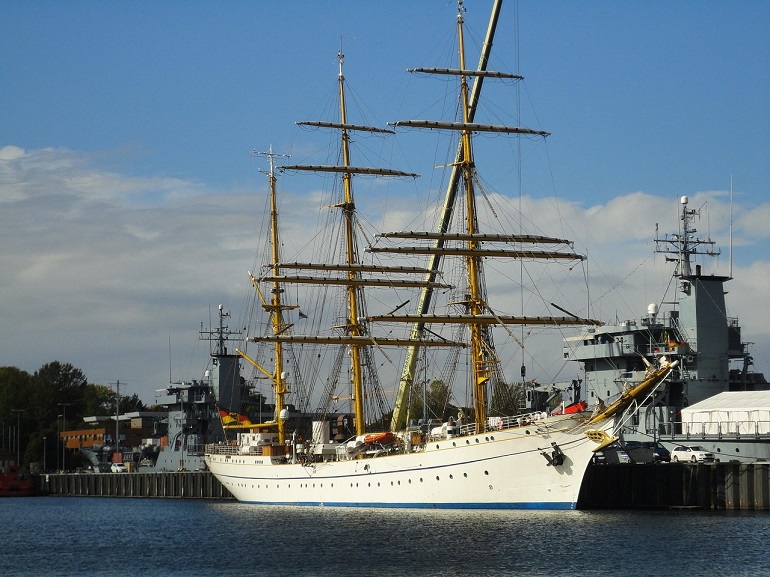
Kiel (pop. 250,000) is the capital and largest city in Schleswig-Holstein, as well as a major German naval base and maritime centre. The city hosts Kiel Week each June, one of the world’s largest sailing events, and serves as a key ferry and cruise hub for the western Baltic.

Almost completely destroyed in WWII, Kiel doesn't offer much in terms of historical buildings. Notable attractions include the Maritime Museum, where three historic ships are moored, and the Aquarium, whose seals are quite popular with kids, while the fjord shoreline offers beaches such as Falckenstein and promenades at Laboe and Schilksee.
The Olympic sailing competitions of the 1936 and the 1972 Summer Olympics were held in Kiel.
Interesting Facts about Kiel
- Kiel is the capital of Schleswig-Holstein and sits at the end of the Kiel Fjord on the Baltic Sea.
- The city lends its name to the Kiel Canal, one of the world's busiest artificial waterways, linking the North Sea with the Baltic.
- Kiel hosts Kiel Week (Kieler Woche), a major international sailing event and one of the largest sailing festivals globally.
- Much of Kiel was heavily damaged during the Second World War due to its strategic naval importance.
- The city is home to Christian-Albrechts-Universität zu Kiel, founded in 1665.
- Kiel's maritime heritage is reflected in its bustling harbour, naval base, and shipbuilding traditions.
- The Hörn bridge in Kiel is a distinctive folding pedestrian bridge that opens like a fan.
- St Nikolai Church, dating back to the 13th century, is one of Kiel's notable historic landmarks.
- Kiel has a strong ferry network connecting it with Scandinavian and Baltic destinations.
- The city's public transport includes ferries across the fjord, offering scenic commuter routes.
History
Medieval Foundations and Early Development
The city of Kiel was founded in 1233 as Holstenstadt tom Kyle by Count Adolf IV of Holstein, with the name Kyle meaning "fjord" or "spring," possibly derived from the Anglo-Saxon kille meaning "a safe place for ships". The settlement was established on what was likely an existing Danish village from the eighth century, and was granted Lübeck city rights in 1242 by Adolf's eldest son, John I of Schauenburg. As part of Holstein within the Holy Roman Empire, Kiel occupied a strategic position just kilometres south of the Danish border. The city became a member of the Hanseatic League in 1284, benefiting from extensive trading privileges throughout the 14th century. The Kieler Umschlag trade fair, first held in 1431, transformed Kiel into the central marketplace for goods and money throughout the Duchy of Holstein, though it began to decline around 1850 and ceased entirely by 1900.
Danish Rule and Prussian Annexation
From 1773 to 1864, Kiel belonged to the Kingdom of Denmark, though it was never incorporated as part of Denmark proper due to the complex personal union arrangement whereby the Danish king ruled Holstein as a fief of the Holy Roman Empire. The town remained under Danish administration even after the Holy Roman Empire's abolition in 1806, with the Danish king continuing to rule through his position as Duke of Holstein, which became a member of the German Confederation in 1815. During the First Schleswig War in 1848, when Schleswig and Holstein rebelled against Danish rule, Kiel briefly served as the capital of Schleswig-Holstein until Denmark's victory in 1850. The Second Schleswig War in 1864 proved decisive, as Kiel and the rest of the duchies were conquered by a German Confederation alliance of Austria and Prussia. Following the Austro-Prussian War in 1866, Kiel was annexed by Prussia in 1867 and became part of the newly formed Province of Schleswig-Holstein.
Imperial Naval Base and Modern Development
The establishment of Kiel as Prussia's Baltic Sea naval base in 1865 by King William I marked the beginning of dramatic urban transformation. When William I became German Emperor in 1871, he designated Kiel as one of Germany's Reichskriegshäfen (Imperial War Harbours), leading to extraordinary population growth from 18,770 inhabitants in 1864 to approximately 200,000 by 1910. The University of Kiel was founded in 1665 by Christian Albert, Duke of Holstein-Gottorp, and became home to distinguished scholars including Theodor Mommsen, Hans Geiger, and Max Planck. Kiel played a pivotal role in German history when it became the site of the sailors' mutiny in late 1918 that sparked the German Revolution, leading to the abolition of the monarchy and creation of the Weimar Republic. During World War II, the city suffered devastating Allied bombing raids that destroyed over 80% of the old town, but was rebuilt post-war and became the official capital of Schleswig-Holstein in 1952.
Main Attractions
Kiel City Hall
Kiel City Hall (Kieler Rathaus), built between 1907 and 1911, features notable Art Nouveau architecture and a tower inspired by the campanile of St Mark’s in Venice. Visitors may tour the interior, view portraits of historical figures, and ride the original paternoster lift. An elevator leads to the town hall’s observation deck at 67 metres, providing extensive views of Kiel and the fjord.

St. Nikolai Church
St. Nikolai Church, the main church in Kiel, stands in the city centre as a monument of local spiritual and architectural history. Dating from the 13th century, the church is known for its Gothic Revival design, imposing tower, historic bronze baptismal font from 1344, and ornate winged altar carved in 1460. St. Nikolai regularly hosts concerts and services, offering a quiet setting for reflection amidst the city's bustle.
The Old Botanical Garden
The Old Botanical Garden on the Kiel Fjord provides a blend of horticultural history and scenic beauty. Originally landscaped in the English style in 1825, the 2.5-hectare park features winding paths, shaded groves, expansive lawns, and a swan pond. Visitors can walk amongst mature trees, view the harbour from the pavilion, and enjoy the calm atmosphere, making it an ideal spot for picnics and leisurely strolls.
Kiel Week
Kiel Week, the city's annual regatta held in June, is regarded as the world's largest sailing festival. Each year, the event attracts millions of spectators and thousands of vessels from around the globe. The festival transforms the city, especially the waterfront, with sailing competitions, cultural performances, food stalls, and exhibitions. Kiel Week offers a unique insight into the city's maritime traditions and global significance in sailing.
Kiellinie
Kiellinie is Kiel's popular waterfront promenade along the fjord, offering views of passing ships and direct access to the water. The area is lined with cafes and restaurants, making it suitable for relaxing meals or coffee breaks outdoors. Parks adjacent to the promenade provide green spaces for walks, cycling, and picnics, while open vistas highlight Kiel's role as a thriving port city.
The Kiel Canal
The Kiel Canal (Nord-Ostsee-Kanal) is one of the world's busiest artificial waterways, connecting the North Sea with the Baltic Sea. Visitors can explore its banks on foot or by bicycle, observing large cargo ships and cruise liners navigating between the seas. Popular spots along the canal include the Holtenau Lock, where the engineering of the canal and transit of ships can be witnessed up close.
Bülk Lighthouse
Bülk Lighthouse, located at the entrance of the Kiel Fjord in Strande, is the area's oldest lighthouse and a key navigational landmark. Built in its current form in 1865, the lighthouse features a viewing platform accessible to visitors at 22 metres, offering panoramic views of the Baltic Sea and coastline. The site includes a pavilion restaurant and is a popular place for strolls and relaxation by the shore.
Top Museums
Maritime and Naval Heritage
Kieler Stadt- und Schifffahrtsmuseum (Kiel City and Maritime Museum)
This municipal museum operates across five locations throughout the city, offering a comprehensive journey through Kiel's fascinating history. The institution particularly focuses on the city's significant role as a naval and shipbuilding centre, its position as an ancient trading and fishing port, and its place in history as the site of the 1918 sailors' uprising. Today's Kiel is internationally recognised as a centre for sailing sports and serves as a major ferry and cruise port, all themes explored within the museum's collections.
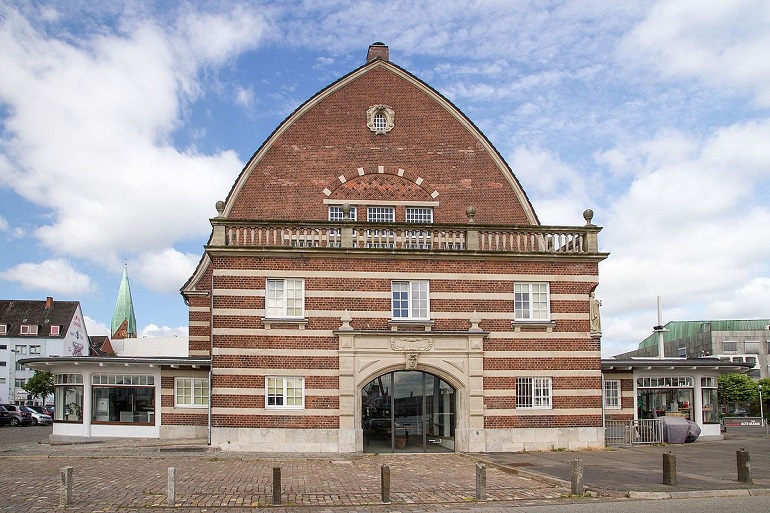
Kiel Maritime Museum Fish Market & Museum Bridge (Schifffahrtsmuseum Fischhalle)
Housed in the former municipal fish hall, this museum was established in 1978 and represents one of Kiel's most distinctive cultural venues. The impressive building, designed by city architect Georg Pauly and inaugurated in 1910, originally served as the bustling hub of the local fish trade before its transformation into a comprehensive maritime museum.
The permanent exhibition provides an extensive overview of Kiel's maritime connections around the world. Visitors can explore the city's fishing heritage, learn about the Kiel Canal, admire marine paintings, and examine numerous ship models and nautical equipment. The collection includes monumental imperial paintings, nautical instruments, ship paintings, figureheads, the legendary Kiel marine suit, and inventions such as a model of the first German submarine and an original sonar. Particularly fascinating are the dioramas and the emperor's panorama 3-D picture show, alongside monumental seascape paintings and a reconstructed kitchen-cum-living room of a shipyard worker.
The museum experience extends beyond the building itself. At the adjoined museum pier, visitors can board and explore three historic vessels: the rescue boat Hindenburg, the fireboat Kiel, and the buoy tender Bussard from 1905. In front of the museum stands the lantern from the Alexander von Humboldt lightship, and the passenger ship Stadt Kiel is also docked nearby as part of the museum fleet.
Art and Cultural Heritage
Kunsthalle zu Kiel (Kiel Art Gallery)
The Kunsthalle represents the cornerstone of Kiel's visual arts scene, featuring an extensive collection that spans from the Dürer period to contemporary international art. The museum houses approximately 1,100 paintings, 300 sculptures, and more than 30,000 works in its Prints and Drawings Collection, alongside photographs and video works.
The collection encompasses art from the 19th century, including Romantic painting and works by Russian "wandering painters," as well as pieces from classical modernism featuring German Impressionists and Expressionists, New Objectivity, and international art since 1945. Notable artists represented include works by Nolde, Georg Baselitz, Neo Rauch, and Gerhard Richter. The Graphic Arts Collection includes remarkable prints by Rembrandt, Adolf Menzel, and Otto Dix.
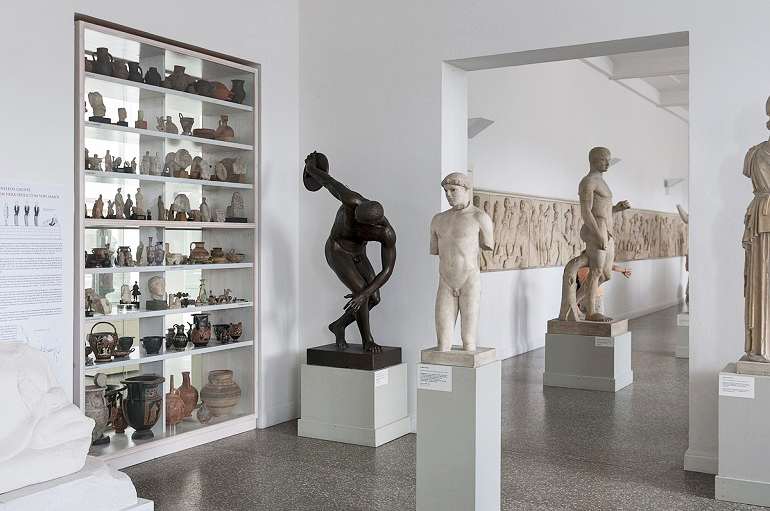
The museum has a particularly poignant history, as in 1937, during the Nazi "Degenerate Art" campaign, a significant number of works were confiscated from the collection, including pieces by Ernst Barlach, Lovis Corinth, Lyonel Feininger, Erich Heckel, Emil Nolde, Max Pechstein, and many other renowned artists. The building also houses the Kiel Collection of Antiquities, established in 1895, with an extensive collection of casts and original pieces, though much of the original collection was destroyed during Second World War air raids.
Künstlermuseum Heikendorf – Kieler Förde Heinrich-Blunck-Stiftung
Located in the charming coastal town of Heikendorf, this museum opened in September 2000 in the carefully restored former home and studio of artist Heinrich Blunck. The museum is dedicated to preserving and displaying the works of the Heikendorf artist colony and other painters active in the region.
The museum building itself holds historical significance as the first brick building in Heikendorf, constructed in 1865. Heinrich Blunck and his wife Käte moved into the property in 1923, expanding the main building in 1928 with a two-storey studio extension. The building received protected monument status in 1997 under Schleswig-Holstein's heritage protection laws.
The collection includes works spanning from North German Impressionism to late Expressionism, featuring pieces by Heinrich Blunck, Rudolf Behrend, Georg Burmester, Oscar Droege, Karin Hertz, Werner Lange, and Fritz Stoltenberg. The former studio building houses the permanent gallery, whilst the ground floor features a lithography workshop where visitors can observe printing on Heinrich Blunck's century-old stone printing press during special demonstrations.
The museum garden deserves special mention, as it has been preserved and redesigned as a museum garden featuring the family's original flower, fruit, and vegetable plots. The garden displays bronze sculptures and reliefs by Karin Hertz and has been recognised since 2006 as one of the "most beautiful gardens in Schleswig-Holstein". A new exhibition hall hosts temporary exhibitions of contemporary artists.
Brunswiker Pavillon Kiel
This cultural institution serves as an important exhibition space with changing displays, predominantly focusing on contemporary and modern art by local and regional creators. The pavilion is known for its commitment to promoting both emerging artists and established figures, featuring exhibitions that span various artistic mediums. Historically, the venue has hosted significant exhibitions, including the pioneering "Auf dem Wege zur ComputerKunst" (On the Way to Computer Art) in 1970, one of the early exhibitions exploring the intersection of technology and art.
Science and Natural History
Zoological Museum of Kiel University
Founded by naturalist Karl Möbius in a building designed by architect Martin Gropius, this museum represents one of Germany's most significant zoological collections. The institution houses scientifically valuable collections spanning three centuries, including material from internationally important 19th-century expeditions.
The museum's impressive holdings include specimens from the Galathea Expedition (1845-1847), the Möbius collection (around 1875), the German deep-sea expedition (1898-1899), original gifts from Kaiser Wilhelm II (1898-1908), and the pioneering scientific sampling expeditions of the North and Baltic Seas from 1902 to 1912. Overall, the museum currently houses approximately 400,000 objects, representing an invaluable heritage for taxonomic, ecological, and biogeographical research.
The exhibitions display systematics, evolution, tropical and German fauna, butterfly ecology, and the history of zoology in Kiel. The museum features dinosaur skeletons and interactive exhibits that make complex scientific concepts accessible to visitors of all ages. Live performances and interactive displays enhance the educational experience, making it particularly appealing to families.
Technology and Innovation
Computermuseum der Fachhochschule Kiel (Computer Museum of Kiel University of Applied Sciences)
Housed in a four-storey Second World War bunker that was converted into a modern museum, this unique institution opened on 14 June 2011. The museum displays approximately 360 exhibits from past decades of computer history across 800 square metres.
The collection spans from the listed electromechanical relay computer Z11 from Zuse KG (1958) and the first fully transistorised German computer Siemens (2002) to massive machines such as the 1.6-tonne former supercomputer "Cyber 76" and microcomputers from the 1990s. The museum offers 16 media stations providing background information through audio documents and films, whilst three emulation stations allow visitors to experience old computer games on authentic vintage computer systems. A specially produced 3D film in the ground-floor lecture hall provides an introduction to the museum visit.
The museum represents part of the "Dietrichsdorf Culture Island," which includes the Media Dome, the Bunker-D Culture and Communication Centre, and the Industrial Museum Howaldt Metal Foundry, alongside over 60 works of art in public spaces. The exhibition was scientifically curated by Berlin computer scientist Dr Ralf Bülow, whilst the spatial design was developed by students from the Muthesius Art Academy in Kiel.
Machinery Museum Kiel Wik (Maschinenmuseum Kiel Wik)
This distinctive museum occupies an industrial building and features an extensive collection of historical engines and machinery. The venue is particularly notable for its authentic industrial atmosphere and comprehensive display of mechanical engineering heritage. Beyond its static exhibits, the museum maintains an active programme of events, making it a dynamic destination that regularly hosts demonstrations and special programmes for technology enthusiasts and families.
Social History and Culture
50er Jahre Museum Kiel (1950s Museum Kiel)
This intimate museum offers visitors a comprehensive glimpse into German life during the 1950s post-war recovery period. Located in Kiel's northern district near the Holtenau locks, the museum is considered something of a hidden gem. The collection was initially based on the private holdings of an American operetta singer, and has been expanded through the dedicated efforts of collector Michael Kmoch, as well as private loans.
The museum recreates authentic 1950s living spaces, including a typical apartment, kitchen, an original grocery shop, and a hair salon. The exhibits showcase everyday objects, furniture, fashion, vehicles, and decor from the post-war era, effectively capturing the spirit and style of the period. The museum also features displays of school life and children's toys from post-war Germany, providing a comprehensive view of domestic life during this pivotal decade.
The attention to detail in recreating 1950s living environments is particularly praised by visitors, who appreciate the authentic atmosphere and well-preserved items on display. The museum serves as both a nostalgic journey for those with personal connections to the era and an educational experience for younger generations learning about this significant period in German history.
Local Cuisine
Visitors to Kiel can savour freshly caught seafood, with Kieler Sprotten—smoked sprats traditionally eaten whole—standing out as an iconic delicacy. Hearty dishes such as Labskaus, a sailor’s stew of corned beef, potatoes and beetroot, reflect the city’s naval history, while Holstein schnitzel, served with a fried egg and anchovies, showcases the region’s distinctive twist on a classic. For those with a sweet tooth, local bakeries tempt with Rote Grütze, a red berry compote often paired with cream or vanilla sauce, offering the perfect finish to a meal by the Baltic Sea.
Getting There
By train Kiel is well connected to Germany’s rail network, with regular direct services from major cities such as Hamburg, Lübeck and Flensburg. Trains from Hamburg, in particular, offer a quick and comfortable journey, making rail travel one of the most convenient options for reaching the city.
By coach or bus Several long-distance coach operators serve Kiel, with routes linking the city to destinations across northern Germany and beyond. Coaches usually arrive at the central bus station, which is located close to the main train station and within walking distance of the city centre, making onward travel straightforward.
By car Travelling to Kiel by car is simple thanks to the A7 and A215 motorways, which provide fast access from Hamburg and other parts of Schleswig-Holstein. Driving allows for flexibility in exploring the scenic countryside and coastline along the way, and there are several well-signposted routes leading directly into the city centre.
| Travel destinations in Schleswig-Holstein | |||||||||||
|---|---|---|---|---|---|---|---|---|---|---|---|
|
|
|
| ||||||||
|
|
|
| ||||||||


