



| Contents |
|---|

Introduction
Nestled on the shores of Lake Constance near the Swiss and Austrian borders, Konstanz (pop. 87,000) is a historic university town with a rich medieval heritage. It offers a charming blend of cobblestone streets, well-preserved architecture, and scenic lakeside promenades. The city’s old town features notable landmarks such as the Konstanzer Münster, a striking Gothic cathedral, and the Niederburg, an elevated district providing panoramic views of the lake and Alps. Konstanz is also known for its vibrant cultural scene, bustling markets, and proximity to picturesque islands like Mainau, famous for its flower gardens. With its mix of academic energy, historical significance, and natural beauty, Konstanz serves as an ideal base for exploring the broader Lake Constance region.
Interesting Facts about Konstanz
- Konstanz is the largest city on Lake Constance and serves as a cultural and educational hub for the region.
- The city's well-preserved medieval Old Town survived World War II unscathed due to its proximity to Switzerland and efforts to appear as part of the neutral country by not observing blackout regulations.
- Konstanz was founded in Roman times, and ancient ruins can still be found alongside modern structures throughout the city.
- The city hosted the historic Council of Constance from 1414 to 1418, the largest gathering of the Middle Ages, during which a new Pope was elected and religious reformer Jan Hus was burned at the stake.
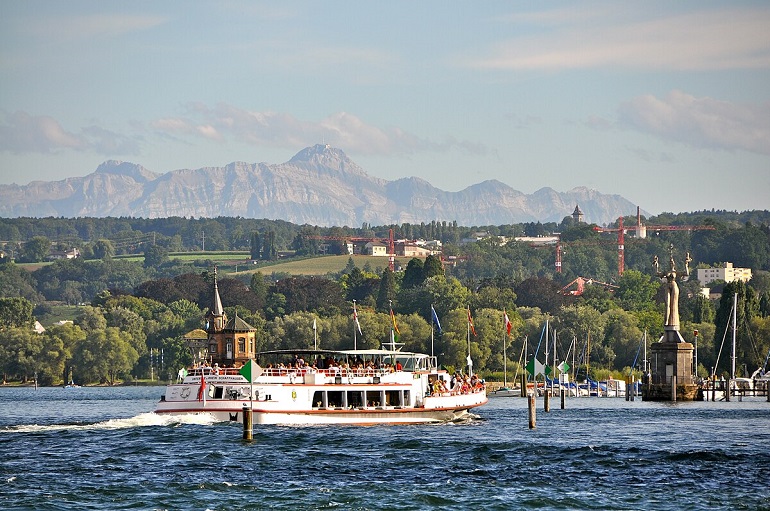
- The iconic Imperia statue at the harbour, a nine-metre-tall satirical monument, commemorates the Council of Constance and has become a quirky symbol of the city.
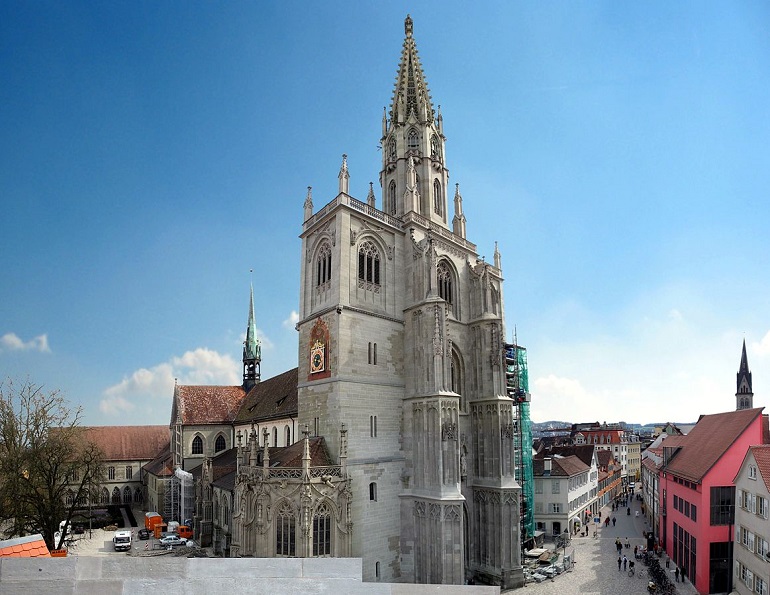
- Konstanz Cathedral, with its origins in the 7th century, dominates the skyline and its tower offers panoramic views over the city, lake, and Alps.
- The city is home to Mainau Island, famed as the “Flower Island” for its lavish botanical gardens and Mediterranean-like landscape.
- Count Ferdinand von Zeppelin, inventor of the Zeppelin airship, was born in Konstanz.
- Konstanz boasts one of the oldest pharmacies in Germany, the Malhaus pharmacy, which has been in operation for over 600 years.
- The city’s university, founded in 1966, is renowned for its academic excellence and features a vast, 24-hour accessible library.
- Konstanz is located at the extreme south-west of Germany and shares an open border with the Swiss town of Kreuzlingen, allowing visitors to walk freely between the two countries.
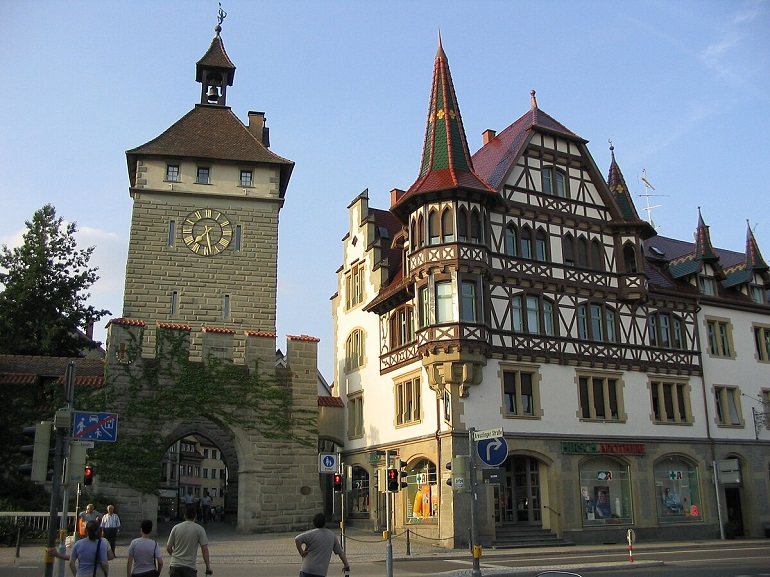
- The Old Town's winding alleys feature remarkable medieval architecture, including the Schnetztor, a well-preserved gate from the city’s former walls.
- Thanks to its border location, Konstanz is a favourite shopping destination for Swiss visitors who seek lower prices and VAT refunds.
- The city is twinned with various international towns, including Richmond upon Thames in the United Kingdom and Suzhou in China.
- Konstanz has a mild oceanic climate, with the lake helping to moderate both summer and winter temperatures.
- Vineyards on the city’s outskirts offer scenic views over Konstanz and produce regional wines.
- The narrowest building in Europe can be found in Konstanz’s Old Town.
- After World War II, French soldiers were stationed in Konstanz until 1979, leaving a legacy in the districts of Chérisy and Jägerkaserne.
- The city has maintained much of its historic character, but some locals worry about its loss due to modern developments catering to shopping tourism.
- Regular catamarans and ferries link Konstanz to other towns across Lake Constance, making it a prominent transport hub for the region.
History
The Celts were among the first known inhabitants before the Romans established a settlement around 40 CE, naming it Constantia after either Emperor Constantius Chlorus or his grandson Constantius II. Remnants of the Roman fortress can still be found today. In the 6th century, the Alemanni conquered the region and set up a bishopric, giving rise to Konstanz’s spiritual importance. The city’s prosperity grew throughout the Middle Ages due to its strategic position, owning the region’s only bridge across the Rhine and thriving in linen production and trade.
In the late Middle Ages, Konstanz reached new prominence when it became a Free Imperial City in 1192, answering only to the Holy Roman Emperor. One of its most notable historical events was the Council of Constance (1414–1418), during which the Papal Schism ended, Pope Martin V was elected, and the reformer Jan Hus was tried and executed. The current harbour is home to the striking Imperia statue, a modern commemoration of this dramatic period. Following the Swiss conquest of Thurgau in 1460, Konstanz’s attempt to join the Swiss Confederacy failed, leading the city to join the Swabian League and later lose imperial privileges after the Swabian War.
The religious landscape of Konstanz shifted dramatically in the 16th century when the city embraced the Protestant Reformation. However, after imperial defeat, Catholicism was restored under Habsburg rule. The Jesuit College and its historic theatre, Germany’s oldest continually performing theatre, were established during this time. Despite Europe’s many wars, Konstanz was spared bomb damage during the Second World War due to its proximity to Switzerland, resulting in an exceptionally well-preserved old town. Today, visitors can admire its medieval charm, Gothic-style Minster, and winding cobbled streets—a living testament to a city that has witnessed centuries of European history.
Main Attractions
Old Town (Niederburg)
The Niederburg is the oldest district in Konstanz, a well-preserved medieval quarter characterised by its labyrinth of narrow, winding alleyways and historic architecture. As you wander through its streets, you will find ancient buildings, charming public fountains, and small, intimate squares. This part of the city is largely pedestrianised, making it ideal for leisurely strolls, shopping in independent boutiques, and dining in traditional wine taverns (Weinstuben). The Old Town’s atmosphere provides a direct glimpse into the city's rich past.
Cathedral of Our Lady (Konstanzer Münster)
The Konstanzer Münster, or Constance Minster, is the city's main cathedral and a significant historical monument located in the heart of the Old Town. Its architectural history spans over a thousand years, with elements of Romanesque and Gothic styles. Visitors can explore its ancient crypt, which contains original parts of the early structure. For a fee, and when open, it is possible to climb the cathedral's tower, which offers commanding panoramic views over Konstanz and Lake Constance. The cathedral is not only a place of worship but also a venue for concerts and cultural events.
Konstanzer Marktstätte
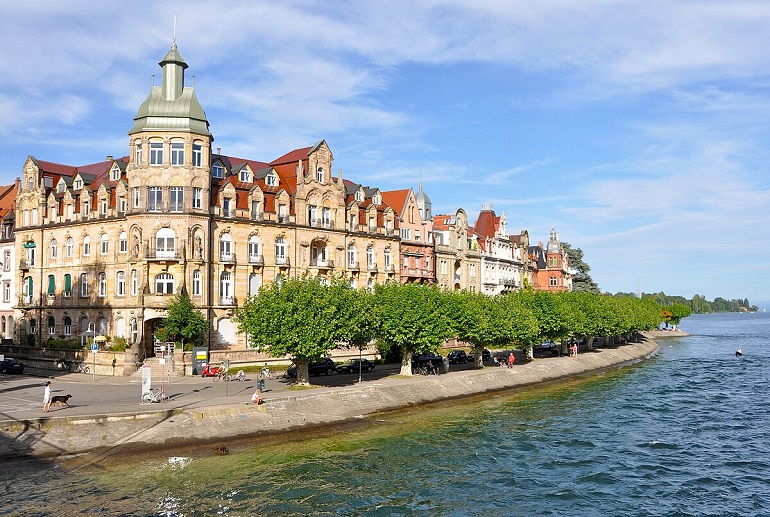
The Marktstätte is the main central square in Konstanz, a spacious plaza that connects the historic Old Town to the modern harbour front. Surrounded by grand 19th-century buildings, department stores, and numerous cafes with outdoor seating, it functions as the city's primary social and commercial hub. The square is a frequent location for markets, city events, and festivals, making it a vibrant and bustling centre of activity throughout the year.
Schnetztor and Rheintorturm
The Schnetztor and Rheintorturm are two impressive remnants of Konstanz's medieval fortifications. The Schnetztor, located at the southern edge of the Old Town, is a well-preserved gate tower distinguished by its traditional half-timbered upper levels and steep tiled roof. Further north, near the river, stands the Rheintorturm, another historic gate that once controlled access from the Rhine bridge. Both structures serve as powerful reminders of the city's historical defences and are significant architectural landmarks.
Churches
Beyond the main cathedral, Konstanz is home to several other historic churches that contribute to its architectural and cultural landscape. The Dreifaltigkeitskirche (Trinity Church) is a former Augustinian monastery church noted for its ornate Baroque interior and a bell tower that occasionally opens to provide city views. St. Stephan’s Church, one of the oldest parishes in the city, features a mix of Romanesque and Gothic elements and is known for its peaceful atmosphere just off the main squares.
Constance Harbour (Konstanzer Hafen)
Situated at the edge of the city centre, Constance Harbour is a bustling and scenic hub for transport and leisure. The piers are the primary departure point for passenger ferries and car ferries connecting Konstanz with other towns around Lake Constance, such as Meersburg and Überlingen. From the harbour walls and lakeside promenades, visitors can enjoy expansive, panoramic views across the water towards the Swiss and Austrian Alps. Its convenient location next to the Old Town makes it a natural starting point for exploring the city.
Imperia Statue
Standing guard at the entrance to Constance Harbour, the Imperia statue is a prominent and provocative city landmark. The 9-metre-tall concrete figure, created by sculptor Peter Lenk and erected in 1993, slowly rotates on its pedestal once every four minutes. It depicts a courtesan holding two small, naked figures on her palms, representing Emperor Sigismund and Pope Martin V, who were key participants in the Council of Constance. The statue is a satirical commentary on the council, symbolising the power that courtesans held over the secular and religious leaders of the time.
Council of Constance Building (Konzilgebäude)
The Konzilgebäude, or Council Building, is a massive stone warehouse located near the harbour, originally constructed in 1388 to serve as a hub for trade. Its historical significance is immense, as it was the venue for the conclave of the Council of Constance (1414–1418), which resulted in the election of Pope Martin V. This event remains the only papal election ever held north of the Alps. Today, the restored building houses a restaurant and serves as a prestigious venue for conferences, banquets, and cultural events.
Konstanz Port and Promenade
The port area and its adjoining promenade serve as a lively focal point for social and recreational activities along the waterfront. The wide, pedestrian-friendly walkway is perfect for leisurely walks, offering continuous views of the lake, passing ships, and the distant Alps. Lined with benches, cafes, and ice cream parlours, it is a popular spot for both locals and tourists to relax and enjoy the lakeside scenery. From here, various companies offer sightseeing boat tours, providing another perspective of the city from the water.
Isle of Mainau
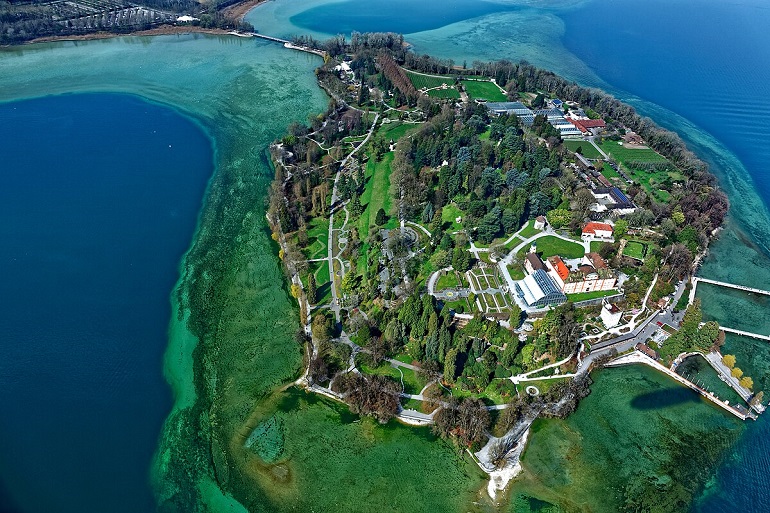
The Isle of Mainau, often called the "flower island," is a major horticultural attraction on Lake Constance. It is renowned for its vast and meticulously maintained botanical gardens, which showcase a diverse array of flowers that change with the seasons. Key features include an arboretum with over 250 species of trees, a large butterfly house that is one of Germany's biggest, and a historic baroque palace dating back to the 18th century. The island provides a family-friendly experience and is accessible from the mainland via a pedestrian bridge or by regular boat services.
University of Konstanz and Surroundings
Set on the Gießberg hill overlooking the city, the University of Konstanz is recognised for its modern campus architecture and beautiful natural setting. The university is surrounded by forests and meadows with well-marked trails for hiking and cycling, offering an escape into nature just outside the urban centre. From various points around the campus, there are striking views over the city, the harbour, the Isle of Mainau, and across Lake Constance, making it a worthwhile destination even for non-academics.
Top Museums
Rosgartenmuseum
Housed in the former late-Medieval guildhall “Zum Rosgarten”, the Rosgartenmuseum immerses visitors in the art and cultural history of Konstanz and the entire Lake Constance region. Its permanent displays range from a 12 000-year-old reindeer-antler engraving to the lavishly illustrated chronicle of the Council of Constance (1414–18). Period rooms—including the original 15th-century Leiner Hall—showcase decorative arts, ceramics from the region’s turn-of-the-20th-century ateliers, and rotating thematic exhibitions that connect medieval foundations with contemporary perspectives.
Archäologisches Landesmuseum Baden-Württemberg
Set within the former Petershausen monastery, this archaeological museum charts over 40 000 years of human settlement in Baden-Württemberg. Beginning with Palaeolithic tools, it leads through Stone Age lake dwellings, Celtic barrows, Roman urban life and Alemannic grave goods. Highlights include meticulously modelled pile dwellings, multimedia installations in the Constance room (illustrating the town’s layered past) and the world-class Trossingen grave finds, notably an exceptionally preserved early-Medieval lyre.
Bodensee-Naturmuseum (“Lake Constance Natural History Museum”)
Branded as a “window to the lake”, this museum (adjacent to SEA LIFE Konstanz) unveils the geological formation, habitats and biodiversity of Lake Constance. Life-sized dioramas, taxidermied specimens and interactive stations engage all five senses—visitors can handle replica skins and listen to recorded calls of native birds and amphibians, tracing the ecological rhythms from reed beds to deep-water zones.
Hus-Haus (Jan Hus House)

Tucked into a half-timbered 15th-century house near the Schnetztor, the Hus-Haus commemorates Czech reformer Jan Hus, who was tried and executed following the Council of Constance. Its permanent exhibition follows Hus’s journey from Prague lecturer, through his theological proposals and arrest, to his legacy in European thought. Multi-language panels, facsimiles of his letters, a “heretic-test” multimedia installation and even fragments from his confinement cell combine to cast both scholarly precision and symbolic resonance.
Städtische Wessenberg-Galerie
Situated in a historic building beside the cathedral, the Wessenberg-Galerie displays 19th- and 20th-century art from south-west Germany and the Lake Constance region. Originating in Ignaz Heinrich von Wessenberg’s collection, its permanent holdings—complemented by frequent special exhibitions—span Romantic landscapes, Symbolist works and contemporary media, all presented within elegant vaulted halls and period interiors.
Kulturzentrum am Münster
More than a single museum, this cultural centre hosts the Kunstverein gallery, rotating exhibitions of regional art and photography, and a museum shop within the cloistered precincts of Konstanz Minster. Its exhibitions range from medieval manuscripts to modern conceptual installations, linking the city’s ecclesiastical architecture with cutting-edge artistic discourse.
Pile-Dwellings Exhibition (Dingelsdorf)
In the village offices of Dingelsdorf, just south of the city, this compact exhibition brings UNESCO World Heritage pile-dwelling archaeology to street-level. Artefacts recovered from Neolithic and Bronze Age lake settlements—tools, pottery fragments, woven textiles and traces of reed thatching—are displayed alongside interpretive panels on construction methods, diet, tool-making and the lake’s changing shorelines.
SEA LIFE Konstanz
While primarily an aquarium, SEA LIFE also functions as an immersive educational site. Beyond its tanks of Lake Constance perch, eel and crayfish, it features exhibits on the lake’s food web, conservation challenges and the historic pile dwellings that once stood in its shallows. Interactive touch pools, a “behind-the-scenes” feed-time demonstration and multimedia presentations contextualise aquatic life within broader environmental systems.
Local Cuisine
The local cuisine is characterised by fresh, seasonal ingredients from the surrounding lakes and forests. Visitors should not miss trying Käsespätzle, a comforting dish of egg noodles smothered in melted cheese and caramelised onions, often topped with crispy fried onions. Another local favourite is Fischbrötchen, a delicious fish sandwich typically filled with freshly caught perch or pike-perch from the lake. For those with a sweet tooth, Zwetschgenkuchen, a moist plum cake made with local stone fruits, is a must-try. The region is also known for its excellent wines, particularly the Baden varieties, which pair perfectly with the hearty local dishes.
Shopping
Konstanz’s city centre comprises over 400 specialist shops clustered in the pedestrianised Altstadt, with narrow lanes hosting independent boutiques, local crafts and the Zalando Outlet. On Tuesdays, Wednesdays Fridays and Saturdays the Wochenmarkt at Marktstätte and Münsterplatz offers regional produce such as cheese, fruit and flowers. Modern shopping centres include the LAGO directly beside the Bahnhof with about 70 shops, restaurants and a cinema, and the Seerhein-Center at Zähringerplatz with 35 retailers and a supermarket. Cross-border proximity to Switzerland makes Konstanz popular for tax-free purchases, especially clothing, electronics and chocolate.
Nature in and around Konstanz
In Konstanz, visitors can stroll along the shores of Lake Constance via the Bodensee promenade, enjoying panoramic views, cycling routes and boat excursions; a short ride brings you to Mainau Island, the “Flower Island” where 45 hectares of seasonal gardens, a baroque palace, palm house and butterfly house await; for wildlife enthusiasts, the Wollmatinger Ried–Untersee–Gnadensee Nature Reserve covers 767 hectares of reed beds, meadows and wetlands on the Seerhein’s banks and hosts over 290 bird species; within the city itself, the Stadtgarten offers riverside lawns, playgrounds and floral displays beside the Rhine; and the waymarked Bodensee-Rundwanderweg encircles the lake, linking Konstanz with neighbouring Reichenau Island and a network of scenic lakeside trails.
Getting There & Around
By train Konstanz is well connected by rail, with frequent direct services from cities such as Zurich and Stuttgart. The main station, Konstanz Hauptbahnhof, is centrally located and accessible, making train travel a convenient option from major cities in Germany and Switzerland. Trains from Zurich Airport operate every hour, and services from other cities often require straightforward connections.
By coach or bus Several long-distance coach companies, such as FlixBus, operate direct buses to Konstanz from nearby cities and airports including Zurich and Stuttgart. Buses arrive at the central bus station (Döbeleplatz), and this mode of transport is often convenient for those seeking flexibility with travel times and affordable options.
By car Konstanz can be reached via well-maintained motorways from Germany, Switzerland, and Austria. From Zurich, drivers take the A1 then the A7, crossing into Germany near Kreuzlingen, while routes from Stuttgart use the A81 towards Singen, following signs for Konstanz. Approaching from Munich involves the A96 towards Lindau and a ferry crossing from Meersburg to Konstanz, offering scenic views as you arrive in the city.
Best Time to Visit
The ideal time to visit Konstanz is during the late spring and summer months, from May through to September. This period offers the most pleasant weather, with comfortably warm temperatures and the most sunshine, perfect for exploring the historic Old Town and enjoying the beautiful shores of Lake Constance. While July and August are the warmest months and coincide with the peak tourist season, visiting in May, June, or September can provide a more relaxed experience with fewer crowds, yet still boasts beautiful conditions for sightseeing and outdoor activities.


