



| Contents |
|---|
Introduction
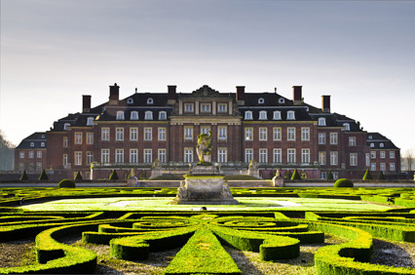
Nordkirchen Palace is a magnificent baroque moated castle situated in the town of Nordkirchen within the Coesfeld administrative district of North Rhine-Westphalia, Germany. Located in the rural Münsterland region approximately 25 kilometres south of Münster, the palace was constructed between 1703 and 1734 and is widely recognised as the "Versailles of Westphalia" due to its architectural grandeur and being the largest fully moated water castle in the region. Originally built as one of the residences of the Prince-Bishopric of Münster by Prince-Bishop Friedrich Christian von Plettenberg and later his successor Ferdinand von Plettenberg, the palace was designed by renowned architects Gottfried Laurenz Pictorius and Johann Conrad Schlaun. The impressive baroque complex features a palatial building surrounded by quadrangular moats and is set within extensive formal gardens spanning approximately 170 hectares, which are considered amongst the finest examples of baroque garden art in Europe. Today, the palace serves as the headquarters of the North Rhine-Westphalia University of Applied Sciences for where over 1,000 students train for careers in the state financial administration, whilst parts of the interior and the entire garden complex remain open to the public for guided tours and leisurely exploration.
Interesting Facts about Nordkirchen Palace
History
Known as the "Versailles of Westphalia," this remarkable palace complex was constructed between 1703 and 1734, making it the largest fully or partly moated Wasserschloss in the region. The present Baroque structure replaced a 16th-century moated castle that had belonged to the noble von Morrien family since 1368. Construction began in 1703 when Prince-Bishop Friedrich Christian von Plettenberg-Lenhausen commissioned court architect Gottfried Laurenz Pictorius to create what would become a masterpiece of European palace architecture. Following Plettenberg's death three years into the project, his nephew Ferdinand von Plettenberg took over the ambitious undertaking.
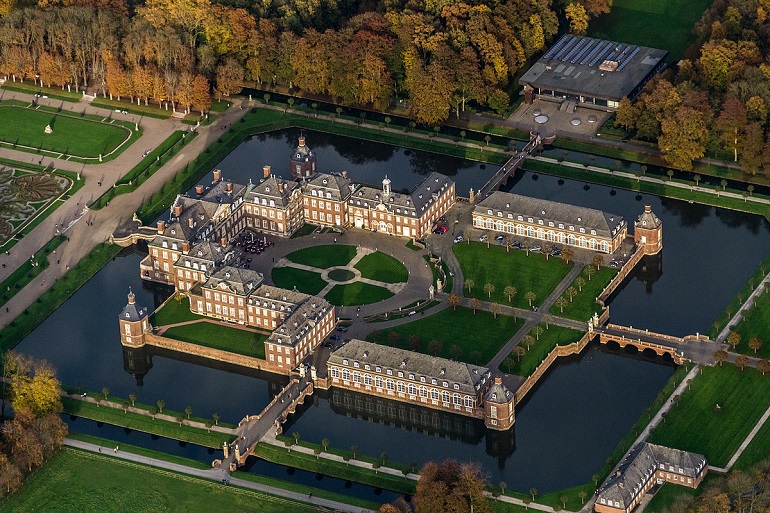
The architectural legacy of Nordkirchen Palace reflects the collaborative genius of several master builders who shaped its distinctive character over three decades. Gottfried Laurenz Pictorius initiated the construction, followed by his son Peter Pictorius the Younger from 1706, before the renowned Johann Conrad Schlaun assumed control from 1724 onwards, ultimately completing the complex in 1734. The palace's design draws inspiration from Dutch precedents such as Het Loo near Apeldoorn, whilst maintaining a distinctly Westphalian character through its sandstone facing. The architectural ensemble consists of a tall corps de logis flanked by symmetrical lower wings that enclose the cour d'honneur in a distinctive U-shape, with one wing housing an exquisite chapel available for wedding ceremonies. The entire structure sits dramatically on a rectangular island, surrounded by broad moat-like canals and accentuated by four small free-standing pavilions at each corner.
The palace's ownership history reflects the tumultuous changes of European aristocracy across centuries. After the Plettenberg family's tenure ended in 1833, the estate passed to Count von Esterházy, who operated a renowned stud farm for racehorses on the grounds. In 1903, Duke Engelbert Marie von Arenberg acquired the property and commissioned French garden architect Achille Duchêne to restore the gardens to their neo-Baroque splendour, adding numerous sculptures during restoration work between 1903 and 1907. Following periods of varied use, including as a Nazi training institute and prisoner-of-war camp during the Second World War, the State of North Rhine-Westphalia purchased the palace in 1959. Today, the complex serves as the Fachhochschule für Finanzen Nordrhein-Westfalen, a specialised university for training tax inspectors, whilst remaining open to the public for tours of its magnificent interior featuring precious stucco work, ceiling paintings, and fine wood carvings. The surrounding 170-hectare park, adorned with over a hundred marble sculptures and formal parterres, continues to enchant visitors as one of Europe's most beautiful garden complexes.
Description
Nordkirchen Palace stands as the most magnificent Baroque palace complex in Westphalia, justifiably earning its renowned moniker as the "Westphalian Versailles". This extraordinary moated palace represents the largest fully preserved Baroque ensemble in the region, situated majestically on a rectangular island surrounded by extensive quadrangular moats in the picturesque southern Münsterland landscape.
Architectural Splendour
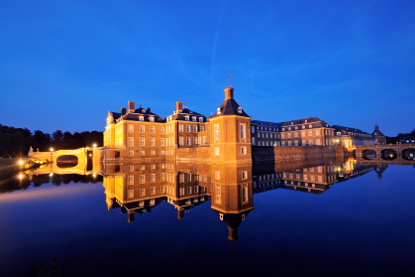
The palace's architectural magnificence centres around the imposing Corps de Logis, the main building from which lower wing structures extend symmetrically to enclose the grand cour d'honneur in a distinctive U-shaped configuration. The entire complex exemplifies the pinnacle of Westphalian Baroque architecture, characterised by its clinker brick construction elegantly sectioned with sandstone elements - a signature feature of the region's distinctive architectural style.
The palace complex showcases quintessential French Classical design principles, meticulously planned according to models such as Het Loo near Apeldoorn. The structure was erected between 1703 and 1734 under the direction of master architects Gottfried Laurenz Pictorius and Johann Conrad Schlaun, creating a harmonious blend of architectural grandeur and symmetrical perfection. The building's four corners are accentuated by charming free-standing pavilions that add to the overall compositional balance.
Interior Magnificence
The palace's interior features exceptional Baroque artistry, though much of the building now serves as the University of Applied Sciences for Finance North Rhine-Westphalia. Visitors can admire the surviving rooms through guided tours, which reveal the palace's former opulence. The vestibule presents an impressive entrance experience, whilst the grand ballroom demonstrates the scale of aristocratic entertainment once hosted within these walls.
The palace chapel stands as a particular highlight, featuring exquisite High Baroque decoration. The chapel's ceiling displays a magnificent trompe-l'oeil painting depicting the Assumption of the Virgin Mary, surrounded by high relief representations of the four evangelists with their respective symbols. Above the altar, covered by a cloth gifted by King Louis XIV of France, sits the founder's coat of arms. The chapel's ornate decoration includes precious stucco work, elaborate ceiling frescoes, and intricate wood carvings that exemplify the finest Baroque craftsmanship.
Additional interior treasures include paintings by the Italian artist Rico, sophisticated imitations of black marble on wooden columns, and a magnificent statue of a child accompanied by his dog representing one of the family heirs. The imperial room houses portraits of Emperor Francis I of Austria and his wife Maria Theresa, whilst Italian fabric covering the walls is valued at an extraordinary 140 euros per square metre. The Rocaille-style dining room features a spectacular Venetian chandelier adorned with gold splinters, marble sinks shaped like scallops, and the distinctive Plettenberg family coat of arms.
The Magnificent Gardens
The palace grounds encompass approximately 170 hectares of breathtaking landscaped gardens that rank amongst Europe's most beautiful. The gardens present a masterful integration of architecture and nature, created according to French formal garden principles whilst incorporating later English landscape garden elements and neo-Baroque redesigning.
Venus Island, situated to the north of the palace, represents the garden's crowning jewel. This spectacular baroque garden features intricate parterres de broderie and parterres de pelouse, complemented by carefully shaped shrubs and numerous sculptures. The island's central visual axis extends seemingly into infinity via a magnificent park avenue, creating a dramatic perspective that epitomises Baroque garden design principles.
The gardens are populated with over one hundred garden sculptures, with the first deliveries made in 1721 by Munich sculptor Johann Wilhelm Gröninger. Additional sculptures were contributed by artists Panhoff and Charles Manskirch, creating an impressive outdoor gallery. The Chinese fountain serves as another notable feature, with its eleven-metre diameter water basin and fountain capable of reaching ten metres in height, surrounded by East Asian sculptures representing mandarins, samurais, Buddhas, and farmers.
The park's network of avenues, axes, and pathways guides visitors through varied landscapes, from formal parterres to more naturalistic woodland areas. The surrounding Tiergarten forest area adds a wonderful natural dimension to the neo-Baroque complex, providing extensive opportunities for exploration beyond the formal gardens.
Current Usage and Visitor Experience
Today, Nordkirchen Palace serves as the seat of North Rhine-Westphalia's University of Applied Sciences for Finance, where approximately 1,500 students pursue three-year dual study programmes in tax administration. Despite this educational function, significant portions of the palace remain accessible to visitors through guided tours offered on Sundays and public holidays, with private tours available by appointment.
The palace grounds remain freely accessible year-round, providing visitors unlimited access to explore the magnificent gardens and park areas. The palace courtyard is always open, allowing visitors to appreciate the building's impressive exterior architecture at any time.
Within the palace complex, the distinguished Venus Restaurant offers refined Westphalian cuisine, providing diners with spectacular views over the formal gardens from its position overlooking the northern façade. The historic palace chapel can be hired for wedding ceremonies, making this fairy-tale setting available for special celebrations.
The palace has been designated by UNESCO as a "total work of art of international standing", acknowledging its exceptional significance in European architectural and garden history. This recognition reflects the harmonious integration of palace architecture with its surrounding landscape, creating an ensemble that continues to captivate visitors with its timeless beauty and grandeur.
Getting There
By train, the closest station to Nordkirchen Palace is Capelle (Westf), located approximately 6km away. Direct trains connect Capelle with major nearby cities such as Münster and Dortmund. After arriving at Capelle station, you can continue your journey to the palace by taking a local bus or a short taxi ride.
By bus, regular routes such as the T52 from Werne, R53 from Lüdinghausen, and B12 from Südkirchen stop at the “Nordkirchen, Schlosspark” bus stop, which is just a short walk from the palace grounds. These services ensure convenient access from various towns in the region.
By car, Nordkirchen Palace is easily accessible via the A1 motorway (exit Ascheberg or Werne-Nord), A2 (exit Castrop-Rauxel or Dortmund-Nordost), and the A43 (Dülmen junction). There is a large, free car park between the castle and the town, with pedestrian paths leading through the scenic park directly to the palace entrance.
Best Time to Visit
Late spring through early autumn offers the most rewarding experience at Nordkirchen Palace: from May to September the guided interior tours run hourly throughout Sundays and public holidays, the formal parterres are at their colourful, daylight stretches well past 21:00, and average highs hover around a comfortable 22–25 °C, making long strolls through the baroque grounds pleasantly warm without midsummer swelter
| Travel destinations in North Rhine-Westphalia | ||||||||||||||
|---|---|---|---|---|---|---|---|---|---|---|---|---|---|---|
|
|
|
|
| ||||||||||
|
|
|
|
| ||||||||||
|
| |||||||||||||


