


| Contents |
|---|
Introduction
Saalburg is a Roman fort located near Bad Homburg in the state of Hesse, Germany. It forms part of the Upper Germanic-Rhaetian Limes, a UNESCO World Heritage Site, and has been extensively reconstructed to display aspects of Roman military architecture and daily life. The site includes the fort itself, a museum with Roman artefacts, detailed exhibits, and reconstructions of ancient military buildings and defences. Saalburg is easily accessible by road and public transport and serves as a valuable destination for those interested in Roman history, archaeology, and the preservation of historic landmarks in central Germany.
Interesting Facts about Saalburg Roman Fort
- The Saalburg is the most completely reconstructed Roman fort in Germany and lies in the Taunus mountains, northwest of Bad Homburg, Hesse.
- Originally built in the 2nd century CE, the Saalburg served as a key border post guarding the northern edge of the Roman Empire for around 150 years.
- The fort housed about 600 Roman soldiers, including both cavalry and infantry, who protected this stretch of the Limes Germanicus.
- Emperor Wilhelm II ordered the reconstruction of the Saalburg in 1897, making it a unique archaeological monument in Europe.
- Since 2005, the Saalburg has formed part of the UNESCO-listed Upper Germanic-Rhaetian Limes World Heritage site.
- The Saalburg complex includes not just the fort, but also a reconstructed Roman village (vicus), bathhouse, inn, and temples, providing a vivid insight into Roman life.
- Visitors to Saalburg can experience Roman history first-hand through its museum, which showcases ancient artefacts, interactive exhibitions, and live demonstrations by staff in authentic Roman attire.
- The Saalburg is surrounded by beautiful forests and hiking trails, making it a popular destination for both history enthusiasts and nature lovers.
- Unusually, the fort’s original whitewashed defensive walls were decorated with trompe-l'œil patterns to imitate ashlar masonry.
- Today, Saalburg serves as a world-renowned centre for provincial Roman archaeological research as well as hosting classical concerts in its historic grounds.

History
The Saalburg represents one of Germany's most significant archaeological treasures, standing as a testament to Roman frontier engineering in the Taunus mountains of Hesse. Initially established around 90 CE, the site began as a modest wooden-and-earth fort housing a numerus unit of approximately 160 auxiliary troops, possibly the numerus Brittonum from Britain. During the late reign of Emperor Hadrian, around 135 CE, the Romans dramatically expanded the site, constructing a much larger 3.2-hectare stone fort designed to accommodate the Cohors II Raetorum civium Romanorum equitata—a partially mounted Raetian cohort of about 500-600 soldiers with Roman citizenship. This unit had previously been stationed at Aquae Mattiacorum (modern Wiesbaden) and the Butzbach fort before arriving at the Saalburg.

As part of the extensive Limes Germanicus frontier system, the Saalburg served as a crucial defensive position protecting the Roman Empire's northern borders against Germanic tribes for over 150 years. The fort controlled the strategic Saalburg Pass, a natural transition route from the River Main plain to Germanic territories, making it essential for monitoring trade and military movements.
Around the fort, a thriving civilian settlement (vicus) developed along the road to Nida (present-day Frankfurt-Heddernheim), featuring elaborate bathing complexes, temples, inns, and residential quarters where soldiers' families lived alongside traders and craftsmen. The Limes itself evolved from a simple forest clearing marked by wooden watchtowers to a sophisticated defensive system featuring a wooden palisade around 120 CE.
The Saalburg's operational period came to an end during the turbulent 3rd century as Germanic pressure intensified along the frontier. Despite Emperor Caracalla's preventive campaign against the Alamanni and their Chatti allies in 213 CE, Germanic incursions resumed around 233 CE, with major attacks occurring in 254 and 260. During the empire-wide crisis of the mid-3rd century, Roman forces abandoned all territories east of the Rhine, and the Saalburg was deliberately evacuated around 260 CE without military action.
After abandonment, the fort served as a stone quarry until its remarkable resurrection in the modern era. Following archaeological investigations by the Nassau Antiquarian Society from 1853-1862 and extensive excavations by the Reichs-Limes-Kommission under Louis and Heinrich Jacobi, Kaiser Wilhelm II ordered the complete reconstruction of the fort in 1897. Today, the Saalburg stands as Germany's most completely reconstructed Roman fort and has been recognised as a UNESCO World Heritage Site since 2005.
Description
A Reconstructed Window into the Roman Empire
Nestled in the wooded Taunus mountains northwest of Bad Homburg, the Saalburg Roman Fort stands as Germany's most completely reconstructed Roman fortress and one of Europe's premier archaeological attractions. This remarkable site offers visitors an authentic glimpse into life on the northern frontier of the Roman Empire, where soldiers once guarded the boundaries between civilisation and the Germanic tribal territories nearly 2,000 years ago.
Recognised as a UNESCO World Heritage Site since 2005 as part of the Upper Germanic-Rhaetian Limes, the Saalburg represents far more than ancient ruins. It is a meticulously reconstructed fortress built upon original Roman foundations, combining rigorous archaeological research with immersive historical presentation to create an unparalleled educational experience.
The Archaeological Park and Reconstructed Fort
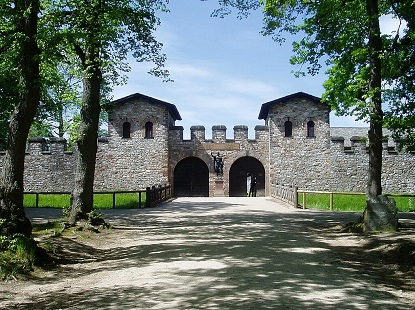
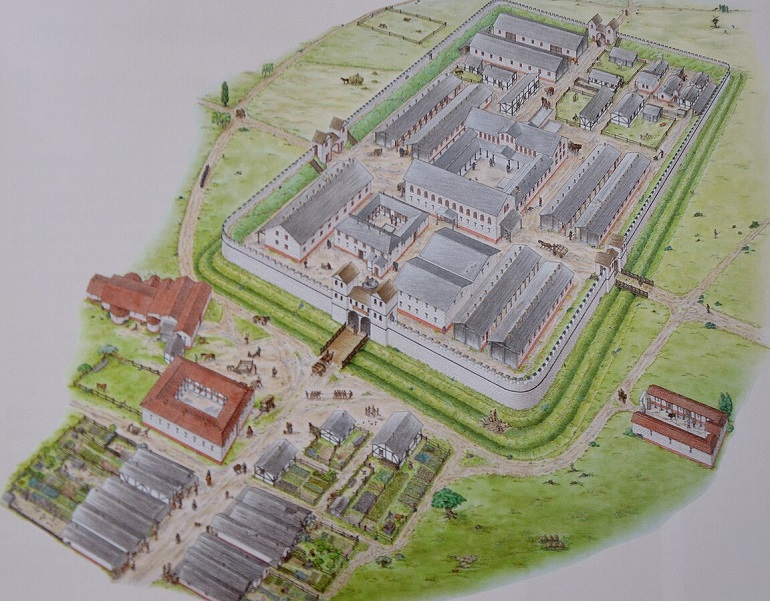
The Saalburg encompasses 3.2 hectares within its defensive walls, presenting a comprehensive recreation of a Roman cohort fort as it would have appeared in its final architectural phase during the 2nd and 3rd centuries CE. The rectangular fortress, measuring 147 by 221 metres, features four gates flanked by towers, with the main entrance (porta praetoria) facing south-southeast towards the Roman city of Nida, present-day Frankfurt-Heddernheim.
The reconstructed defensive walls, complete with whitewashed exteriors painted in trompe-l'œil patterns to simulate ashlar blocks, rise impressively above an earthen rampart that allowed Roman defenders to access the wall-top. Visitors can walk along these walls and explore the interior courtyard, which today presents a park-like setting of grass and trees that belies its original packed arrangement of military buildings.
At the heart of the fortress stands the principia, the central headquarters building featuring a large plaza surrounded by officers' quarters and administrative offices. This structure includes the aedes, a shrine that once housed the military standards (signa militaria), and an assembly hall where the garrison would gather. Adjacent to the principia, the reconstructed horreum (granary) now serves as one of the museum's primary exhibition spaces, while the partially reconstructed praetorium provided quarters for the fort's commanding officer.
Two fully reconstructed barrack buildings in the southeastern section demonstrate how Roman soldiers lived, with authentic contubernia (sleeping quarters) furnished to show the spartan conditions endured by the frontier troops. A fabrica (workshop) building, constructed according to modern archaeological understanding, illustrates the various crafts and trades that kept the fortress operational.
The Civilian Settlement and Roman Baths
Beyond the fortress walls lies the partially excavated and preserved vicus, the civilian settlement that grew up around the military installation. This unique feature sets the Saalburg apart from other Roman sites, as it is the only limes fort where the adjacent civilian community has been systematically uncovered and preserved for public viewing.
The vicus stretched along the Roman road leading to Nida and housed an estimated 1,500 civilians alongside the 600 soldiers stationed at the fort. Visitors can explore the foundations of strip houses characteristic of Roman villages—long rectangular buildings with narrow facades facing the street, topped by porticus (covered walkways). These structures housed soldiers' families, merchants, craftsmen, and tavern keepers who served the military community.
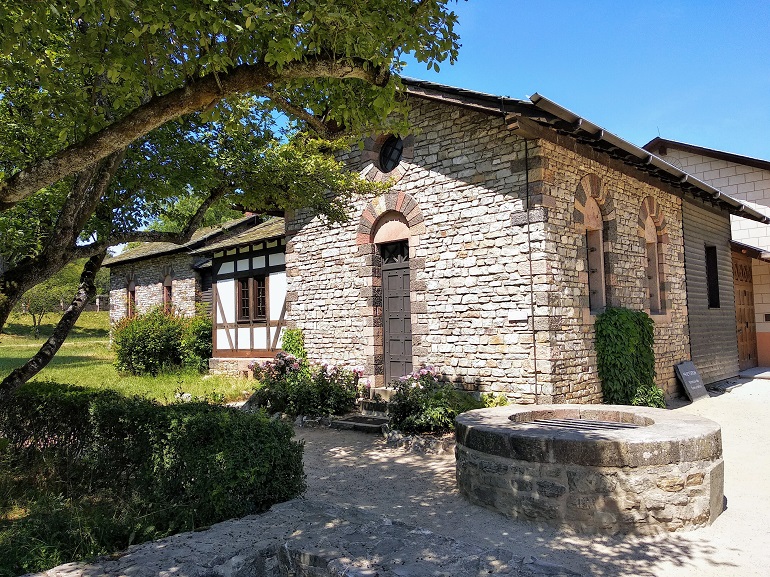
Among the most impressive preserved structures are the remains of a mansio, an official posting station for the imperial postal service (cursus publicus), and an elaborate bath complex. The Roman thermae represents one of the largest and most sophisticated bathing facilities discovered outside of Rome itself, featuring all the essential elements of Roman bathing culture: an apodyterium (changing room), frigidarium (cold bath), two tepidaria (lukewarm baths), a caldarium (hot bath), and a sudatorium (sauna). The complex employed an ingenious hypocaust system for underfloor and wall heating, with praefurnia (firing chambers) providing the necessary heat.
Archaeological evidence suggests the vicus also contained a mithraeum, a shrine dedicated to Mithras, the Persian deity particularly popular among Roman soldiers. Additional features include two cemeteries and various temples, creating a complete picture of Romano-Germanic frontier society.
Museum Collections and Exhibitions
The Saalburg Museum houses one of Germany's most significant collections of Roman provincial archaeology, with over 32,500 artefacts providing intimate glimpses into daily life along the limes. The permanent exhibitions, distributed throughout the reconstructed buildings, present military equipment, domestic items, religious objects, and trade goods that illustrate the complex cultural exchange occurring at the empire's edge.
The horreum exhibition focuses on cultural, historical, architectural, and military aspects of Roman Germania, displaying well-preserved weapons, tools, pottery, jewellery, coins, and leather goods including remarkably preserved footwear. These objects, many discovered during excavations at the Saalburg and other Taunus forts, demonstrate the sophisticated material culture that characterised Roman frontier life.
Particularly notable are the military displays showcasing various weapons systems including catapults, ballistas, and personal armaments used by auxiliary troops. Reconstructed scenes throughout the museum buildings depict soldiers' living conditions, craft workshops, and domestic arrangements, bringing the archaeological evidence to life through careful historical interpretation.
The museum also maintains an extensive research library of 30,000 volumes dedicated to provincial Roman archaeology and limes studies, reflecting its role as an internationally recognised centre for Roman frontier research. Regular academic colloquia and a series of scholarly publications continue to advance understanding of this crucial period in European history.
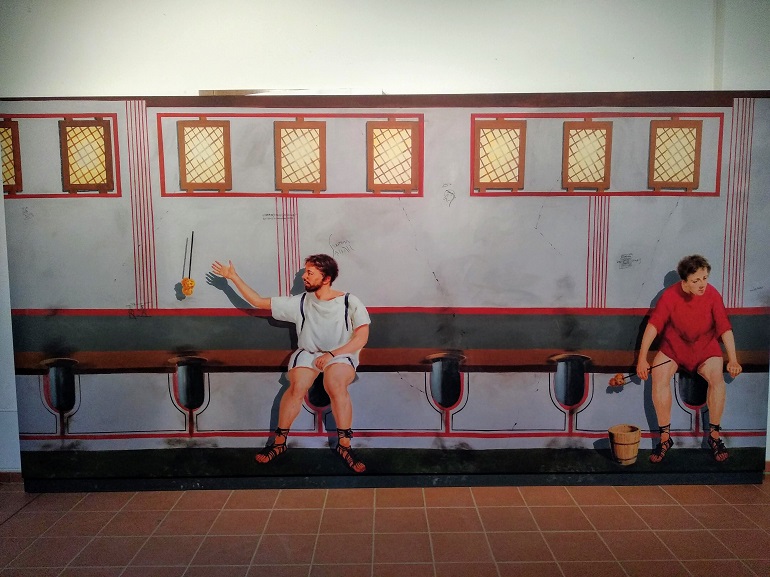
Experiential Programming and Living History
The Saalburg distinguishes itself through diverse programming that transforms archaeological education into immersive historical experience. Regular "Sunday Romans" events feature costumed interpreters from historical reenactment groups, particularly the 4th Vindeliker Cohort, who demonstrate Roman military techniques, crafts, and daily life practices based on current archaeological research.
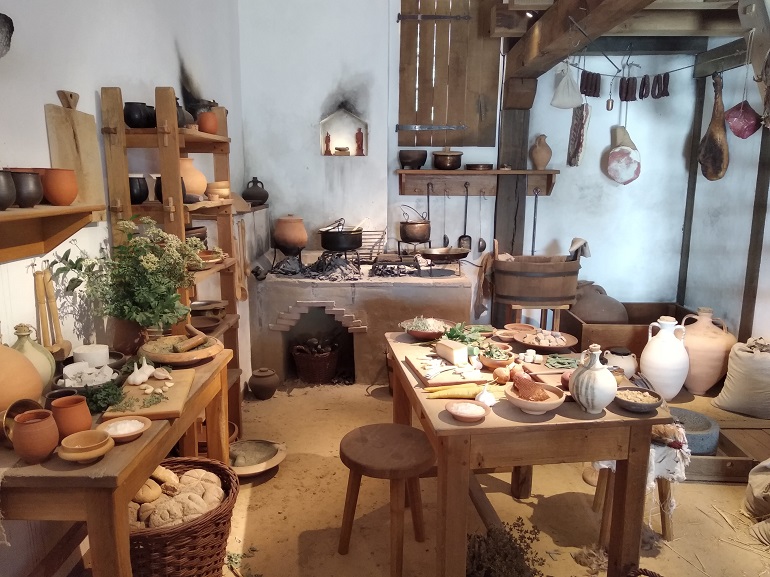
These living history presentations go beyond mere entertainment, offering authentic demonstrations of Roman cooking techniques using reconstructed ovens, metalworking and woodcraft workshops, archery displays with historically accurate equipment, and military exercises showcasing auxiliary soldier training. Visitors can observe bread baking using traditional methods, witness demonstrations of Roman medical and hygiene practices, and learn about religious customs and superstitions that shaped frontier garrison life.
Special themed events throughout the year explore specific aspects of Roman culture, from "Culinaria" programmes focusing on ancient food culture to gladiatorial demonstrations by professional historical combat groups. These events often include opportunities for hands-on participation, allowing visitors to try their hand at Roman crafts, sample historically-inspired cuisine, and engage with period technologies.
Facilities for Visitors
The Saalburg provides comprehensive facilities to enhance the visitor experience whilst maintaining the site's historical authenticity. The Taberna, the museum restaurant housed in reconstructed Roman-style buildings, serves both contemporary cuisine and dishes inspired by ancient Roman recipes, allowing visitors to literally taste history whilst dining in an appropriate historical setting.
The museum shop, located in reconstructed strip houses that replicate the architecture of the original vicus, offers an extensive selection of Roman-themed merchandise, educational materials, replica artefacts, and scholarly publications. The shop also houses the Limes Information Centre Hesse, providing comprehensive resources about the broader World Heritage Site and other Roman remains throughout the region.
Modern visitor amenities include clean facilities, ample parking, and accessibility considerations that enable enjoyment of the site whilst preserving its historical integrity. The contrast between ancient architecture and contemporary visitor services is handled with particular sensitivity to maintain the immersive historical atmosphere.
Digital Innovation and Technology
The Saalburg has embraced digital technology to enhance visitor engagement without compromising its historical authenticity. The Kastell Guide, a complimentary digital tour system accessible via smartphone or tablet, provides four distinct self-guided experiences tailored to different interests and age groups.
This innovative system works exclusively on-site through the museum's WiFi network, offering multimedia content including informative videos, interactive 3D models, and detailed explanations of buildings and artefacts. Tours range from comprehensive overviews suitable for general audiences to specialised animal-themed discovery tours designed for families with children aged 8-12 years.
The digital guide includes presentations by the museum director highlighting personal favourites and stories from the institution's 125-year history. QR codes distributed throughout the grounds and exhibitions provide instant access to relevant content, allowing visitors to explore at their own pace whilst receiving expert interpretation.
The Surrounding Landscape and Walking Opportunities
The Saalburg's location within the Taunus mountains provides exceptional opportunities for combining historical exploration with outdoor recreation. The 2.4-kilometre Rundweg Saalburg (Saalburg Circular Trail) leads visitors through the surrounding forest to additional Roman remains, including well-preserved sections of the original limes rampart and ditch system.
Along this trail, walkers encounter reconstructed watchtowers, additional archaeological monuments from both the Roman period and the site's early 20th-century reconstruction, and information panels explaining the broader context of Roman frontier defense systems. The trail provides stunning views across the Taunus landscape and connects to the larger network of hiking paths that traverse this scenic region.
The Hochtaunus Limes Adventure Trail extends this experience across more than 30 kilometres, following the ancient Roman border from Glashütten to Ober-Mörlen with the Saalburg as its centrepiece. This longer route connects multiple Roman sites including the forts of Kleiner Feldberg and Kapersburg, offering serious hikers the opportunity to trace the entire local section of Rome's northern frontier.
Planning Your Visit
The Saalburg operates year-round with seasonal schedule variations to accommodate changing daylight hours and weather conditions. From March through October, the site welcomes visitors daily from 9:00 AM to 6:00 PM, whilst winter hours (November through February) run from 9:00 AM to 4:00 PM, Tuesday through Sunday, with Monday closures.
Admission pricing reflects the site's exceptional value, with adult tickets at €8, reduced rates for students and seniors, and special pricing for children aged 6-17 at €3. Family tickets and group discounts are available, making the attraction accessible to diverse audiences. Children under 6 enter free of charge.
Public tours operate regularly in both German and English, with separate programmes for adults and children during peak season (March-October) offering departures at 11:00 AM, 1:00 PM, and 3:00 PM on Sundays. Winter tours (November-February) provide combined experiences for all ages at 2:00 PM on Sundays. These guided experiences, lasting approximately 45 minutes, cost €5 for adults and €3 for children in addition to admission.
The Saalburg represents an extraordinary achievement in archaeological reconstruction and historical interpretation, offering visitors an unparalleled opportunity to experience the reality of Roman frontier life. Through its careful balance of rigorous scholarship, innovative presentation techniques, and immersive programming, this remarkable site brings the ancient world to life whilst providing deep insights into the cultural exchanges that shaped European civilisation. For anyone seeking to understand the Roman Empire's impact on Germanic Europe, the Saalburg provides an essential and unforgettable experience that illuminates nearly two millennia of shared history.
Getting There
By train, Saalburg is easily accessible from Frankfurt by taking the regional train (RB15) or the S-Bahn to Bad Homburg, and then transferring to a local train or bus towards Saalburg/Lochmühle. From Bad Homburg, the Taunusbahn (line 15) and RB15 trains run a few times a day, followed by a short walk to the fort.
By bus, travellers can take bus line 5 from Bad Homburg Bahnhof directly to Saalburg. This route is especially convenient, with buses operating several times a day, although service may be more frequent on weekends than on weekdays. Bus line 5 passes through the town centre (Kurhaus) and delivers visitors directly to the Saalburg entrance.
By car, you can reach Saalburg via the A5 or A661 motorways from Frankfurt. Exit onto Route 456 and follow the signs to the Römerkastell Saalburg. The fort is well signposted, but keep in mind that parking spaces are somewhat limited, particularly during weekends and special events.
Best Time to Visit
The reconstructed Roman fort of Saalburg is open throughout the year, yet the most rewarding window for a visit is from May to September, when mild temperatures and generally dry days make its ramparts and forest trails a pleasure to explore. June and August are particularly pleasant, offering the warmest conditions without oppressive heat, so picnics on the grounds and walks along the Limes are at their best. During the summer season the museum extends its opening hours to 10:00–18:00, giving travellers a full day to wander the excavations and exhibitions. It is also when living-history weekends, gladiator displays and craft demonstrations animate the fort, adding colour and atmosphere that are absent in the quieter winter months.