



| Contents |
|---|

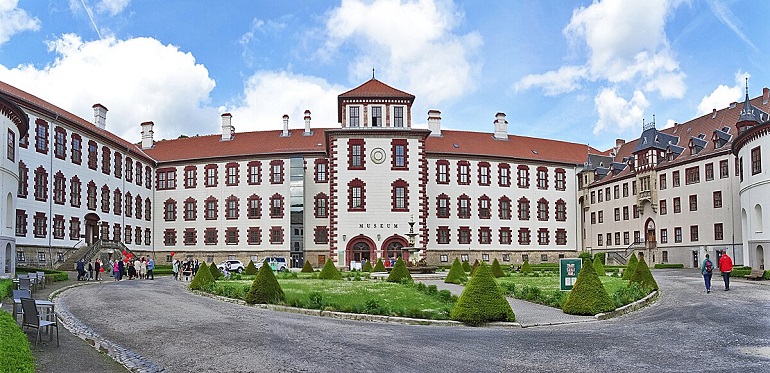
Elisabethenburg Palace, Meiningen.
Introduction
Capital of the Duchy of Saxe-Meiningen from 1680 to 1918, Meiningen (pop. 25,000) is a town of culture renowned for its theatre and orchestra. The Meiningen Court Orchestra, one of the oldest orchestras in Europe, was founded in 1690 by Duke Bernhard I with Hans von Bülow as conductor (and later Richard Strauss and Max Reger). The ducal palace, Elisabethenburg, houses the Music Museum as well as important Renaissance art collections.
Interesting Facts about Meiningen
- Meiningen was the capital of the Duchy of Saxe-Meiningen from 1680 to 1918.
- The town is renowned as Germany’s “theatre town”, with the Meiningen Theatre being one of the most influential theatres in the country and the birthplace of director’s theatre in the 19th century.
- Schloss Elisabethenburg, the ducal palace constructed between 1682 and 1692, still stands as a prominent symbol and houses major art collections.
- The Australian city of Adelaide is named after Adelaide of Saxe-Meiningen, who was born here and became Queen of the United Kingdom.
- Meiningen is famous for its well-preserved half-timbered houses and beautiful neoclassical architecture, especially in its old town.
- The town’s Englischer Garten, created in the late 18th century, is an English landscape garden in the centre.
- In 1874, a catastrophic fire destroyed almost a third of Meiningen, sparing only the ducal palace, and the rebuilt sections feature neoclassical style.
- The Meiningen Court Orchestra, founded in 1690, is among the oldest orchestras in Germany, having been conducted by renowned musicians such as Hans von Bülow and Max Reger.
- Meiningen housed a significant Jewish community in the Middle Ages, which suffered during various persecutions, such as the events of 1243 and 1298.
- Grand theatrical tours from Meiningen in the late 19th century revolutionised European theatre, spreading historically accurate stagecraft throughout the continent.

History
Meiningen's roots stretch back to the Frankish Empire of the 6th or 7th centuries, when it emerged at the crucial intersection of two trade routes and a ford across the River Werra. The settlement was first documented in 982 as "Meininga in Meiningermarca," initially serving as crown land in the Duchy of Franconia before becoming a royal possession. Around the year 1000, construction began on the town's distinctive Stadtkirche, which would be expanded and rebuilt multiple times throughout the centuries. Emperor Henry II donated Meiningen to the Roman Catholic Diocese of Würzburg in 1008, beginning a 534-year period of ecclesiastical rule. The Bishops of Würzburg constructed a moated castle in the 11th century to protect their valuable property—the site that would later become the magnificent Schloss Elisabethenburg. The town endured significant trials during this period, including a devastating plague in 1153, the same year it received its first judicial rights, and extensive damage during conflicts between Würzburg and the House of Henneberg in 1222.
By 1230, Meiningen had achieved full town status and was granted considerable autonomy in 1344. The citizens demonstrated their determination to protect their freedoms by constructing formidable fortifications featuring double walls and three protective moats. The town's medieval character was further enriched when Franciscan monks built a monastery between 1239 and 1242. However, prosperity alternated with disaster: a major fire in 1380 destroyed approximately a quarter of the settlement, including the town council's precious archives. The citizens' fierce independence was demonstrated in 1432 when they rose up and completely destroyed the Würzburg castle, though they later faced consequences when Würzburg troops besieged the town until its capitulation in 1399. Despite these setbacks, Meiningen flourished economically, growing to about 2,000 inhabitants by 1450 and developing thriving textile, metalworking, and trading industries. The town's fortunes changed hands again in 1542 when it passed to the Henneberg family, and subsequently to the House of Wettin in 1583 following the Henneberg line's extinction.
The town's golden age began in 1680 when it became the capital of the Duchy of Saxe-Meiningen, established following the partition of Saxe-Gotha among Duke Ernest the Pious's seven sons. Duke Bernhard I transformed Meiningen into a proper ducal residence, constructing the elegant Schloss Elisabethenburg between 1682 and 1692 and establishing the renowned Court Orchestra in 1690. The town gained international cultural significance under Georg II, Duke of Saxe-Meiningen, born in 1826, who became a passionate patron of theatrical arts and founded the famous Meiningen Court Theatre in 1831. One of the duchy's princesses, Adelheid Louise Theresa Caroline Amelia, married the future King William IV of Great Britain in 1818, leading to the Australian city of Adelaide being named in her honour. The town's infrastructure modernised significantly during the 19th century with the arrival of the Werra Railway in 1858, connecting Meiningen to the broader German railway network. Despite suffering a major fire in September 1874 that destroyed a third of the town, Meiningen rebuilt in elegant Neoclassical style with financial assistance from cities across Germany and Austria. By the late 19th and early 20th centuries, the presence of several major banks had established Meiningen as an important financial centre in Germany. The duchy era ended with the German Revolution of 1918, after which Meiningen became capital of the Free State of Saxe-Meiningen before joining the newly created state of Thuringia in 1920.
Main Attractions
Elisabethenburg Castle and Castle Park
Elisabethenburg Castle stands prominently on the edge of Meiningen's town centre as the former ducal residence built during the baroque period. The castle houses art collections and the Meiningen Museum, featuring rooms with chandeliers and exhibitions documenting the history of the house. Visitors can explore the castle church and numerous rooms on guided tours, with changing exhibitions regularly held throughout the complex. The surrounding castle park provides an extensive green space for leisurely walks, with well-maintained paths and mature trees creating a tranquil environment adjacent to the historic building.
Meiningen State Theatre (Staatstheater Meiningen)
The Meiningen State Theatre holds the distinction of being one of Germany's most renowned theatres and is recognised as the birthplace of modern director's theatre. Under Duke George II's patronage in the 19th century, the theatre developed innovative production principles that created a more democratic and historically authentic style of performance. The theatre's touring company performed across Europe for 16 years during the late 19th century, earning Meiningen the nickname "theatre town". Today, the venue continues to stage high-quality productions including drama, musicals, and performances by the affiliated Meininger Hofkapelle orchestra.
Historic Half-Timbered Houses and Market Square
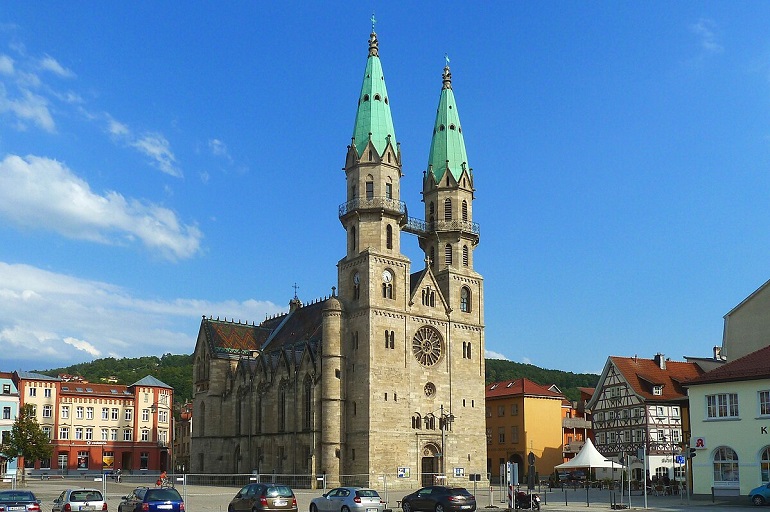
Meiningen's town centre showcases an impressive collection of well-preserved half-timbered houses that create a picturesque medieval atmosphere throughout the pedestrian areas. The market square serves as the focal point, dominated by the massive "Unseren lieben Frauen" church, whose roof features distinctive colourful decorative patterns. These historic Thuringian half-timbered buildings, combined with glamorous classical architecture from the ducal period, form the architectural backbone of the town and provide excellent opportunities for leisurely exploration.

English Garden
The English Garden represents one of Meiningen's principal green spaces, originally created in the late 18th century during the ducal period. The park features a pond with an illuminated fountain, open meadows, and the crypt chapel where visitors can find Germany's first monument to composer Johannes Brahms. The garden provides multiple recreational opportunities including walking paths, jogging routes, and quiet areas for relaxation, making it a popular destination for both locals and visitors seeking respite from urban activities.
Stadtkirche (Town Church)
The Stadtkirche serves as Meiningen's principal church and offers one of the best panoramic views across the entire city due to its elevated position. Visitors can climb to the top of the church tower to access viewing platforms both inside and outside the structure. The church represents an important religious and architectural landmark in the town centre, easily accessible from the main pedestrian areas and market square.
Steam Locomotive Works (Dampflokwerk Meiningen)
The Meininger Steam Locomotive Works continues to operate as a working facility where historic "steel horses" from bygone eras undergo restoration and maintenance. This industrial heritage site offers visitors insight into traditional railway engineering and the preservation of historical locomotives. The facility demonstrates ongoing craftsmanship in maintaining vintage steam engines, providing a unique attraction for railway enthusiasts and those interested in industrial history.
Hiking Trails and Viewpoints
Meiningen's surrounding landscape offers numerous well-maintained and signposted hiking trails through the Thuringian Forest. The "Meininger" trail extends approximately 11 kilometres through woodland, passing various viewpoints that provide elevated perspectives of the city below. Notable viewing locations include the Diezhäuschen, Schaubach-Hütte, and the ruins on Donopskuppe, which offer particularly impressive sunset vistas. Some trails feature QR codes that provide audio content related to composer Johannes Brahms, who spent time in the area.
Büchner's Rear House (Büchnersches Hinterhaus)
This architectural building represents an important historical site in Meiningen's cultural landscape. The structure serves as a significant example of the town's architectural heritage and provides insight into local building traditions. The building has received recognition for its historical and cultural value, contributing to Meiningen's reputation as a centre of German literary and cultural history.
Goetz Cave (Goetz-Höhle)
Located near Meiningen, the Goetz Cave represents a natural attraction and historic site that offers visitors underground exploration opportunities. The cave system provides geological interest and represents part of the region's natural heritage. Access to the cave allows visitors to experience the area's subterranean formations and learn about local geological processes.
Top Museums
Schloss Elisabethenburg - Meininger Museen
The crown jewel of Meiningen's museum landscape is housed within Schloss Elisabethenburg, a striking baroque palace built from 1682 onwards that serves as a prominent architectural landmark. This former residence of the Dukes of Saxe-Meiningen now contains the main part of the Meininger Museen, which represents the largest museum complex in southern Thuringia and houses the most extensive art collection in the region.
The palace museum is divided into four distinct sections, offering comprehensive exhibitions on art, theatre, music, and literary history. The collection has fascinating origins, tracing back to Duke Anton-Ulrich of Saxe-Meiningen, an unconventional royal who secretly married a chambermaid and spent years living in Amsterdam, where he built an impressive art collection through his agent and painter Jan Maurits Quinkhard. Despite financial constraints that led to various sales over the centuries, the museum retains precious works by renowned artists including Ferdinand Bol, Abraham Breughel, Jacob de Backer, Pieter Nason, Jan Frans van Bloemen, and Hieronymus Janssens.
Theatermuseum "Zauberwelt der Kulisse"
Located in the former ducal riding hall, the Theatermuseum "Zauberwelt der Kulisse" (Theatre Museum "Magic World of Stage Sets") offers a unique glimpse into the theatrical heritage that made Meiningen famous throughout Europe. This specialised museum focuses on the historical stage designs of the Meininger Hoftheater, providing fascinating insights into the art of stage design and the revolutionary theatrical practices that emerged under Duke Georg II's patronage.
The museum showcases the innovative staging techniques and elaborate set designs that characterised the Meininger style, which influenced theatre productions across Europe and helped establish modern directorial practices. Visitors can explore the evolution of stage craft and understand how Meiningen earned its reputation as the birthplace of modern directorial theatre.

Literaturmuseum im Baumbachhaus
The Literaturmuseum occupies the historic Baumbachhaus, celebrating the town's literary connections and cultural contributions. This museum forms part of the Meininger Museen complex and focuses on the literary heritage of the region, though specific visiting arrangements may require advance enquiry.
The museum highlights the importance of literature in Meiningen's cultural development and showcases works and artefacts related to significant literary figures associated with the town and surrounding region.
Meininger Zweirad Museum
For those interested in transportation history, the Meininger Zweirad Museum presents a comprehensive collection dedicated to two-wheeled vehicles. This speciality museum traces the evolution of bicycles and motorcycles, providing insight into the development of personal transportation and the role these vehicles played in German society.
Galerie ada
The Galerie ada serves as Meiningen's municipal gallery, contributing to the town's contemporary cultural scene. This venue complements the historical museums by presenting modern and contemporary artworks, ensuring that Meiningen's artistic tradition continues to evolve and engage with current artistic movements.
Local Cuisine
Local menus are dominated by traditional German favourites, but the real standouts include the celebrated Thüringer Rostbratwurst—a perfectly seasoned grilled sausage exclusive to the region—and the beloved Thuringian dumplings, which are hand-crafted from a mix of raw and cooked potatoes. Hearty dishes such as rosemary roast pork with red cabbage and Thuringian dumplings, schnitzel, and the occasional wild mushroom cream sauce also reflect the area’s dedication to authenticity and robust flavours. Many restaurants, such as the historic Ratsstube and the elegant Schlossstuben, take pride in serving these local specialities, often accompanied by artisanal breads, cakes, and a welcoming atmosphere that lets visitors experience true Thuringian hospitality.
Getting There & Around
By train Meiningen is well connected by train, making rail travel a convenient option. High-speed and regional services from major German cities such as Frankfurt, Hamburg, and Aachen run regularly to Meiningen, generally requiring one or more changes along the route. Deutsche Bahn and ICE trains provide modern, comfortable journeys and Meiningen’s station is just a short distance from the town centre.
By coach or bus There are coach and long-distance bus routes that connect Meiningen with various towns and cities in Germany and neighbouring countries. Services usually require a transfer, most often at larger hubs such as Würzburg or Zella-Mehlis, before reaching Meiningen. Once in the region, local buses provide easy access to the town and surrounding area.
By car Travelling by car to Meiningen offers flexibility and scenic views, as the town is accessible via the German motorway and road network. From cities like Frankfurt or Brussels, it is a straightforward drive by following the major motorways and then connecting to regional roads leading directly into Meiningen, with the journey taking just over five hours from western European capitals.


