



| Contents |
|---|

Introduction
Görlitz (pop. 56,500), situated on the River Neisse, is Germany's easternmost city and forms part of the Europastadt Görlitz/Zgorzelec alongside its Polish neighbour. It boasts one of Europe's most comprehensive historic city centres, featuring over 4,000 protected architectural monuments spanning Gothic, Renaissance, Baroque and Art Nouveau periods. The Altstadt remained remarkably intact throughout the Second World War, preserving its original street layout and an extraordinary collection of merchant houses, churches and civic buildings dating from the 13th to 20th centuries. As a former member of the Lusatian League of Six Cities, Görlitz prospered through trade and craftsmanship, leaving behind a architectural legacy that has made it a popular filming location for period dramas and earned recognition as a UNESCO World Heritage candidate city.
Interesting Facts about Görlitz
- Görlitz is Germany’s easternmost city, sitting on the Lusatian Neisse with its twin town Zgorzelec just across the bridge in Poland.
- It prospered on the medieval Via Regia trade route and became a leading Upper Lusatian member city famed for cloth and linen craftsmanship.
- The intact old town spans Gothic, Renaissance, Baroque and Art Nouveau architecture, largely spared wartime destruction and meticulously preserved.
- Nicknamed “Görliwood”, it has hosted major film productions and was named European Film Location of the Decade in 2017.
- Wes Anderson’s The Grand Budapest Hotel used the city’s early-20th-century Kaufhaus for its grand lobby interiors.
- The 15th meridian runs through Görlitz, giving it symbolic status for Central European Time and making it among the first places in Germany to see sunrise.
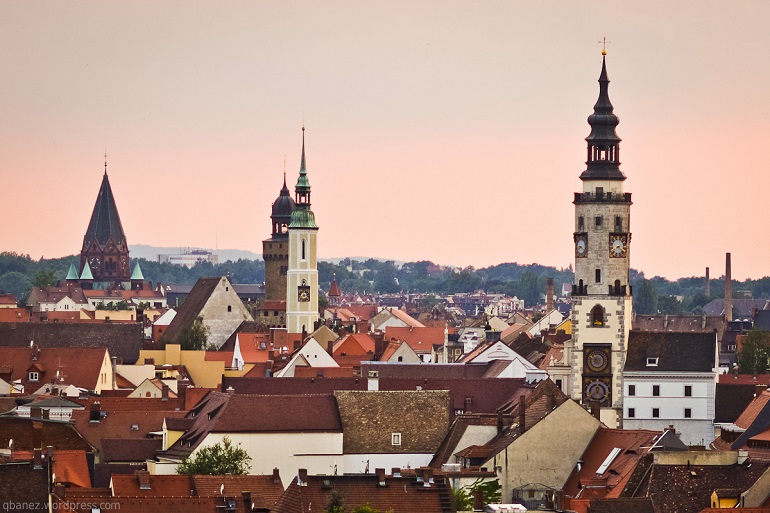
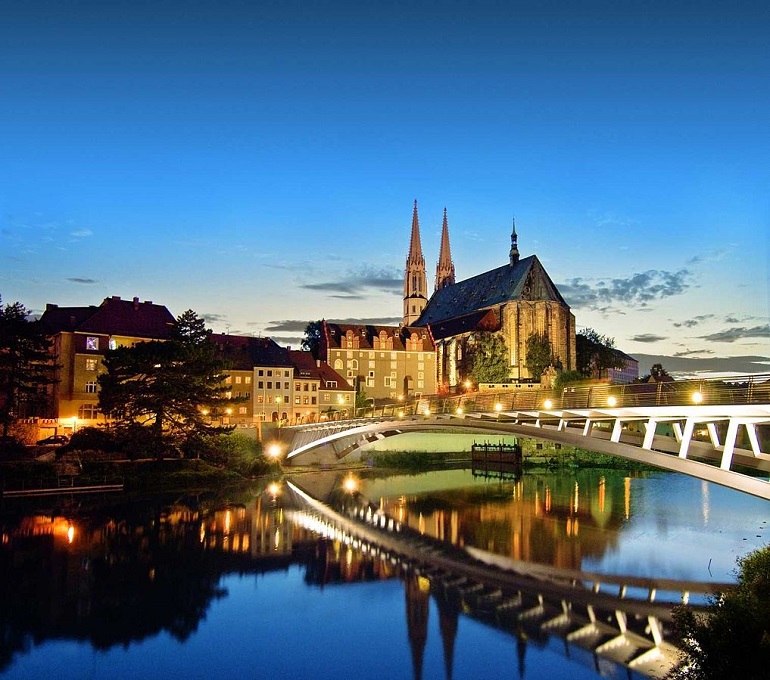
- Its skyline is dominated by the late-Gothic Church of Saints Peter and Paul, begun in the 15th century.
- Görlitz contains a renowned medieval replica of Jerusalem’s Holy Sepulchre, completed in 1504 and preserved ever since.
- After 1945, the city was divided by the new Oder–Neisse border, with the eastern districts becoming today’s Zgorzelec in Poland.
- Culturally tied to Lusatia, it has Sorbian roots and hosts Silesian traditions, including the Schlesisches Museum and Silesian Christmas Market.
- The Lower Market (Untermarkt) features arcades once used by cloth merchants and film-famous façades like the Brauner Hirsch.
- Görlitz remains a regional commercial hub and railway junction, historically linked to vehicle and turbine manufacturing in a lignite-mining area.
History
Medieval Origins and Rise to Prominence
Görlitz first emerged from the mists of history as a Slavic settlement called "Gorelic," with its earliest recorded mention appearing in a document from Holy Roman Emperor Henry IV in 1071. The town grew at the strategic intersection of Europe's oldest and most important trade routes, most notably the Via Regia, which connected Kiev to Santiago de Compostela, and the Salt Road linking Prague to the Baltic Sea. Originally inhabited by the Bieżuńczanie tribe and later the Sorbian Milceni, the area changed hands multiple times before becoming part of Bohemia in 1075. The settlement gradually evolved into a proper town during the 13th century, receiving formal town privileges in 1303. By 1346, Görlitz had become prosperous enough to join the prestigious Upper Lusatian Six City League alongside Bautzen, Löbau, Zittau, Kamenz, and Lauban (Lubań), a powerful confederation that helped secure trade routes and brought considerable wealth to the member cities.
Economic Golden Age and Political Transformations
The Medieval period marked Görlitz's economic zenith, as the town became renowned throughout Europe for its exceptional textile craftsmanship, particularly in cloth production and the trade of woad, a plant used to dye fabrics blue. The introduction of linen to the local textile industry provided a significant economic boost, leading to the construction of magnificent Gothic, Renaissance, and Baroque buildings that still grace the city today. From 1377 to 1396, Görlitz even served as the capital of its own eponymous duchy. The town's fortunes fluctuated with the changing political landscape, passing through Hungarian rule under King Matthias Corvinus from 1469, before reverting to Bohemia in 1490. The Protestant Reformation arrived in Görlitz during the early 1520s, and by the latter half of the 16th century, the town and its surroundings had become almost entirely Lutheran.
Prussian Era and Modern Challenges
The devastating fires of 1525, 1691, and 1717 destroyed much of the medieval city, but Görlitz rebuilt itself each time. Following the Thirty Years' War, the region of Upper Lusatia, including Görlitz, was ceded to the Electorate of Saxony in 1635, where it remained until the Congress of Vienna in 1815 transferred the town to the Kingdom of Prussia. During this period, Görlitz served as an important stop along one of the two main routes connecting Warsaw and Dresden, with Polish Kings Augustus II the Strong and Augustus III frequently travelling through the town. The city's fortunes changed dramatically during the Second World War when, whilst largely spared from bombing, the post-war Oder-Neisse line cruelly divided Görlitz in 1945, with its eastern districts becoming the Polish town of Zgorzelec. During the East German era, Görlitz remained a border town with limited cross-border contact, but German reunification and Poland's accession to the European Union have since restored cooperation between the two halves of this historic city.
Main Attractions
Old Town
Untermarkt
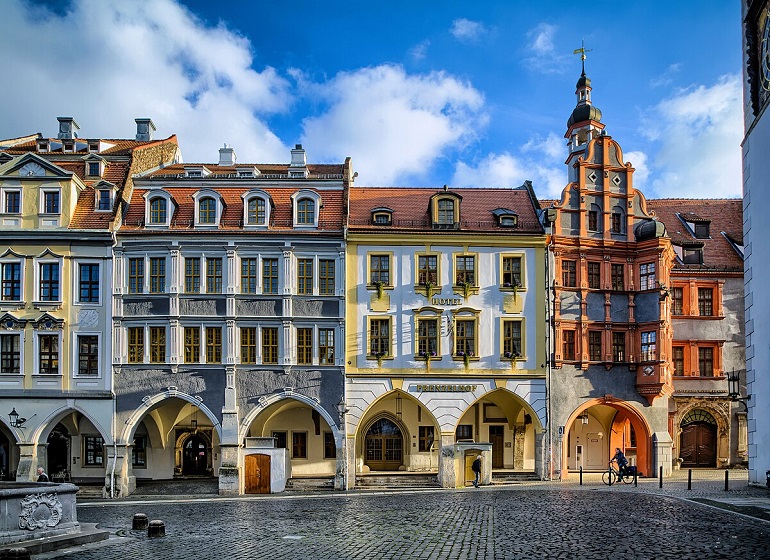
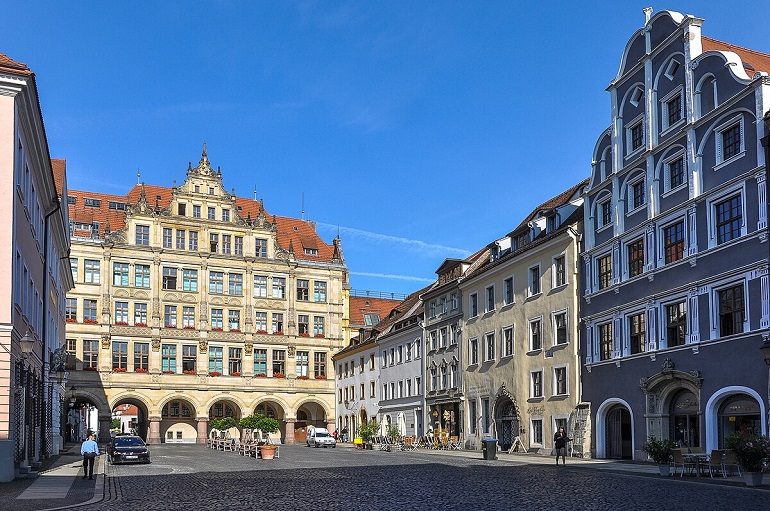
The Untermarkt in Görlitz radiates the enchanting atmosphere of medieval Saxony, where centuries of mercantile tradition converge upon a cobblestone expanse framed by architectural masterpieces. To its south stands the imposing town hall, its ornately carved Böhmisches Portal of 1471 serving as a testament to Gothic stonework, while the iconic Neptunbrunnen of 1725 occupies the square's centre, its sculpted figures symbolising cardinal virtues. Along the perimeter, historic hall houses display an array of richly decorated facades and arcaded walkways that once facilitated the bustling trade of the Via Regia. Throughout the year, the Untermarkt hosts vibrant markets and cultural festivals, inviting visitors to linger in charming cafés and boutique shops nestled beneath the elegant gables.
Altes Rathaus (Old Town Hall)
The Altes Rathaus, or Old Town Hall, is a remarkable architectural centrepiece in Görlitz's historic Untermarkt (Lower Market). Its origins trace back to the 14th century, and the building showcases a blend of architectural styles, from its Renaissance portal to the late Gothic facade. A striking feature is the outdoor staircase, added in 1537, adorned with intricate carvings and the figure of Justice. Another notable element is the clock tower, which features two clock faces—a traditional 12-hour clock and a 24-hour astronomical clock—and a sculpture of a guard's head that opens its eyes and mouth on the hour. This collection of buildings has been expanded and modified over centuries, creating a unique and picturesque complex that reflects the city's long and prosperous history as a trading centre.
Neues Rathaus (New Town Hall)
Standing adjacent to the Altes Rathaus, the Neues Rathaus, or New Town Hall, presents a contrasting yet complementary architectural style. Constructed in the early 20th century in the Neo-Renaissance style, its grand and imposing facade was designed to project the civic pride and growing prosperity of Görlitz at the time. The building is characterised by its monumental scale, ornate gables, and a towering clock tower that has become a defining feature of the city's skyline. While it serves the modern administrative functions of the city, the Neues Rathaus was carefully designed to harmonise with the historic fabric of the Untermarkt, creating a seamless blend of old and new that is characteristic of Görlitz's unique architectural landscape.
Reichenbacher Turm (Reichenbach Tower)
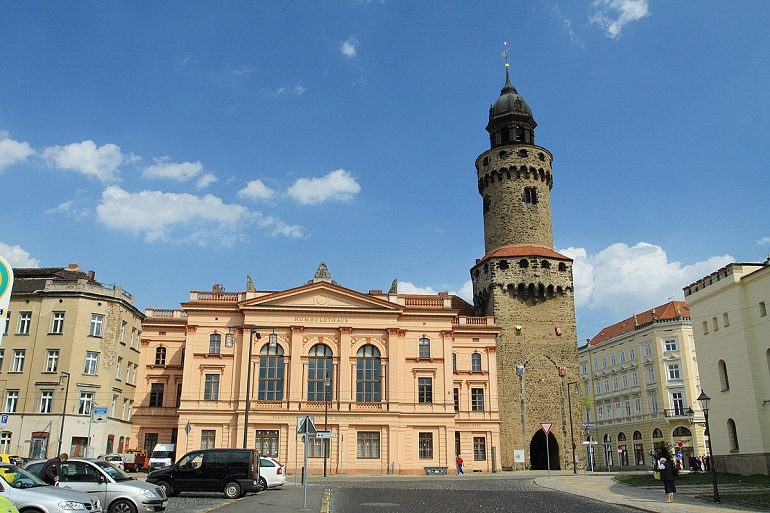
Dominating the western perimeter of Görlitz's Altstadt, the Reichenbacher Turm commands attention with its formidable medieval fabric, tracing origins to the thirteenth century when the Upper Market was established. The tower's robust lower section reveals the original quadrangular plan, which gives way to an octagonal storey and a cylindrical upper turret, culminating in a circular crenellated battlement added in 1485. A vaulted pedestrian passage, introduced in 1869 after the demolition of the adjoining fortifications, now invites visitors to pass beneath the tower's storied arch. A climb to the summit affords sweeping panoramas of the city's red-tiled roofs, slender church spires and the sinuous course of the Neisse River.
Old Town Bridge
Spanning the Lusatian Neisse to connect Görlitz with its Polish counterpart Zgorzelec, the Old Town Bridge embodies both historical passage and symbolic unity. Replacing earlier medieval crossings, the current steel-trussed structure offers pedestrians and cyclists unobstructed views along the riverbank, where mirrored reflections of the Altstadt's church spires dance upon the water. Interpretative plaques recount the bridge's evolution from a mercantile thoroughfare along the Via Regia to a postwar emblem of cross-border reconciliation, while lantern-lit promenades at dusk impart a timeless, reflective ambience.
Religious Heritage
Pfarrkirche St. Peter und Paul (Peterskirche)
The Pfarrkirche St Peter und Paul, known colloquially as the Peterskirche, presides atop Johanniskirchberg with twin Gothic spires clad in verdigris copper that rise imperiously above the cityscape. Constructed across the thirteenth and fourteenth centuries, its vaulted interior shelters a Baroque high altar crafted in the seventeenth century and the renowned "solar organ" installed in 1701, whose façade is aglow with rays of natural light. Richly carved wooden choir stalls and a sculpted stone pulpit evoke the intersection of medieval stone and Baroque artistry, while the church's majestic acoustics render it a favoured venue for organ recitals and choral performances.
Ev. Dreifaltigkeitskirche (Church of the Holy Trinity)
Poised majestically on the southern edge of the Obermarkt, the Evangelische Dreifaltigkeitskirche, often called the Oberkirche, ranks among Görlitz's most venerable religious edifices. Consecrated in 1245 by Franciscan friars in dedication to the Holy Trinity, its original choir and nave walls retain the imprint of early Gothic craftsmanship. Later expansions from the fourteenth to sixteenth centuries introduced the striking Barbarakapelle and ancillary chapels, while a Baroque interior refurbishing in the seventeenth and eighteenth centuries bestowed sumptuous stucco ornamentation. Within its cavernous nave, visitors admire the intricately carved Mönchsgestühl of 1484 and the winged altar of 1788, set beneath soaring arches that resonate with a millennium of devotional heritage.
Lutherkirche
Dominating Lutherplatz with its fortress-like profile, the Lutherkirche exemplifies early twentieth-century neo-Romanesque design by local architect Ernst Peschko. Conceived as a basilical hall church, its exterior evokes the Reformers' hymn "Ein feste Burg ist unser Gott" in stone, while inside, vaulted arches and sturdy pillars guide the eye toward a Baroque Kanzelaltar salvaged from the erstwhile Holy Spirit Church of 1772. Above, Jugendstil flourishes animate the ceiling's painted motifs of pelicans and vine scrolls, lending an ethereal luminosity to a space that continues to serve both as a vibrant parish and a celebrated concert venue.
Goerlitz Synagogue
Meticulously restored after decades of neglect, the Goerlitz Synagogue stands as one of Saxony's most significant examples of early twentieth-century synagogue architecture, blending Art Deco restraint with intricate decorative arts. Since reopening to the public, visitors encounter a serene sanctuary where geometric wall patterns, a wrought-iron gallery and a resplendent Torah ark combine to evoke the liturgical traditions of Görlitz's once-thriving Jewish community. The domed sanctuary and fluted columns frame the prayer hall, while interpretative displays illuminate the building's cultural and historical significance.
Other Attractions
Naturschutz-Tierpark Görlitz
Nestled within a verdant woodland on the city's eastern fringe, the Naturschutz-Tierpark Görlitz invites families and nature enthusiasts to explore a conservation-focused environment home to over five hundred animals representing more than one hundred species. Carefully designed naturalistic enclosures allow visitors to observe native and exotic wildlife, from European bison and deer to vibrant tropical birds and nocturnal mammals. Engaging educational programmes and guided tours offer insights into ecosystem management, while accessible pathways and informative signage ensure an inclusive experience. A rustic forest café provides regional refreshments amid tranquil green surroundings, completing the park's blend of recreation and ecological stewardship.
Görlitz Water Tower
Erected in the closing years of the nineteenth century to serve Görlitz's burgeoning water supply, the Görlitz Water Tower exemplifies industrial elegance in red brick, its slender form accented by arched windows and a tiered cornice that supports a conical copper roof. Following sensitive conversion, an interpretative centre within traces the evolution of the city's waterworks, while a viewing platform near the summit delivers panoramic vistas across the Altstadt's mosaic of towers and rooftops. As both a monument to civic progress and a vantage point beloved by photographers, the tower bridges the city's past and present.
Top Museums
Silesian Museum in Görlitz
Housed in a beautifully restored Renaissance complex that includes the renowned Schönhof, the Silesian Museum offers a comprehensive exploration of 1,000 years of Silesian culture. The museum’s permanent exhibitions present the region’s art, crafts, glassware, textiles, and historic artefacts, reflecting both everyday life and major European events. Its displays are enhanced with multimedia and interactive features, making it accessible and engaging for families. The museum also hosts temporary exhibitions and events, ensuring there’s always something new to discover.
Senckenberg Museum for Natural History
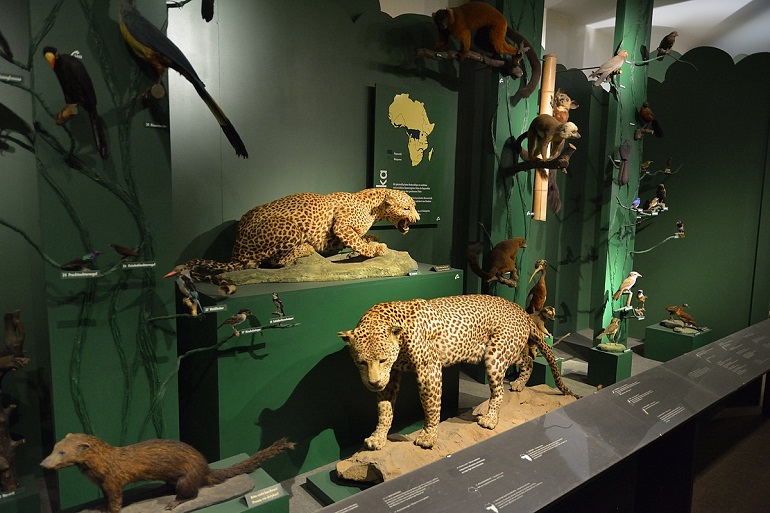
The Senckenberg Museum for Natural History in Görlitz provides a captivating exploration of the natural world with a strong focus on the biodiversity and geology of the Upper Lusatia region. Its permanent exhibitions feature lifelike dioramas that present the area's distinct habitats and wildlife, including wolves and sea eagles. A significant highlight is the museum's dedication to soil science, showcased through a unique exhibit that magnifies a soil column to reveal the complex ecosystem within. The museum also houses a vivarium with 70 living animal species from various global regions, such as the green tree monitor lizard from Papua New Guinea and native species like the grass snake. With over six million objects in its collections, the museum serves as a vital research centre, particularly in the fields of soil zoology, botany, and geology.
Barockhaus (Görlitzer Sammlungen für Geschichte und Kultur)
Barockhaus is a grand Baroque townhouse in which visitors encounter lavish living quarters from the 18th century, complete with stucco ceilings, sumptuous paintings, sculptures, goldsmith’s work, and porcelain. Highlights include the Upper Lusatian Library of Sciences and a Baroque curiosity cabinet filled with specimens from nature and science. The museum provides a vivid window into the Age of Enlightenment and the cultural and intellectual history of Görlitz.
Historic Museum of Görlitz
Set within a magnificent Renaissance building, the Historic Museum of Görlitz is notable for its intricate 16th-century façade featuring biblical reliefs. The museum presents the art history of the city and traces its development through the centuries, illustrating Görlitz’s significance as a cultural and trade hub. The exhibitions are well-curated and the atmosphere is engaging, making local history both accessible and enjoyable.
Görlitz Museum of Photography
This unique museum is dedicated to preserving the photographic heritage of Görlitz, including the history and products of the city’s renowned optical industry. The collection features historic cameras, photographs, and exhibitions on GDR-era photographic culture. A special focus is placed on the achievements of local firms such as Meyer-Optik Görlitz, making it a must-visit for those interested in the intersection of technology, industry, and art.
Kaisertrutz
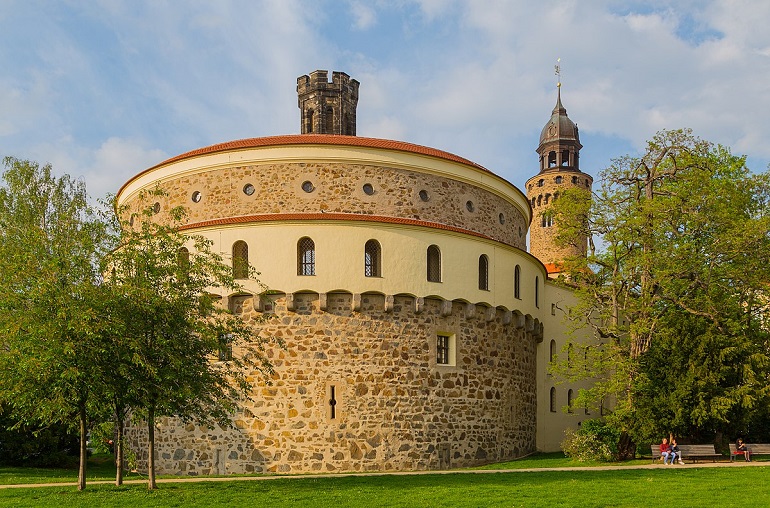
Originally a city fortification, Kaisertrutz now serves as a museum that traces the development of Görlitz from prehistoric times to the present day. The unique round tower houses exhibits on urban growth, trade, wars, and local culture, offering a panoramic view over the city.
Local Cuisine
Visitors can savour hearty regional fare such as Sächsischer Sauerbraten, a marinated pot roast typically served with dumplings and red cabbage, or enjoy Quarkkäulchen, small potato pancakes enriched with quark cheese and often accompanied by apple compote. Sweet-toothed travellers should not miss Eierschecke, a layered cake of pastry, quark and custard that is a Saxon classic. Alongside these traditional dishes, local restaurants often feature freshwater fish from the Lusatian countryside and seasonal delights like mushrooms and asparagus, making Görlitz a rewarding destination for those seeking authentic flavours of Saxony.
Getting There
By train Görlitz is well connected by regional rail services, with frequent trains running from Dresden and other Saxon cities, making it a convenient option for those wishing to travel comfortably and directly into the town centre.
By coach or bus Long-distance coaches operate routes from major German cities to Görlitz, while regional and local buses also link surrounding towns, offering flexibility for those preferring road travel.
By car The town is easily accessible by motorway and well-maintained regional roads, with straightforward approaches from Dresden, Bautzen, and the border with Poland, which make driving an attractive alternative for travellers who value independence and scenic routes.