



| Contents |
|---|

Introduction
Located at the end of the Schlei Förde (Slien Fjord), Schleswig (pop. 27,000) grew out of the Viking settlement of Haithabu (Hedeby), which flourished as one of northern Europe's biggest trading town between the 9th and 10th centuries.
From the 12th century, the region was ruled by the Dukes of Gottorf, whose palace houses the Schleswig-Holstein Landesmuseum, the city's main attraction. The other one is the pretty fishing village of Holm, southeast of the Old Town.
Interesting Facts about Schleswig
- Schleswig sits on the Schlei fjord-like inlet, a Baltic Sea arm that has shaped the town’s maritime character for centuries.
- The town’s name derives from Old Norse/Old Danish, meaning “bay of the Schlei,” reflecting its Viking-age roots.
- Schleswig was a key centre of the Viking trading network due to its proximity to Hedeby, one of Northern Europe’s most important early medieval emporia.
- Gottorf Castle in Schleswig served as the residence of the Dukes of Schleswig-Holstein-Gottorf and now houses major state museums.
- The Baroque Globe of Gottorf, an enormous walk-in globe from the 17th century, is one of the town’s most unusual historic artefacts.
- St Peter’s Cathedral (Dom zu Schleswig), begun in the 12th century, features a striking late Gothic tower visible across the flat Schleswig landscape.
- Schleswig has alternated between Danish and German rule over the centuries, mirroring the complex history of the broader Schleswig region.
- The Holm district, a former fishermen’s quarter of small gabled houses around a chapel, preserves Schleswig’s traditional waterside architecture.
- Schleswig is the administrative seat of the Schleswig-Flensburg district, despite being a town of modest size.
- The Dannewerk (Danevirke), a vast system of ancient earthworks south of Schleswig, underscores the area’s strategic frontier role in the Viking and medieval periods.
- The State Museum of Art and Cultural History at Gottorf displays significant collections from prehistoric to modern times.
- Schleswig’s location between North Sea and Baltic trade routes made it a cultural crossroads of Germanic and Scandinavian influences.
- The town hosts events linked to its maritime and Viking heritage, drawing visitors interested in living history and archaeology.
- Schleswig’s Schlei shoreline offers birdlife-rich wetlands, making it a draw for nature enthusiasts and cyclists.
- The town’s urban fabric blends medieval lanes, ducal residences, and post-war architecture, reflecting continuous adaptation over a millennium.
History
The history of Schleswig stretches back over a millennium, rooted in the struggles between Danish and Germanic peoples for control of this strategically important region. Originally known as South Jutland, Schleswig had been under Danish control since the fifth century. The area was first inhabited by a mixture of West Germanic tribes including the Cimbri, Angles, and Jutes, later joined by North Germanic Danes and West Germanic Frisians. Archaeological evidence of this early history can be found near the town of Schleswig itself, where the impressive Danewerk fortification wall stands as testament to Danish defensive efforts from the 9th to 12th centuries. Nearby lie the ruins of Haithabu, the historic Viking trading settlement that flourished until its ultimate destruction by fire in 1066. The village of Sliasthorp an der Schlei was already mentioned in the Royal Frankish Annals in 804, though the Vikings initially favoured the more strategic location at Haddeby Noor for their trading centre, which at its height housed more than 1,000 inhabitants.
During the mediaeval period, Schleswig's political landscape transformed significantly as it became a duchy within Denmark in the 12th century due to infighting in the Danish royal house. The region received its town charter around 1200 and developed into an important episcopal seat during the Middle Ages. From 1460, the King of Denmark ruled both Schleswig and Holstein as their duke, though Schleswig remained part of Denmark whilst Holstein remained within the Holy Roman Empire. This dual arrangement created the foundation for centuries of territorial disputes. The Duchy of Schleswig, also known as Southern Jutland, maintained a semi-autonomous status whilst serving as a Danish fief, creating ongoing tensions with the nobility of Holstein within the Holy Roman Empire. Evidence of Danish cultural dominance can be seen in the numerous Scandinavian place-names scattered throughout the lands north of the Eider River, mixed with German names that reflect later Germanic influence.
The 19th century brought dramatic political upheaval as both Danes and Germans claimed rightful sovereignty over Schleswig-Holstein, culminating in the famous Schleswig-Holstein Question. Whilst Holstein's population remained entirely ethnically German, Schleswig had been predominantly Danish until extensive German influence in the late 1700s and early 1800s led to the Germanisation of South Schleswig. The First Schleswig War of 1848 saw Danish victory when Denmark attempted formal annexation, but the Second Schleswig War of 1864 resulted in Prussian and Austrian triumph, leading to Schleswig's incorporation into Prussia in 1867. Following Germany's defeat in World War I, the 1920 Schleswig plebiscites mandated by the Treaty of Versailles resulted in Danish-speaking North Schleswig returning to Denmark, where it was renamed South Jutland. Meanwhile, the remaining German portion of Schleswig merged with Holstein to form the modern state of Schleswig-Holstein, with the historic town of Schleswig serving as capital of the Prussian province until Kiel assumed this role after World War II.
Main Attractions
Gottorf Castle and Baroque Garden
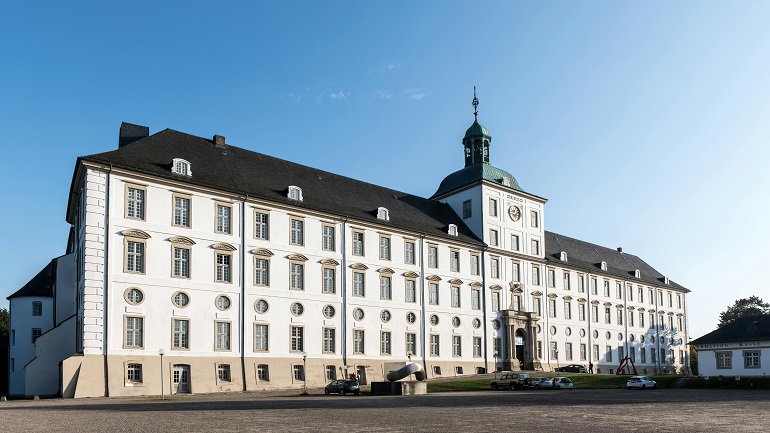
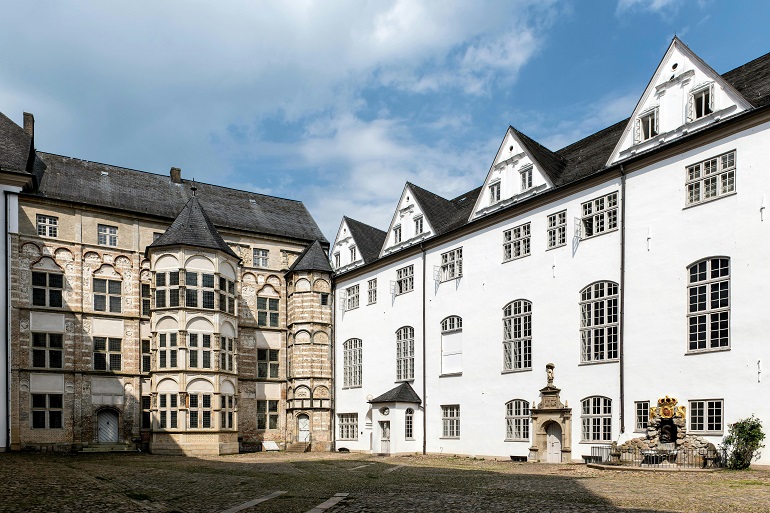
Gottorf Castle, set on an island in the Schlei, developed from a medieval stronghold into the residence of the dukes of Schleswig-Holstein-Gottorf, with its present Baroque form shaped largely in the 16th–18th centuries. The complex includes courtyards, moats and causeways, and is surrounded by extensive grounds. The reconstructed Baroque Garden follows a 17th-century terraced plan with axial symmetry, parterres and water features, reinstated from historical surveys and engravings. Its elevated layout provides framed views over the parkland and water, while avenues and sculptural elements illustrate period garden design. Access to the outdoor areas is generally open during daylight hours, with seasonal maintenance occasionally restricting sections of the terraces and paths.
Prince’s Palace (Prinzenpalais)
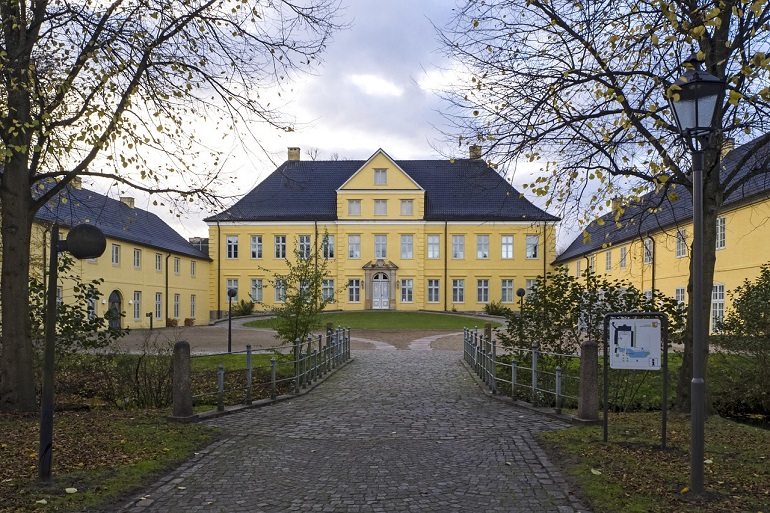
The Prince’s Palace is an early 18th-century Baroque residence built 1711–1714 on Königstraße as a townhouse for the Dukes of Schleswig-Holstein-Gottorf and later used to accommodate members of the ducal family. The three-storey, stuccoed façade presents a balanced, classical arrangement with a central portal and restrained ornamentation typical of the period, set back slightly from the street behind a short forecourt. Inside, the historic layout followed a representative suite on the piano nobile with service areas to the rear, reflecting its function as an urban residence rather than a fortified seat. The building stands within walking distance of Schleswig Cathedral and the old town, forming part of the ensemble of civic and aristocratic architecture that documents Schleswig’s role as a former ducal centre. Public access depends on current institutional use and programming, and exterior viewing from the street is straightforward.
Schleswig Cathedral (St. Petri-Dom)
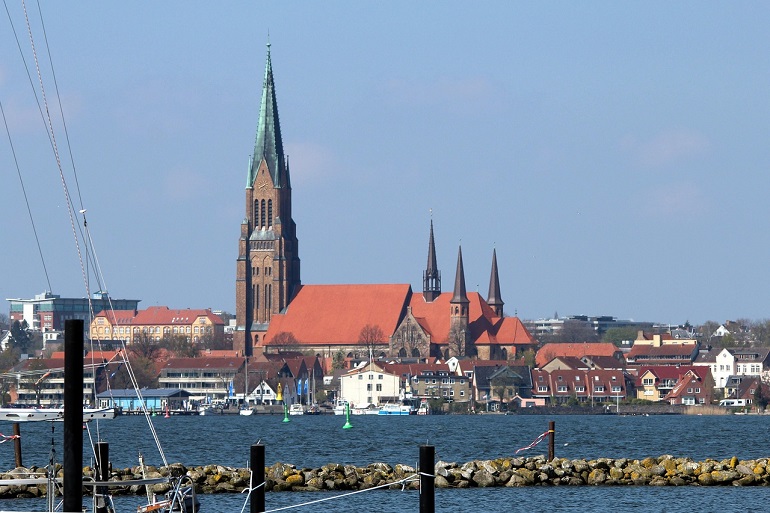
Schleswig Cathedral is a brick and sandstone Gothic cathedral whose origins date to the 12th century, incorporating earlier Romanesque elements. It is known for the Bordesholm Altar by Hans Brüggemann (early 16th century), a large late Gothic carved altarpiece originally from Bordesholm Abbey. The 112m west tower, completed in the 19th century, offers views over the town, the Schlei inlet and surrounding landscapes when open to visitors. The cathedral precinct includes medieval and later ecclesiastical buildings, with tombs of regional nobility and bishops reflecting Schleswig’s role as a religious centre. Regular services and occasional concerts take place, and access to specific areas may vary according to worship schedules.
Schleswig Old Town (Altstadt) and Rathausmarkt
The old town encompasses a compact network of streets between the cathedral and the harbourfront, with merchant houses, gabled façades and civic buildings reflecting Schleswig’s role as a former ducal and ecclesiastical seat and trading place on the Schlei. The Rathausmarkt serves as a focal square for markets and events, surrounded by 19th and early 20th-century administrative and commercial architecture. Streets such as Schubystraße and Stadtweg connect the commercial centre with older residential areas, offering consistent examples of northern German brickwork and stuccoed structures. Wayfinding is straightforward on foot, with pedestrian crossings linking the core to the waterfront.
Holm Quarter
Holm is Schleswig’s historic fishermen’s quarter located on a small peninsula along the Schlei. It is characterised by a ring of modest 18th and 19th-century houses around a central green and the small Holm church (Friedenskirche). The layout reflects a communal structure historically shared by fishing families, with narrow lanes leading to moorings and slipways on the waterfront. Some buildings display traditional thatched or tiled roofs and low façades typical of the region. The area remains residential, so access is by public streets and paths without formal admissions, and basic services are available nearby in the old town.
Schleswig Harbour and Schlei Promenade
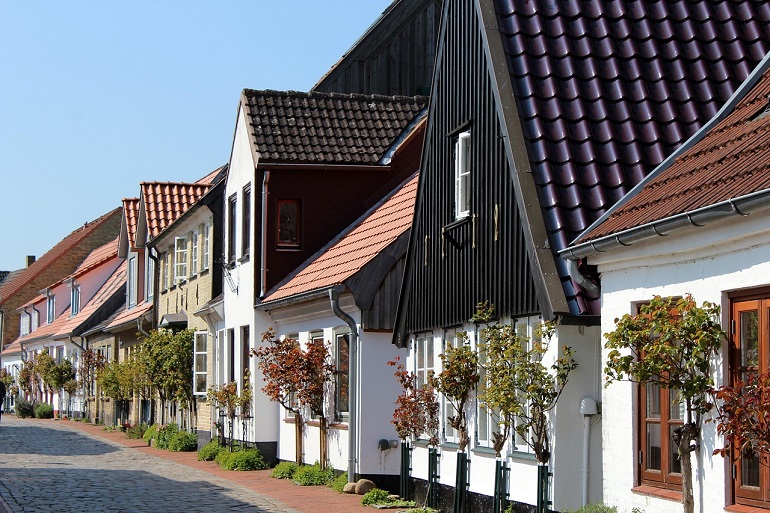
The harbour area lines the inner Schlei fjord, comprising marina berths, quays and a continuous promenade suitable for walking and cycling. Working and leisure vessels use the facilities, and seasonal passenger boats operate on routes along the Schlei to nearby settlements. Information boards describe the waterway’s role as a navigable inlet connecting to the Baltic Sea via the Schleimünde. The promenade provides access to seating areas, viewing points and occasional public art, with clear sightlines to the cathedral and Gottorf Castle. Basic amenities, including cafés and kiosks, are located adjacent to the walkway.
Friedrichsberg Lakefront and Park Areas
The Friedrichsberg district west of the centre includes green spaces and small lakes that connect to the Schlei via ditches and wetlands. Paths are laid out for casual walking and jogging, with benches and play areas integrated into the landscaped zones. Tree-lined avenues and open lawns provide clearings with views towards Gottorf Castle’s silhouette. The area functions as a local recreational corridor with straightforward access from residential streets and cycle routes. Facilities are basic, focusing on open-air use without formal attractions.
Stadtpark Königswiesen
Königswiesen is Schleswig’s principal waterfront park set along a broad curve of the Schlei, used for open-air recreation and periodic events. It features mown lawns, tree clusters, playground equipment and direct access to the shore, with pathways designed for pedestrians and cyclists. The park’s configuration accommodates temporary stages and festival infrastructure when required, while remaining open as a public green space outside event periods. Its location provides unobstructed views across the water to the old town and cathedral. Wayfinding is simple with multiple entries from adjacent streets and parking areas.
Sankt-Jürgen Quarter and Monastic Remains
The Sankt-Jürgen area preserves elements associated with medieval charitable and monastic foundations historically located outside the old town walls. Surviving structures and plot patterns mark the former presence of hospitals and religious precincts serving travellers and the poor. Residential development has replaced much of the earlier fabric, but street alignments and boundary features indicate medieval origins. The district connects to the broader urban fabric through local roads and footpaths, offering a low-intensity walk through layers of urban development. No admission is required as the area is integrated into the city’s public realm.
Around Schleswig
Haddebyer Noor and Haithabu Surroundings
South of Schleswig, the Haddebyer Noor is a lagoon-like expansion of the Schlei bordered by fields, woodlands and paths that trace the outskirts of the early medieval trading settlement of Haithabu. The landscape preserves topographical features such as semicircular embankments and harbour approaches visible in the terrain. Waymarked trails provide viewpoints over the water and towards the Dannewerk alignment, illustrating the historical connection between defence lines and the trading site. Birdlife is present year-round, and access is via footpaths and cycleways from Schleswig and nearby villages.
Dannewerk (Danevirke) Earthworks and Ramparts
South of Schleswig lie the Dannewerk earthworks, a system of ramparts and ditches dating from the early medieval period, constructed and expanded over centuries to control movement across the Jutland Peninsula. Several sections of rampart and wall lines remain visible in the landscape, accessible via marked paths. The earthworks illustrate defensive strategies and territorial boundaries associated with Danish royal authority and later conflicts. Viewing platforms and signage at key segments enable self-guided visits to the outdoor features. Access points are spread along rural roads, with parking at designated areas.
Top Museums
Schloss Gottorf: The Museum Island
Schloss Gottorf anchors Schleswig’s “museum island,” housing two major institutions: the Museum of Art and Cultural History and the Archaeological Museum, alongside the reconstructed Baroque garden and the remarkable Gottorf Globe, often described as the first planetarium-like structure of its kind in the world. The castle complex presents Schleswig-Holstein’s history and material culture on a grand scale, from prehistory to contemporary art, with special highlights accessible across the estate.
- The Schloss Gottorf complex brings together major collections, spectacular archaeological finds, and curated art displays within the castle’s historic rooms, with the garden and the giant globe forming integral parts of the visit experience.
Museum of Art and Cultural History Schloss Gottorf
As part of the largest museum complex between Hamburg and Copenhagen, this museum spans medieval church art through to modern and contemporary work, with around 120,000 objects and selected displays presented across more than 15,000m² on the museum island. Expect faience, works linked to Lucas Cranach the Elder and his workshop, and 20th-century art with a strong expressionist emphasis through the Horn Foundation collection. The castle’s interiors are used as exhibition spaces, intertwining architecture and collection, and the reconstructed Gottorf Globe and the surrounding Baroque garden are signature features of a visit.
- The institution’s roots run back to 1875, evolving from the Thaulow Museum and developing wide-ranging collections that mirror Schleswig-Holstein’s cultural history.
Archaeological Museum Schloss Gottorf
The Archaeological Museum has helped shape research into northern European prehistory and early history and holds more than 10 million finds spanning roughly 80,000 years of human activity. Among its standout objects are the Nydam Boat, an exceptionally preserved rowing vessel from the era of the Teutons, and renowned bog bodies including the Child of Windeby, displayed with context that connects ritual, environment, and conservation. The museum’s work links closely to regional excavations and academic partners, and it is closely affiliated with the Viking Museum Haithabu, reflecting the continuity of the region’s archaeological narrative.
- The museum’s lineage reaches back to the 1830s and has been located with the art museum at the Schloss Gottorf site since 1950, now together under the Schleswig-Holstein State Museums Foundation.
The Gottorf Globe and Baroque Garden
Adjacent to the castle, the reconstructed giant globe—celebrated as the first planetarium—sits within a formal Baroque garden, both restored as part of the wider museum island experience. The globe merges scientific curiosity and courtly spectacle, while the garden provides a historic landscape that frames the castle’s collections with period horticulture and design.
- These features are integral to the state museum foundation’s ensemble, connecting art, science, and environment in one campus.
History Museums
Viking Museum Haithabu (Wikinger Museum Haithabu)
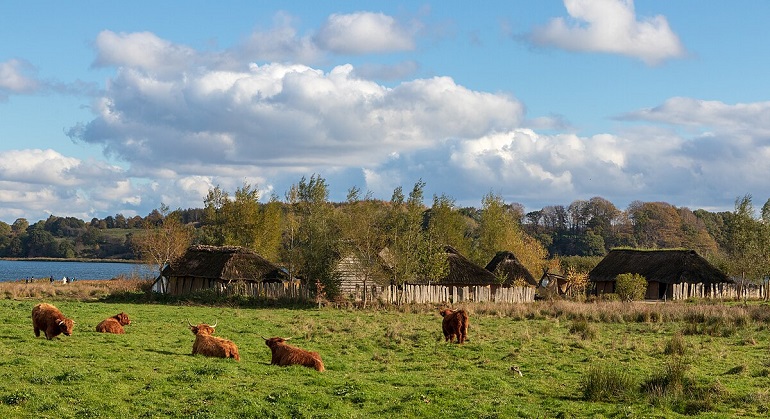
On the edge of the former Viking emporium Hedeby, the museum is one of Germany’s most important archaeological museums, combining original finds, models, and multimedia to animate daily life a millennium ago. A footpath leads to reconstructed Viking-era houses and a landing bridge built directly from excavation evidence, offering an immersive sense of the settlement’s craft, trade, and maritime world. Hedeby/Haithabu’s significance as a borderland marketplace is threaded through the exhibition narrative, situating it within Scandinavian and continental networks.
- Haithabu is affiliated with the state museums at Schloss Gottorf and forms a core part of Schleswig’s interconnected heritage landscape.
Danevirke Museum and the Danewerk Earthworks
Southwest of Schleswig, the Danevirke monumental earthwork—integrated into the landscape over centuries—once connected Haithabu to Hollingstedt, guarding the southern frontier of the Danish realm and controlling a vital overland trade corridor between the North and Baltic Seas. The Danevirke Museum interprets this extensive defensive and commercial system and situates it within the shared Danish-German border history, with the broader site recognised for its exceptional significance.
- The museum experience complements Haithabu’s story by revealing the strategic infrastructure that sustained the Viking world in the region.
Stadtmuseum Schleswig
The Stadtmuseum presents the town’s layered identity, typically focusing on local history, art, and civic heritage within Schleswig’s urban context. While smaller in scope than the state museums, it rounds out a visit by highlighting the city’s own narratives and notable personalities, providing a municipal lens on the Schlei and its historical development.
- Together with the larger institutions, it helps stitch personal and local stories into Schleswig’s state and archaeological frameworks.
Local Cuisine
Freshly caught fish from the nearby Schlei and Baltic Sea are central to local dining, with delicacies such as Matjes herring, often served with onions, apples, and potatoes. Hearty dishes reflect the region’s farming culture, including Labskaus, a comforting seafarer’s meal made with salted beef, beetroot, and potatoes, and Grünkohl mit Pinkel, a winter classic of curly kale with smoked sausage. Sweet-toothed travellers can indulge in Rote Grütze, a vibrant red berry pudding typically enjoyed with cream or vanilla sauce. Together, these specialities highlight the blend of land and sea that defines Schleswig’s culinary identity.
Getting There
By train Schleswig is well-connected by rail, with regular regional services linking it to Hamburg, Kiel, and Flensburg, making it a straightforward and comfortable option for travellers arriving from larger cities.
By coach or bus Long-distance coaches also serve the area, stopping conveniently in Schleswig and offering a good option for those travelling from other parts of Germany or neighbouring regions, while local buses provide easy onward connections within the town and the surrounding countryside.
By car Schleswig is easily accessible via the A7 motorway, which runs north–south between Hamburg and the Danish border, ensuring a direct and flexible route for those who prefer the independence of driving.
| Travel destinations in Schleswig-Holstein | |||||||||||
|---|---|---|---|---|---|---|---|---|---|---|---|
|
|
|
| ||||||||
|
|
|
| ||||||||


