



| Contents |
|---|

The Rococo Castle.
Introduction
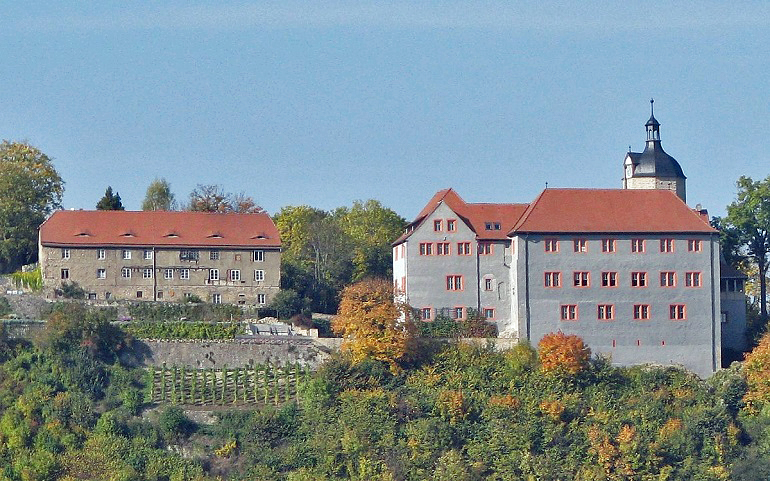
Perched dramatically on a shell limestone cliff 90 metres above the meandering Saale Valley, the Dornburger Schlösser comprise one of Thuringia's most remarkable architectural ensembles. This unique collection of three palaces, each representing a different historical era, offers visitors an extraordinary journey through centuries of German architectural evolution whilst providing breathtaking panoramic views across the surrounding countryside. The three palaces are the Altes Schloss, Renaissanceschloss, and Rokokoschloss are located in Dornburg-Camburg, 11 km north of Jena. Former possessions of the Dukes of Saxe-Weimar-Eisenach, they reflect distinct architectural styles spanning the Middle Ages to the 18th century.
The Alte Schloss (old castle) is an eclectic mix of medieval, Renaissance and Baroque styles and is the larger of the three. The Renaissanceschloss (Renaissance castle) was built in 1539 in replacement of a 14th-century manor house. The Italian-style Rokokoschloss (Rococo castle), erected in 1774, is the smallest but also the prettiest. It is more a villa or a pavilion than an actual castle. A common park for the three castles was laid in the 18th and 19th centuries based on the French and English landscape gardening techniques. The castles are accessible for guided tours as well as independent visits.
Interesting Facts about the Dornburger Schlösser
- The Dornburger Schlösser are a unique ensemble of three palaces—medieval, Renaissance, and Rococo—perched high above the Saale Valley in Thuringia, Germany.
- The oldest palace, the Altes Schloss, has origins in the High Middle Ages and features a distinctive hexagonal keep, blending Romanesque and baroque elements.
- The Renaissance palace was built in 1539 and later became a favourite summer retreat for Grand Duke Carl August, who hosted Johann Wolfgang von Goethe there for extended stays.
- The Rococo palace, constructed in the mid-18th century, dazzles with its ornate ballroom and was the site of Germany’s first-ever constitutional parliament meeting in the winter of 1818–1819.
- The ensemble’s terraced gardens, replete with roses, fruit trees, and vineyards, offer panoramic views and are open to the public for free strolls from early morning until dusk.
- The Dornburger Schlösser have served many purposes over the centuries—including as administrative centre, cotton mill, school, museum, and university facility—reflecting their dynamic history.
- Today, the palaces are a lively cultural venue, hosting art exhibitions, concerts, and the annual Dornburg Palace Night, which fills the grounds with music and lights every August.
History
The Dornburger Schlösser in Thuringia represent a fascinating ensemble of three distinct palaces that chronicle centuries of German architectural and political history on a dramatic shell limestone cliff above the River Saale. The site's origins trace back to a 10th-century royal palace (Königspfalz) established during the Ottonian dynasty. King Otto I visited Dornburg on multiple occasions between 952 and 965, including hosting a significant imperial diet (Reichstag) in 965. The location continued to serve as an imperial residence under Otto II, who held another Reichstag there in 980, and Heinrich II in 1004. After the Ottonian line ended, the medieval fortress fell into the hands of various noble families, including the counts of Groitzsch in 1083, before eventually passing to the Saxon ducal house of Wettin in the 14th century.
The Altes Schloss (Old Palace), the northernmost and oldest of the trio, was constructed around 1522 on the foundations of a ministerial castle that had been severely damaged during the Saxon Fraternal War in 1451. This Renaissance-style structure underwent significant expansion between 1562 and 1573 under Duke Johann Friedrich II of Saxony. The palace served as a widow's seat for three generations of Saxon duchesses and later functioned as an administrative centre for the Dornburg district. During the 18th century, the building was repurposed for various commercial uses, including a cotton spinning mill, textile factory, and school. The palace fell into decline during the 19th century until Grand Duke Carl Alexander initiated the first conservation efforts in 1883. Following German reunification, extensive restoration work was completed, and since 2004, the building has served as a meeting centre for the Friedrich Schiller University of Jena.
The Renaissance Palace, built in 1539 by Volrad von Watzdorf on the site of a 14th-century manor house, represents the middle structure both chronologically and geographically. The palace was expanded into its current form between 1605 and 1608 in the late Saxon Renaissance style. After changing hands several times due to financial difficulties, Grand Duke Carl August of Saxe-Weimar-Eisenach purchased the property in 1824 and transformed it into a comfortable residential palace, commissioning the creation of an English landscape garden that remains today. The palace gained literary significance when Johann Wolfgang von Goethe retreated there following Carl August's death, residing from July to September 1828 and composing his celebrated "Dornburger Gedichte" (Dornburg Poems). The Rococo Palace, the youngest and most ornate of the three, was commissioned in 1732 by Duke Ernst August of Saxe-Weimar-Eisenach, who demolished over 21 townhouses to create space for this elaborate pleasure palace modelled after Augustus the Strong's military camps. After the original structure was demolished due to construction defects, architect Gottfried Heinrich Krohne rebuilt the palace between 1736 and 1747 in the Italian Rococo style. The palace achieved particular historical importance in the winter of 1818-19 when it hosted the first parliament of a constitutional monarchy in Germany.
Description
The Three Palaces
The Old Palace (Altes Schloss)
The northernmost and oldest of the trio, the Old Palace traces its origins to the High Middle Ages, with the current structure dating from 1522. Built upon the foundations of an earlier ministerial castle destroyed during the Saxon fratricidal war, this imposing structure showcases a fascinating blend of architectural periods. The palace's most striking feature is its distinctive hexagonal keep, which rises majestically from the complex and serves as a powerful reminder of its medieval castle origins.
The building underwent significant Renaissance modifications during the 16th century, particularly between 1562 and 1573 under Duke Johann Friedrich II of Saxony. This transformation softened the fortress-like appearance whilst maintaining its commanding presence. The palace combines Romanesque, late-Gothic and baroque elements, creating a unique architectural tapestry that tells the story of its evolution through the centuries.

Unfortunately, the Old Palace can only be viewed from the exterior, as it currently serves as a conference and meeting centre for the Friedrich Schiller University of Jena. The building's exterior walls tell tales of its varied past, having served at different times as an administrative seat, cotton spinning mill, textile factory, and school before its current educational role.
The Renaissance Palace (Renaissance-Schloss)
The middle palace of the ensemble, the Renaissance Palace, was constructed in 1539 by Volrad von Watzdorf on the site of an earlier manor house. This elegant residential building embodies the architectural principles of the 16th century Renaissance, with its characteristic white gables and distinctive turrets creating a striking silhouette against the valley backdrop.
The palace gained particular significance during the 19th century when Grand Duke Carl August acquired it in 1824 and undertook extensive renovations to transform it into a comfortable residence. The building's fame, however, rests largely on its association with Johann Wolfgang von Goethe, Germany's most celebrated poet. Following the death of his patron Duke Carl August in 1828, Goethe sought solitude here, using the palace as a retreat where he penned some of his famous Dornburg poems and continued his scientific observations.

The palace's interior reflects the refined taste of the Grand Ducal court, though extensive renovation work means the museum within will remain closed until 2028. The building's exterior showcases the elegant proportions and harmonious details characteristic of Renaissance architecture, with carefully balanced facades that speak to the sophisticated aesthetic sensibilities of the period.
The Rococo Palace (Rokoko-Schloss)
The youngest and most ornate of the three palaces, the Rococo Palace represents the pinnacle of 18th-century courtly elegance. Commissioned by Duke Ernst August I of Saxe-Weimar in 1732, the original structure suffered from construction defects and was subsequently demolished. The current palace, designed by Franconian architect Gottfried Heinrich Krohne, was built between 1736 and 1741 and stands as a masterpiece of Rococo architecture.
The palace's exterior captivates with its pink-and-yellow outer walls, ornate trim around windows and doors, and distinctive fish-scale roofing topped with pointed finials. This charming colour scheme and decorative detailing create an almost fairy-tale appearance that perfectly embodies the playful spirit of the Rococo period.
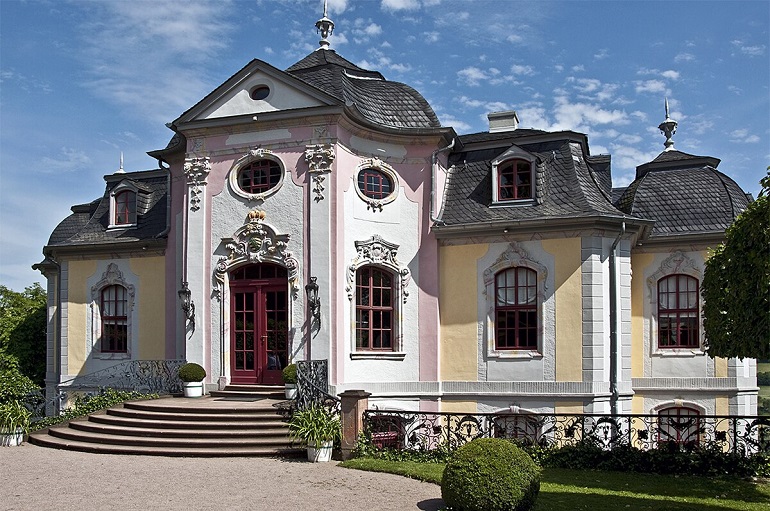
The interior's crowning glory is the magnificent ballroom with colourful stucco marble work that exemplifies the opulent elegance of 18th-century court culture. The ballroom's ornate decorations, featuring intricate stucco work and elaborate artistic details, transport visitors back to an age of courtly splendour and refined entertainment. This space, along with other elegantly appointed rooms, showcases the sophisticated lifestyle of the ducal court and the period's love of decorative arts.
The palace served an important political function when, between 1817 and 1818, it hosted the first elected state parliament of the Duchy of Saxe-Weimar-Eisenach, making it historically significant as the venue for Germany's first partially freely elected state parliament of a principality.
The Gardens and Landscape
The three palaces are unified by an extraordinary garden complex that represents one of the finest examples of landscape design in Thuringia. The gardens, largely redesigned by court gardener Carl August Christian Sckell beginning in 1824, masterfully combine different horticultural styles to create a cohesive and breathtaking whole.
Garden Design and Layout
The gardens are ingeniously laid out on five terraces, each offering different perspectives and experiences. This terraced design makes brilliant use of the steep topography, creating dramatic views whilst providing intimate garden spaces. The design philosophy combines elements of both French formal gardens and English landscape gardens, reflecting the changing tastes of the 19th century.
The English landscape garden sections feature gently sloping areas with naturalistic plantings, winding paths, and carefully composed vistas that appear effortless but are the result of sophisticated design. These areas provide a romantic contrast to the more formal elements and invite leisurely strolling and contemplation.
The Rose Gardens
Perhaps the most celebrated feature of the garden complex is the elaborate rose garden system. Romantic rose arbours create enchanting walkways, whilst the Rose Arbour Walk near the Rococo Palace provides a fragrant promenade with spectacular valley views. The Tea Piazza, added during the early 19th century renovations, offers an elegant gathering space surrounded by carefully tended rose plantings.
The roses reach their spectacular peak during the annual Rose Festival in late June, when thousands of blooms create a riot of colour and fragrance that has inspired visitors for generations. These gardens have been celebrated since Goethe's time, who wrote enthusiastically about the "rose arbours so bedecked as to appear fairy-like."
Vineyard Terraces
The garden's integration with the landscape is perhaps most dramatically expressed in the steeply sloping vineyard terraces that cascade down towards the Saale Valley. These terraces serve both practical and aesthetic purposes, producing wine whilst creating striking visual patterns on the hillside. The vineyard tradition here spans over 1,000 years, and the reconstructed vineyard cottage from 1999 serves as a charming focal point and shelter.
The terraces are accessed by restored vineyard staircases that allow visitors to descend through the different levels, each offering increasingly spectacular views across the valley. From the pentagonal viewing terrace beside the Rococo Palace, visitors can appreciate the full scope of this remarkable landscape design.
Formal Garden Elements

The gardens also feature more formal elements, including geometric flower beds and carefully maintained grass gardens. These structured areas provide visual anchors and demonstrate the sophisticated understanding of garden design principles that characterised the 19th-century landscaping philosophy.
Views and Setting
The Dornburg Palaces' most spectacular feature may well be their incomparable setting high above the Saale Valley. From virtually every vantage point within the complex, visitors are treated to breathtaking panoramic views that stretch across the valley to the distant hills. The university city of Jena, with its distinctive JenTower, provides a modern counterpoint to the historic landscape.
The shell limestone cliff upon which the palaces sit creates a natural viewing platform that feels almost suspended above the valley floor. This dramatic topography not only provides stunning vistas but also creates the impression that the palaces are floating above the landscape, particularly when morning mist fills the valley below.
Cultural Activities and Modern Use
Today, the Dornburger Schlösser successfully blend their historical significance with contemporary cultural programming. The Rococo Palace serves as a venue for temporary exhibitions ranging from princely collections to modern Bauhaus design, whilst also hosting concerts and weddings in its elegant ballroom.
The annual Dornburg Palace Night in August transforms the entire complex into a magical cultural venue, with music, light installations, and artistic performances creating an enchanting atmosphere throughout the gardens and buildings. This event exemplifies how the palaces continue to serve as vibrant cultural centres rather than mere historical monuments.
The grounds also house the Bauhaus Workshop Museum in the former stables, which preserves the only remaining Bauhaus ceramics workshop in its original location. This addition connects the site's historical significance with its role in 20th-century design history, demonstrating the continuing evolution of this remarkable cultural landscape.
Getting There
By train Dornburger Schlösser is accessible by regional train from Jena-Paradies to Dornburg, with journeys taking roughly 11 minutes. From Dornburg station, it’s a steep 20- to 30-minute climb on foot to reach the castles, so be prepared for an uphill walk or consider arranging a taxi for the final ascent.
By coach or bus Intercity buses (notably lines 424 and 442) operate from Jena to Dornburg-Camburg, stopping in the town. Do check the timetables in advance, as departures are not always hourly, and be sure to note the time of the last bus so as not to be stranded in this quiet locale. There are no bus services up the hill to the castles themselves, so a short walk will be required after arrival in Dornburg.
By car The castles can be easily reached by car; Dornburger Schlösser is a short and scenic drive from Jena (about 20 minutes), Weimar (36 minutes), or Erfurt (just under an hour). There is ample parking available near the castles, and from the car park, it is just a short stroll to the palace grounds.
Best Time to Visit
The Dornburger Schlösser are at their most enchanting from late May to early July, when the terraced gardens are lush and the rose arbours surrounding the Rococo Palace erupt into fragrant colour just in time for the long-running Dornburger Rosenfest, staged on the final weekend of June and crowned by the appearance of the newly-elected Rose Queen. During this period daylight is long, temperatures are pleasantly mild, and the museums in the Renaissance and Rococo palaces are open daily (except Wednesday) from 10 a.m. to 5 p.m., while the parks themselves open from 9 a.m. until dusk, giving ample time for unhurried exploration. If you favour a more atmospheric evening visit, return in late August for the candle-lit Schlössernacht, when music and illuminations transform the hill-top ensemble without the full heat of high summer.


