



| Contents |
|---|
Introduction
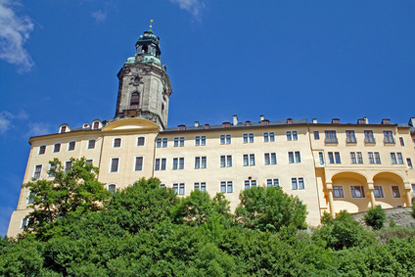
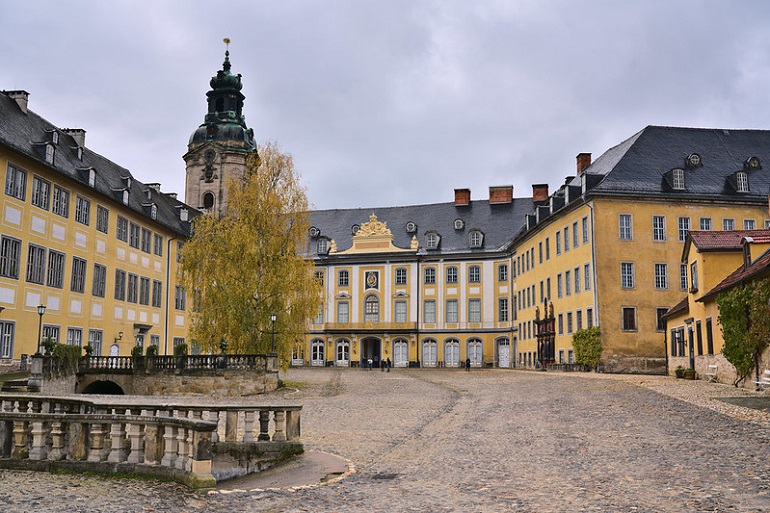
Heidecksburg Palace stands on a rocky spur 60 metres above the historic town of Rudolstadt in Thuringia. Originally founded in the 13th century, the present three-winged Baroque palace was built after a fire in 1735 under Prince Friedrich Anton of Schwarzburg-Rudolstadt to the designs of Johann Christoph Knöffel and completed by Gottfried Heinrich Krohne. Today it houses the Thuringian State Museum, with richly decorated Rococo and Baroque interiors, a porcelain gallery, a historical armory and the “Rococo en miniature” exhibition. Open to visitors daily (except Monday) from 10 am to 6 pm (5 pm November–March), Heidecksburg attracts over 100 000 guests a year and offers guided tours of its grand festival hall and princely apartments.
Interesting Facts about Heidecksburg Palace
- Heidecksburg Castle is a prominent Baroque palace situated on a mountain top, making it visible from miles around in Rudolstadt, Thuringia.
- The castle's origins date back to the 13th century, although it was rebuilt in the 18th century following a devastating fire in 1735.
- It served as the residence of the princes of Schwarzburg-Rudolstadt, reflecting centuries of noble life and history.
- The palace interiors are lavishly decorated in both Baroque and Rococo styles, featuring opulent rooms and grand banqueting halls.
- One of its highlights is the two-storey ballroom adorned with elaborate stucco work and ceiling frescoes by noted artists Jean Baptiste Pedrozzi and Lorenz Deisinger.
- A unique feature of the castle is the 'Rococo en miniature' exhibition, displaying a detailed miniature world of 18th-century courtly life.
- The palace houses the Thuringian State Museum and the Rudolstadt State Archives, offering visitors a rich cultural and historical experience.
- Despite its centuries-old history, the castle survived both the 1735 fire and the devastation of World War II, remaining largely intact.
- The name "Heidecksburg" is thought to be an artificial word, possibly referencing the now-lost castle "Neideck" of Arnstadt, with the earliest mention found in a document from 1665.
- The castle is renowned for its impressive collections, including historic armoury, paintings, and regional porcelain masterpieces.
History
Heidecksburg Castle's origins trace back to the 13th century when the Counts of Orlamünde first constructed a fortress on this strategically important hilltop site overlooking Rudolstadt. The Counts of Schwarzburg acquired the castle from the Orlamünde family in 1334, marking the beginning of their long association with this remarkable residence. However, the original medieval structure faced destruction during the Thuringian Counts' War in March 1345, necessitating the construction of a new castle in the second half of the 14th century. By 1571, Count Albrecht VII of Schwarzburg chose the castle as his permanent residence, elevating Rudolstadt to the status of a princely seat and commissioning Flemish architect Georg Robin to design extensions that would reflect the town's new importance.
The castle's transformation into a magnificent Renaissance residence began in earnest after a devastating fire on 25th March 1573 destroyed large portions of the existing structure. Count Albrecht VII seized this opportunity to create an entirely new three-winged Renaissance-style castle, with architects Christoph Junghans and Nikol Schleizer taking over from Georg Robin during the construction process. From 1547 to 1918, Heidecksburg served continuously as the residence of the counts and later princes of Schwarzburg-Rudolstadt, one of Thuringia's oldest noble families. The 17th century brought relatively few structural changes to the castle, but this period of stability prepared the way for the dramatic baroque transformation that would follow.
The castle's current magnificent baroque appearance emerged following another catastrophic fire in 1735 that destroyed both the northern and western wings. Prince Friedrich Anton von Schwarzburg-Rudolstadt commissioned the renowned architect Johann Christoph Knöffel to create a palatial residence befitting his royal status, drawing inspiration from Dresden's baroque splendour and French palatial architecture. When Knöffel was deemed too slow in his progress, Gottfried Heinrich Krohne replaced him as architect, working from 1743 until his death in 1756 and leaving detailed plans for the interior furnishings that were executed over the following two decades. The construction officially concluded in 1786, though work on the southern wing continued into the early 19th century. The palace's crown jewel, the two-storey Festive Hall, features a remarkable ceiling fresco depicting the council of Olympian gods, painted by Giovanni Battista Pedrozzi in just four weeks during 1744. After the last Prince of Schwarzburg-Rudolstadt, Günther Victor, abdicated in 1918 following the monarchy's abolition, the castle was converted into a museum complex that continues to attract over 100,000 visitors annually.
Description
Perched majestically on a hill overlooking the town of Rudolstadt, Heidecksburg Castle is one of Thuringia's most magnificent baroque residences. Its impressive silhouette, often called the "city crown of Rudolstadt," dominates the landscape and offers a unique view over the town.
The palace is a stunning example of baroque architecture, blending stately grandeur with the playful elegance of the rococo style. The exterior is characterised by clear lines and a representative austerity, while the lavishly decorated interior reveals ornate and whimsical details.
The Interior
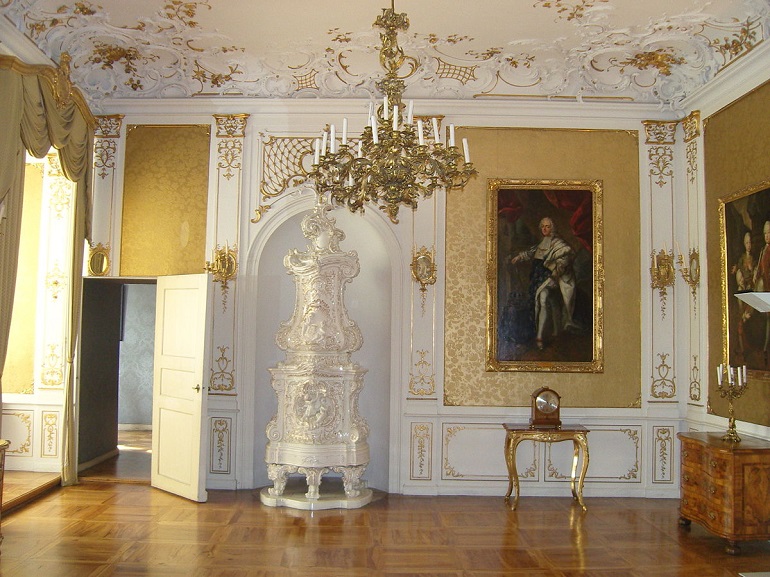
Upon entering, visitors step into a world of sumptuous interiors where light dances across gilded stuccowork, frescoed ceilings and polished marble floors. The central Ballsaal (festival hall) is the crowning jewel: vaulting walls curve in gentle concave and convex rhythms, clad in pastel-tinted stucco marble that shimmers in hues of blue-grey, soft yellow and warm russet. Cornices and rocailles, partially gilded, frame a breathtaking ceiling fresco depicting the Olympian gods, while a recessed gallery lined with mirrors and console tables accommodates the court orchestra above.
Branching off from the Ballsaal is a suite of state apartments. In the Red and Green Halls, portraits of princely ancestors peer down from velvety walls, punctuated by pedestals bearing East Asian porcelain vases. Elegant alcoves once housed ornate stoves, their marble surrounds carved with pastoral motifs, and overdoor paintings by court artists animate the space with scenes of spring and autumn.
Beyond lies the Lady’s Writing Room, its groin-vaulted stucco ceiling lending intimacy to delicate furnishings of mahogany and rosewood. Here, gilt mirrors catch glints of afternoon sun, and a small wrought-iron balcony overlooks the courtyard. The adjoining Tapestry Room enchants with its richly woven walls depicting hunting scenes and mythological beasts, all under a heavy, hand-carved beam ceiling that riffs on the earlier Renaissance chamber still preserved at the castle’s southern tip.
A sequence of more private salons unfolds next: the Golden Salon dazzles with embossed gilt wallpaper and curvaceous Rococo silhouettes, while the Classical Cupid Room offers repose beneath a vaulted ceiling adorned with cherubic medallions. The Delmenhorst Chamber charms with its restrained Mannerist stucco—mythical hunting scenes etched into pale plaster—echoing the earliest phases of the palace’s vast ensemble.
Art aficionados will linger in the Oldenburg Gallery, where lion-fighting tableaux and equestrian portraits line the walls, and in the Painting Gallery, which showcases works by 18th- and 19th-century German masters. The Porcelain Gallery presents exquisite table services from Thuringia’s famed manufactories. For a whimsical finale, the “Rococo en miniature” exhibition reveals a miniature world of paper-crafted palaces and figurines, a delightful tribute to courtly life in diminutive scale.
The palace also has an outstanding collection of armoury, with late medieval swords, Renaissance arquebuses, as well as intricately decorated hunting rifles and crossbows. There is even a Museum of Natural History.
Getting There
By train Rudolstadt (Thür) railway station is centrally located and well-connected by regional and national trains. Upon arrival, it is just a few minutes’ walk to the Market Square. From the station, several stairways lead up to Heidecksburg Castle, taking approximately 15–20 minutes on foot through the picturesque town centre.
By coach or bus The central bus station in Rudolstadt is situated close to both the train station and Market Square. From there, the castle is easily accessible on foot, following routes similar to those from the railway station and requiring a pleasant uphill walk of around 15–20 minutes.
By car Visitors arriving by car will find Heidecksburg Castle signposted within Rudolstadt. There are parking facilities near the castle, and from the car park, it is only a short walk to the entrance, allowing guests to enjoy the scenic setting as they approach the historic site.
Best Time to Visit
The ideal time to visit Heidecksburg Castle is between late spring and early autumn, when the weather in Rudolstadt is at its most agreeable. From May through September, daylight is long and temperatures range from around 15 °C to 25 °C, perfect for exploring the castle’s baroque splendour and its terraced gardens without the chill of winter or the damp of early spring. June and July are particularly warm and lively, coinciding with local festivals that bring the town to life, while May and September offer slightly cooler, quieter conditions for those who prefer a more tranquil experience. By planning your trip during these months, you’ll enjoy both comfortable sightseeing and the full splendour of Heidecksburg’s hilltop vistas.


