



| Contents |
|---|
Introduction
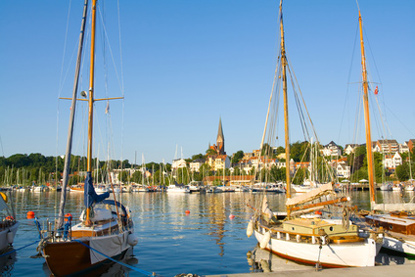
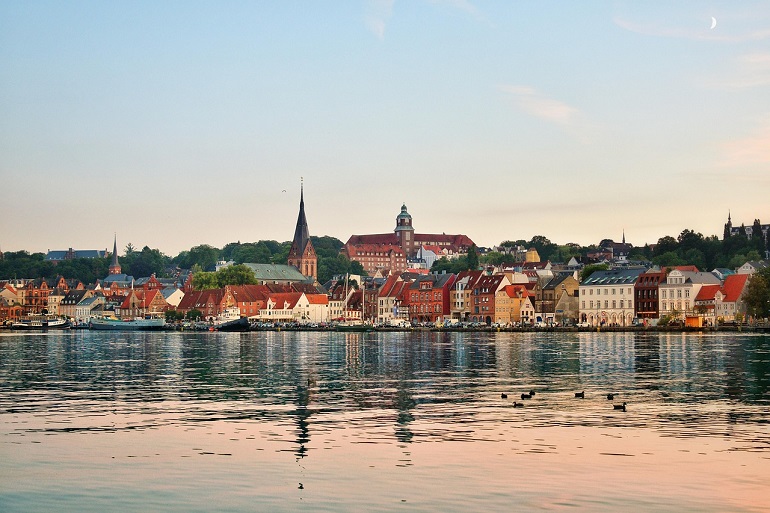
Flensburg (pop. 91,000) is Germany’s northernmost city and the third-largest in Schleswig-Holstein, located at the inland tip of the Flensburg Fjord about 7km south of the Danish border. The city has a bilingual German–Danish character and is home to a recognised Danish minority with dedicated schools and cultural institutions. Flensburg has a long history as a merchant port. In the 16th century it already traded as far as the Mediterranean, Greenland and the Caribbean. In the 18th century, cane sugar was imported from the Danish West Indies and refined in Flensburg. The main sight is the Maritime Museum, which has an interesting section of the rum trade. Flensburg is also known nationally for the Federal Motor Transport Authority’s driver penalty points register, the handball club SG Flensburg-Handewitt, and the Naval Academy at Mürwik.
In May 1945, following Hitler's death, Flensburg was the seat of the last government of Nazi Germany, under Admiral Dönitz.
Interesting Facts about Flensburg
- Historically, Flensburg was the Kingdom of Denmark’s second-biggest port after Copenhagen between 1460 and 1864, before passing to Prussia following the Second Schleswig War.
- In the 1920 Schleswig plebiscite, Flensburg voted to remain part of Germany.
- The city is a cultural and commercial hub for northern Schleswig-Holstein, with industries ranging from shipbuilding and metalworking to rum production.
- Flensburg hosts Germany’s Kraftfahrt-Bundesamt, known nationwide for its points registry of traffic offences (the “Verkehrssünderkartei”).
- A significant Danish minority shapes local life and education in Flensburg, with Danish schools and organisations active since 1920.
- The city is home to SG Flensburg-Handewitt, one of Europe’s prominent handball teams.
- The Naval Academy at nearby Mürwik and the area’s naval role have been notable since before the Second World War, with naval functions resuming after West Germany’s establishment.
- Flensburg briefly hosted the last government of the Third Reich under Karl Dönitz from 1 May 1945 until early June 1945.
- Notable landmarks include the medieval churches of St Nicholas and St Mary, the Nordertor city gate (1595), and the historic Nordermarkt.
- The University of Flensburg, founded in 1946, underpins the city’s profile as a modern northern German university town.
- Flensburg is locally famous for Flensburger Pilsener beer, colloquially called “Flens”.
- The city’s compact centre and medieval lanes reflect its past as a major Baltic port and trading hub on the fjord.
- Contemporary estimates and forecasts place Flensburg’s population around the mid-90,000s, with recent reports citing 96,431 in 2023 and gradual growth projected.
History
Medieval Foundations and Danish Heritage
Flensburg was founded by Danish settlers by 1200 CE at the innermost end of the Flensburg Fjord, strategically positioned where important medieval trade routes converged. The settlement received its town rights in 1284 and rapidly developed into one of the most significant towns in the Duchy of Schleswig. Unlike neighbouring Holstein, Schleswig remained outside the German Holy Roman Empire, which meant that whilst Flensburg maintained contact with the Hanseatic League, it was never formally a member. The town's prosperity was built upon its thriving herring fishery, with kippered herrings being exported inland and to nearly every European country during the Middle Ages. The location offered ideal conditions for settlement, including shelter from heavy winds, proximity to the Hærvejen (Oxen Way) trade route connecting Hamburg to Jutland, and access to the Angelnway trade route between North Frisia and Angeln. Queen Margaret I of Denmark tragically died aboard a ship in Flensburg Harbour on 28 October 1412 during a plague outbreak, highlighting the town's importance as a Danish port.
The Kingdom's Second City and Changing Allegiances
Between 1460 and 1864, Flensburg flourished as the Kingdom of Denmark's second-largest port after Copenhagen, experiencing considerable economic growth during this period. By the 16th century, with a fleet of 200 ships, Flensburg had become the most important Danish trading city within the Baltic region. The town served as the capital of the Duchy of Schleswig from 1851 to 1864 under Danish rule. However, this golden age came to an abrupt end with the Second Schleswig War in 1864, when Flensburg was ceded to the Kingdom of Prussia following the Battle of Flensburg on 6 February 1864. The demographic composition of the town gradually shifted after Prussian rule, with Danish residents initially maintaining a majority until around 1880, when immigration of German workers and replacement of the bureaucracy with German officials altered the balance. On 1 April 1889, Flensburg gained the status of an independent city (kreisfreie Stadt) within the Province of Schleswig-Holstein.
Twentieth Century Transitions and Modern Identity
The question of Flensburg's national identity was finally settled by a League of Nations plebiscite in 1920, where the town voted by a large margin to remain part of Germany, though some northern neighbourhoods were ceded to Denmark. As recognition of this pro-German vote, the government gifted the town a large hall called the "Deutsches Haus" as thanks for German loyalty. During the Second World War, Flensburg escaped the devastating air raids that destroyed other German cities, though it suffered casualties including 20 children killed in a nursery school bombing in 1943. The town gained unexpected historical significance in May 1945 when Admiral Karl Dönitz, Hitler's appointed successor, established the so-called Flensburg Government there, making it the seat of the last Third Reich government for one week until the regime's dissolution on 23 May 1945. Today, Flensburg maintains its dual cultural heritage, with a sizeable Danish community estimated by some to comprise as much as 25% of the population, and the SSW political party representing the Danish minority regularly gaining 20-25% of votes in local elections.
Main Attractions
Eastern Old Town of Flensburg
The Eastern Old Town of Flensburg is one of the oldest districts in the city and contains a network of historic streets and merchants' courtyards. Among these is Süderfischerstraße, which dates back before 1100 and features buildings such as the rebuilt yellow house from around 1828. The area includes the remains of St John's Church from the 12th century and fragmented old gates. This side of the old town preserves its traditional architecture and provides insight into the city's trading heritage and evolution over centuries.
Oluf-Samson Gang
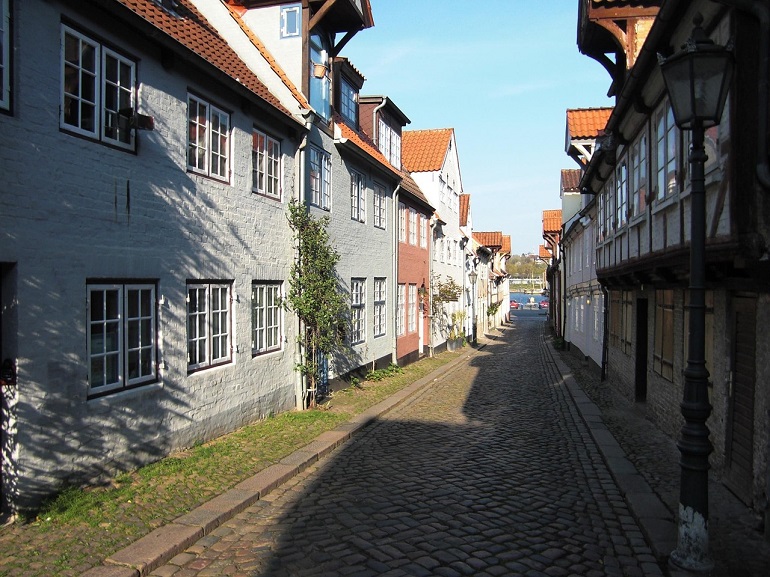
Oluf-Samson Gang is a short, historic street in Flensburg’s old town known for its well-preserved merchants’ and sailors’ houses, many dating from the 18th and 19th centuries. The lane reflects the city’s maritime and trading past, with narrow plots, courtyards, and façades that illustrate traditional North German urban architecture. It has a long association with Flensburg’s rum trade and harbour life due to its proximity to the inner fjord. Today, the street is residential with some small businesses and retains cobbled sections and period details, offering a compact snapshot of the townscape that developed around the harbour.
Südermarkt (South Market)
Südermarkt is one of Flensburg’s principal market squares, located at the southern end of the compact city centre where several shopping streets converge. Historically, it formed part of the town’s commercial hub alongside the Nordermarkt further north, hosting regular markets and public events. The square is framed by a mix of historic and later buildings, and it remains an active urban space used for weekly markets, seasonal stalls, and civic gatherings. Public transport links and pedestrian routes connect Südermarkt to nearby retail areas and landmarks, making it a central orientation point for visitors moving through the inner city.
Nordermarkt (North Market)
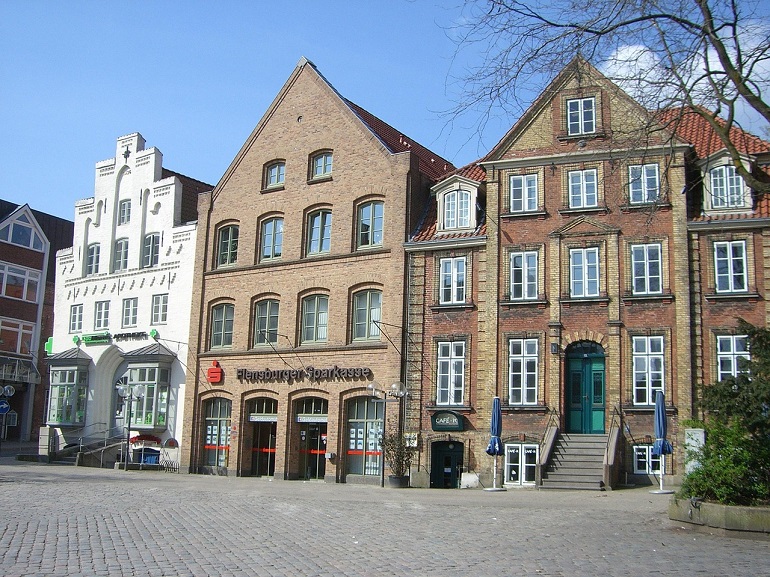
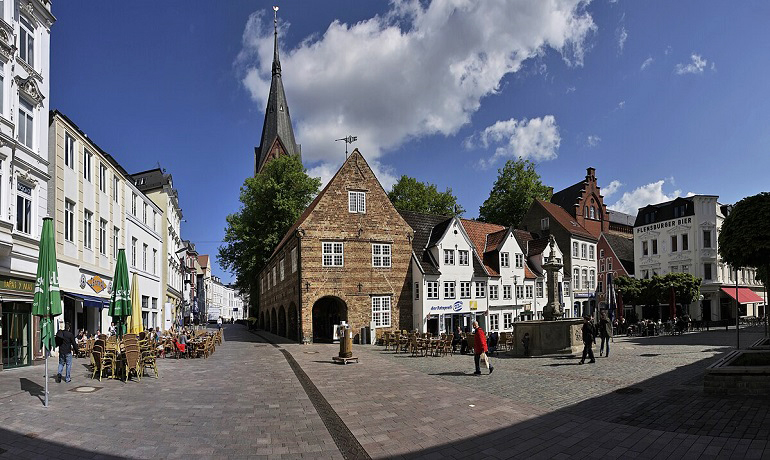
The Nordermarkt is a historic square in Flensburg’s old town, situated at the northern end of the former medieval core and framed by gabled merchants’ houses that reflect the city’s trading past. It functioned for centuries as a market and gathering place linked to the nearby harbour via the old street network, and today continues to host regular markets and seasonal events. The square is paved and largely pedestrian, with cafés and restaurants around its edges, and features a fountain and occasional public art. Its layout preserves the traditional urban form, with narrow lanes leading off towards the Norderstraße and the Nordertor, making it a practical orientation point between the central shopping streets and the harbourfront.
Nordertor
The Nordertor is a well-known historical city gate built around 1595, originally marking the northern boundary of Flensburg. With its stepped gables and arch, it quickly became a symbol of the city. Notable features include plaques on the gate showing royal and city coats of arms, plus Latin and German mottos commemorating peace and piety. The gate was renovated several times across centuries and now serves as a popular landmark and site for civil weddings.
Walzenmühle Flensburg
The Walzenmühle Flensburg is a historic industrial building in the Neustadt district, constructed in 1889 as a corn mill. It quickly became a symbol of local modernisation, replacing traditional windmills in the region. The mill complex, built in the neogothic style, features the distinctive silo tower added in 1917. After ceasing grain production in 1972, the site was repurposed to host offices and retail spaces. The Walzenmühle remains one of Neustadt's architectural landmarks and is protected as a cultural monument.
Wasserturm Flensburg-Mürwik
The Wasserturm Flensburg-Mürwik stands as a prominent architectural landmark in the Volkspark on the eastern side of the Flensburg Firth. With its unique, vase-like shape and a viewing platform 26 metres high, it offers visitors wide, panoramic views over the city and even as far as Denmark. Accessible in the summer months, both lift and stairs lead to the platform. The building itself is a protected cultural monument and features a double water reservoir, with the inner and outer tanks able to be filled independently, which is practical for operation and maintenance.
Parks
Collundtspark
Collundtspark is a green area in the Neustadt district, established approximately in the 18th century and redesigned in the early 1990s. The park is bordered by Schloßstraße and Duburger Straße and offers open lawns and accessible walking paths. It serves as both a local recreational space and a place for relaxation among mature trees, making it popular for strolls and family activities in a central urban location.
Carlisle Park
Carlisle Park, named after Flensburg's partner city Carlisle, is situated close to the main railway station. Created in 1927, it features a broad lawn encircled by avenues of trees and is centrally located in the city. Often used for recreational activities and urban gardening, this park is easily accessible and is known for its spacious grounds and relaxed atmosphere.
Volkspark
The Volkspark lies on elevated ground above the Flensburg Firth in the Fruerlund district and covers 75 hectares. Established in the 17th century, it has extensive woodland, walking and running tracks, sports facilities including the Flensburg Stadium, tennis and hockey courts, and numerous playgrounds. Seasonal highlights include the Mürwiker Wasserturm, sun solstice celebrations at the Sonnenwendplatz, and opportunities for winter sledging and gardening. It is Flensburg's main recreational park and an important part of the city's landscape and community life.
Around Flensburg
| Schloss Glücksburg |
|---|

Located near Flensburg, Glücksburg Castle is a Renaissance water castle built between 1583 and 1587 by Duke Johann the Younger. The castle is notable for its square layout, towers on each corner, and its scenic lakeside setting. Once the seat of the ducal line of Glücksburg and a temporary residence for Danish royalty, the castle grounds and exterior are frequently explored by visitors.
|
Top Museums
Museumsberg Flensburg
Museumsberg Flensburg is one of the largest museums in Schleswig-Holstein and serves as a cultural landmark. Its exhibitions span more than three millennia, featuring art, furniture, and artefacts from the Middle Ages to Art Nouveau. The museum is currently displaying a special selection of masterpieces from the Kunsthalle zu Kiel, including works by Emil Nolde and Karl Schmidt-Rottluff, alongside the museum's permanent collection. Additional highlights include:
- Paintings from the Egernsund artist colony and expressionists tied to the region.
- Rooms furnished to reflect peasant and bourgeois life, showcasing intricate woodcarving and period furniture.
- A significant collection of religious art from South Schleswig, especially wooden sculptures.
- The Parisian chamber, notable for its striking New Gothic assembly hall and colourful lancet windows.
- Modern art exhibitions, gobelin tapestries from Denmark, and histories of local furniture craftsmanship.
The museum also integrates temporary exhibitions, educational programmes, and workshops.
Flensburger Schifffahrtsmuseum
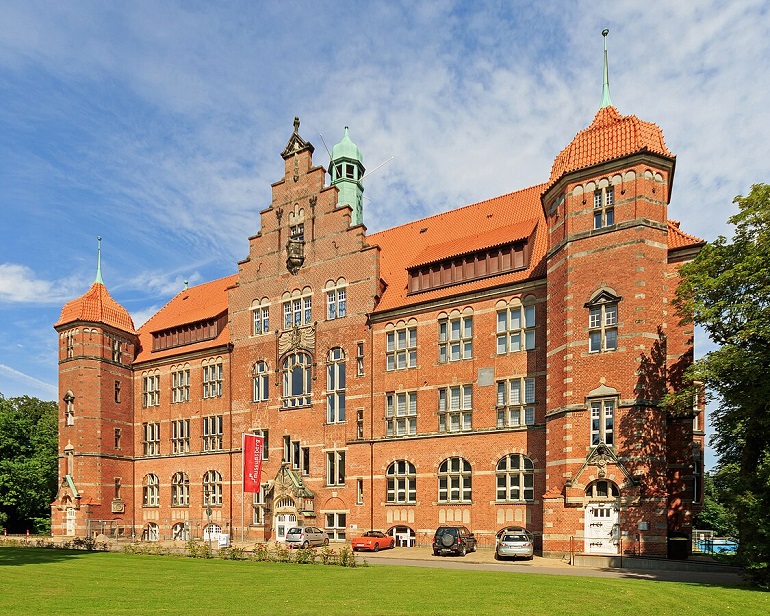
Flensburger Schifffahrtsmuseum (Flensburg Maritime Museum) presents the city's deep maritime roots. Located in a historic customs building near the port, its exhibits illuminate Flensburg's era as an important hub for shipping and trade, with particular attention to the 18th and 19th centuries. Highlights include:
- Anchors, navigational instruments, ship models, and documents tracing the evolution of shipbuilding from wooden schooners to modern vessels.
- Displays devoted to Flensburg's rum trade and connections with the Danish West Indies, exploring the economics and darker aspects of maritime commerce.
- Interactive hands-on installations, making it ideal for visitors of all ages.
- Regular special exhibitions, guided tours, and courses such as knot-tying or rum tasting.
- A café and museum shop, plus easy access to the Rum & Sugar Mile and the historic port area.
Museumswerft Flensburg
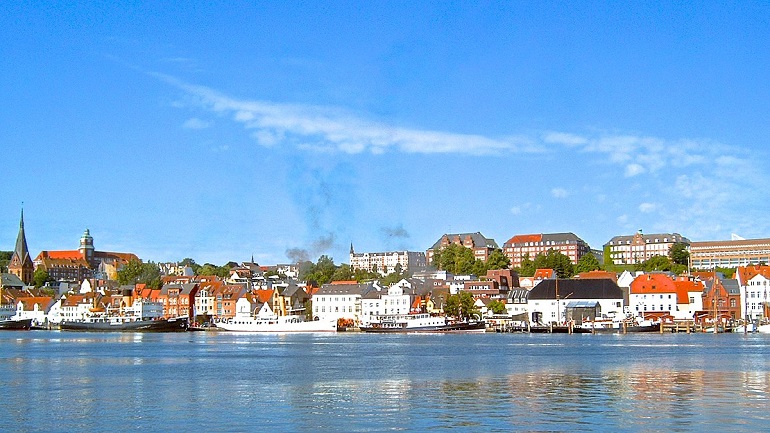
Museumswerft Flensburg provides an immersive experience into traditional boatbuilding and maritime craftsmanship. Situated on Flensburg's waterfront, the museum reconstructs and restores sailing and working boats as they appeared in the Baltic region 100–200 years ago. Key features include:
- Live demonstrations of historical shipbuilding techniques, offering insights into past everyday life at the shipyard.
- Opportunities for hands-on participation, including courses with antique tools and youth shipbuilding projects.
- Exhibits with fishing boats, nets, and reconstructions of historic vessels, such as the famous Jesus-Boat replica.
This museum is particularly engaging for families, craft enthusiasts, and anyone interested in industrial heritage.
Naturwissenschaftliches Museum Flensburg
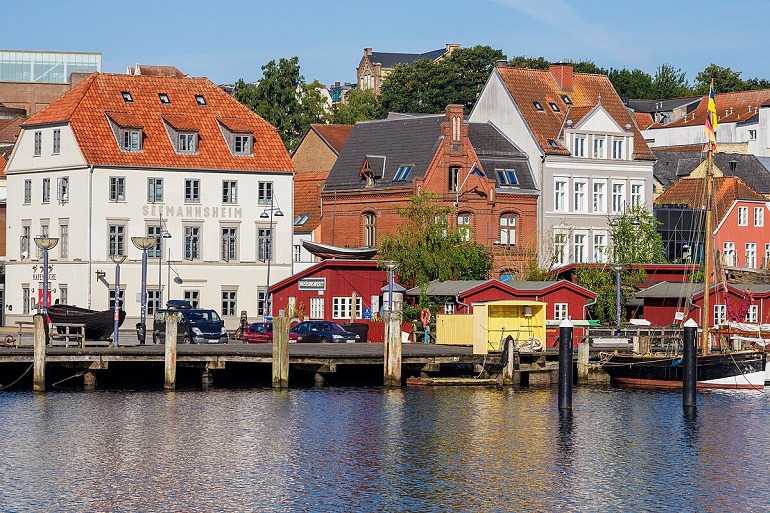
Located within the Museumsberg complex, this natural history museum focuses on regional geology, minerals, flora, and fauna. It enriches understanding of Schleswig-Holstein's natural environment for visitors of all ages.
Harbour Museum Flensburg
This museum, situated close to the historic harbour, tells the story of Flensburg's port and its importance for trade. It features artefacts, photographs, and displays detailing the evolution of navigation and shipping in the region.
Tauchermuseum Flensburg
The Diving Museum presents the history and technology of diving, with equipment exhibits and educational information suitable for technical enthusiasts and families.
Local Cuisine
Visitors to Flensburg can savour Fischbrötchen, freshly baked rolls filled with pickled or smoked fish, often enjoyed along the harbour, while hearty dishes such as Labskaus, a mash of corned beef, potatoes, beetroot, and herring, reflect the town’s maritime heritage. Traditional northern delicacies like Grünkohl mit Pinkel (kale with smoked sausage) are especially popular in the colder months, while Rote Grütze, a sweet red berry pudding served with cream or vanilla sauce, provides a refreshing finish. Influenced by both seafaring trade and Danish culture, Flensburg’s cuisine perfectly balances rustic heartiness with a touch of coastal freshness.
Getting There
By train Flensburg is easily reached by rail, with regular services connecting from major northern German cities such as Hamburg and Kiel, making it a convenient choice for both regional and long-distance travellers.
By coach or bus Long-distance coaches also serve Flensburg with routes from several German cities, while regional buses link the town to nearby destinations within Schleswig-Holstein and across the Danish border.
By car If travelling by car, Flensburg is well connected via the A7 motorway, which runs directly north from Hamburg towards Denmark, offering a straightforward drive to the city with scenic countryside along the way.
| Travel destinations in Schleswig-Holstein | |||||||||||
|---|---|---|---|---|---|---|---|---|---|---|---|
|
|
|
| ||||||||
|
|
|
| ||||||||


