



| Contents |
|---|

Introduction
Harz National Park is a protected nature reserve located in the German federal states of Lower Saxony and Saxony-Anhalt. Spanning approximately 247 square kilometres, it is one of Germany's largest forest national parks, with about 97 percent of its area covered in woodland, primarily ancient spruce and beech forests. The park includes the Brocken, the highest peak in the Harz mountains, alongside extensive upland bogs, rivers, and granite rock formations. Established in its current form in 2006 by merging two separate parks, it is part of the European Union's Natura 2000 network and is a habitat where the Eurasian lynx has been successfully reintroduced.

Geography and Landscape
Setting and Scale
Harz National Park spans the western stretch of the Harz, Germany’s northernmost mountain range, covering roughly a tenth of the massif across Lower Saxony and Saxony-Anhalt. The terrain runs from the lower foothills near Herzberg and Bad Lauterberg in the south to the higher northern slopes between Wernigerode, Ilsenburg, and Bad Harzburg, rising from about 230–270 metres to the summit of the Brocken at 1,141 metres, the highest peak in northern Germany.
Peaks, Plateaus, and Valleys
The park is defined by rugged relief: steep ridges, broad plateaus, and deeply incised valleys and gorges that carve through the range. The most prominent high points are the Brocken, Bruchberg, and Achtermann, with the Brocken forming the dominant massif in the north. To the west and south, elevations step down gradually, while the northern edge rises abruptly above the surrounding lowlands, reflecting the range’s fault-block character. Classic V-shaped valleys and ravines punctuate the landscape, with the dramatic Bode Gorge emblematic of the region’s erosional power.
Rivers, Gorges, and Water Engineering
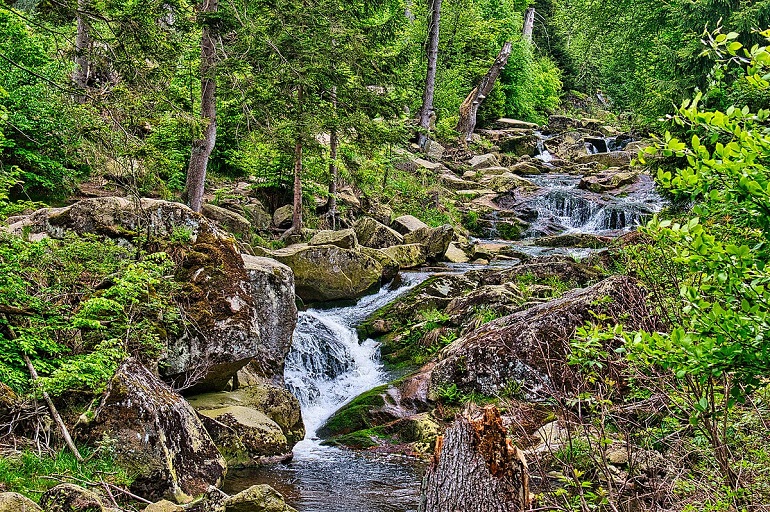
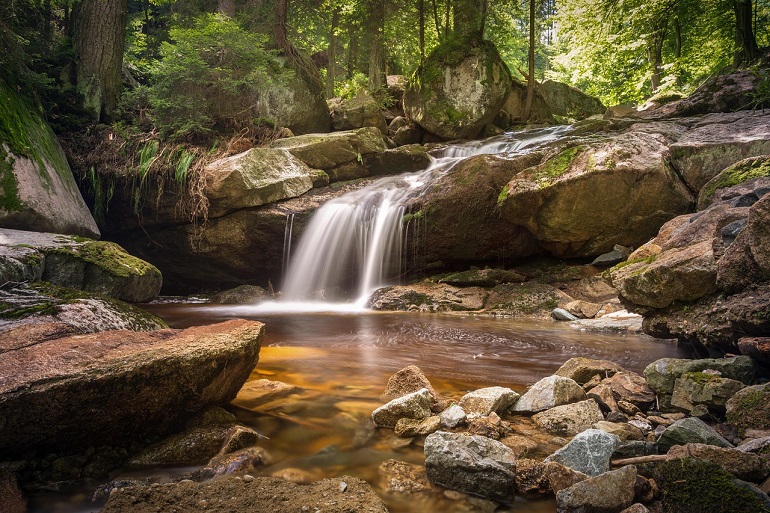
Numerous rivers rise within the park’s uplands, including the Bode, Ilse, and Oder, feeding fast-flowing streams that thread through narrow valleys and granite clefts. Historic waterworks complement the natural hydrology: the 18th-century Oderteich reservoir—built to supply mining operations—collects the Oder’s headwaters, while larger impoundments such as the Oder Dam and Ecker Dam sit on or near the park’s margins alongside smaller lakes like the Silberteich. These features shape both scenery and trail networks, with cascades and boulder-choked channels common along upland routes.
The Brocken Massif
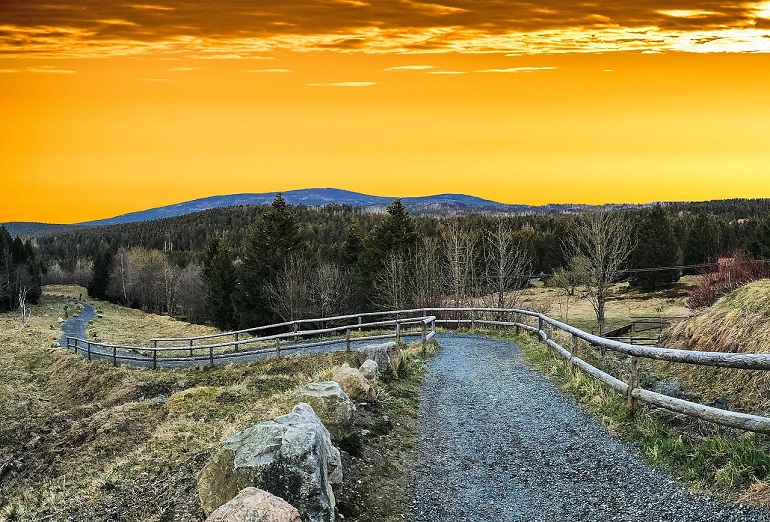
Crowning the park, the Brocken rises to 1,141 metres with a rounded, treeless summit and subpeaks like Heinrichshöhe and Königsberg. Its exposure fosters frequent fog and wind, granting far-reaching panoramas in clear weather and a distinctly alpine feel relative to its latitude and height. The mountain sits near the former inner-German border and dominates views across the Harz, serving as an orientation point for walkers traversing the high plateaus and ridges.
Rocks and Landforms
The Harz is among Germany’s most geologically varied low mountain ranges. Within and around the park, bedrock includes granites, slates and shales, greywackes, and flysch, with localised limestone and gabbro belts near Elbingerode and Bad Harzburg that have historically been quarried. Granite intrusions underpin key uplands, including the Brocken, while long geological uplift and erosion have sculpted stone runs, tors, and block fields across higher slopes and plateaus. The range’s northern boundary fault has produced sharp relief contrasts and frequent changes in rock type over short distances, contributing to the diversity of landforms encountered on even short walks.
Spatial Character
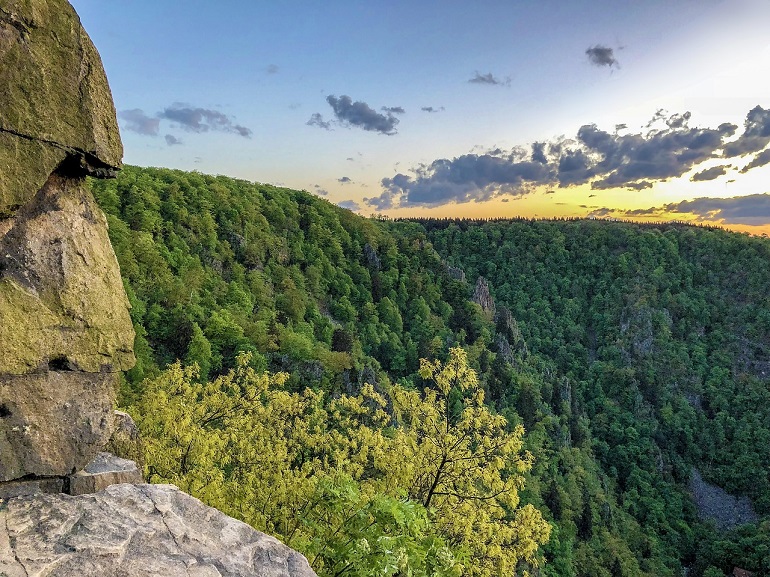
The park’s landscapes transition markedly with elevation and aspect. Northern slopes tend to be steeper and more rugged, with abrupt escarpments and narrow ravines, while southern reaches broaden into lower mountains and rolling foothills. Across the high country, open raised bogs and weathered rock outcrops punctuate otherwise forested plateaus, breaking into dramatic viewpoints above the Bode, Oker, and Ilse valleys. Together, these elements create a compact mountain environment with the feel of a larger range, concentrated into a navigable area rich in contrasts.
Flora and Fauna
Wildlife in the Harz
The Harz National Park boasts an extraordinary diversity of wildlife, with its Nordic climate and varied elevation levels creating ideal conditions for species typically found much further north. The park's diverse habitats—from dense forests to exposed summits, bogs to mountain streams—support a remarkable array of creatures that would make any naturalist's visit worthwhile.
The Big Five
The park is particularly renowned for its "Big Five" animal superstars—impressive mammals that represent the wild heart of the Harz. Red deer roam the forests alongside roe deer and wild boar, whilst the park has become one of the last refuges for the elusive European wildcat. Most remarkably, the Eurasian lynx has successfully returned after being reintroduced to the region, now silently stalking through the forest as the apex predator.
Feathered Treasures
Bird enthusiasts will find the Harz particularly rewarding. The park shelters several ornithological treasures, including the magnificent peregrine falcon soaring above rocky outcrops, the secretive boreal owl, and the impressive black stork. High-altitude specialists such as the ring ouzel and spotted nutcracker thrive in the mountain spruce forests, whilst the rare black woodpecker is one of six woodpecker species resident here. The western capercaillie, a large woodland grouse known for its dramatic courtship displays, adds another spectacular element to the park's avian community.
Nocturnal Residents
The Harz supports an impressive seventeen species of bats, making it one of Germany's most important bat habitats. Other nocturnal creatures include the European pine marten with its distinctive yellowish throat patch, and the adaptable raccoon, originally introduced but now well-established near the park's water sources.
Smaller but Significant Species
Despite the park's acidic waters and extensive spruce forests creating challenging conditions for amphibians and reptiles, several hardy species persist. The fire salamander, easily recognised by its black body adorned with bright yellow spots, inhabits damp forest areas near streams. Brown trout and bullhead have found suitable conditions in the mountain streams.
The park's invertebrate life remains largely unexplored due to its vast diversity, but includes fascinating cold-adapted species such as the northern emerald dragonfly and cranberry fritillary butterfly. On the summit of the Brocken itself, unique creatures like flightless snow flies and snow fleas survive in the harsh conditions.
Flora of the Harz
The plant life of Harz National Park tells a fascinating story of post-glacial survival and adaptation. More than 1,000 species of ferns and flowering plants flourish here, many representing relicts from the last ice age that found refuge in this northern upland region.
Forest Composition
The park's forests reveal both natural heritage and human influence. Currently, 82% consists of spruce stands—largely the result of 19th-century reforestation efforts—whilst only 12% are beeches, with the remaining 6% comprising species such as oak, rowan, and birch. However, the park management is actively encouraging natural regeneration to restore the original beech and maple forests that once dominated lower elevations.
Vegetation Zones
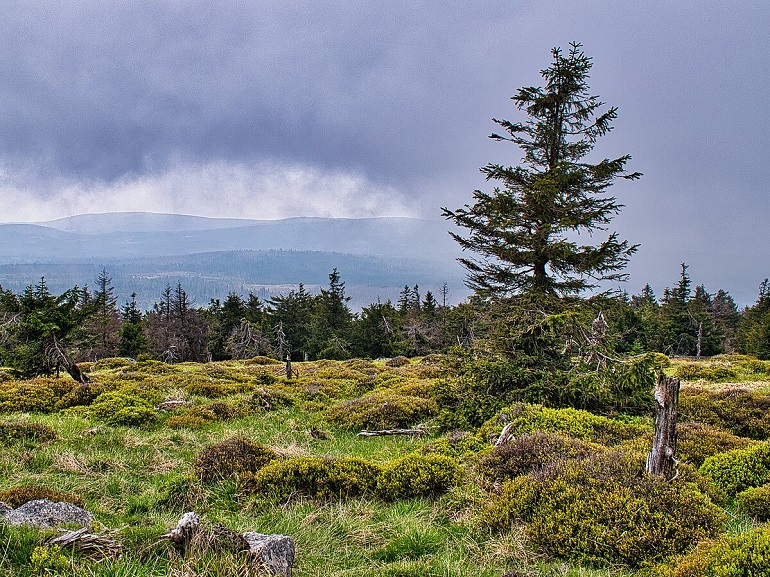
The Harz exhibits distinct vegetation zones corresponding to elevation. In the sub-alpine area above 1,050 metres lies the dramatic "battle zone" of ancient spruces—gnarled trees over 250 years old, sculpted into bizarre shapes by wind and weather. Here, dwarf shrub heaths and raised bogs predominate.
The altimontane zone (750-1,050m) remains spruce-dominated, whilst the montane (450-750m) and submontane zones showcase the park's most characteristic forest type—the Hainsimsen beech forest, thriving on acidic soils.
Arctic and Alpine Survivors
The park's most remarkable botanical treasures are its Northern European and Arctic relicts. Species such as chickweed wintergreen, fir clubmoss, and bottle sedge likely remained here after the last ice age. True Arctic vegetation includes Alpine clubmoss and Bigelow's sedge, creating a unique botanical time capsule.
The Crown Jewel: Brocken Anemone
The summit's most celebrated resident is the alpine anemone or "Brocken anemone"—a white-flowered beauty that originated in Asian mountains and represents the only location in Germany where this extraordinary plant can be found. Its presence adds an almost mythical quality to the already legendary Brocken summit.
Mountain Meadows and Mosses
Between May and July, visitors can enjoy the colourful displays of the carefully managed mountain meadows. These nutrient-poor grasslands, composed mainly of red fescue and golden oat grass, harbour specialised herbs including spignel, wig knapweed, heath pea, and various bedstraw species.
The park also supports about half of Germany's moss species, creating intricate tapestries on forest floors and rock faces. Combined with diverse lichens, these cryptogams contribute significantly to the park's ecological complexity.
Whether you're tracking lynx prints in the snow or marvelling at ancient anemones on the Brocken summit, Harz National Park offers visitors a unique opportunity to experience a landscape where Ice Age relicts and modern conservation success stories create one of Germany's most biodiverse wilderness areas.

Activities and Attractions
The Harz National Park offers visitors an extraordinary playground for outdoor enthusiasts, with its protected wilderness areas, dramatic rock formations, and diverse landscapes. From the summit of the Brocken, northern Germany's highest peak, to tranquil moorland boardwalks, the park presents countless opportunities for adventure and exploration across a hiking network spanning over 8,000 kilometres throughout the region.
Hiking Trails and Walking Routes
The Crown Jewel: Brocken Summit Ascents
The Harz's most iconic hiking destination remains the Brocken mountain at 1,141 metres, offering multiple ascent routes that each provide unique perspectives on the national park's diverse ecosystems.
The Goethe Trail represents the most popular approach, departing from TorfHaus and covering 8 kilometres (16 kilometres return) with approximately 330 metres of elevation change. Despite the substantial altitude gain, this well-maintained pathway remains accessible to most walkers, requiring 5 to 6 hours for the complete journey. The trail showcases the park's ecological transitions, from dense spruce forests through mountain meadows to the stark summit landscape.
The Heinrich Heine Route from Ilsenburg provides arguably the most scenic Brocken ascent, following the babbling Ilse mountain stream through pristine valley landscapes. This historically significant trail traces the footsteps of the famous German Romantic poet, who immortalised this journey in his literary works. The route offers a more gradual approach through ancient forests and alongside cascading waterfalls.
Multiple additional approaches exist from Schierke, Bad Harzburg, and Torfhaus, each presenting distinct challenges and rewards. These varied routes ensure that even repeat visitors can experience fresh perspectives on the mountain's dramatic landscapes.
Long-Distance Hiking Trails
The Harz region excels in providing comprehensive long-distance hiking experiences that showcase the area's remarkable diversity over multiple days.
- The Harzer-Hexen-Stieg (Witches' Trail) stands as the region's premier long-distance route, stretching 94 kilometres from Osterode in Lower Saxony to Thale in Saxony-Anhalt. This challenging trail requires 5 to 7 days to complete and passes directly over the Brocken summit, offering hikers the opportunity to experience the entire breadth of Harz landscapes. The route encompasses dense forests, open moorlands, historic mining areas, and dramatic river valleys, providing an comprehensive immersion in the region's natural and cultural heritage. For those preferring to avoid the summit, an alternative 34.4-kilometre detour called the Brocken Umgehung bypasses the peak whilst maintaining the trail's overall character.
- The Harzer Grenzweg presents a unique 100-kilometre journey along Germany's former inner border, combining natural beauty with profound historical significance. This trail provides testimony to the country's Cold War division, featuring preserved border installations and interpretive displays that illuminate this pivotal period in German history. The route uniquely blends nature conservation with historical education, creating a deeply meaningful hiking experience.
- The Karstwanderweg Südharz extends over 200 kilometres from Sangerhausen to Osterode, traversing the distinctive gypsum karst landscape of the southern Harz. This geological wonderland features unique rock formations, cave systems, and specialised plant communities adapted to the mineral-rich soils. The trail offers exceptional opportunities to observe rare geological phenomena whilst experiencing some of Germany's most unusual landscapes.
- The Selketal-Stieg follows one of the Harz's most beautiful valleys across 72 kilometres, connecting the scenic Falkenstein Castle to the UNESCO World Heritage town of Quedlinburg. This route particularly appeals to cultural enthusiasts, combining pristine river valley hiking with significant architectural and historical sites.
- The Harzer Foersterstieg (Forester's Path) spans 60 kilometres from historic Goslar to Riefensbeek-Kamschlacken, featuring three major reservoirs: the Grane, Innerste, and Söse dams. This trail demonstrates the region's water management heritage whilst providing access to spectacular lakeside walking and diverse forest ecosystems. Information boards and adventure areas along the route offer insights into traditional forestry practices and regional ecology.
- The Harzer Klosterwanderweg (Monastery Trail) covers 64 kilometres through the northern Harz foothills, connecting Wendhusen Monastery at Thale to UNESCO-listed Goslar. This contemplative route emphasises the region's monastic heritage and offers peaceful walking through rolling countryside and historic settlements.
- The Harzer Baudensteig provides an approximately 100-kilometre journey from Bad Grund to Walkenried through mixed forests, gentle valleys, and hilltop viewpoints. Traditional mountain huts along the route serve refreshments and provide authentic regional hospitality, making this trail particularly appealing for those seeking cultural immersion alongside natural beauty.
Specialised Circular Trails
The national park and surrounding areas offer numerous circular routes that provide comprehensive experiences within manageable timeframes.
The Torfhausmoor Trail creates one of the park's most enchanting 4.5-kilometre circular experiences through pristine moorland ecosystems. The 1.5-hour journey features extensive boardwalks that protect sensitive bog environments whilst allowing intimate access to these rare wetland habitats. Visitors can observe specialised plant communities, including carnivorous sundews and rare orchid species, whilst learning about peat formation and conservation efforts.
The Oderteich Circuit encompasses Germany's former largest dam, now recognised as a UNESCO World Heritage site. This 4.5-kilometre, hour-long walk provides excellent photographic opportunities around the historic reservoir whilst demonstrating ecological succession as planted spruce forests gradually return to natural woodland. The trail showcases the park's "wilderness development" philosophy, where deadwood habitats support increasingly rich biodiversity.
Advanced circular routes include the challenging Neuwerk circuit covering 12.8 kilometres with varied terrain and multiple scenic highlights, requiring approximately 4 hours to complete. The route encompasses forest paths, open meadows, and elevated viewpoints that provide panoramic Harz vistas.
Near Rübeland, a 5.1-kilometre circular trail offers spectacular views of both the historic cave town and distant Brocken mountain. This moderate 1 hour and 40-minute walk combines geological interest with mountain scenery.
The historically significant Sorge border trail covers 6.9 kilometres through areas that once divided East and West Germany. This relatively easy 1 hour and 50-minute walk features preserved border installations and interpretive materials that illuminate the region's Cold War experience.
Family-Friendly and Educational Trails
The Liebesbankweg (Love Bench Trail) near Hahnenklee provides an excellent 7-kilometre family introduction to Harz hiking. Multiple viewpoints and strategically placed benches offer frequent rest opportunities, whilst several scenic ponds allow swimming during warmer months. The trail's gentle gradients and regular facilities make it particularly suitable for children and less experienced walkers.
The mountain meadow nature trail around Benneckenstein spans 5 kilometres of pushchair-friendly terrain with educational focus. Themed display boards and accompanying booklets help visitors identify typical Harz mountain plants and learn about traditional herbal medicine, creating an excellent educational outdoor classroom.
Shorter family circuits include the Stiege village loop covering 3.2 kilometres in approximately 50 minutes, featuring the distinctive stave church and Lake Stiege. The Trautenstein Dammbachtal route provides a gentle 3.3-kilometre, 55-minute family walk through peaceful valley landscapes.
Specialised nature trails such as the Tanne Red Harz Highland Cattle circuit combine 9.6 kilometres of moderate hiking with agricultural heritage, showcasing traditional cattle breeds in mountain pasture settings.
Advanced and Challenging Routes
For experienced hikers seeking greater challenges, the Harz provides numerous demanding trails that test endurance whilst rewarding effort with spectacular scenery.
Multi-day variations of the major long-distance trails allow experienced hikers to complete ambitious traverses, such as the full Harzer-Hexen-Stieg in 4 to 5 intensive daily stages. These routes require substantial preparation, appropriate equipment, and comprehensive route planning.
Technical mountain trails around areas like Wernigerode and Bad Harzburg feature steeper gradients, rocky terrain, and more exposed conditions that demand proper hiking boots and weather-appropriate clothing.
Mountain Biking and Cycling Adventures
The Harz mountains provide exceptional mountain biking terrain with purpose-built trail networks around locations such as Zorge and Schulenberg. These routes offer varying difficulty levels from family-friendly forest paths to technical single-track descents that challenge experienced riders.
The Harz Cycle Network encompasses hundreds of kilometres of marked routes that accommodate touring cyclists and mountain bikers. Many trails run parallel to hiking routes, providing alternative means of accessing remote areas and scenic viewpoints.
E-bike facilities throughout the region support less experienced cyclists or those preferring assisted cycling. Charging stations and specialised e-bike rental services make these trails accessible to broader audiences.
Rock Formations and Geological Adventures
The Teufelsmauer (Devil's Wall) represents one of northern Germany's most striking geological features, creating a dramatic sandstone ridge that attracts climbers, hikers, and geologists. These ancient rock formations provide excellent scrambling opportunities and serve as outdoor classrooms for understanding regional geological processes.
Granite tor climbing around the Brocken massif offers more technical rock climbing opportunities for experienced climbers. These weathered granite outcrops provide natural climbing routes with spectacular mountain views.
Cave exploration around Rübeland includes the famous Baumannshöhle and Hermannshöhle stalactite caves, which offer underground adventures that complement surface hiking activities. These limestone cave systems feature spectacular mineral formations and underground rivers.
Cultural and Historical Attractions
The Rammelsberg Mine near Goslar provides UNESCO World Heritage underground tours that reveal over 1,000 years of continuous mining heritage. These guided experiences include underground railway journeys and demonstrations of historical mining techniques.
Medieval architecture throughout the region includes the Walkenried Monastery ruins, which showcase Cistercian monastic life and medieval building techniques. The site combines architectural heritage with peaceful garden settings ideal for contemplative walks.
The Hexentanzplatz (Witches' Dancing Place) near Thale merges folklore with spectacular Bode Valley views. Visitors can access this legendary site via cable car or challenging hiking trails, whilst exploring the area's rich mythological associations.
Historic narrow-gauge railways including the Brockenbahn and Selketalbahn provide alternative transport methods that double as scenic attractions. These steam-powered trains offer nostalgic travel experiences whilst accessing remote hiking trailheads.
Visitor Facilities and Educational Centres
The TorfHaus National Park Visitor Centre serves as the primary information hub for Brocken ascents, providing detailed weather updates, trail conditions, and safety advice. Interactive exhibitions explain park ecology and conservation efforts whilst helping visitors plan appropriate hiking routes.
The Sankt Andreasberg National Park Visitor Centre features comprehensive displays on local mining heritage and geology, alongside the specialised FledermausReich bat exhibition. These facilities provide educational context that enriches outdoor experiences.
The HarzWaldHaus in Bad Harzburg houses a 400-square-metre interactive forest exhibition, including Germany's largest publicly viewable ant colony with 100,000 inhabitants visible through glass panels.
Ranger programmes throughout the park offer guided walks, wildlife observation sessions, and educational talks that provide expert insights into park ecology and management. These programmes particularly benefit families and visitors seeking deeper understanding of the natural environment.
The Harzer Wandernadel (Harz Hiking Badge) system encourages systematic exploration through a network of 222 stamping points across the region. This hiking achievement programme motivates visitors to explore lesser-known areas whilst providing a comprehensive regional touring framework.
Whether pursuing challenging multi-day adventures across the region's premier long-distance trails, enjoying gentle family walks through educational nature reserves, or seeking technical climbing challenges on dramatic rock formations, the Harz National Park delivers unparalleled outdoor experiences that combine pristine wilderness with rich cultural heritage, ensuring that every visit reveals new discoveries in one of Germany's most accessible yet wild mountain regions.
Accommodation
Mountain Huts and Forest Cabins
For those yearning to wake to birdsong and the scent of pine, mountain huts and forest cabins provide a tranquil retreat. Often built of local timber and stone, these simple dwellings sit deep in the woodland or on high ridges. Inside, you’ll find basic yet comfortable furnishings—think wooden benches, warming stoves and fold-away beds—perfect for disconnecting and immersing oneself in nature. With no road access in many spots, reaching these cabins on foot or by bike adds to the sense of adventure.
Eco-Friendly Lodges and Retreats
Sustainability underpins many of the park’s modern lodges and retreats. Constructed to low-impact standards, these eco-friendly hideaways feature solar panels, rainwater harvesting and natural insulation. Interiors typically showcase locally sourced furnishings and communal spaces designed to foster conversation among fellow nature-lovers. Some offer yoga platforms overlooking valleys or guided mindfulness walks, making them ideal for a restorative break.
Family-Friendly Holiday Homes
Families will find a range of self-catering holiday homes nestled on the park’s fringes. Spacious living areas, well-equipped kitchens and outdoor play spaces ensure that children can roam freely, while parents relax on sunny terraces. Many homes include adjacent picnic spots or easy access to nature trails, where youngsters can learn about wildlife and wander under leafy canopies.
Forest Campsites and Glamping
For the more adventurous, forest campsites allow pitching tents beside babbling brooks or hidden glades. Facilities often include eco-toilets, wood-fired showers and communal camp kitchens. If roughing it isn’t your style, glamping pods and canvas tents offer a luxurious twist: think proper beds, soft lighting and private decking for starry-night reflections. These sites strike the perfect balance between wilderness immersion and creature comforts.
Shepherd’s Huts and Hobbit-Style Dwellings
One of the park’s most charming lodging concepts are shepherd’s huts and hobbit-style dwellings tucked along remote valleys. These compact, arch-roofed chalets boast handcrafted interiors, snug sleeping lofts and wood-burning stoves. With windows framing panoramic views of hillsides and meadows, they feel like fairytale hideaways, ideal for romantic escapes or creative retreats.
Practical Considerations
Most accommodation lies off the beaten track, so travellers should plan transport carefully. Many sites provide secure bike storage and shuttle services from nearby towns. As infrastructure within the park is deliberately limited to preserve its wild character, it’s wise to book well in advance, particularly during summer and leaf-peeping season.
By choosing from the park’s diverse lodging styles, visitors can tailor their stay to match any mood—be it rugged solitude, eco-conscious comfort or family-centred fun—while remaining ever close to the Harz’s timeless beauty.
Gastronomy
Traditional Harz Cuisine
The gastronomy of the Harz is characterised by robust, warming dishes that perfectly complement the region's often brisk mountain climate. Wild game features prominently on local menus, with venison, wild boar, and forest fowl taking centre stage in many traditional preparations. These proteins are typically accompanied by seasonal vegetables, hearty root crops, and an array of foraged mushrooms that thrive in the park's dense woodlands.
Harzer cheese stands as perhaps the region's most famous culinary export. This distinctive sour milk cheese, with its pungent aroma and tangy flavour, has been produced in the area for over 1,000 years. The cheese appears in various forms throughout local cuisine, from simple accompaniments to bread to more elaborate cooked dishes that showcase its unique character.
Seasonal Specialities
The changing seasons bring distinct flavours to Harz cuisine. Spring ushers in fresh asparagus dishes, often paired with locally cured hams and new potatoes. Summer celebrations feature an abundance of berry-based desserts, utilising the region's prolific blueberries, raspberries, and blackberries that grow wild throughout the national park's forests.
Autumn marks the height of mushroom season, when chanterelles, porcini, and other forest fungi appear in countless preparations. This is also when game season reaches its peak, with elaborate hunting feasts celebrating the bounty of the Harz's wildlife reserves. Winter brings warming stews, hearty sausages, and the famous Harzer Schmorbraten – a slow-braised pot roast that embodies the comfort food tradition of the mountains.
Mountain Hut Culture
The Harz's extensive network of mountain huts and alpine lodges maintains a vital tradition of Almgastronomie – mountain gastronomy. These establishments serve simple yet satisfying fare designed to fuel hikers and outdoor enthusiasts. Expect to find warming soups, substantial sandwiches built on dense regional breads, and hearty one-pot meals that make excellent use of local ingredients.
Traditional Erbswurst (pea sausage soup) remains a stalwart of hut menus, alongside various regional sausage varieties and the ever-present Sauerbraten – a marinated roast that varies slightly in preparation throughout the different states that encompass the park.
Brewing Heritage
The Harz region boasts a proud brewing tradition that dates back centuries. Local pilsners and wheat beers perfectly complement the hearty mountain cuisine, whilst seasonal brews celebrate everything from harvest festivals to winter solstice traditions. Many establishments feature locally-produced schnapps and fruit brandies, often crafted from the region's abundant orchards and wild fruits.
Foraging and Local Produce
The national park's pristine environment supports a thriving culture of sustainable foraging that influences much of the local cuisine. Wild herbs, berries, mushrooms, and edible flowers find their way into both traditional recipes and contemporary interpretations of regional dishes. This connection to the land ensures that Harz cuisine remains deeply rooted in its natural surroundings.
Local honey from mountain apiaries adds sweetness to traditional baked goods, whilst wild juniper berries provide distinctive flavouring for both sweet and savoury preparations. The region's mountain spring water is renowned for its purity and often features in the preparation of traditional breads and brewing processes.
Vegetarian Mountain Fare
Whilst traditionally meat-heavy, Harz cuisine offers numerous vegetarian options rooted in the region's agricultural heritage. Potato dumplings in various forms provide hearty sustenance, often accompanied by rich mushroom gravies or seasonal vegetable preparations. Traditional herb soups showcase the diversity of mountain flora, whilst various grain-based dishes reflect the area's historical reliance on hardy mountain crops.
The abundance of wild berries and nuts throughout the park ensures that vegetarian visitors can enjoy authentic regional flavours through seasonal tarts, compotes, and traditional baked goods that celebrate the natural bounty of this remarkable landscape.
Whether seeking a warming meal after a long mountain hike or exploring the rich culinary traditions of Central Germany, the Harz National Park offers a gastronomic experience that perfectly marries the region's natural abundance with centuries of mountain cooking wisdom.
Getting There and Around
The Harz National Park is easily accessible from several town centres, with strong connections by both public transport and car. The region is served by train stations such as Bad Harzburg and Schierke, offering regular arrivals from surrounding cities and onward connections into the park. Coaches and local buses also connect nearby towns and villages, with key stops like Altenau Glockenbergweg providing access around the area. Motorists will find the park well signposted, and parking is widely available at major visitor centres and trailheads, including both free and paid options.
Once inside the park, getting around is straightforward:
- The landscape is crisscrossed with marked hiking trails, suitable for all abilities, with information at centres such as Nationalpark-Besucherzentrum TorfHaus, Sankt Andreasberg National Park Center and Nationalparkhaus Schierke.
- Visitor centres are accessible by car and public transport, and offer facilities for disabled travellers, including wheelchair access and designated parking.
- The iconic Brocken Railway from Schierke provides a scenic journey to the Brocken summit, while the Harz narrow-gauge rail network enables leisurely exploration of mountain and forest scenery.
- Cycling and walking are popular, with routes tailored for families and seasoned hikers, plus dedicated picnic areas for restful stops.
- Dogs are permitted on most trails, and there are plenty of family-friendly activities and playgrounds, making the park welcoming for all ages.
Plan your visit at local tourist information centres – notably Torfhaus and HohneHof – for up-to-date information on walking routes, nature activities and seasonal highlights. Most centres provide maps, guidance, and rest facilities, contributing to a comfortable and informative trip. For those touring multiple sites or venturing into neighbouring protected areas, the South Harz Nature Park and the broader Landschaftsschutzgebiet Harz und südliches Harzvorland offer further lush landscapes and well-kept paths.
Best Time to Visit
The Harz National Park is truly a year-round destination, with each season offering its own unique charms and activities. However, your ideal time to visit will largely depend on your interests and what you hope to experience in this enchanting German mountain range.
Summer (June-August)
Summer represents the peak season for good reason. The weather is at its warmest and most reliable, making it perfect for hiking, cycling, and exploring the park's extensive trail network. Days are long, giving you plenty of daylight hours to discover the region's natural beauty. The forests are lush and green, waterfalls are at their most impressive, and wildlife is most active.
However, summer is also the busiest time, particularly during the German school holidays which run from mid-June through mid-September. If you prefer quieter experiences, consider visiting early June or late August when crowds thin out slightly.
Autumn (September-November)
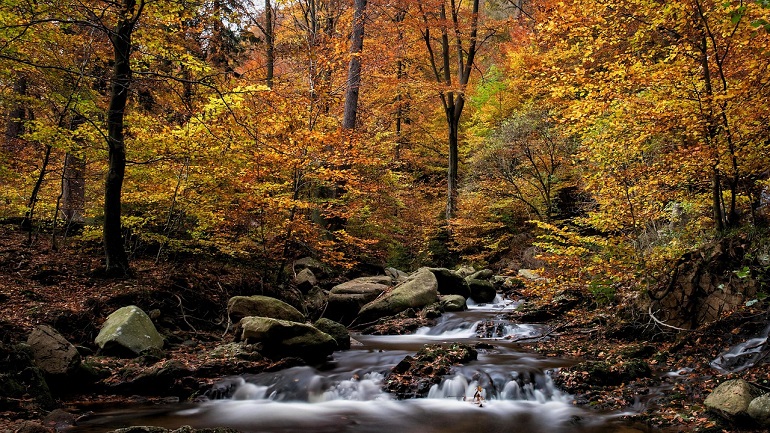
Many consider autumn the most spectacular time to visit the Harz. September and October offer ideal hiking conditions with comfortable temperatures and stunning foliage displays. The deciduous trees create a magnificent tapestry of reds, golds, and browns across the mountainsides, making it a photographer's paradise.
October is particularly magical when the region becomes quieter as summer crowds disperse, yet the weather remains pleasant for outdoor activities. The longer autumn evenings provide perfect opportunities for cosy evenings in traditional mountain villages.
Spring (March-May)
Spring arrives later in the Harz than in surrounding lowland areas, but this creates a particularly enchanting experience. As the last snow melts, rushing streams and waterfalls come alive, and the forest floor erupts with wildflowers and fresh greenery. Wildlife emerges from winter hibernation, making it an excellent time for nature observation.
The weather can be changeable during spring, so pack layers and waterproofs. However, fewer crowds and the dramatic awakening of nature make this an underrated time for a visit.
Winter (December-February)
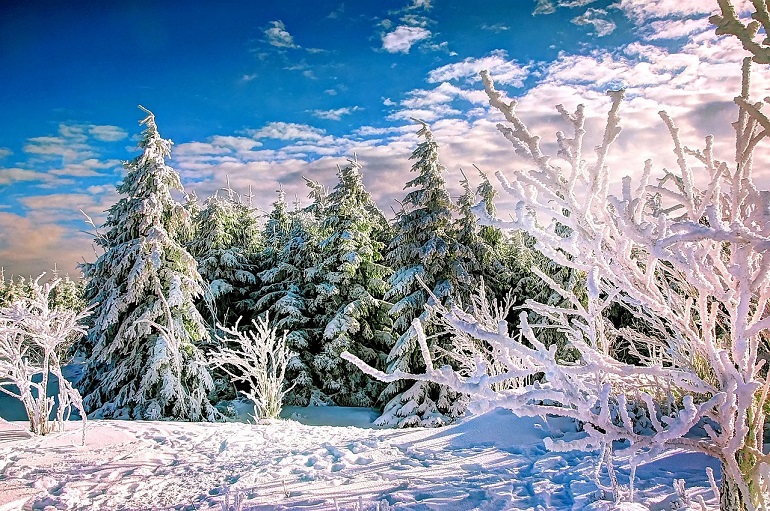
Winter transforms the Harz into a fairytale landscape, especially during heavy snowfall. This season is popular for winter sports enthusiasts, with skiing, snowboarding, and sledging opportunities available throughout the region. The snow-covered peaks and frost-laden trees create some of the most photogenic scenes you'll find anywhere in Germany.
Christmas and New Year periods are particularly busy, so book accommodation well in advance if planning a winter visit during these times.
Weather Considerations
The Harz experiences a mountain climate that can be quite extreme, particularly at higher elevations around the Brocken summit. Temperatures here can resemble northern Iceland in January and the northern Arctic Ocean in July. The region receives substantial precipitation year-round, with the upper elevations seeing 1,000-1,800mm annually.
Weather can change rapidly in the mountains, so always check forecasts before setting out and pack appropriate gear regardless of the season. The Brocken is shrouded in fog for much of the year, adding to its mystical atmosphere but potentially limiting visibility.
Avoiding the Crowds
For the most peaceful experience, avoid German school holiday periods and major holiday weekends. Early mornings and late afternoons tend to be quieter than midday, particularly at popular attractions. Spring and late autumn offer the best balance of pleasant weather and fewer visitors.
The Harz's diverse climate zones mean you can enjoy outdoor activities throughout the year, making it one of Germany's most reliable mountain destinations regardless of when you choose to visit.
Conservation and Responsible Tourism
The Harz National Park stands as a beacon of conservation excellence in Germany, demonstrating how protected wilderness and sustainable tourism can coexist harmoniously. This remarkable protected area, spanning both Lower Saxony and Saxony-Anhalt, embodies the national park motto of "letting nature be nature" whilst welcoming over one million visitors annually.
Conservation at the Heart of the National Park
The Harz National Park's conservation mission centres on protecting and restoring its natural ecosystems through minimal human intervention. The park follows the worldwide national park philosophy of allowing nature to develop freely, transforming former commercial plantations into diverse, self-sustaining forests.
Forest Restoration and Natural Development
The park's most significant conservation challenge has been the transition from monoculture spruce plantations to natural mixed forests. From 2008 to 2018 alone, approximately 4.3 million copper beech and other native species were planted to support the return of original deciduous trees. This restoration work has become increasingly vital following the extreme weather events and bark beetle infestations of 2018 and 2019.
The park's approach to forest development is deliberately hands-off in semi-natural areas, where no intervention occurs anymore. Dead trees and fallen timber are left to decompose naturally, becoming the foundation for new forest generations whilst significantly increasing the number of animal and plant species. This rewilding process allows rare and endangered species to find habitats and return to the region.
Protecting Unique Ecosystems
The Harz upland moors represent some of the most ecologically significant areas within the park, achieving international recognition for their distinctive flora. These ancient biotopes, among the oldest in the Harz region, provide crucial habitats for highly specialised plants such as round-leaved sundew, cotton grass, and various peat mosses. Remarkably, some species like the dwarf birch have persisted since the last ice age, making them living ice age relics of extraordinary conservation value.
These moorland ecosystems serve dual purposes for biodiversity preservation and climate protection, storing significant amounts of carbon whilst supporting unique plant communities that exist nowhere else in the region.
Sustainable Tourism Initiatives
The Harz region has embraced comprehensive sustainable tourism practices, recognising that environmental protection and visitor enjoyment must work in tandem. The regional commitment to sustainability extends far beyond the national park boundaries, encompassing innovative mobility solutions, community engagement, and environmental education.
HATIX: Revolutionary Sustainable Transport
The HATIX system represents one of Europe's most successful sustainable tourism transport initiatives. Visitors booking accommodation in participating Harz towns receive a complimentary ticket enabling free use of local public transport throughout their stay. This innovative scheme dramatically reduces private vehicle use, cutting CO2 emissions whilst providing guests with convenient access to attractions and hiking trails.
The region has further enhanced sustainable mobility through e-car sharing programmes and an extensive network of electric vehicle charging stations. These infrastructure investments ensure that environmentally conscious visitors can explore the region emission-free, whether in remote locations or town centres.
"The Forest is Calling" Initiative
The collaborative "The Forest is Calling" campaign demonstrates exemplary visitor engagement in conservation efforts. This multi-stakeholder initiative, supported by forestry offices, the Harz National Park, and tourism associations, educates visitors about forest restoration whilst encouraging active participation through sponsorships, donations, and tree planting campaigns.
Thirteen specially designed photo spots throughout the region sensitise holidaymakers to natural processes, with information boards featuring strategically cut-out sections offering unique landscape views. Visitors share these experiences using the hashtag #DerWaldRuft, spreading conservation awareness through social media engagement.
Practical Sustainability Measures
Water Refill Stations operate under the motto "Avoid plastic waste | Drink tap water | Fill up your water bottle," with free refill points at tourist information centres in Altenau, Wildemann, Clausthal-Zellerfeld, and the Harz Welcome Centre in Torfhaus. These stations form part of a nationwide network of over 6,150 refill points, significantly reducing single-use plastic consumption.
Tree Planting Campaigns, including the #heiermann4future initiative, have planted tens of thousands of trees with volunteer helpers on designated state and municipal forest areas. These programmes focus on introducing deep-rooted, CO2-binding deciduous trees to create more resilient forest ecosystems capable of withstanding extreme weather events.
Certification and Recognition
The region's commitment to sustainability has earned significant recognition. Wernigerode became the first sustainable travel destination in Saxony-Anhalt to receive TourCert certification in 2022, with criteria including environmental awareness and accessibility rigorously assessed. The town has also held FairTrade Town status since 2017, demonstrating commitment to responsible global trade practices.
TourCert-certified accommodations, including the BergwaldChalets in Schierke and Ferienwohnungen am Klint in Wernigerode, provide visitors with verified sustainable lodging options that meet strict environmental and social responsibility standards.
Visitor Guidelines for Responsible Tourism
Visitors can contribute to conservation efforts through mindful travel choices:
- Choose public transport over private vehicles to reduce emissions
- Respect protected areas and follow designated trails to minimise ecosystem disruption
- Select activities with low ecological footprints such as hiking and cycling
- Use digital resources instead of printed materials to reduce paper consumption
- Support local initiatives by purchasing regional products and services
- Participate in conservation programmes through volunteering or donations
The Harz National Park exemplifies how wilderness protection and sustainable tourism can create mutually beneficial relationships. Through innovative transport solutions, community engagement programmes, and steadfast commitment to natural ecosystem restoration, the region provides a model for conservation-focused tourism that other protected areas worldwide can emulate. Visitors to this remarkable landscape become active participants in its preservation, ensuring that future generations can experience the wild beauty of Germany's northern mountains.
Visitor Centres and Educational Facilities
Harz National Park offers a well-developed network of visitor centres and educational hubs that help interpret the park’s wilderness ethos—“let nature be nature”—and orient travellers to trails, wildlife, and the region’s unique history and geology. Each centre combines practical information with engaging exhibitions and ranger-led programming, making them ideal starting points for walks and family outings.
TorfHaus National Park Visitor Centre (Torfhaus)
Set at 811 metres amid sweeping views to the Brocken, TorfHaus serves as a central gateway to the park, with free admission, a barrier-free exhibition on wilderness, moorland, and the Green Belt, plus route advice for classic hikes such as the Goetheweg and the boardwalk across the Große Torfhausmoor. It also functions as an official information point for the UNESCO Global Geopark Harz . Braunschweiger Land . Ostfalen and hosts guided walks, excursions, and wilderness education programmes for individuals and groups throughout the year.
- What to expect: Interactive displays on forest change, moors, wildlife and conservation; maps, weather updates, and a well-stocked shop with books and trail gear.
- Orientation: Adjacent to the large Torfhaus car park and bus stop; a popular trailhead for Brocken and moorland circuits.
- Hours and access: Seasonal opening times; admission free.
Brockenhaus Visitor Centre (on the Brocken summit)
Perched on Northern Germany’s highest peak (1,141 m), the Brockenhaus blends museum and visitor centre, presenting a multi-storey, multimedia journey through the Brocken’s natural history, folklore, and Cold War past inside a distinctive former GDR listening post dome. Exhibits cover summit ecology, weather, and cultural myths, with a café and a roof terrace offering 360° views when clear.
- What to expect: Immersive exhibits on the mountain’s nature and history; practical summit orientation; café “Hexenflug” and panoramic terrace.
- Getting there: By Harzer Schmalspurbahnen (narrow-gauge railway) from Wernigerode, Drei-Annen-Hohne or Schierke, or on foot via classic routes from Schierke, Torfhaus or Ilsenburg.
- Hours and prices: Typically open daily with paid entry; check current times on arrival or local listings.
Nationalparkhaus Sankt Andreasberg (Sankt Andreasberg)
A short walk from the Samson Mine visitor attraction and the Kurpark, this free-to-enter centre combines a modern “Return of Wilderness” exhibition with the FledermausReich, a dedicated bat experience that’s popular with families and school groups. Staff run events and guided tours year-round, and the building is barrier-free with accessible facilities and tactile guidance outdoors.
- What to expect: Hands-on displays about forest succession, wildlife, and bat ecology; frequent ranger-led activities; free admission.
- Practicalities: Central town location with nearby parking and public transport access; seasonal opening hours.
HarzWaldHaus (Bad Harzburg)
Formerly known as the Haus der Natur, the HarzWaldHaus presents an interactive woodland discovery exhibition developed by Lower Saxony State Forests with the National Park as a partner, featuring lynx information and Germany’s largest indoor formicarium—an ant colony with an estimated 100,000 residents and multiple queens. It complements nearby nature attractions such as the treetop walk and Wild Cat Discovery Trail, making it a good add-on to a Bad Harzburg day out.
- What to expect: Engaging stations on forest dynamics, climate impacts, sustainable forestry and conservation; shop with books and maps; partially barrier-free.
- Location and hours: In the Kurpark next to the Burgberg cable car; Tuesday–Sunday opening; modest admission fee with concessions and HarzCard benefits.
What the Centres Offer Travellers
- Orientation and route planning: Up-to-date trail conditions, weather, and itinerary suggestions for day walks and multi-hour summit routes.
- Exhibitions and interpretation: Accessible displays on wilderness regeneration, moor ecology, geology, and the Green Belt’s cultural landscape.
- Ranger-led activities: Regular guided walks, wilderness camps, and nature education suitable for individuals, families, and school groups.
- Accessibility and family-friendly features: Barrier-free layouts in key centres, interactive stations, and child-friendly exhibits like bat zones and the formicarium.
- Practical services: Shops with maps and nature books; cafés and indoor refuges at summit level for poor weather days.
Planning Tips
- Pair TorfHaus with a moorland loop or the Goetheweg to the Brocken for a full day; start early to enjoy quieter trails and better visibility on the boardwalks.
- On summit days, allow time for the Brockenhaus exhibition and terrace; weather can change quickly, so check conditions at a visitor centre before setting out.
- For families and school groups, combine Sankt Andreasberg’s FledermausReich with a gentle town-side walk or mine visit; exhibits are free and highly interactive.
- In Bad Harzburg, link the HarzWaldHaus with the treetop walk or cable car for a varied nature-plus-views itinerary; the lynx and ant exhibits are standouts for children.
These centres collectively anchor the park’s visitor experience, combining practical advice with compelling storytelling about the Harz’s recovering wild landscapes and cultural history, ensuring meaningful, well-prepared forays into this cross-border national park.