



| Contents |
|---|
Introduction
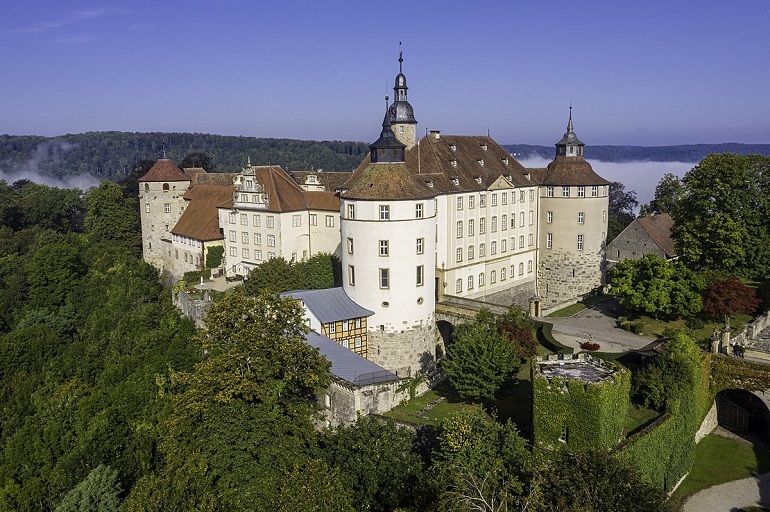
Perched majestically on a mountain spur high above the Jagst valley in Baden-Württemberg, Langenburg Castle presents itself as a stunning example of Renaissance architecture combined with baroque elegance. This fairy-tale-like fortress continues to serve as the residence of the Princes of Hohenlohe-Langenburg, maintaining its role as a living palace rather than merely a historical monument. Originally constructed during the 12th century as a medieval fortress, the castle was inherited by the House of Hohenlohe in 1253 following the extinction of the original Lords of Langenburg. The structure underwent significant transformation in the early 17th century when Count Philipp Ernst zu Hohenlohe-Langenburg converted it into an elegant Renaissance residence, establishing it as the official seat of the principality. The castle features a charming Renaissance courtyard, baroque elements added during 18th-century renovations, and houses the Deutsches Automuseum in its former stables, displaying approximately 70 vintage automobiles that chronicle the development of motorised transport. Visitors can explore the lavishly furnished state rooms containing period furniture, artwork, and family heirlooms, whilst the baroque garden, meticulously restored according to original 18th-century plans, provides a stunning backdrop for the annual Fürstliche Gartentage garden festival each September. The castle remains a living residence where Prince Philipp zu Hohenlohe-Langenburg, Princess Saskia, and their children continue the to this remarkable estate, making it one of Germany's most authentic aristocratic homes open to the public.
Interesting Facts about Langenburg Castle
- Langenburg Castle has served as the residence of the princely Hohenlohe-Langenburg family for centuries, and remains a lived-in home today.
- The castle sits atop a hill, offering spectacular panoramic views of the picturesque Hohenlohe landscape and the Jagst valley.
- Originally built in the Middle Ages, Langenburg Castle was transformed into a Renaissance palace in the 17th century, with later Baroque additions.
- The castle is renowned for hosting a remarkable vintage and classic car museum, attracting enthusiasts from across the globe.
- Guided tours lead visitors through lavish rooms filled with period furniture, historic artwork, and princely heirlooms that span generations.
- The castle grounds include beautifully preserved Baroque gardens that provide the scenic backdrop for one of southern Germany's largest annual garden fairs.
- Langenburg Castle’s chapel is celebrated for its circular design and psalm-engraved walls, making it a unique and popular venue for weddings and cultural events.
- Parts of the castle are still closed to the public, as it remains an active aristocratic residence, preserving its authentic, lived-in atmosphere.
- The princely family, together with a famed racing driver, established the Langenburg Car Museum in 1969 after an impromptu decision over wine.
- Langenburg Castle and its surrounding town are steeped in history, with records of the site dating back to at least 1226, and connections to the region’s noble and royal families.
History
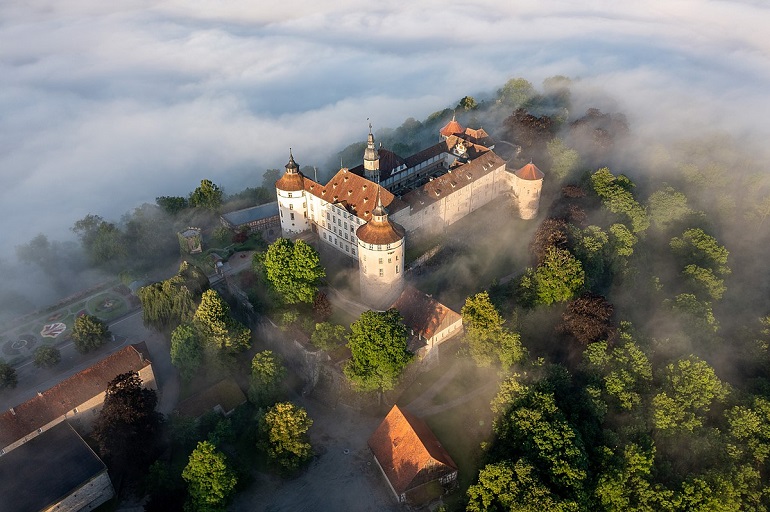
Langenburg Castle's origins trace back to the 12th century, when it was initially constructed during the Middle Ages. The settlement of Langenburg itself was first documented in 1226, though prehistoric habitation is likely. The castle was originally built by the free Lords of Langenburg, who entered historical records in 1201 and maintained close relations with the Lords of Hohenlohe. After the Langenburg family line became extinct in 1253, the town and castle were inherited by the House of Hohenlohe, beginning a relationship that continues to this day. The lordship of Hohenlohe was elevated to county status in 1495, and from 1568 onwards, Langenburg served as the residency of the county and later principality of Hohenlohe-Langenburg.
The castle underwent significant architectural transformations during the Renaissance period. In the 17th century, Count Philipp Ernst zu Hohenlohe-Langenburg undertook major renovations, transforming the mediaeval fortress into an elegant Renaissance palace. The castle's exterior showcases impressive Renaissance architecture from this period, whilst maintaining its commanding position on a hilltop crag overlooking the Jagst Valley. Subsequent generations in the 18th century added Baroque flourishes to the structure, creating the architectural blend visible today. The castle complex includes a magnificent Renaissance courtyard, a castle chapel, and baroque gardens that have been preserved according to their original plans. During the 17th century, Langenburg was also the site of witch trials, with the last victims, Anna Schmieg and Barbara Schleicher, executed in 1672.
The principality of Hohenlohe-Langenburg was elevated from a county to a principality in 1701, with the family achieving the status of ruling princes of the Holy Roman Empire by 1764. However, like many German states, it was mediatised to Württemberg in 1806 following the dissolution of the Holy Roman Empire. The House of Hohenlohe-Langenburg has maintained strong connections with European Protestant dynasties throughout its history, including marriages to British royalty - Queen Adelaide was related to the family, and Princess Margarita of Greece and Denmark, sister of Prince Philip, Duke of Edinburgh, married into the family in 1931. Today, the castle remains the private residence of the princely family, with Prince Philipp of Hohenlohe-Langenburg as the current owner. The family has opened portions of the castle to the public as a museum, showcasing lavish rooms filled with period furniture, artwork, tapestries, and collections of weapons and hunting trophies. The castle grounds also house the German Automobile Museum in the former stables, featuring approximately 70 vintage cars.
Description
Architecture and Courtyard
The castle's most striking feature is its Renaissance courtyard, widely regarded as one of southern Germany's most beautiful castle courtyards. This architectural jewel showcases three magnificent sandstone galleries stacked one above the other at the end of the east wing, creating a dramatic vertical display. The courtyard is adorned with elegant galleries, gables, balconies, and distinctive corkscrew towers featuring spiral staircases that add whimsical character to the structure.
The impressive bell tower, originally designed as a lookout point nicknamed "Lug ins Land" (look out over the land), provides commanding views across the landscape. A crowned lion weather vane bearing the year 1616 sits atop the tower, commemorating when Count Philipp Ernst of Hohenlohe-Langenburg completed the courtyard's current form. The tower's bells chime every quarter hour, adding an enchanting soundtrack to any visit.
Interior Spaces and Collections
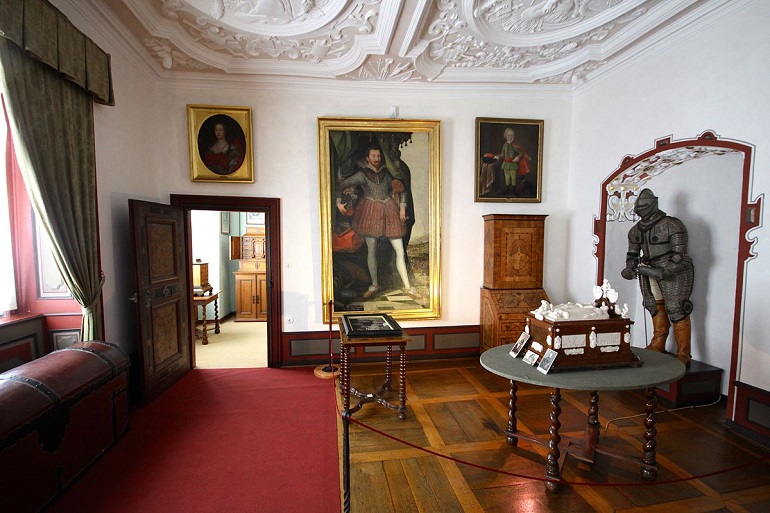
The castle's interior offers visitors a glimpse into centuries of noble life through its lovingly furnished rooms filled with period furniture, artwork, tapestries, and family heirlooms. The guided tours showcase the authentic atmosphere of a residence that has been continuously inhabited by the princely family for generations. Particularly noteworthy is the castle's collection of weapons, armour, and hunting trophies that demonstrate the lifestyle of German nobility throughout the centuries.
The castle's circular chapel stands out as an architectural highlight, featuring a unique design with a first-floor balcony and psalms decorating the walls from floor to ceiling. This intimate sacred space provides visitors with a sense of the spiritual life that has been central to the castle's history.
German Automobile Museum
Since 1970, the castle has housed Germany's first classic car museum within its historic stables. This unique attraction displays approximately 65 vintage and classic vehicles, documenting the evolution of motorised transport from early automobiles to modern times. The collection includes an eclectic mix ranging from post-war small cars to magnificent Mercedes models, with notable pieces including a silver 300SL and vehicles donated by members of the British Royal Family, reflecting the castle's connections to European royalty.
Gardens and Grounds
The castle's baroque garden represents the only baroque terrace of its kind in Baden-Württemberg. Originally laid out in the early 17th century as a pleasure garden with two terraces, it was transformed into its current baroque style in the mid-18th century under Prince Ludwig. The garden features elegant rose arches, ornamental fountains, and meticulously maintained flower beds planted in the Hohenlohe family colours of red and white.
At the far end of the garden stands the Orangery, a beautifully restored 19th-century structure that originally housed citrus trees and exotic plants. Today, this elegant venue serves as a popular location for weddings and special events, offering guests a romantic setting surrounded by the castle's historic ambiance.
Viewing Opportunities and Facilities
The castle's elevated position provides spectacular panoramic views across the Jagst valley and the surrounding Hohenlohe landscape. Visitors can enjoy these vistas from multiple vantage points, including the Lindenstamm viewing platform built on the 12th-century castle walls.
The castle café, established in 1950, offers both indoor and outdoor seating for up to 300 guests combined. Its terrace provides an ideal spot to savour refreshments while taking in the stunning valley views. The café serves traditional treats alongside coffee and tea, creating a perfect conclusion to any castle visit.
Cultural Events and Activities
Beyond its regular touring schedule, Langenburg Castle hosts the annual Fürstliche Gartentage (Princely Garden Days) on the first weekend of September. This significant event, recognised as the largest garden fair in southern Germany, attracts over 30,000 visitors annually and features more than 170 exhibitors showcasing the latest in gardening and home living trends.
The castle also offers atmospheric candlelit tours that provide visitors with an especially romantic way to experience the historic rooms and corridors by flickering light, creating an unforgettable ambiance that brings the castle's rich history to life.
Getting There
By train Langenburg Castle can be reached from cities such as Stuttgart or Frankfurt by taking a train to Eckartshausen-Ilshofen station, then transferring to a local bus bound for Langenburg Markt. This combination is convenient as regional trains and connecting buses run regularly, though a transfer is required at Eckartshausen-Ilshofen.
By bus Regional bus services link nearby towns and train stations to Langenburg Markt, making it accessible by public transport after arriving via train at cities like Schwäbisch Hall or Heilbronn.
By car Langenburg Castle is easily accessible by car and offers plenty of parking nearby. From the A6 autobahn, take the Kirchberg an der Jagst or Ilshofen/Wolpertshausen exit and follow the local roads for a picturesque drive through the countryside, arriving at Langenburg within roughly an hour from Stuttgart or two hours from Frankfurt.
Best Time to Visit
The optimal time to visit Langenburg Castle is during the main season from late April through October, with the summer months of June to August offering the most favourable conditions. During this peak period, the castle is open Wednesday through Sunday from 11:00 to 17:00, providing ample opportunity to explore both the magnificent Renaissance architecture and the fascinating German Automobile Museum housed in the former royal stables. The late spring and summer months also coincide with the castle's beautiful Baroque gardens being in full bloom, making for particularly enchanting photographs and leisurely strolls through the meticulously maintained grounds. Weather-wise, temperatures during June to August range from comfortable highs of 23-25°C, ideal for exploring the hilltop castle and enjoying the stunning panoramic views over the Jagst Valley. For those seeking a truly special experience, early September presents an exceptional opportunity to visit during the renowned Fürstliche Gartentage (Princely Garden Days), when over 170 exhibitors transform the castle grounds into one of southern Germany's largest and most elegant garden fairs. However, visitors should note that the castle closes entirely from November through Easter, making spring and summer visits essential for those wishing to experience the full splendour of this princely residence.