| Contents |
|---|

Introduction
Fulda (pop. 70,000) is a beautiful baroque town that grew around a Benedictine monastery of Fulda, founded in 774 as an outpost for Charlemagne's conquest and Christianisation of Saxony. The influential abbey evolved into a principality of its own right. Key landmarks include the Fulda Cathedral, the final resting place of Saint Boniface, and the adjacent Michaelskirche, one of Germany's oldest churches. The city also features a notable Baroque Quarter with the former Prince-Abbots' palace, now the Stadtschloss, and its accompanying gardens. Its location in central Germany has historically made it an important transport hub.
Interesting Facts about Fulda
- Fulda was founded as a Benedictine monastery in 744 by Sturmius, a disciple of St Boniface.
- The city is home to the tomb of St Boniface, known as the Apostle of the Germans, housed in Fulda Cathedral.
- Fulda boasts one of the most impressive Baroque quarters in Germany, with the cathedral, Stadtschloss (City Palace), and an Orangery all within walking distance.
- St Michael’s Church in Fulda, built around 820 CE, is one of the oldest religious buildings in Germany.
- The Hexenturm (“Witch’s Tower”), dating from the 12th century, was once part of the medieval city wall and used as a women’s prison in the later Middle Ages.
- Fulda played a critical strategic role during the Cold War, as it was located near the border between West and East Germany in the so-called “Fulda Gap,” considered a potential major invasion route.
- The city escaped heavy damage during the Second World War, preserving its historic centre with cobbled streets and half-timbered houses.
- Fulda’s University, active between 1734 and 1803, was one of many educational institutions that made the city an intellectual centre in Europe during the early Middle Ages.
- A bustling market square and Palace Gardens make Fulda a particularly charming destination for visitors seeking traditional German culture.
- Fulda is named after the Fulda River, which runs through the city, and lies serenely in a valley surrounded by the scenic Rhön and Vogelsberg mountains.
History
Fulda’s origins trace back to 744 CE when the English missionary St. Boniface sent his disciple, St. Sturm, to establish a Benedictine abbey on the banks of the River Fulda. This monastery rapidly became a major centre for religious, educational, and cultural life within the Carolingian Empire, boasting a large scriptorium, a significant medieval library, and attracting scholars from across Europe. Fulda’s importance was further enhanced in 751, when it was placed directly under papal authority, and following Boniface’s martyrdom in 754, it became a renowned pilgrimage site thanks to his tomb.
By the Middle Ages, Fulda had emerged as a prosperous settlement, being officially chartered as a city in 1157. It grew in power and influence, acquiring imperial privileges such as market and customs rights. The city was ruled by prince-abbots, and from 1752 by prince-bishops, who guided Fulda through ambitious Baroque architectural transformations, most notably the construction of the resplendent Fulda Cathedral and the city palace. The surrounding Baroque quarter remains a testament to this period, with many well-preserved stately buildings and churches, including St Michael’s Church, dating from the ninth century and considered one of Germany’s oldest churches.
Throughout its history, Fulda’s strategic position made it the stage for both prosperity and adversity. The city endured the upheavals of the Thirty Years’ War and was repeatedly contested during the Napoleonic era, spent brief periods under the Principality of Nassau-Orange-Fulda and the Grand Duchy of Frankfurt, before joining the Kingdom of Prussia in 1866. Unlike many German cities, Fulda suffered little destruction in the Second World War. During the Cold War, it gained significance as a military centre near the East-West border, notably as part of the ‘Fulda Gap’, a key point of potential confrontation. Today, Fulda is renowned for its architectural heritage, religious significance, and vibrant cultural life.
Main Attractions
Fulda Cathedral (Dom zu Fulda)
Fulda Cathedral, constructed in the early 18th century, is the city's most prominent landmark and an important site for religious history. It serves as the burial place of St Boniface, the “Apostle of the Germans”, and displays Baroque architectural features. The cathedral’s twin towers dominate the skyline, and the building is regularly used for organ recitals and religious ceremonies. Entry is free, and it is located close to other notable sites in Fulda.
Altes Rathaus (Old Town Hall)
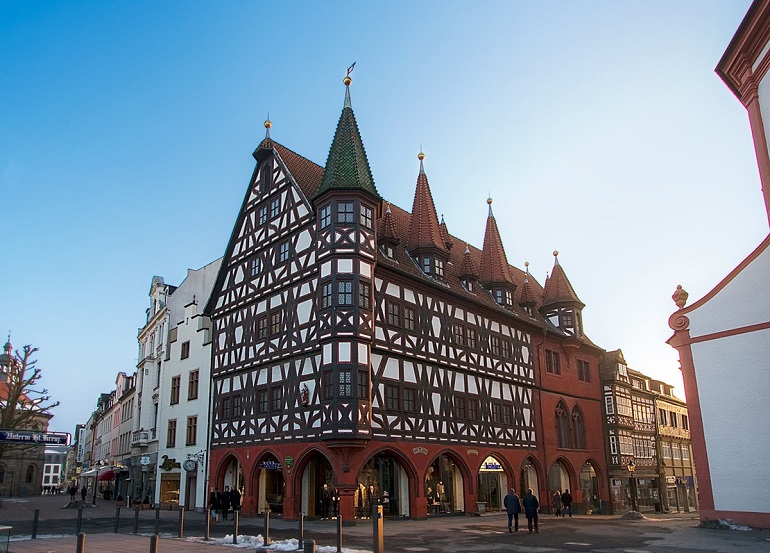
The Altes Rathaus is an historic half-timbered building situated in Fulda’s old town. Originally serving as the town hall, the building now houses shops on its ground floor but remains a noteworthy example of regional architecture. Its distinctive red base and white upper structure make it a visible landmark in the town centre.
Stadtschloss (City Palace)
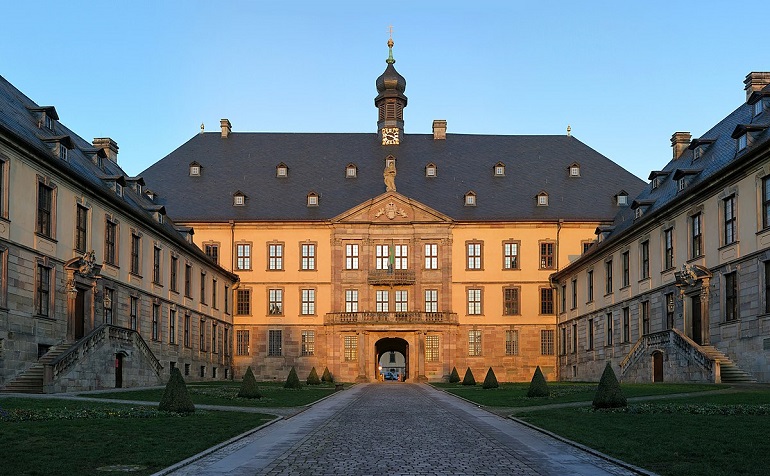
The Stadtschloss, originally built in the early 18th century, was the former residence of the prince-abbots and later prince-bishops of Fulda. The palace consists of several wings and is notable for its sumptuously decorated historic state rooms and a grand hall of mirrors. Sections of the building are open to visitors, offering a perspective on Baroque residential architecture. The Stadtschloss is located beside the Schlossgarten and close to the city centre.

Schlossgarten Fulda (Palace Garden)
Directly adjacent to the cathedral and the Stadtschloss, the Schlossgarten is a sizeable Baroque garden open to the public. The garden features formal lawns, fountains, and various flowerbeds, making it suitable for walks and recreational visits. The Orangerie, a striking Baroque building, stands on one side of the gardens and is occasionally used for cultural events. Access to the gardens is free.
St Michael’s Church (Michaelskirche)
St Michael’s Church, situated near the cathedral, is one of Germany’s oldest preserved churches. Built around 820 CE, it features a crypt dating back to its earliest days and is considered an example of Carolingian architecture. The church was originally constructed as a burial chapel and still retains several Romanesque elements.
Kloster Frauenberg (Frauenberg Monastery)
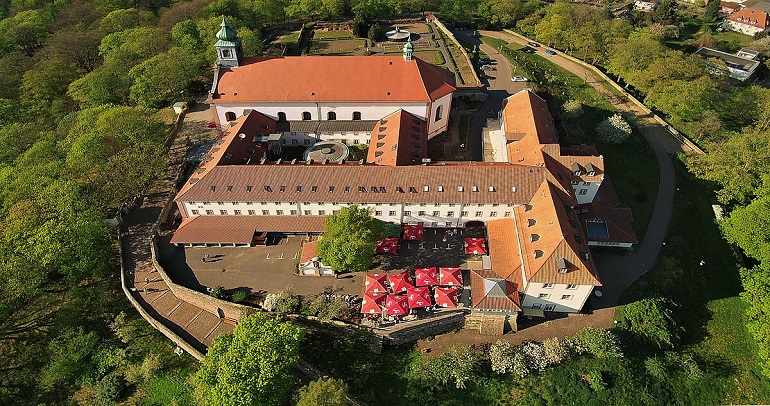
Kloster Frauenberg is a Franciscan monastery located on a hill just outside the town centre. The site offers views over Fulda and includes a church, monastery buildings, and a garden. The monastery is an active religious site, and the quiet surroundings are suitable for contemplation or walks. It is accessible by foot or vehicle.
Dahliengarten (Dahlia Garden)
Located close to the cathedral square, Dahliengarten is a public garden known for its collection of dahlia varieties, which bloom in late summer. The garden provides a seasonal display of approximately 30 dahlia varieties. This area is particularly popular for walks during the blooming season and is free to access.
Top Museums
1. Vonderau Museum
Housed in a 4000 m² former grammar school, the Vonderau Museum is the largest cultural institution between Kassel and Frankfurt. Its three permanent exhibitions cover:
- Cultural History: Artefacts from prehistory to modern times, including local ceramics and agrarian tools.
- Natural History: Dioramas depicting the geological formation of the Rhön, fossil specimens and mounted wildlife of East Hesse.
- Art: Paintings and sculptures ranging from medieval devotional works to regional contemporary artists.
A highlight is the in-house planetarium, whose six-metre dome and full-dome projection transport visitors on immersive cosmic journeys. The museum also hosts rotating special exhibitions with a regional focus and offers museum-education programmes for all ages.
2. Deutsches Feuerwehr-Museum (German Firefighting Museum)
Occupying two spacious halls, this museum chronicles the evolution of firefighting in German-speaking lands from medieval hand pumps to modern fire engines. Key displays include:
- Early fire-extinguishing devices and Renaissance-era hose reels.
- Steam-powered fire engines and turn-of-the-century ladder wagons.
- Multimedia stations recounting historic major fires and firefighting techniques.
Interactive elements—such as a recreated 19th-century fire engine pump—engage both enthusiasts and families.
3. Kinder-Akademie Fulda (Children’s Academy)
Germany’s first independent children’s museum stimulates young minds through art, science and technology. Its signature attraction is the “Begehbares Herz”, a walk-through heart model that anatomically immerses children in the circulatory system. Additional hands-on exhibits cover robotics, optics and creative workshops, all designed to encourage discovery and experimentation.
4. Dommuseum Fulda (Cathedral Museum)
Nestled beside the baroque cathedral, the Dommuseum houses the ecclesiastical treasures of Fulda Abbey and Diocese. Among its exhibits:
- Liturgical vestments from medieval brocades to rococo silks.
- Gilded monstrances, chalices and bishop’s regalia.
- Medieval reliquaries and devotional ivory carvings.
This “treasure chamber” illuminates Fulda’s central role in Carolingian and later church history.
5. Stadtschloss & Historical Rooms
The baroque Stadtschloss (City Palace), once the residence of Fulda’s prince-abbots, reveals princely life in its lavishly stuccoed state rooms. Visitors explore:
- The Rococo Festsaal (Banquet Hall) with original ceiling frescoes.
- The Empire-style apartments of the early 19th century.
- Collections of Fulda porcelain and a gallery of 18th-century paintings.
In the palace cellars, the Fastnachtsmuseum traces 500 years of Fulda’s carnival tradition with costumes, floats and digital media stations.
6. Schloss Fasanerie Museum
Just outside Fulda, Schloss Fasanerie is an 18th-century summer residence of the Fulda prince-abbots. Its museum displays original showrooms furnished in period splendor—parquet floors, chandeliers and gilded furniture—alongside private porcelain and clock collections. The palace’s landscaped park and deer garden complete the baroque ensemble.
7. Erlebniswelt Blockflöte (Recorder Exhibition)
A delight for music-lovers, this museum chronicles 180 years of German recorder-making. Beyond showcasing historic instruments, it invites visitors to handle original blockflöten in a workshop setting, exploring tonewoods and craftsmanship first-hand.
8. Blackhorse Museum Fulda
Documenting the nearly 50-year presence of the U.S. Army’s “Blackhorse” Cavalry Regiment, this military museum features uniforms, equipment and oral histories. Photographs trace the regiment’s role in Cold War Europe and its integration with local communities.
9. Villa Franz Erhard Walther
Dedicated to the Fulda-born sculptor and Golden Lion laureate Franz Erhard Walther, this gallery presents his “Activatable Sculptures” – fabric and form works that only become complete when manipulated by the visitor, emphasising the participatory nature of his art.
10. Johannesberg Priory & Propstei Johannesberg
Perched on a hill overlooking Fulda, the former Benedictine monastery offers:
- Historical rooms displaying monastic artefacts and models of medieval timber-framed houses.
- An artisans’ collection featuring tools of local crafts and rural life.
This site blends ecclesiastical heritage with folk-cultural insights.
Local Cuisine
A must-try in Fulda is Schwartenmagen, a savoury cold cut terrine often enjoyed with rustic bread or pan-fried alongside potatoes. For bread enthusiasts, Kümmelbrot, a hearty caraway-seed bread, offers an authentic taste of the region. Those with a love for baked treats should not miss Zwibbelsploatz, a delightful onion tart that combines sweet and savoury notes in every bite. Many local restaurants and beer gardens take pride in serving these dishes alongside regional craft beers, providing a warm and inviting introduction to Fulda's culinary heritage.
Getting There & Around
By train Fulda is easily accessible thanks to its excellent rail connections, with frequent high-speed ICE trains linking the city to major destinations such as Frankfurt, Brussels, and Luxembourg. The main railway station is situated centrally, making it convenient for onward travel within the city and the surrounding region.
By coach or bus Regional and long-distance bus services also offer routes to Fulda, with providers such as FlixBus and BlaBlaCar connecting the city to various parts of Germany and neighbouring countries. Coaches typically arrive at designated stops near the city centre, making it a practical option for those travelling from nearby cities or seeking an economical journey.
By car Fulda is well-connected by road, lying just off the A7 and A66 motorways, providing straightforward access from Frankfurt, Kassel, and other major cities. Visitors arriving by car will find convenient parking options, and the city is clearly signposted from the major routes, making navigation simple and direct.