



| Contents |
|---|

Introduction
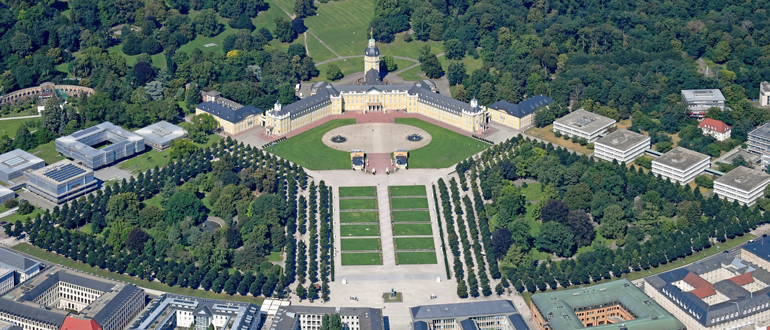
Unprepossessing in itself, the city of Karlsruhe was built around its sumptuous palace, with 32 streets radiate from the palace like the ribs on a folding fan. Karlsruhe Palace was built between 1715 and 1718 by Margrave Charles III William of Baden-Durlach after a dispute with citizens of his former capital, Durlach. The baroque palace served as the residence and governmental seat of the margraves, electoral princes, and grand dukes of Baden for nearly two centuries until 1918, when the last monarch departed. Originally constructed partially of wood, the palace was rebuilt in stone following damage in 1746, with subsequent alterations by renowned architect Balthasar Neumann and Friedrich von Kesslau adding the baroque façade that defines its current appearance. The palace is renowned for its unique urban planning concept, positioned at the centre of 32 radiating streets that fan outward like spokes of a wheel, earning Karlsruhe the nickname "fan city" (Fächerstadt). Though heavily damaged during Allied bombing in September 1944, the palace was meticulously reconstructed between 1955 and 1966, with the baroque exterior faithfully restored whilst the interior was redesigned as a modern museum space. Today, the palace houses the Badisches Landesmuseum (Baden State Museum), founded in 1919, which displays extensive collections spanning prehistory to the 21st century, including the the palace's 51-metre tower offering panoramic views of the city and surrounding Black Forest region.
Interesting Facts about Karlsruhe Palace
- Karlsruhe Palace was built in 1715 by Margrave Charles III William of Baden-Durlach following a dispute with the citizens of his previous capital.
- The city of Karlsruhe was designed with the palace at its centre, with 32 streets radiating outwards like the spokes of a wheel, earning it the nickname the "fan city".
- Originally, parts of the palace were constructed with wood, but it was rebuilt in stone in 1746 to ensure durability.
- The palace served as the residence and seat of government of the margraves, electoral princes, and grand dukes of Baden for almost 200 years.
- Karlsruhe Palace now houses the Badisches Landesmuseum, a prominent cultural history museum presenting art and historical living environments spanning from prehistory to modern times.
- The palace tower, standing 51 metres high, offers panoramic views over Karlsruhe and the surrounding Black Forest.
- The interior of the palace was remodelled in a simpler style after World War II, while the exterior was restored to its original Baroque design following heavy bomb damage in 1944.
- The Schlossgarten (Palace Garden) adjacent to the palace was originally designed in French Baroque style and later transformed into an English landscape garden, featuring rare tree species and art works.
- Since 2015, Karlsruhe Palace has hosted the "Schlosslichtspiele" annual summer light show, combining modern art with history.
- The palace’s design reflects Baden’s rich history and Baroque grandeur with its three-winged structure and ornate decorations.
History
Karlsruhe Palace stands as one of Germany's most significant baroque landmarks, built between 1715 and 1718 for Margrave Charles III William of Baden-Durlach. The construction began after a bitter dispute with the citizens of his previous capital, Durlach, prompting the margrave to establish an entirely new residence in the forest. The original building was designed by Jakob Friedrich von Batzendorf and served as the centrepiece of the newly founded city of Karlsruhe. Remarkably, the entire city was planned around the palace, with 32 streets radiating outward from the palace tower like spokes on a wheel or ribs on a folding fan, earning Karlsruhe the nickname "Fächerstadt" (fan city). Margrave Karl Wilhelm held a grand ceremony to mark his move into the new residence on 30th October 1718, though the palace was only partially completed at the time.
The palace underwent significant architectural transformations throughout the 18th century. Initially constructed partly of wood, the building required complete reconstruction in stone by 1746. Under Charles Frederick, who later became Grand Duke of Baden, the palace was extensively altered between 1746 and 1770 by renowned architects Balthasar Neumann and Friedrich von Kesslau. These modifications included the addition of larger windows and doors, pavilions, and wings that enhanced the baroque structure. In 1785, Wilhelm Jeremias Müller made further changes by shortening the tower and adding a distinctive cupola. For nearly two centuries, the palace served as the residence and seat of government for the margraves, electors, and grand dukes of Baden, witnessing significant historical events including the expulsion of Grand Duke Leopold during the Revolutions of 1848. The last monarch, Frederick II, Grand Duke of Baden, was forced to vacate the palace in 1918 following his abdication.
The palace's modern history reflects both destruction and renewal. During the Second World War, the building was completely destroyed by Allied bombing on 27th September 1944, burning down to its outer walls. The reconstruction project began in 1952 and was completed with a celebratory dedication in 1966. Whilst the baroque façade was meticulously restored to its original appearance, the interior was redesigned as a modern museum facility. Since 1919, the palace has housed the Badisches Landesmuseum (Baden State Museum), which was established after the state of Baden took over the building. Today, visitors can explore extensive collections of archaeology, ethnology, and Baden folklore, as well as the reconstructed throne room featuring crown insignias and portraits of Baden's rulers. The palace façade underwent another complete renovation that was finished in 2015 to mark Karlsruhe's 300th anniversary.
Description
Architecture and Design
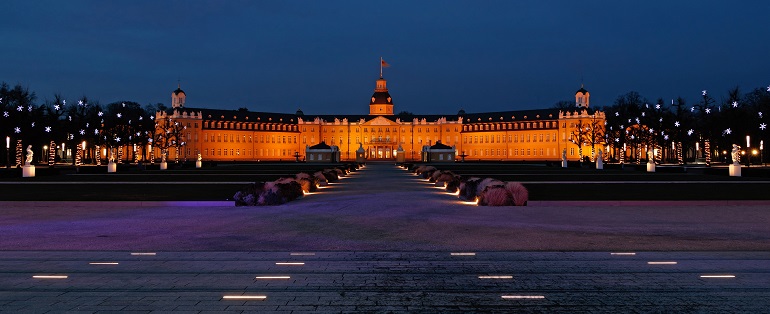
The palace presents a striking three-winged Baroque structure, constructed primarily in stone after the original wooden elements were replaced in 1746. The building's most prominent feature is its seven-storey octagonal tower, which rises 42 metres into the sky and serves as the architectural focal point from which 32 streets radiate outward. Originally standing at 51 metres, the tower was shortened in 1785 when Wilhelm Jeremias Müller added an elegant cupola.
The palace's exterior showcases classic Baroque grandeur with its symmetrical façade, ornate windows, and decorative pavilions that connect the side wings to the main building. The central tower wing houses some of the most important ceremonial spaces, whilst the building's stone construction gives it a solid, imposing presence that befits its former role as a ducal residence.
Interior Splendour
Within the palace walls, visitors encounter magnificently appointed rooms that reflect centuries of royal habitation. The Marble's crown jewels, featuring a two-storey height with walls covered in stuccoed marble. This ceremonial space once hosted official functions and displays a large ceiling painting depicting the Birth of Venus by court painter Joseph Melling.
The Garden Hall provides another stunning interior space, surrounded by terraces that offer panoramic views of the palace gardens. This room, which can accommodate up to 200 guests for receptions, maintains its baroque interior decoration and serves as a window into the opulent lifestyle of Baden's former rulers.
The palace's interior also features the historically significant Throne Room, where the Baden monarchy held court, along with various apartments and ceremonial chambers decorated in authentic baroque and rococo styles. Modern renovations have created contemporary exhibition spaces whilst preserving the building's historic character.
The Palace Tower Experience
The tower offers visitors an unparalleled perspective of Karlsruhe's unique urban design. After climbing 165 steps, guests reach the viewing balcony that encircles the octagonal tower structure. From this 42-metre vantage point, the distinctive fan-shaped street grid becomes clearly visible, with nine streets running south towards the city centre in perfect symmetry.
The 360-degree viewing platform provides spectacular vistas extending to the Black Forest, the Palatinate mountains, and even the Vosges ranges stretching into France. On clear days, visitors can identify landmarks including the Federal Constitutional Court, the famous pyramid on Marktplatz, and various hills surrounding the city.
Palace Gardens and Grounds
The Schlossgarten stretches magnificently northward from the palace, transformed from its original French Baroque design into an expansive English landscape garden. This vast green space covers approximately 500 metres and features rolling meadows, mature tree groves, and winding pathways that invite leisurely exploration.
A particularly charming feature is the Schlossgartenbahn, a 2.7-kilometre miniature railway that has operated since 1967, carrying visitors through the garden's most scenic areas. The gardens also contain various monuments, fountains, and artistic installations, including the famous Blue Ray - a path marked by 1,645 blue majolica ceramic tiles leading from the palace tower to the majolica manufactory.
The gardens seamlessly connect with the adjacent Karlsruhe Botanical Garden, creating an extensive green corridor that serves as both a recreational space and a showcase of botanical diversity.
Museum Collections
Today, the palace houses the renowned Badisches Landesmuseum (Baden State Museum), which presents over 50,000 years of cultural history across four floors. The museum's collections span from prehistoric archaeology to contemporary culture, with particularly notable displays including ancient Greek and Roman artefacts, medieval sculptures, and the famous Karlsruher Türkenbeute - Ottoman military equipment and artwork collected during the Turkish Wars.
The basement level features cutting-edge archaeological exhibitions, whilst upper floors display everything from Renaissance art to Baden's regional history. The museum employs innovative digital technologies and interactive displays, making it one of Germany's most progressive cultural institutions.
Visitor Experience
The palace operates as both a historical monument and an active cultural centre. Regular opening hours allow access to the permanent exhibitions Tuesday through Sunday, with extended hours on weekends. The tower experience requires a separate ticket and offers scheduled film presentations about the palace's founding story.
Special events throughout the year include the spectacular Schlosslichtspiele - a summer light show that illuminates the entire 300-metre palace façade with artistic projections. The palace also hosts concerts, conferences, and private celebrations in its historic halls.
The on-site facilities include a museum shop and café, whilst the surrounding palace square and gardens provide ample space for outdoor relaxation and photography. The palace's central location makes it easily accessible by public transport and serves as the perfect starting point for exploring Karlsruhe's unique fan-shaped city layout.
Getting There
By train, Karlsruhe Palace is conveniently reached from major German cities, including Frankfurt and Stuttgart, with direct Inter-City Express (ICE) trains to Karlsruhe Hauptbahnhof. From the main station, visitors can take a tram or streetcar to the Marktplatz (U) or Kronenplatz (U) stops, from which the palace is only a short stroll north through the city centre.
By coach or bus, most long-distance coaches and buses arrive at Karlsruhe’s intercity bus station, located at the south entrance of the main train station. From there, frequent trams or streetcars provide easy access to the city centre and the Marktplatz, making the palace an accessible destination for those travelling by bus.
By car, Karlsruhe is accessible via the A5 autobahn (direction Frankfurt/Basel) or the A8 (direction Stuttgart/Mannheim Frankfurt). After taking the “Zentrum” exit, simply follow the white signs towards the palace, where you will find the Schlossplatz underground car park conveniently located nearby.
Best Time to Visit
Late spring through early autumn is undoubtedly the optimal time to visit Karlsruhe Palace, with the period from May to September offering the most rewarding experience. During these warmer months, Karlsruhe benefits from its reputation as one of Germany's sunniest cities, enjoying around 140 days of sunshine annually and average summer temperatures of 20°C, making it perfect for exploring both the palace's magnificent Baroque façade and its extensive gardens. The palace museum operates on extended hours from Tuesday to Thursday (10am-5pm) and Friday to Sunday (10am-6pm), though it remains closed on Mondays. Summer visitors can also take advantage of special seasonal attractions, including the spectacular Schlosslichtspiele light show that transforms the palace's 170-metre façade into Germany's largest projection screen for six weeks during summer evenings, whilst the surrounding gardens come alive with open-air events and provide an idyllic setting for leisurely strolls. The botanical gardens adjacent to the palace are particularly stunning during this period, with exotic plants and themed sections in full bloom, whilst the palace tower remains accessible until one hour before closing, offering panoramic views across the fan-shaped city layout that inspired Thomas Jefferson's design for Washington, DC.


