



| Contents |
|---|

Tübingen.
Introduction
Tübingen (pop. 93,000), a charming university town in southwestern Germany, is nestled along the Neckar River in the state of Baden-Württemberg. With a history dating back over 900 years, this picturesque city is renowned for its well-preserved medieval old town, featuring steep steps, narrow lanes, and pointed gabled houses. Home to the prestigious University of Tübingen, founded in 1477, the city boasts a vibrant academic atmosphere with nearly one-third of its 90,000 residents being students. Tübingen offers a blend of cultural attractions, including the imposing Hohentübingen Castle, the Gothic Stiftskirche, and numerous museums showcasing art and archaeology. The town's lively market square, crowned by the 15th-century Town Hall with its ornate astronomical clock, serves as a focal point for local life and events.
Interesting Facts about Tübingen
- The Eberhard Karls University of Tübingen was founded in 1477, making it one of Central Europe’s oldest universities and a historic hub for theology and sciences.
- The town’s skyline is dominated by Hohentübingen Castle and the Gothic Stiftskirche of St George, with many institutes and exhibits housed in the castle today.
- Traditional punting on slender wooden boats called Stocherkähne animates the Neckar, culminating in an annual Stocherkahn race each June.
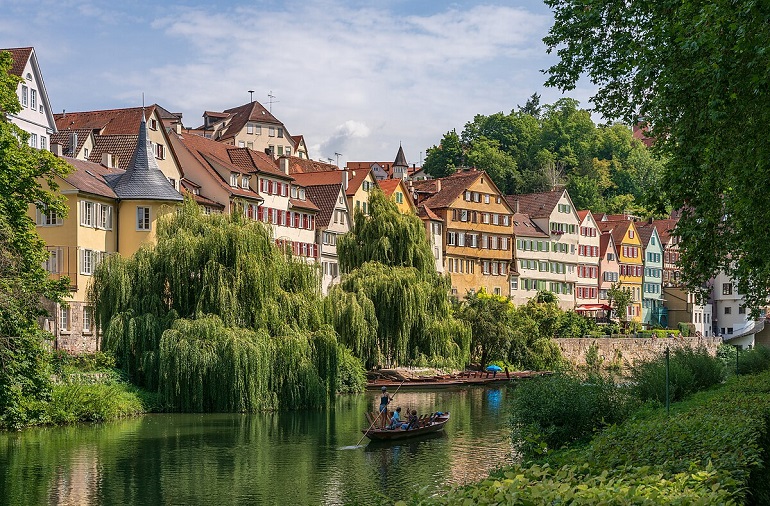
- Tübingen’s Old Town preserves colourful half-timbered houses along the famed Neckarfront, including the yellow Hölderlinturm associated with the poet Friedrich Hölderlin.
- The city hall on the Markt, a late-Gothic building first erected in the 15th century, remains a photogenic centrepiece of civic life.
- During the Thirty Years’ War the town changed hands multiple times, occupied by Imperial, Swedish, and French forces, reflecting its strategic position in Swabia.
- Tübingen is frequently described as Germany’s “youngest” city by average age, thanks to its large student population relative to residents.
- The town blends progressive, green politics with traditional Swabian traits of frugality and order, a character long noted in surveys of quality of life.
- Weekly markets on the Holzmarkt and Marktplatz and seasonal festivities keep the pedestrianised centre lively throughout the year.
- Publishing has deep roots here, with the influential Allgemeine Zeitung founded in Tübingen by Cotta in the late 18th century.
- Tübingen celebrates chocolate each year with the ChocolART festival, drawing visitors to the cobbled streets for tastings and workshops.
- The town’s academic legacy includes figures such as Kepler, Hegel, and Hölderlin connected to its seminaries and faculties over the centuries.
- Bebenhausen Abbey, in a district of Tübingen, adds monastic heritage and sits on a branch of the Way of St James pilgrimage route.
- Environment-friendly policies are visible in everyday life, from dense cycling culture to efforts to limit inner-city car traffic and pollution.

History
Ancient Origins and Medieval Beginnings
Tübingen's history stretches back an remarkable 14,000 years, with the area first settled by ancient humans in the 12th millennium BCE. The Romans established a presence here in 85 CE, constructing a limes frontier wall along the River Neckar. The modern city emerged during the 6th or 7th centuries when the region was populated by the Alamanni people. Some historians suggest that the significant Battle of Solicinium may have been fought at Spitzberg, a mountain in Tübingen, in 367 CE, though evidence remains inconclusive. Tübingen first appears in official records in 1191, though the local castle of Hohentübingen has documented history dating back to 1078, when it was besieged by Henry IV, King of Germany. The name was transcribed in medieval Latin as "Tuingia" and "Twingia". By 1231, Tübingen had achieved the status of a civitas, indicating royal recognition of civil liberties and a proper court system.
The Rise of a University Town
The most transformative period in Tübingen's history began in the 15th century with significant religious and educational developments. An Augustinian monastery was established by Pope Alexander IV in 1262, followed by a Franciscan monastery in 1272. The foundation of a Latin school (now the Uhland-Gymnasium) in 1300 demonstrated the city's commitment to learning. Between 1470 and 1483, the magnificent St George's Collegiate Church was constructed. However, the most significant event occurred in 1477 when Duke Eberhard im Bart of Württemberg founded the Eberhard Karls University, making it one of the oldest universities in Central Europe. The university quickly gained renown as one of the most influential centres of learning in the Holy Roman Empire, particularly for theology. A Protestant faculty, the Tübinger Stift, was established in 1535 in the former Augustinian monastery. The university attracted brilliant minds including astronomer Johannes Kepler, poet Friedrich Hölderlin, and philosopher G.W.F. Hegel.
Modern Trials and Transformation
Tübingen endured significant hardships during the turbulent 17th century, being occupied multiple times during the Thirty Years' War by the Catholic League (1622-1625), the Swedes (1638), and the French (1647-1649), whilst also being devastated by plague. The city demonstrated resilience, rebuilding after parts of the old town burned down in 1789 in the original architectural style. The 19th century brought expansion beyond medieval boundaries with the rectangular Wilhelmsvorstadt development and connection to the Royal Württemberg State Railways network in 1861. The city faced its darkest period during the Nazi era, when the university became a centre for research on the "Jewish question" and racial theories. On Kristallnacht in 1938, Nazi Stormtroopers burned down Tübingen's synagogue, and only two of the 23 remaining Jewish community members survived the Holocaust. During the Second World War, three bombing raids caused relatively minor damage, destroying the Neckar Bridge and about 85 houses. The city was surrendered to French forces in April 1945, who remained as occupiers until 1949, with an Allied garrison presence lasting until the end of the Cold War in the 1990s.
Main Attractions
The Old Town (Altstadt)
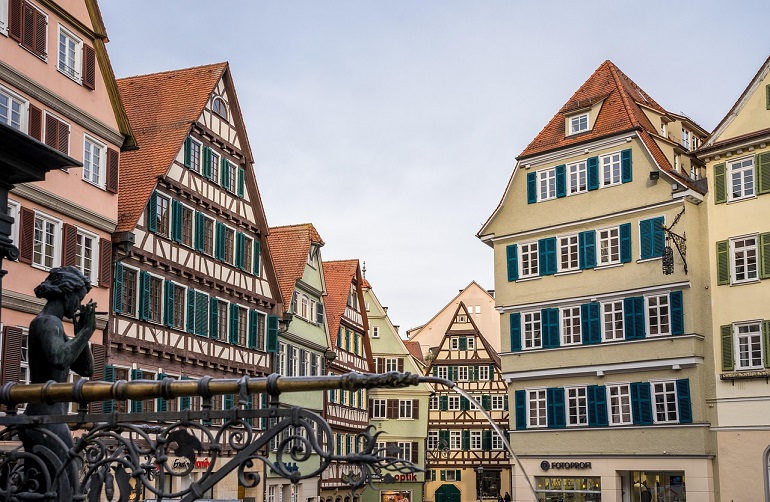
The Old Town (Altstadt) of Tübingen is a true jewel, boasting winding cobbled streets, beautifully preserved timber-framed houses, and vibrant squares. The heart of the Altstadt, centred around the Holzmarkt and the Georgsbrunnen fountain, invites visitors to meander through historic alleyways lined with boutiques, cafés, and market stalls. Dating back over 900 years, the medieval quarter presents steep steps, narrow lanes, and pointed gabled houses that create an enchanting tapestry leading up to the castle. The area is particularly atmospheric in the evenings or during festivals, when the ancient buildings glow under soft lights and locals and visitors alike mingle in the bustling pedestrian zones.
The Marktplatz (Market Square)
The Marktplatz (Market Square) serves as the beating heart of Tübingen and forms one of its most picturesque gathering spots. This central square hosts the weekly market every Monday, Wednesday, and Friday, where regional producers offer fresh goods and local specialities. Surrounded by architectural gems ranging from medieval half-timbered houses to baroque buildings, the square creates a perfect backdrop for people-watching and sampling traditional dishes at the local cafés. The atmosphere here perfectly captures the essence of German town life, with residents and students mingling throughout the day.
The Town Hall (Rathaus)
The Town Hall (Rathaus) stands as one of the most striking buildings bordering the charming market square. Originally constructed in 1435 as a marketplace, this late Gothic building showcases varying architectural designs and materials that reflect its numerous renovations over the centuries. The town hall features several remarkable historical elements, including an astronomical clock installed in 1511 that remains operational today, a carillon constructed in 1988, and a more recently installed art gallery featuring works by renowned German painters. The building underwent major renovation in 2015 at a cost of €11 million, ensuring its preservation as both a functioning civic building and a popular photographic subject.
The Neptunbrunnen (Neptune Fountain)
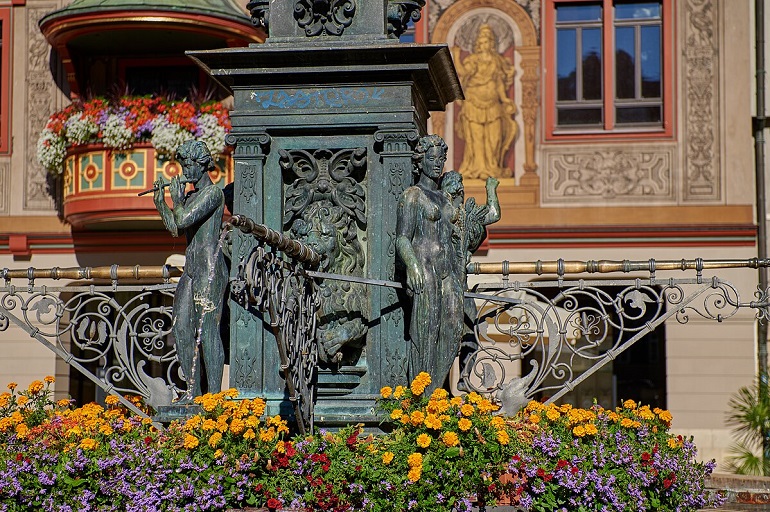
Located at the heart of Tübingen's marketplace, the Neptunbrunnen (Neptune Fountain) serves as an iconic meeting point and testament to the town's urban history. This self-sufficient sandstone fountain, named after Neptune, the Roman god of the sea, stands tall in the middle of the market square as one of the city centre's top tourist attractions. Though its unveiling came with some controversy, the ornate baroque statue surrounded by flowing water has become a beloved landmark where locals gather and street performers provide a lively soundtrack to the atmospheric central square.
The Holzmarkt
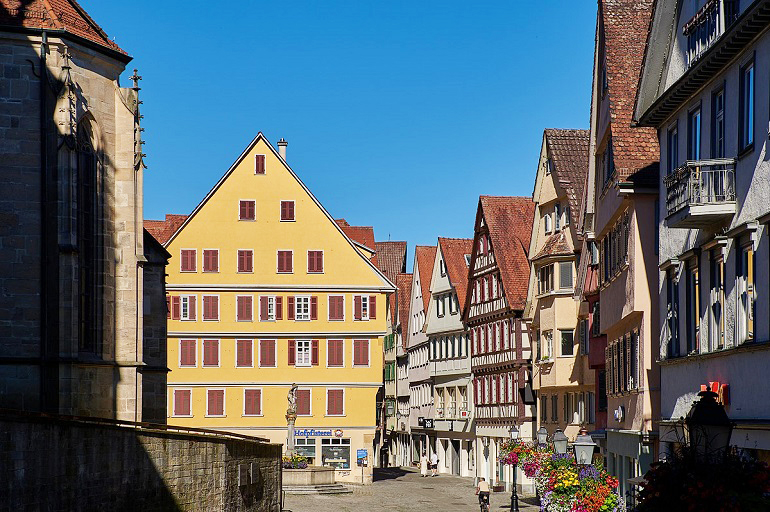
The Holzmarkt, which translates to "wood market," sits directly in front of the Stiftskirche and serves multiple functions in modern Tübingen. This historic square now acts as a venue where demonstrators hold rallies, local farmers sell their produce, and residents gather to relax and socialise. The area surrounding the Holzmarkt features boutiques, restaurants, and the renowned Heckenhauer bookstore, making it a cultural hub that blends commerce with community life.
St. George's Collegiate Church (Stiftskirche)
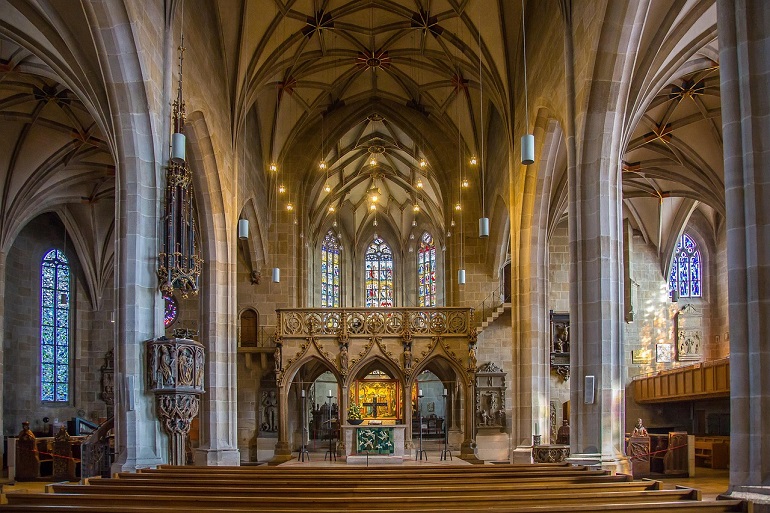
St. George's Collegiate Church (Stiftskirche) dominates the Old Town skyline as an impressive 15th-century Gothic structure. This late Gothic masterpiece reflects the architectural grandeur of its era whilst serving as Tübingen's largest and most important concert hall. Visitors are often drawn to its soaring tower, which can be climbed for some of the best views of the city and surrounding countryside. Inside, the church impresses with its monumental pipe organ, beautiful glass windows, shell limestone sculptures, folding altar, and intricately carved choir stalls. The building continues to host music performances and services, providing glimpses into both the city's architectural heritage and its vibrant community spirit.
The Neckar River waterfront
The Neckar River waterfront creates one of Tübingen's most scenic and photographed areas, particularly around the famous Hölderlinturm. The riverbank serves as the primary location for punting trips, which are considered among the best leisure activities for both locals and visitors. These popular excursions operate daily from May to September, lasting approximately one hour and costing €13 per person. The traditional punt boats offer unique perspectives of the historic city from the water, whilst the famous annual "Tübingen Punt Race" provides one of the city's most entertaining and wild spectacles.
The Hölderlinturm (Hölderlin Tower)
The Hölderlinturm stands as one of Tübingen's most famous landmarks and photographed spots along the Neckar waterfront. This restored tower with medieval origins served as the residence of the renowned German poet Friedrich Hölderlin from 1807 until his death in 1843. The tower now houses exhibitions about the poet's life and works, offering visitors insights into his literary contributions and personal history. Located on the banks of the Neckar River, the tower provides an excellent vantage point for observing the historic city and serves as a popular starting point for punting trips on the river.
The Neckarinsel (Neckar Island)
The Neckarinsel (Neckar Island) and surrounding waterfront area provide peaceful walking paths and excellent vantage points for photography. The island setting, combined with the historic buildings reflected in the water, creates some of the most picturesque scenes in Tübingen. Visitors can cross various bridges that offer gorgeous views of the Neckarfront and the historic half-timbered houses that line the riverbank.
Schloss Hohentübingen (Hohentübingen Castle)
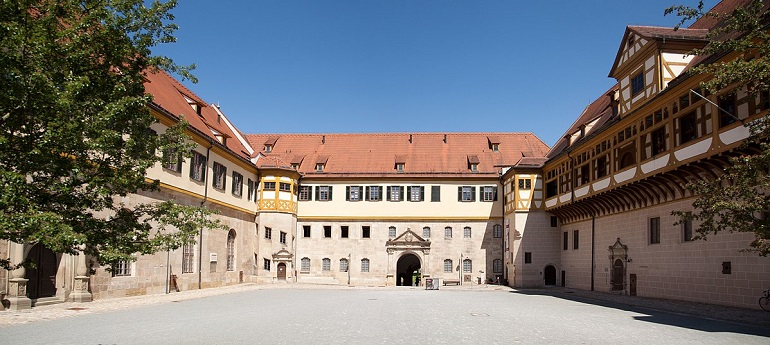
Schloss Hohentübingen (Hohentübingen Castle) crowns the hilltop above the Old Town, serving as both a historical monument and active part of the University of Tübingen. This stunning remnant of the Middle Ages, with origins dating back to the 11th century, displays a blend of architectural styles including Gothic, Renaissance, and Baroque elements. The castle houses various academic departments and offers impressive courtyards, ancient fortifications, and commanding views of the surrounding landscape. Even visitors who don't explore the interior museum will find the panoramic views from the castle grounds well worth the uphill walk.
Other Attractions
Eberhard Karls University
The Eberhard Karls University is not a single, enclosed campus but the very heart and soul of Tübingen, deeply woven into the city’s fabric. Founded in 1477, it is one of Germany’s oldest and most prestigious universities, and its presence is felt everywhere, from the ancient castle housing academic departments to the bustling lecture halls along Wilhelmstraße. The university infuses the city with a youthful, intellectual energy, and its historic buildings, scattered throughout the town, are architectural highlights in their own right. Exploring the university quarters offers a unique glimpse into a living academic tradition that has shaped Tübingen for over five centuries, blending scholarly pursuits with the rhythm of daily life.
The University of Tübingen's Botanical Garden
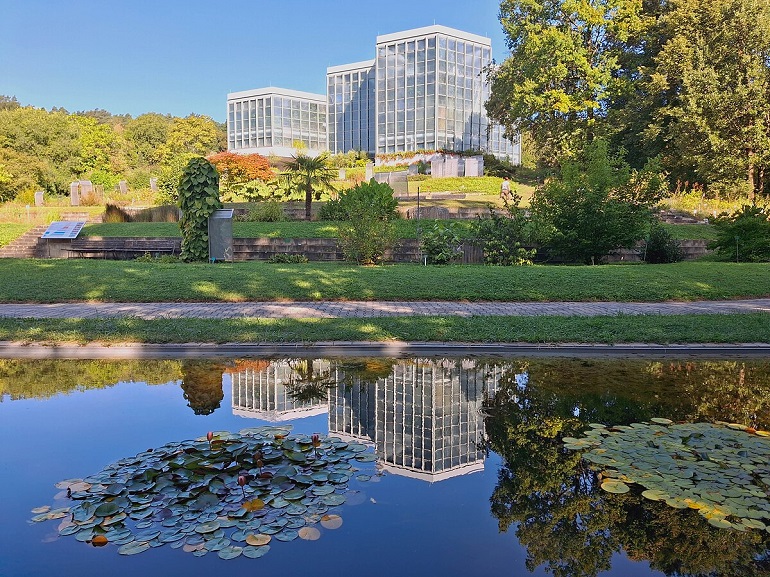
The University of Tübingen's Botanical Garden creates an oasis of tranquillity featuring themed gardens that display plant species from five continents. Winding footpaths guide visitors through carefully curated landscapes ranging from alpine meadows to arid desert environments, all meticulously presented for both educational and aesthetic purposes. The garden maintains excellent accessibility with wheelchair-friendly paths and proves popular with families thanks to its spacious grounds and regular educational activities. This attraction perfectly combines scientific learning with natural beauty, making it an ideal destination for nature enthusiasts and those seeking peaceful contemplation.
The Bismarck Tower
The Bismarck Tower perches on a hill overlooking Tübingen, offering spectacular panoramic views of the city and its picturesque surroundings. Built in honour of Otto von Bismarck in the early twentieth century, this landmark attracts hikers and visitors seeking peaceful retreats with stunning vistas. The climb up the wooded slopes rewards visitors with breathtaking sights of the city's rooftops, the meandering Neckar River, and on clear days, the distant Swabian Alps.
Bebenhausen Monastery and Palace
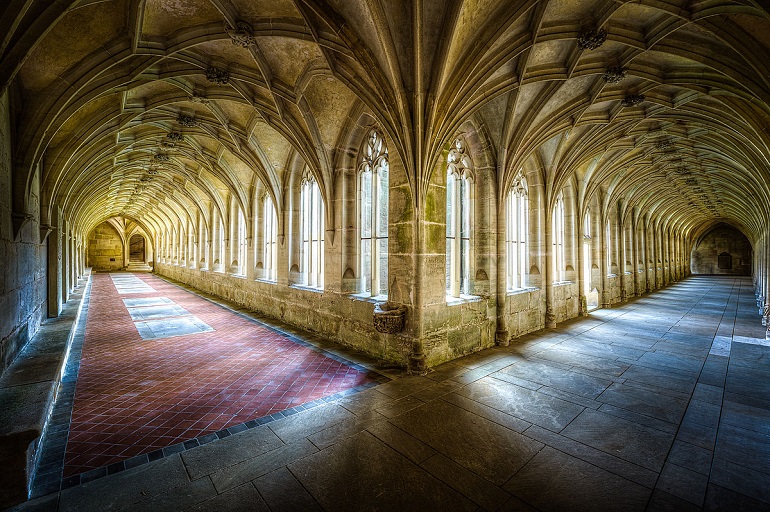
Nestled in the tranquil Schönbuch Forest, the Monastery and Palace Bebenhausen represents one of the region's finest examples of medieval religious architecture. This 12th-century Cistercian monastery, later converted into a hunting castle, showcases remarkable half-timbered architecture and maintains beautiful surrounding gardens. The complex offers visitors comprehensive insights into both medieval monastic life and the later transformation into royal retreats. The well-preserved buildings feature impressive churches, cloisters, and monastic structures that demonstrate the evolution of architectural styles and purposes over the centuries, with the peaceful forest setting providing an atmospheric counterpoint to the cultural and historical richness contained within the monastery walls.
Top Museums
Major City and University Museums
Stadtmuseum Tübingen (City Museum)
Located in the heart of the historic old town within a beautifully preserved former granary, the Stadtmuseum Tübingen serves as the city's cultural memory keeper. Spanning four floors, this museum offers an immersive exploration of 600 years of Tübingen's history, making the past tangible through interactive exhibitions and innovative storytelling techniques.
The museum's crown jewel is its unique collection dedicated to Lotte Reiniger, the world-famous silhouette artist and animation pioneer. This permanent exhibition celebrates the work of this groundbreaking filmmaker, offering visitors insights into early animation techniques and artistic innovation. An English-language audio guide enhances the experience for international visitors.
One of the museum's most compelling features is the "Room of Memories", an innovative serious game designed for groups of up to four people. Styled as an atmospheric attic space, visitors can explore and discover objects that reveal authentic stories from the Nazi era, creating a powerful and educational experience about this dark chapter in history.
The museum also features a remarkable VR station that transports visitors to a historic house in the Caucasus, originally built by Swabian settlers from the region. This cutting-edge technology allows for an extraordinary journey through time and geography, demonstrating how Tübingen's influence extended far beyond its borders.
Beyond its permanent collections, the Stadtmuseum regularly hosts special exhibitions focusing on current and historical topics related to Tübingen, as well as hands-on exhibitions designed specifically for families. The museum functions as a vibrant community hub through events, workshops, and participatory projects.
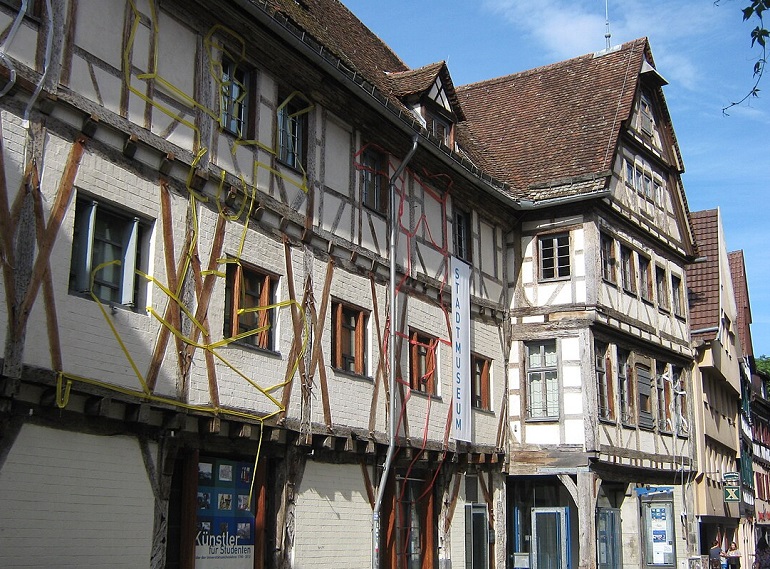
Museum of the University of Tübingen (MUT)
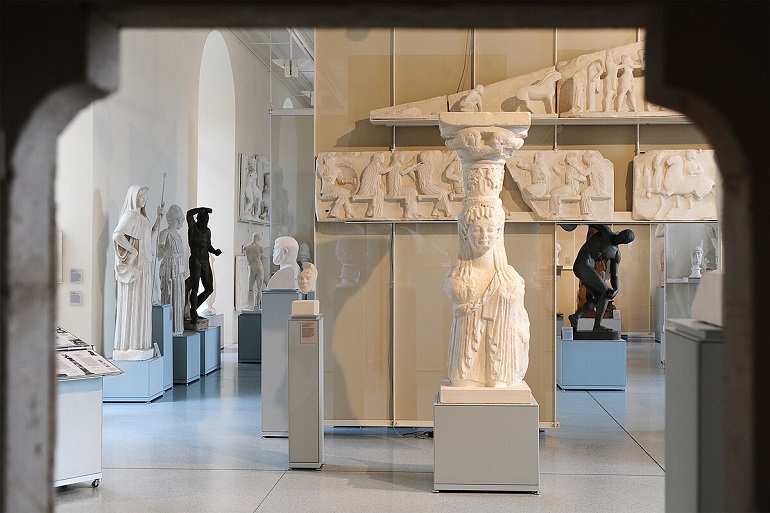
The Museum of the University of Tübingen (MUT), founded in 2006, serves as the central institution overseeing approximately 70 university collections. This remarkable museum network represents the largest collection of university museums at any German institution.
Museum Ancient Cultures at Hohentübingen Castle
The flagship location, housed within the historic Hohentübingen Castle, presents the Museum Ancient Cultures across 2,000 square metres. This extraordinary exhibition spans 40,000 years of cultural history through 4,600 exhibits from seven archaeological collections.
The museum holds the unique distinction of being the only university museum worldwide to display artefacts from two UNESCO World Heritage sites whilst also holding a Guinness World Record. Among its most precious treasures are the oldest figurative works of art and musical instruments of humanity - mammoth ivory figures and fragments of bone flutes from the Vogelherdhöhle in the Swabian Jura.
Key highlights include the famous "Tübinger Waffenläufer" (Tübingen Hoplite), a bronze statuette of an Olympic champion that represents one of the finest examples of ancient Greek art. The Egyptian collection features remarkable pieces including a rare ancient Egyptian sacrificial chamber and the 4,500-year-old offering chamber of Seschemnefer III from Giza. The coffin of Idi, complete with a surviving 'star clock' on its lid, provides fascinating insights into ancient Egyptian beliefs about death and the afterlife.
The museum's Ice Age collection showcases the world-famous Vogelherd horse, carved from mammoth ivory approximately 40,000 years ago. These remarkable artefacts represent humanity's earliest artistic expressions and are recognised as UNESCO World Heritage items under "Caves and Ice Age Art in the Swabian Jura".
Additional collections explore Mesopotamian cuneiform texts spanning 5,000 years of ancient Near Eastern script development, whilst the prehistoric section includes exhibits from the UNESCO World Heritage "Prehistoric Pile Dwellings around the Alps". The Malanggan artworks from New Ireland and ceramic vessels from South American Shipibo communities add global perspectives to the collection.
During winter months, visitors can descend into the castle cellars to view the world's oldest surviving giant wine barrel, constructed in 1549.
Bohnenberger Observatory
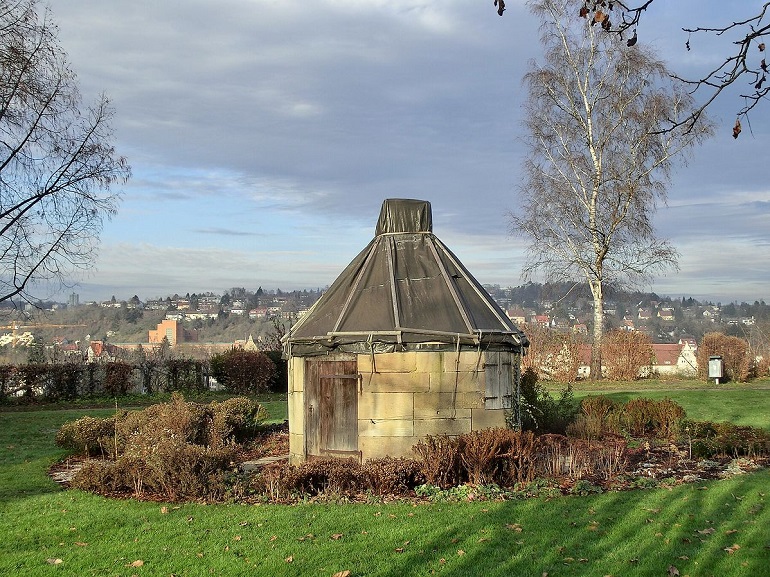
The Bohnenberger Observatory, perched on a bastion of Hohentübingen Castle, is a site of major scientific-historical importance. Established around 1814 by the astronomer and mathematician Johann G. F. Bohnenberger, it was specifically built to house one of the most advanced instruments of its era, the Reichenbach repeating circle. This observatory served as the official starting point (the zero-point) for the first land survey of the Kingdom of Württemberg in 1818, and today it is the world's oldest surviving ground observatory built for its original instrument, forming a unique historical ensemble.
Castle Laboratory
Located in the castle's former kitchen, the Castle Laboratory is internationally recognised as the cradle of biochemistry. It was here in 1869 that Friedrich Miescher first isolated and identified a substance he called "nuclein," which we now know as DNA, a discovery that laid the foundation for modern genetics. Later, under the leadership of Felix Hoppe-Seyler, groundbreaking research on the red blood pigment, which he named "haemoglobin," was conducted in this very laboratory, cementing its legacy as a site of world-changing scientific breakthroughs.
Contemporary Art Museums
Neues Kunstmuseum Tübingen (NKT)
The Neues Kunstmuseum Tübingen, which opened in spring 2025, represents a revolutionary approach to art presentation. Spanning 1,200 square metres of exhibition space, this state-of-the-art facility creates an entirely new access point to art by embedding artworks within the life worlds of their creators and framing exhibitions with multimedia elements.
The museum's most impressive feature is its 50-seat screening room equipped with an enormous curved LED wall displaying documentations and films in stunning 4K quality. This innovative space allows for immersive art experiences that complement the physical exhibitions. Through cutting-edge projection and large-scale display technology, the museum can present works at 1:1 scale even when the original pieces aren't physically present in Tübingen.
The NKT's inaugural exhibition, "Panik in Tübingen" (8 March to 15 June 2025), showcases 30 years of paintings by legendary rocker Udo Lindenberg. The exhibition features approximately 200 of his most fascinating creations, from his famous "Kosmos" motifs to his contemporary free-spirited and humorous works. Lindenberg's distinctive techniques, including his legendary "Likörelle" created with eggnog, Blue Curacao, and other inspiring beverages, are prominently displayed.
The museum's vision extends beyond traditional art presentation, aiming to become a meeting place for art enthusiasts and the general public alike, including families and school groups. Future programming will include guest exhibitions by internationally renowned artists, retrospectives from the Art-28 collection, diverse cultural events, virtual studio tours, teacher seminars, and educational content for school classes.
Kulturhalle Tübingen
The Kulturhalle Tübingen serves as an intimate art museum space, focusing on contemporary and modern artistic expressions. This welcoming venue prides itself on being family-friendly and inclusive, specifically noted as LGBTQ+ friendly and a transgender safe space.
Specialist and Local Interest Museums
Boxenstop Tübingen
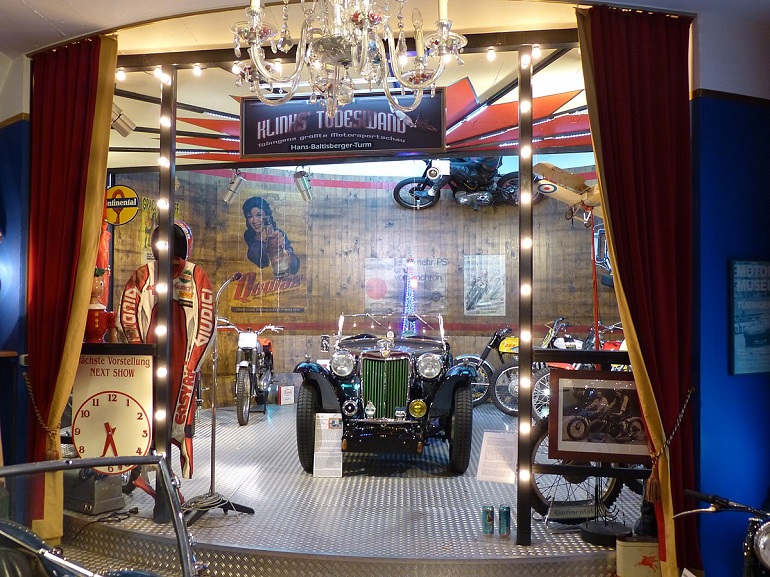
Boxenstop Tübingen offers a delightfully quirky experience as a car and toy museum. This unique attraction houses an eclectic collection of vehicles, motorcycles, and bicycles, alongside vintage children's games. The museum's charm lies in its celebration of automotive history and nostalgic playthings, creating an engaging experience that appeals particularly to families and enthusiasts of transport history.
Hesse Kabinett Tübingen
The Hesse Kabinett provides an intimate literary experience, focusing on the connection between the Nobel Prize-winning author Hermann Hesse and Tübingen. This small but significant museum explores Hesse's time in the city and his literary contributions, offering insights into one of Germany's most celebrated writers.
Keltermuseum Unterjesingen
The Keltermuseum Unterjesingen celebrates the region's winemaking heritage. This local history museum focuses on traditional wine production methods and the cultural significance of viticulture in the Tübingen area, providing visitors with an authentic glimpse into centuries-old traditions.
Local Cuisine
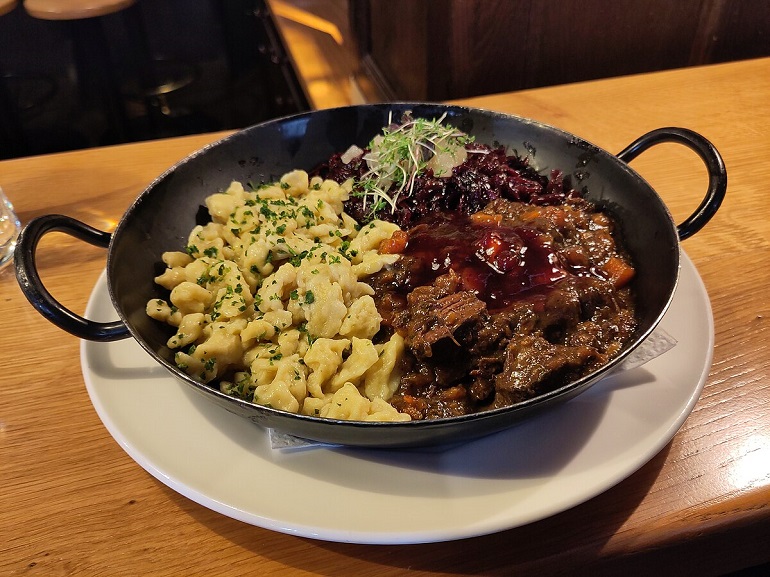
Tübingen offers a delightful array of traditional Swabian cuisine that reflects the region's rich culinary heritage. The local speciality is Spätzle, soft egg noodles whose name derives from the Swabian word for "little sparrow", often served with cheese (Käsespätzle) or accompanying meat dishes. Another regional favourite is Maultaschen, meat-filled ravioli that pairs wonderfully with the hearty soups common in Baden-Württemberg cuisine. Visitors should also sample Schupfnudeln, potato dumplings, and the famous Schwarzwälder Kirschtorte (Black Forest cake), which legend claims originated in Tübingen despite being associated with the Black Forest region. For an authentic dining experience, establishments like Weinstube Forelle and Gasthaus Bären come highly recommended by locals, offering traditional dishes prepared with fresh, regional ingredients in cosy, gemütlich settings. The town's culinary scene balances time-honoured Swabian comfort food with international influences, making it a delightful destination for food enthusiasts.
Shopping
Tübingen offers a diverse shopping experience in its charming old town centre. The market square hosts a bustling market every Monday, Wednesday, Friday (7:00 a.m. - 1:00 p.m.) and Saturday (8:00 a.m. - 1:00 p.m. around Jakobus Church), selling fresh regional produce. The old town features a mix of shops including banks, supermarkets, family-run specialty stores, boutiques and antique shops. For vintage enthusiasts, several second-hand shops like Unikat Vintage, La Seconda, and Second-Hand-Zentrum offer quality clothing at reasonable prices. Most shops open between 8:00-10:00 a.m. and close between 6:00-8:00 p.m., with supermarkets staying open until 8:00-10:00 p.m. (one on Schleifmühlenweg opens until midnight). Note that shops in Germany typically close on Sundays and public holidays, with exceptions being bakeries, florists, and petrol stations with convenience stores. Residential neighbourhoods also have shops for basic needs, while hypermarkets can be found along Reutlinger Str. and in nearby Kirchentellinsfurt.
Nature in and around Tübingen
Tübingen and its surroundings offer a diverse range of natural attractions for outdoor enthusiasts. The Schönbuch Nature Park, located between Tübingen, Reutlingen, Böblingen and Herrenberg, is the oldest nature park in Baden-Württemberg and serves as the green lung of the central Neckar region. It features an extensive network of hiking and cycling trails, nature trails, and family-friendly areas. The Swabian Alb, with its rolling hills, provides numerous hiking opportunities, including the Früchtetrauf hiking region, known for trails that wind through orchards and vineyards. The area also boasts the Geopark and biosphere area of the Swabian Jura, where visitors can explore unique caves, meteor craters, and learn about local geology. Additionally, the region around Tübingen offers a variety of educational trails, such as the Rotwild-Erlebnispfad and the geological trail in Kirnbach, catering to different interests and abilities.
Schönbuch Forest
Schönbuch Forest, located just outside Tübingen, provides a paradise for outdoor enthusiasts and nature lovers. As a protected nature park known for its scenic landscape and diverse fauna, Schönbuch features an extensive network of hiking and cycling trails weaving through pristine woodlands. The forest offers excellent opportunities for wildlife spotting, peaceful walks, and escaping the bustle of city life. Families particularly appreciate the well-maintained playgrounds and designated picnic areas that make it ideal for leisurely afternoon outings.
Getting There
By train Tübingen is well-connected to Germany's extensive rail network, with the most convenient route typically involving a connection through Stuttgart Hauptbahnhof, where hourly regional trains complete the final hour-long journey to Tübingen. International travellers usually connect via major hubs like Frankfurt or Munich, with most journeys requiring 2-4 changes depending on your starting point. The town's main railway station, Tübingen Hauptbahnhof, sits conveniently close to the historic city centre.
By coach Long-distance coach services, particularly FlixBus, provide an economical alternative to rail travel, with coaches arriving at Tübingen's central station. For those flying into the region, the Airport Sprinter bus line 828 offers direct connections from Stuttgart Airport to the university area, taking approximately 50 minutes to an hour. Coach travel generally takes longer than trains but offers comfortable seating and often direct routes from major European cities.
By car Tübingen enjoys excellent motorway connections, making it easily accessible by road from across Europe. The most direct route uses the four-lane Bundesstraße 27, which connects directly from Autobahn 8 near Stuttgart, whilst drivers on Autobahn 81 should exit at Herrenberg (from the north) or Rottenburg (from the south). The journey from Stuttgart takes just 30-35 minutes under normal traffic conditions, whilst major cities like Munich, Frankfurt, and Zurich are all within a comfortable 2.5-hour drive.
Best Time to Visit
The best time to visit Tübingen is from late spring to early autumn, particularly between May and September. During this period, the weather is pleasantly warm, with temperatures ranging from 15°C to 25°C, making it ideal for outdoor activities and sightseeing. Summer sees Tübingen come alive with events such as the Stocherkahnrennen, a traditional punting race on the Neckar River held in June. Autumn, especially September and October, is also a favourable time to visit, offering mild weather and beautiful fall foliage. To avoid the largest crowds whilst still enjoying good weather, consider planning your trip during the shoulder months of May and September. These months provide a balance of pleasant temperatures, fewer tourists, and the opportunity to experience local events, ensuring an optimal time to explore Tübingen's charming streets, historic architecture, and vibrant university atmosphere.


