



| Contents |
|---|
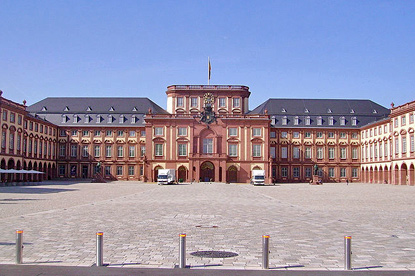
Mannheim Palace.
Introduction
Mannheim, a vibrant city in southwestern Germany, offers a unique blend of history, culture, and modern attractions. Located at the confluence of the Rhine and Neckar rivers, this university city is known for its distinctive grid-like layout, earning it the nickname "City of Squares". Mannheim boasts Europe's second-largest Baroque palace, now home to the renowned University of Mannheim, and the iconic Wasserturm (Water Tower) surrounded by one of the continent's most beautiful Art Nouveau architectural ensembles. The city's rich cultural scene includes numerous museums, theatres, and music venues, catering to diverse tastes from classical to contemporary. As a hub of innovation, Mannheim has a proud history of inventions, including the bicycle, automobile, and tractor. With its blend of historical landmarks, green spaces like the Luisenpark, and a thriving shopping district, Mannheim provides visitors with a wealth of experiences to explore.
Mannheim may not be one of Germany's most most beautiful cities, but its gigantic electroral palace is definitely worth a stop. With a length of 450 metres and a floor area of 60,000 m², it is simply Germany's largest palace (only slightly smaller than Versailles) and Europe largest Baroque-style palace. Unfortunately the palace was badly damaged during World War II. All the exterior was reconstructed, but only the most important state rooms were restored to their former glory. Most of the palace is now occupied by the University of Mannheim. Only the central part can be visited.
Interesting Facts about Mannheim
- Mannheim's city centre features a unique grid layout known as the "Quadratestadt" (Square City), with streets organised in a chessboard-like pattern.
- It is nicknamed the "City of Inventions" as the first automobile (Carl Benz, 1886), bicycle (Karl Drais’ draisine, 1817), and tractor were developed here.
- The baroque Mannheim Palace, now housing the University of Mannheim, is the second-largest palace complex of its kind in Europe after Versailles.
- Mannheim’s 60-metre-tall Water Tower, built in 1886, stands as an iconic landmark within a striking Art Nouveau square.
- Designated a UNESCO City of Music in 2014, it boasts a vibrant cultural scene including the National Theatre and Popakademie music university.
- Over 44% of Mannheim’s population has foreign roots, with significant Turkish, Italian, and Bulgarian communities.
- It hosts Germany’s largest inland port and Europe’s second-largest rail freight marshalling yard.
- The SAP Arena in Mannheim is home to ice hockey champions Adler Mannheim and handball team Rhein-Neckar Löwen.
- Mannheim’s annual Maimarkt trade fair is the largest regional consumer exhibition in Germany.
- The Reiss-Engelhorn-Museen complex showcases artefacts spanning archaeology, global cultures, and art history across four exhibition halls.
- Its 217-metre Fernmeldeturm telecommunication tower dominates the skyline as one of Germany’s tallest structures.
- Luisenpark, visited by 1.2 million annually, is ranked among Europe’s most beautiful urban parks.
- Mannheim marks the start of the Bertha Benz Memorial Route, commemorating the world’s first long-distance car journey in 1888.
- The city pioneered smart-grid technology, integrating a power-line communication network across its electrical infrastructure.

History
Mannheim, a city in southwestern Germany, has a rich and varied history dating back to its first mention as a village in 764. The city as we know it today began to take shape in 1606 when Frederick IV, Elector Palatine, commissioned Dutch fortification architect Bartel Janson to design an ideal city. This resulted in Mannheim's distinctive grid pattern of 136 rectangular blocks, earning it the nickname "Square City." The city was granted town privileges in 1607, though it would be destroyed twice in the following century—first during the Thirty Years' War in 1622 and again in 1689 during the War of the Grand Alliance.
The 18th century marked a golden age for Mannheim when it became the capital of the Electoral Palatinate in 1720. The Palatine electors moved their residence to the city, leading to the construction of magnificent Baroque buildings including the Mannheim Palace—the second-largest Baroque palace in Europe—completed in 1760. During this period, Mannheim flourished as a cultural centre with a renowned school for musicians, an art gallery, and an academy of sciences. Germany's first National Theatre opened in Mannheim in 1778, the same year the court moved to Munich. In 1782, it hosted the first performance of Friedrich Schiller's play "The Robbers".
The 19th century brought significant changes to Mannheim as it was transferred to the Grand Duchy of Baden in 1802. The establishment of Rhine Harbour in 1828 and the construction of the first Baden railway in 1840 stimulated economic growth. The Industrial Revolution transformed Mannheim into a hub for machinery and engineering, earning it the reputation as the "Gateway to the Rhine." The city became a centre for innovation, with Karl Drais inventing the first bicycle in 1817 and Karl Benz driving the first automobile on Mannheim's streets in 1886. During the March Revolution of 1848-49, Mannheim served as a centre for political and revolutionary activity. Today, despite suffering extensive damage during World War II, Mannheim stands as a vibrant city where baroque heritage harmoniously blends with industrial innovation.
Main Attractions
Mannheim Baroque Palace
The second-largest Baroque palace in Europe (after Versailles), Mannheim Palace features an impressive 400-metre facade and covers an area of 6 hectares. Originally the main residence of the Prince-electors of the Palatinate, the palace now houses the University of Mannheim while maintaining its historical grandeur.
The palace was constructed between 1720 and 1760 under Electors Karl Philip and Karl Theodor, replacing an earlier castle damaged during the Nine Years' War. The magnificent structure contains over 500 rooms spread across three main wings, creating a horseshoe-shaped layout. The central Mittelbau features representative halls including the impressive Rittersaal (Knights' Hall) with its ornate stucco work and ceiling frescoes.
The palace church (Schlosskirche) is particularly noteworthy for its elaborate Baroque interior, featuring marble columns, gold leaf decorations, and an impressive dome. The Schneckenhof yard, named for its spiral staircases, hosts open-air concerts and cultural events during summer months. Two prominent sculptures representing the palace founders, Charles III Philip and Charles Theodore, stand guard at the entrance, welcoming visitors to this architectural masterpiece.
Water Tower (Mannheimer Wasserturm)
This iconic 60-metre high structure is Mannheim's most recognisable landmark. Built between 1886 and 1889, the tower was designed by architect Gustav Halmhuber and holds approximately 2,000 cubic metres of water. Located at Friedrich Square, it's surrounded by beautiful gardens and fountains, creating one of Germany's most unique Art Nouveau monuments.
The tower's distinctive silhouette features a cylindrical shaft topped by a circular observation platform and crowned with a domed roof. The exterior is adorned with sandstone sculptures representing various mythological figures. Though no longer open for public tours, the tower remains a functioning part of the city's water supply system.
The surrounding gardens were designed by landscape architect Heinrich Siesmayer and feature symmetrical flowerbeds, ornamental shrubs, and several fountains that create a harmonious setting for the tower. The area is particularly stunning in summer evenings when illuminated, and in winter when the surrounding area hosts a Christmas market that attracts thousands of visitors with its festive atmosphere, traditional crafts, and regional culinary specialities.
Friedrichsplatz
This square surrounding the Water Tower was designed by architect Bruno Schmitz, who also designed the Rosengarten concert hall and convention centre. The area features beautiful arcades and fountain constructions that are considered among Germany's most unique historical Art Nouveau monuments.
The square's layout follows a symmetrical design with the Water Tower as its focal point. Four ornamental fountains mark the corners of the central area, each representing different themes from classical mythology. The surrounding gardens feature seasonal plantings that change throughout the year.
The arcades that frame the square house cafés and restaurants with outdoor seating areas, allowing visitors to enjoy the architectural splendour while sampling local cuisine. During summer months, the square hosts various cultural events, including open-air concerts and art exhibitions. The area is particularly magical during the annual Christmas market, when light installations transform the space into a winter wonderland.
Paradeplatz
Located in the heart of Mannheim's city centre at squares O1/P1 in the city's grid system, Paradeplatz serves as a cultural hub. Its main attraction is the Grupello Pyramid fountain, created by Gabriel de Grupello in 1711. From this central monument, ten paths radiate in a star formation, connecting the square to surrounding streets and creating a distinctive geometric pattern when viewed from above.
The square derives its name from its historical use as a parade ground for military exercises during the 18th century. Today, it functions as a transportation hub with underground tram connections and as a meeting point for locals and visitors alike. The area is surrounded by important civic buildings, including the historic Stadthaus and various financial institutions housed in impressive structures that showcase architectural styles from different periods.
Throughout the year, the square hosts seasonal markets, political rallies, and public celebrations, reflecting its continued importance as a civic centre. The surrounding shops and restaurants make it an ideal place to explore Mannheim’s vibrant city life.
Planken Shopping Precinct
This 800-metre long pedestrian zone runs from the Water Tower to Paradeplatz, making it the main shopping street in Mannheim. The Planken features countless retailers, traditional department stores, concept stores, and famous brands, attracting shoppers from throughout the Rhine-Neckar region.
Architectural highlights along the Planken include the Engelhorn fashion house, a family-owned department store dating back to 1890 that now occupies several buildings with distinctive facades. The Q6/Q7 shopping centre represents modern retail architecture with its glass and steel construction housing over 90 shops across 30,000 square metres.
Street performers, seasonal decorations, and temporary exhibitions enliven the Planken throughout the year. During December, the Christmas market extends along portions of the street, complementing the festive atmosphere created by elaborate light installations suspended above the pedestrian zone.
Jesuit Church
Constructed between 1733 and 1760, this Catholic church was consecrated to St. Ignatius of Loyola and St. Francis Xavier. Despite suffering severe damage during World War II, it was rebuilt in its historical Baroque style under the direction of architect Hans Herkommer between 1946 and 1957.
The church's twin-towered facade dominates Mannheim's skyline and features statues of the four cardinal virtues—Prudence, Justice, Fortitude, and Temperance—created by sculptor Paul Egell. The impressive 75-metre high dome creates a spacious, light-filled interior that exemplifies the grandeur of Baroque sacred architecture.
Inside, visitors will find marble pilasters supporting vaulted ceilings adorned with restored frescoes depicting scenes from the lives of saints. The "Crowned Silver Madonna" sculpture from 1747 represents one of its most valuable treasures. The church remains an active parish and welcomes visitors to experience both its architectural splendour and spiritual atmosphere.
Open Urban Art Museum
Since 2013, Mannheim has transformed into an open-air gallery with over 30 large-scale murals throughout the city. This initiative, called STADT.WAND.KUNST (City.Wall.Art), invites international street artists to create vibrant artworks that have become part of Mannheim's identity.
Notable works include Falk Lehmann's "Gegen das Vergessen" (Against Forgetting), based on portraits of Holocaust survivors by photographer Luigi Toscano. OKUDA San Miguel's colourful "Girl's Love" brings his characteristic geometric style to Mannheim with vibrant compositions featuring female figures and animal motifs.
Free walking tours of these murals are available through Mannheim’s tourism office. Each year new works are added to this evolving outdoor gallery that has significantly contributed to Mannheim's cultural landscape.
Market Square (Marktplatz)
The oldest structure in Mannheim is located at Market Square: a commemorative fountain dating back to 1719 commissioned by Elector Carl Philipp. St. Sebastian Parish Church dominates one side of the square while nearby stands the Old Town Hall with its Renaissance-style facade.
The square hosts weekly markets selling fresh produce, flowers, and regional specialities on Tuesdays, Thursdays, and Saturdays. It also serves as a venue for public events like Mannheim’s Wine Festival or seasonal celebrations such as Easter or Christmas markets.
Fernmeldeturm Mannheim (Telecommunications Tower)
This impressive structure stands at 212 metres tall and features an observation deck at 121 metres offering panoramic views of Mannheim and beyond. A revolving restaurant at this height provides diners with stunning vistas while enjoying regional cuisine.
The tower is an example of modern engineering from 1975 that has become an iconic part of Mannheim’s skyline while serving functional telecommunications purposes.
Multihalle
This groundbreaking structure located in Herzogenriedpark was designed for lightweight architecture by Frei Otto for Germany’s Federal Garden Show in 1975. Its timber lattice shell construction spans over 7,500 square metres making it one-of-a-kind globally!
The Multihalle remains preserved today due to its architectural significance hosting experimental design projects/events aimed towards sustainable urban development goals alongside exhibitions promoting innovation!
Top Museums
Reiss-Engelhorn-Museen
The Reiss-Engelhorn-Museen stands as one of Mannheim's three dominant cultural institutions, comprising four distinct exhibition houses spread across an impressive 11,300 square metres of space. This expansive museum complex houses approximately 1.2 million objects, creating a truly diverse cultural experience for visitors. The collections span numerous disciplines including archaeology, world cultures, art history, photography, and the history of theatre and music. What sets this institution apart is its ability to secure international collaborations that bring world-class exhibitions to Mannheim, exhibitions that might otherwise only be seen in major metropolises like Berlin. The museum's comprehensive approach to cultural heritage makes it an essential visit for anyone seeking to understand human achievement across various fields and time periods.
Museum Bassermannhaus für Musik und Kunst
As part of the larger Reiss-Engelhorn-Musea complex, the Museum Bassermannhaus für Musik und Kunst occupies a special place in Mannheim's cultural landscape. Located in the Mannheimer Quadrate in the city centre, this museum opened its doors on December 11, 2011, made possible through the support of the Bassermann-Kulturstiftung. The museum's central focus revolves around music, art, and cultures from around the world, offering visitors a global perspective on artistic expression. Its collections particularly emphasise musical instruments and artistic traditions from various cultures, creating a unique space where visitors can explore the interconnections between different forms of creative expression across civilisations and time periods. The museum's thoughtful curation helps visitors understand how music and art have evolved differently yet similarly across human cultures.
Kunsthalle Mannheim
The Kunsthalle Mannheim represents one of Germany's most significant repositories of modern and contemporary art. Established in 1909 and housed initially in an Art Nouveau building designed by Hermann Billing, this prestigious institution has continually evolved over more than a century. The museum's rich collection encompasses approximately 2,000 canvases, 300 sculptures, and 30,000 drawings, watercolours, and engravings by 19th and 20th-century artists. Visitors can explore works from artistic movements including Romanticism, Realism, Neoclassicism, Impressionism, Expressionism, and the New Objectivity. The collection features masterpieces by renowned artists such as Édouard Manet, Paul Cézanne, Vincent van Gogh, Caspar David Friedrich, Francis Bacon, and many others. In 2018, the museum expanded with a striking new building designed by gmp Architects, featuring seven exhibition halls and a 22-metre-high glass-roofed atrium. This architectural marvel was conceived as a "city within a city," with individual cubes arranged in an inspiring composition, connected via galleries, terraces, and bridges—mirroring Mannheim's own grid-like urban layout.
Technoseum
The Technoseum, formerly known as the "State Museum of Technology and Labour" until its renaming in 2010, offers a fascinating journey through technological advancement and industrial development. This dynamic museum focuses on the interconnection between technology and social history, portraying the industrialisation process from approximately 1750 to the present day. What makes the Technoseum particularly engaging is its emphasis on interactive experiments, allowing visitors to experience technological evolution firsthand rather than merely observing it. The museum provides a comprehensive display of the industrialisation process specifically in south-western Germany, offering valuable insights into how technological advancement shaped both the region's economy and its social fabric. Through its thoughtful exhibitions, the Technoseum helps visitors understand not just how machines work, but how they have transformed human society over the past three centuries.
Schillerhaus
The Schillerhaus, located in the Ludwigshafen district of Oggersheim, represents an important literary landmark with deep historical significance. This preserved residence commemorates the period when the celebrated German poet, philosopher, physician, historian, and playwright Friedrich Schiller stayed here under the alias 'Dr. Schmidt' from October 13 to November 30, 1782. This brief but significant period in Schiller's life marked his flight from the Duchy of Württemberg to Mannheim in the Electorate of Palatinate-Bavaria, making the Schillerhaus a crucial location in understanding the personal journey of one of Germany's most influential literary figures. The museum provides visitors with insight into Schiller's life circumstances during this tumultuous period, as well as the broader cultural and political climate of late 18th-century Germany that shaped his work and worldview.
Museumsschiff Mannheim
Since 1985, the vessel known as the Mainz has served as the Museum Ship of Mannheim, or Museumsschiff Mannheim. This floating museum is strategically moored on the Neckar River, near the Kurpfalzbrücke bridge, making it easily accessible to visitors. The ship itself represents an important piece of maritime history, preserved and repurposed to educate the public about naval engineering, river navigation, and the historical importance of waterways to Mannheim's development as a commercial centre. Aboard the Museumsschiff, visitors can explore various aspects of nautical life, from the technical aspects of ship operation to the daily experiences of those who worked and travelled on such vessels. The museum offers a unique perspective on Mannheim's relationship with its rivers and the broader maritime traditions that have shaped the region.
Mannheimer Kunstverein
The Mannheimer Kunstverein counts among Germany's oldest art associations, having celebrated its 175th anniversary in 2008. This venerable institution is housed in an exhibition building located on Augustaanlage, providing a dedicated space for the display of contemporary art. The association organises approximately 15 changing exhibitions annually, offering visitors regular opportunities to explore new and unfamiliar artistic expressions. As a platform for emerging and established contemporary artists, the Mannheimer Kunstverein plays a vital role in Mannheim's cultural ecosystem, fostering artistic innovation and dialogue. The association's long history reflects its enduring commitment to supporting artists and enriching the cultural life of Mannheim, making it an important destination for those interested in the cutting edge of artistic expression.
Aufzugsmuseum
The Aufzugsmuseum presents a specialised collection dedicated to the history of elevator construction, offering a unique perspective on this often-overlooked aspect of architectural and engineering history. The museum houses an impressive collection of approximately 700 objects related to elevator technology and its environmental context, gathered over several decades of careful curation. These artifacts collectively provide a comprehensive overview of the evolution of elevator technology, from early mechanical systems to modern innovations. Through its focused approach, the Aufzugsmuseum illuminates how this seemingly mundane technology has fundamentally transformed architecture, urban planning, and daily life. The museum appeals particularly to those with interests in engineering, industrial design, and the ways in which technological innovations have shaped our built environment and patterns of movement within it.
Schloss Mannheim (Mannheim Palace)
The magnificent Mannheim Palace, one of Europe's largest baroque palaces, houses the Schlossmuseum, offering visitors a glimpse into the opulent world of the Electoral Court. This impressive structure, second in size only to Versailles among European baroque palaces, features meticulously restored staterooms that showcase the grandeur and artistic achievements of the 18th century. The palace's architecture itself represents a masterpiece of baroque design, with its symmetrical façade, ornate decorations, and carefully planned gardens. Inside, visitors can explore the lavish apartments once occupied by the Electors of the Palatinate, gaining insight into court life, political power, and artistic patronage during the baroque era. The museum's collections include period furniture, paintings, sculptures, and decorative arts that illustrate the refined tastes and international connections of Mannheim's rulers during the city's golden age as an electoral capital.
MARCHIVUM
Housed within a repurposed former bunker, the MARCHIVUM represents an innovative approach to preserving and presenting Mannheim's municipal history. This unique cultural institution serves as both an archive and a museum, safeguarding important historical documents while making the city's past accessible to the public through engaging exhibitions. The conversion of a utilitarian defensive structure into a space for cultural memory creates a powerful juxtaposition between the building's original purpose and its current function. The MARCHIVUM's exhibitions trace Mannheim's development from its founding to the present day, highlighting key events, influential figures, and social transformations that have shaped the city's character. Through its combination of archival preservation and public education, the MARCHIVUM plays a vital role in maintaining Mannheim's historical consciousness and fostering civic identity among residents and visitors alike.
Local Cuisine
Mannheim boasts a rich and diverse culinary landscape that reflects both traditional German heritage and multicultural influences. Visitors can sample authentic local delicacies such as Saumagen, a hearty pork dish, and Mannheimer Brezeln, the city's unique take on pretzels. The regional cuisine also features delightful dumplings like Maultaschen filled with meat and seasonal vegetables, and Spätzle egg noodles that can be enjoyed on their own or as accompaniments to main dishes. For a comprehensive taste experience, one should explore the bustling weekly market where traditional German breads made from locally grown grains are served alongside cold cuts. Mannheim's "Little Istanbul" neighbourhood offers authentic Turkish regional specialties, including freshly made beef sandwiches. Beyond these highlights, the city serves up hearty soups featuring smoked trout and various meat varieties. For those with a sweet tooth, family-run restaurants offer authentic Mannheim desserts that provide a perfect finale to any culinary journey through this vibrant German city.
Shopping
Mannheim offers a diverse shopping experience with its unique grid-like city layout known as the "City of Squares." The main shopping area is Die Planken, a pedestrian street stretching from the Wasserturm (water tower) to Paradeplatz, featuring department stores, boutiques, and cafés. Parallel to Die Planken are Fressgasse and Kunststraße, where shoppers can find speciality items, delicatessens, and unique products. Notable shopping destinations include Q6 Q7 Stadtquartier, a modern shopping centre with distinctive architecture, and Engelhorn, a family-run department store established in 1890 that spans over 40,000 square metres across six floors, offering international designer brands. For fresh produce and local specialities, visit the Farmer's Market in Marktplatz, open Tuesday, Thursday, and Saturday mornings. Most shops operate Monday through Saturday from 10:00 to 20:00, with Sunday closures. The shopping district is easily navigable on foot or by public transport, with approximately five kilometres of shop fronts across 220,000 square metres of retail space.
Nature in and around Mannheim
Mannheim offers a variety of natural attractions for visitors to enjoy. The city boasts two significant parks: Luisenpark, a green oasis in the heart of the city with Gondoletta boats, a mountain stream, and a Chinese tea house; and Herzogenriedpark, a 21-hectare space perfect for families and outdoor enthusiasts. The Waldpark, located directly on the Rhine, provides extensive parkland with meadows and waterways ideal for long walks. Adjacent to the Waldpark is the Reißinsel Nature Reserve, one of the most important bird breeding grounds in the Rhine Valley, home to about 60 species of birds and rare plant varieties. The Reißinsel is closed to visitors from March to June for conservation purposes. For those seeking a picturesque setting, Friedrichsplatz near the water tower offers green spaces, promenades, and fountains as part of Germany's largest contiguous Art Nouveau complex. These natural spaces provide ample opportunities for picnicking, relaxation, and enjoying the outdoors within the urban environment of Mannheim.
Luisenpark
Spanning 41 hectares, Luisenpark is one of Germany's most beautiful parks. Built between 1892 and 1903, it's located on the left bank of the Neckar river. The park was significantly expanded for the 1975 Federal Garden Show (Bundesgartenschau) and continues to be a beloved green space for residents and visitors alike.
The Kutzerweiher, a 40,000 m² artificial lake, forms the heart of the park. Visitors can enjoy "Gondoletta" boat rides along a 1,840-metre course that winds through the park's waterways, passing under ornamental bridges and alongside lush gardens. The boats operate from April to October, offering a relaxing perspective of the park's landscape.
A highlight of Luisenpark is the Chinese garden named "Garden of Many Views" (多景园), which was created in partnership with Mannheim's sister city, Zhenjiang. This authentic garden features traditional Chinese architecture, including a tea house where visitors can participate in traditional tea ceremonies. The garden's design follows classical Chinese principles, with carefully placed rocks, water features, and plant selections creating a harmonious environment for contemplation.
The Pflanzenschauhaus greenhouse complex houses tropical and subtropical plants from around the world. Within this complex, visitors will find a butterfly house where hundreds of exotic butterflies fly freely among tropical vegetation. Adjacent aquariums showcase diverse aquatic ecosystems, from Amazon river habitats to coral reef environments.
For entertainment, the park features an open-air stage with approximately 1,000 seats, hosting concerts and cultural performances throughout the summer months. The 205-metre high telecommunication tower located within the park offers a rotating restaurant with panoramic views of Mannheim and the surrounding Rhine-Neckar region. For families, a large playground and spacious leisure meadows provide ample space for recreation and relaxation.
Herzogenriedpark
This 33-hectare park complements Luisenpark as another green space for relaxation in Mannheim’s Neckarstadt district. Herzogenriedpark features meadows for picnicking, themed gardens showcasing diverse landscapes, sports facilities like tennis courts and mini-golf courses, and even a petting zoo popular among families.
The park hosts community events such as outdoor cinema screenings or cultural festivals celebrating Mannheim’s diverse population while providing ample space for recreational activities like cycling or jogging.
Getting There & Around
Mannheim is a well-connected German city that serves as one of the country's most important transport hubs. You can easily reach Mannheim by train, with the main railway station (Mannheim-Hbf) being just a short stroll from the city centre. The station offers excellent regional, national and international connections, making it possible to arrive from Paris or Munich in just 3 hours. For international travellers, Mannheim is conveniently located only 30 minutes away from Frankfurt and Stuttgart airports. Once in the city, getting around is straightforward thanks to the efficient public transport network operated by Rhein-Neckar-Verkehr GmbH (rnv). Trams and buses run frequently throughout the day (every 10 minutes) and evening (every 20 minutes), with day passes available for cost-effective travel. The central station and Paradeplatz serve as the main transport hubs. For budget-conscious travellers, cycling is a brilliant option as Mannheim is relatively flat with increasingly bike-friendly infrastructure. Rental bikes are available throughout the city, with the first 30 minutes free for students. Single journey tickets on public transport cost around 2.50 euros, while FlixBus connections to other cities start from as little as 5.48 euros.
Best Time to Visit
The best time to visit Mannheim is during late spring (May to June) or early autumn (September). During these periods, the weather is pleasantly mild, with temperatures ranging from 20°C to 26°C, making it ideal for outdoor exploration and sightseeing. These months offer a perfect balance of comfortable temperatures and fewer tourist crowds compared to the peak summer season. Additionally, visitors can enjoy the beautiful spring blooms or autumn foliage in Mannheim's parks and gardens. Late spring and early autumn also coincide with various local events and festivals, providing an excellent opportunity to experience the city's vibrant culture. While summer can be warm and enjoyable, it tends to be more crowded and occasionally rainy, whilst winter months can be quite cold and less suitable for outdoor activities.


