



| Contents |
|---|
Introduction
Former capital of the Hanseatic League, Lübeck (pop. 217,000) is a pristine medieval city of brick merchant houses and copper-spired churches enclosed on an island by the Trave has been listed by UNESCO since 1987. Lübeck is still the largest German port on the Baltic Sea. Founded in the 12th century, it grew as a major trading hub of the Hanseatic League, reflected in landmarks such as the Holstentor city gate, the gabled merchants’ houses along the Obertrave, and St. Mary’s Church with its twin towers. The compact Altstadt features seven major church spires, narrow lanes, and historic courtyards, while museums like the European Hansemuseum and the Buddenbrook House explore the city’s commercial and literary heritage. As the home of the Nobel-prize winners Thomas Mann and Günter Grass, the city has top-notch literary museums dedicated to each author. Lübeck is also associated with marzipan production, with long-established confectioners contributing to its culinary identity.
Interesting Facts about Lübeck
- Lübeck’s medieval Old Town is a UNESCO World Heritage Site famed for its Brick Gothic architecture and merchant houses that reflect its Hanseatic past.
- The city was the de facto capital of the Hanseatic League, shaping Baltic Sea trade and politics from the 13th to the 16th centuries.
- Lübeck is nicknamed the “City of the Seven Spires” for its striking skyline dominated by multiple Gothic church towers.
- Niederegger marzipan from Lübeck, made chiefly with almond paste and sugar, has been an internationally renowned delicacy since the 19th century.
- The Holstentor, Lübeck’s iconic twin-towered city gate, symbolises the city on Germany’s €2 commemorative coins and countless souvenirs.
- Thomas Mann, Nobel Prize-winning author of Buddenbrooks, was born in Lübeck and drew heavily on the city and its merchant families in his work.
- Lübeck’s salt trade, transported along the Stecknitz Canal to the Elbe, was central to its medieval wealth and influence.
- The city’s churches, such as St. Mary’s (Marienkirche), pioneered Brick Gothic innovations later copied across northern Europe.
- Lübeck sits on the River Trave near the Baltic Sea, with its seaside district Travemünde serving as a historic ferry port and resort.
- Post-war Lübeck lay close to the inner-German border, making it a key western gateway to the Baltic during the Cold War.

History
Medieval Origins and Early Settlement
Lübeck's history traces back to ancient times, with humans settling in the area after the last Ice Age ended around 9,700 BCE. The city's name derives from the Slavic root "lub-" meaning "love". Before 819 CE, Polabian Slavs founded a settlement called Liubice (meaning "how lovely") at the mouth of the Schwartau River into the Trave, approximately 4 kilometres north of the present-day city centre. By the 10th century, this Slavic settlement had become the most important stronghold of the Obotrite confederacy, with a castle built to defend the strategic location. However, in 1128, pagan raiders from Rügen destroyed Liubice. The modern German town was founded in 1143 by Adolf II, Count of Schauenburg and Holstein, who established the settlement on the river island of Bucu. The count built a new castle, first mentioned by chroniclers in 1147, though he was forced to cede it to Henry the Lion, Duke of Saxony, in 1158.
Rise of the Hanseatic League
Following Henry the Lion's fall from power in 1181, Lübeck briefly became an Imperial city before experiencing periods under various rulers including the Duchy of Saxony, the County of Holstein, and the Kingdom of Denmark until the Battle of Bornhöved in 1227. The pivotal moment came in 1226 when Emperor Frederick II elevated the town to the status of a Free Imperial City, creating the Free City of Lübeck. Lübeck was granted Soest city rights in 1160, and Emperor Barbarossa ordained that the city should have a ruling council of 20 members dominated by merchants, establishing pragmatic trade interests that shaped politics for centuries. Around 1200, the port became the main departure point for colonists heading to Baltic territories conquered by the Livonian and Teutonic Orders. In the 14th century, Lübeck became the "Queen of the Hanseatic League" and by far the largest and most powerful member of this medieval trade organisation. The Hanseatic League made Lübeck its administrative headquarters in 1358, just eight years after the Black Death had devastated the city's population. By 1375, Emperor Charles IV named Lübeck one of the five "Glories of the Empire," sharing this prestigious title with Venice, Rome, Pisa, and Florence.
Decline and Modern Transformation
Lübeck's golden age began to wane following its defeat in the Count's Feud, a Danish civil war from 1534 to 1536, which marked the beginning of the city's gradual decline. The revolutionary Protestant Reformation (1529-30) brought sweeping changes when the city council was expelled and Jürgen Wullenwever became burgomaster, leading an unsuccessful war against Denmark, Sweden, and the Netherlands that damaged the city's economy and regional influence. Although the Hanseatic League was effectively dissolved in 1630, Lübeck remained the most important harbour on the Baltic Sea. The city maintained neutrality during the Thirty Years' War (1618-1648), but the combination of war devastation and the new transatlantic orientation of European trade caused further decline. During the French Revolutionary and Napoleonic Wars (1792-1815), Lübeck's trade was completely ruined, and the city fell under French rule from 1811 to 1813. After 1815, it became a member state of the German Confederation, preserving its status as an independent city-state until 1937. Despite suffering significant damage during the Second World War, with almost 20% of the city destroyed including major monuments, selective reconstruction preserved Lübeck's historic character. Today, the city's historic old town remains Germany's most extensive UNESCO World Heritage Site.
Main Attractions
Lübeck's Old Town (Altstadt)
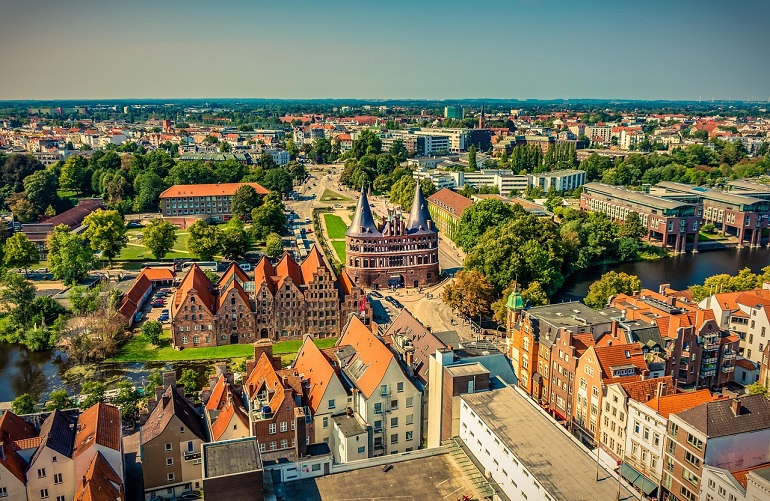
Lübeck's Old Town is situated on an island surrounded by the Trave and Wakenitz rivers and is recognised as northern Europe's first UNESCO World Heritage Site. The medieval urban layout features cobbled streets, historic brick houses with stepped gables, and grand churches that date back to the 13th and 14th centuries. The island setting creates a natural boundary that makes navigation straightforward whilst protecting the historic character from modern development. Strolling through the Altstadt allows visitors to appreciate significant examples of Brick Gothic architecture and a distinctive cityscape that reflects Lübeck's role as the former capital of the Hanseatic League. The area encompasses numerous streets and squares that showcase perfectly preserved medieval town planning, with the entire district representing one of the most complete examples of Hanseatic architecture in Northern Europe.
The Holstentor (Holsten Gate)
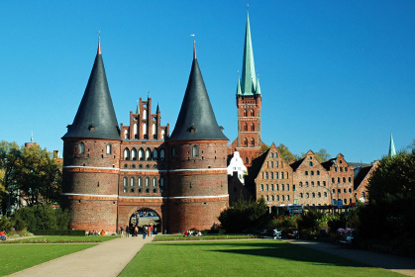
The Holstentor is a monumental city gate built between 1464 and 1478, recognisable by its twin round towers and distinctive red brick structure. Standing at the western entrance to the Old Town, it is one of only two remaining medieval gates in Lübeck and has become Germany's most recognisable city gate symbol. The gate was designed both for defence and as a demonstration of Lübeck's wealth and power, erected more to parade the city's might and affluence than serve purely defensive purposes. Originally part of a larger fortification system, the Holstentor consists of two towers connected by a central building with a passageway underneath. The structure has been rebuilt twice throughout its history and was featured on the 50 Deutsche Mark note, later appearing on the German 2 Euro coin from 2006. The gate's imposing presence and historical significance make it an essential landmark for understanding Lübeck's medieval heritage.

Lübeck Cathedral (Lübecker Dom)
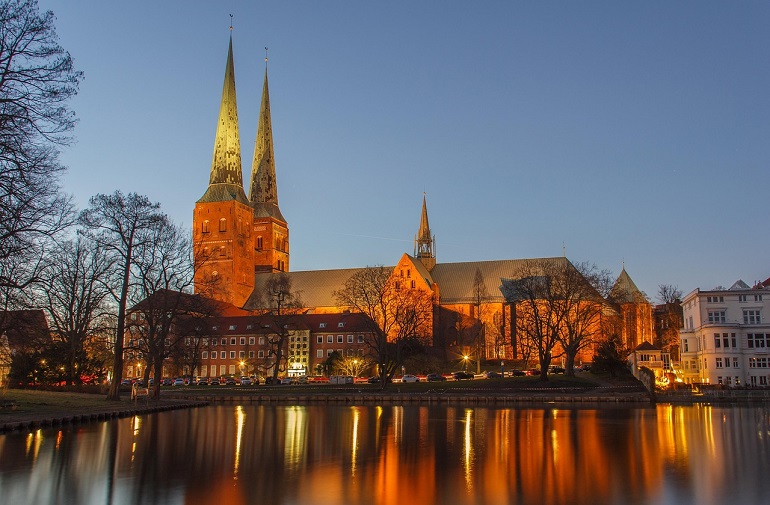
Lübeck Cathedral dates from the 12th century and was founded by Henry the Lion (Henry III), making it one of the oldest monuments in the city. The cathedral is distinguished by its twin spires and more austere architectural lines, contrasting with the more elaborate St. Mary's Church. Despite facing significant damage during World War II, the cathedral was meticulously restored with reconstruction completed in 1982, preserving its cultural significance whilst serving as a symbol of resilience. The building represents over 800 years of continuous religious use and architectural evolution, with various periods of construction and renovation visible throughout its structure. The surrounding grounds provide a peaceful setting within the busy Old Town, and the cathedral's interior conveys both Lübeck's religious heritage and the community's determination to preserve their cultural landmarks despite wartime destruction.
St. Mary's Church (Marienkirche)
St. Mary's Church is a celebrated example of Baltic Brick Gothic architecture, constructed between 1265 and 1352 at the highest point of Lübeck's Old Town. Its imposing twin spires, reaching skyward from the city's highest elevation, dominate the skyline and are visible from throughout the city. The church is referred to as "the mother church of brick Gothic" having influenced the design of approximately seventy other churches throughout the Baltic region. The scale and ornate detail of the structure reflect the affluence and ambition of Lübeck's medieval merchant class, with the building serving as both a spiritual centre and a symbol of civic pride. The church's architectural innovations, including its soaring interior space and sophisticated brick construction techniques, established a template that spread throughout Northern Europe. Its prominent location and architectural significance make it an indispensable part of Lübeck's historic landscape.

The Salzspeicher (Salt Storehouses)
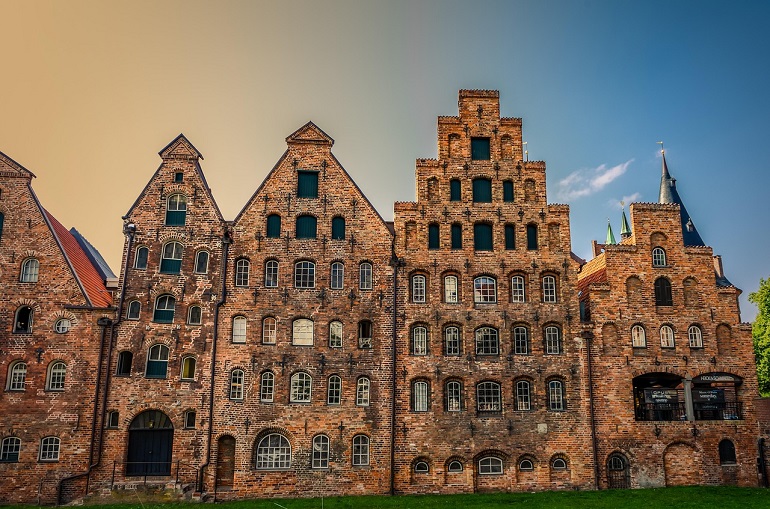
The Salzspeicher form a distinctive ensemble of Renaissance brick buildings constructed between 1579 and 1745 along the banks of the River Trave. These iconic structures showcase impressive Gothic and Renaissance architecture, standing as testament to Lübeck's rich trading heritage during the height of the Hanseatic League. Originally designed to store salt—which served as both an important food preservative and valuable trading commodity—the warehouses were crucial to the city's economic prosperity. The row of buildings presents a unified architectural appearance despite being constructed over nearly two centuries, with their stepped gables and brick construction creating one of Lübeck's most photographed landmarks. Their strategic riverside location allowed for efficient loading and unloading of cargo ships, facilitating the salt trade that was fundamental to preserving food for long sea voyages and maintaining Lübeck's position as a major commercial hub.
Lübeck Town Hall (Rathaus)
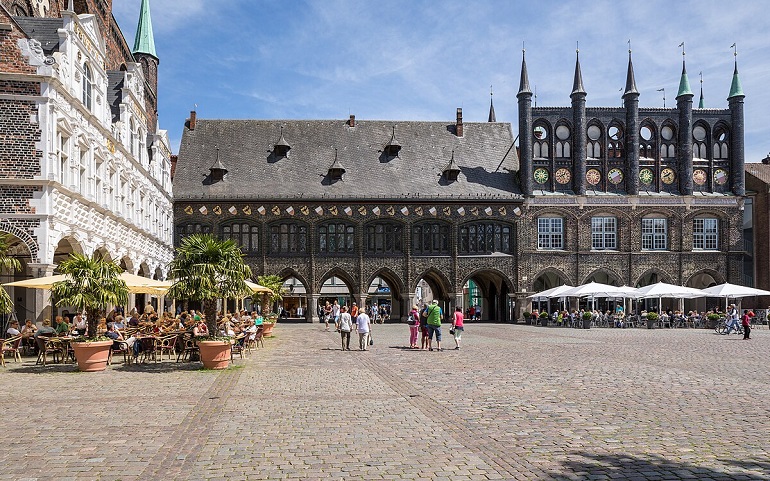
Lübeck Town Hall is a prominent civic building located in the heart of the Old Town and is considered one of Germany's most beautiful town halls. Originally begun in the 13th century and expanded through subsequent periods, it showcases an impressive facade with ornate brickwork and distinctive architectural features. The building includes unusual elements such as different door heights in the courtroom, which historically served a judicial function—acquitted defendants left triumphantly through the tall door with room to wear their hats, whilst convicted individuals humbly exited through the low door, revealing their fate to onlookers outside. The exterior architecture combines Gothic and Renaissance elements, reflecting the building's construction over several centuries. Guided tours provide detailed information about municipal traditions and the building's evolution, though the exterior remains freely accessible for architectural appreciation. The Town Hall's central location makes it a natural focal point for exploring the surrounding Old Town streets and squares.
Hidden Alleys and Courtyards (Gänge und Höfe)
The hidden alleys and courtyards form a unique aspect of Lübeck's Old Town, with approximately eighty passages currently open to the public from an original 180. These narrow lanes and enclosed gardens were developed during the Middle Ages as affordable housing for tradespeople, artisans, and workers who could not afford properties on the main streets. Behind the grand facades of the Old Town lies this miniaturised town with snug houses and lush gardens that now form part of the UNESCO World Heritage Site. The lovingly restored alleyway houses represent coveted living space today and exude idyllic romanticism, offering visitors a glimpse into medieval urban planning and social structure. Popular examples include Dunkelgrüner Gang, Von-Höveln-Gang, Kalandsgang, Haasenhof, Glandorps Hof, and Füchtingshof. Many passages remain actively inhabited, creating a living urban culture that allows visitors to experience how different social classes coexisted within the medieval city structure.
The House of the Seamen's Guild (Haus der Schiffergesellschaft)
The House of the Seamen's Guild is a historical guildhall built in the mid-16th century, notable for its richly decorated facade and maritime heritage. Situated opposite St. Jacob's Church, it served as the meeting place for Lübeck's seafaring community and reflects the city's strong maritime traditions through its unique architecture and intricate details. The building houses fascinating exhibits about the history of the seafaring community that once thrived in this vibrant Hanseatic city. During summer months, visitors can explore the cosy inner courtyard, which offers excellent views of St. Jacob's Church directly opposite. The guildhall's interior contains maritime artefacts and displays that illustrate the important role of seafarers in Lübeck's commercial success. The building represents the social and professional organisations that were central to medieval urban life, where craftsmen and traders formed associations to protect their interests and maintain professional standards.
Schulgarten Lübeck
Schulgarten Lübeck is a botanical and recreational garden situated near the Wakenitz River, featuring diverse plant collections, well-maintained walking paths, and designated areas for picnics and family activities. The garden serves both educational and recreational purposes, with facilities including picnic tables, public restrooms, and wheelchair-accessible entrances that accommodate visitors with varying needs. The site is particularly suitable for casual hikes and nature walks, offering a peaceful, green retreat within the urban environment that is popular among both local residents and tourists. The botanical aspects of the garden provide opportunities to observe regional plant species and gardening techniques, whilst the recreational facilities make it an ideal location for family outings. The garden's position along the Wakenitz River enhances its natural setting and provides scenic water views that complement the planted areas. Its designation as a tourist attraction reflects its value as both an educational resource and a pleasant outdoor space for relaxation and leisure activities.
River Trave Walks
Walking along the River Trave provides excellent opportunities to view Lübeck's historic architecture from unique perspectives whilst enjoying well-maintained paths on both sides of the water. Visitors can choose to walk on the Old Town side, cross to the opposite bank, or switch between sides using the numerous historic bridges that span the river. The riverside paths offer striking photographic opportunities of the city's famous seven towers, the Holstentor, and the salt warehouses reflected in the water. The circular route around the Old Town island takes approximately one hour and provides continuously changing views of the medieval cityscape. River walks are particularly rewarding during different times of day, as the changing light enhances the brick Gothic architecture and creates varied atmospheric conditions. The paths accommodate both leisurely strolls and more focused architectural study, with numerous benches and viewing points positioned to maximise the scenic potential of Lübeck's unique island setting.
Around Lübeck
Travemünde
Travemünde is Lübeck's seaside district on the Baltic Coast, accessible by train from the city centre in approximately 20-25 minutes to the "Travemünde Strand" terminal station. The area features a long, wide sandy beach that provides ample space for summer visitors, with opportunities for swimming, sunbathing, and renting traditional Strandkorb (hooded beach chairs) for the day. Travemünde combines seaside leisure with maritime heritage, hosting the Old Lighthouse, several marinas, and elegant promenades that reflect its status as a renowned spa resort. The district allows visitors to combine their cultural exploration of Lübeck's Old Town with relaxing seaside activities, making it possible to experience both medieval history and coastal recreation in a single visit. The beach's soft sand and facilities make it particularly appealing to families, whilst the maritime infrastructure continues to serve both recreational and commercial purposes.

Gothmund
Gothmund is a picturesque fishing village located in the St. Gertrud district on the outskirts of Lübeck, positioned on the banks of the Trave River. The village is characterised by traditional thatched cottages, historic boat jetties, and a tranquil waterside setting that provides a marked contrast to the urban historic core of Lübeck. Many of the fishermen's houses are listed buildings, reflecting the area's authentic maritime heritage and traditional North German coastal architecture. The village includes a small harbour where a few fishing boats can still be observed, maintaining connections to its working maritime past. Gothmund represents the rural and maritime traditions that surrounded Lübeck's urban prosperity, offering visitors insight into the broader regional culture beyond the Hanseatic commercial centre. The village's peaceful atmosphere and traditional architecture make it a popular destination for walks, photography, and experiencing the quieter aspects of the Lübeck area's cultural landscape.
Top Museums
Historic Landmarks and Medieval Heritage
Museum Holstentor
The Museum Holstentor stands as perhaps Lübeck's most iconic symbol, housed within the famous red-brick medieval gate that has welcomed visitors since the 15th century. Built between 1464 and 1478 by city master builder Hinrich Helmstede following Dutch models, this architectural masterpiece now serves as a gateway to understanding Lübeck's Hanseatic past.
The exhibition "The Power of Trade" takes visitors through seven themed rooms that illuminate the city's role as a major trading hub during the Hanseatic League. The museum showcases historical ship models, suits of armour, weapons, legal instruments, and articles of merchandise that tell the success story of medieval Lübeck's merchants who put their city firmly on the international map. The exhibits demonstrate how Lübeck's foreign and domestic trade flourished, highlighting the importance of seafaring for the city and exploring the armament and history of the Holsten Gate itself.
St. Anne's Museum Quarter (Museumsquartier St. Annen)
The Museumsquartier St. Annen occupies a beautifully restored 15th-century Gothic monastery complex, creating an atmospheric setting for one of Germany's most significant collections of medieval art. This former Augustinian nunnery has served as a museum since 1915 and houses Germany's largest collection of medieval sculpture and altar-pieces.
The museum's treasures include famous altars by renowned artists such as Hans Memling (formerly at Lübeck Cathedral), Bernt Notke, Hermen Rode, Jacob van Utrecht, and Benedikt Dreyer. The first floor presents these sacred works of art in their authentic monastic setting, whilst the second floor offers a fascinating journey through domestic life, displaying a comprehensive collection of home décor items and period interiors that demonstrate how citizens lived from medieval times through to the 1800s.
The museum complex features 25 exhibition rooms within the 500-year-old monastery, providing an exemplary experience of medieval furniture, room decoration, table settings, clothing, celebrations, and the values and norms of everyday life. The tranquil courtyards, gardens, and late Gothic cloister from 1512 add to the contemplative atmosphere.

Contemporary Art and Modern Exhibitions
Kunsthalle St. Annen
Adjacent to the Museum Quarter, the Kunsthalle St. Annen presents dynamic contemporary art within a modern architectural setting that incorporates remnants of the monastery's former church. Built on the remains of the church lost in a 1948 fire, this 1,000-square-metre exhibition space organises regular exhibitions of modern and contemporary art.
The Kunsthalle houses its own collection of modern art from after 1945 and gained particular recognition in 2005 when it acquired a collection from the estate of Leonie von Rüxleben, comprising approximately 1,400 works representing Germany's largest collection of artists' self-portraits after 1945. The building's design, which preserved and restored the surviving church portal with a 2002 sculpture "Adam und Eva" by Lothar Fischer, earned its architects the main prize from the Bund Deutscher Architekten (BDA) in Schleswig-Holstein in 2003.
The Kunsthalle has recently introduced a children's art gallery as part of its "Hello Lübeck" exhibition, focusing on young visitors and providing opportunities for children to experience art in a sensory way.
Specialised Collections and Unique Experiences
Museumshafen Lübeck (Harbour Museum)
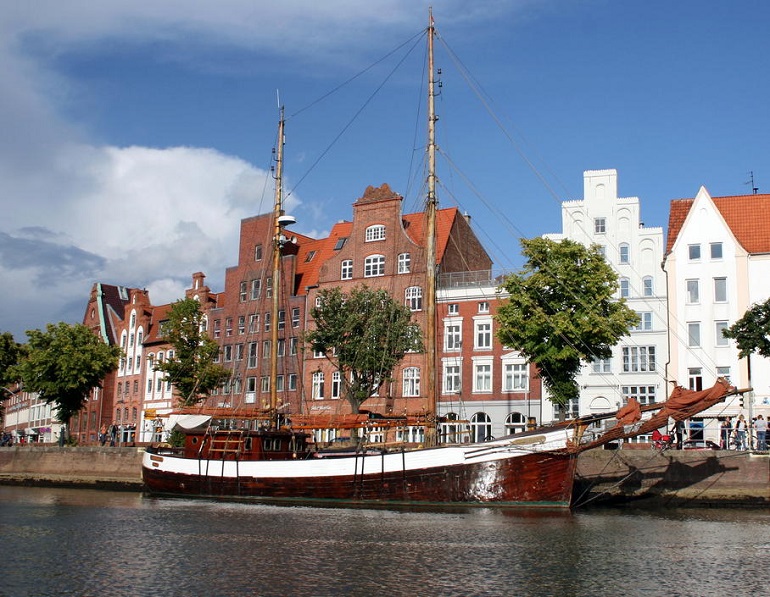
Museumshafen Lübeck is an open-air harbour attraction where more than twenty historic ships from various periods of maritime history are permanently moored. The collection includes vessels ranging from a 15th-century caravel to a 1910 tugboat, providing a comprehensive overview of shipbuilding evolution and maritime technology. These vessels are displayed along the quay with explanatory signage, and visitors can observe ongoing restoration work that maintains the ships in seaworthy condition. The harbour serves both as an educational resource and a working preservation facility, where traditional maritime crafts and techniques are maintained and demonstrated.
Visitors can wander leisurely along the harbour, where historic vessels create a striking contrast against Lübeck's medieval architecture. The motor tugboat TITAN, dating to 1910 and owned by the Museumshafen association, stands as a symbol of the industrial age and the vital role tugboats played in harbour operations. Traditional sailing vessels represent the era when Lübeck was a major trading hub within the Hanseatic League.
The museum provides informative exhibits about shipbuilding techniques and nautical traditions that have shaped the region over centuries. The vibrant atmosphere is particularly notable during weekends when maritime festivals and local events bring the harbour to life. Educational workshops cater to all ages, whilst the tranquil setting offers scenic spots for relaxation with views over the Baltic Sea.
Lübeck Museum of Theatre Puppets
The Lübeck Museum of Theatre Puppets offers an enchanting journey into the world of international puppetry, housed within five medieval brick houses on the narrow street called Kolk, near the Holstentor. This private museum, created from Fritz Fey Jr.'s decades-long collection, contains approximately 1,000 exhibits from three centuries and three continents (Europe, Africa, and Asia).
The museum demonstrates how puppeteers throughout history have held mirrors up to their societies, showcasing technically diverse puppet types including glove puppets, marionettes, rod and finger puppets, shadow puppets, ventriloquist's dummies, mechanical puppets, and metamorphosis figures. Star attractions include imaginative shadow puppets from Indonesia (Wayang), "Moto Rafael, the Electric Drawer," the "Dog Clown" used in scenes with real dogs, and technically sophisticated transformation puppets.
Beyond the puppets themselves, the museum displays posters, props, scenery, costumes, musical instruments, and entire puppet theatres, providing a comprehensive view of high-quality puppeteering. Interactive elements include a museum quiz for families and a video room showing puppet plays from around the world. The museum also features a shop and café where visitors can relax amongst old marionettes and illustrations of historical ballads.
Industrial Heritage and Social History
Industriemuseum Herrenwyk
The Industriemuseum Herrenwyk documents Lübeck's transformation from an ancient merchant city to an industrial centre, housed in the former department store of the Hochofenwerk Lübeck AG. This museum focuses on the era from industrialisation to deindustrialisation, covering key sectors including steelmaking, shipbuilding, mechanical engineering, and food processing.
The museum provides detailed documentation of work in the blast furnace plant and the lives of workers in the factory colony, with particular focus on the 1920s and 1930s. It also covers the rise and fall of the Flender shipyard, offering comprehensive insights into the city's industrial history and the people who shaped it. The collection includes extensive depots filled with machines and tools, craft implements, objects of everyday worker culture, and a large toy collection.
A significant aspect of the museum addresses the difficult history of the tens of thousands of forced labourers brought to work in the plants during the Second World War. The museum began its activities in 1983, preserving not only the technical aspects of industry but also the social and human dimensions of industrial life.
Memorials and Remembrance
Gedenkstätte Lübecker Märtyrer
The Gedenkstätte Lübecker Märtyrer serves as a poignant memorial to four clergymen executed by the Nazis on 10 November 1943. The evangelical pastor Karl Friedrich Stellbrink and Catholic chaplains Hermann Lange, Eduard Müller, and Johannes Prassek were condemned to death by the Nazi People's Court for "undermining military morale, malice, aiding the enemy, and listening to enemy broadcasts".
Located in an annex to the Propstei Church Herz Jesu on Parade Street, the memorial opened in 2013, incorporating the existing crypt beneath the church choir. The entrance area features a large crucifix that belonged to Hermann Lange and display panels that place the events surrounding the Lübeck Martyrs within their historical context.
The memorial includes a striking 17-part printmaking work by artist Julia Siegmund depicting the lives and deaths of the martyrs, displayed across the window front. Four stelae present large portraits of the four martyrs, with interactive biographical elements featuring screens and headphones on the reverse sides. The former coal cellar houses exhibitions about the arrested laypeople and the parish housekeeper, alongside displays about the beatification process.
The crypt serves as a place of remembrance and prayer, containing Hermann Lange's urn with his ashes, an altar and ambo, facilities for lighting candles, and various artistic objects. The memorial demonstrates how Nazi terror is illustrated through the concrete biographies, convictions, and resistance of these four men.
Regional Folk Culture
Volkskundemuseum Schönberg
Located approximately 30 kilometres from Lübeck in Schönberg, the Volkskundemuseum in Schönberg preserves the unique cultural identity of the Schönberg region, which developed strong cultural independence as the Principality of Ratzeburg and a remote exclave of Mecklenburg-Strelitz.
The museum operates at two locations: the Heimatmuseum in Schönberg city centre since 1931 and the open-air Bechelsdorfer Schulzenhof since 1972. The outdoor facility features the "Bechelsdorfer Schulzenhaus," relocated to Schönberg in the 1960s, which forms the core of the open-air installation alongside a large barn and bakehouse. Both the barn and Schulzenhaus represent some of Mecklenburg's oldest hall houses, dating from around 1500.
The museum's collection, initiated by teacher Fritz Buddin from 1903, focuses on furniture and textiles alongside local folklore and traditions. Thematic areas include the Bishopric of Ratzeburg, Schönberg as the seat of bishops, urban craftsmanship, rural folk art, traditional costume as identity marker, and cultural exchange between villages and the Hanseatic city of Lübeck. The museum also addresses complex topics including the history of local associations and both bourgeois and workers' singing societies.
Local Cuisine
Lübeck, the former “Queen of the Hanseatic League,” offers travellers not only medieval charm but also a distinct culinary heritage influenced by both Baltic traditions and German coastal fare. The city is world-famous for its Lübecker Marzipan, crafted from finely ground almonds and rose water, regarded as one of the finest varieties globally. Traditional fish dishes, particularly Bismarckhering (pickled herring) and Matjes (young salted herring), reflect Lübeck’s maritime ties, often served with potatoes and onions. Visitors should also try Rotspon, a red wine imported from France and matured in Lübeck’s cellars, beloved since the Hanseatic era. For something sweet, bakeries tempt with Niederegger Torten, layered cakes infused with marzipan, offering a perfect finish to a day exploring the cobbled streets and brick Gothic landmarks.

Getting There
By train Lübeck is well connected to the German rail network, with frequent services linking it to Hamburg in under an hour. From Hamburg, travellers can continue directly to Lübeck’s central station, which is only a short walk or local bus ride from the historic old town.
By coach Regular long-distance coaches serve Lübeck from Hamburg and other major German cities, arriving at the central bus station conveniently located near the main train station. This makes bus travel an accessible and straightforward option for reaching the city.
By car Lübeck is easily reached by road, with the A1 motorway providing direct access from Hamburg and connections from other parts of northern Germany. Drivers can follow well-signposted routes leading directly to the city centre, where several parking facilities are available close to the main attractions.
| Travel destinations in Schleswig-Holstein | |||||||||||
|---|---|---|---|---|---|---|---|---|---|---|---|
|
|
|
| ||||||||
|
|
|
| ||||||||


