



| Contents |
|---|
Introduction
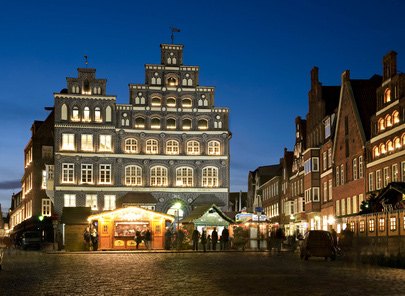
Lüneburg (pop. 77,500) is a former Hanseatic city that grew rich on salt mining, beer brewing and trade in the Middle Ages. Today it is a quiet and handsome historic town with stepped gable and timber-framed façades. Its leaning buildings, dislocated by centuries of mining, give the place a unique charm. The compact old town features stepped-gable façades and timber-framed houses, with several buildings showing a characteristic lean due to ground subsidence from centuries of underground salt extraction. Key landmarks include the Alter Kran (medieval crane) on the Ilmenau riverside, the market squares such as Am Sande lined with gabled merchant houses, and notable churches including St John’s and St Michael’s. The former saltworks history is interpreted at the German Salt Museum, while the preserved streetscapes reflect the city’s minimal wartime damage and sustained mercantile heritage. Lüneburg is also a university town with a lively centre of cafés, shops, and breweries, offering a concise mix of historical sights, museums, and riverside districts within easy walking distance.
Interesting Facts about Lüneburg
- Lüneburg's distinctive leaning buildings are the result of centuries of underground salt mining, which caused the ground to shift and gave the city its uniquely charming tilted architecture.
- The city was once so wealthy from salt production that it became one of the most powerful members of the Hanseatic League, with salt being as valuable as gold during medieval times.
- Salt mining continued for nearly a millennium in Lüneburg, from the 10th century until production finally ceased in 1980.
- The town has been officially allowed to use the title 'Hanseatic City of Lüneburg' (Hansestadt) since 2007, recognising its former membership in the medieval Hanseatic League.
- Lüneburg was virtually undamaged during World War II, which is why its medieval town centre remains almost perfectly preserved with its original 13th-18th century architecture.
- The city's development was characterised by the motto 'Mons, Pons, Fons' (Hill, Bridge, Spring), representing the three original settlement areas that eventually merged to form the town.
- Heinrich Heine, the famous German poet, once called Lüneburg his 'residence of boredom' (Residenz der Langeweile) when his parents lived there from 1822 to 1826.
- The town's historical appearance remained frozen in time after the collapse of the Hanseatic League around 1560, as hardly any new buildings were constructed in the city centre, preserving its medieval character.
- Lüneburg is home to Leuphana University, which was founded in 1946 and adds a vibrant student population to this historic town.
- The city's therapeutic salt springs continue to operate today, with the SaLü saltwater thermal baths utilising the same salt spring that has been active for centuries.
History
Lüneburg emerged as a settlement of note by 956 CE, recorded as Luniburc on the Ilmenau River at the edge of the Lüneburg Heath, and expanded markedly under the 12th-century rule of Henry the Lion, duke of Saxony. It received its town charter in 1247 and served as the residence of the dukes of Brunswick-Lüneburg until 1371, anchoring its regional prominence in the High Middle Ages. A unique geological fortune defined its destiny: abundant brine springs enabled large-scale salt extraction from at least the 10th–12th centuries, turning Lüneburg into one of medieval northern Germany’s wealthiest towns and shaping its urban fabric, economy, and institutions for centuries.
Salt—often dubbed “white gold”—propelled Lüneburg into the Hanseatic trading world as a key supplier for preserving Baltic and Norwegian herring, a staple during fasting periods across Europe. The town’s monopoly in North Germany and its overland Old Salt Road to Lübeck, later complemented by the Stecknitz Canal’s opening in 1398, integrated production with maritime transport networks and amplified Hanseatic prosperity. Lüneburg became a powerful member of the Hanseatic League and maintained its importance into the early modern period; politically, it was incorporated into Hanover in 1705 and then into Prussia in 1866, reflecting broader territorial shifts in northern Germany. Salt production continued as the city’s defining industry until its closure in 1980, after which the former saline was transformed into the German Salt Museum, preserving this millennial heritage.
Despite 19 bombing raids between 1940 and 1945, Lüneburg’s historic centre escaped the level of devastation suffered by nearby cities, leaving its distinctive ensemble of brick-Gothic, stepped-gable, and timber-framed buildings largely intact. A major attack on 22 February 1945 caused heavy casualties and infrastructure damage—especially around the railway—but the Altstadt survived, enabling extensive post-war conservation that began in earnest in the late 1960s and 1970s. In September 1945, the Belsen Trial of former Bergen-Belsen and Auschwitz staff opened in Lüneburg, underscoring the city’s immediate post-war role in legal reckoning. Today, Lüneburg is a university town and a designated Hanseatic city since 5 October 2007, its preserved fabric and salt legacy drawing visitors to one of northern Germany’s most atmospheric medieval centres.
Main Attractions
Am Sande
Am Sande is the main square in Lüneburg and is notable for its historic importance as the town’s commercial hub. Surrounded by imposing medieval houses built in the distinctive Gothic brick style, the square remains lively with shops, restaurants and cafes. Many buildings feature characteristic stepped gables and their facades reflect centuries of prosperity fuelled by salt trade. It is also an ideal place to observe the town’s unique leaning architecture, shaped by centuries of salt mining beneath the city.

Lüneburg Town Hall (Rathaus)
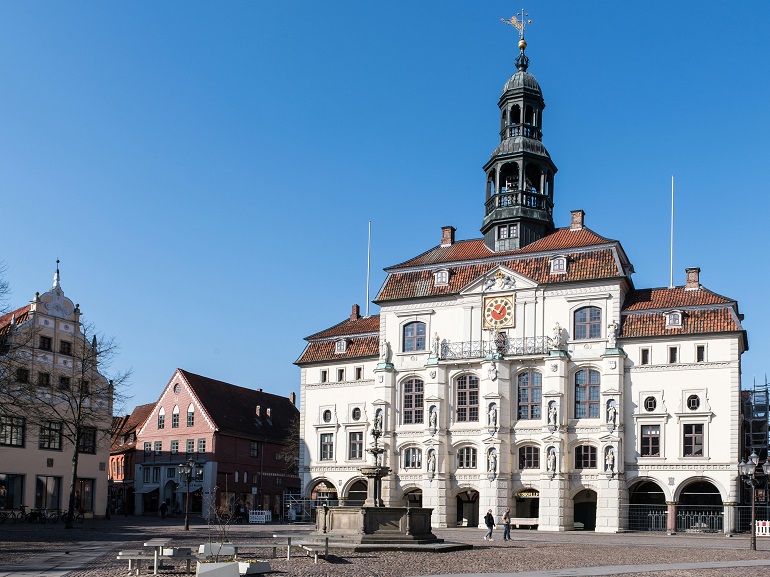
Lüneburg's Town Hall, or Rathaus, is one of the largest and most significant medieval town halls in Northern Germany, with its origins dating back to around 1230. Having been continuously expanded over centuries, the complex showcases a blend of architectural styles, from its Gothic origins to a later Baroque facade overlooking the market square. The building has survived without war damage, preserving its historically significant interior. Visitors on guided tours can see numerous art treasures, including the Great Council Chamber with detailed Renaissance carvings, the richly decorated Hall of Princes, and the Court of Justice, which features notable ceiling and wall paintings from the late 15th century. It continues to serve as the seat of the city's administration.
Old Town and Shopping Streets
Lüneburg’s Altstadt (old town) is characterised by well-preserved medieval and early modern architecture. The traffic-calmed streets make shopping and strolling easy, with a range of specialist shops located beneath historic facades. Many of these buildings survived war and urban development, providing visitors with a genuine sense of the city’s storied past and lively present.
Alter Kran
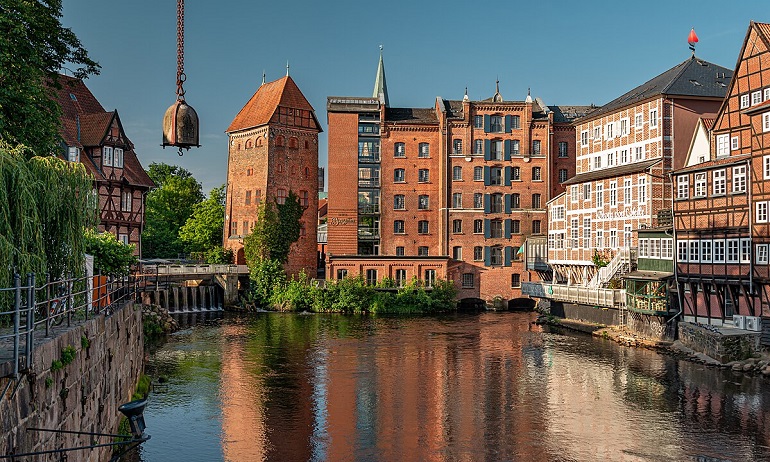
The Alter Kran, or Old Crane, is a medieval harbour crane located by the Ilmenau river. Dating back to the early 14th century, this robust piece of engineering was vital for loading salt onto barges for distribution throughout northern Europe. The crane is now a picturesque centrepiece of the harbour area and symbolises Lüneburg’s historical significance in regional trade. The surroundings offer scenic views and are a popular spot to visit for insight into the town’s commercial heritage.
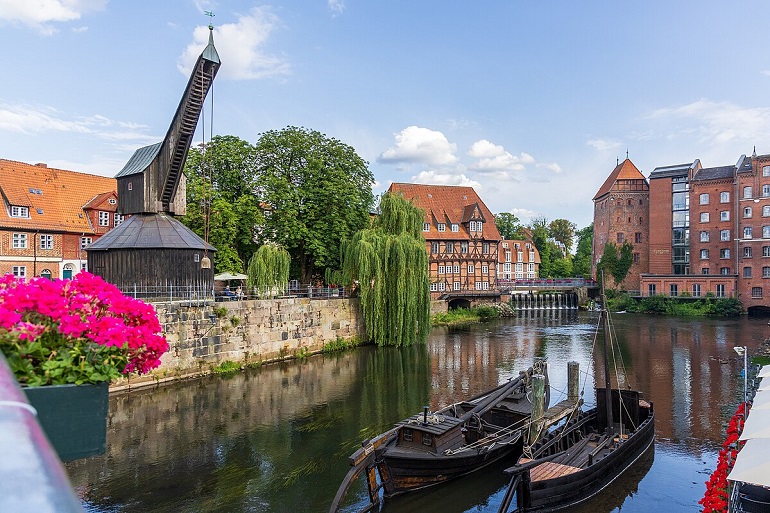
Der Stintmarkt (Lüneburg Harbour)
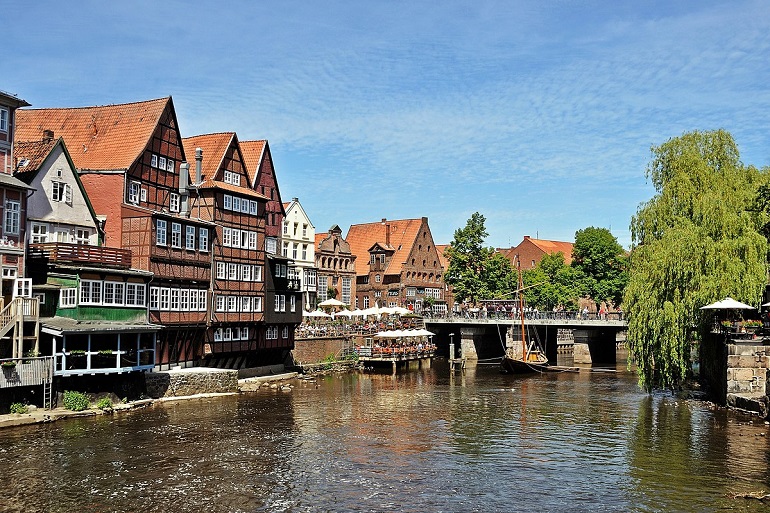
Der Stintmarkt is the historic marketplace situated along the riverside near Alter Kran. Originally a busy trading spot for salt and fish, particularly the local “stint”, the area has transformed into a vibrant part of Lüneburg’s nightlife with many bars and restaurants. The riverside location is favoured for its lively and welcoming atmosphere, especially in warmer months, making it a social centre for both locals and tourists.
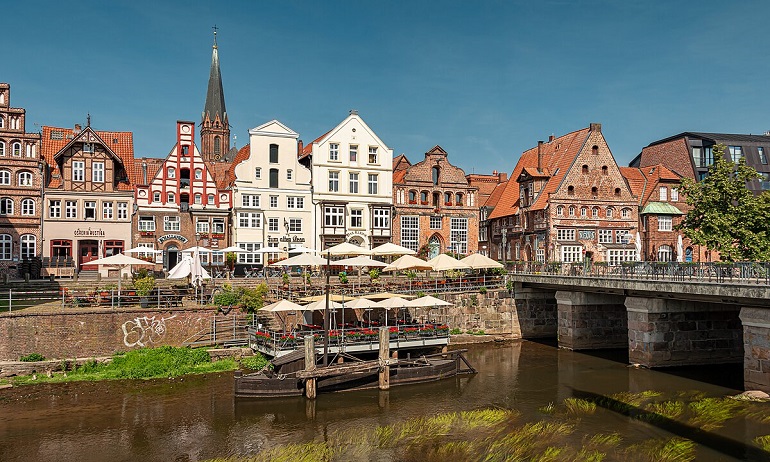
Lüneburg Water Tower
The Lüneburg Water Tower is one of the city’s most recognisable landmarks, offering panoramic views of the old town and the surrounding Lüneburg Heath. Visitors can climb 142 steps to the top and enjoy the vista, with an exhibition inside providing historical context about water supply in Lüneburg. The tower serves as both a practical structure and a testament to the city’s commitment to preserving its architectural heritage.
Leuphana University
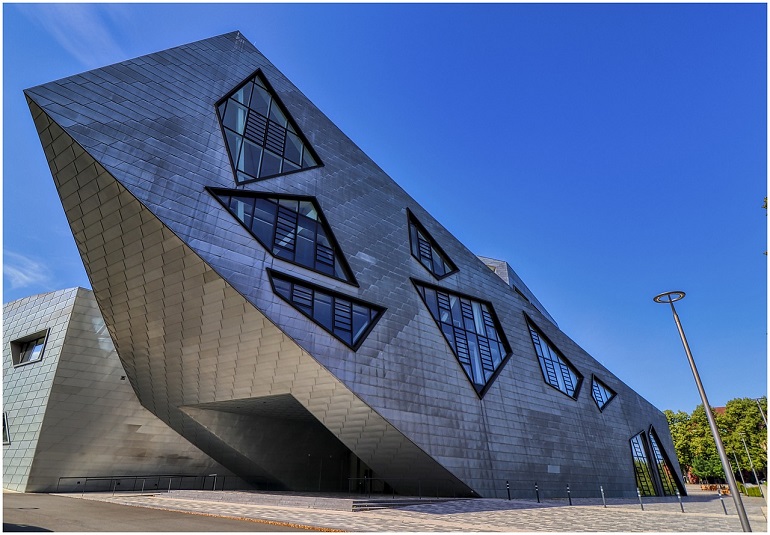
The Central Building of Leuphana University, designed by architect Daniel Libeskind and completed in 2017, is a modern architectural landmark for the campus. Situated on a former military barracks, its distinctive, jagged silver-coloured facade and angular structure deliberately contrast with the existing grid of the older buildings. The building integrates a research centre, student centre, seminar rooms, and a large auditorium, creating a dynamic environment for interdisciplinary learning and exchange. Its design, which features unusual window openings and no two rooms being the same, was developed with student participation and aims to reflect the university's innovative and forward-thinking ethos.
Kurpark and Gradierwerk
Lüneburg's Kurpark offers tranquil green spaces for relaxation, having served as a spa resort since 1907. A key feature within the park is the Gradierwerk, a unique structure designed to assist respiratory health. Brine from underground springs is fed over blackthorn brushwood, and visitors can sit in front of this installation to breathe in the mineral-rich air. The combination of peaceful parkland and historic spa facilities makes it a popular site for leisurely walks and wellness activities.
Michaeliskirche (St Michael's Church)
St Michael's Church is an important ecclesiastical site in Lüneburg, noted for its historical significance and architectural beauty. Built in the medieval period, its proximity to salt mines is evident in the visible subsidence affecting nearby buildings. The church is a fine example of the region's Gothic style and serves as both a place of worship and a landmark reflecting Lüneburg’s rich heritage.
Around Lüneburg
Lüneburger Heide
Situated just beyond the city, the Lüneburger Heide (Lüneburg Heath) is a large natural reserve renowned for its scenic beauty and diverse flora and fauna. Especially popular among hikers, cyclists and nature enthusiasts, the heath is famous for its blooming heather in late summer. It offers expansive landscapes for outdoor recreation and is considered an essential excursion for those seeking a natural contrast to the city’s urban attractions.
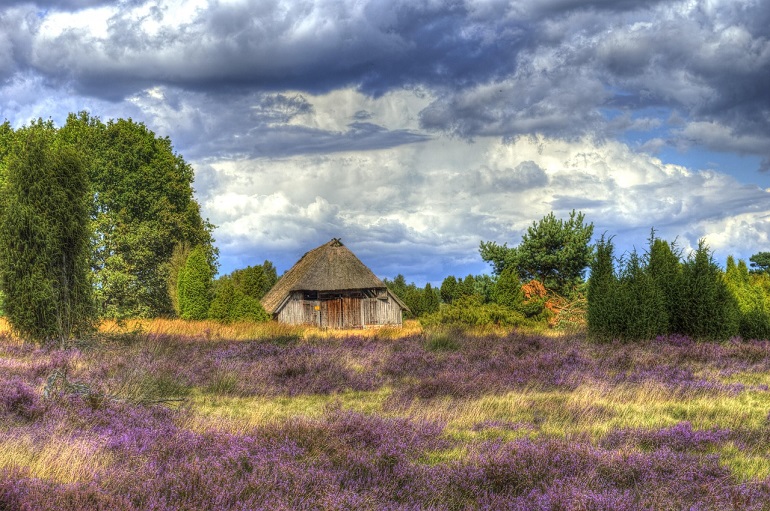
Top Museums
German Salt Museum (Deutsches Salzmuseum)
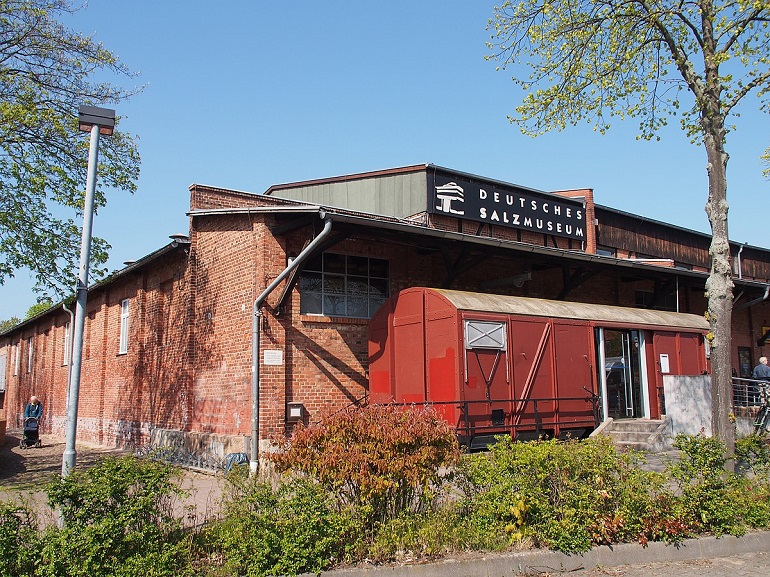
Located at the site of the former saltworks, the German Salt Museum is an unmissable institution in Lüneburg. It traces the story of salt—commonly known as “white gold”—which was instrumental in shaping the city's prosperity and status in the Hanseatic League. Interactive exhibits take visitors through centuries of salt production, presenting both the technology and the traditions surrounding its extraction. Guided tours and reconstructions of historic equipment allow guests to experience the processes engaged in by the master salters, known as Sülfmeister, whose craft dominated Lüneburg for over 1,000 years.
Museum Lüneburg
This modern and comprehensive museum showcases Lüneburg’s multifaceted history, from prehistoric times to the present. The collections span natural history, town archaeology, and cultural history, with immersive exhibits popular among both adults and children. Noteworthy highlights include displays on the region’s glacial past, medieval salt trade, and local minerals such as Boracit and Lüneburgit. The museum also features unique artefacts like the monumental replica of the 13th-century Ebstorf Map and a seven-metre-long folding table from the ducal castle of Kalkberg. Dedicated rooms narrate the city’s evolution, influential families, and pivotal events such as the Reformation, offering a holistic exploration of Lüneburg’s identity. A sunny café terrace with views of the Ilmenau river makes for a relaxing spot after your tour.
East Prussian Regional Museum (Ostpreußisches Landesmuseum)
This specialist museum invites visitors to examine the history, art, and culture of East Prussia, a former German province. Its exhibits document the heritage of East Prussia up until 1945, including artefacts that reflect everyday life, artwork, and historical objects, thus providing insight into another layer of German history closely linked to Lüneburg.
Brewery Museum (Brauereimuseum)
Housed in the former Kronen-Brauerei, the Brewery Museum is a delight for anyone interested in brewing traditions and industrial heritage. Historic brewing equipment, a collection of drinking vessels spanning 1,200 years, and artefacts from the beer trade tell the story of Lüneburg’s centuries-old brewing culture—a vital industry alongside salt mining that contributed to the town’s wealth.
Arche-Park Lüneburg
The Arche-Park provides visitors with an open-air exploration of the region's archaeological past, complementing the historical museums with a hands-on engagement with ancient artefacts and landscape reconstruction.
Lüneburg’s museums encapsulate the essence of its Hanseatic roots, mineral wealth, brewing traditions, and broader German history. Each institution offers a distinct perspective, from interactive salt-making demonstrations to contemplative journeys through cultural and natural histories. Whether you're drawn to industrial heritage, medieval artefacts, or genealogical connections, Lüneburg's museums promise an enriching experience in one of Northern Germany’s most charming towns.
Local Cuisine
In Lüneburg expect plenty of freshwater fish and preserved seafood, notably Matjes herring served with apples, onions and sour cream, alongside rustic staples like Labskaus (a beetroot-tinged corned beef mash) and crisp Kartoffelpuffer. The heath lends its own flavours, with Heidschnucke (moorland lamb) and heather honey featuring in seasonal menus, while local bakers turn out buckwheat cakes and salt-kissed sweets. Centuries of brewing tradition live on in malty lagers and the town’s Lüneburger Pilsner, perfect with Buchweizentorte or a slab of Bienenstich. For a briny nod to “white gold,” look for dishes finished with local salt, and pair pub classics like Bratwurst and Sauerbraten with tangy red cabbage and dumplings for a true Lower Saxon comfort plate.
Getting There
By train Lüneburg sits on the main line between Hamburg and Hanover, with frequent direct regional and long-distance services; trains from Hamburg run roughly every half hour with typical journey times around 25–35 minutes, and services from Hanover are usually hourly, making rail the most convenient option for most travellers.
By coach or bus Long-distance coaches to nearby Hamburg or Hanover pair easily with onward regional trains to Lüneburg, and within the local area Lüneburg is integrated into the Hamburg transport network (HVV), providing straightforward bus connections once arrived.
By car The city is well connected by motorway: approach via the A39 (linking at Maschener Kreuz towards the A1) or from the south via the A7, then follow the B209 into town, with large car parks such as Sülzwiesen offering convenient access to the centre.


