



| Contents |
|---|
Introduction
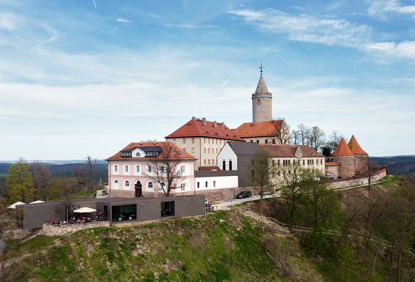
Leuchtenburg Castle stands on a wooded hilltop 400 metres above the Saale Valley near the village of Seitenroda, close to Kahla in central Thuringia. First in the early 13th century as the seat of the Lobdeburg family, the castle ensemble has been restored to retain its medieval ramparts, towers and curtain walls. Today it houses a museum dedicated to Thuringian porcelain, including the immersive Porcelain Worlds exhibition and the 20-metre Skywalk of Wishes, alongside a traditional castle restaurant. Visitors can explore defences dating from the 15th century, climb the keep for panoramic views of the Thuringian Forest and Harz Mountains, and reach the site by car or on foot via marked hiking trails.
Interesting Facts about Leuchtenburg Castle
- Leuchtenburg Castle sits dramatically atop a 400-metre hill, offering breathtaking panoramic views over the Saale valley.
- The castle complex dates back nearly a thousand years, with its origins in the early 13th century and its first mention in 1221.
- Leuchtenburg is celebrated for its award-winning Porcelain Worlds exhibition, which includes both the world’s tallest vase (8 metres high) and the world’s smallest coffee pot.
- The unique Porcelain Church within the castle has striking vertical porcelain blinds designed by a student of Daniel Libeskind.
- The “Skywalk of Wishes” allows visitors to write wishes on porcelain plates and hurl them from a 20-metre-high platform, a tradition said to bring good luck.
- Historically, the castle has served various roles, including as a noble seat, prison, mental asylum, youth hostel, and now a museum and restaurant.
- During the Thirty Years' War, Leuchtenburg was used as a refuge, and its strong hilltop position made it a defensive stronghold in many conflicts.
- The castle hosted the first youth hostel in Thuringia in the early 20th century.
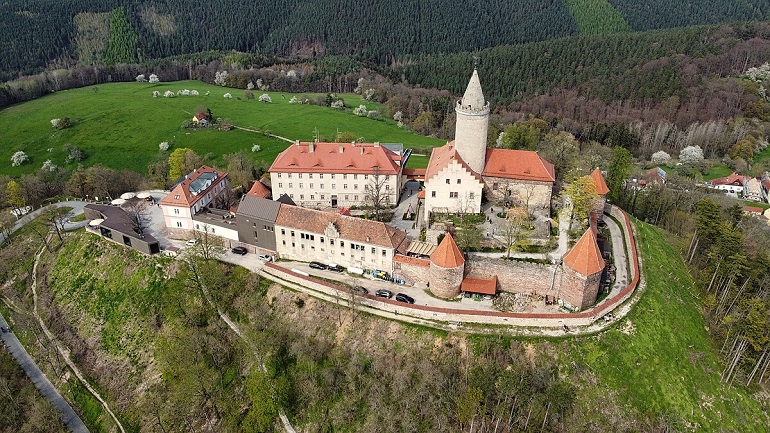
- Remarkably, the castle grounds are largely intact, with double walls, moats, and medieval defensive towers still encircling its perimeter.
- Leuchtenburg Castle is considered a hidden gem among German castles, receiving fewer tourists than many counterparts but earning praise for its immersive events, exhibitions, and accessible design.
History
Leuchtenburg Castle, perched majestically 400 metres above the Saale valley near Kahla in Thuringia, boasts a remarkable history spanning nearly a millennium. First documented in 1221 as the family seat of the noble Lobdeburg-Leuchtenburg lineage, the castle was originally constructed around 1200 by aristocrats from Franconia. The fortress served primarily as an administrative centre during its early centuries, with its strategic hilltop position providing commanding views over the surrounding countryside. In 1333, the castle changed hands when it was acquired by the influential Counts of Schwarzburg (see Frankenhausen), before being sold again to the powerful Counts of Wettin in 1396. Around 1460, four fortification towers were added to strengthen the castle's defences, creating the impressive defensive complex that visitors can still explore today.
During the tumultuous Thirty Years' War (1618-1648), Leuchtenburg frequently served as a crucial refuge for those fleeing the conflicts that ravaged central Europe. The castle's ownership continued to shift through various noble houses, eventually falling under the control of the Duchy of Saxe-Gotha-Altenburg in 1724. From the 18th century onwards, the castle's role transformed dramatically when it began operating as a prison, workhouse, and lunatic asylum, marking a stark departure from its aristocratic origins. This penal function continued well into the 19th century, with the prison finally closing in 1871 following German unification. The castle then experienced another reinvention, operating as a hotel from 1873 to 1951, before becoming home to Thuringia's first youth hostel in the early 1900s.
The modern era has witnessed Leuchtenburg's renaissance as a cultural and tourist destination. In 2007, the Leuchtenburg Castle Foundation was established, launching an ambitious programme of restoration and development that has transformed the medieval fortress into a unique attraction. The castle now houses an award-winning museum featuring the renowned Porcelain Worlds exhibition, celebrating the region's rich ceramic heritage with interactive displays and remarkable artefacts, including the world's tallest vase at 8 metres in height. Historic vineyards have been replanted on the castle grounds, whilst the entire complex has undergone comprehensive renovation during the 21st century. Today, visitors can explore the well-preserved medieval structures, including the original defensive walls, towers with their historic dungeons, and the impressive keep with its panoramic observation deck offering spectacular views across the Thuringian landscape.
Description
Architectural Character
Leuchtenburg presents an arresting blend of medieval fortification and contemporary intervention. The original 13th-century keep and surrounding curtain walls remain largely intact, their robust stonework imparting a sense of age-worn resilience. A striking 26-metre round tower, built in 1665 from earlier masonry, affords a cylindrical counterpoint to the square lines of the main castle.
Nested against these ancient structures is a bold modern extension conceived for the Porcelain Worlds exhibition. Here, crisp glass facades and slender steel frames form seven distinct “experience worlds”, each differentiated by its own colour scheme and thematic design. The extension culminates in the Skywalk of Wishes—a 20-metre cantilevered walkway with a glass floor that projects over the valley, merging daring minimalism with panoramic splendour.
Porcelain Worlds Exhibition
Within the castle’s heart, the Porcelain Worlds transform the historic enceinte into an immersive gallery dedicated to “white gold”. Seven interactive zones guide visitors from the origins of porcelain in Asia to its reinvention by European craftsmen and into visionary future concepts.
- Archive of Desire: Under ultraviolet light, guests inscribe secret wishes on porcelain shards, then cast them over the ramparts to shatter far below—an ancient ritual promising good fortune.
- World’s Largest Vase & Smallest Coffee Pot: A majestic eight-metre vase soars overhead, while its diminutive counterpart hides within a glass cabinet, viewable only through magnification.
- Porcelain Church: Designed by a protégé of Daniel Libeskind, this former chapel glows with vertical blinds fashioned from translucent porcelain panels, suffusing the space with a soft, ethereal light.
Every environment is animated by tactile displays, audio-visual installations and hands-on workshops, ensuring that porcelain’s fragile materiality becomes a living, sensory encounter.
Visitor Experience
The castle grounds invite exploration of ramparts, battlements and narrow spiral staircases spiralling into deep, shadowy dungeons. An observation deck atop the keep rewards the climb with a sweeping panorama of the Thuringian Forest and distant Harz mountains.
Leuchtenburg accommodates visitors of all abilities: a panoramic glass lift links courtyard level to upper exhibition spaces, while broad walkways and glazed passages offer barrier-free circulation. Subtle landscaping around the outer bailey harmonises rugged masonry with cultivated lawns and herbaceous borders.
Culinary offerings echo the castle’s convivial spirit. A rustic tavern tucked within the ramparts serves hearty Thuringian specialities and regionally sourced wines. Elsewhere, a light-filled bistro and sun terrace provide views over the valley, perfect for coffee and delicate castle cakes.
Getting There
By train Travellers can reach Leuchtenburg Castle by taking a train to Kahla (Thür) station, which is the closest rail stop. From there, you may either continue by taxi for a short drive to the castle or choose to walk up the hill, following marked hiking trails through scenic countryside surroundings.
By bus For those using coach or bus services, there is a direct bus from Kahla to Seitenroda, the village at the foot of the castle. This service runs several times a day, making it a reasonably convenient option for visitors preferring public transport. Upon arrival in Seitenroda, the castle can be reached on foot with a pleasant uphill walk.
By car If travelling by car, Leuchtenburg Castle is easily accessible from nearby towns such as Jena, Weimar, and Erfurt. The castle offers a free car park at the base of the hill; from there, it’s a short walk to the entrance. The roads leading to the site are well signed, making for a straightforward and enjoyable drive through the Thuringian countryside.
Best Time to Visit
The ideal time to visit Leuchtenburg Castle is between late spring and early autumn, when both the weather and the castle’s offerings are at their best. From April through October the museum and exhibitions are daily from 09:00 to 19:00, and the surrounding Saale Valley is awash with blooming wildflowers and lush greenery, making the castle’s panoramic terraces particularly enchanting. Summer brings longer daylight hours and a lively programme of medieval performances, guided tours, evening barbecues and even knightly banquets, while early autumn’s golden light and crisp air lend the ramparts a romantic atmosphere without the summer crowds. Travelling in these months also ensures easy access by car or on foot along scenic hiking routes, and affords the best chance of clear skies for the sweeping valley views that make Leuchtenburg Castle truly unforgettable.


