



| Contents |
|---|

Introduction
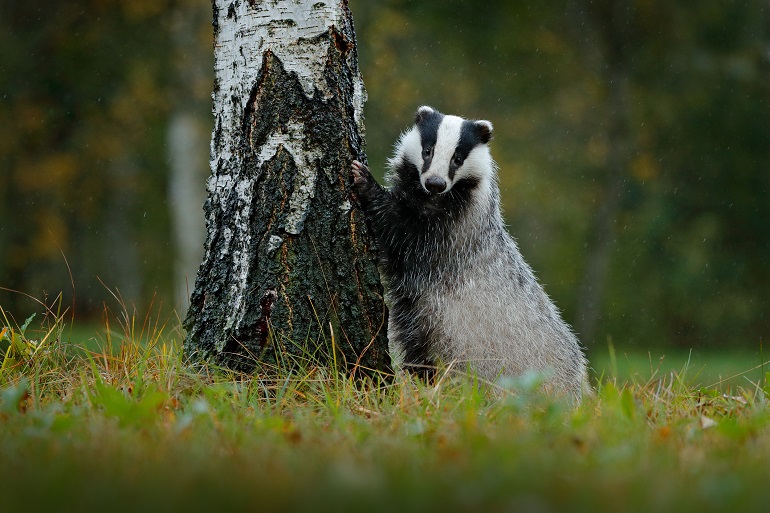
The Black Forest National Park, established on 1 January 2014, is the first national park in Baden-Württemberg. Located in the southwestern part of the country near the French border, it covers an area of 10,062 hectares along the main crest of the Northern Black Forest. The park is divided into two separate areas approximately 3.5 kilometres apart: the Ruhestein area (7,615 hectares) and the High Ochsenkopf/Plättig area (2,447 hectares). With peaks reaching over 1,000 metres in height, including Dreifürstenstein at 1,155 metres, the park offers spectacular views and diverse landscapes. The region experiences approximately 200 rainy days and 180 foggy days annually, with an average snow depth of 60-70 centimetres. This undisturbed natural setting provides habitats for various wildlife, including the peregrine falcon (the fastest bird in the world), the pygmy owl (Europe's smallest owl), deer, pine martens, dormice, wild boar, and the wood grouse, which is the symbolic bird of the Black Forest.
Geography and Landscape
Topography
The park is characterised by its varied terrain, featuring:
- Steep ridgelines
- Densely forested slopes
- Picturesque meadows
- Numerous small creeks and streams
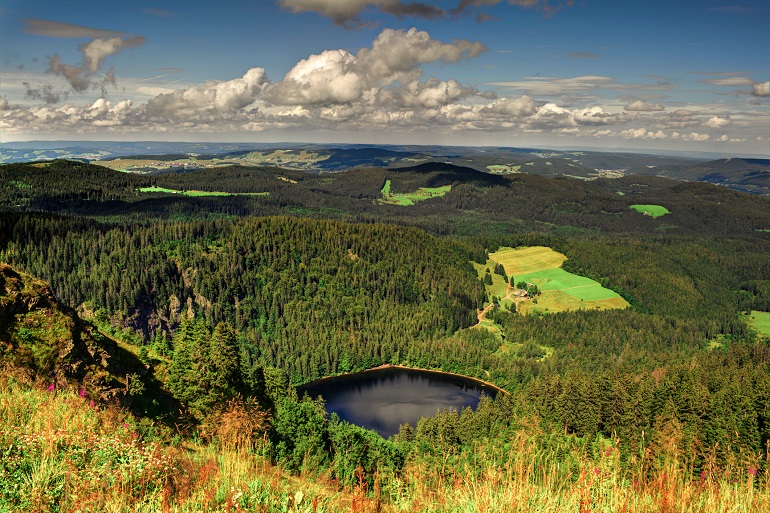
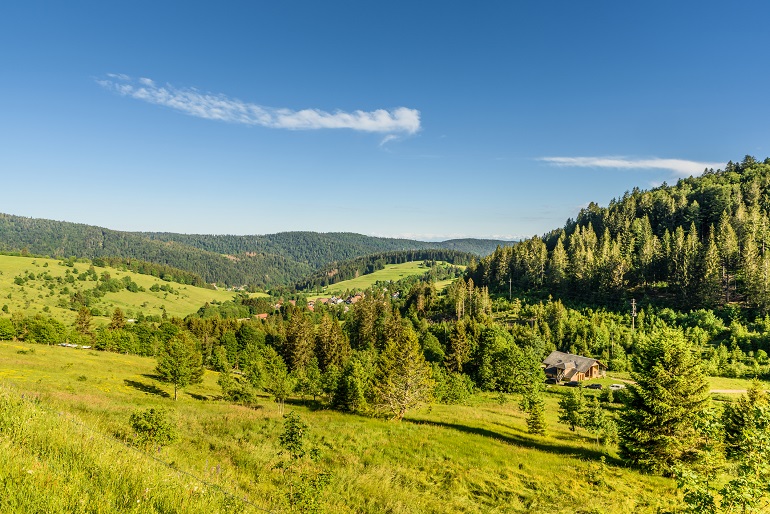
The western edge of the park boasts particularly dramatic elevation changes, with steep slopes rising sharply from the valley floor. In contrast, the eastern edge presents more gradual inclines. Throughout the park, visitors will encounter a series of ridgelines interspersed with forested valleys, creating a captivating landscape.
Water Features
The Black Forest National Park is dotted with various water features that add to its natural beauty:
- Tarns and ponds nestled amidst the ridgelines and valleys
- The headwaters of the Murg River in the southern portion of the park
- Glacial cirques, remnants of the region's ice age past
Elevation and Notable Peaks
The park's elevation ranges from just below 500 metres at its lowest point to over 1,000 metres at its highest peaks. Some of the significant summits within the park include:
- Dreifürstenstein (1,155 m) - The tallest peak in the park
- Badener Höhe (1,003 m) - The most prominent peak
- Hoher Ochsenkopf (1,055 m)
- Vogueskopf
- Altsteigerskopf
Geological Features
The Black Forest National Park sits atop a fascinating geological foundation:
- The park is part of the crystalline bedrock of the Variscan basement
- The eastern and northeastern areas are covered by Bunter Sandstone slabs
- Granite and gneiss formations can be found in the lower valleys
This unique geology contributes to the park's diverse landscape and provides insight into the region's long geological history.
Unique Landscape Elements
The park is home to several distinctive landscape features:
- 'Grinden' - Special heathlands with mountain pines, blueberries, and wild grasses
- Glacial geomorphology, evident in the cirques and tarns scattered throughout the park
- A mosaic of forests, meadows, and pastures that create a harmonious blend of natural and cultural landscapes
Flora and Fauna
Flora
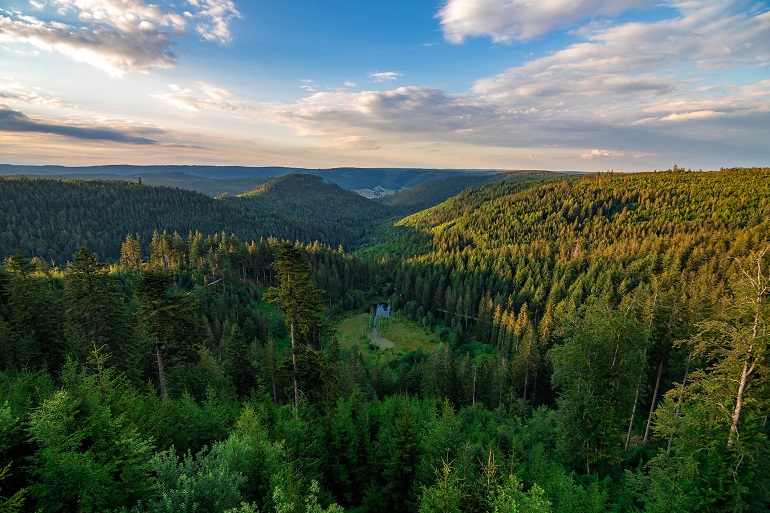
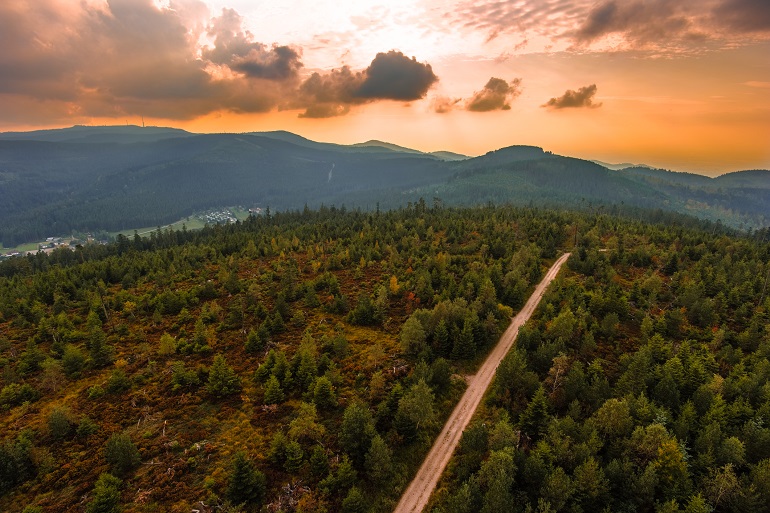
The park's landscape is dominated by a mixed mountain forest, primarily consisting of Norway spruce, silver fir, and European beech trees. This coniferous-deciduous blend creates a lush, green canopy that gives the Black Forest its distinctive character. Amongst the trees, the forest floor is carpeted with various mosses and ferns, thriving in the cool, humid climate and acidic soil.
One particularly noteworthy plant is the rare Braun's holly fern (Polystichum braunii), found in only 15 locations throughout Central Europe. The park also boasts beautiful water lilies that grace the surface of Mummel Lake, adding a touch of elegance to the landscape.
Fauna
The Black Forest National Park is home to an impressive array of wildlife:
Mammals
- Various deer species, including roe deer and red deer
- Wild boar
- Pine martens
- Garden dormice
- Several bat species
Birds
- Wood grouse (capercaillie), the symbolic bird of the Black Forest
- Peregrine falcon, the fastest bird in the world
- Pygmy owl, Europe's smallest owl species
- Woodpeckers, including the rare three-toed woodpecker
- Common crossbill
- Nutcracker
- Red kite
Other wildlife
- Adders (venomous snakes, though bites are extremely rare)
- Various amphibian species in the park's cirque lakes
- Numerous insect species
The park serves as a crucial habitat for many of these species, particularly for birds. It is Europe's most important nesting ground for the wood grouse and provides a sanctuary for various other bird species such as ravens and owls.
Visitors exploring the park might encounter deer grazing in meadows, hear the distinctive sound of woodpeckers in the forest, or spot squirrels leaping between trees. The diverse ecosystem of the Black Forest National Park offers nature enthusiasts and wildlife watchers a truly memorable experience.
Activities and Attractions
The Black Forest National Park offers a wealth of outdoor activities and attractions for visitors seeking to immerse themselves in one of Germany's most enchanting natural landscapes. With over 10,000 hectares of protected wilderness, the park embodies the philosophy of "Let nature be nature," creating a truly wild experience for adventurers.
Hiking Trails
The Black Forest boasts an impressive network of hiking trails that has been maintained for more than 140 years by the Schwarzwaldverein (Black Forest Association). With more than 23,000 kilometres of routes criss-crossing the entire region, hikers of all abilities can find their perfect path.
Long-Distance Trails
Several renowned long-distance hiking trails traverse the national park:
- Westweg (West Trail) - This historic 290-kilometre route from Pforzheim to Basel is Germany's oldest long-distance trail, established in 1900. Split into 12 or 13 daily stages (depending on whether you take the western or eastern variant), it passes through the national park and over the Feldberg, with a total vertical ascent of 8,000 metres.
- Mittelweg (Central Trail) - Starting in Pforzheim, this 230-kilometre trail heads via Freudenstadt and the Nagold and Kinzig valleys towards Triberg with its famous waterfall before continuing south to Waldshut. The route is divided into nine daily stages varying from 13 to 31 kilometres.
- Ostweg (East Trail) - Another trail beginning in Pforzheim, this 245-kilometre path skirts the eastern borders of the Black Forest on its way to Schaffhausen in Switzerland. Established in 1903, it consists of 12 daily stages.
- Murgleiter (Murg Valley Trail) - This 110-kilometre premium trail has been certified by the German Hiking Institute. It offers top-class walking experiences through varied landscapes.
- Schluchtensteig (Gorge Trail) - This spectacular 120-kilometre trail in the southern Black Forest combines seven different gorges over six daily stages of approximately 20 kilometres each.
- Schwarzwald-Querweg Gengenbach–Alpirsbach - This 93-kilometre trail connects the western and eastern edges of the Black Forest, passing through diverse landscapes including the Kinzig Valley and the national park's core zone.
- Hansjakobweg - Named after the famous Black Forest author Heinrich Hansjakob, this trail consists of two routes. The northern route spans 90 kilometres from Haslach to Schapbach, while the southern route covers 57 kilometres from Triberg to Schapbach.
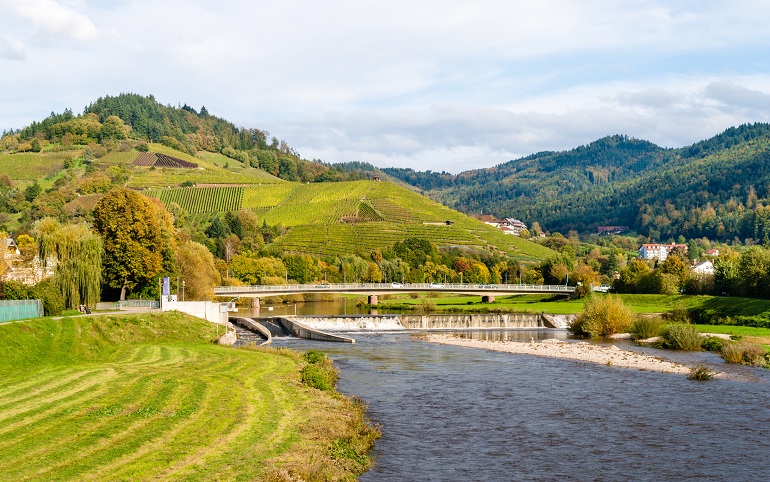
- Ortenauer Weinpfad - Although not entirely within the national park, this 120-kilometre trail offers a unique perspective on the region, winding through vineyards on the western slopes of the Black Forest.
Circular Trails in the National Park
The national park features numerous circular trails that showcase its most beautiful areas:
- Lynx Trail (Luchspfad) - A 4.5-kilometre trail with interactive stations that begins at the lynx hut, where visitors can learn about these elusive predators and even hear their calls.
- Wilderness Trail - This trail takes hikers through dense woodlands that represent the wild heart of the Black Forest.
- Badener Höhe Circular Path - This route passes through dark woodlands on a section of the Waldlehrpfad path and over the Herrenwieser Sattel up to the summit of the approximately 1,000-metre-high Badener Höhe, the second highest peak in the park's northern zone.
- Wildsee View Trail - Beginning at the National Park Centre in Ruhestein, this varied circular path takes visitors over meadows, up to heathlands at Seekopf, and into Baden-Württemberg's oldest protected forest, offering views of the dark Wildsee lake embedded in the peaceful Schönmünztal valley.
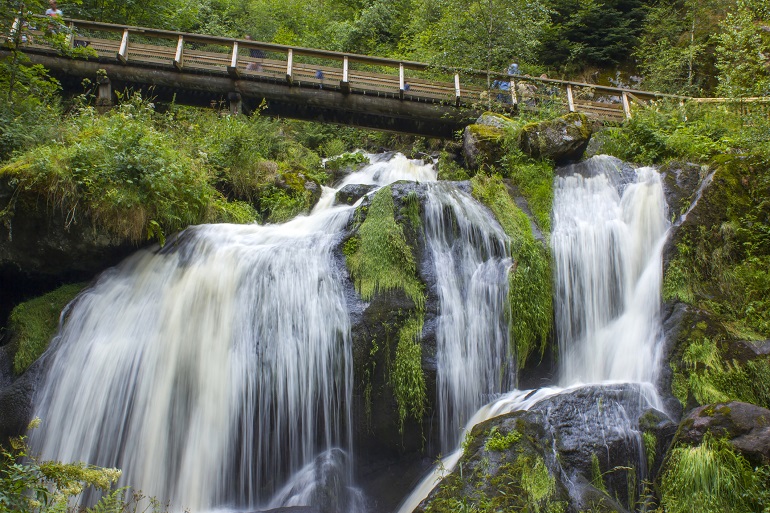
- Allerheiligen Waterfalls Trail - From the Allerheiligen monastery ruins, hikers can follow narrow rocky paths along the largest natural waterfall in the northern Black Forest, where the Lierbach drops a total of 66 metres through granite formations.
- Schliffkopf Loop - From the car park at the Schliffkopf Hotel, this circular route passes through mountain heaths and unspoilt forests, offering wonderful distant views over the blue-green Black Forest hills to the Rhine plain.
- Huzenbacher Lake Trail - This circular route leads into the quiet valley of Lake Huzenbach and up into the wild core zone of the national park, featuring one of the typical cirque lakes of the northern Black Forest.
- Tonbach Valley Trail - From the large car park in Tonbach, this path leads across the quiet valley with meadows and pastures alternating with unspoilt forests, and includes a deer enclosure.
Themed Trails
The national park features several themed trails that offer educational experiences alongside natural beauty:
- Lotharpfad - This 800-metre circular trail showcases the aftermath of Storm Lothar, which devastated parts of the forest in 1999. It provides insights into natural forest regeneration processes.
- Wildnispfad - A 4.5-kilometre trail that immerses hikers in the concept of "wilderness" and the park's philosophy of letting nature take its course.
- Holzweg - This trail focuses on the historical and current uses of wood in the Black Forest, featuring interactive stations and art installations.
Family-Friendly Trails
For those hiking with children, the national park offers several family-friendly options:
- Grinde-Pfad - A short, 2-kilometre trail with interactive stations designed to teach children about the unique Grinde landscape (treeless hilltops) of the Black Forest.
- Märchenweg - This "Fairy Tale Path" near Baiersbronn features sculptures and storytelling stations based on local legends and fairy tales.
- Naturerlebnispfad Ruhestein - A nature experience trail near the National Park Centre, offering hands-on learning about local flora and fauna.
Premium Hiking Experiences
The Black Forest Highlands have been recognised as a premium hiking destination by the German Hiking Institute. These trails feature breathtaking viewpoints, thrilling paths, and immersive nature experiences:
- Rappenfelsensteig - This 12.8-kilometre premium trail leads through the deepest Black Forest, past Kuchelfelsen and over the Rappenfelsen with numerous viewpoints. In good weather, hikers can see as far as the Alps.
- Baiersbronner Himmelsweg: Bannwald-Rund-Tour - This tour through the heart of the national park visits Germany's oldest protected forest, the "Bannwald Wilder See," showing how a "primeval forest of tomorrow" is developing without human influence.
Barrier-Free Options
The national park offers accessible tours for visitors with mobility limitations, ensuring everyone can experience the beauty of the Black Forest. These include trails at Schliffkopf with impressive views and Seekopf, which takes visitors from meadows to the wilds.
Cycling and Mountain Biking
The Black Forest National Park is not just for hikers; it also offers excellent opportunities for cyclists and mountain bikers:
- Schwarzwald-Radweg - This long-distance cycling route covers 230 kilometres, connecting Karlsruhe to Lörrach through the heart of the Black Forest.
- Northern Black Forest Mountain Bike Trail - A challenging 450-kilometre route that circles the northern Black Forest, including sections within the national park.
- E-Bike Routes - The park offers several e-bike-friendly routes, allowing less experienced cyclists to enjoy the mountainous terrain.
Winter Activities
The Black Forest National Park transforms into a winter wonderland during the colder months, offering a range of activities:
- Cross-Country Skiing - The park maintains over 100 kilometres of groomed cross-country ski trails, suitable for both classic and skating techniques.
- Snowshoeing - Guided snowshoe tours are available, allowing visitors to explore the silent, snow-covered forests.
- Winter Hiking - Many of the park's trails are maintained for winter hiking, offering a different perspective on the landscape.
Rock Climbing
For the more adventurous, the national park features several rock climbing areas:
- Battert Rocks - Located near Baden-Baden, these impressive granite formations offer routes for climbers of all skill levels.
- Mummelsee Rocks - A smaller climbing area near the mystical Mummelsee lake, offering a unique combination of climbing and scenic beauty.
Water Activities
While the national park is primarily known for its forests, it also offers some water-based activities:
- Canoeing on the Murg - The Murg River, which flows through the eastern part of the park, offers opportunities for canoeing and kayaking during high water periods.
- Wild Swimming - Some of the park's lakes, such as the Herrenwieser See, are suitable for wild swimming during the summer months.
Cultural and Historical Sites
The Black Forest National Park is not just about nature; it also contains several sites of cultural and historical interest:
- Allerheiligen Monastery Ruins - These atmospheric ruins of a 12th-century monastery offer a glimpse into the region's medieval past.
- Glasmännlehütte - This restored glassmaker's hut provides insights into the historical glass-making industry of the Black Forest.
- Alexanderschanze - A well-preserved 18th-century fortification offering panoramic views and historical interest.
Wellness and Relaxation
The Black Forest has long been known for its health resorts and spas. While not directly operated by the national park, several nearby towns offer wellness experiences:
- Baden-Baden - This famous spa town on the edge of the national park offers thermal baths and wellness centres.
- Bad Wildbad - Another historic spa town, known for its thermal springs and treetop walk.
Photography and Art
The diverse landscapes of the Black Forest National Park provide endless inspiration for photographers and artists:
- Photography Workshops - The park occasionally offers guided photography tours and workshops, focusing on landscape and wildlife photography.
- Plein Air Painting - Many artists visit the park to capture its beauty through painting, with some local accommodations offering special packages for artists.
Stargazing
Due to its relatively low light pollution, the Black Forest National Park is an excellent location for stargazing:
- Hornisgrinde Observatory - Located on the highest peak in the northern Black Forest, this observatory offers public viewing nights.
- Dark Sky Areas - The park has several designated dark sky areas perfect for amateur astronomers and night sky photographers.
Accommodation
Types of Accommodation
Cabins and Chalets
For those looking to embrace the rustic charm of the Black Forest, cabins and chalets are an excellent choice. These accommodations often feature traditional wooden architecture and provide a true Black Forest experience. Many are equipped with modern amenities whilst maintaining their authentic character.
Hotels and Resorts
The area boasts a variety of hotels, ranging from comfortable 3-star establishments to opulent 5-star resorts. Many of these offer panoramic views of the surrounding landscape and provide amenities such as spas, indoor pools, and gourmet restaurants serving local cuisine.
Guesthouses and Pensions
For a more personal touch, consider staying at a guesthouse or pension. These family-run establishments often offer a warm welcome and insider knowledge of the area, perfect for travellers seeking a homely atmosphere.
Location Considerations
When choosing accommodation in the Black Forest National Park, consider the following:
- Proximity to hiking trails and outdoor activities
- Access to public transport
- Views of the surrounding forest or valleys
- Distance to local attractions and amenities
Seasonal Considerations
Accommodation availability and prices may vary depending on the season:
- Summer (June-August): Peak season with higher prices and limited availability
- Winter (December-February): Popular for ski holidays, book in advance for ski resorts
- Spring and Autumn: Quieter periods with potentially lower rates and good availability
Amenities
Many accommodations in the Black Forest offer amenities tailored to outdoor enthusiasts and nature lovers, such as:
- Bike rental services
- Packed lunch options for hikers
- Drying rooms for wet gear
- Information on local trails and attractions
Booking Tips
Consider the following when booking your accommodation:
- Book well in advance for peak seasons and holidays
- Look for packages that include local attractions or activities
- Consider accommodations that offer the "KONUS" card for free public transport in the region
- Check for eco-friendly options if sustainability is important to you
Gastronomy
Traditional Specialities
The Black Forest is famous for its eponymous ham, a protected geographical indication product. This exquisite cured meat undergoes a specific preparation process, involving salting, seasoning with local spices, and cold-smoking using wood from native conifers. The result is a distinctively flavoured ham with a characteristic dark exterior.
Another iconic dish is the Schwarzwälder Kirschtorte, or Black Forest Gateau. This decadent dessert features layers of chocolate sponge cake, whipped cream, and cherries, often soaked in Kirschwasser, a local cherry brandy. It's a perfect representation of the region's love for both chocolate and cherries.
Savoury Delights
The cuisine of the Black Forest is characterised by its use of local, seasonal ingredients. Visitors can savour dishes such as:
- Maultaschen: Large, square ravioli-like dumplings filled with minced meat and herbs
- Spätzle: Egg noodles often served as a side dish or in Käsespätzle, a cheesy variation akin to macaroni and cheese
- Flammkuchen: A thin, crispy tart topped with crème fraîche, onions, and bacon
- Schäufele: Slow-roasted pork shoulder, typically served with potatoes and salad
Game dishes are also popular, with venison and wild boar often featuring on menus, especially during autumn and winter.
Fresh Produce and Seasonal Specialities
The region's farmers' markets offer a wealth of fresh, local produce. During the spring, white asparagus, known as 'white gold', becomes a staple in many dishes. Autumn brings an abundance of mushrooms foraged from the forest floor.
Beverages
The Black Forest is not just about food; it's also known for its excellent drinks. The area produces fine wines, particularly Grauer Burgunder (Pinot Gris) and Spätburgunder (Pinot Noir). For beer enthusiasts, local breweries offer a range of traditional German beers.
No meal in the Black Forest is complete without sampling some of the local spirits. Kirschwasser, a clear brandy made from cherries, is perhaps the most famous. Many small distilleries in the region also produce other fruit brandies, known as Edelbrand, using local fruits like pears, plums, and raspberries.
Dining Culture
Visitors to the Black Forest can experience the region's culinary delights in a variety of settings, from cosy, traditional inns to modern, fine-dining establishments. Many restaurants pride themselves on using locally sourced ingredients and traditional recipes, offering an authentic taste of the Black Forest.
The concept of 'Nature Park Hosts' is prevalent in the region, where restaurants commit to showcasing local products and traditional recipes, providing guests with a true Black Forest culinary experience.
Getting There and Around
By Train
Train travel is an excellent option for reaching the Black Forest. The region is well-connected to major European cities via Germany's efficient rail network.
From Brussels, you can take a train to Karlsruhe, Baden-Baden, or Offenburg, all of which serve as gateway cities to the Black Forest. The journey from Brussels to the Black Forest area takes approximately 7-8 hours depending on your route.
If you're coming from London, you can reach the Black Forest in under 6 hours via high-speed connections. Once in the region, a network of regional rail routes provides access to various parts of the forest.
By Car
Driving is perhaps the most flexible way to explore the Black Forest National Park:
- From the west, the A5 motorway along the Rhine valley provides excellent access, linking Basel with Frankfurt.
- From the north, the A8 motorway connects Karlsruhe to Munich, passing Stuttgart.
- The southern side of the Black Forest can be reached via B roads along the Upper Rhine valley.
The driving distance from Brussels to the Black Forest is approximately 469 km, taking around 4 hours 43 minutes. Road conditions in the region are excellent, well-marked, and easy to navigate, though be prepared for fog and snow in winter months.
For scenic drives, consider following the Black Forest High Road (Schwarzwaldhochstrasse) or the Black Forest Scenic Road (Schwarzwald Panoramastraße), both offering spectacular views.
By Bus
Bus services connect major cities to the Black Forest region. From Brussels, for example, you can take a BlaBlaCar Bus to Strasbourg, then another bus to Baden-Baden, followed by a final bus to destinations within the forest. This journey takes approximately 10 hours 25 minutes and costs between €35-€55.
By Plane
Flying is an option for those coming from further afield:
- Fly to Stuttgart Airport, then take trains to reach the Black Forest.
- Alternatively, fly to Frankfurt Airport and connect via train to the region.
Getting Around the Black Forest
Once in the Black Forest, public transport is quite good for reaching popular hiking destinations like Feldberg. The DB Navigator app is recommended for planning journeys and purchasing tickets.
For maximum flexibility, consider renting a car at one of the gateway cities. This allows you to explore more remote areas and travel at your own pace.
Best Time to Visit
Spring (April to May)
- Nature in Bloom: Late April and early May are ideal for witnessing nature at its best, with trees blooming and the landscape coming alive after winter. This period is perfect for hiking and exploring the park's scenic trails.
- Weather: Spring weather can be unpredictable, with occasional rain and cooler temperatures, especially in the mornings and evenings.
Summer (June to August)
- Peak Season: Summer is the peak tourist season, with warm weather and long days ideal for hiking, biking, and other outdoor activities. However, it can get crowded, especially around popular spots.
- Activities: This is the best time for hiking enthusiasts, as all trails are accessible, and the weather is generally favourable.
Autumn (September to October)
- Foliage and Festivals: Autumn offers vibrant foliage, although the Black Forest is predominantly coniferous, so the colour change is less dramatic than in deciduous forests. It's an excellent time for mountain biking and Nordic walking, with fewer tourists than in summer.
- Cultural Events: The region hosts numerous cultural festivals and traditional festivities during autumn.
Winter (December to February)
- Snowy Landscapes: For those who enjoy winter sports or the serene beauty of snow-covered landscapes, winter is a magical time. Feldberg, with its higher elevation, often has snow from December to February.
- Activities: Skiing and snowboarding are popular in areas like Feldberg, while the snow-covered trails offer a unique hiking experience.
Visiting Tips
- Black Forest National Park Hours: The park is closed on Mondays and has limited hours during winter months (November to April). It also closes on certain holidays.
- Weather Preparation: Always check the weather forecast before visiting, especially in winter or spring, as conditions can be unpredictable.
- Transportation: The easiest way to explore the Black Forest is by car, allowing you to navigate the scenic routes like the Schwarzwaldhochstrasse and Schwarzwald Panoramastraße.
In summary, the best time to visit the Black Forest National Park depends on your preferences:
- For Hiking and Nature: Late spring and early summer.
- For Cultural Events and Autumn Foliage: Late summer to early autumn.
- For Winter Sports: December to February.
Conservation and Responsible Tourism
Conservation Efforts
The park's primary focus is on allowing natural processes to unfold without human intervention. This approach has created a haven for diverse wildlife, including rare species such as the three-toed woodpecker and the garden dormouse. The park is divided into three zones with varying levels of protection:
- Core Zone: Nature reigns supreme here, with only minimal maintenance of paths and visitor facilities.
- Developing Zone: Limited human support is provided until 2044, after which it will be left entirely to nature.
- Management Zone: This area serves as a buffer, protecting neighbouring properties and maintaining cultural landscapes.
Responsible Tourism
The Black Forest National Park offers visitors a unique opportunity to experience wilderness whilst promoting sustainable practices:
- Guided Tours: Park rangers lead educational excursions, allowing visitors to explore the park responsibly.
- Designated Trails: Visitors are required to stick to marked paths for hiking, cycling, and winter sports, ensuring minimal disturbance to wildlife.
- Eco-friendly Accommodation: The park offers sustainable overnight options through the Trekking Schwarzwald programme.
- Educational Programmes: The park provides a range of tours and lectures, with special programmes for schools and groups.
- Strict Visitor Guidelines: Rules include keeping dogs on leads, not removing anything from the park, and proper waste disposal.
Visitor Centres and Educational Facilities
National Park Centre Ruhestein
The crown jewel of visitor facilities is the National Park Centre at Ruhestein, which opened in June 2021. Located 915 metres above sea level amid the wooded slopes of the Black Forest, this architectural marvel was built between 2015 and 2020. The design brilliantly references the surrounding forest, with eight pipe-like structures resembling fallen tree trunks stacked upon each other. The exterior façade features wooden shingle cladding that helps the substantial 3,000 m² complex blend harmoniously into its forest setting.
Inside, visitors are welcomed in a spacious foyer that leads to various facilities including:
- A permanent multimedia exhibition explaining the development of the wild forest
- Various exhibition, training and lecture rooms
- A cinema providing insights into nature conservation
- A café with a sun terrace offering panoramic views of the surrounding treetops
- A shop selling local products
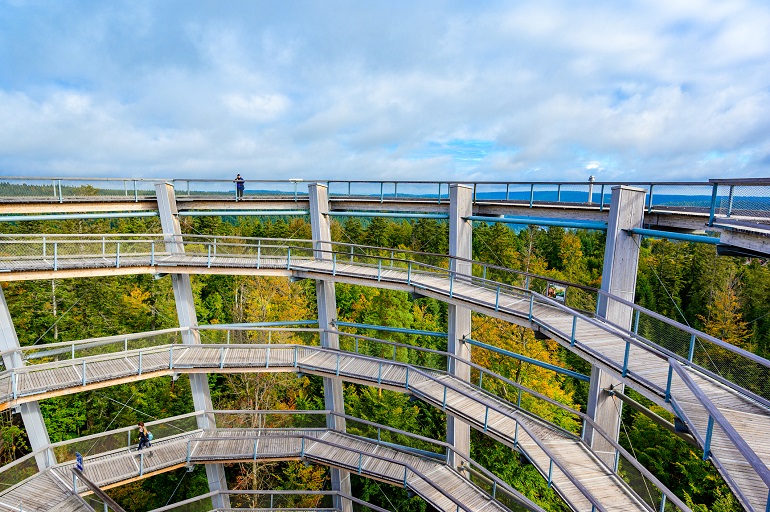
The centre's most striking features include a 65-metre skywalk that allows visitors to walk through the treetops and a 34-metre inclined wooden viewing tower offering spectacular views of the Murg Valley. These elements provide unique perspectives of the forest canopy and surrounding landscape.
Educational Programmes
The Black Forest National Park excels in providing educational experiences for visitors of all ages:
- Guided Ranger Tours: Expert rangers like Florian Hoffmann lead revelatory walks through the forest, helping visitors learn about the rapidly changing natural landscape, identifying flora and fauna, and explaining the importance of deadwood to forest ecosystems.
- Wildlife Education Team: The park offers specialised programmes for kindergartens, school classes and associations to explore the developing wilderness under expert guidance.
- Annual Programme: A wide range of tours and lectures are offered throughout the year, allowing visitors to discover different aspects of the park's ecology and conservation efforts.
School Trips and Educational Tourism
The Black Forest region is particularly well-suited for educational visits:
- Cross-Curricular Studies: Schools can arrange trips focusing on various subjects including environmental science, geography, history, and languages.
- Language Immersion: The area provides an excellent environment for students learning German, offering authentic cultural experiences and opportunities to practice language skills with locals.
- Sustainable Tourism and Ecological Studies: Students can participate in guided eco-tours discussing the flora, fauna, and conservation efforts that make the Black Forest a model of ecological responsibility.
- Interactive Learning: The National Park Centre's exhibits are designed to be interactive and engaging, with varied types of technology to captivate visitors of all ages.
Practical Information
- Opening Times: The National Park Centre is open Tuesday to Sunday (closed Mondays), with hours from 10 am to 5 pm from November to April, and extended hours from May to October.
- Accessibility: Many attractions in the national park and the National Park Centre can be reached via public transport.
- Facilities: The centre includes accessible amenities, with parking available (though note there is a parking fee).
- Payment: Some facilities may accept cash only, so it's advisable to come prepared.
The Black Forest National Park's visitor centres and educational facilities offer a perfect blend of architectural innovation, natural immersion, and educational enrichment, making them essential stops for anyone wishing to understand and appreciate this remarkable wilderness area.