



| Contents |
|---|
Introduction
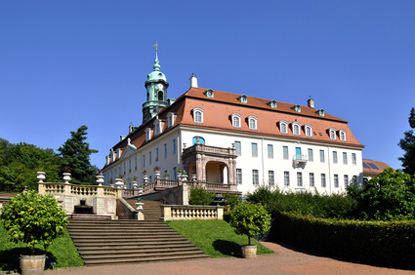
Nestled in the rolling Saxon countryside near Chemnitz, Lichtenwalde Palace stands as one of Germany's most enchanting baroque treasures, captivating visitors with its elegant 18th-century architecture and world-renowned water gardens. This magnificent palace, with its pristine white façade and red-tiled roofs, serves as the perfect backdrop to what is widely considered one of Europe's finest baroque garden complexes, featuring an extraordinary system of cascading fountains, ornate water features, and meticulously manicured terraces that tumble gracefully down the hillside. The palace grounds offer a sublime blend of artistic landscaping and engineering marvel, where over 330 water jets create a symphony of movement and sound amongst sculpted hedges, vibrant flowerbeds, and classical statuary. Originally built as a summer residence for Saxon nobility, Lichtenwalde has been lovingly restored to its former glory, providing modern visitors with an authentic glimpse into the opulent lifestyle of 18th-century aristocracy whilst offering peaceful garden walks, cultural exhibitions, and seasonal events that celebrate both its rich heritage and natural beauty.
Interesting Facts about Lichtenwalde Palace
- Lichtenwalde Palace stands on a rocky spur about 60 metres above the Zschopau Valley, offering commanding views over the river landscape.
- The present Baroque palace was commissioned after 1722 by Count Christoph Heinrich von Watzdorf, replacing earlier medieval buildings on the site.
- Its ten-hectare gardens date from the transition between Baroque and Rococo and are structured along sightlines with terraces and concert spaces.
- The park is famed for an extraordinary ensemble of 335 historical fountains and water features woven through avenues and pavilions.
- The palace complex is often ranked among Germany’s most beautiful historic parks for its design and preservation.
- High-ranking guests, including Saxon kings Albert and Friedrich August III, once stayed in the palace’s so-called King’s Room.
- The Chinese Room and Red Salon are highlights among the restored interiors now presented to visitors.
- After extensive post-war looting and varied GDR-era uses, the site underwent a decade of restoration and reopened as a museum and events venue in 2010.
- Today a “Treasury” museum exhibits European, Asian and West African artefacts across roughly 1,500 square metres.
- The palace and park are managed by a non-profit subsidiary of the Free State of Saxony, which has owned the property since 1990.
- Pillnitz Palace entered electoral hands in 1694 through an exchange involving the Lichtenwalde estate, linking the sites in Saxon history.
- The three-wing palace plan and chapel with a Donati organ reflect a layered architectural story spanning late medieval to Baroque periods.
- The gardens’ sloped setting creates surprising vistas and axial views unique among Saxon Baroque parks.
- Lichtenwalde lies near Chemnitz and remains a popular excursion destination for its heritage, gardens and cultural programming.
- The basic late-Baroque garden structure mapped in 1767 has been carefully reconstructed according to historical models.
History
Lichtenwalde Palace stands as one of Saxony's most magnificent baroque complexes, with an illustrious history spanning over 800 years. The original fortress was constructed by the Margraves of Meissen in the first half of the 13th century on a rocky spur 60 metres above the Zschopau valley. This strategic position made it one of the oldest castles in Saxony, initially built around 1250 during the colonisation period following the discovery of silver ore in the region. After being administered briefly by the empire at the end of the 13th century, the castle returned to the margraves in 1307, who pledged the property and allowed it to change hands numerous times over the subsequent centuries.
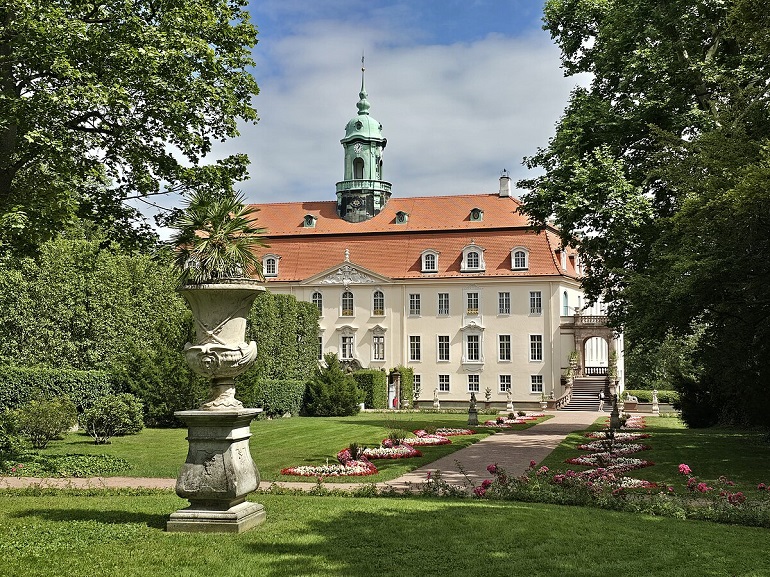
The transformation from medieval fortress to baroque palace began in 1722 when Christoph Heinrich Graf von Watzdorf acquired the estate and commissioned the complete demolition of the old buildings. In their place, he constructed the magnificent baroque castle that visitors see today, creating one of the most beautiful baroque palaces in Saxony with its impressive architecture and opulent interior. The late baroque park was laid out from 1730 onwards on behalf of his son, featuring a sophisticated 10-hectare design with over 400 metres of length, 335 fountains, and numerous visual and path axes that have been preserved according to the historical 1767 park plan. In the second half of the 18th century, ownership passed to the Counts von Vitzthum von Eckstädt, who resided there until their expropriation in 1945. Notably, the castle was exchanged by Elector John George IV in 1694 for Pillnitz Palace, demonstrating its significant value in Saxon royal circles.
The palace's modern history reflects Germany's tumultuous 20th century, having been looted after the Second World War and subsequently used for various purposes during the GDR era, most recently as an educational facility for the state health service. Following German reunification in 1990, the castle became property of the newly founded Free State of Saxony, which remains the owner today. After extensive reconstruction and restoration work lasting a decade, the complex was converted into a museum and event venue, finally reopening to the public in March 2010. The castle chapel, one of the oldest surviving parts dating from the 13th century and renovated in 1622-23, was carefully preserved during the 1722-26 reconstruction and now houses a reconstructed Donati organ that was first played in 2012. Today, the palace showcases magnificent restored rooms including the Red Salon, Green Salon, and Chinese Room, alongside museum exhibitions featuring European, Asian, and West African treasures across 1,500 square metres.
Description
Architectural Grandeur
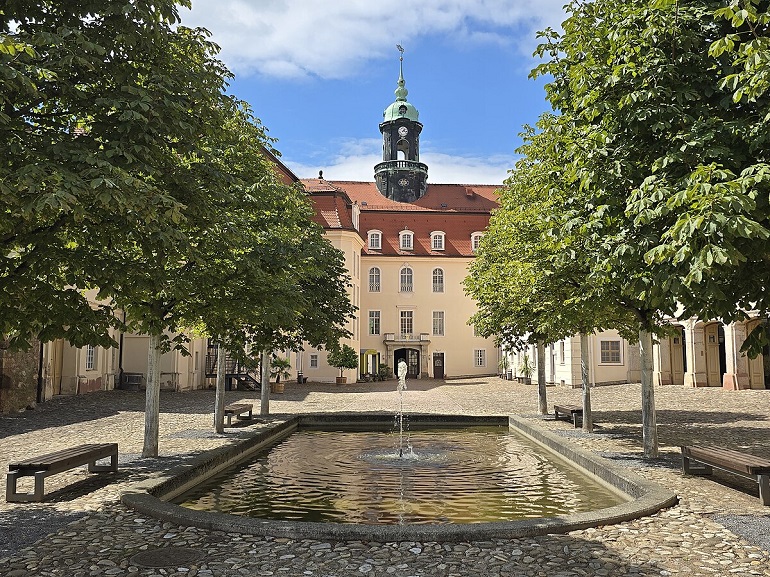
The palace’s exterior presents a harmonious interplay of symmetry and ornamentation. Its central corps de logis is flanked by two slightly lower wings, forming a U-shaped courtyard that would once have welcomed horse-drawn carriages and stately processions. Soft pastel hues accentuate the stucco work, whilst pilasters, festoons and balustraded balconies lend an air of theatrical splendour. Windows crowned with sculpted keystones and an elaborately framed main entrance combine to create a façade that balances noble restraint with baroque flair.
Interior Opulence
Reception and State Rooms
Upon crossing the threshold, visitors find themselves in the grand entrance hall, where rich marble flooring and gold-leaf stuccowork set the tone for the sumptuous interiors that await. The principal reception rooms, arranged enfilade, demonstrate the art of 18th-century display. The lofty High Hall, once a setting for masked balls and musical soirées, features a vaulted ceiling adorned with frescoes of allegorical figures, and ornate doorcases framed by sculpted putti. Opposite this, the Mirror Salon dazzles with its array of gilded mirrors that reflect candlelight to brilliant effect.
Salon Suites
The Red Salon delights with deep crimson draperies, damask wall coverings and carved walnut furniture upholstered in silk brocade. Here, delicate porcelain vases and candelabra complete the scene of aristocratic refinement. Adjoining this, the Green Salon offers a more intimate ambience, its softer hues of pistachio and ivory complemented by botanical motifs in stucco and tapestry. Every room is punctuated by portraits of former residents, their ornate frames seamlessly integrated into the decorative scheme.
The Chinese Room and Rococo Fantasia
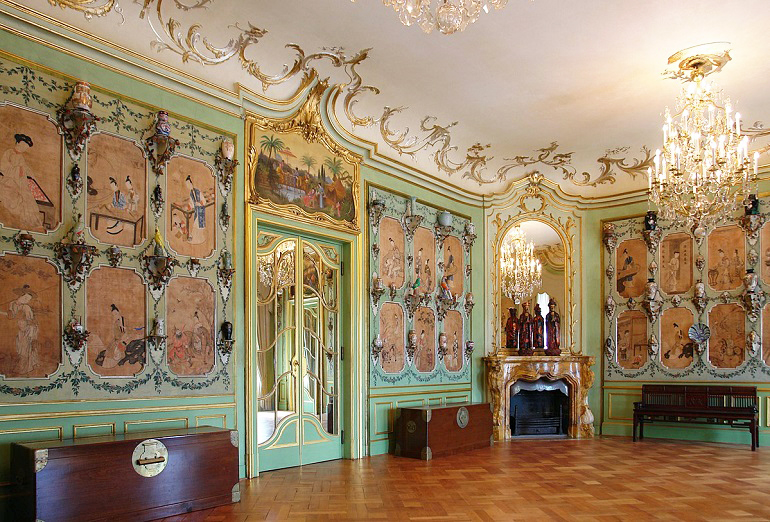
A highlight of the interior is the Chinese Room, the palace’s jewel of chinoiserie. Panelled walls bear intricate lacquered décor, pagoda-style motifs and latticed glazing that evoke an exotic Far Eastern pavilion. The furniture—ebony chairs, lacquer cabinets and mother-of-pearl inlaid tables—was imported from Asia and remains arranged as it would have been in the mid-18th century, creating an immersive, almost theatrical environment.
Chapel and Musical Heritage
Tucked discreetly within the southern wing lies the palace chapel, a serene sanctuary characterised by its vaulted ceiling, Rococo stucco angels and delicate pastel painting. Its focal point is an elegantly carved altarpiece, while pews of polished oak offer seating for private devotions. Above, the historic Donati organ, restored to full splendour, occasionally fills the air with baroque compositions, providing a glimpse into the musical traditions that once authorised noble worship.
Treasury Museum and Collections
Lichtenwalde’s Treasury Museum occupies several adjacent rooms, each dedicated to a particular area of collecting passion. One gallery displays fine examples of Chinese porcelain and Japanese kutani ware, their glazed surfaces glimmering under low-angle lighting. Another showcases neoclassical enamels and richly embroidered silks, while a third holds ritual masks and ceremonial objects from Nepal, Tibet and West Africa, testament to the era’s burgeoning interest in global artefacts. A further chamber houses the palace’s celebrated silhouette collection—Germany’s largest—presenting over a thousand delicate cut-paper portraits that chart the fashions and physiognomies of centuries past.
The Baroque Park and Gardens
Mastery of Water and Sculpture
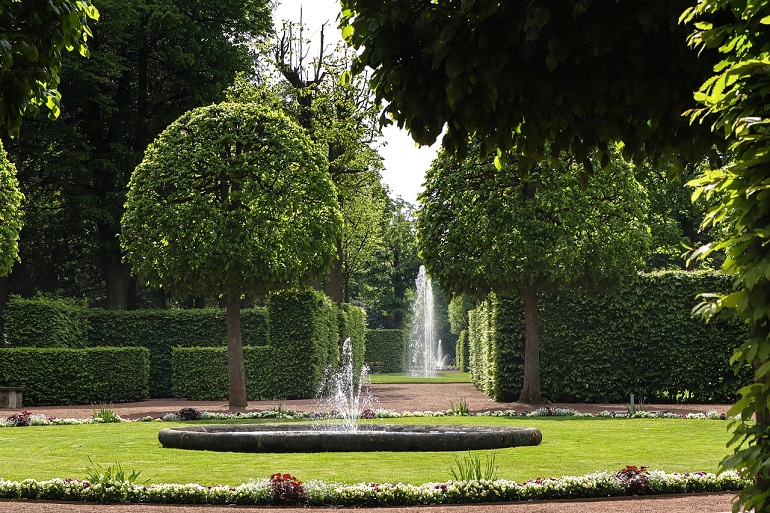
Encompassing some ten hectares, the palace grounds unfold in a series of sculpted terraces, each enlivened by water. A sophisticated hydraulic system, still entirely gravity-fed, animates 335 historical fountains, cascades and jets. The crowning glory—the Seven Arts Fountain—features allegorical figures carved from sandstone, each representing a different discipline, arranged in a graceful circle around a central basin. Nearby, a playful Dolphin Fountain arcs water into ornamental basins, giving a lighthearted twist to the otherwise formal layout.
Hundreds of smaller jets animate balustrades and retentions walls, while hidden spouts surprise visitors as they wander along gravelled paths. The crystalline sound of water murmuring across stone creates an ever-present soundtrack that unites the gardens into a living baroque theatre.
Terraces, Vistas and Garden Rooms
Rather than imposing a rigid, geometric design upon the steeply inclined terrain, the garden’s creators embraced the natural contours, subdividing the slope into a sequence of terraces linked by elegant stairways. Stone balustrades adorned with urns, vases and mythical creatures line the edges, while clipped yew hedges carve out intimate garden rooms. Each terrace presents a distinct tableau: parterres of scented lavender and rosemary; fragrant rose borders; and beds of vibrant annuals arranged in swirling patterns.
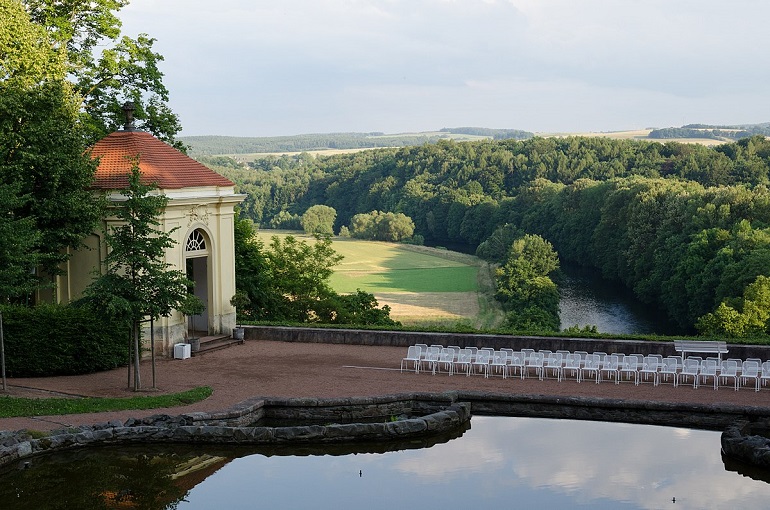
At key viewpoints, raised platforms offer sweeping panoramas of the valley below, framed by ornamental urns and classical sculptures. These vantage points were intentionally positioned to allow the palace to remain visually connected to its landscape, reinforcing the baroque principle of unity between architecture and nature.
Follies, Pavilions and Themed Spaces
A charming Swiss Cottage folly, complete with rustic wooden beams and a small thatched roof, sits nestled among trees, evoking a pastoral idyll. Close by, a circular pavilion replete with Corinthian columns and a domed roof once served as a summer concert hall for intimate chamber performances. Elsewhere, a Hedge Maze offers a playful diversion, whilst tucked-away benches and secluded alcoves invite quiet reflection amid sculpted hedges and shaded groves.
Seasonal Splendour and Cultural Events
The palace and its grounds take on different characters throughout the year. In spring, tulips, hyacinths and irises carpet the parterres in pastel hues; summer brings a riot of roses, peonies and lavender; autumn cloaks the terraces in warm golds and russets; and in winter the skeletal forms of statues and fountains stand in stark relief against frost-tipped foliage.
A lively programme of concerts, theatrical performances and art exhibitions animates the palace throughout the season. The vaulted High Hall, with its superb acoustics and baroque splendour, hosts chamber music evenings under candlelight, whilst the open-air pavilion provides a charming setting for summer recitals. Seasonal fêtes, such as the midsummer fountain theatre—where water displays, music and light combine—celebrate the palace’s heritage in immersive spectacle.
Getting There
By train The easiest rail route is via Chemnitz: take a regional service from Dresden, Leipzig or elsewhere to Chemnitz Hauptbahnhof, then continue on a local train to Niederwiesa or Flöha; from Niederwiesa it’s roughly 2 km to the palace, reachable on foot via signposted paths across the Zschopau valley, or by a short local bus or taxi ride.
By coach or bus Long-distance coaches serve Chemnitz; from the coach station or Hauptbahnhof, transfer to a regional bus towards Niederwiesa/Flöha and alight at the nearest stop for Lichtenwalde, then walk uphill following the brown tourist signs; regional buses from Freiberg and other nearby towns also connect along the B173 corridor.
By car Lichtenwalde lies just east of Chemnitz near the A4: exit at Chemnitz-Ost or Frankenberg and follow the B173 towards Niederwiesa/Flöha, then the brown “Schloss Lichtenwalde” signs into the village; designated car parks are signposted by the palace and gardens—use these rather than the narrow residential streets.
Best Time to Visit
The best time to visit Lichtenwalde Palace is during the spring and summer months, particularly from May through September, when the weather is mild and pleasant. Spring brings blooming flowers throughout the expansive baroque gardens, making it an ideal time to experience the full beauty of the meticulously maintained park with its elegant terraces, winding paths, and ornate sculptures. The warmer months of June through August offer comfortable temperatures ranging from 11-22°C, perfect for leisurely strolls through the palace grounds and exploring the formal garden designs and wooded areas. September also provides excellent visiting conditions with mildly cool weather, whilst autumn brings its own charm to the landscape. During these seasons, visitors can fully appreciate both the baroque castle's magnificent architecture and the surrounding park in full bloom, particularly as the extensive meadows and flower beds are at their most spectacular.