



| Contents |
|---|

Introduction
Nuremberg (pop. 545,000; metro 3.6 million), the second-largest city in Bavaria with 545,000 inhabitants, combines medieval heritage with modern urban life. The city sits on the Pegnitz River and features the Nuremberg Castle, a medieval fortress built around 1140 that dominates the skyline. As the unofficial capital of the Franconia cultural region, Nuremberg forms an urban area with neighboring cities Fürth, Erlangen, and Schwabach, encompassing approximately 3.6 million inhabitants. The city offers 54 different museums, including the Germanic National Museum which houses 1.3 million cultural artifacts. While 90% of the town was destroyed in 1945, many medieval-style areas were carefully rebuilt using the original stones, preserving the city's historical character. Modern Nuremberg features Germany's first driverless subway lines and Bavaria's second-busiest airport, making it both a significant cultural destination and a vital transportation hub.
Nuremberg was the unofficial capital of the Holy Roman Empire, the seat of the Imperial Diet, and residence of numerous Kings of Germany. It is also where the Imperial regalia was kept.
Interesting Facts about Nuremberg
- The city’s imposing Kaiserburg (Nuremberg Castle) was a key imperial residence where every Holy Roman Emperor stayed between 1050 and 1571.
- The Golden Bull of 1356 required newly elected German kings to hold their first Imperial Diet in Nuremberg, cementing its political importance.
- Nuremberg kept the Imperial Regalia permanently from 1423 until 1796, underscoring its central role in the Holy Roman Empire.
- The city is famed for its medieval walls and towers, which still encircle much of the old town and remain remarkably well preserved.
- The Hauptmarkt hosts the Gothic Frauenkirche and the ornate Schöner Brunnen, whose lucky ring is said to bring good fortune to those who spin it.
- Nuremberg’s Christkindlesmarkt on the main square is one of Germany’s most renowned Christmas markets.
- The Germanisches Nationalmuseum, Germany’s largest museum of cultural history, is a flagship institution in Nuremberg.
- The city features the Kettensteg, considered the first chain bridge on the European continent.
- Nuremberg was the site of the post-Second World War Nuremberg Trials at the Palace of Justice, a milestone in international law.
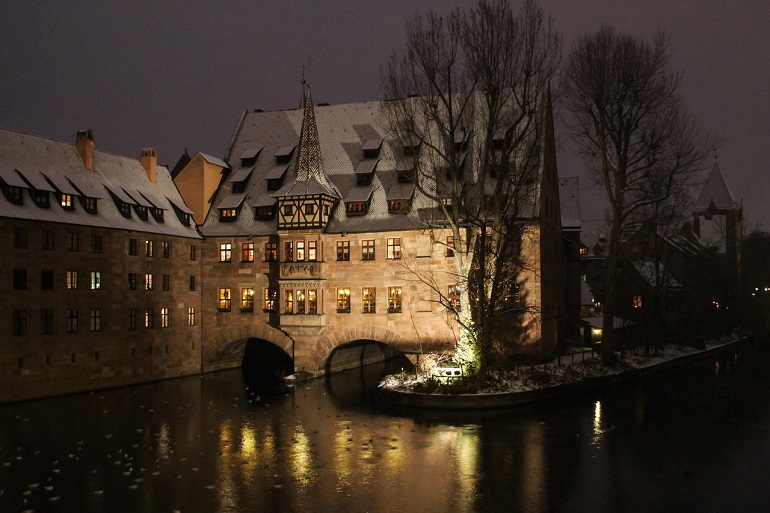
- The Heilig-Geist-Spital, founded in 1332 on the Pegnitz, was among the largest medieval hospitals and now houses a home and restaurant.
- Nuremberg’s old town pairs half-timbered houses and stone bridges over the Pegnitz with a castle skyline that defines the city’s character.
- The deep well and Sinwell Tower at the castle are signature features, the latter offering panoramic views over the historic centre.
- The city’s Nazi Party Rally Grounds and documentation centre present a stark record of twentieth-century history.
- Nuremberg’s railway heritage includes the German National Railways Museum, an anchor site on the European Route of Industrial Heritage.
- The Gothic Lorenzkirche dominates the southern old town with intricate stonework and stained glass dating to the 13th–14th centuries.
- The Hauptmarkt is also celebrated for Nuremberg gingerbread, a sweet tradition entwined with the market’s history.
- Nuremberg rose as a powerful trading hub from the 12th century due to its strategic position on key medieval trade routes.
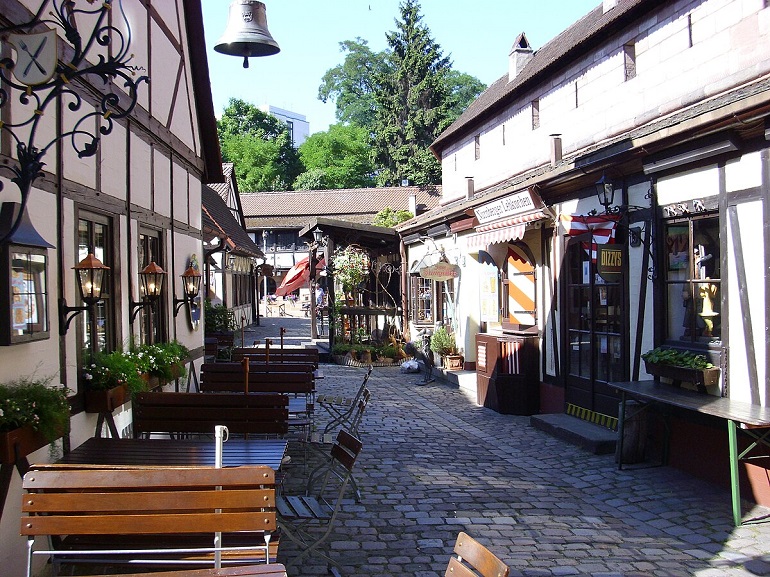
- The old town includes Handwerkerhof, a small quarter evoking traditional craft workshops within the city walls.
- Albrecht Dürer’s legacy endures here, with his home and grave among the city’s cultural touchstones.

History
Nuremberg's recorded history begins in 1050, when the city was first documented as the location of an imperial castle between East Francia and the Margraviate of the Nordgau of Bavaria. The city's strategic position on key trade routes between Italy and Northern Europe propelled its rapid expansion and rise to prominence from 1050 to 1572. King Conrad III established the Burgraviate of Nuremberg between 1137 and 1152, with the first burgraves coming from the Austrian House of Raabs. Following the extinction of their male line around 1189, the burgraviate passed to Frederick I of the House of Hohenzollern in 1193. By 1219, Emperor Frederick II granted Nuremberg the Great Charter of Freedom, bestowing town rights, Imperial immediacy, coin-minting privileges, and independent customs policy, effectively removing the city from burgrave control. This elevated status made Nuremberg, alongside Augsburg, one of the two great trade centres on the vital Italy-Northern Europe route.
The 14th century marked Nuremberg's golden age and largest period of growth. Charles IV's Golden Bull of 1356 designated Nuremberg as the mandatory location where newly elected kings of Germany must hold their first Imperial Diet, establishing it as one of the three most important cities of the Holy Roman Empire. The city became an unofficial capital of the Empire, hosting the Imperial Diet from 1211 to 1543, making it one of the most frequent sites after Regensburg and Frankfurt. In 1423, Emperor Sigismund of Luxembourg granted the Imperial regalia to be kept permanently in Nuremberg, where they remained until 1796 when advancing French troops necessitated their removal. The city flourished as the centre of the German Renaissance during the 15th and 16th centuries. In 1525, Nuremberg embraced the Protestant Reformation, and in 1532, the Nuremberg Religious Peace was signed there, preventing war between Lutherans and Catholics for 15 years. However, the city's prominence began to wane during the Thirty Years' War (1618-1648), when frequent quartering of soldiers, financial costs, and cessation of trade caused irreparable damage and nearly halved the population.
Following the Napoleonic Wars, Nuremberg experienced a revival as Bavaria incorporated the city in 1806 under the Treaty of Confederation of the Rhine. The city's transformation into a modern industrial centre began with the opening of Germany's first railway, the Bavarian Ludwigsbahn connecting Nuremberg to nearby Fürth, in 1835. By 1852, the population had grown to 53,638 inhabitants, comprising 46,441 Protestants and 6,616 Catholics. The city's industrial development accelerated throughout the 19th century, and by 1905, the population had reached 291,351, including 86,943 Catholics, 196,913 Protestants, 3,738 Jews, and 3,766 members of other religions. During the 20th century, Nuremberg gained infamy as a favoured location for Nazi Party rallies, with Hitler particularly drawn to the city's former status as an Imperial Roman City. The city suffered extensive bombing during World War II but was subsequently rebuilt to preserve its medieval heritage. Post-war, Nuremberg became internationally known as the site of the Nuremberg Trials, where Nazi war criminals were prosecuted.
Main Attractions
Altstadt (Old Town)
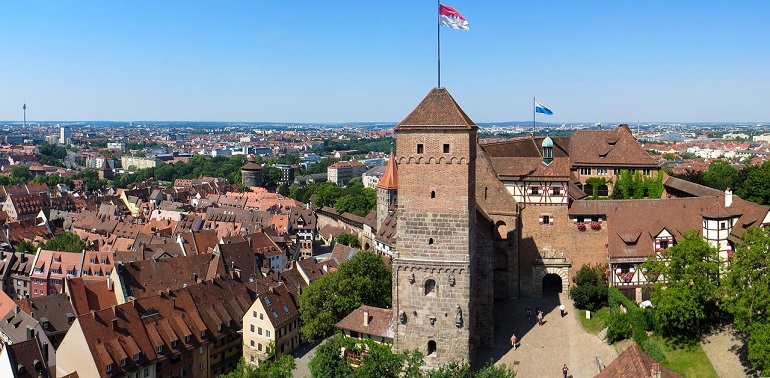
Nuremberg's extensive Altstadt, or Old Town, is a captivating district that exudes medieval charm, enclosed by ancient fortifications. Divided by the Pegnitz River into two main sections, St. Lorenz to the south and St. Sebald to the north, the area is a maze of cobblestone streets, picturesque squares, and historic buildings. While significant portions were damaged during the Second World War, meticulous restoration has preserved its historical character, blending original structures with faithful reconstructions. The Old Town is the vibrant heart of the city, where visitors can explore architectural treasures like half-timbered houses, wander through lively market squares, and enjoy the numerous shops and traditional Franconian restaurants that line its atmospheric lanes.

City Walls (Stadtmauer)
Encircling the entire Old Town is one of Europe's most formidable medieval defensive systems, the Nuremberg City Walls. Originally constructed between the 12th and 16th centuries, the stone ramparts stretch for about four kilometres and are punctuated by numerous gates and towers. Of the original 183 towers, 71 still stand, including the four massive, round gate towers at Laufer Tor, Frauentor, Spittlertor, and Neutor which mark the main entrances into the city. A walk along sections of the wall offers fantastic views and a tangible sense of the city's historical importance and its need for robust protection. The fortifications, integrated with the Imperial Castle at their northernmost point, remain a defining feature of Nuremberg's skyline.

Imperial Castle of Nuremberg (Kaiserburg)
The Imperial Castle of Nuremberg stands as one of Europe's most significant surviving medieval fortresses, perched majestically atop a sandstone ridge overlooking the city. Dating back nearly 1,000 years, this imposing complex served as the residence of all legitimate German kings and emperors from 1050 to 1571, making it one of the most important imperial palaces of the Holy Roman Empire. Visitors can explore the castle grounds freely or delve deeper with a museum tour showcasing Nuremberg's rich history. The complex includes the Imperial Stables from 1495 (now a youth hostel), the Pentagonal Tower dating from 1040, and the magnificent Palas quarters featuring a unique double chapel from the early 13th century. The castle's Deep Well plummets 50 metres into the sandstone, accessible only via guided tours every half hour, whilst the Sinwell Tower provides breathtaking panoramic views across the city. The Castle Gardens, with roots tracing back to 1525, offer an attractive space for contemplation amidst the historical grandeur.

Hauptmarkt (Main Market Square)
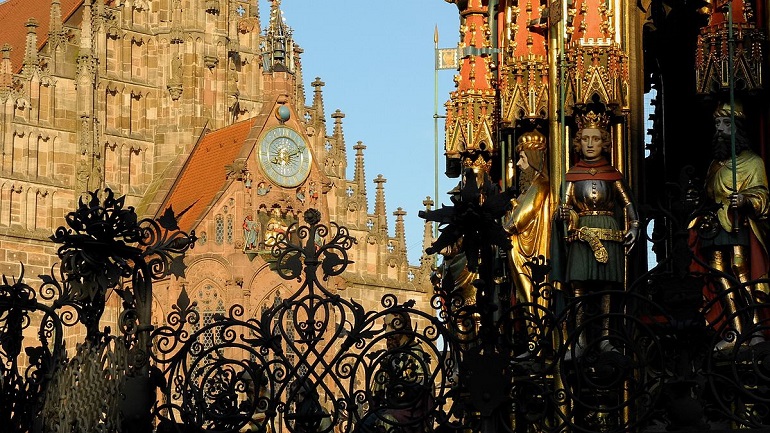
The Hauptmarkt serves as Nuremberg's traditional city centre and has hosted daily markets for centuries, continuing this vibrant tradition today. The square features the magnificent Schöner Brunnen (Beautiful Fountain) from the 14th century, an ornate Gothic structure adorned with decorative figures and featuring the famous brass rings that visitors touch for good luck or fertility according to local legend. The square also houses the Gänsemännchen Fountain from 1555, depicting a Franconian peasant carrying geese with water flowing from their beaks. Surrounding the square, visitors find St. Giles' Church (the city's only Baroque church), the Old Town Hall with its impressive doorways and historic dungeons, and the newer 20th-century municipal building. The Hauptmarkt transforms each December into the setting for the renowned Nürnberg Christkindlesmarkt, one of Europe's most popular Christmas markets attracting over a million visitors annually.
Frauenkirche (Church of Our Lady)
The Frauenkirche stands as a Gothic masterpiece on Nuremberg's main square, completed in 1362 and serving as both a spiritual centre and architectural landmark. The church's façade features the famous Männleinlaufen, a mechanical clock installed in 1506 where figures representing the seven Electors pace around Emperor Charles IV daily at noon. The interior, originally designed with imperial attendance in mind, showcases the Tucher Altar from 1440 and handsome monuments by Adam Kraft. The church serves as the focal point for Nuremberg's world-famous Christmas Market, where the Christkind officially opens the festivities from the church entrance. The building exemplifies Gothic church architecture whilst maintaining its role as an active Catholic parish, welcoming visitors to daily mass and providing a serene space for reflection amidst the bustling market square.
Medieval Dungeons (Mittelalterliche Lochgefängnisse)
The Medieval Dungeons beneath Nuremberg's Town Hall offer guided tours through twelve preserved prison cells and a torture chamber, providing insight into medieval justice systems. These authentic underground chambers served as the city's main detention facility for centuries, housing prisoners awaiting trial or serving sentences. The well-preserved cells demonstrate the harsh conditions of medieval imprisonment, whilst the torture chamber displays authentic implements used in interrogation and punishment. Guided tours explain the legal processes of medieval Nuremberg, including the roles of judges, executioners, and various officials in the justice system. The dungeons represent one of the best-preserved examples of medieval judicial facilities in Germany, offering visitors a sobering glimpse into historical criminal justice practices.
Weissgerbergasse (Tanners' Lane)
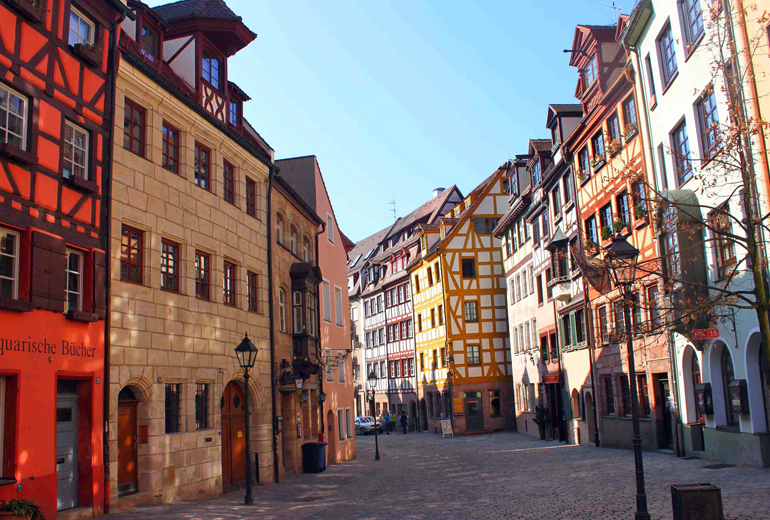
Weissgerbergasse represents one of Nuremberg's most photographed streets, lined with perfectly preserved medieval half-timbered houses that once housed the city's leather tanners. This narrow cobblestone lane showcases authentic medieval architecture, with buildings dating from the 15th and 16th centuries featuring distinctive timber framing and traditional craftsmanship. The street's name derives from the white leather tanners who worked here, processing fine leather goods that made Nuremberg famous throughout medieval Europe. Today, the buildings house shops, restaurants, and small businesses, maintaining the street's commercial character whilst preserving its historical appearance. The lane provides an excellent example of medieval urban planning and demonstrates how historical districts can successfully blend preservation with modern commercial use.
Henkersteg (Hangman's Bridge)
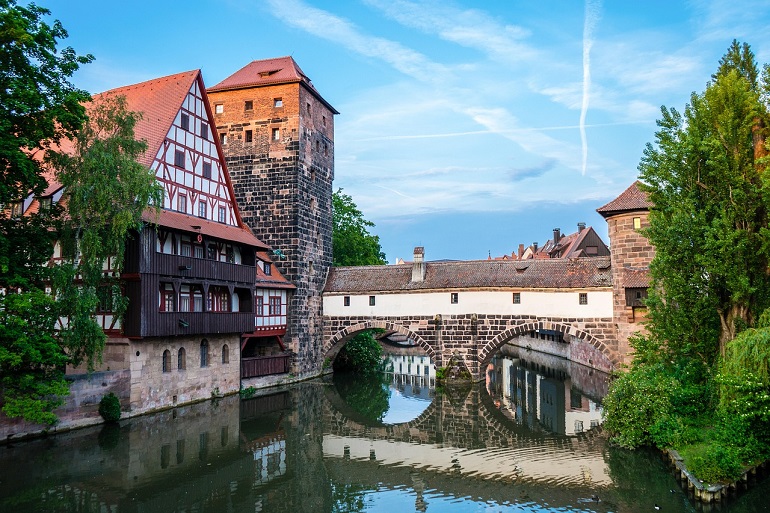
The Henkersteg spans the Pegnitz River as a historic pedestrian bridge offering picturesque views of the old town and surrounding medieval architecture. This charming wooden bridge connects different areas of the old town whilst providing an ideal vantage point for photography enthusiasts. The bridge's name references its historical association with the city's executioner, who once lived nearby in a house that came with the position. Modern visitors appreciate the bridge's romantic atmosphere, enhanced by colourful love locks attached to its railings by couples seeking to symbolise their commitment. The bridge's position over the gently flowing Pegnitz River creates perfect reflections of the surrounding medieval buildings, making it a favourite spot for both professional photographers and casual tourists seeking memorable images of Nuremberg's timeless beauty.
Heilig-Geist-Spital (Hospital of the Holy Spirit)
The Heilig-Geist-Spital is one of Nuremberg's most picturesque and historically significant landmarks, renowned for its beautiful medieval architecture that extends over the Pegnitz River. Founded in 1339 by the wealthy patrician Konrad Gross, it was originally established as the largest hospital in the Free Imperial City to care for the sick, elderly, and needy. Beyond its function as a hospital, its chapel gained immense importance as the secure depository for the Imperial Regalia, including the crown jewels of the Holy Roman Empire, from 1424 until 1796. The distinctive bridge-like section was added in the early 16th century, creating the iconic view admired today. While much of the original complex was damaged in the war, the surviving structures now house a restaurant offering views over the river, as well as a home for senior citizens, continuing its legacy of care in a new form.
Handwerkerhof (Craftsmen's Courtyard)
The Handwerkerhof recreates the atmosphere of medieval Nuremberg within a charming complex of traditional workshops and rustic restaurants. This unique attraction showcases authentic traditional crafts, allowing visitors to observe skilled artisans practising time-honoured techniques such as pewter work, glassblowing, leather crafting, and toy making. The courtyard's small shops focus specifically on traditional Bavarian craftsmanship, offering visitors the opportunity to purchase genuine handmade items as souvenirs. The on-site restaurants serve hearty Franconian cuisine in an authentic medieval setting, complete with traditional décor and regional specialities. This immersive experience provides insight into the artisanal traditions that made Nuremberg famous throughout medieval Europe, particularly its renowned toy-making and metalworking industries.
St. Sebaldus Church (Sebalduskirche)
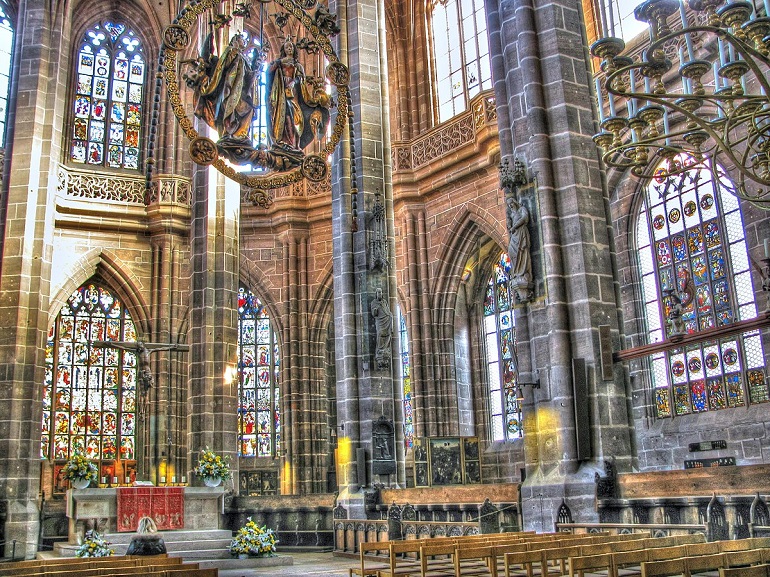
St. Sebaldus Church represents one of Nuremberg's finest examples of Gothic architecture, built between 1225 and 1273 with a magnificent east choir added in 1379. The church houses remarkable artistic treasures, including the Schreyer-Landauer tomb by Adam Kraft and the famous tomb of St. Sebaldus from 1508, a bronze masterpiece created by Peter Vischer and his sons. The church's interior features the Madonna in an Aureole dating from 1420, whilst the east choir contains a silver sarcophagus from 1397 holding the saint's remains. Other highlights include a Crucifixion group by Veit Stoss from 1507 and an impressive organ with 6,000 pipes. The church offers private tower tours twice weekly, providing spectacular views over the old town for those fortunate enough to secure limited spaces.
Lorenzkirche (St. Lawrence's Church)
Dominating the southern part of the Old Town, the Lorenzkirche is a magnificent example of High Gothic architecture and one of Nuremberg's most important ecclesiastical buildings. Construction began around 1243, and its impressive twin-towered west facade greets visitors with an immense and intricate rose window, known as the "Star of St. Lorenz". The interior is a treasure trove of religious art, most notably the monumental stone tabernacle masterfully carved by Adam Kraft and the "Angelic Salutation," an intricate woodcarving by Veit Stoss suspended from the vaulting of the choir. Despite damage during the war, the church was painstakingly restored and continues to serve as a prominent Lutheran parish and a testament to the faith and wealth of Nuremberg's citizens during the Middle Ages.
The Way of Human Rights (Straße der Menschenrechte)
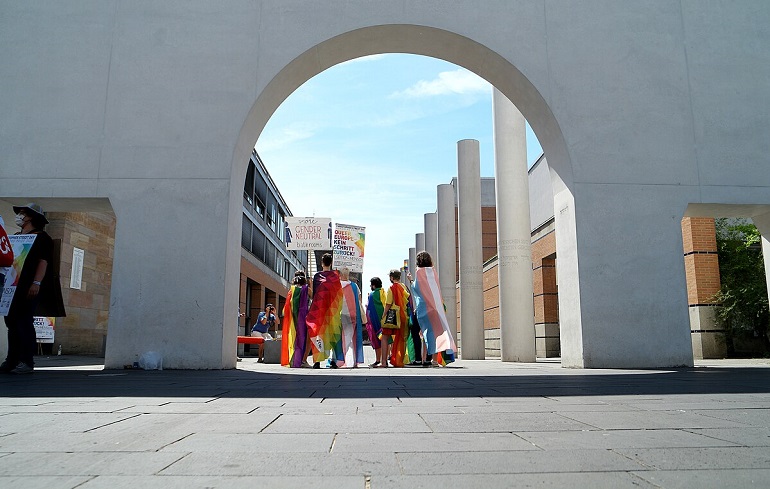
As a powerful statement of Nuremberg's transformation from its Nazi-era reputation to a "City of Peace and Human Rights," the Way of Human Rights is an impactful outdoor monument. Conceived by Israeli artist Dani Karavan and inaugurated in 1993, this installation is located on Kartäusergasse, leading to the Germanisches Nationalmuseum. The monument consists of a grand entrance gate and 29 pillars, each engraved with one article of the Universal Declaration of Human Rights in German and another language. This striking memorial serves as a permanent and thought-provoking reminder of the fundamental rights afforded to all people and repudiates the city's dark past, symbolising its modern commitment to justice and peace.
Nuremberg Zoo
Nuremberg Zoo offers a naturalistic experience within a forested setting, housing diverse species including ibex, lions, zebras, polar bears, and marine mammals. The zoo emphasises conservation and education, featuring spacious enclosures that replicate natural habitats as closely as possible. Particularly notable are the polar bear facilities and the extensive African savanna exhibit where visitors can observe zebras and other plains animals. The zoo's design integrates seamlessly with the surrounding landscape, utilising the natural topography to create immersive environments for both animals and visitors. Family-friendly amenities include playgrounds, educational programmes, and special birthday party options, making it an ideal destination for visitors of all ages seeking to connect with wildlife in a responsible, educational setting.
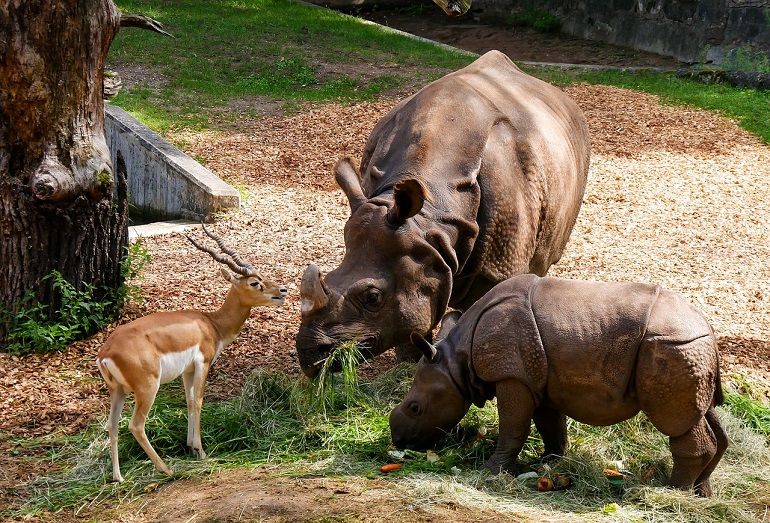
Historic Rock-Cut Cellars (Felsengänge)
Beneath Nuremberg's streets lies a labyrinthine network of historic rock-cut cellars that served various purposes throughout the centuries, including historic beer brewing. These fascinating underground passages, carved directly into the sandstone beneath the city, offer guided tours that reveal the ingenuity of medieval Nuremberg's inhabitants. The cellars maintained consistent cool temperatures ideal for storing beer, making them essential to the city's brewing tradition. Modern tours include various themes, from historical exploration to the famous beer brewing heritage that made Nuremberg renowned throughout the German states. The atmospheric underground chambers provide a unique perspective on daily life in medieval times, showcasing how residents adapted to their environment through remarkable engineering.
Historic Art Bunker (Historischer Kunstbunker)
The Historic Art Bunker provides fascinating guided tours through maze-like tunnels beneath Nuremberg Castle that served as air-raid shelters and art repositories during World War II. These remarkable underground chambers protected invaluable artworks and cultural treasures from Allied bombing, including pieces from major German museums and private collections. The tours reveal the complex logistics involved in safeguarding cultural heritage during wartime, showcasing how curators and officials worked to preserve artistic legacies for future generations. The bunker's multiple levels and chambers demonstrate the extensive planning required to protect both people and priceless cultural artifacts. Advance booking is recommended due to the popularity of these unique historical tours that combine wartime history with cultural preservation efforts.
Bürgermeistergarten
The Bürgermeistergarten provides a picturesque respite within the city, featuring carefully maintained landscaping, colourful flower beds, and spectacular views over Nuremberg's old town. This charming park offers visitors peaceful walking paths amidst seasonal plantings that change throughout the year, creating different visual experiences across seasons. The garden's elevated position provides excellent photographic opportunities, particularly of the medieval city walls and historic buildings. Well-maintained paths make the garden accessible to visitors of all ages and mobility levels, whilst strategically placed benches invite contemplation and relaxation. The park serves as a popular spot for locals and tourists alike, offering a tranquil escape from the bustling city streets whilst maintaining proximity to major attractions.
Top Museums
Historical and Memorial Museums
Germanisches Nationalmuseum
The Germanisches Nationalmuseum is Germany's largest museum of cultural history, offering an unparalleled journey through the art and culture of German-speaking regions. Established in 1852 and housed in a complex that combines a medieval Carthusian monastery with modern architectural additions, its collection contains over 1.3 million objects from the Stone Age to the present day. Highlights include priceless artefacts such as the Behaim Globe, the world's oldest surviving globe, an extensive collection of works by Albrecht Dürer, one of Europe's most important collections of historical musical instruments, and a vast array of sculptures, paintings, and decorative arts that provide a comprehensive overview of Germanic cultural heritage.
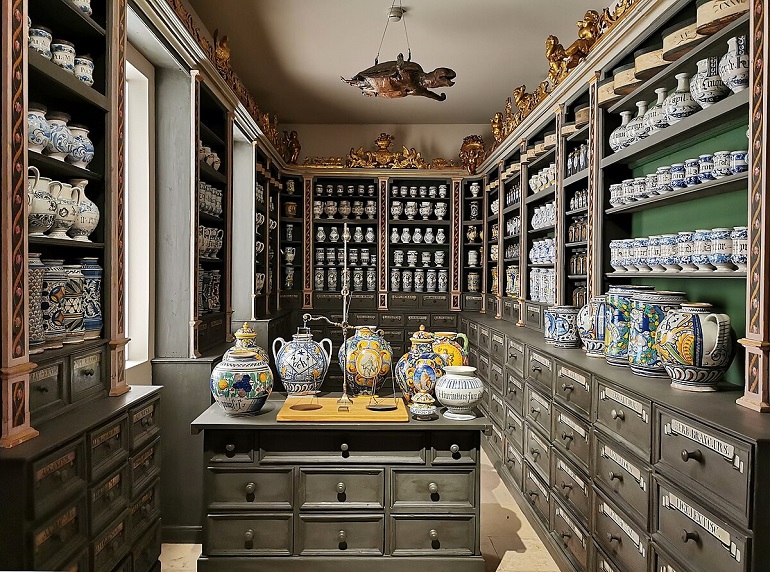
Stadtmuseum im Fembo-Haus (City Museum at Fembo House)
The City Museum at Fembo House offers a captivating journey through 950 years of Nuremberg's history, uniquely situated within the city's only surviving large late-Renaissance merchant's house. Built between 1591 and 1596, the building miraculously survived the Second World War intact and has served as the city's primary historical museum since 1953. Visitors are guided through 26 rooms, where original interiors, detailed room installations, and audio plays bring to life the city's development from its first mention in 1050 to the modern era. The tour culminates with a look at a large, highly detailed wooden model of the Old Town, providing a unique perspective on the city's historical layout.
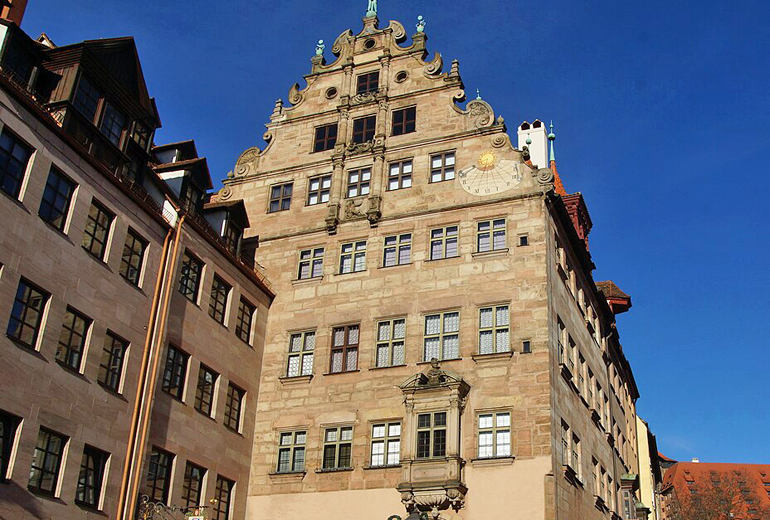
Henkerhaus Museum (Executioner's House)
The Henkerhaus Museum occupies a unique position in Nuremberg's museum landscape, housed in the former 16th-century residence of the city's official executioner. This well-preserved building once served as the state-issued home of Franz Schmidt, Nuremberg's executioner from 1578 to 1617, who became known as "Meister Franz" and completed 361 executions during his career.
The museum provides insights into medieval justice systems through Schmidt's detailed diaries, which offer one of the best glimpses into German law of the period. The exhibits explore the role of executioners in medieval society, the social attitudes towards justice, and the instruments used in punishment and execution. Despite its dark subject matter, the museum presents its content in an educational context, examining the complexities of morality and justice in historical perspective. The building's location overlooking the Pegnitz River reportedly offers one of Nuremberg's most picturesque views.
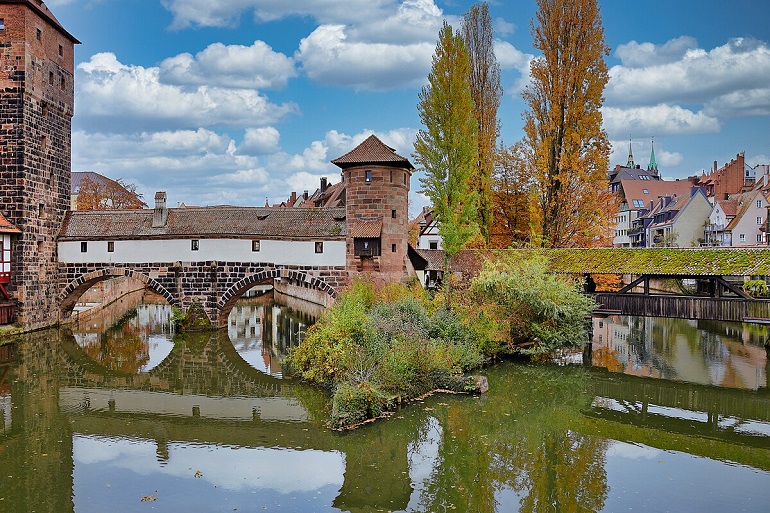
Garnisonmuseum (Garrison Museum)
The Garnisonmuseum presents military history within the dramatic setting of a former World War II air raid bunker from 1941, with walls 2.40 metres thick of steel-reinforced concrete. This unique venue houses comprehensive exhibits documenting Nuremberg's 950-year military history and its relationship with broader German military development.
The museum's extensive collection spans from the imperial city's medieval military through the Royal Bavarian Army, the Reichswehr, Wehrmacht, and extends to the presence of US forces and the German Armed Forces into the 1990s. Large-scale dioramas bring military history to life, including reconstructions of a 1916 trench section, a 1944 command post scene, prisoner-of-war camps, and modern Bundeswehr quarters. The museum also illuminates the social relationships between citizens and stationed soldiers throughout different historical periods, presenting complete family legacies that trace the life paths of soldiers across all epochs and ranks.
Documentation Center Nazi Party Rally Grounds
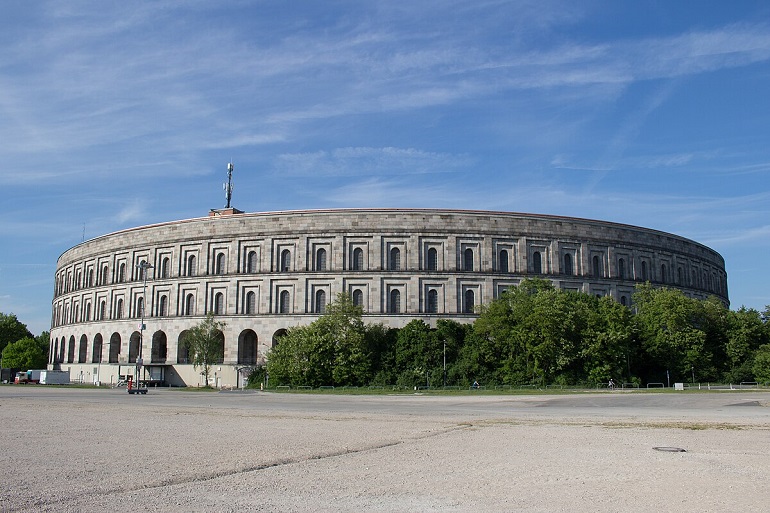
The Documentation Center Nazi Party Rally Grounds is housed within the monumental, unfinished Congress Hall, part of the vast grounds where the Nazi party held its propaganda rallies between 1933 and 1938. The museum's permanent exhibition, 'Fascination and Terror', critically examines the causes, context, and consequences of the Nazi regime, with a particular focus on Nuremberg's role. An imposing diagonal walkway of glass and steel cuts through the building's northern wing, an architectural statement by Günther Domenig that directly confronts the immense scale of the Nazi-era structure. While currently undergoing major renovations, the centre offers a specially designed interim exhibition, 'Nuremberg – Site of the Nazi Party Rallies. Staging, Experience and Violence', which uses objects and personal accounts to explore the history of the rallies and the grounds.
Memorium Nuremberg Trials
The Memorium Nuremberg Trials is a powerful information and documentation centre located on the top floor of the Palace of Justice, directly above the historic Courtroom 600. It was in this courtroom that leading members of the Nazi regime were tried by the International Military Tribunal between 1945 and 1946. The permanent exhibition provides in-depth information about the defendants, their crimes, the proceedings of the trials, and their lasting impact on the development of modern international criminal law. A media installation allows visitors to experience a digital reconstruction of the courtroom as it was during the trials, connecting original footage with the historic space to underscore the site's global significance.
Art and Cultural Heritage
Albrecht Dürer House
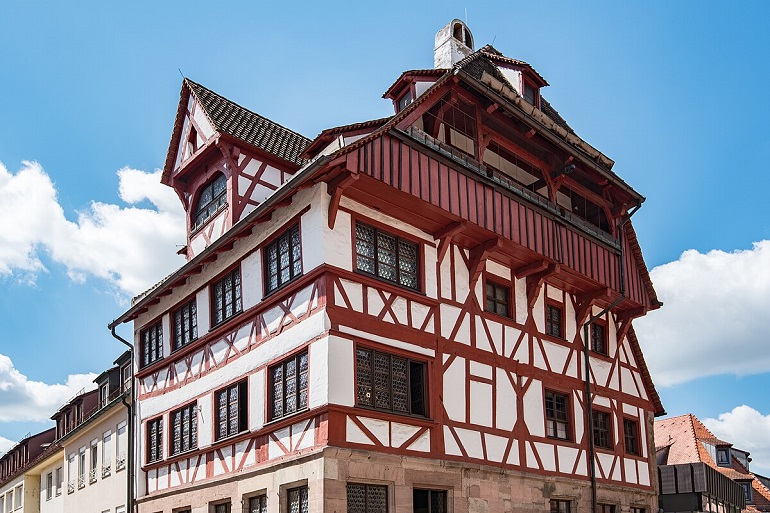
The Albrecht Dürer House stands as one of Europe's most significant artist residences, where Germany's most famous painter lived and worked from 1509 until his death in 1528. This magnificent half-timbered Gothic house is one of the few undestroyedburgher houses from Nuremberg's golden age and the only 16th-century artist's house in Northern Europe. The museum has operated as Germany's first artist museum since 1828, providing an authentic atmosphere that reflects the building's historic importance.
The house contains original etchings and woodcuts by Dürer, displayed within rooms that maintain their period authenticity. A particularly engaging feature is the guided tours conducted by an actress portraying Dürer's wife Agnes, bringing the Renaissance period to life for visitors. The museum also features rotating exhibitions showcasing the city's extensive art collections, and visitors can observe demonstrations of historical printing techniques in the working print shop.
New Museum - Nuremberg State Museum of Art and Design
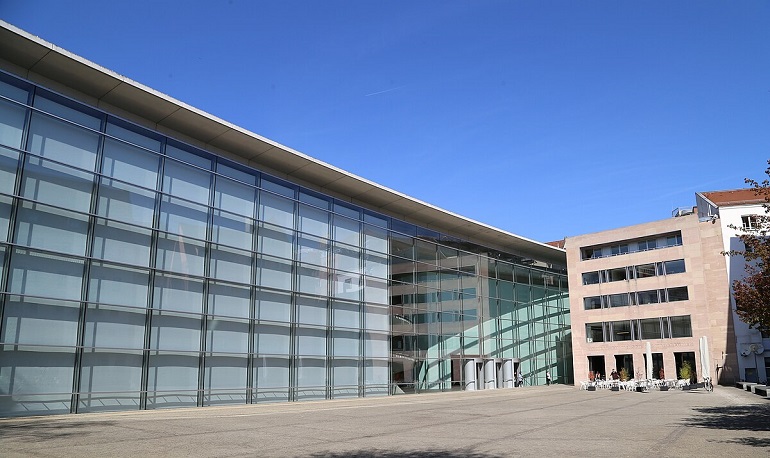
The New Museum (Neues Museum in German) represents contemporary artistic vision housed within striking modern architecture. This Free State of Bavaria museum, designed by architect Volker Staab and opened in 2000, features a distinctive curved glass façade that creates an architectural landmark in Nuremberg's historic centre.
Spanning over 3,000 square metres, the museum presents art and design from the 1950s to the present day. The collection uniquely combines painting, sculpture, photography, video art, and installations with international design pieces, creating innovative spatial relationships between different artistic mediums. The museum's contemporary focus provides a compelling contrast to Nuremberg's medieval heritage, showcasing how artistic expression has evolved into the modern era.
Transportation and Communication
German Railway Museum
The German Railway Museum (DB Museum in German) offers one of the most comprehensive railway experiences in Europe, inviting visitors to discover "the whole world of railways". This expansive 19th-century museum combines indoor and outdoor exhibits featuring vintage trains and interactive displays that chronicle the evolution of rail transport.
The museum's centrepiece is an impressive model railway layout dating from the 1960s, featuring over 500 metres of track—equivalent to the length of five football fields. The collection includes historic rail stock, locomotives, and carriages that illustrate the technological advancement and social impact of railway development. The museum successfully combines educational content with hands-on experiences, making it engaging for visitors of all ages whilst providing detailed insights into industrial progress and daily life.
Museum für Kommunikation Nürnberg (Museum of Communication)
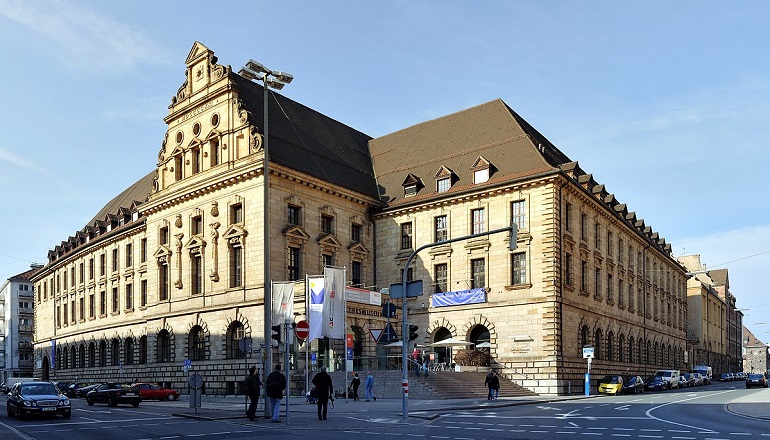
Adjacent to the Railway Museum, the Museum of Communication focuses on the broader evolution of human communication and transportation systems. This technology museum features a comprehensive collection that includes not only railway-related exhibits but also broader communication technologies and their impact on society. The museum maintains a specialised library and offers interactive experiences that demonstrate how communication methods have transformed over time.
Specialised and Unique Museums
Bernstein-Museum (Amber Museum)
The Bernstein-Museum presents a fascinating world dedicated entirely to amber, showcasing one of Germany's most comprehensive collections of this fossilised tree resin. The museum's star attraction is Germany's largest amber specimen, weighing an impressive 12.410 kilograms.
The collection spans an extraordinary range, featuring amber in over 400 different colours, including rare blue, red, yellow, white, green, and black specimens. Particularly captivating are the prehistoric inclusions—plant and animal specimens trapped in amber 40 million years ago—including extraordinary pieces such as amber containing a marsupial's footprint, an ape's tooth marks, and even a 120-million-year-old movable water droplet. The museum also displays amber artwork and jewellery ranging from 50 to 3,000 years old, demonstrating the material's enduring appeal across cultures and centuries.
Family-Oriented Museums
Kindermuseum Nürnberg (Children's Museum)
Located in the distinctive Kachelbau building, the Kindermuseum specialises in interactive learning experiences designed specifically for young visitors. This family-friendly institution functions as an environmental education centre, operating under the principle that "we can only protect what we know".
The museum offers hands-on exploration of nature, environment, and technology, alongside fascinating journeys through time that reveal how daily life has evolved from past to present. The museum regularly features changing special exhibitions that explore diverse themes, ensuring repeat visits offer new discoveries. The facility is designed to be fully accessible and provides a restaurant, restrooms, and comprehensive amenities for families.
Spielzeugmuseum Nürnberg (Nuremberg Toy Museum)
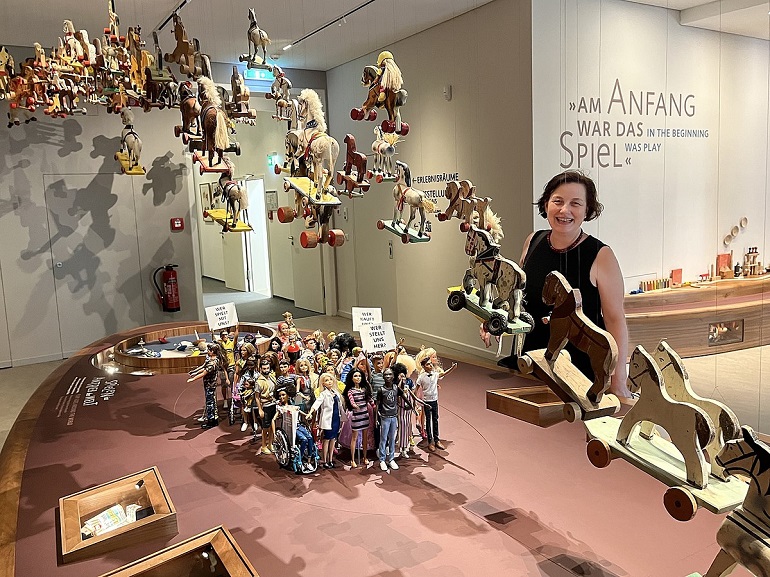
Nuremberg's long-standing reputation as a city of toys is celebrated at the Nuremberg Toy Museum, considered one of the most famous of its kind in the world. Tracing a history that begins with the city's first doll makers in the 15th century, the museum's collection of around 87,000 objects depicts the cultural history of play from antiquity to the present. Across its four floors, visitors can explore a world of historical wooden toys, exquisite dollhouses and 'Nuremberg kitchens', tin figures, and optical toys. The museum also features modern classics like Lego and Barbie, as well as a highlight on the third floor: a historic model railway layout with 175 metres of track, representing the 'Omaha Union Station' from the 1940s.
Local Cuisine
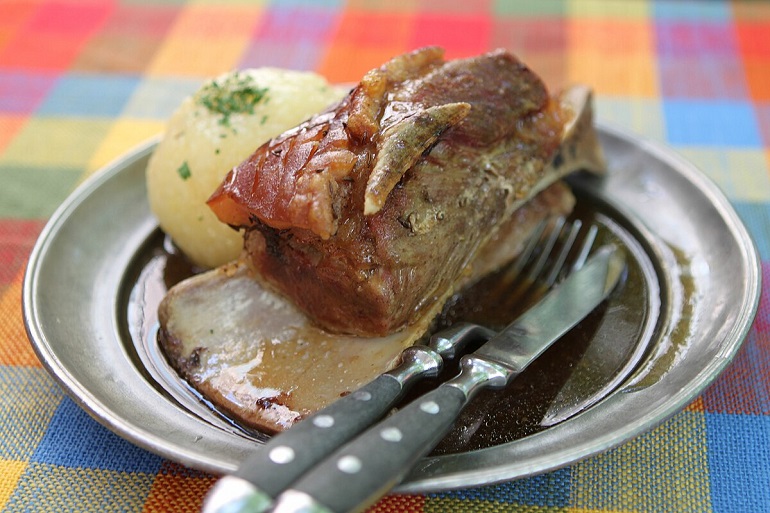
Nuremberg boasts a rich culinary heritage that centres around several iconic dishes. The city's most famous delicacy is the Nuremberger Bratwurst, small finger-sized sausages traditionally grilled over beechwood and served as "3 im Weggla" (three in a bun) with mustard. The local Schäuferle, a tender pork shoulder slow-roasted until the meat falls off the bone and topped with crispy crackling, represents the heartier side of Franconian cuisine, typically accompanied by potato dumplings and sauerkraut. No visit to Nuremberg would be complete without sampling the celebrated Lebkuchen, a spiced gingerbread made with nuts, honey, and aromatic spices like cinnamon, cloves, and cardamom, a recipe dating back to medieval times when the city was a major spice trading hub. These traditional delicacies are best enjoyed with the city's distinctive local beers, particularly the unique Rotbier, a traditional red beer that perfectly complements these robust flavours.
Shopping
Nuremberg boasts Europe's oldest and largest pedestrian zone, offering an exceptional shopping experience across its historic Old Town. The city's main shopping areas are concentrated in a golden triangle of fashion, lifestyle and luxury, with four primary shopping streets: Karolinenstrasse, Pfannenschmiedsgasse, Königsstrasse, and Breite Gasse. The elegant Kaiserstraße houses prestigious fashion labels and luxury brands, whilst Breite Gasse caters to younger shoppers with trendy boutiques. For a more traditional shopping experience, visit the Market Square, where local produce vendors offer fresh fruits and vegetables, or explore speciality shops like Wicklein Lebküchnerei for authentic Nuremberg gingerbread. The city also features several modern shopping centres, including City-Point Nürnberg, Franken-Center, and Mercado Nürnberg, which collectively house hundreds of shops ranging from international brands to local retailers.
Nature in and around Nuremberg
Nuremberg offers a wealth of natural attractions both within the city and in its surroundings. The city is blessed with numerous parks and green spaces, including the expansive People's Park Marienberg, which attracts visitors year-round for sunbathing in summer and tobogganing in winter. The picturesque Pegnitz Meadows serve as a popular spot for cycling, jogging, and picnicking, whilst the vast Reichswald, a 25,000-hectare cultured woodland, provides countless bicycle tracks and hiking trails. For those seeking more adventurous pursuits, the Franconian Jura mountains at the city's doorstep present excellent opportunities for hiking, kayaking, and climbing. The city also features several delightful water bodies, including the Wöhrder Lake and the Dutzendteich ponds, which are perfect for leisurely walks and water sports. Nature enthusiasts will particularly appreciate the Hainberg Conservation Area, a former military ground turned nature reserve that now hosts protected plant and animal species. The mysterious Irrhain Grove, a fascinating tree maze created in 1675, adds a touch of intrigue to Nuremberg's natural landscape.
Getting There & Around
Getting to Nuremberg
By train, Nuremberg is well connected through Germany’s high-speed rail network, with frequent services from major cities such as Frankfurt and Munich as well as international connections from places like Brussels and Antwerp. Trains arrive at Nuremberg Hauptbahnhof, the city's main station, making it easy for travellers to access the city centre and other local transport options. The journey times vary depending on the departure location but are generally efficient and comfortable.
By coach or bus, various long-distance bus services such as FlixBus operate regular routes to Nuremberg from neighbouring countries and cities including Brussels and Munich. Buses arrive at the central coach station, conveniently located near the city centre, offering a cost-effective option for those preferring bus travel. Services are frequent enough to provide flexible travel times.
By car, Nuremberg is accessible via the German autobahn network, which links the city to major European routes. The city is easy to reach by car from surrounding countries and nearby German cities, with well-signposted motorways leading directly into Nuremberg. Driving allows for flexibility in travel plans and the option to explore the wider region at leisure once in the area.
Getting around Nuremberg
Nuremberg is compact and pedestrian-friendly, so the Old Town and many headline sights are best explored on foot, with much of the historic core lying within a short stroll of each other. For longer hops, the integrated VGN network links the city and wider region by U-Bahn, trams, buses and S-Bahn, with urban services operated by VAG under a single, coordinated system. Arrivals and departures are straightforward thanks to the U-Bahn line U2, which runs directly between the airport and Nürnberg Hauptbahnhof in roughly 12 minutes. Weekend late-night travel is covered by NightLiner buses radiating hourly from the central station, keeping the city moving in the small hours. Real-time journey planning and mobile ticketing are available via the VGN Fahrplan & Tickets app, offering live departures, door-to-door routing and accessibility options. Visitors who prefer a city pass can use the Nürnberg Card, which includes unlimited public transport in Zone A for 48 hours alongside entry to top attractions.
Best Time to Visit
The ideal time to visit Nuremberg is from late spring to early autumn, specifically between May and September, when the weather is most pleasant for outdoor activities and sightseeing. During these months, temperatures are comfortably warm, typically ranging from 20°C to 25°C in July and August. However, for those seeking to avoid peak tourist crowds and higher prices, the shoulder months of May, June, and September are particularly recommended, offering a perfect balance of pleasant weather and fewer visitors. These months provide ideal conditions for exploring the city's historical landmarks, enjoying outdoor cafes, and strolling through the charming Old Town, though it's wise to pack a light jacket and brolly for occasional rain showers. Whilst December offers the magical Christmas market experience, do note that winters can be quite cold with temperatures hovering around freezing, and daylight hours are notably shorter.


