



| Contents |
|---|
Introduction
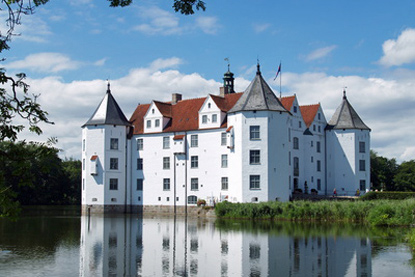
Constructed between 1582 and 1587, Glücksburg Castle (a.k.a. Glücksburg Palace or Schloss Glücksburg) sits on the shores of the Flensburg Fjord. It was originally built as a residence for the Dukes of Schleswig-Holstein-Sonderburg-Glücksburg, and has been used occasionally by the Danish Kings. Nicknamed the Wasserschloss ('water castle') owing to its position in the middle of a lake, it is one of the most important Renaissance castles in northern Europe. The castle features characteristic white walls and a symmetrical three-winged structure. Today, Glücksburg Castle is open to the public, offering museum exhibitions about its history, architecture, and the European royal families that have lived there. The site also hosts cultural events and provides guided tours for visitors.
Interesting Facts about Glücksburg Castle
- Glücksburg Castle is a striking Renaissance water castle, standing on an artificial lake with its foundations made from recycled stone from a former Cistercian monastery.
- Built between 1583 and 1587 for Duke Johann the Younger, it is one of the most significant castle complexes in Northern Europe.
- The castle's name and motto, “Gott Gebe Glück Mit Frieden” (God grant happiness and peace), are immortalised above its main entrance.
- It was constructed without piles, supported instead by a 2.5-metre-high granite plinth, making it architecturally unique among moated castles.
- Glücksburg Castle was the ancestral home of the ducal House of Glücksburg, whose descendants became monarchs in Denmark, Norway, and Greece.
- Christian IX of Denmark, associated with the castle, earned the nickname “father-in-law of Europe” because his children married into many of the continent's royal families.
- The castle features an original Renaissance chapel, complete with a famous Marcussen organ from 1847 that is still in use today.
- From 1854, the castle served as the summer residence of King Frederick VII of Denmark, who died there in 1863.
- Glücksburg Castle has been open to the public as a museum since 1923 and displays extensive collections of art, tapestries, and historical artefacts.
- The castle’s Red Hall boasts some of the earliest stucco work in Schleswig-Holstein and once hosted balls, royal gatherings, and salons.
- Weddings, christenings, and concerts are still regularly held on the castle premises, bringing history to life for visitors.
- The octagonal corner towers, each seven metres in diameter, and the building's symmetrical layout make it a prime example of late Renaissance architecture in Germany.
- The castle’s history is accessible to visitors of all ages, with thematic tours and even opportunities for children to dress up as royalty during their visit.

History
Glücksburg Castle's origins trace back to a medieval monastic foundation established by Cistercian monks between 1209 and 1210. The Ryd Abbey, also known as Rudekloster, occupied the site for over 350 years until the Reformation brought dramatic change. In 1538, the monastery was secularised, and by 1544, it had passed into the possession of Danish King Christian III. The transformation from religious sanctuary to royal residence began when King Frederick II granted the former monastery lands to his brother, Duke John the Younger of Schleswig-Holstein-Sonderburg, in 1582. John immediately commenced demolishing the monastery buildings and began construction of an entirely new castle, utilising high-quality granite from the medieval foundations and recycling many of the original bricks for his ambitious project.
The construction phase spanned just five years, from 1582 to 1587, under the skilled direction of master builder Nikolaus Karies. A formal construction contract was signed on 21st December 1582, with Duke John providing 6,000 Lübeck marks for the work—equivalent to approximately 1,200 cattle at the time. The Duke's personal motto, "Gott Gebe Glück Mit Frieden" (God Grant Happiness and Peace), inspired both the castle's name and its distinctive heraldic decoration, with the initials G.G.G.M.F. prominently displayed above the main entrance alongside his coat of arms. The architectural design represents a prime example of Renaissance architecture in Northern Europe, featuring a square structure measuring 30 metres on each side, built upon a 2.5-metre-high granite plinth that emerges directly from an artificially created castle lake. The building comprises three identical gabled houses built side by side, with octagonal towers of 7-metre diameter positioned at each corner.
Following Duke John's death in 1622, the castle became the ancestral seat of the House of Schleswig-Holstein-Sonderburg-Glücksburg and evolved into one of Europe's most significant royal residences. The property gained particular prominence when it passed to the younger Glücksburg line in 1825, established by Friedrich Wilhelm, who received the castle and ducal title from Danish King Frederick VI. The castle served as a summer residence for Danish royalty, most notably King Frederick VII, who died there on 15th November 1863. Under Christian IX, who became Danish king following Frederick VII's death, Glücksburg earned its reputation as the "cradle of Europe" due to the extensive royal marriages that connected the house to virtually every major European dynasty. During the Second Schleswig War in 1864, the castle briefly served military purposes as quarters and later as a hospital, before passing into Prussian ownership and eventually being returned to the ducal family by King Wilhelm I in 1869.
Description
Glücksburg Castle, known as Schloss Glücksburg in German, is one of the most picturesque and iconic water castles in Northern Europe. Nestled amidst serene parkland and reflected gracefully in its encircling lake, the castle makes an immediate impression with its elegant white façades and striking blend of Renaissance and early Baroque architectural features.
Architecture & Setting
The castle is built on a foundation of oak piles in the heart of a tranquil lake, giving it the impression of floating upon water. Its symmetrical towers and gabled roofs are mirrored in the still surface below, creating a dreamlike vista perfect for photographs. The castle’s exterior is defined by clean lines, a harmonious arrangement of towers, and classic whitewashed walls punctuated by rows of small windows.
Guests enter through a lovely bridge leading over the moat. The grand entrance hints at the refined atmosphere found within, seamlessly blending royal charm and understated elegance.
Interior Highlights
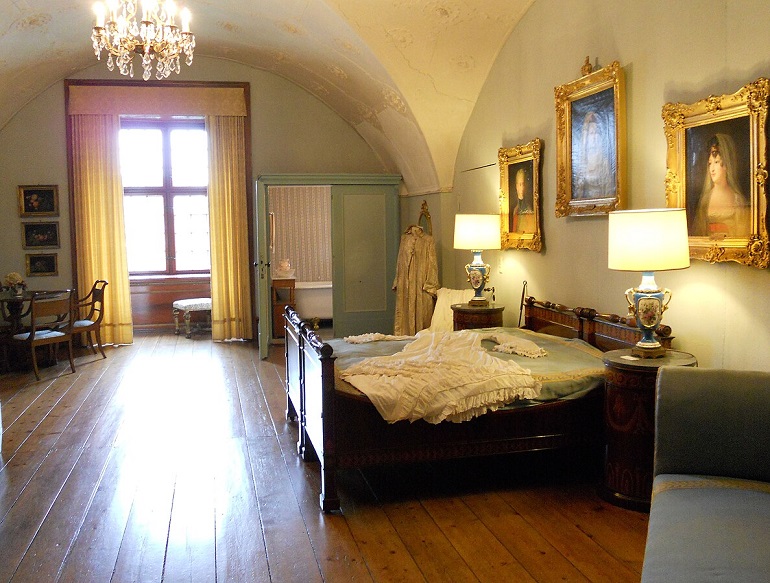
Inside, Glücksburg Castle invites visitors to explore room after room filled with period furnishings, ornate tapestries, and original artworks. The reception halls are adorned with impressive chandeliers and historic portraits, while the chapel is notable for its intricate ceiling and beautiful decorative accents. Each chamber presents a unique glimpse into the castle’s opulent past, with finely carved woodwork, antique furniture, and exquisitely preserved décor.
Particularly captivating are the grand staircases, stately salons, and the library, filled with the scent of old books and a palpable atmosphere of scholarly tranquillity.
Gardens & Grounds
Surrounding the castle lies a beautifully maintained park. These grounds are dotted with centuries-old trees, artfully landscaped lawns, and quiet paths perfect for strolling. The picturesque setting makes the castle grounds ideal for picnics, leisurely walks, or simply soaking in the reflective tranquillity of the lake.
Getting There
By train Travelling to Glücksburg Castle is straightforward by rail: take a train to Flensburg, the nearest main station, which is well connected to major German cities, especially via Hamburg. Once in Flensburg, you can continue your journey by bus, taxi, or even by ferry towards Glücksburg.
By coach or bus From Flensburg, regular bus services—such as lines 21 and 22—depart from the Flensburg ZOB (central bus station) and travel directly to Glücksburg, with stops conveniently close to the castle grounds. The journey takes around 20 to 25 minutes, making it an easy and comfortable option for visitors.
By car If you choose to drive, Glücksburg is easily accessible via the A7 motorway towards Flensburg. From there, follow the B200 and then the B199 directly to Glücksburg. Ample parking is available near the castle, some of which is paid and some short-term free parking a short walk from the grounds.
Best Time to Visit
The most delightful period to explore Glücksburg Castle is from late spring through early autumn, when the weather is comfortably mild and the castle’s gardens shimmer with colour Visiting between May and June offers pleasantly warm days—ideal for strolling around the moat and rose gardens—while avoiding the height of the summer holidays and the larger crowds that July and August can bring. An autumn trip in September and early October also rewards travellers with crisp air, turning foliage and a tranquil atmosphere, as well as the opportunity to enjoy the castle’s historic rooms without long queues. During these shoulder seasons the guided tours run regularly, and the moderate temperatures ensure a thoroughly enjoyable experience both inside the Renaissance halls and across the expansive grounds.
| Travel destinations in Schleswig-Holstein | |||||||||||
|---|---|---|---|---|---|---|---|---|---|---|---|
|
|
|
| ||||||||
|
|
|
| ||||||||


