



| Contents |
|---|
Introduction
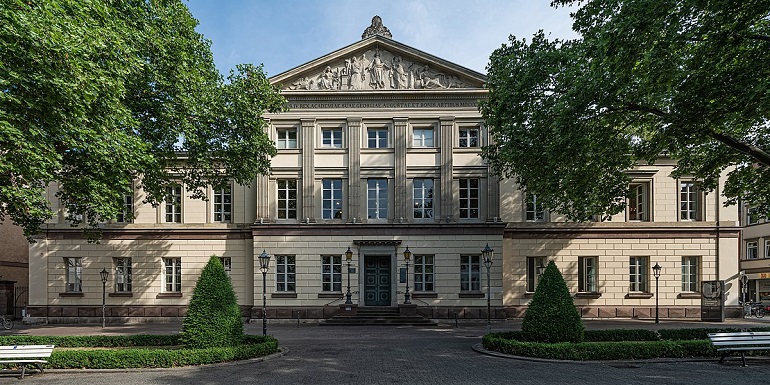
Göttingen (pop. 124,500) is a city that revolves around its university, a sort of German Cambridge or Oxford. Founded in 1734 by George II, King of Great Britain and Elector of Hanover, the University of Göttingen quickly became one of the most prestigious universities in Germany, spawning some 45 Nobel laureates.
Famous alumni and academics include Carl Friedrich Gauss, the Brothers Grimm, Max Planck, Werner Heisenberg, Arthur Schopenhauer, Otto von Bismarck, J. P. Morgan, J. Robert Oppenheimer, and former Chancellor Gerhard Schröder.
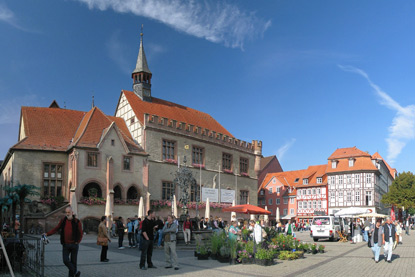
The town itself is encircled by former ramparts and features a largely preserved medieval layout with numerous half-timbered houses competing for the visitor's attention with neoclassical university buildings and medieval churches. But Göttingen's historical centre suffered from WWII like other German cities and it has lost its architectural homogeneity and authenticity.
Key landmarks include the a 14th-century town hall, the Gänseliesel fountain on the main square, Gothic churches such as St. Johannis, a historic botanical garden, and several museums and theatres reflecting the city’s academic heritage. The River Leine runs through the city, and local industry includes precision instruments and publishing alongside research-driven enterprises.
Interesting Facts about Göttingen
- Göttingen is a historic university city on the River Leine in southern Lower Saxony, renowned for the Georg-August University founded by King George II in the 18th century.
- The city’s roots trace back to a settlement first recorded as “Gutingi” in 953 CE, and it received town rights in the early 13th century.
- A powerful Hanseatic League member in the 14th century, Göttingen prospered through long-distance trade and artisan guilds.
- The “Göttingen Seven” professors famously protested against the abolition of a constitution in 1837, a milestone in German liberal history.
- Göttingen’s Gänseliesel fountain is a beloved symbol, traditionally kissed by newly graduated doctoral students.
- The city escaped major wartime destruction, preserving many medieval half-timbered houses and its Gothic town hall.
- Göttingen is a compact, bike-friendly place with a youthful atmosphere thanks to a large student population and multiple research institutes.
- The university’s strengths in mathematics and physics drew luminaries such as Carl Friedrich Gauss and helped cement the city’s scientific reputation.
- Excellent rail links put Göttingen on major north–south routes, making intercity travel to Berlin, Hamburg, Frankfurt and Hanover straightforward.
- Cultural life is vibrant, with theatres, festivals (including Händel and jazz), museums, and one of Germany’s oldest botanical gardens.
History
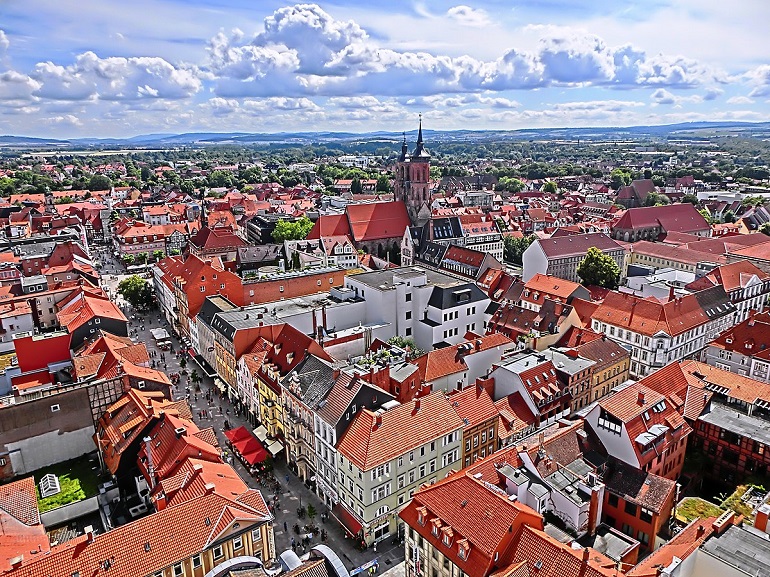
Founded near the early medieval village of Gutingi, first recorded in 953 under Holy Roman Emperor Otto I, Göttingen emerged as a planned trading town between about 1150 and 1200 at a Leine River crossing, likely under the Welf duke Henry the Lion. By the 13th century the burghers had secured self-governance privileges, and the town joined the Hanseatic League in the 14th century, prospering on north European trade routes while shaping a pentagonal old-town street plan that still hints at its medieval origins. The neighbouring imperial fortress of Grona, documented from 915 and visited repeatedly by Ottonian rulers, was eventually destroyed during city feuds in the 14th century, symbolising Göttingen’s growing urban autonomy in the later Middle Ages.
From the 16th to 19th centuries, Göttingen’s political fortunes tracked those of the Welf states: after phases under Brunswick-Wolfenbüttel and Lüneburg, it entered the Electorate of Hanover in 1692, shifted through Napoleonic rule in the Kingdom of Westphalia (1807–1813), returned to Hanover, and then became Prussian following the 1866 annexation of the Kingdom of Hanover. The Hanoverian Southern Railway reached the city in 1854, tying Göttingen into north–south traffic; today it sits on the Hanover–Würzburg high-speed line, reflecting its long-standing role as a transport node. Medieval civic traditions such as the Schützengesellschaft (marksmen’s guild) endure alongside the iconic Gänseliesel fountain ritual for new doctorate holders, a town custom that encapsulates Göttingen’s blend of scholarship and lived heritage.
Göttingen’s identity has been defined since the Enlightenment by its university, founded by George II (as Elector of Hanover and King of Great Britain) with lectures beginning in 1737, rapidly becoming one of Europe’s most visited universities and a centre of academic freedom. The “Göttingen Seven” professors, including the Brothers Grimm, were dismissed in 1837 for protesting the Hanoverian king’s revocation of the constitution, cementing a civic reputation for principled dissent; meanwhile, the city’s mathematical and scientific schools flourished under figures such as Gauss, Riemann and Hilbert. Despite expulsions under the Nazi regime and wartime disruption, Göttingen resumed teaching early in 1945 and later became a hub for top research institutes, with the Max Planck Society’s strong presence underlining its modern moniker as a city of science.
Main Attractions
Old Town (Altstadt)
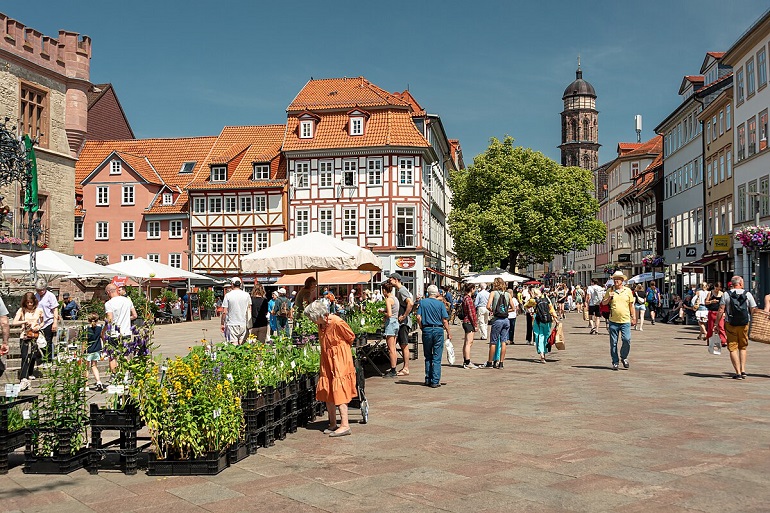
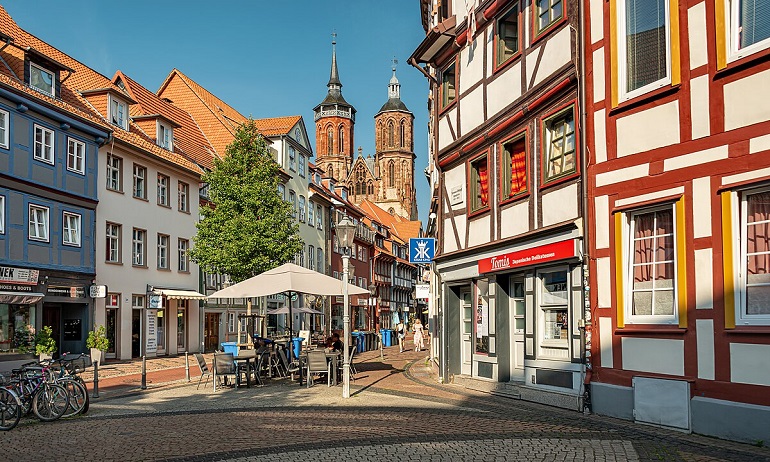
Göttingen's historic Old Town features numerous Gothic, Renaissance and Baroque half-timbered houses within medieval ramparts that have survived largely intact. The centre remains practically undamaged from wartime destruction, preserving its authentic character around the market square where the Gänseliesel fountain stands before the medieval town hall. The Old Town encompasses winding streets lined with well-preserved historical buildings, traditional shops, and cafés that frame the market square, creating an atmospheric setting that reflects the city's long university heritage.
Old Town Hall (Altes Rathaus)
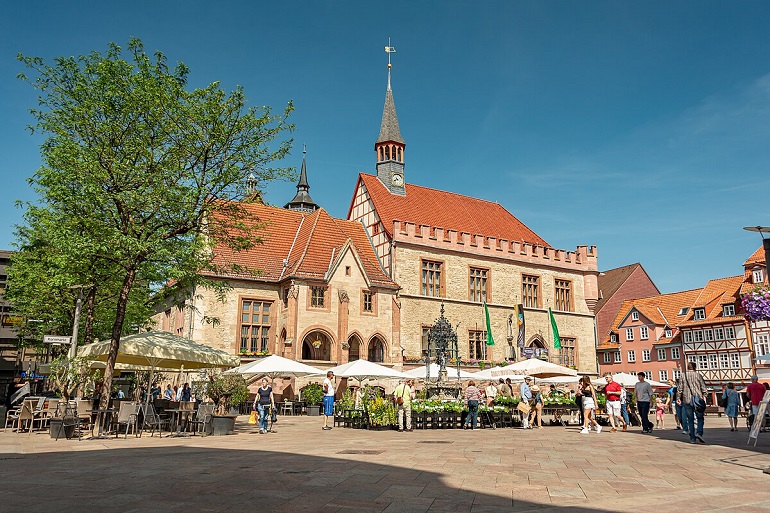
Dating to around 1270, the Old Town Hall stands on the market square opposite the Gänseliesel and evolved through multiple medieval expansions to its present form. Historically a guildhall and civic centre with functions including a wine cellar and great hall, it housed city administration until 1978; today it is used for representative events and contains murals and coats of arms reflecting Göttingen’s Hanseatic connections.
Gänseliesel
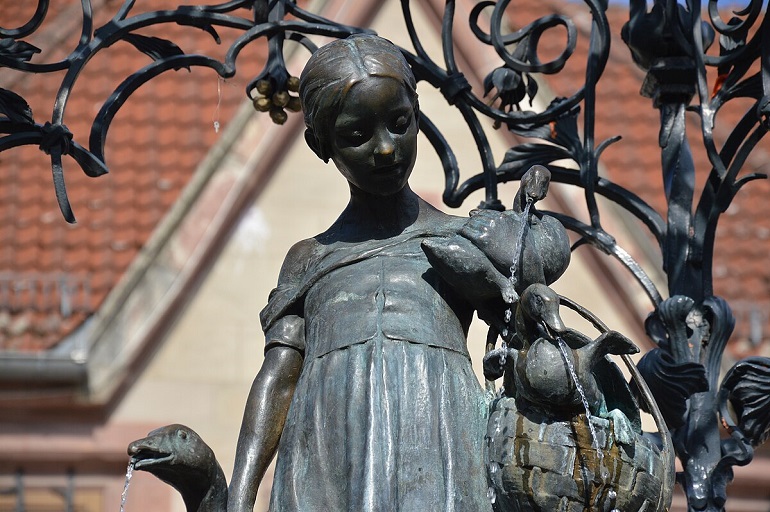
The Gänseliesel is a bronze fountain figure erected in 1901 in front of the medieval town hall and is regarded as Göttingen’s best-known landmark; it plays a central role in doctoral graduation traditions, where new PhDs bring flowers and kiss the statue as a rite of passage. The site has hosted a fountain since at least the 18th century, with the present design—by architect Heinrich Stöckhardt and sculptor Paul Nisse—chosen by popular preference after a public display of proposals, and installed without an official ceremony.
St John’s Church (St. Johannis-Kirche)
St. Johannis is a three-aisled Gothic hall church located directly behind the Old Town Hall, built around 1300 and measuring 60 metres long and 19 metres wide. The church is particularly notable for its two distinctive towers of different heights—the taller northern spire housed watchmen for over 600 years until 2001, reached by 238 steps. Construction began in the early 13th century with a Romanesque portal from 1245, continued in Gothic style during the 14th century, and the distinctive tower caps were completed in 1661-62, whilst the interior has undergone numerous renovations over the centuries.
Old Botanical Garden of Göttingen University
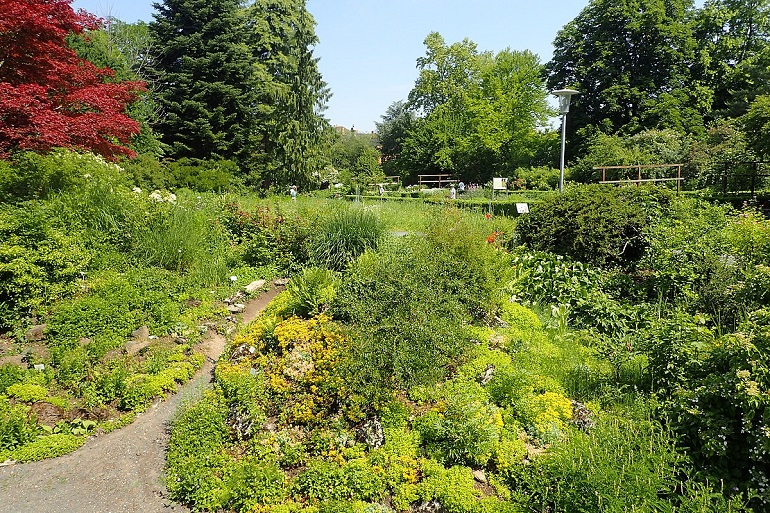
Established in 1736 by Albrecht von Haller as a hortus medicus, the 4.5-hectare Old Botanical Garden lies by the city wall in the Altstadt and remains open daily as a historic university garden. It developed substantial glasshouse facilities by the 19th century, suffered losses of tropical collections during the Second World War, and later modernised its systematic layout (2003–2007) to reflect contemporary molecular phylogeny.
Göttingen Observatory (Historische Sternwarte)
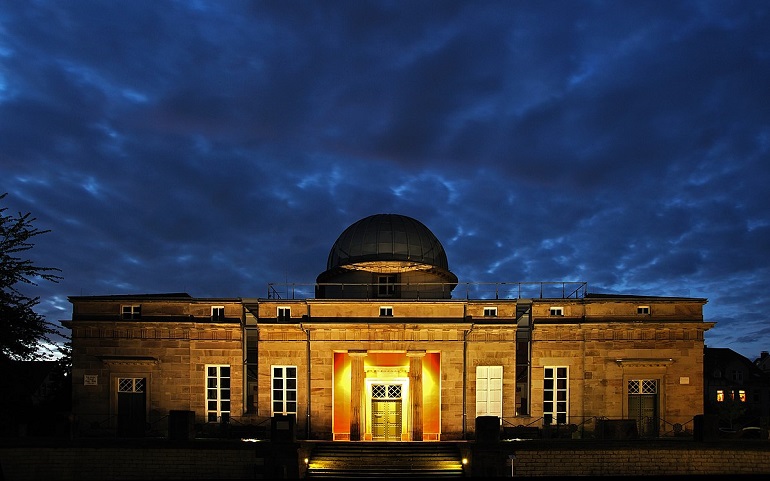
The University Observatory Göttingen, established in 1751, is the third-oldest university observatory in the German-speaking world after Vienna and Graz. The original observatory was built on a city wall tower but was replaced in 1816 by a classical observatory building on Geismar Landstraße, which operated until 1929 when functions moved to the Hainberg Observatory. The historic 1816 observatory represents an important chapter in German astronomical research, having been used by notable figures including cartographer and mathematician Tobias Mayer for his famous lunar observations until his death in 1762.
Deutsches Theater
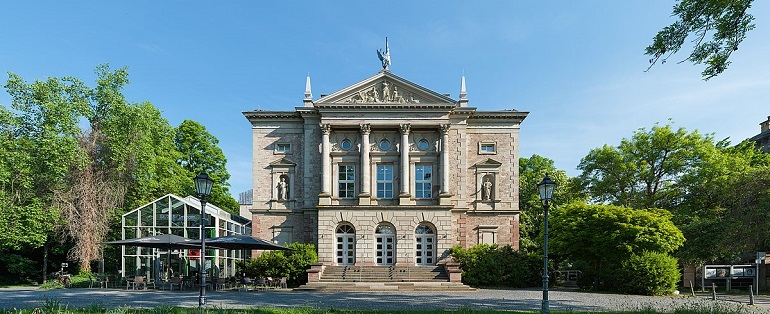
The Deutsches Theater, opened in 1890 as Theater am Wall, is Göttingen's largest theatre and operates on four stages including the main house (DT-1) with 496 seats across parquet and three tiers in Neo-Renaissance style. The theatre building stands at one of the city's most beautiful squares, Theaterplatz, and maintains a repertory system with around 25 premieres per season spanning classical and contemporary drama, children's productions, and musical performances. Since 2014, the theatre has been directed by Erich Sidler and employs approximately 170 staff including 26 permanent actors, operating as a pure spoken-word theatre with a focus on contemporary social themes.
St. Jacobi Church (Jacobikirche)
St. Jacobi is a three-aisled Gothic hall church built between 1361 and 1433, notable for its tall west-front tower, approximately 71–72 m, the highest in the old-town skyline. The church contains a significant Gothic winged altar dated 1402 and offers tower ascents on guided arrangements that provide views over the historic centre.
St. Albani Church (Albanikirche)
St. Albani is a Gothic hall church on the eastern edge of the inner city, with construction of the current building begun in 1423 and later given a distinctive Baroque spire cap that shapes its silhouette. The interior features 19th-century Neo-Gothic fittings, an organ by Paul Ott with 36 stops, and a notable winged high altar, reflecting layers of liturgical and architectural history.
Bismarck Tower (Bismarckturm)
Opened in 1896 on the Kleperberg at 332 m elevation, the Bismarck Tower rises 31 m and is cited as the highest Bismarck tower in Lower Saxony, offering long views towards the Brocken and Hohen Meißner in clear conditions. The structure includes a memorial hall with a bronze bust and seasonal opening hours, and serves as a popular hiking destination above the Geismar district.
Kiessee
The Kiessee is Göttingen’s principal recreational lake, offering a level circuit for walks, boating opportunities, a playground, and adjacent natural areas to the south that serve as a local green escape. The lakeside facilities make it a frequent spot for informal relaxation and light outdoor activity close to the city centre.
Plesse Castle (Burg Plesse)
Located just north of Göttingen above Bovenden, Plesse Castle is a hilltop complex first recorded in 1015 and long associated with the Lords of Plesse before later Hesse affiliations and eventual abandonment in 1660. The site, integrated into the regional leisure landscape, offers expansive views over the Leine valley and features in local legends and the context of the German Fairy-tale Route.
Top Museums
Local History Museums
Städtisches Museum (Municipal Museum)
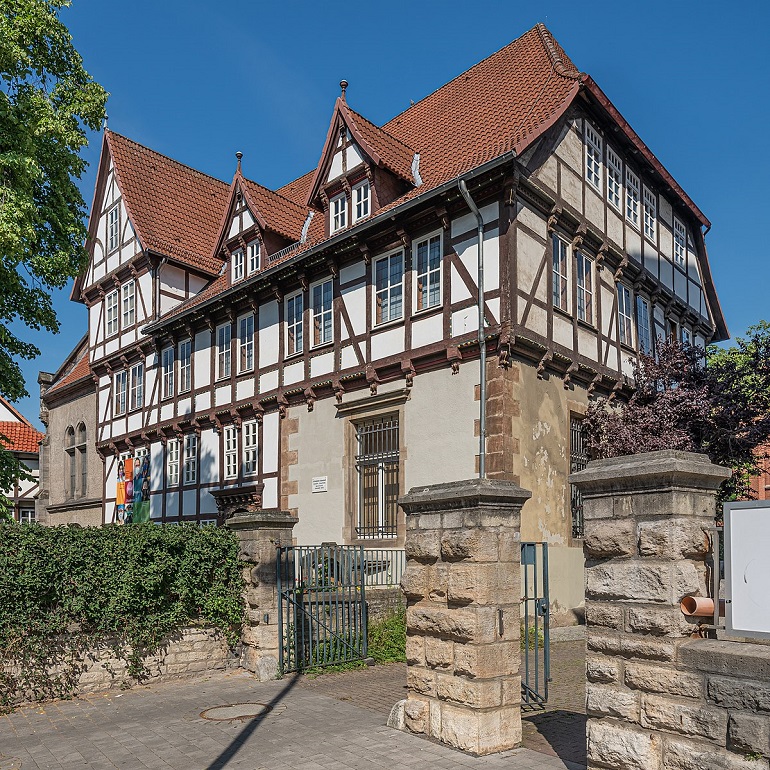
The Städtisches Museum serves as Göttingen's primary repository of local history and cultural heritage. Housed in the magnificent Hardenberger Hof, the city's only surviving Renaissance noble seat constructed in 1592 by Brunswick Chancellor Johann von Jagemann, the museum itself is a historical treasure. This four-storey fachwerk building once hosted Johannes Brahms during the summer of 1853.
The museum houses an impressive collection of approximately 150,000 objects that trace the cultural evolution of Göttingen and its surroundings from the earliest settlements to the present day. Its extensive collections encompass the art and cultural history of South Lower Saxony, including prehistory and protohistory, town history, religious art, and university heritage. Particularly notable is the collection of ecclesiastical art spanning from the 12th to the 19th century. The museum also features a delightful museum garden at Ritterplan.
Currently, parts of the museum remain accessible despite ongoing renovation work, allowing visitors to explore significant portions of the Hardenberger Hof and the religious art collection.
Science and University Museums
Forum Wissen
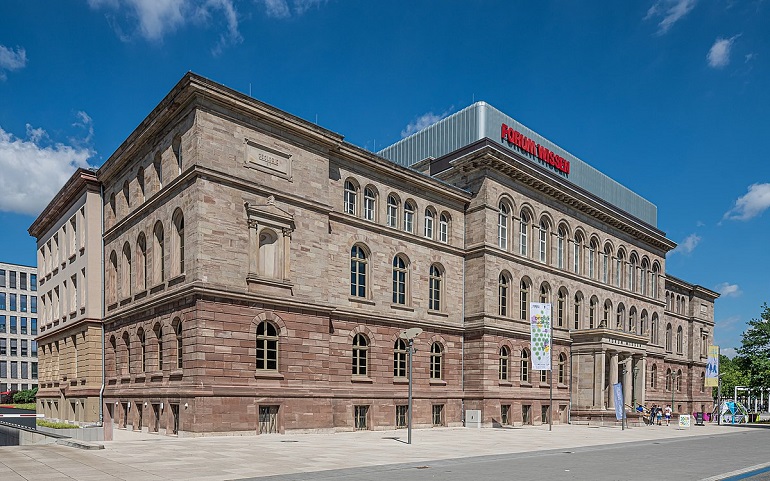
Forum Wissen stands out as Göttingen's unique science museum, offering visitors an exceptional insight into the world of scientific discovery. This modern institution features a comprehensive basic exhibition alongside numerous exciting special exhibitions and regular events. The museum represents the city's strong scientific tradition and provides an engaging experience for visitors interested in understanding scientific principles and discoveries.
Museum for Geological Sciences
Founded in 1773 as part of the "Königlich-Academisches Museum" (Royal Academic Museum), the Museum for Geological Sciences is one of the few museums in Lower Saxony with publicly accessible exhibition areas dedicated to geology, mineralogy, and palaeontology. This historic institution showcases the university's long-standing commitment to earth sciences education and research.
Museum of Göttingen Chemistry
Established in 1979 within the Faculty of Chemistry, this specialised museum contains a diverse collection documenting the history of chemistry at the University of Göttingen over the past 250 years. The museum features both permanent exhibitions and extensive storage collections that continue to grow and evolve.
Zoological Museum
Located within the Johann-Friedrich-Blumenbach-Institute for Zoology and Anthropology, the Zoological Museum houses an extraordinary collection of over 100,000 preserved specimens. The collection includes invaluable scientific treasures such as holotypes (specimens used to define newly discovered species), rare specimens, and examples of extinct species collected during the 18th, 19th, and 20th centuries from around the world. These specimens serve as crucial evidence for understanding evolutionary processes in the animal kingdom.
Computer Museum of the GWDG
The university also operates a Computer Museum through the GWDG (Society for Scientific Data Processing), showcasing the development of computing technology and its role in academic research.
Göttingen State and University Library Exhibition Spaces
The Göttingen State and University Library functions as both an academic library and cultural institution. One of Germany's largest academic libraries, it regularly hosts well-regarded exhibitions in its foyer and in the beautifully converted Paulinerkirche (St. Paul's Church). The Historical Building houses manuscripts, rare books, maps, and a significant history-of-science collection, whilst the original SS. Peter and Paul's Church has been transformed into an exhibition and lecture centre. The library's collection includes over 8 million media units, featuring a Gutenberg Bible amongst its treasures.
Additional Cultural Venues
Kunsthaus Göttingen and Art Venues
Kunsthaus Göttingen provides space for contemporary art exhibitions. The city also features numerous smaller galleries and exhibition spaces, including the old town hall (Altes Rathaus) which regularly hosts larger exhibitions of contemporary artists, and various private galleries such as the Apex gallery.
University Art Collection
The University Art Collection offers another recommended venue for art enthusiasts, contributing to Göttingen's rich cultural landscape.
Göttingen's museum landscape reflects the city's unique character as both a historic university town and a centre of scientific achievement. The museums collectively tell the story of a city shaped by centuries of academic excellence, from medieval times through to modern scientific discoveries, whilst preserving the cultural heritage of the broader South Lower Saxony region.
Local Cuisine
Göttingen’s food culture blends hearty North German comfort with seasonal produce from the surrounding countryside, making room on the table for classics like Grünkohl (kale) with smoked sausages, autumn’s beloved Birnen, Bohnen und Speck (pears, beans and bacon), and regional staples such as asparagus (Spargel) in late spring and early summer. Expect potatoes in many guises alongside robust meats—think sausage plates and game—echoing broader Lower Saxon traditions, while local menus also nod to nearby specialities like Harzer cheese and cured hams from the region. When the weather turns, kale season brings slow-cooked greens with pork belly or sausage, while late summer into autumn celebrates the sweet-savoury balance of pears and beans enriched with smoky bacon, typically served with boiled potatoes for a satisfying, rustic finish.
Getting There
By train Göttingen is a major stop on Germany’s north–south high-speed corridor, with frequent ICE and IC services linking it directly with hubs such as Hannover, Kassel-Wilhelmshöhe and Frankfurt, making rail the quickest and most convenient option for most travellers.
By coach or bus Long-distance coaches, including FlixBus, serve Göttingen’s central bus station on Berliner Straße, providing direct links to numerous German and European cities and a simple, ticket-in-app boarding experience.
By car Göttingen sits right on the A7 motorway, a key north–south route that has been widened and modernised on the Bockenem–Göttingen section, giving straightforward access whether approaching from Hamburg/Hanover to the north or from Kassel/Frankfurt to the south.


