


 Ireland Guide
 Scotland Guide
 Wales Guide
| Contents |
|---|
Introduction
St James’s Park is a serene ribbon of greenery in the heart of Westminster, linking Buckingham Palace to Whitehall with sweeping lawns, vibrant flowerbeds, and a picturesque lake. Beloved for its resident pelicans and abundant waterfowl, the park pairs classic London views—palace vistas and Guards in scarlet—with peaceful paths, ornamental bridges, and quiet corners for a picnic or a pause. Cafés and kiosks provide easy refreshments, while well-marked routes suit leisurely strolls, morning jogs, and family outings alike. Whether you’re crossing between landmarks or lingering to photograph the skyline from the Blue Bridge, this elegant Royal Park offers a restorative breather from the city’s bustle in every season.
Activities and Attractions
Origins and Medieval Foundations
The park’s story begins not with royalty, but with medieval care. In 1189, the Hospital of St James the Less stood on this marshy ground west of Westminster, a sanctuary for women with leprosy. The surrounding meadows, frequently flooded by the River Tyburn, provided grazing while the hospice lent the area its enduring name. This charitable foundation later came under the oversight of Eton College, embedding the site in London’s early social history.
Tudor Transformation
In 1532, Henry VIII acquired the hospital lands and enclosed them as a deer park, creating a vast western hunting preserve that would eventually include Hyde Park, Green Park, and Kensington Gardens. Between 1531 and 1536 he commissioned a red-brick hunting lodge that evolved into St James’s Palace, still defining the park’s northern boundary. The newly walled park served as both a breeding ground for deer and a stage for Tudor pageantry; by 1539, great public reviews and displays were already drawing Londoners to this royal landscape.
Stuart Innovations and Public Access
James I transformed the utilitarian deer park through comprehensive drainage and formal landscaping, establishing pools at the eastern end—precursors to today’s Duck Island—and creating the celebrated Rosamond’s Pond. Fascinated by the exotic, he kept camels, a crocodile, an elephant, and rare birds in elaborate aviaries along what became Birdcage Walk. He also established a physic garden and planted mulberries in an ambitious attempt to foster a domestic silk industry.
After the Restoration, Charles II reshaped the park with French-influenced elegance, likely under André Mollet. A grand ornamental canal—reborn later as today’s serpentine lake—became the landscape’s organising feature. Most significantly, Charles II opened the park to the public, setting a lasting precedent that royal green spaces should also serve the city’s people.
Georgian Refinement and Regency Grandeur
The 18th century saw the park adapt to changing tastes and uses: cattle grazed the lawns, fresh milk was sold at the “Lactarian,” and the eastern ground evolved into Horse Guards Parade, an ideal stage for military ceremony. The 1761 purchase of Buckingham House for Queen Charlotte initiated the western end’s development into the royal residential quarter.
The most dramatic reimagining came with John Nash’s works (1826–1827) for the Prince Regent, later George IV. Nash softened the strict canal into a naturalistic, winding lake; straight allées gave way to meandering paths and picturesque plantings. In tandem, The Mall matured into a great processional axis linking palace and government, while the urban set-piece culminating in the Victoria Memorial (completed in the early 20th century) framed the park within a grand ceremonial ensemble.
Natural Features and Wildlife Sanctuary
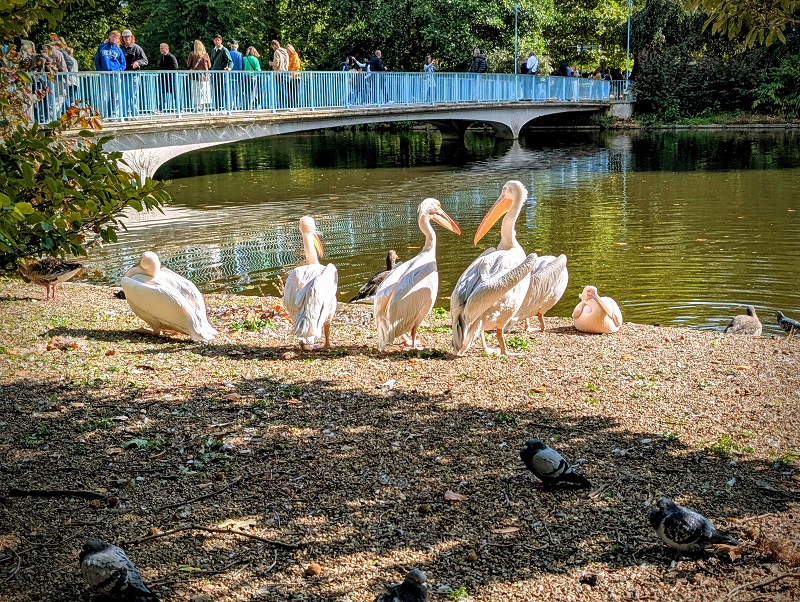
The serpentine lake, sustained by artesian sources, supports a remarkable diversity of waterfowl. Pelicans—first gifted in 1664—remain the park’s most storied residents, sharing the waters with swans, tufted ducks, mallards, coots, and moorhens, while herons often fish along the margins. At the eastern end, Duck Island functions as a sanctuary, allowing nesting and roosting in a protected setting still visible from the paths.
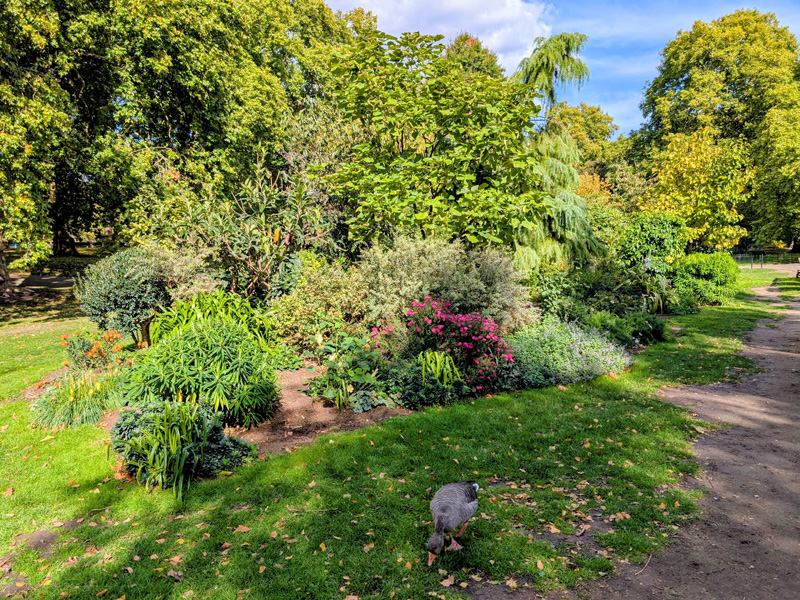
Mature plane, lime, and oak trees—many dating to Nash’s era—form a generous canopy and habitats for songbirds. Seasonal displays shape the park’s character: spring carpets of daffodils and blossoming cherries; summer’s orchestrated flowerbeds maintaining colour from March through October; and autumn’s golds and russets transforming the avenues and lakeside walks.
Architectural Treasures and Monuments
The Victoria Memorial anchors the western approach with allegorical sculpture and gilded Victory presiding over Queen Victoria’s marble effigy. Across the water, the elegant Blue Bridge offers the park’s definitive viewpoints: westward to Buckingham Palace framed by trees and memorial; eastward to the London Eye, the towers of Westminster, and the government façades of Whitehall.
More intimate features punctuate quieter corners: the playful Tiffany Fountain near the Duck Island bridge; the Guards Memorial commemorating the fallen of two world wars; and smaller plaques and markers that chart the park’s role in national remembrance and celebration.
Ceremonies and Royal Pageantry
St James’s Park remains a principal stage for state ceremonial. Trooping the Colour, marking the monarch’s official birthday, fills the adjacent Horse Guards Parade with precision drill and music before crowds gather on the lawns and along The Mall to watch processions and balcony appearances at Buckingham Palace. On many days, the Changing of the Guard threads through the park, its scarlet tunics and bearskins echoing centuries of tradition.
Contemporary Character and Visitor Experience
Today the park balances high ceremony with everyday sanctuary. Winding paths welcome morning joggers and leisurely strollers alike; expansive lawns host picnics beneath veteran trees; and a well-designed playground offers younger visitors space to explore without disturbing the landscape’s calm. A sensitively sited café serves as a convivial pause point with vistas across the water to Duck Island and the lawns beyond.
Seasonal activities and informal performances occasionally animate the setting, while frost or snowfall in winter reveals the landscape’s beautifully composed structure. Throughout, careful horticulture and thoughtful management preserve the park’s tranquillity amid the surrounding institutions of monarchy and state.
Enduring Legacy and Future Vision
St James’s Park condenses five centuries of changing taste—from Tudor utility and Stuart elegance to Nash’s Romantic naturalism—into a coherent, living landscape. Ongoing conservation sustains the lake’s ecology, renews the tree collection, and protects views and sightlines that make the park both sanctuary and ceremonial stage. As new commemorations and carefully considered enhancements are introduced, the park continues to evolve without losing the historic character that makes it one of the world’s finest urban royal parks.
Getting There
Reaching St James’s Park is straightforward: the closest Underground stop is St James’s Park on the District and Circle lines, a few minutes’ walk from the park’s southern edge. You can also alight at Westminster or Green Park stations for short walks, or at Victoria and Charing Cross mainline stations, both around 15 minutes on foot to the park. Numerous buses serve the surrounding area, including routes that stop at Westminster Abbey and Parliament Square, from where it’s an easy stroll to the park’s gates. If you prefer to walk from central landmarks, it’s roughly a quarter-hour from Trafalgar Square via Whitehall and Parliament Street, or from Buckingham Palace through The Mall and the Blue Bridge vistas. Cycling is well supported with marked cycleways and nearby hire points; check TfL for the latest docking locations and suggested routes.
Best Time to Visit
Spring and early summer are the best times to visit St James’s Park, when the ornamental flowerbeds are in full bloom, days are longer, and wildlife is most active; arrive on a weekday morning for softer light, fewer crowds, and tranquil lake views, or time an afternoon visit between 2:30 and 3pm to catch the daily pelican feeding on the Blue Bridge side; the park opens from 5am to midnight year-round, so crisp autumn colours and quiet winter mornings also reward those seeking calmer strolls away from peak tourist hours.