


 Ireland Guide
 Scotland Guide
 Wales Guide
| Contents |
|---|
Introduction
Manchester (pop. 570,000, metropolitan area 2,562,000) is the third largest metropolitan area in the United Kingdom, after London and Birmingham. It is famous for Manchester United, the nation's most ardently supported and richest football club, as well as for being the set of Coronation Street, the longest-running British soap opera (broadcasting since 1960). The 2002 Commonwealth Games were held in Manchester, and are remembered as the largest multi-sport event ever to be held in the UK. The inhabitants of Manchester are called the Mancunians.
Interesting Facts about Manchester
- Manchester is widely regarded as the world's first industrialised city, sparking the Industrial Revolution in the late 18th century.
- The world's first passenger railway station, Liverpool Road Station, opened in Manchester in 1830.
- Chetham's Library, founded in 1653, is the oldest public library in the English-speaking world.
- The world's first stored-program computer, the Manchester Baby, was developed at the University of Manchester in 1948.
- Manchester is home to two of the world's most famous football clubs, Manchester United and Manchester City.
- The city has produced iconic bands like The Smiths, Oasis, and Joy Division, contributing significantly to its rich musical heritage.
- Manchester was a significant centre for the women's suffrage movement, with Emmeline Pankhurst founding the Women's Social and Political Union here in 1903.
- The worker bee is a symbol of Manchester, representing the city's industrious nature and strong community spirit.
- Manchester's Curry Mile on Wilmslow Road is famous for its numerous South Asian restaurants and takeaways.
- The first episode of the world's longest-running TV soap opera, "Coronation Street," was broadcast from Manchester in 1960.
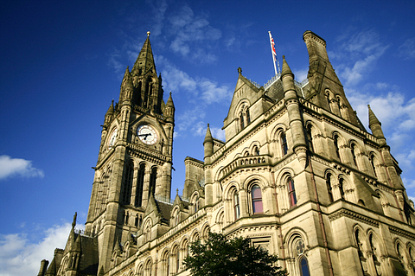
- Manchester Town Hall, built in 1877, is a magnificent example of Victorian neo-Gothic architecture and a symbol of civic pride.
- The city is considered one of the most linguistically diverse in Western Europe, with over 200 languages spoken by its residents.
- Manchester hosts the annual World Pie Eating Championships.
- The atom was first split in Manchester by Ernest Rutherford in 1917.
- According to a global survey, one out of ten people in the world are Manchester United fans.
History

History of Manchester
Learn about the city's evolution through the ages: the Roman fort, the Medieval town, the Industrial Revolution, Cottonpolis, the world's first passenger railway, the IRA bombing and the Millenennium redevelopment.
Main Attractions
In spite of its history stretching back to Roman times, Manchester is first and foremost a Victorian city. Its golden age, the last quarter of the 19th century, saw the erection of the city's grandest buildings, including the town hall. The city centre is compact enough to cover on foot.

Attractions (Centre-West)
Explore the area around the former Central Railway Station, the Town Hall, the Royal Exchange, Bridgewater Hall, Castlefield, the Roman ruins, and more.

Attractions (North)
Discover the medieval core of the city and the modern shopping area in the Millennium Quarter, and sample the bohemian atmosphere of the Northern Quarter.

Attractions (East-South)
For a change of mood, dine at Chinatown or stroll around the Gay Village, and visit the stupendous museums and art galleries around the University of Manchester.
Top Museums
General Museums
Manchester Museum
Located within the University of Manchester, the Manchester Museum is a treasure trove of archaeology, anthropology, and natural history. The museum boasts an impressive collection of over 4.5 million objects, including Egyptian mummies, dinosaur skeletons, and a vivarium housing live amphibians from around the world. The museum's galleries explore various themes, such as the Living Worlds gallery, which encourages visitors to reflect on their relationship with nature, and the Ancient Worlds gallery, which delves into the history of ancient civilisations. The museum also hosts temporary exhibitions that often focus on cutting-edge scientific research and cultural discoveries.
One of the highlights of the Manchester Museum is its extensive collection of Egyptian antiquities, featuring mummies, sarcophagi, and other artifacts that provide a glimpse into ancient Egyptian life and culture. Additionally, the museum offers a range of educational programs and activities designed to engage visitors of all ages with its vast collections.
Museum of Science and Industry (MOSI)
The Museum of Science and Industry celebrates Manchester's role as the world's first industrial city. Exhibits include vintage cars, aircraft, and locomotives, as well as displays on textiles, computing, and Manchester's sewerage and sanitation systems. The museum is situated on Liverpool Road and offers a fascinating insight into the city's industrial past. Visitors can explore the reconstructed 19th-century streets, which recreate the sights and sounds of Manchester during its industrial heyday.
MOSI also houses a collection of historic locomotives and offers rides on a replica of the first intercity railway line, which ran between Liverpool and Manchester. The museum's focus on innovation and technology makes it an engaging destination for both children and adults interested in science and history.
Specialised Museums
Imperial War Museum North
Located in Salford, just outside Manchester city centre, the Imperial War Museum North explores the impact of war on society. The museum features a collection of artefacts and personal stories that highlight the human cost of conflict. Its unique design, with a series of interconnected pods, creates an immersive experience for visitors. The museum's exhibitions cover various aspects of war, from the First World War to contemporary conflicts, providing a thought-provoking exploration of the effects of war on individuals and communities.
The museum also hosts temporary exhibitions that focus on specific themes or events, such as the experiences of soldiers during major conflicts or the role of women in wartime. These exhibitions often include personal artifacts and testimonies, offering a poignant reminder of the human side of war.
People's History Museum
This museum is dedicated to the history of democracy and the struggle for equality in Britain. It showcases a wide range of exhibits that explore the lives and experiences of ordinary people throughout history. From the early trade unions to the suffragette movement, the museum highlights key moments in the fight for social justice and political rights. The museum's collection includes banners, posters, and other artifacts that reflect the diverse struggles and achievements of the working class.
The People's History Museum also offers interactive displays and activities, allowing visitors to engage directly with the history of democracy and activism. Its exhibitions are designed to inspire reflection on the ongoing quest for equality and justice in society.
Manchester Jewish Museum
Housed in a stunning Grade II listed Moorish Revival synagogue, the Manchester Jewish Museum offers a glimpse into the history and culture of Manchester's Jewish community. The museum features a vast collection of artifacts, photographs, and personal stories, including over 20,000 photographs and 530 oral history testimonies. Visitors can explore the beautifully restored synagogue building, which itself is a testament to the architectural and cultural heritage of the Jewish community in Manchester.
The museum's exhibitions delve into themes such as immigration, community life, and the impact of major historical events on the Jewish community. It provides a unique opportunity to learn about the experiences and traditions of Manchester's Jewish population.
Greater Manchester Police Museum
Located in the Northern Quarter, this museum provides an intriguing look at the history of policing in Britain. Exhibits include police uniforms, vehicles, and even former police cells. The museum offers a glimpse into the evolution of law enforcement, showcasing how policing practices have changed over time. Visitors can explore recreated Victorian-era police stations and cells, gaining insight into the conditions faced by both police officers and prisoners in the past.
The museum also hosts guided tours and interactive activities, allowing visitors to engage more deeply with the history of policing. Its collection includes artifacts from significant cases and events in Manchester's policing history, providing a fascinating look at the city's law enforcement past.
Art and Culture
The Whitworth
The Whitworth is an art gallery known for its contemporary art exhibitions and its beautiful park setting. It was named Art Fund Museum of the Year in 2015 and features a diverse collection of art and textiles. The gallery's exhibitions often focus on modern and contemporary art, with a particular emphasis on works that explore themes of nature, culture, and society.
The Whitworth is also renowned for its stunning architecture and its integration with the surrounding park. Visitors can enjoy both the art exhibitions and the scenic views of the park, making it a unique cultural destination in Manchester.
Manchester Art Gallery
Manchester Art Gallery is home to a significant collection of Pre-Raphaelite art, among other notable works. The gallery hosts various exhibitions throughout the year, making it a must-visit for art enthusiasts. Its collection includes works by artists such as Ford Madox Brown and Dante Gabriel Rossetti, offering a glimpse into the artistic movements of the 19th century.
The gallery also features a range of contemporary art exhibitions, often focusing on themes relevant to modern society. Its diverse collection and engaging exhibitions make it a vibrant part of Manchester's cultural scene.
Sport and Literature
National Football Museum
Located in the Urbis building, the National Football Museum celebrates the history and culture of football in England. The museum features interactive exhibits, artifacts, and personal stories from football legends. Visitors can explore the evolution of football, from its early days to the present, and learn about the sport's impact on British culture and society.
The museum offers a range of activities and exhibitions that cater to both casual and dedicated football fans. Its collection includes iconic football memorabilia and interactive displays that allow visitors to test their football skills.
John Rylands Library
While not strictly a museum, the John Rylands Library is a significant cultural institution in Manchester. This stunning Victorian-era library is home to a vast collection of rare books and manuscripts, including works by William Shakespeare and the earliest known piece of the New Testament. The library's Gothic Revival architecture makes it a breathtaking destination for anyone interested in literature, history, or architecture.
Visitors can explore the library's exhibitions, which often focus on the history of printing, literature, and the library itself. The building's intricate stone carvings and stunning stained-glass windows make it a must-see attraction in Manchester.
Local Cuisine
The city is known for the iconic Manchester Tart, a sweet pastry filled with raspberry jam, custard, and coconut, as well as the hearty Lancashire Hotpot, a comforting casserole of lamb or beef with potatoes. For those seeking savoury treats, the Bury Black Pudding is a must-try, whilst the Eccles Cake, a flaky pastry filled with currants, makes for a perfect teatime snack. The adventurous might fancy a Pasty Barm, a unique combination of a meat pasty in a bread roll, or the Rag Pudding, a suet pastry filled with minced meat and onions. No visit to Manchester would be complete without sampling some chips and gravy, a simple yet beloved local favourite. These dishes, along with the city's thriving international food scene, make Manchester a true paradise for food enthusiasts.
Shopping
Manchester's city centre features several major shopping destinations, including the expansive Manchester Arndale with over 200 stores, and the upscale Trafford Centre located a few miles west. For high-end fashion, New Cathedral Street and Exchange Square are home to luxury brands and department stores like Selfridges. The Northern Quarter is known for its independent boutiques, vintage shops, and quirky finds. Market Street serves as the main shopping thoroughfare, lined with popular high street brands. Those seeking unique items should visit Afflecks, an indoor market filled with alternative and indie retailers. From designer outlets to bustling indoor markets, Manchester provides ample retail therapy opportunities for locals and visitors alike.
Nature in and around Manchester
The city itself boasts several green spaces, including Heaton Park, one of the largest municipal parks in Europe, featuring a boating lake and treetop adventure course. Just outside the city, Peak District National Park provides extensive hiking and biking trails through varied terrain, including moorlands and limestone valleys. Water-based activities can be enjoyed at Sale Water Park and Chorlton Water Park, where visitors can kayak, canoe, or simply enjoy a lakeside stroll. For those interested in wildlife, Dove Stone Nature Reserve offers opportunities to spot rare species like mountain hares and peregrine falcons. The Pennine Bridleway National Trail stretches for 120 miles through the Derbyshire Peak District, ideal for cycling and horse riding. Within the city centre, Fletcher Moss Gardens showcases a variety of plant life, including wild tulips and bamboo, maintained by dedicated volunteers.
Getting There & Around
By train, Manchester is served by two major railway stations: Manchester Piccadilly and Manchester Victoria, with frequent services from London taking approximately 2 hours, whilst direct connections run from major cities including Birmingham, Leeds, Liverpool, and Edinburgh via the West Coast Main Line and other key routes.
By coach, National Express and other operators provide regular services to Manchester's central coach station from cities throughout Britain, with journey times typically longer than rail but offering a comfortable alternative for budget-conscious travellers.
By car, Manchester sits at the heart of England's motorway network with the M62 running east-west through the city, connecting to the M6 for north-south travel, whilst the M56 provides links to Chester and North Wales, and the M61 connects to Preston and beyond - the city centre is easily reached via well-signposted junctions, though parking can be limited during peak times.
Best Time to Visit
The best time to visit Manchester is from June to August, when the city enjoys its warmest and most pleasant weather. During these summer months, temperatures typically range from 15°C to 22°C, providing ideal conditions for exploring the city's iconic landmarks, outdoor cafes, and beer gardens. This period also coincides with Manchester's vibrant events calendar, featuring exciting festivals such as the Manchester International Festival and Manchester Jazz Festival. Whilst summer is the peak tourist season, resulting in higher accommodation costs, the long, sunny days and bustling atmosphere make it well worth the visit. However, it's worth noting that Manchester's weather can be unpredictable, so it's always wise to pack a light jacket or brolly, even in midsummer.