


 Ireland Guide
 Scotland Guide
 Wales Guide
| Contents |
|---|
Introduction
Situated on the banks of the River Severn, Worcester (pronounced 'Wuh-ster'; pop. 104,000) is the county town of Worcestershire. The town is not the most charming of England, but has a few nice Tudor and Georgian buildings, a fine cathedral and an excellent porcelain museum.
Worcester has also acquired international fame with its Worcestershire Sauce. Futhermore, Worcester claims the oldest daily newspaper in the world, Berrow's Worcester Journal, which origins date back to 1690, as well as two prestigious public schools, the Royal Grammar School Worcester (founded c. 1291) and the Cathedral School (refounded by Henry VIII in 1541).
Worcester's most famous citizens was Sir Edward Elgar (1857-1934), who composed the world-famous Pomp and Circumstance Marches, including Land of Hope and Glory, the anthem of England at the Commonwealth Games, and March No1, used for the graduation ceremonies in the United States.
Every three years Worcester hosts the Three Choirs Festival, presumably the oldest music festival in Europe, alternating with Gloucester and Hereford.
Interesting Facts about Worcester
- Worcester is properly pronounced "Wuss-ter" rather than "War-kes-ter," according to local tradition.
- King John, one of England's most famous monarchs, is buried in Worcester Cathedral, making it unusual as most English kings were interred at Westminster Abbey.
- The Battle of Worcester in 1651 was the final battle of the English Civil War, where Oliver Cromwell's forces defeated King Charles II's Royalist army.
- The British Medical Association was founded in the board room of the old Worcester Royal Infirmary in 1832.
- Worcester is the birthplace of the world-famous Worcestershire Sauce, invented by chemists John Wheeley Lea and William Henry Perrins with inspiration from Bengal, India.
- Worcester Cathedral contains the only circular chapter house in the entire country.
- The Three Choirs Festival, dating from the 18th century and credited as the oldest music festival in the British Isles, rotates every three years between Worcester, Gloucester, and Hereford.
- Berrow's Worcester Journal, Britain's oldest surviving newspaper, was founded in Worcester in 1690.
- The city's famous porcelain industry was established by John Wall in 1751.
- Worcester was originally founded by the Romans around 50 CE and stood on the Roman road from Wroxeter to Gloucester.
- During the Middle Ages, Worcester was an important wool town, and glove making has been a significant industry since the 13th century.
- The Commandery, a 16th-century building, served as King Charles II's headquarters during the Battle of Worcester.
- Worcester's street layout has remained virtually unchanged since the Middle Ages, with the High Street following the original Roman thoroughfare.
- Archaeological evidence suggests settlements in Worcester date back to 700 BCE, making it one of the oldest cities in England.
- The remains of a 4,000-year-old Bronze Age burial site have been incorporated into a car park at Perdiswell, making it Britain's first park-and-ride scheme to be part of the nation's historical heritage.
- Worcester once boasted a prosperous river fishing industry, with Fish Street filled with cottages inhabited by fishermen's families.
- The city was formerly one of Britain's leading glove-making areas, with leather companies employing people in surrounding villages who crafted fine gloves by hand in their cottages.
History
Worcester's origins stretch back to antiquity, with evidence of early settlements near the River Severn. The Romans established a settlement around 50 CE, and its name, derived from the Latin castra for "camp", hints at this Roman habitation. Following the Roman departure, the Saxons founded a new town called Weorgoran ceaster, meaning "settlement of the people by the winding river". In 680 CE, Worcester was chosen as the seat of a new bishopric, establishing it as a significant religious centre. During the reign of Alfred the Great in the late 9th century, it was fortified as a burgh to defend against Viking invasions. Throughout the Middle Ages, Worcester thrived as a market town, with wool being its primary industry and glove-making becoming important from the 13th century. The city's prominence is underscored by the burial of King John in its magnificent cathedral in 1216.
The city played a crucial and dramatic role in the English Civil Wars. Although it initially equivocated, Worcester was swiftly occupied by Royalist forces at the start of the conflict. It endured its first siege in 1643 and remained a key Royalist garrison town for much of the war. Its most famous historical event is the Battle of Worcester on 3 September 1651, the final and decisive conflict of the wars. Here, Oliver Cromwell's New Model Army, numbering around 30,000, comprehensively defeated the 16,000-strong, mainly Scottish, Royalist army of Charles II. After the defeat, Charles II briefly hid in a house in the Cornmarket before famously fleeing to France. In the battle's aftermath, the victorious Parliamentarian army heavily looted the city, causing extensive damage, and around 10,000 of the captured soldiers were either transported to the New World or put to work in England.
Following the turmoil of the Civil War, Worcester rebuilt and evolved into a centre of fine craftsmanship and industry. In 1751, Dr John Wall founded the porcelain factory that would become the world-renowned Royal Worcester Porcelain, celebrated for its exquisite products. Another of the city's famous creations is Worcestershire sauce, a fermented condiment introduced by local chemists Lea & Perrins in 1838. The city is also home to Berrow's Worcester Journal, which was founded in 1690 and holds the title of Britain's oldest surviving newspaper. The city's strategic importance was recognised again during the Second World War when it was selected as a potential evacuation site for the entire British government.
Main Attractions
Worcester Cathedral
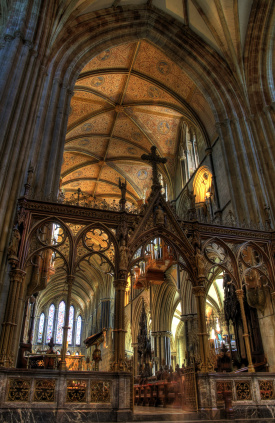
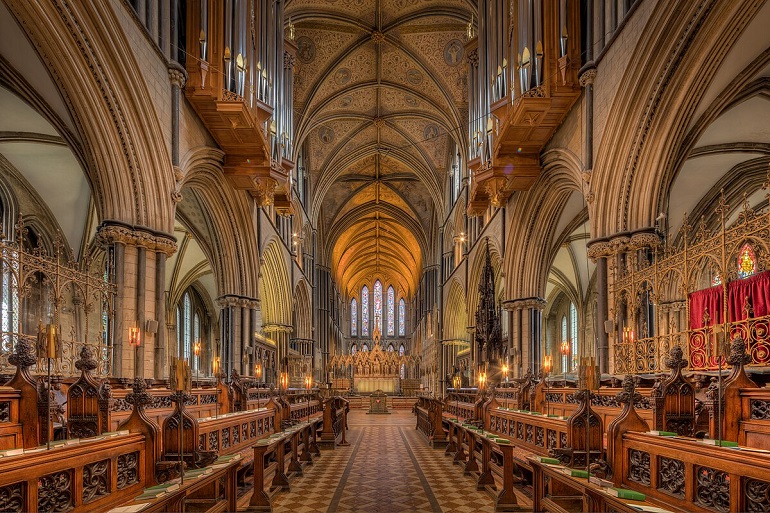
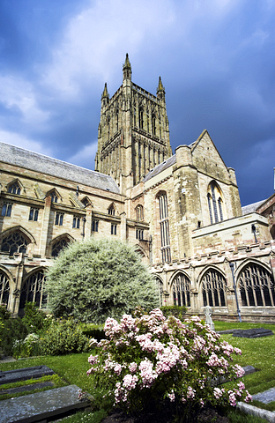
Worcester Cathedral was founded on the banks of the River Severn in 679 by St Theodore of Canterbury. Nothing remains of the original cathedral, and the construction of the present structure was started in 1084 by Bishop Wulstan (later canonised as St Wulstan) and boasts the largest Norman crypt in Britain. The present building showcases architectural styles ranging from Norman to Perpendicular Gothic, reflecting centuries of construction and renovation.
The cathedral is particularly notable for its Norman crypt, one of the largest in England, and its medieval cloisters which provide a peaceful retreat from the city bustle. The 14th-century Chapter House contains some of the finest medieval stone carving in the country, whilst the cathedral serves as the final resting place for several royal figures, including King John and Prince Arthur, Henry VIII's eldest son. Visitors can climb the cathedral tower for panoramic views across Worcester and the River Severn, though advance booking is recommended for tower tours.
Edgar Tower
The 14th-century Edgar Tower stands as Worcester's most recognisable medieval gatehouse, originally forming part of Worcester Castle's defensive system. This impressive stone structure serves as the ceremonial entrance to the cathedral precinct and College Green, creating a dramatic approach to the cathedral. The tower represents one of the finest examples of medieval military architecture in the West Midlands and provides an excellent backdrop for photography. Visitors can appreciate the tower's architectural details and historical significance as they pass through on their way to the cathedral.

Worcester City Centre Historic Quarter
The city centre is characterised by an exceptional collection of timber-framed buildings dating from the medieval and Tudor periods, alongside elegant Georgian brick architecture. These historic structures house shops, restaurants, and businesses, creating a vibrant commercial area with significant architectural interest. The Guildhall, built in 1721, represents one of the finest examples of early 18th-century civic architecture in the region. Walking tours of the historic quarter reveal the city's development over many centuries and highlight significant buildings and their historical contexts.
Worcester Woods Country Park
Covering over 100 acres of diverse landscape, Worcester Woods Country Park offers extensive woodland and meadow areas perfect for walking, cycling, and wildlife observation. The park features several well-marked trails of varying difficulty levels, from gentle strolls suitable for families to more challenging routes for serious walkers. Facilities include picnic areas, children's play zones, and a visitor centre with café. The park serves as an important habitat for local wildlife and provides educational opportunities through its nature trails and information boards. Car parking is available on site, making it easily accessible for visitors.
Gheluvelt Park
This memorial park was created to commemorate the First World War and provides a peaceful green space in the heart of the city. The park features formal gardens, a duck pond, and well-maintained lawns perfect for picnicking and relaxation. Children's facilities include a traditional playground and a modern splash pad that operates during warmer months. The park's war memorial serves as a focal point for remembrance services and provides a quiet space for reflection. Regular events and activities are held throughout the year, making it a vibrant community space.
Fort Royal Park
Located on the historic site of the English Civil War's final battle, Fort Royal Park offers both recreational facilities and significant historical interest. The elevated position provides some of the best panoramic views across Worcester, taking in the cathedral, river, and surrounding countryside. The park includes walking paths, open grassland for informal recreation, and interpretation boards explaining the site's historical significance. This location played a crucial role in the 1651 Battle of Worcester, and visitors can appreciate the strategic importance of this high ground in the city's military history.
River Severn Activities
Worcester River Cruises operates regular boat trips along the River Severn, offering unique perspectives of the city's skyline and cathedral from the water. These leisurely cruises provide commentary on local history and wildlife whilst showcasing the natural beauty of the Severn Valley. The river also offers opportunities for private boat hire and seasonal special cruises. Diglis Island, located in the river, hosts various events throughout the year including educational workshops and guided wildlife walks, accessible by special arrangement.
Spetchley Park Gardens
Situated on the outskirts of Worcester, Spetchley Park Gardens encompasses a substantial garden estate with over 30 acres of diverse botanical collections. The gardens feature a remarkable variety of plants, including rare and unusual species, set within mature parkland with views towards the Malvern Hills. Woodland walks wind through the estate, offering different perspectives on the gardens and surrounding countryside. The Victorian kitchen garden has been restored and demonstrates historical growing techniques. The gardens are particularly renowned for their spring bulb displays and autumn colours.
Worcester Racecourse
Positioned beside the River Severn, Worcester Racecourse hosts both flat and National Hunt racing throughout the year. The racecourse offers excellent facilities for spectators, with various viewing areas and hospitality options available. The riverside location provides an attractive setting for racing, with the cathedral providing a distinctive backdrop. The course is known for its friendly atmosphere and accessibility, making it suitable for both racing enthusiasts and casual visitors. Regular race meetings are scheduled from spring through autumn.
Worcestershire County Cricket Club
The historic cricket ground at New Road has been home to Worcestershire County Cricket Club since 1896 and is renowned for its picturesque riverside setting. The ground offers excellent views of Worcester Cathedral and is considered one of the most beautiful cricket venues in England. During the cricket season, the ground hosts county championship matches, one-day games, and occasionally international fixtures. The pavilion and surrounding facilities have been modernised whilst maintaining the ground's traditional character and charm.
Worcester and Birmingham Canal
The Worcester and Birmingham Canal provides excellent walking and cycling routes through the city and into the surrounding countryside. The towpath offers a peaceful alternative to road transport and showcases the industrial heritage of the region. The canal features several historic locks and bridges, with interpretation boards explaining the waterway's construction and operation. Canal boat trips and narrowboat hire are available for those wishing to experience the waterway from a different perspective. The route connects Worcester to Birmingham and forms part of the wider canal network.
Top Museums
Worcester City Art Gallery and Museum
Located in a handsome Victorian building in the heart of Worcester, this institution blends the traditional with the contemporary. The galleries showcase an eclectic mix of fine art, from British Impressionists to local legends such as Benjamin Williams Leader. Exhibitions cover art, natural history, geology, archaeology, and social history. One highlight is the Worcester Soldier galleries, which explore the histories of the Worcestershire Regiment and the Queen's Own Worcestershire Hussars.
Visitors can also discover quirky gems like dinosaur footprints, a reconstructed Victorian chemist’s shop, and the Worcestershire Sauce archive. Family-friendly activities, creative workshops, and a lively calendar of events make it a dynamic space for all ages.
The Commandery
The Commandery stands as one of Worcester’s most atmospheric historic buildings, famed for its role as the Royalist Headquarters during the decisive Battle of Worcester in the English Civil War. This Grade I listed site brings to life over 800 years of history — from its beginnings as a medieval chapel, through its time as a monastic hospital and family home, to its more recent function as a printworks.
The interactive Civil War Story exhibition immerses visitors in the dramatic events of the 17th century, letting you experience the choices and strategies of the time. There’s plenty for families, including dress-up activities, haunting tales, and beautiful walled gardens to explore.
Museum of Royal Worcester
A must-see for anyone with an interest in ceramics, this museum celebrates Worcester’s internationally renowned porcelain. The collections span pieces produced from 1751 until the factory’s closure in 2008, illustrating the artistry and innovation that made Royal Worcester a household name worldwide.
Stunning displays reveal the evolution of design, technology, and culture through the medium of porcelain. Interactive features, such as the Sensory Trail, and opportunities to get hands-on with pottery painting further enrich the visit, making the museum a delight for families, collectors, and creative spirits alike.
Tudor House Museum
Set upon one of the city’s oldest streets, this beautifully preserved 16th-century timber-framed house offers a glimpse into Worcestershire’s social history across the ages. The building itself is full of unique architectural features, and displays recount the story of Worcester through its many incarnations — from Tudor era life to its role as a coffee house and wartime ARP post. The museum places a strong focus on local heritage and community stories.
The Infirmary and George Marshall Medical Museum
These two medical museums, found on the University of Worcester’s City Campus and in the Worcestershire Royal Hospital, celebrate the life-saving advances in healthcare over the centuries. Exhibits combine history, science, art, and technology to bring the stories of early hospitals, medical practice, and pharmacy to life. Among the highlights are a reconstructed apothecary shop, a Victorian operating theatre, and artefacts ranging from curious instruments to death masks.
Other Notable Museums
- The Greyfriars: A timber-framed medieval house brimming with period furnishings and textiles reflecting five centuries of history.
- Worcestershire Masonic Library & Museum: Displays diverse regalia, artefacts, and memorabilia associated with freemasonry in the county.
Local Cuisine
The city and its surrounding county, Worcestershire, are famous for more than just the iconic Lea & Perrins Worcestershire Sauce; visitors can savour a range of local produce and unique dishes. Tuck into a Worcester Blue Burger for a modern twist on a classic, or seek out artisanal cheeses like Double Worcester and Malvern. The region is also renowned for its high-quality produce, including the celebrated Vale of Evesham asparagus when in season. For a truly authentic experience, look for pubs serving traditional dishes, perhaps a modern take on a historical recipe like a Ragout of Sweetbreads, and be sure to try locally made products such as Droitwich Salt, jams, and chutneys which are used by chefs across the county. Wash it all down with a pint of real ale or cider from one of the many local breweries.
Getting There & Around
To reach Worcester, England, travellers can choose from several convenient options. The city is well connected by train, with regular direct services from London Paddington, Birmingham, and other major cities. Those wishing to drive will find Worcester easily accessible via the M5 motorway, which runs to the east of the city and links with other key routes. National coach services also operate frequent routes to and from Worcester, making it accessible from many parts of the country. Additionally, for those arriving by air, Birmingham Airport is the nearest major airport, offering straightforward onward travel by train or road to Worcester.