


 Ireland Guide
 Scotland Guide
 Wales Guide
| Contents |
|---|

Introduction
Dover (pop. 34,000) is the main port linking England to Continental Europe. Dover is only 34 km (21 miles) away from the French town of Calais. 18 million passengers cross the Channel every year, either by ferries, hovercraft or through the Euro-tunnel using Eurostar highspeed train.
Dover is famous for its white chalk cliffs, which rise dramatically from the sea to heights of over 100 metres and gave Britain its nickname of Albion, meaning "white".
Dover was settled at least since the Bronze Age, and a waterlogged boat found there was estimated to be dating from ca. 1550 BCE , making it one of the oldest seagoing vessels ever recovered.
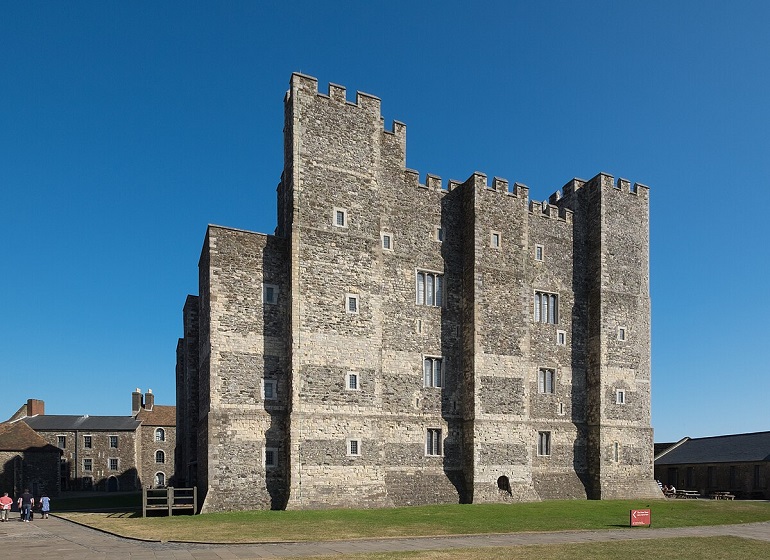
The main tourist attraction, apart from the cliffs, is Dover Castle, which started as a Saxon fort and was reinforced by William the Conqueror and Henry II. The castle came under attack in 1216 in a tentative French invasion, but the constable of the castle Hubert de Burgh successfully defended Dover during the three-month siege.
The Romans already built a 80-foot high lighthouse there in 50 CE, which still survives. Next to it, a Roman mansion known as the Painted House dates from about about 200 CE and is one of the best preserved Roman building in Britain.
Dover became the centre of English Channel defense during World War I. And during World War II. The town came repeatedly under the fire of German bombers and long-range guns, and consequently a series of underground caves and tunnels in the cliffs were dug and used as air-raid shelters.
Interesting Facts about Dover
- Dover is the closest English port to the European mainland and serves as Britain's gateway to the continent.
- The famous White Cliffs of Dover are made of chalk and tower approximately 350 feet (110 metres) above the sea.
- Dover's name is thought to derive from an ancient term referring to double banks or the split that could be seen heading into the harbour.
- Dover's harbour spans over 600 acres, making it one of the largest ferry ports in the world.
- Julius Caesar considered invading Britain from Dover in 55 BCE but found the imposing white cliffs to be a deterrent and landed elsewhere instead.
- Dover Castle, built by King Henry II in the 12th century, is England's largest castle and stands 375 feet above sea level.
- Dover is known as the 'Lock and Key of England' due to its strategic position controlling the English Channel.
- Dover Port is the busiest passenger ferry terminal in the world and the busiest cruise liner terminal in Britain.
- Ian Fleming wrote many of his James Bond novels at the foot of Dover's white cliffs, and the town features in his novel Moonraker.
- Dover is referenced in William Shakespeare's King Lear, cementing its place in English literary history.
- Over 368,000 tourists visited Dover Castle in 2019, making it one of England's most popular historic attractions.
- Dover was heavily bombed during World War II, with the town and seafront devastated by the Luftwaffe.
- You can see two historic shipwrecks from the White Cliffs of Dover, including the SS Falcon which caught fire and ran aground in 1926.
- Louis Blériot landed in Dover in 1909 after completing the first flight across the English Channel, with a memorial marking the exact spot.
- Dover was made one of the historic Cinque Ports during the 11th century and claims to be a Saxon borough by "prescription".
- Dover Castle houses a Roman lighthouse and the ancient Church of St. Mary in Castro within its precincts.
- Dover has three principal museums open all year round, including the Dover Museum, Roman Painted House, and Dover Transport Museum.
History
Evidence of human activity in Dover dates back to the Stone Age, with settlers originally crossing a land bridge before the English Channel formed. Archaeological finds, such as Neolithic flint tools and pottery, indicate early settlements in the River Dour valley. The discovery of the world-famous Bronze Age Boat, dating from around 1550 BCE, underscores Dover’s significance as a hub for early maritime trade. By the 1st century BCE, Julius Caesar arrived off the coast of Dover, although his fleet eventually landed at nearby Deal.
The Romans heavily fortified Dover, then known as Portus Dubris, establishing it as a major naval base and port. Two Roman lighthouses were constructed to guide ships, and the remains of one such lighthouse—Britain’s tallest surviving Roman structure—can still be seen today. In medieval times, Dover played an essential role as one of the Cinque Ports, a defensive and trading alliance that provided ships and men to the Crown in exchange for privileges. Dover Castle, dramatically perched above the town, was developed extensively from the 12th century and withstood multiple French attacks, most notably the siege of 1216 by Prince Louis of France. The town prospered under royal patronage, saw the construction of religious institutions, and thrived as a centre for trade and ferry crossings.
From the Napoleonic era through the 20th century, Dover was a focal point of military defence. Extensive fortifications were built, including those on the Western Heights, in response to repeated threats of invasion from France. During both World Wars, Dover became known as “Britain’s Frontline Town,” serving as a pivotal embarkation port, air raid shelter, and command centre during events such as the Dunkirk evacuation. The port and town endured heavy shelling and bombing, earning a lasting reputation for resilience. Post-war, the town modernised its harbour and embraced tourism, while many historic sites—such as Dover Castle and its wartime tunnels—remain prominent attractions today.
Main Attractions
The White Cliffs of Dover

The White Cliffs of Dover stand as one of England's most recognisable natural landmarks, rising dramatically from the English Channel with their distinctive chalk faces. These iconic cliffs offer numerous walking trails accessible from the National Trust's White Cliffs Visitor Centre, providing visitors with spectacular panoramic views across the water. On particularly clear days, the French coastline becomes visible from various vantage points along the cliff tops. The area serves as an excellent location for wildlife observation, with diverse wildflower species and bird populations thriving in the coastal environment. Visitors can also access the Fan Bay Deep Shelter, a network of wartime tunnels carved beneath the cliffs during the Second World War, which offers guided tours revealing the area's military history.
Dover Castle
Dover Castle represents one of England's most impressive medieval fortifications, originally founded in the 11th century and significantly expanded during the 12th century. The castle complex features the imposing Great Tower, extensive battlements, and a network of secret wartime tunnels that served crucial roles during both world wars. Within the castle grounds, visitors can explore the Underground Hospital, which provides insight into the site's wartime medical facilities. The grounds also contain the Roman Lighthouse, known as the Pharos, alongside St Mary in Castro church, demonstrating the site's long historical significance. The castle's elevated position offers commanding views over Dover's port and the English Channel, making it both a strategic historical site and a scenic viewpoint.
The Western Heights
The Western Heights comprise extensive 19th-century fortifications that overlook Dover's town centre and harbour, forming part of the area's comprehensive defensive system. Key features include the Drop Redoubt fort, the North Centre Bastion, and the Citadel, each representing different aspects of 19th-century military architecture. The Grand Shaft stands as a particularly unique feature—a triple-helix staircase designed to provide quick access between the heights and the town below. While some areas remain accessible for self-guided exploration, visitors can enjoy impressive views of the surrounding Dover area and appreciate the scale of these historical defensive works.
Samphire Hoe Country Park
Samphire Hoe Country Park occupies a unique position as a nature reserve created entirely from chalk excavated during the Channel Tunnel's construction. This 74-acre site sits at the foot of Shakespeare Cliff and provides designated trails suitable for both walking and cycling enthusiasts. The park has gained recognition for its excellent sea fishing opportunities, diverse wildflower displays including rare orchid species, and varied birdwatching possibilities. Facilities include an on-site tea kiosk and education centre, making it an accessible destination for visitors interested in both recreation and learning about the area's natural environment.
South Foreland Lighthouse
South Foreland Lighthouse occupies a prominent position on the White Cliffs, having been constructed in 1843 during the Victorian era. This lighthouse holds historical significance as the first to utilise electric lighting and served as the location for Marconi's pioneering radio experiments. Guided tours provide detailed information about lighthouse operations and the site's technological innovations throughout its operational period. The lighthouse complex includes a tea room and offers excellent views across the English Channel, combining historical interest with scenic appeal.
Dover Beaches
Dover's coastline features several distinct beach areas, each offering different characteristics and amenities. Dover Beach, located near the town centre, consists of pebbles and benefits from shelter provided by the harbour walls, with an adjacent promenade and nearby cafés enhancing visitor convenience. Shakespeare Beach, positioned west of the port, remains less developed than Dover Beach whilst providing excellent views of the surrounding cliffs. St Margaret's Bay, accessible via the coastal path east of Dover, offers a quieter cove setting known for its dramatic cliff scenery and more secluded atmosphere.
Kearsney Abbey Gardens
Kearsney Abbey Gardens occupy a former estate site approximately two miles northwest of Dover, providing public access to carefully maintained landscaped gardens. The grounds feature several lakes, mature tree collections, and well-designed garden areas that reflect the site's historical development as a private estate. The gardens operate as a free attraction, making them popular for picnics and nature walks amongst both locals and visitors seeking peaceful outdoor recreation.
Saxon Shore Way
The Saxon Shore Way represents a significant long-distance national trail that passes directly through Dover, offering extensive route options along the coastline and through the surrounding countryside. This well-signposted trail system accommodates both walking and cycling activities, with particular scenic sections around the cliffs and through the town area. The trail provides access to various historical and natural sites whilst offering visitors the opportunity to experience Dover's landscape from different perspectives.
Top Museums
Dover Museum & Bronze Age Boat Gallery
Situated in Market Square behind its Victorian façade, Dover Museum is the largest and most comprehensive in the district. The museum chronicles over 3,000 years of Dover’s story—from prehistory to the present day—across three floors brimming with artefacts, models, and interactive displays.
Highlights:
- Ground Floor Archaeology Gallery: Travel through Dover’s timeline from the Stone Age to the Saxons, featuring Roman fort remains, exquisite Saxon jewellery, and Celtic artefacts. This gallery reveals how Dover’s fortunes were shaped by its strategic location.
- History Gallery: The first floor explores the rise of Dover as a Cinque Port, its maritime significance, and life during two World Wars. Expect to find scale models illustrating the evolution of the port, exhibits on Dover Castle, and a section dedicated to ‘Frontline Dover’ detailing the town’s vital role during wartime Britain.
- Bronze Age Boat Gallery: Arguably the museum’s star feature, this gallery houses the world’s oldest known seagoing vessel—a 3,600-year-old, oak-planked boat discovered in Dover in 1992. The gallery uses artefacts, replicas, and digital interactives to illuminate the boat’s significance for Bronze Age trade and technology, offering an engrossing experience for visitors of all ages.
- Channel Swimming Collection: Celebrating Dover’s pivotal role in cross-Channel swimming, this display tells the stories of record attempts from Captain Matthew Webb’s successful swim in 1875 to recent achievements. The permanent exhibition is complemented by an extensive online archive.
- Changing Exhibitions: The mezzanine galleries offer rotating special exhibitions on local history, from smuggling and rescue operations to community traditions.
- Family Friendly Features: The museum also offers reconstructed street scenes, hands-on activities, and a much-loved mounted polar bear named Fred, a local mascot for generations.
Dover Transport Museum
Just outside the town centre, this museum is dedicated to the region’s transport heritage and is unique in Kent. It presents a remarkable collection of vintage vehicles, model railways, and reconstructed shopfronts that evoke the nostalgia of 20th-century Dover. The Dover Transport Museum is entirely volunteer-run and operates as a registered charity.
Highlights:
- Vintage Vehicle Collection: Features historic cars, motorcycles (including the world’s largest display of Norman Motorcycles), buses, and commercial vehicles, many lovingly restored by local enthusiasts.
- Model Railways and Bygone Street Scenes: Interactive model railways and recreated high street shops give visitors a tangible sense of past local life, appealing to family visitors and history buffs alike.
- Ferry and Tunnel Memorabilia: Insightful displays showcase artefacts from the Dover car ferries and channel tunnel operations—celebrating Dover’s role as Britain’s main cross-channel gateway.
- Romany Life Displays and Community Exhibits: The museum delves into local social history with themed displays on Romany culture and the evolution of everyday life during the 20th century.
Dover Castle Museums & Exhibits
While primarily a fortress, Dover Castle houses several museum exhibits that shed light on its military, medieval, and wartime history, including secret wartime tunnels and siege experiences.
Grand Shaft Staircase
This unique triple-helix staircase is a feat of early 19th-century engineering, once providing soldiers a rapid route from the Western Heights barracks to town below. It stands as a heritage attraction rather than a formal museum but is well worth a visit for those interested in military architecture.
Maison Dieu (Dover Town Hall)
Set to reopen after restoration in 2025, Maison Dieu will feature as a cultural hub and heritage centre, with forthcoming exhibitions exploring the building’s history and Dover’s place in the cross-Channel region.
Local Cuisine
Dover's culinary scene reflects its position as a historic port town in Kent, blending traditional English fare with coastal specialities that have sustained locals for centuries. The town is particularly renowned for Dover sole, a prized flatfish caught in the English Channel waters between Dover and France, typically served grilled or fried with lemon and local potatoes. Visitors should also sample huffkins, Kent's distinctive bread rolls marked by a thumb indentation in the centre, traditionally filled with bacon for breakfast or local cherries and cream for afternoon tea. Other regional delicacies include lamb's tail pie, a hearty dish featuring tender Romney Marsh lamb, and Kentish rarebit, a local twist on Welsh rarebit made with apples and cheese on toasted bread. The town's proximity to Whitstable means fresh oysters feature prominently on menus, whilst sweet treats like gypsy tart and Kentish cherry batter pudding provide a taste of the county's dessert traditions. Dover's restaurants, from waterfront establishments like Cullins Yard to traditional pubs such as The White Horse, showcase these local ingredients alongside classic fish and chips, making the town an excellent base for exploring Kentish cuisine.
Getting There & Around
Dover is located 120km from central London, close to the southeasternmost tip of England. The French town of Calais lies only 32km across the English Channel.
By train, Dover is easily accessible from London with high-speed Southeastern services from St Pancras International taking just over an hour to reach Dover Priory station in the town centre, whilst regular services from Victoria and Charing Cross stations take approximately two hours.
By coach, National Express operates services from Victoria Coach Station to Dover, with journeys taking around two to three hours and arriving at either the central bus station on Pencester Road or Dover Eastern Docks Ferry Terminal.
By car, Dover lies approximately 90 minutes from London via the M2 and M20 motorways - drivers can take the M20 which merges into the A20 at Folkestone, continuing until the Eastern Docks roundabout, or alternatively use the M2 which becomes the A2 at Faversham before reaching the same destination.
By sea, regular ferry services operate between Dover and Calais or Ostend).