


 Ireland Guide
 Scotland Guide
 Wales Guide
| Contents |
|---|
Introduction
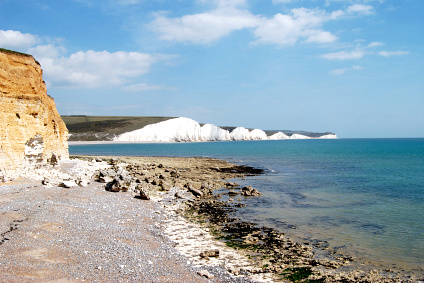
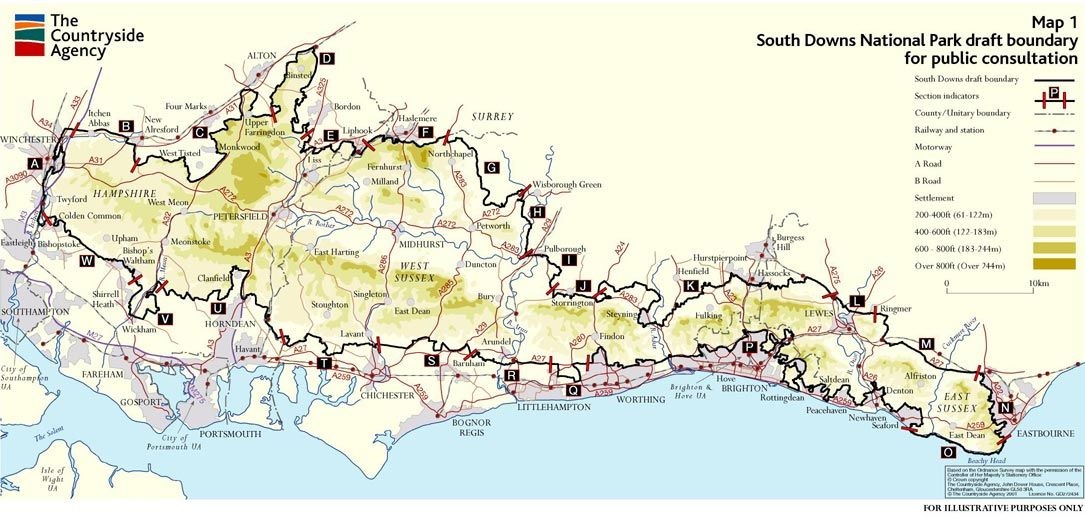
South Downs National Park, England’s newest national park, was officially designated on 31 March 2010. Covering approximately 1 600 km² across Hampshire, West Sussex and East Sussex, it stretches from Winchester in the west to the white chalk cliffs of Seven Sisters near Eastbourne in the east. The park’s undulating chalk downland, valley woodlands and lowland heath support internationally important habitats, while the 160 km South Downs Way offers the only National Trail to lie wholly within a single national park. Home to around 113 000 residents and visited by millions annually, South Downs was granted International Dark Sky Reserve status in 2016, making it one of the darkest and most accessible night-sky destinations in southern England.
Geography and Landscape
The Downs: Chalk Spine and Rolling Hills
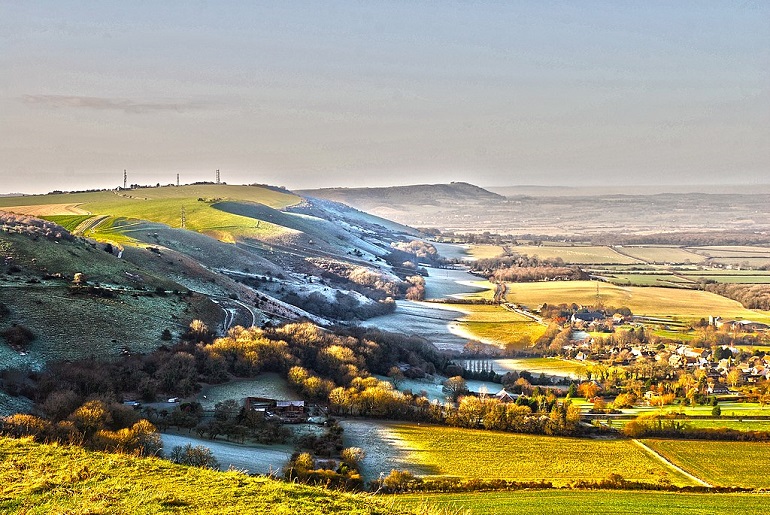
At the heart of the park lies the distinctive chalk ridge of the South Downs, often described as its “spine”. These chalk hills, laid down when the region was submerged under a warm sea millions of years ago, now rise as smooth, rolling downlands with sweeping, open views. The landscape is punctuated by steep north-facing escarpments and gently sloping “dip” slopes stretching southward. In the east, the chalk meets the English Channel in formidable white cliffs such as the Seven Sisters and Beachy Head.
The Western Weald: Contrast and Variety
Transitioning further west or north from the chalk hills, visitors encounter the Western Weald—a landscape shaped by older sandstones and clays. This area brings a dramatic change, with densely wooded hills, hidden valleys, and a patchwork of fields and woodlands. The highest point in the park, Blackdown, reaches 280 metres and crowns the Greensand Ridge. In contrast, Butser Hill is the highest chalk hill at 271 metres.
Rivers and Valleys
Several significant rivers wind their way across the park, carving deep valleys through the chalk downs and adding character to the scenery. The Arun, Adur, Ouse, and Cuckmere are among the most notable, each creating dramatic gaps in the hills that offer natural corridors for both wildlife and humans and providing attractive spots for exploration and relaxation.
Land Use and Cultural Landscape
The landscape of the South Downs is as much shaped by millennia of human activity as it is by its geology. Ancient tracks like the South Downs Way follow the ridge, connecting market towns, hidden hamlets, and historic estates. Dry valleys, wind-blown hilltops, and distinctive villages can be found throughout, often sited to make the most of natural springs and sheltered folds in the land.
Geological Legacy
Both the chalk of the downs and the greensand of the Weald were deposited during the Cretaceous Period, lending the area its classic cuesta landform with steep escarpments and rolling slopes. The porous chalk acts as a vast underground reservoir, feeding springs and streams and supporting a network of rivers that thread through the region.
Coastal and Inland Beauty
In the eastern reaches, the South Downs yield to the sea in some of England’s most recognisable coastal scenery. Inland, the patchwork of open downland, wooded ridges, and farmed valleys reveals a landscape of remarkable variety—one that is ever-changing yet always inviting.
The South Downs National Park is a region of unique geographical diversity and scenic splendour, offering visitors an ever-changing panorama of rolling hills, ancient ridgelines, sheltered valleys, and breath-taking coastal vistas. This is the landscape that has inspired poets, artists, and travellers for centuries.
Flora and Fauna
The South Downs National Park is a showcase for the very best of southern England’s natural heritage, blending rolling landscapes with a wealth of distinctive wildlife and plant life. Its diverse habitats—chalk grasslands, coastal cliffs, ancient woodlands, heathlands, and river valleys—make it one of the richest areas for biodiversity in the UK.
Chalk Grasslands
Fauna:
- Home to 39 species of butterfly including the striking Adonis blue, chalkhill blue, and the Duke of Burgundy. Insects such as bees and beetles are abundant thanks to the diversity of wildflowers.
- Small mammals and birds such as skylarks and linnets find shelter and food here, while fallow deer may graze in woodland glades nearby.
Flora:
- Host to an astonishing variety of wildflowers, including the rare burnt orchid, horseshoe vetch, cowslip, wild thyme, and the iconic round-headed rampion or ‘Pride of Sussex’.
- Up to 50 plant species can be found in just a single square metre, making this habitat one of the most species-rich in Western Europe.
Woodlands and Hedgerows
Fauna:
- Ancient beech, oak, and yew woods are havens for species such as the elusive barbastelle bat, tawny owls, woodpeckers, and hazel dormice.
- Hedgerows act as “nature’s superhighways”, supporting birds, insects, and small mammals.
Flora:
- Notable woodlands include the mystical yew groves of Kingley Vale, some of the oldest living trees in England.
- Expect bluebells and a wide array of fungi and understory plants in spring and autumn.
Heathlands
Fauna:
- Heathlands at Woolmer Forest and Shortheath Common are home to all Britain’s native reptile and amphibian species, including adders, smooth snakes, sand lizards, great crested newts, and natterjack toads.
- Birdlife such as the nightjar and woodlark find their niche in these rare and open landscapes.
Flora:
- Dominated by heather, birch, gorse, and purple moor grass, with Scots pine scattered throughout.
- Carnivorous plants like sundew can also be discovered here.
Rivers, Wetlands and Chalk Streams
Fauna:
- Otters and water voles can be spotted if you’re fortunate, while kingfishers and wading birds abound along the River Ouse and Arun floodplains.
- Rivers such as the Meon and Itchen are famed for their brown trout, salmon, grayling, as well as a host of dragonflies and amphibians.
Flora:
- Stream and riverside habitats support aquatic plants and provide vital resources for a huge variety of insects and other wildlife.
Coastal Cliffs and the Heritage Coast
Fauna:
- The chalk cliffs, particularly at Seven Sisters, are vital for migratory and breeding birds including fulmars, kittiwakes, skylarks, and Canada geese.
- The Cuckmere Estuary provides feeding grounds for ringed plovers and other waders.
Flora:
- Cliff-tops and fringes display hardy flowers like sea thrift and ground ivy, thriving in windy, saline conditions.
Seasonal Highlights
- Spring: Bluebells in ancient woodlands, early spider orchids, and vibrant butterflies in chalk grasslands.
- Summer: Butterflies such as the chalkhill blue reach peak abundance; wildflower meadows burst into colour; adders and dragonflies are most visible.
- Autumn: Raptors like kestrels, buzzards and red kites can be seen on open downs, while fungi appear in shaded woods.
- Winter: Rivers and wetlands host gathering wading birds; look for water voles and flashes of the kingfisher.
Noteworthy and Rare Species
| Rare Species | Status/Location |
|---|---|
| Greater mouse-eared bat | Once extinct, now found in the park |
| Burnt orchid | Scarce, found in chalk grasslands |
| Silver-spotted skipper | Rare butterfly of warm, grazed slopes |
| Round-headed rampion | ‘Pride of Sussex’, chalk hills |
| Otter | Elusive, rivers and wetlands |
| Nightjar | Heathlands and commons, spring-summer |
Activities and Attractions
Hiking Trails: The Heart of the South Downs Experience
The South Downs Way: England's Premier National Trail
The South Downs Way represents the crown jewel of English walking routes, stretching 100 miles (160km) from Winchester Cathedral to the Victorian seaside resort of Eastbourne. This National Trail follows ancient droveways and trackways along the chalk escarpment, offering walkers an unparalleled journey through some of England's most important chalk landscapes.
Route Highlights by Section:
Winchester to Exton (12 miles)
The journey begins at the historic Winchester Cathedral, following ancient paths through rolling Hampshire countryside. The route passes through picturesque villages and offers gentle introduction to the downs terrain.
Exton to Buriton (15 miles)
This section showcases remarkable diversity, featuring Old Winchester Hill with its Iron Age earthworks, a surprise vineyard, and the fly fishing haven at Meon Springs. The trail climbs to Butser Hill at 270m, the highest point on the entire South Downs Way, before winding through Queen Elizabeth Country Park's forested paths to the charming village of Buriton.
Buriton to Amberley (14 miles)
After crossing gently rolling farmland, the trail enters the South Downs proper, following the northern edge with spectacular views towards northern landscapes and villages. The route passes through Cocking and woodland areas before briefly following the ancient Roman Stane Street near Bignor Roman Villa, then descending towards the River Arun and the picturesque village of Amberley.
Amberley to Pyecombe (16 miles)
This section features the famous Chanctonbury Ring, a prominent hilltop crowned with beech trees, before moving south around Steyning and Bramber. Walkers cross the River Adur before reaching the impressive dry valley of Devil's Dyke near Pyecombe, offering spectacular 360-degree views.
Pyecombe to Lewes (13 miles)
The trail passes the iconic Jack and Jill windmills at Clayton and reaches Ditchling Beacon (248m), the highest point of the South Downs in Sussex. This elevated position provides breathtaking panoramic views before the route turns south towards the historic town of Lewes.
Lewes to Eastbourne (17 miles)
The final section passes Rodmell, where Virginia Woolf once lived, crosses the River Ouse, and leads to the charming village of Alfriston. A riverside walk through ancient Friston Forest precedes the dramatic finale at the Seven Sisters white chalk cliffs, continuing along the cliff tops to spectacular Beachy Head and onwards to Eastbourne.
Navigation and Practical Information:
- Well-marked with National Trail waymarkers throughout
- Total ascent approximately 4,200m over the entire route
- Suitable for walking, cycling, and horse riding
- Multiple accommodation options available along the route
- Water taps and facilities provided at regular intervals
The Serpent Trail: A Hidden Gem
The 65-mile Serpent Trail offers a completely different South Downs experience, winding through the internationally rare heathland landscapes that characterise the western portion of the National Park. Beginning at Haslemere Railway Station and finishing at Petersfield, this serpentine route provides solitude and stunning scenery often overlooked by mainstream tourism.
Key Features:
- Passes through Black Down, the highest point in the South Downs National Park at the Temple of the Winds
- Features ancient sunken lanes and droveways used by traders and shepherds for thousands of years
- Traverses National Trust sites including Marley Common, Woolbeding Common, and Lavington Common
- Well-waymarked with distinctive Serpent Trail discs throughout
- Passes through historic villages including Liphook, Milland, Fernhurst, Petworth, and Midhurst
Additional Long-Distance Routes
- The Downs Link (37 miles)
Connecting the North Downs Way with the South Downs Way, this route follows disused railway lines and offers gentle gradients suitable for families. - The Hangers Way (21 miles)
Exploring the unique 'hanger' woodlands of Hampshire, this trail connects Alton with the South Downs Way. - Shipwrights Way (50 miles)
Running from Alice Holt Forest to Portsmouth Harbour, this route celebrates the area's maritime heritage.
Shorter Circular Walks and Day Hikes
- Seven Sisters and Beachy Head Coastal Walk
Experience England's most dramatic chalk cliffs on this iconic coastal route. The undulating path along the cliff tops provides constant sea views and photographic opportunities at every turn. - Cissbury Ring Variations
This ancient Iron Age hill fort offers multiple route options from 2.5 to 9 miles, combining archaeological interest with expansive views across the downs and towards the coast. - Chanctonbury Ring Circuits
Choose between a 9km circular walk or a more challenging 15km version, taking in ancient earthworks, woodland paths, and panoramic ridge walking with views stretching to the Isle of Wight. - Devil's Dyke Explorations
This remarkable dry valley offers various walking options, from short family-friendly strolls to longer ridge walks incorporating nearby villages and viewpoints. - Ditchling Beacon to Devil's Dyke Ridge Walk
Connect two of the South Downs' most famous landmarks on this challenging ridge walk, featuring constant panoramic views and several ascent and descent opportunities. - East Meon Circular (14km)
Combining peaceful riverside walking along the River Meon with rolling pasture and traditional Hampshire village scenes, this route showcases the gentler side of the downs. - Cuckmere Valley and Litlington White Horse
Explore the meandering Cuckmere River alongside its famous white horse chalk figure, with opportunities to extend the walk to include Alfriston and the Seven Sisters.
Cycling Adventures
South Downs Way by Bicycle
The entire 100-mile South Downs Way is fully accessible to cyclists, offering one of the UK's most challenging and rewarding cycle touring experiences. The route demands mountain bikes due to its chalky, stony, and sometimes muddy terrain, making it unsuitable for road bikes.
Cycling Highlights:
- Demanding climbs and steep descents mixed with flatter sections
- Takes between seven and nine days to complete the full distance
- Join at accessible points including Cocking Village, Harting Down, or Bignor Hill near Amberley
- Horse-friendly facilities including water troughs available throughout
Family-Friendly Cycling Routes
Centurion Way (5.5 miles)
This former railway line between Chichester and West Dean provides flat, tarmac cycling perfect for families. The route features the Chichester Road Gang sculptures by David Kemp, created from empty oxygen cylinders to depict Roman road workers.
Meon Valley Trail
Following another disused railway line, this route offers gentle gradients and scenic countryside views through Hampshire.
Advanced Cycling Challenges
The more open Eastern Downs provide varied cycling terrain, from challenging ascents to gentle country lane rides and vineyard tours. South Downs by Bike offers 10 curated routes of varying difficulty levels.
Equestrian Activities
The South Downs National Park boasts approximately 745 miles (1,200km) of bridleways, making it one of the UK's premier horse riding destinations.
South Downs Way on Horseback
Distance: 100 miles (160km)
Difficulty: Expert or accomplished riders only
Duration: Minimum four days, covering approximately 25 miles daily
The route provides excellent going on fast-draining chalk terrain that remains mud-free even in wet weather. Riders encounter steep climbs and descents requiring fitness from both horse and rider, along with numerous gates and occasionally stony paths.
Facilities for Equestrians:
- Horse-friendly accommodation available along the route
- Water taps and troughs provided at regular intervals
- Horse-friendly pubs and cafés located strategically along the way
- Horsebox parking available throughout the national park
Queen Elizabeth Country Park Equestrian Trails
Located near Petersfield, this country park offers excellent horse riding facilities:
Permissive Horse Trail (9.7km/6 miles)
A circular route through Queen Elizabeth Forest, marked by red-topped posts with white horseshoe symbols.
Clanfield Bridleway 9 (2km/1.25 miles)
A shorter route connecting the park to Chalton village.
Facilities:
- Designated horsebox parking at Gravel Hill
- Water trough available behind the Visitor Centre
- Booking system available for multiple horseboxes
- Regular equestrian events throughout the year
Water-Based Activities
River Adventures
The South Downs' gentle rivers provide excellent opportunities for peaceful water-based exploration:
River Ouse
Flowing through Lewes and past several historic villages, the Ouse offers gentle paddling with opportunities to spot local wildlife and enjoy riverside pubs.
Cuckmere River
Famous for its meandering course and appearance in numerous films and television programmes, the Cuckmere provides a unique paddling experience through ancient water meadows.
River Arun
The longest river in Sussex offers varied paddling experiences, from gentle family-friendly sections to more challenging stretches for experienced paddlers.
Guided Water Tours
The Kayak Coach provides professional guided tours and equipment rental, offering one of the best ways to experience the South Downs from a unique aquatic perspective. These tours combine scenic river paddling with insights into local history, wildlife, and geology.
Guided Tours and Experiences
South Downs Tours
Operating comfortable 8-seat, fully air-conditioned minibuses, South Downs Tours provides luxury guided experiences accessing viewpoints along narrow country lanes inaccessible to larger coaches.
Standard Tour Highlights:
- Seven Sisters coastline and Coastguard Cottages
- Beachy Head and Bo Peep spectacular vistas
- Birling Gap beach walks beneath towering chalk cliffs
- Historic Alfriston village with galleries, boutiques, and traditional pubs
- Long Man of Wilmington mystical hill figure
Bespoke Tour Options:
Custom tours available for groups up to 8 people, allowing visitors to create personalised itineraries based on specific interests.
Walking Tours and Themed Experiences
Various operators provide specialist guided walking tours focusing on:
- Historical themes including Roman heritage, medieval history, and wartime stories
- Archaeological walks exploring ancient sites and prehistoric landscapes
- Natural history tours focusing on geology, flora, and fauna
- Literary connections including Virginia Woolf, Alfred Lord Tennyson, and other writers associated with the downs
Stargazing and Dark Sky Experiences
The South Downs National Park contains 10 official Dark Sky Discovery Sites, offering exceptional stargazing opportunities free from light pollution.
Premier Stargazing Locations
Bignor Hill Dark Sky Discovery Site
Featuring 360-degree views and easy Milky Way visibility with the naked eye, Bignor Hill represents one of the finest stargazing locations in southern England. The National Trust car park provides free access, with the location accessible via a steep track through Bignor village.
Harting Down
Managed by the National Trust, this Site of Special Scientific Interest offers wide-open spaces perfect for astrophotography, with the Milky Way clearly visible across the night sky. The location provides spectacular daytime views reaching the Isle of Wight.
Butser Hill
The highest point on the South Downs Way also serves as an excellent stargazing location, combining elevation with minimal light pollution for optimal celestial viewing.
Astronomy Events and Facilities
Many Dark Sky Discovery Sites host regular astronomy events, star parties, and guided night-time walks, often in partnership with local astronomy societies and the South Downs National Park Authority.
Historical Sites and Cultural Attractions
Major Castles and Fortifications
Arundel Castle
This magnificent hilltop fortress offers extensive grounds, regular re-enactments, jousting tournaments, and medieval-themed events throughout the year. The castle's elevated position provides commanding views across the surrounding countryside.
Pevensey Castle
With a remarkable history spanning 16 centuries, this fortress exhibits fascinating stories from Roman origins through Norman conquest to its role during the Second World War.
Archaeological Sites
Bignor Roman Villa
One of the largest and most impressive Roman villa sites in Britain, featuring outstanding mosaic floors and providing insights into Romano-British life and culture.
Cissbury Ring
This Iron Age hill fort represents one of the finest examples of prehistoric defensive earthworks in southern England, combining archaeological significance with spectacular views.
Chanctonbury Ring
The mysterious hilltop site combines Iron Age earthworks with later Roman and medieval remains, surrounded by distinctive beech trees planted in the 18th century.
Museums and Cultural Sites
Ditchling Museum of Art and Craft
Celebrating the area's rich artistic heritage, this museum showcases the creative legacy of the Ditchling community and its influence on British arts and crafts.
Amberley Working Museum
This open-air museum brings industrial heritage to life, demonstrating traditional crafts and industries that shaped the South Downs landscape.
Middle Farm
An award-winning working farm offering insights into agricultural practices, local food production, and countryside management.
Historic Villages and Market Towns
Alfriston
Known as the 'Cathedral of the Downs', this picturesque village features a stunning 14th-century church, traditional thatched cottages, and a fascinating smuggling history. The village offers numerous galleries, boutiques, cafés, and traditional Sussex pubs.
Amberley
This quintessential chalk downland village features thatched cottages, a medieval church, and the ruins of a 14th-century castle, all set against the backdrop of dramatic chalk cliffs.
Lewes
The historic county town of East Sussex boasts a Norman castle, Anne of Cleves House, and strong connections to Thomas Paine and other historical figures.
Family Attractions and Adventure Parks
Farm Parks and Animal Attractions
Fishers Adventure Farm Park
This popular destination combines animal encounters with extensive play facilities, rides, and hands-on farm experiences suitable for all ages.
Drusillas Park
One of the UK's best small zoos, featuring exotic animals, adventure play areas, and educational programmes designed to engage children with wildlife conservation.
Dunreyth Alpacas
Offering unique alpaca encounters and walking experiences, this attraction provides memorable family experiences in the heart of the South Downs.
Gardens and Natural Attractions
Kingley Vale National Nature Reserve
Home to some of Britain's oldest yew trees, this ancient woodland offers peaceful walks through one of Europe's finest yew forests, with opportunities to spot rare wildlife and enjoy spectacular downland views.
Seven Sisters Country Park
Featuring the iconic white chalk cliffs of the Sussex Heritage Coast, this country park provides excellent visitor facilities, guided walks, and educational programmes focusing on coastal geology and wildlife.
Adventure Activities
Goodwood Estate
Beyond its famous motor racing and horse racing events, the Goodwood Estate offers various outdoor activities, including cycling routes, walking trails, and estate tours showcasing the historic house and its magnificent art collection.
Queen Elizabeth Country Park
This extensive country park near Petersfield provides numerous outdoor activities including mountain biking trails, orienteering courses, adventure play areas, and educational programmes about downland ecology and management.
Specialist Interests and Unique Experiences
Photography and Art
The South Downs' dramatic landscapes, historic villages, and changing light conditions make it a paradise for photographers. Popular subjects include:
- Sunrise and sunset from prominent viewpoints like Ditchling Beacon and Chanctonbury Ring
- Coastal photography along the Seven Sisters and Beachy Head cliffs
- Village architecture in locations like Alfriston, Amberley, and Bramber
- Wildlife photography in ancient woodlands and chalk grassland habitats
Geology and Natural History
The South Downs' chalk geology creates unique landscapes and habitats of international importance. Geological highlights include:
- Chalk cliff exposures revealing millions of years of marine history
- Dry valleys like Devil's Dyke, formed during ice age conditions
- Chalk grassland supporting rare wildflowers and butterfly species
- Ancient woodland remnants on steep valley sides
Literary Connections
The South Downs have inspired numerous writers and artists:
- Virginia Woolf lived at Monks House in Rodmell and walked extensively on the downs
- Alfred Lord Tennyson found inspiration at Black Down, the highest point in the National Park
- Rudyard Kipling lived at Bateman's in nearby Burwash and celebrated the Sussex landscape in his poetry
Seasonal Activities and Events
Spring Activities
- Wildflower walks to see rare chalk downland species including orchids
- Dawn chorus walks in ancient woodlands
- Lambing experiences at working farms throughout the National Park
Summer Pursuits
- Festival attendance at various outdoor events and country shows
- Open garden visits to historic estates and private gardens
- Outdoor theatre performances in castle grounds and country parks
Autumn Adventures
- Fungi forays in beech and oak woodlands
- Harvest festivals celebrating local food and farming traditions
- Migration watching as birds pass through on autumn journeys
Winter Experiences
- Crisp downland walks with exceptional visibility from high viewpoints
- Christmas markets in historic towns and villages
- Cosy pub experiences with roaring fires and traditional Sussex ales
Accommodation
The South Downs National Park offers a diverse range of places to stay, from rustic campsites beneath star-filled skies to elegant self-catering cottages nestled among rolling chalk hills. Wherever you choose to rest your head, you’ll find yourself immersed in a landscape of ancient woodlands, sweeping vistas and quintessential English villages.
Camping and Glamping
For those who relish the outdoors, camping and glamping provide the chance to wake to dawn chorus and starlight after dark.
- Traditional campsites often occupy verdant meadows or sheltered woodlands. Facilities range from basic hard-standing pitches for tents to serviced pitches with electricity and water.
- Glamping options span bell tents, yurts, safari tents and shepherd’s huts. Many sites include en-suite or shared shower blocks, furnished interiors and communal campfires, blending comfort with countryside immersion.
- Eco-minded farm-based retreats commonly partner with the National Park’s sustainability scheme, offering locally sourced welcome hampers and wildlife-friendly sites.
Self-catering Cottages and Lodges
Self-catering accommodation suits families, friends and couples seeking independence.
- Renovated barns, historic farmhouses and purpose-built lodges dot the park, often with modern kitchens, cosy living spaces and private gardens or terraces.
- Properties range from single-bedroom bolt-holes to large rural retreats sleeping eight or more, ideal for celebrations or multi-generational stays.
- Many cottages sit on working farms or estate grounds, providing direct access to footpaths and bridleways and occasionally offering on-site produce or occasional farm tours.
Bed & Breakfast and Farmstays
B&Bs and farm-stay rooms combine local hospitality with easy access to trails and villages.
- Breakfast often showcases regional breads, free-range eggs and preserves, setting you up for a day’s exploration.
- Farm-stay hosts may offer pony treks, guided walks or cycling routes directly from the doorstep, enriching the countryside experience.
Unique and Specialist Stays
For a truly memorable night under the South Downs sky, consider one of the park’s more unusual options:
- Converted railway carriages, treehouses or vintage caravans perched in woodland clearings.
- Off-grid cabins and eco-pods boasting wood-burning stoves, hot tubs or panoramic gable-end windows.
- Group bunkhouses or camping barns providing communal platform sleeping for larger gatherings.
Choosing Your Base
When selecting accommodation, consider:
- Location: A coastal base near the Seven Sisters cliffs offers sea breezes, while a western setting around Winchester provides quiet farmland and easy motorway links.
- Amenities: Decide if you need on-site facilities (cafés, bike hire, laundry) or prefer a self-contained retreat.
- Seasonality: Some glamping pods and shepherd’s huts are winter-proofed; tent camps may be best suited to late spring through early autumn.
- Sustainability: Many providers display the Green South Downs certification, reflecting eco-friendly practice and support for park conservation.
Gastronomy
Local Produce
Situated amidst fertile farmland, the South Downs is celebrated for its high-quality, locally sourced ingredients. The area is renowned for:
- Fresh, seasonal vegetables from market gardens.
- Traditional cheeses crafted with milk from local dairy farms.
- Charcuterie and free-range meats, including Sussex beef and Hampshire pork.
- Artisanal breads baked with heritage grains.
The coastal proximity also allows for an abundance of fresh seafood, brought in daily from nearby fishing ports.
Traditional Flavours
The food culture of the South Downs draws heavily on British culinary heritage. Expect to enjoy:
- Hearty stews and pies using locally reared meats and root vegetables.
- Classic ploughman’s lunches featuring local cheeses, pickles and freshly baked bread.
- Game dishes in autumn and winter, reflecting the region’s sporting traditions.
Sweet treats, such as scones served with clotted cream and seasonal fruit preserves, are staples at local tearooms.
Drinks and Beverages
The region is also noted for its vibrant drinks scene. The chalky soils and gentle climate have helped South Downs become one of England’s leading wine-producing areas, especially known for sparkling wines. Several local breweries and cider presses add to the variety, offering everything from crisp real ales to traditional farmhouse ciders.
Farm-to-Table Ethos
Sustainability and provenance matter deeply in the South Downs. Many eateries and food markets embrace a farm-to-table philosophy, with menus that change to reflect the best of the season. Visitors can often trace their meal’s ingredients back to the neighbouring fields, vineyards, or rivers.
Food Festivals and Markets
Seasonal food fairs, farmers’ markets, and harvest festivals feature prominently in the culinary calendar. These gatherings offer the best opportunity to sample regional specialities, meet local producers, and discover the bounty of the South Downs firsthand.
Getting There and Around
Getting There
By Train
Train travel is the easiest and quickest way to reach the South Downs National Park. The park's proximity to London makes it exceptionally accessible, with regular trains from London Waterloo and London Victoria taking between 60-90 minutes to reach gateway stations.
Key Gateway Stations:
- Winchester - Western gateway to the park
- Lewes - Eastern access point, just over an hour from London Victoria
- Amberley - Direct access to the Arun Valley
- Petersfield - On the Portsmouth line
- Liss - Hampshire access point
Multiple train stations serve the park directly, including Haslemere, Hassocks, Pulborough, Arundel, Liphook, Rowlands Castle, and Southease. This extensive rail network means you can catch a train directly into the heart of the South Downs and begin walking immediately from stations like Amberley in the Arun Valley, Southease in the Ouse Valley, or Liss in Hampshire.
From the South Coast, there are direct lines to Winchester from major stations including Southampton, Portsmouth, and Bournemouth. Brighton connects to the park via regular services to Lewes, taking just 15 minutes.
By Bus
An excellent network of bus routes links railway stations, villages, and local visitor attractions throughout the park. The bus network is particularly useful for reaching areas not directly served by rail and for exploring different parts of the park without returning to your starting point.
Brighton and Hove Buses operate a 'Breeze' service from Brighton city centre to popular destinations within the National Park, including Devil's Dyke, Ditchling Beacon, and Stanmer Park.
Planning Your Journey
Use the Traveline journey planner to find the best route from your starting point. For rail travel, check National Rail for timetables and locations, ensuring you verify weekend and bank holiday schedules before setting off.
Getting Around the Park
The South Downs Discovery Ticket
The South Downs Discovery Ticket provides unlimited bus travel across the South Downs National Park for individuals and families. This ticket covers the majority of bus operators in the area, allowing you to hop on and hop off as you please throughout your visit.
Cycling
The South Downs offers exceptional cycling opportunities with 1,200 kilometres of car-free bridleways winding through the National Park. The famous South Downs Way National Trail is unique as the only UK National Trail fully traversable by bicycle, stretching 160 kilometres (100 miles) from Winchester to Eastbourne.
Cycling Infrastructure:
- 15 bike hire sites scattered throughout the National Park
- Miles of leafy country lanes and old railway trails
- Dedicated cycle routes including the Cuckoo Trail, Downs Link, and Centurions Way
- Mountain bike trails at Queen Elizabeth Country Park
Popular cycling routes include the Meon Valley trail, rides around the River Itchen, and routes near Petersfield and Rowlands Castle.
Walking
With over 2,000 rights of way, trails and paths throughout the park, walking remains one of the most popular activities. The crown jewel is the South Downs Way National Trail, running 100 miles from Winchester to Eastbourne with a total ascent of 3,800 metres.
The trail, thought to date back around 6,000 years, can be walked, cycled, or ridden on horseback. Most people complete the full trail in 7-10 days, though you can easily access shorter sections from various points along the route.
Popular Walking Areas:
- Devil's Dyke area - National Trust trails with beautiful views
- Mill Hill Trail - wheelchair and pushchair accessible
- Ditchling Beacon - accessible via the Breeze bus service
- Ancient landscape walks around Saddlescombe Farm and Newtimber
Accessibility
The South Downs National Park is easily accessible by all forms of transport. Most bus operators within the park cater to wheelchair and pushchair users, and there are fully accessible walking trails such as the Circular Mill Hill Trail.
Luggage Services
For those planning multi-day walks along the South Downs Way, luggage transport services are available to carry your belongings between overnight stops, allowing you to walk with a lighter load.
Making the Most of Your Visit
The park's excellent transport links mean you can easily combine different attractions and activities in a single day. Use the interactive Discovery Map on the South Downs National Park website to plan your adventures, filtering by transport options, attractions, and activities.
Best Time to Visit
The South Downs National Park enjoys some of the most favourable weather in Britain, making it an excellent destination throughout the year. Thanks to its relatively low-lying landscape and proximity to continental Europe, the region experiences drier conditions and more sunshine than many other parts of the UK, with mild temperatures year-round and cool coastal breezes providing relief during warmer months.
Spring (March to May)
Spring marks a delightful time to explore the South Downs as the landscape awakens from winter. The season brings increasingly mild temperatures, with highs ranging from around 10°C in March to 18°C by May. This period offers some of the lowest rainfall of the year, particularly in March and May.
What to Expect:
- Spectacular displays of bluebells carpeting the ancient woodlands
- Early Purple Orchids flowering in the woods
- Fresh green landscapes as vegetation springs into life
- Generally dry conditions with occasional showers
- Moderate visitor numbers, making it ideal for peaceful exploration
Spring proves particularly rewarding for nature enthusiasts and photographers, as the combination of emerging wildflowers and crisp, clear days creates perfect conditions for outdoor activities.
Summer (June to August)
Summer represents the peak season for visiting the South Downs, bringing the warmest and most reliable weather of the year. Temperatures typically reach their highest in late July, with daytime highs around 22°C and comfortable overnight lows of 13°C.
What to Expect:
- Longest daylight hours for extended outdoor adventures
- Warmest temperatures and most sunshine
- Fields of golden barley swaying in the breeze
- Comfortable conditions for all outdoor activities
- Higher visitor numbers, particularly at weekends
- Occasional thunderstorms providing brief but refreshing interludes
Whilst summer offers the most predictable weather, it's worth noting that even during the warmest months, layers remain advisable as coastal breezes can create cooler conditions, especially on the hilltops.
Autumn (September to November)
Many consider autumn to be the finest time to visit the South Downs National Park. September and October particularly stand out as exceptional months, offering the perfect balance of pleasant weather and spectacular scenery.
What to Expect:
- Golden and crimson autumn colours transforming the woodlands
- Comfortable temperatures ranging from 20°C in September to 10°C in November
- "Mists and mellow fruitfulness" creating atmospheric morning scenes
- Fewer crowds as summer visitors depart
- Excellent photography opportunities with dramatic sunrises and sunsets
- Crisp, clear days ideal for long walks
The autumn months provide an ideal compromise between good weather and tranquil conditions, making this season particularly appealing for those seeking a more peaceful experience of the National Park.
Winter (December to February)
Winter in the South Downs remains surprisingly mild compared to other parts of Britain, though it represents the coolest and wettest period of the year. Daytime temperatures typically hover around 7-9°C, with the landscape taking on a different but equally beautiful character.
What to Expect:
- Crisp, clear days with spectacular afternoon sunsets
- Bare trees revealing distant views previously hidden by foliage
- Cosy atmosphere perfect for shorter walks followed by warming refreshments
- Lowest visitor numbers, offering maximum peace and solitude
- Higher chance of rain and occasional frost
- Shorter daylight hours limiting exploration time
Despite the cooler conditions, winter can reward visitors with some of the most dramatic and atmospheric conditions of the year, particularly during clear, frosty mornings.
Climate Considerations
The South Downs benefits from a particularly benign microclimate within the British Isles. The coastal influence moderates temperatures throughout the year, whilst the prevailing south-westerly winds bring relatively dry conditions. However, visitors should note that hilltop areas can feel considerably cooler and breezier than sheltered valleys.
The region typically receives around 950mm of annual rainfall, with winter months seeing more persistent rain from Atlantic weather systems, whilst summer precipitation mainly arrives as brief thunderstorms. Snow remains uncommon and rarely settles for extended periods.
Planning Your Visit
- For the warmest weather: Visit during July and August, though expect more crowds and higher accommodation costs.
- For the best balance: September and October offer excellent weather with fewer visitors and stunning autumn colours.
- For wildflowers: Spring months, particularly April and May, showcase the famous bluebell displays and emerging orchids.
- For solitude: Winter months provide the most peaceful experience, though weather can be more unpredictable.
- For photography: Autumn offers the most dramatic lighting conditions and varied colours, whilst spring provides fresh, vibrant scenes.
Conservation and Responsible Tourism
Protecting a Unique Landscape
South Downs National Park is cherished for its rolling chalk hills, ancient woodlands, rare wildlife, and patchwork of traditional farmland. Conservation here is not just about preserving natural beauty, but also safeguarding habitats for species such as skylarks, chalkhill blue butterflies, and the elusive dormouse. The Park Authority works alongside local communities and volunteers to:
- Restore chalk grasslands and hedgerows.
- Protect rare chalk streams and wetlands.
- Conserve historic features and archaeological sites.
- Support sustainable farming practices that benefit wildlife.
Efforts are ongoing to combat threats such as invasive species, habitat fragmentation, and climate change, ensuring the Park remains a haven for generations to come.
What Responsible Visitors Can Do
Visiting responsibly means making choices that support conservation while enjoying the landscape.
Stick to Paths
- Use signposted footpaths, cycle tracks, and bridleways to avoid trampling sensitive habitats and disturbing wildlife.
Take Only Memories
- Do not pick wildflowers or remove natural or archaeological features.
- Enjoy wildlife from a distance, refraining from feeding animals.
Respect Farming and Livestock
- Close gates behind you.
- Put dogs on leads near livestock and during ground-nesting bird season.
- Avoid entering fields marked as private.
Minimise Your Impact
- Take all litter home—or better, bring reusable containers and packaging.
- Use public transport, cycle, or walk where possible to reduce your carbon footprint.
- Support local producers and businesses.
Leave No Trace
- Light fires and barbeques only in designated areas.
- Keep noise levels low to maintain the tranquillity valued by both wildlife and people.
Sustainable Initiatives
The South Downs National Park Authority runs projects and accreditation schemes for businesses to operate sustainably. Many local accommodations, cafes, and tour guides now hold Green Tourism awards or similar recognitions, encouraging:
- Low-energy operations
- Use of local products
- Waste reduction and recycling programmes
Participation in conservation events—such as tree-planting or citizen science surveys—offers visitors a hands-on way to give back to the landscape.
Why It Matters
With millions exploring the South Downs every year, balancing access with care is essential. By choosing sustainable travel, respecting the countryside code, and fostering a stewardship mindset, visitors help preserve the South Downs’ natural and cultural heritage for everyone to enjoy.
Visitor Centres and Educational Facilities
The South Downs Centre, Midhurst
- Location: North Street, Midhurst, West Sussex GU29 9DH
- Facilities: This hub is not only home to the National Park Authority but also provides a contemporary visitor centre. Visitors can access friendly staff for guidance, walking and cycling maps, information leaflets, and local products including books and souvenirs. There are public toilets, secure cycle facilities (space for 20 bikes), and an electric car charging point.
- Opening Times: Monday to Thursday, 9am–4.30pm; Friday, 9am–4pm; closed at weekends and on bank holidays.
- Accessibility: The centre is easily found in Midhurst and is ideal for both first-time and returning visitors looking to plan walks or explore off the beaten track.
Additional Visitor Information Points
- Beachy Head Visitor Centre (East Sussex): Positioned atop dramatic chalk cliffs, offering detailed displays about the area’s geology and history.
- Seven Sisters Country Park Visitor Centre (East Sussex): A resource for information on local walks, wildlife, and the famous white cliffs.
- Queen Elizabeth Country Park (Hampshire): To the west, this centre offers guidance on exploring some of the park’s most breathtaking scenery.
Educational Facilities and Learning Opportunities
The South Downs National Park is committed to outdoor learning and offers a vast range of educational facilities and programmes for schools, teachers, and groups.
South Downs Education Team and Learning Network
- Learning Providers: Over 100 education sites and providers operate in and around the National Park, encompassing outdoor classrooms, environmental education, and curriculum-linked opportunities.
- Programmes: The South Downs Education Team supports school assemblies, interactive lessons (both indoor and outdoor), and can facilitate career support, work experience, and bespoke group sessions.
- Learning Resources: Free downloadable resources, lesson plans, and interactive materials are available, covering topics such as wildlife habitats, landscape history, and dark skies. The park also produces termly newsletters for educators.
Notable Educational Initiatives
- Explorers of the South Downs: An initiative focused on outdoor adventure and environmental awareness for children, including shelter building, bushcraft, art, and team-building. Targeted support is available for schools with high needs and for children with special educational requirements.
- Residential Stays: Designed to connect urban or disadvantaged young people with nature through immersive outdoor experiences.
- Ambassador Schools: City schools, such as those in Brighton, have become “Ambassador Schools” to foster deeper connections with the park and expand educational outreach.
Support for Self-Led Visits
- Seven Sisters Country Park: Schools are welcome for self-led educational visits, drawing on resources from the park and local environmental organisations to enrich their learning experiences.
The Learning Hub and Map
The South Downs Learning Map helps teachers and group leaders find nearby educational venues and providers, while the online Learning Hub offers classroom-ready resources and guidance on linking outdoor experiences to the curriculum.