


 Ireland Guide
 Scotland Guide
 Wales Guide
| Contents |
|---|
Introduction
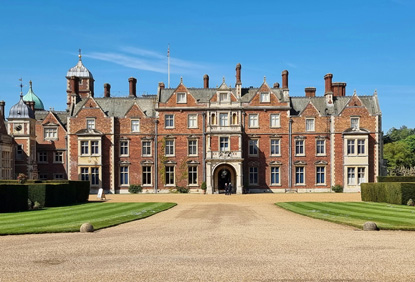
Sandringham is a historic royal estate located in Norfolk, England, which has served as a private country retreat for the British Royal Family since 1862. The estate centres around Sandringham House, a late 19th-century country house built in the Jacobethan style, surrounded by 20,000 acres of parkland, gardens, and working farmland. The property is particularly renowned as the traditional Christmas residence of the Royal Family and has been the setting for numerous significant royal occasions and celebrations over the past century and a half. When not in use by the Royal Family, portions of the estate including the house, gardens, and museum are open to the public, offering visitors the opportunity to explore the ground floor rooms, admire the extensive gardens featuring lakes and woodland walks, and learn about the estate's royal history through displays of photographs, memorabilia, and royal vehicles.
Interesting Facts about Sandringham
- Sandringham House has been a private residence of British monarchs since 1862, when it was purchased as a 21st birthday gift from Queen Victoria to her eldest son, Albert Edward, Prince of Wales.
- The estate covers an impressive 20,000 acres of Norfolk countryside, encompassing seven villages and featuring some of the finest shooting opportunities in England.
- Sandringham Time was a unique tradition introduced by Edward VII, whereby all clocks on the estate were set half an hour ahead of GMT to maximise daylight during the shooting season from October to February, and this custom was maintained until 1936.
- The estate's game shooting was legendary, with meticulously maintained records showing annual bags rising from 6,000-8,000 birds in the 1870s to over 20,000 birds per year by 1900.
- Both King George V and King George VI died at Sandringham House - George V on 20th January 1936 and George VI on 6th February 1952.
- The name "Sandringham" derives from the Domesday Book of 1086, where it was recorded as "Sant Dersingham," meaning "the sandy part of Dersingham".
- Sandringham village was the birthplace of Diana, Princess of Wales.
- The estate houses one of Europe's largest game larders, which was constructed for storing the enormous quantities of game birds shot during royal hunting parties and was inspired by the one at Holkham Hall.
- The Norwich Gates at Sandringham were designed by Thomas Jeckyll and presented as a wedding gift to Edward VII and Alexandra from "the gentry of Norfolk".
- The estate has maintained racing pigeon lofts since 1886, originally constructed for birds given to the Duke of York by King Leopold II of Belgium.
- Sandringham's museum houses an extensive collection of royal motor vehicles, including a 1900 Daimler owned by Edward VII and a 1939 Merryweather & Sons fire engine made specifically for the estate's independent fire brigade.
- The estate operates as a working farm with arable crops and forestry, whilst also serving as the beloved Christmas retreat where the Royal Family traditionally gathers each year.
History
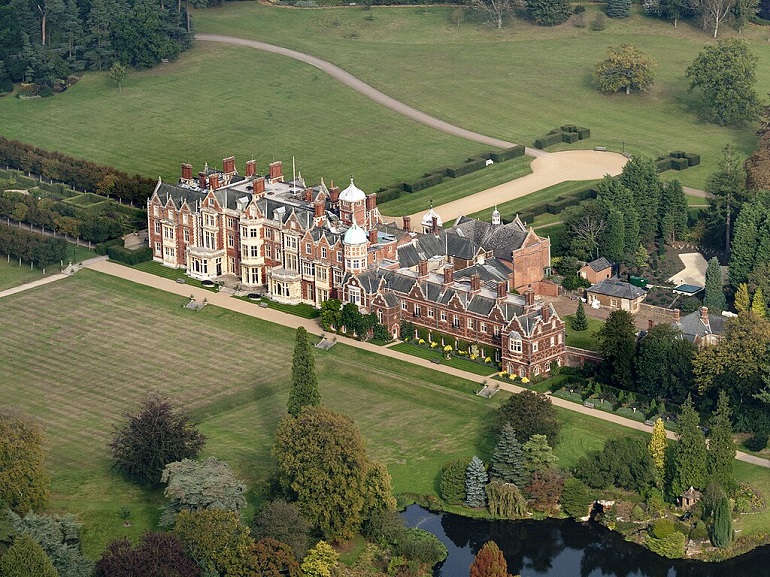
Following the Norman Conquest, the land was awarded to Robert Fitz-Corbun, a Norman knight, whilst archaeological evidence suggests even earlier habitation with the discovery of a Roman villa near Appleton Farm. Throughout the medieval period, the estate passed through notable hands, including Anthony Woodville, Lord Scales, brother-in-law to Edward IV in the 15th century. By the Elizabethan era, a manor house occupied the present site, which eventually came into the possession of the Hoste Henley family, descendants of Dutch refugees. In 1771, Cornish Henley demolished the existing structure to build Sandringham Hall, a Georgian mansion that would serve as the foundation for the current royal residence.
The transformation of Sandringham into a royal retreat began in 1862 when Queen Victoria purchased the estate for £220,000 as a 21st birthday present and country home for her son, Prince Albert Edward, later King Edward VII. Finding the existing Georgian hall inadequate for royal entertaining, the Prince of Wales embarked on an ambitious rebuilding programme between 1870 and 1900, creating the current house in what architectural historian Nikolaus Pevsner described as "frenetic Jacobean" style. Edward's passion for country pursuits led him to develop Sandringham into one of England's finest sporting estates, with meticulously maintained game books recording annual bags rising from 6,000-8,000 birds in the 1870s to over 20,000 by 1900. The estate's unique character was further enhanced by the introduction of "Sandringham Time" in 1901, whereby all clocks were set half an hour ahead of Greenwich Mean Time to maximise daylight during the shooting season—a tradition maintained until 1936.
Following Edward VII's death in 1910, Sandringham passed to his son George V, who declared it "dear old Sandringham, the place I love better than anywhere else in the world". The estate became the setting for significant royal milestones, including the first royal Christmas broadcast in 1932 and the deaths of both George V in 1936 and George VI in 1952. Unlike other royal residences, Sandringham remains the private property of the monarch rather than part of the Crown Estate, requiring George VI to purchase it from his brother Edward VIII following the abdication crisis. Today, the 20,000-acre estate continues as the beloved country retreat of King Charles III, maintaining its tradition as the royal family's Christmas gathering place whilst also welcoming the public to explore its gardens, museum, and visitor centre—a practice begun when King Edward VII first opened the gardens to visitors in 1908.
Description
The House
Sandringham House stands as one of England's most beloved royal residences, its Jacobean-style exterior presenting a magnificent architectural statement that has welcomed visitors for over a century. The house, famously described as 'the most comfortable house in England', represents the pinnacle of late Victorian and Edwardian domestic architecture, where grandeur meets genuine homeliness in a way that few great houses achieve.
The building's facade is a masterpiece of red brick construction, adorned with elaborate stonework and distinctive chimneys that create a skyline both imposing and welcoming. The house's design reflects the personal tastes of successive generations of the Royal Family, who have used it as their private retreat from the formalities of court life. Unlike many royal residences, Sandringham retains an intimate, family atmosphere that visitors can sense immediately upon entering.
Interior Splendour
The eight main ground floor rooms that are open to the public offer an extraordinary journey through royal domestic life, each space preserved largely unchanged from Edwardian times and filled with treasures that span centuries of royal collecting. These rooms tell the story not just of monarchy, but of family life, personal taste, and the evolution of decorative arts over generations.
The Drawing Room serves as the heart of the house, where the Royal Family traditionally gathers for afternoon tea and evening entertainment. Here, visitors can admire the exquisite collections of Meissen porcelain that gleam from every surface, their delicate hand-painted decorations catching the light from the tall windows. The room's atmosphere is one of refined elegance, with comfortable seating arrangements that speak to the house's role as a genuine family home rather than a mere ceremonial space.
The Dining Room showcases the grandest entertaining traditions of the Royal Family, with its magnificent table settings featuring fine Minton china that represents the pinnacle of English ceramic artistry. The room's walls are adorned with portraits and landscapes that create an intimate gallery of royal taste, while the stunning trompe-l'oeil ceiling work overhead creates remarkable optical illusions that have delighted guests for generations.
Throughout these magnificent spaces, visitors encounter stunning objets d'art collected by and gifted to members of The Royal Family over the years. Each piece tells a story, whether it's a diplomatic gift from a foreign dignitary, a personal acquisition that caught a royal eye, or a family heirloom passed down through generations. The famous 'jigsaw table' stands as a charming reminder of the family's love of puzzles and games, while the cinema projection point speaks to the house's early embrace of modern entertainment technology.
The semi-precious stones displayed throughout the rooms create glittering focal points that demonstrate the Royal Family's appreciation for natural beauty transformed by human craftsmanship. These collections, ranging from carved jade to polished agates, reflect both personal taste and the diplomatic gifts that have flowed to the Royal Family from around the world.
The Gardens
Overview and Philosophy
The 60 acres of formal gardens at Sandringham represent one of the finest examples of English garden design, where royal patronage has created a landscape that seamlessly blends formal grandeur with natural beauty. Set within the broader 20,000-acre estate, these gardens offer visitors a magnificent tapestry of colour, texture, and seasonal interest that has been carefully cultivated and refined by five generations of monarchs, each adding their own vision while respecting the work of their predecessors.
The gardens embody the very best of English horticultural tradition, where careful planning meets apparent naturalness, and where every vista has been composed with the eye of an artist. The overall design philosophy reflects the Royal Family's deep love of gardening and their understanding that a great garden must serve both as a work of art and as a living, breathing ecosystem that supports wildlife and provides sanctuary for both plants and people.
Garden Highlights
The North End Garden
Created by Geoffrey Jellicoe for King George VI in 1947, this enchanting space represents one of the most successful examples of post-war garden design in England. The garden is informally planted in a cottage-garden style that deliberately contrasts with the more formal areas of the estate, creating a sense of discovery and surprise as visitors move through different garden rooms.
The North End Garden reaches its absolute peak of splendour in late July, when the carefully orchestrated succession of plantings creates a veritable haven for bees and butterflies. The garden's design follows the principles of ecological gardening that were revolutionary in the 1940s but are now recognised as essential for supporting biodiversity. Long herbaceous borders flow in gentle curves, packed with traditional cottage garden plants that have been chosen not just for their beauty but for their value to wildlife.
The planting scheme includes great drifts of lavender that fill the air with fragrance, towering delphiniums in shades of blue that echo the summer sky, and masses of roses that climb through pergolas and spill over walls. The informal style means that plants are allowed to self-seed and spread naturally, creating the kind of happy accidents that make English gardens so distinctive. Narrow grass paths wind through the plantings, inviting visitors to explore every corner and discover hidden seats where they can pause to enjoy the garden's peaceful atmosphere.
The Topiary Garden
Added in 2023, the geometric Topiary Garden provides a striking contemporary addition to Sandringham's horticultural heritage. This garden represents a bold departure from the estate's traditionally naturalistic style, offering instead a space of formal geometric patterns that change subtly with the seasons as the carefully sculpted plants grow and are trimmed.
Designed as a place of peace and contemplation, the garden reflects the same principles of universal symbolism as the Cosmati Pavement in Westminster Abbey, creating a space where visitors can find quiet reflection away from the busier areas of the estate. The topiary work itself is a masterpiece of the gardener's art, with box hedging carved into intricate patterns that create a living carpet when viewed from the raised walkways that surround the garden.
The garden's design incorporates elements of sacred geometry, with patterns that have symbolic meaning while also creating visually striking compositions. The careful maintenance required for such precise topiary work demonstrates the estate's commitment to the highest standards of horticulture, while the garden's contemporary design shows how traditional techniques can be used to create thoroughly modern spaces.
Woodland and Water Features
The gardens' woodland areas represent some of the most atmospheric and peaceful spaces on the estate, where densely planted shrubbery with shady woodland walks create a sense of entering an enchanted forest. These areas, initiated in the late 1960s as part of a major expansion of the garden's scope, demonstrate how careful planning can create naturalistic landscapes that feel as though they have existed for centuries.
The woodland gardens feature fine collections of rhododendron, camellia and magnolia trees that were originally brought from Windsor Castle, creating living links between the Royal Family's various residences. These magnificent specimens have matured into some of the finest examples of their species in England, creating spectacular seasonal displays that draw visitors from around the world. The rhododendrons, in particular, create tunnels of colour in late spring, with varieties chosen to provide succession of bloom from early April through to June.
Among the woodland plantings, visitors can discover rare and unusual trees that provide both shelter for the more delicate plants and stunning focal points throughout the seasons. Ancient oaks provide a canopy for more recent plantings, while specimen trees like the handkerchief tree and various rare maples create moments of surprise and delight. The shade-loving plants beneath these trees offer spectacular displays of varied shapes, colours and textures throughout the seasons, from the fresh green of emerging ferns in spring to the rich burgundies and golds of autumn foliage.
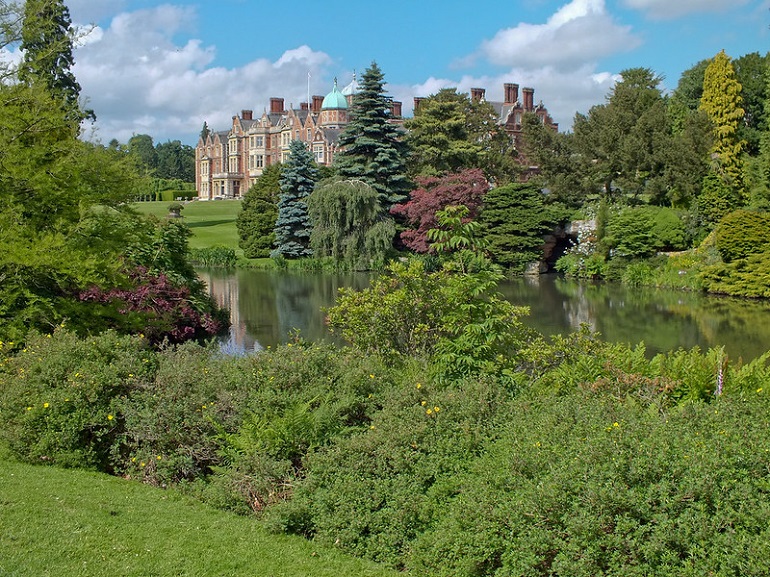
The water features that thread through the gardens add both visual beauty and the soothing sound of moving water to the garden experience. Natural springs feed the ornamental lakes, creating a sustainable water system that supports both the garden's irrigation needs and its wildlife populations. The main lake serves as a mirror for the sky and surrounding plantings, while also providing habitat for waterfowl and other wildlife.
An ornamental stream winds through the meadow areas, its banks planted with moisture-loving plants that thrive in this naturalistic setting. These plantings include great drifts of primulas in spring, followed by astilbes and hostas that provide lush foliage and delicate flowers throughout the summer months. The stream's meandering course has been designed to look entirely natural, though every curve and pool has been carefully planned to create the most beautiful views and the best growing conditions for the plants.
Queen Alexandra's Nest
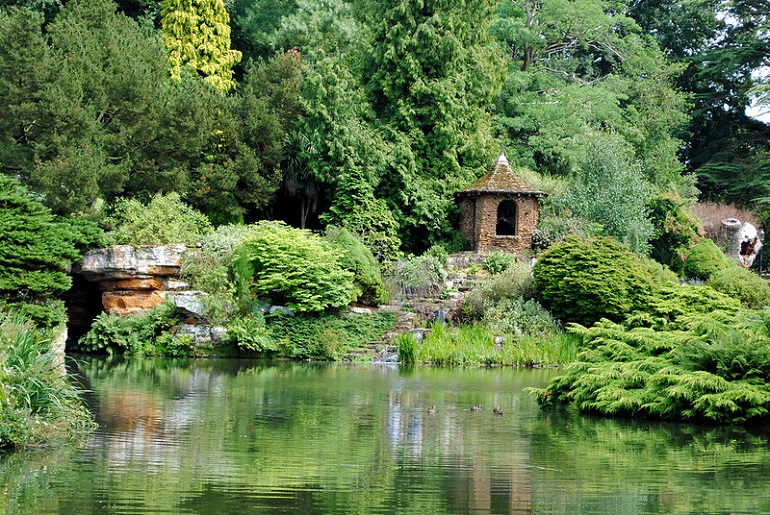
Built in 1912, Queen Alexandra's Nest represents one of the most charming and historically significant features of the Sandringham gardens. This delightful summerhouse sits atop an elaborate rockery that was landscaped by James Pulham using his famous 'Pulhamite' stone, an artificial stone that was revolutionary in its time and allowed for the creation of naturalistic rock formations that would have been impossible with natural stone.
The Nest itself is a masterpiece of Edwardian garden architecture, designed to provide a beautiful vantage point over the lake while offering shelter from both sun and rain. Its position was carefully chosen to take advantage of one of the most picturesque views in the entire garden, where the lake reflects the sky and surrounding trees create a natural amphitheatre of greenery.
The rockery surrounding the Nest is planted with alpine plants and small shrubs that thrive in the well-drained conditions, creating a miniature mountain landscape that provides interest throughout the year. In spring, the rocks are studded with tiny bulbs and early-flowering perennials, while summer brings a succession of drought-tolerant plants that can cope with the challenging growing conditions.
Seasonal Splendour
The gardens at Sandringham have been designed to offer highlights in every season, creating a magnificent and ever-changing landscape that rewards multiple visits throughout the year. This seasonal succession has been carefully orchestrated over decades, with each generation of gardeners adding new elements while maintaining the overall harmony of the design.
Spring arrives early in the gardens, with the first snowdrops appearing in January, followed by great drifts of daffodils that naturalise in the grass areas and create rivers of gold beneath the still-bare trees. The beautiful displays of rhododendrons and magnolias begin in March and continue through May, with careful selection of varieties ensuring that there is always something spectacular in bloom. The magnolias, in particular, create some of the garden's most dramatic moments, with their huge, waxy flowers appearing before the leaves and transforming the trees into living sculptures.
Summer brings the cottage garden borders to their full glory, with the North End Garden reaching its peak in July when every border is packed with colour and fragrance. The rose gardens come into their own during this season, with climbing roses covering pergolas and walls, and bush roses creating focal points throughout the more formal areas. The water features become particularly important during the summer months, providing cooling relief and supporting the lush growth of moisture-loving plants.
Autumn transforms the gardens into a tapestry of gold, bronze, and crimson, as the mature tree plantings reveal their full glory. The rare and unusual trees show their individual character during this season, with some providing brilliant autumn colour while others offer interesting bark or unusual seed pods. The autumn-flowering plants, including late roses, asters, and ornamental grasses, extend the season of interest well into October.
Winter reveals the garden's underlying structure, with the dramatic bark of unusual trees providing visual interest when most plants are dormant. The evergreen plantings, including the magnificent rhododendrons and camellias, provide year-round structure and shelter for wildlife, while the topiary work in the formal areas creates sculptural elements that are particularly striking when touched with frost.
Wildlife and Natural Areas
The more naturalistic areas of the Sandringham gardens represent a pioneering approach to wildlife-friendly gardening that was ahead of its time when first implemented and remains exemplary today. These areas are specifically managed to encourage a wide range of wildlife, creating habitats that support everything from tiny insects to large mammals while maintaining the aesthetic standards expected of a royal garden.
The meadow areas are managed using traditional techniques that allow wildflowers to flourish while preventing the encroachment of scrubland. These areas provide crucial habitat for butterflies, bees, and other pollinators, while also creating beautiful naturalistic displays that change throughout the seasons. The stream plantings create corridors for wildlife movement, allowing animals to move safely between different areas of the estate while providing the moisture-loving plants with ideal growing conditions.
The woodland areas provide nesting sites for birds and shelter for small mammals, while the careful selection of plants ensures that there is food available throughout the year. Berry-producing shrubs provide autumn and winter sustenance, while the diverse plant communities support the insects that form the base of the food chain.
The Royal Park
Beyond the formal gardens lies the magnificent 600-acre Royal Park, a landscape that extends the garden experience into a more naturalistic setting while maintaining the high standards of management that characterise the entire estate. This expansive area offers visitors the opportunity to explore diverse landscapes that range from ancient heath and woodland to more formal parkland settings, each supporting different plant and animal communities.
The park includes an extensive network of waymarked trails and woodland paths that wind through landscapes that have been shaped by centuries of careful management. These paths offer visitors the chance to explore at their own pace, discovering hidden corners and unexpected vistas that reveal new aspects of the estate's natural beauty. The trail system has been designed to accommodate visitors of all abilities, with shorter loops for those who prefer gentle walks and longer routes for more adventurous explorers.
The Veteran Oak stands as one of the park's most remarkable features, an ancient tree said to be 800 years old that serves as a living monument to the estate's extraordinary longevity and natural heritage. This magnificent specimen predates the Royal Family's association with Sandringham by centuries, standing as a witness to the changing landscape and the evolution of the estate from medieval hunting ground to modern royal residence.
The oak's massive trunk and spreading canopy create a natural cathedral that provides shelter for countless other plants and animals, while its presence adds a sense of deep historical continuity to the landscape. The area around the tree has been carefully managed to protect its root system while allowing visitors to appreciate its full majesty, with seating provided at a respectful distance where people can sit and contemplate this remarkable survivor from England's ancient past.
Sandringham represents the very finest in English country house and garden design, where royal patronage has created a landscape of unparalleled beauty and horticultural excellence that continues to evolve and inspire. From the elegant interiors filled with priceless treasures that tell the story of royal collecting over generations, to the carefully crafted gardens that blend formal design with natural beauty in ways that support both human enjoyment and wildlife conservation, every corner of this remarkable estate offers something to delight and inspire visitors while demonstrating the highest standards of stewardship and care.
Getting There
The most convenient approach is by rail to King's Lynn station, which is well-connected to London and other major cities, followed by the regular Lynx bus service that runs directly to Sandringham village. Alternatively, visitors can take the train to Dersingham station, which is slightly closer, though this requires a short taxi journey or pleasant walk through the Norfolk countryside. For those travelling by car, Sandringham is easily accessible via the A149 coast road or A148 from King's Lynn, with ample parking available at the estate. The journey from London takes approximately two hours by train plus the connecting bus service, making it an ideal day trip destination. Local taxi services operate from both railway stations for those preferring door-to-door convenience, whilst cycling enthusiasts will find the area well-suited for two-wheeled exploration with several cycle routes converging near the estate.
Best Time to Visit
The best time to visit Sandringham Estate is during the warmer months from April to October, when the House, formal Gardens, and St Mary Magdalene Church are open to the public. Spring and early summer are particularly delightful, offering visitors the chance to see the estate's magnificent gardens in full bloom with snowdrops and daffodils in early spring, followed by bluebells and rhododendrons as the season progresses. Summer provides ideal conditions for exploring the 600 acres of Royal Parkland, enjoying outdoor activities, and making the most of the estate's walking trails and children's play area. Whilst the House and Gardens close during winter months when the Royal Family is in residence for their traditional Christmas celebrations, the Royal Parkland, Courtyard facilities including the shop and restaurant, and the adventure playground remain open year-round, making Sandringham a worthwhile destination regardless of season. For those seeking a truly magical experience, the festive period offers the spectacular Luminate light trail through the parkland, creating an enchanting winter wonderland perfect for families.