


 Ireland Guide
 Scotland Guide
 Wales Guide
| Contents |
|---|
Introduction
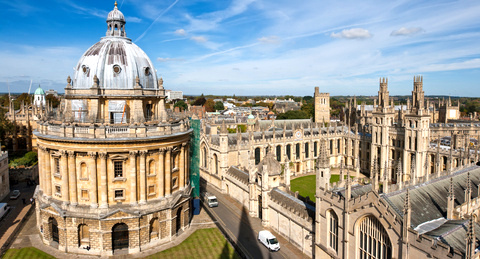
Home to the oldest university in the English-speaking world, Oxford (pop. 163,000) boasts a rich architectural heritage with its iconic 'Dreaming Spires' and Gothic buildings. The compact city centre is easily explored on foot, offering visitors a blend of historic colleges, world-class museums, and picturesque parks. Oxford's cultural significance extends beyond education, with literary connections to authors such as Lewis Carroll and J.R.R. Tolkien. The city provides a range of attractions, from punting on the River Cherwell to exploring the Bodleian Library and the Ashmolean Museum. With its vibrant atmosphere, mix of ancient and modern, and proximity to the beautiful Cotswolds countryside, Oxford offers a quintessentially British experience for travellers.
Oxford University is one of the world's most prestigious academic institutions (along with its local rival, Cambridge), and is the oldest university in the English-speaking world. Countless celebrities are on the list of its alumni. Some of the most famous include, chronologically, John Locke, William Penn, Christopher Wren, Adam Smith, Percy Bysshe Shelley, Lewis Carroll, Oscar Wilde, JRR Tolkien, Indira Gandhi, Margarett Thatcher, Bill Clinton, Aung San Suu Kyi, Rupert Murdoch, Rowan Atkinson (Mr Bean), Michael Palin and Hugh Grant. All in all, Oxford has produced 72 Nobel prize-winners, 25 British Prime Ministers, 23 Presidents or non-British Prime Ministers, 6 saints, 86 Archbishops, 18 Cardinals and 1 Pope.
Oxford's economy is not limited to third-level education and tourism. Car manufacturing has been going on since 1912, when William Morris established the first mass-produced car factory in the country in the district of Cowley.
Interesting Facts about Oxford
- Oxford University is the oldest university in the English-speaking world, with evidence of teaching dating back to 1096.
- The name Oxford comes from 'Oxanforda', meaning a ford where cattle could cross the river.
- Oxford was briefly the capital of England for three and a half years during the English Civil War.
- The Bodleian Library at Oxford is one of Europe's oldest libraries, with over 12 million items in its collection.
- Oxford University consists of 39 semi-autonomous colleges, each with its own distinct character and traditions.
- The city was largely spared during World War II bombings, preserving much of its historic architecture.
- Oxford has educated 27 British Prime Ministers and numerous world leaders.
- The famous Oxford English Dictionary has been produced by Oxford University Press since 1884.
- Oxford served as a filming location for many scenes in the Harry Potter films, inspiring the look of Hogwarts.
- The Ashmolean Museum, founded in 1683, is the world's oldest university museum.
- Oxford degree ceremonies are conducted in Latin, maintaining a centuries-old tradition.
- The city has more published authors per square mile than anywhere else in the world.
- Oxford University students have won 158 Olympic gold medals.
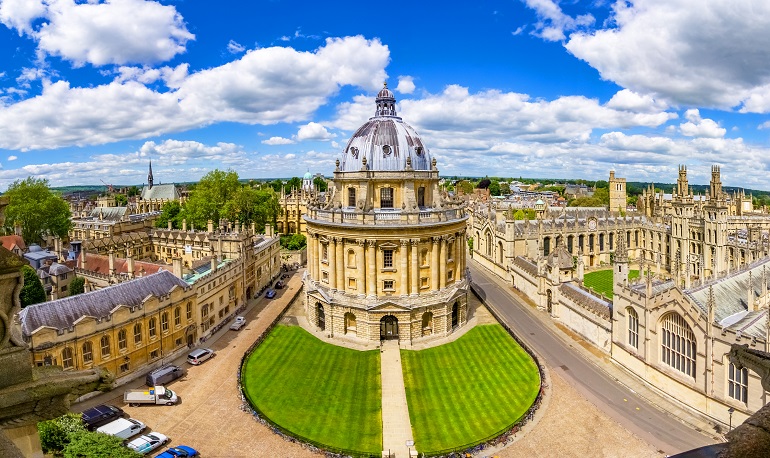
- The Radcliffe Camera, an iconic Oxford landmark, was built in 1737 as a science library.
- Oxford's Botanic Garden, established in 1621, is the UK's oldest botanical garden.
History
The Saxons founded "Oxanforda" in the 8th century. It became a military frontier town between the kingdoms of Mercia and Wessex , and was fortified by Alfred the Great to protect it from Danish raids.
The university's history starts in 1167, when the English students were expelled from the Sorbonne University in Paris and established a new academic centre in the backwater that was Oxford at the time.
The students didn't go along well with the local townspeople, and clashed several times, like in 1209, 1330, and most famously in 1355, when 63 students and 30 townspeople were killed in the St Scholastica Day Riot. King Edward III brought in troops to quell the riot and, supporting the students, imposed a fine of one penny per student killed to be paid by the mayor and citizens at every anniversary of the riot. This practiced did not come to an end until 1825 !
The university was divided into independent colleges in the 13th century. The first three were the the University College (1249), Balliol (1263) and Merton (1264). At least three new colleges were created in the ensuing three centuries. Nevertheless, the first college admitting women did not open until 1878, and women were not actually awarded a degree until as late as 1920.
In 1790 the Oxford Canal connected the city with Coventry, and in the 1840s the Great Western Railway and London and North Western Railway linked Oxford with London. As a result, Oxford experienced a rapid industrial growth, with the first car manufacture opening in 1912 and the printing and publishing industries becoming well established by the 1920s.
Recent immigration has given Oxford a notable cosmopolitan character, especially in the Headington and Cowley Road areas with their many bars, cafes, restaurants, clubs, ethnic shops and fast food outlets. 13% of the population is now 'non-white', with 5% of South Asians, 2,5% of Afro-Caribeans and 1.8% of Chinese. This does not include the numerous short-term international students of the university and English language schools.
Main Attractions

|
|
|
Orientation
The town is surrounded by two rivers, the Thames (also known locally as Isis) and the Cherwell, as well as the Oxford Canal and numerous lawns and meadows, conferring Oxford a very pastoral atmosphere. Carfax Tower (the name comes from Latin quadri furcus, i.e. "four forks") marks the city centre, at the junction of High Street, St Aldgate's, Queen Steet and Cornmarket Street, which divide the city in four quarters.
University of Oxford
The University of Oxford, one of the world's oldest universities, dominates about a quarter of the city. It comprises 38 colleges, many of which are open to visitors:
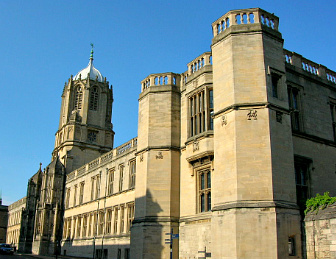
Christ Church College: Known for its grand stairwell featured in Harry Potter films, Christ Church also houses the Christ Church Cathedral. Open Monday to Saturday 10:00 to 17:00 and Sunday 14:00 to 17:00. Visitors can explore the Tom Quad, the largest quadrangle in Oxford, and enjoy the beautiful gardens.
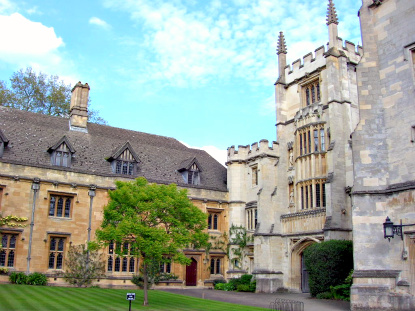
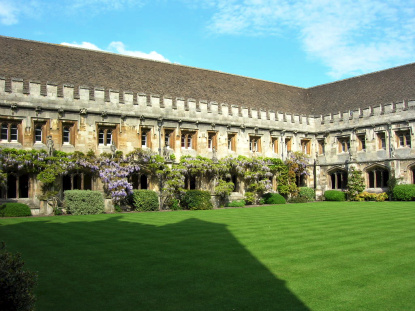
Magdalen College: Located on the banks of the River Cherwell, it's known for its tranquil beauty and picturesque grounds. The college is famous for its choir and the annual May Day celebrations, where students sing from the tower at dawn.
Trinity College: Centrally located with beautiful grounds, a Chapel, and a Dining Hall. Open Monday to Sunday 10:30 to 16:00. Trinity is one of the largest colleges in Oxford and has a rich history of academic excellence.
Many colleges allow visitors to explore their quads and gardens. It's advisable to check individual college websites for specific opening times and entry fees, as these can vary.
Bodleian Library
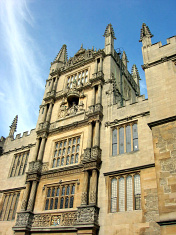
The Bodleian Library, Britain's second-largest library, holds a copy of every book published in England since 1662. Guided tours are available, offering insights into the library's history and architecture. The Bodleian also hosts temporary exhibitions and events, which are worth checking out during your visit.
Oxford Castle & Prison
A partly ruined medieval castle just outside the city centre. The St George's Tower is believed to date back to Saxon times. Now a visitor attraction, it offers guided tours showcasing over 1,000 years of history. Visitors can explore the castle's prison cells and learn about its past as a place of execution and imprisonment.
Iconic Buildings
- Radcliffe Camera: A distinctive round building and part of the Bodleian Library. It houses a reading room and is a popular spot for photographs.
- Sheldonian Theatre: The official ceremonial hall of the University of Oxford. It hosts various events, including concerts and degree ceremonies.
- Carfax Tower: Offers views over the city's spires. Located in the heart of Oxford, it's a great spot to get a panoramic view of the city.
- University Church of St Mary the Virgin: Another vantage point for city views. The tower provides stunning vistas of Oxford's skyline.
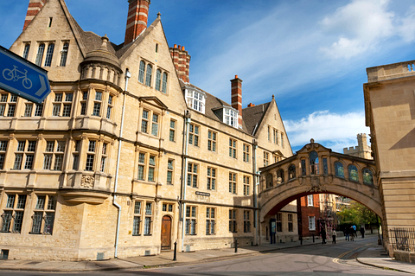

Green Spaces
Oxford boasts numerous parks and green spaces:
- University Parks: Expansive parkland in the heart of the city. It includes a cricket pitch, a lake, and walking paths, making it a popular spot for recreation and relaxation.
- University Botanic Garden: The UK's oldest botanic garden. It features a wide variety of plant species and is a peaceful oasis in the city.
- Christ Church Meadow: Picturesque meadows adjacent to Christ Church College. It's a beautiful place for a stroll along the River Cherwell.
- Port Meadow: A vast area of common land beside the River Thames. It's known for its wildflowers and wildlife, offering a glimpse into Oxford's natural beauty.
River Activities
Punting on the Thames (locally known as the Isis) and the Cherwell is popular, especially in summer. Oxford River Cruises offers various boat trips, including sightseeing and dining experiences. Visitors can enjoy a leisurely punt while taking in the city's scenic views.
Shopping
- Covered Market: A historic market dating back to the 18th century, offering a range of local produce and crafts. It's a great place to find unique gifts or enjoy some traditional British food.
- Gloucester Green Market: An open-air market held Wednesday to Saturday, featuring local produce and international street food. It's a lively spot to sample different cuisines and shop for fresh produce.
Religious Sites
- Christ Church Cathedral: Located within Christ Church College. It serves as both the college chapel and the cathedral of the Diocese of Oxford.
- University Church of St Mary the Virgin: A central landmark in Oxford. It offers stunning views from its tower and hosts various events throughout the year.
- Martyrs' Memorial: A stone monument commemorating Oxford martyrs. It's a significant historical landmark and a reminder of Oxford's role in the English Reformation.
Other Attractions
- Oxford Union: A debating society known for hosting prominent speakers. Visitors can attend debates or take a tour of the building.
- Ashmolean Rooftop Restaurant: While not a museum attraction itself, the restaurant offers stunning views of the city and is a great place to dine.
- Oxford Playhouse: A theatre hosting a variety of performances, including plays, musicals, and concerts.
Events and Festivals
Oxford hosts several events and festivals throughout the year:
- Oxford Literary Festival: Celebrating literature with author talks and workshops.
- Oxford International Jazz Festival: Featuring live jazz performances across the city.
- Oxford May Day Celebrations: A traditional event where students sing from Magdalen College tower at dawn.
Remember to check opening times and any entry fees before visiting, as these can vary depending on the season and special events. Planning ahead will ensure you make the most of your time in Oxford.
Top Museums
Art Museums
Ashmolean Museum
The Ashmolean Museum, founded in 1683, holds the distinction of being Britain's first public museum and the world's second university museum. As Oxford University's Museum of Art and Archaeology, it houses an incredibly rich and diverse collection spanning 500,000 years of human history.
Highlights include:
- The world's greatest collection of Raphael drawings
- Significant Egyptian pre-Dynastic sculpture and ceramics
- The most important Minoan collection in Britain
- Anglo-Saxon treasures
- The famous Messiah Stradivarius violin
- An extensive collection of modern Chinese paintings
The museum also features curiosities such as Lawrence of Arabia's ceremonial dress and Guy Fawkes' lantern from the Gunpowder Plot. Its galleries are filled with artefacts from ancient civilizations, including Greek and Roman antiquities, providing a deep insight into the evolution of human culture.
Modern Art Oxford
This contemporary art gallery is known for its cutting-edge exhibitions and installations by both emerging and established artists. The gallery regularly updates its exhibitions and hosts various events, talks, and workshops.
Modern Art Oxford provides a dynamic space for artistic innovation and experimentation, often pushing the boundaries of what is considered 'art'. It is a must-visit for anyone interested in contemporary culture and the latest trends in the art world.
Christ Church Picture Gallery
This art museum houses an important collection of approximately 300 Old Master paintings, offering visitors a chance to view significant works from various periods in art history.
The gallery features works by artists such as Michelangelo, Raphael, and Leonardo da Vinci, alongside lesser-known but equally fascinating pieces. It provides a serene and intimate setting to appreciate some of the world's most renowned artworks.
History and Anthropology Museums
Pitt Rivers Museum
Founded in 1884, the Pitt Rivers Museum is renowned for its extraordinary collection of anthropological and archaeological artefacts from around the world. The museum's unique layout, with dense displays and cabinets filled with objects, offers an immersive experience.
Must-see exhibits include:
- The collection of shrunken heads
- Impressive totem poles
- An extensive array of masks from various cultures
The museum is particularly noted for its thematic displays, which group objects by function rather than by geographical origin. This approach allows visitors to explore how different cultures have developed similar solutions to common problems, fostering a sense of global connection.
Museum of Oxford
Located in Oxford's Grade II listed town hall, this is the only museum dedicated to telling the story of Oxford and its people. It serves as an excellent introduction to the city's rich history and culture.
The museum explores themes such as the city's role in the Civil War, its industrial past, and its significance in literature and education. It offers a personal perspective on Oxford's development, highlighting the lives and experiences of its residents over the centuries.
Science Museums
Oxford University Museum of Natural History
Housed in a stunning Gothic Revival building, this museum opened in 1860 and holds the University of Oxford's significant geological and zoological specimens.
Key attractions include:
- The Tyrannosaurus rex skeleton
- The famous Oxford Dodo
- An impressive collection of minerals and gemstones
The museum's architecture itself is a marvel, with a grand glass roof and intricate stone carvings. It hosts regular events and exhibitions, making it a lively hub for both scientific learning and community engagement.
Museum of the History of Science
Occupying the world's oldest surviving purpose-built museum building, this institution showcases an unrivalled collection of early scientific instruments. A notable exhibit is the blackboard used by Albert Einstein during his lecture at Oxford in 1931.
The museum offers a fascinating glimpse into the development of science and technology, with exhibits on astronomy, physics, and chemistry. Visitors can explore the evolution of scientific thought and see instruments used by some of history's most influential scientists.
Specialised Collections
The Bate Collection of Musical Instruments
Located within the Faculty of Music, this unique collection showcases over 2,000 musical instruments from around the world. Visitors can explore the evolution of music-making across different cultures and historical periods.
The Oxford University Press Museum
This small but fascinating museum offers insights into the history of printing and publishing. It houses a collection of historic printing equipment and provides a glimpse into the role of Oxford University Press in shaping literary and academic publishing.
The History of Computing Museum
Located at the Department of Computer Science, this museum explores the development of computing technology. It features early computers and related artefacts, highlighting the rapid advancements in this field.
Local Cuisine
The city is renowned for its Oxford sausages, a savoury treat best enjoyed with mashed potatoes and onion gravy. Another local speciality is Oxford sauce, a tangy accompaniment to meat dishes that dates back to the 18th century. For those with a sweet tooth, Oxford pudding and Banoffee pie are must-try desserts. The historic Covered Market, operating since 1774, is a hub for fresh produce and artisanal goods, including the famous Oxford Blue cheese. Visitors can also indulge in a quintessential British experience with afternoon tea, featuring delicate finger sandwiches, scones, and cakes. For a more contemporary taste, Oxford's diverse restaurant scene offers everything from Thai curries to Caribbean delicacies, reflecting the city's cosmopolitan character.
Shopping
The city centre features popular chain stores along Cornmarket Street and Queen Street, while the Westgate Shopping Centre houses over 100 retailers and eateries. For a more unique experience, the historic Covered Market, dating back to 1774, offers an eclectic mix of independent shops, from butchers and greengrocers to artisanal crafts and vintage clothing. Broad Street is home to the renowned Blackwell's bookshop, a must-visit for literature enthusiasts. Those seeking independent boutiques and specialist shops should explore the trendy Jericho area, particularly Walton Street and Little Clarendon Street. The Cowley Road in East Oxford provides a multicultural shopping experience with its diverse range of ethnic stores and quirky independent retailers. For high-end shopping and antiques, the High Street and its surrounding areas are worth exploring.
Nature in and around Oxford
The city itself boasts several picturesque green spaces, including Christ Church Meadow, a tranquil pasture bordering the Cherwell and Thames rivers, and the expansive University Parks, which features a duck pond and even a Quidditch pitch. Just outside the city centre, Port Meadow provides 900 acres of ancient grazing land along the Thames. For those seeking woodland walks, Shotover Country Park offers beautiful trails and stunning views of Oxford. Nature enthusiasts can visit Lye Valley, a rare calcareous valley fen habitat, or explore the Oxford Botanic Garden and its associated Harcourt Arboretum. Further afield, the Cotswolds Area of Outstanding Natural Beauty is within easy reach, offering rolling hills, charming villages, and scenic walks. For a unique outdoor experience, visitors can enjoy a swim at Hinksey Outdoor Pool, a heated lido that has been a local favourite since 1934.
Getting There & Around
By train, Oxford is easily accessible from London Paddington with regular services running throughout the day, taking approximately one hour, whilst direct trains also operate from Birmingham, Manchester, and other major cities across Britain.
By coach, National Express and other operators provide frequent services to Oxford from London Victoria Coach Station and cities nationwide, with the journey from London typically taking around one hour and forty minutes, making it an economical option for budget-conscious travellers.
By car, Oxford is conveniently located just off the M40 motorway (Junction 8 or 9), providing excellent access from London, Birmingham, and the Midlands, whilst the A34 connects the city to the south coast and northern England, though visitors should be aware that parking in the city centre is limited and the Park and Ride schemes on the outskirts offer a practical alternative for those driving into Oxford.
Best Time to Visit
The best time to visit Oxford is generally considered to be from May to September. During these months, the weather is pleasantly warm, with temperatures ranging from 11°C to 22°C, making it ideal for exploring the city's historic streets and lush green spaces. This period offers longer days, perfect for sightseeing and enjoying Oxford's vibrant atmosphere. Summer brings a host of festivals and events, including the traditional May Day celebrations and the renowned Oxford Literary Festival. Whilst this is the peak tourist season, with busier streets and higher accommodation prices, the city's energy and wealth of activities make it a truly captivating time to experience Oxford's academic charm and architectural splendour. For those seeking a quieter visit, the shoulder seasons of spring (March to May) and autumn (September to November) offer mild weather and fewer crowds, allowing for a more relaxed exploration of this iconic university city.