


 Ireland Guide
 Scotland Guide
 Wales Guide
| Contents |
|---|
Introduction
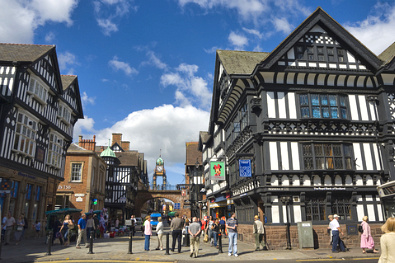
Few cities in north-west England can boast as much history as Chester (pop. 93,000). Founded by the Romans in 79 CE, the city's name is a corruption of the Latin castrum, meaning fortified town. Located on the River Dee near the England-Wales border, Chester boasts the most complete city walls in Britain, offering a 2-mile elevated walk with views of the city and distant Welsh mountains. The city is renowned for its unique medieval Rows, elegant black-and-white half-timbered mansions, two-tiered shopping galleries that house a mix of modern shops and independent boutiques. Chester's rich heritage is evident in its stunning Gothic cathedral, the largest Roman amphitheatre in Britain, and the oldest racecourse in the country. Chester combines its historical charm with modern amenities, making it a captivating destination for history enthusiasts and casual visitors alike.
Interesting Facts about Chester
- Chester was founded as a Roman fort called Deva Victrix in 79 CE.
- The city boasts the most complete city walls in Britain, measuring nearly 2 miles in circumference.
- Chester's unique Rows, dating back to the 13th century, are two-tiered medieval galleries of shops found nowhere else in the world.
- The Roodee, Britain's oldest sporting venue in continual use, has hosted horse racing since 1539.
- Chester Cathedral, originally a Saxon Minster, was rebuilt as a Benedictine Abbey with construction beginning in 1092 and finishing in 1535.
- The city is home to the largest Roman amphitheatre in Britain, which could seat 7,000 spectators.
- Chester has the only surviving rock-cut Roman Shrine in the country, dedicated to the goddess Minerva.
- A Tudor law once dictated that Welshmen were not allowed in Chester between sunset and sunrise.
- The Eastgate Clock is said to be the most photographed clock in England after Big Ben.
- In 2022, Chester was voted the most beautiful city in the world according to a mathematical formula based on the Golden Ratio.
- The city was one of the last in England to fall to the Normans after the conquest of 1066.
- Chester Zoo, founded in 1931, is the UK's largest zoological garden and the country's most-visited wildlife attraction.
- The car park near New Gate stands on the site of the Chester Lion Brewery Co Ltd, which was founded in 1642.
- Chester was granted city status in 1541 by Henry VIII.
- A person from Chester is called a Cestrian.
History
The Romans conquered Britain in 43 CE, but it wasn't until the 79 CE that they established a fortress on the River Dee, in the land of the Celtic Cornovii tribe. The castrum grew into a town and became known as Castra Devana, or Deva Victrix, after the name of the 20th Legion (Legio XX Valeria Victrix). The Roman fortress was a fifth bigger than the other in Britain at the time, such as Eboracum (modern York). The amphitheatre, which could seat between 8,000 and 10,000 people, was the largest of its kind in Britannia.
After the Roman withdrawal in the 5th century, Chester fell under the control of various Anglo-Saxon kingdoms. The city faced Viking raids during the Dark Ages, with longships sailing up the River Dee to wreak havoc.
Following the Norman Conquest in 1066, Chester became a significant stronghold under William I, who created the first Earl of Chester. The city flourished as a trading port during the Middle Ages, and it was during this time that the famous Chester Rows were constructed—a unique series of two-tiered medieval galleries housing shops. However, Chester faced hardship during the English Civil War when it endured a two-year siege, ultimately surrendering due to starvation.
The silting up of the estuary of the Dee in the 17th century forced the relocation of the port to Liverpool, but the city remained prosperous as the county town of Cheshire. Elegant new houses and terraces were built to accommodate wealthy merchants. The Victorian period saw further development, including the construction of the gothic-style Town Hall and the installation of the Eastgate Clock to commemorate Queen Victoria's Diamond Jubilee. Today, Chester is renowned for its well-preserved city walls, the most complete in Britain, and its distinctive black and white architecture, much of which dates from the Victorian era's Black-and-white Revival movement.
Main Attractions
Roman Chester
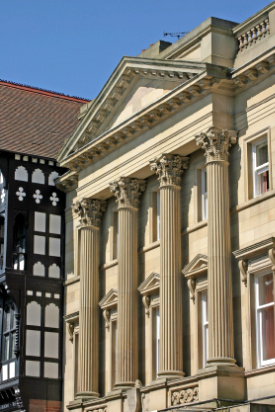
Chester boasts some of the best preserved Roman architecture in northern Europe. Its red sandstone Roman walls are not just the oldest but also the most complete city walls in Britain, of any historical period. They measure nearly 3 km (2 miles). The original Roman walls was further extended during the Norman period. They were badly damaged by siege engines and cannons used by the Parliamentarians during the English Civil War (1642-1651) and underwent considerable repairs in the 18th century.
Numerous bridged gates let the traffic inside the old city, namely: Eastgate, Northgate, St Martin's Gate, Watergate, Bridgegate, Newgate, and the Wolf Gate. The Eastgate Clock (dating from 1899) is said to be the most photographed clock in England after Big Ben.
The ruined Roman amphitheatre can be seen in the southeastern corner of the city centre, on the edge of Grosvernor Park. Built in the 1st century, it is largest amphitheatre so far uncovered in Britain. With a diagonal of nearly 100 m, the arena was big enough to accommodate over 8000 spectators. It fell into dereliction circa 350 CE and was only rediscovered during construction work in 1929.
Follow Lower Bridge St. and cross the river to reach the district of Handbridge. There along the main road, in Edgar's Field, you will find the much battered Minerva's Shrine. It dates from the 2nd century and is the only monument of its kind in Western Europe that remains in its original location.
You can learn more about Chester's Roman past at the Dewa Roman Experience, which has hands-on exhibits as well as a reconstructed Roman street.
Timber-framed architecture
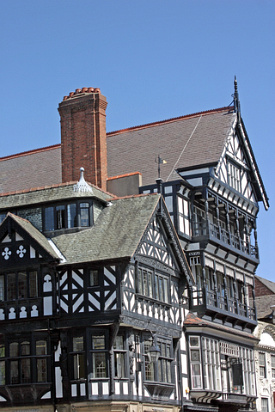
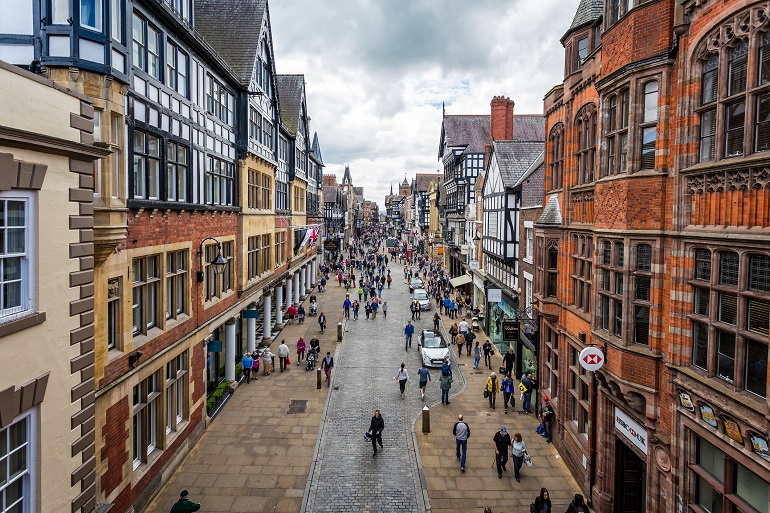
Chester's emblematic black-and-white timber-framed houses are typical of the late Middle Ages and the Renaissance (the Tudor era). However, few buildings from this period remain. Many were rebuilt in the 16th or 17th centuries. Besides, a sizeable portion of what can be viewed today dates from the Victorian period, as part of the late 19th- and early 20th-century "Black-and-white Revival". One of the most famous of these is No. 1 Bridge Street, built in 1888.
The most unique feature of Chester's architecture are the Rows, covered walkways running along the first-floor level of shops. The first record of the Rows appears in 1293, and the phenomenon seems to have reached its full extent by about 1350. There are 95 such buildings in Chester. Some of the finest medieval examples include Cowper House, at No. 12 Bridge Street, and The Falcon, at the junction of Lower Bridge Street and Grosvenor Road. Many other noteworthy Rows are to be founded in Watergate Street, such as the houses at Nos. 11, 23 and 37, as well as Bishop Lloyd's House at No. 41. The 13th-century house known as the Three Old Arches, at 48 Bridge Street, is considered to be the earliest shop front still surviving in England.
A few later houses revived the tradition, such as the Georgian-style Booth Mansion of 1700 in Watergate Street or the Neo-gothic-style Crypt Chambers of 1858 in Eastgate Street.
It was announced in July 2010 that the Chester Rows are being considered for UNESCO World Heritage status.
Other sights
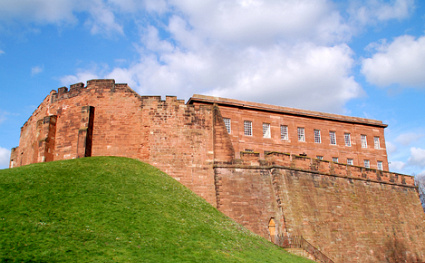
The oldest building in town (besides the city walls) is Chester Castle, at the southwestern extremity of the ramparts. It was originally constructed in 1070, only four years after the Norman invasion of England and five years earlier than Windsor Castle. Neoclassical buildings destined as a county court were added to the remains of the time-worn Norman fortress between 1788 and 1813.
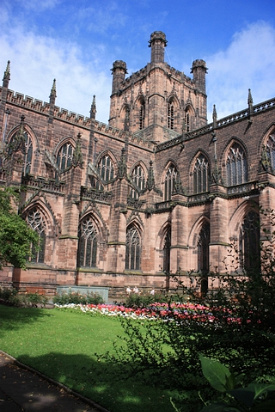
Though not huge, the most prominent edifice in the city centre is Chester Cathedral. It was erected between the 13th and 16th centuries and blends Romanesque and Gothic styles.
The majestic town hall was completed in 1869 in the Gothic Revival style, using the same local pink-reddish sandstone as the castle and the cathedral. Its spire towers at 49 m above the street, 10 m higher than the cathedral's tower.
Top Museums
City Centre Museums
Grosvenor Museum
The Grosvenor Museum, a cornerstone of Chester's cultural landscape, is housed in a striking Victorian building. This museum offers a comprehensive journey through Chester's history and beyond:
- Roman Galleries: Featuring one of the largest collections of Roman tombstones in Britain, these galleries provide insight into life in Roman Chester (Deva Victrix). Visitors can examine intricate carvings, military equipment, and everyday objects used by Roman soldiers and civilians.
- Natural History: The museum's natural history section showcases the diverse flora and fauna of Cheshire, including taxidermy specimens, geological samples, and interactive displays about local ecosystems.
- Period House Rooms: A series of meticulously recreated rooms spanning from 1680 to 1925 offer a glimpse into the domestic life of Chester's residents across different eras.
- Art Gallery: Housing works from the 16th century to the present day, with a focus on local artists and scenes. The gallery includes paintings, sculptures, and decorative arts.
- Newstead Gallery: This space hosts temporary exhibitions, ensuring there's always something new to discover.
Dewa Roman Experience
This immersive museum takes visitors on a journey through Roman Chester, offering a multi-sensory experience:
- Time Capsule: The tour begins with a simulated ride in a Roman Galley, setting the scene for the historical journey ahead.
- Reconstructed Roman Streets: Walk through meticulously recreated Roman streets, complete with authentic sights, sounds, and even smells.
- Excavated Roman Remains: The museum is built around genuine archaeological remains, allowing visitors to see the actual foundations of Roman Chester.
- Hands-on Activities: Try on Roman armour, fire a catapult, or participate in archaeological digs.
- Artefact Display: Examine genuine Roman artefacts found during excavations in Chester.
Cheshire Military Museum
Located within the historic Chester Castle, this museum pays tribute to the county's military heritage:
- Regimental History: Detailed exhibits on the various regiments associated with Cheshire, including the Cheshire Regiment, the Cheshire Yeomanry, and the 5th Royal Inniskilling Dragoon Guards.
- Medal Room: A display of medals awarded to Cheshire soldiers, including Victoria Crosses and other distinguished service awards.
- Weapons and Uniforms: An extensive collection showcasing the evolution of military equipment and attire from the 17th century to modern times.
- War Art: A collection of paintings and sketches depicting various conflicts and military scenes.
- Interactive Displays: Hands-on exhibits allowing visitors to experience aspects of military life, such as morse code communication.
Sick to Death
This quirky museum offers a unique perspective on medieval medicine and mortality:
- The Plague Doctor's House: A recreated medieval physician's dwelling, complete with period-accurate medical instruments and remedies.
- The Diagnosis Room: Interactive displays where visitors can attempt to diagnose historical ailments using medieval medical knowledge.
- The Autopsy Theatre: A simulated autopsy experience, offering insights into historical understanding of human anatomy.
- The TURDIS: A time-travelling toilet experience that humorously explores the history of sanitation and its impact on public health.
- Medicinal Garden: A small garden showcasing plants traditionally used in medieval medicine.
Chester History and Heritage
Situated in the historic St. Michael's Church, this centre is a treasure trove of local history:
- Photographic Archive: An extensive collection of historical photographs documenting Chester's streets, buildings, and residents over the centuries.
- Local History Library: A comprehensive resource for researchers and genealogists interested in Chester's past.
- Oral History Collection: Recordings of Chester residents sharing their memories and experiences of the city.
- Themed Exhibitions: Regular rotating exhibits focusing on different aspects of Chester's history and culture.
Nearby Museums
Lion Salt Works
While technically located in nearby Northwich, this museum is worth mentioning for its significance to Cheshire's industrial heritage:
- Restored Salt Works: A beautifully preserved example of the salt industry that was crucial to Cheshire's economy.
- Interactive Exhibits: Displays explaining the salt extraction process and its importance to the region.
- Butterfly Garden: A beautiful outdoor space showcasing local flora and fauna.
- Play Area: A salt-themed playground for younger visitors.
Norton Priory Museum and Gardens
Located just outside Chester in Runcorn, this museum offers a unique look at monastic life:
- Ruins of Norton Priory: The most excavated monastic site in Europe, offering insights into medieval religious life.
- St. Christopher Statue: Home to a colossal 14th-century statue of St. Christopher, one of the largest surviving medieval statues in Britain.
- Walled Garden: A beautiful 18th-century walled garden featuring over 100 varieties of plants.
- Woodland Walks: Nature trails through ancient woodlands, showcasing local biodiversity.
Local Cuisine
The region is known for its Cheshire cheese, a crumbly and salty variety that dates back to Roman times. The city's signature Chester Pudding, a precursor to lemon meringue pie, is a must-try dessert. For a hearty main course, sample the Cheshire Pork Pie, filled with bacon, apples, and onions. Seafood enthusiasts will appreciate the fresh catches from nearby rivers and the Irish Sea. The local favourite Welsh Rarebit, a savoury dish of melted cheese sauce on toasted bread, showcases the region's love for dairy. Chester's food scene also embraces modern tastes, with numerous restaurants offering innovative takes on British classics and international cuisines. Don't miss the opportunity to enjoy a pint of locally brewed ale in one of the city's historic pubs, completing your gastronomic journey through Chester's delightful fare.
Shopping
Chester boasts a unique shopping experience centred around its medieval Rows. These 700-year-old two-tiered covered galleries, found along the main streets of Eastgate, Northgate, Bridge Street and Watergate, house a mix of independent boutiques and high street favourites. The city centre is compact and walkable, featuring a blend of modern and historic architecture. Shoppers can find fashion, beauty, homeware and speciality food shops within the cobbled streets and quirky lanes. The Grosvenor Shopping Centre, an Edwardian-style mall, offers additional retail options with around 70 stores. Chester also has a vibrant indoor market and is known for its local produce, including cheeses and artisanal goods. The city consistently ranks highly among UK shopping destinations, offering a range of options for various budgets and tastes.
Nature in and around Chester
The city boasts several green spaces, including the historic Grosvenor Park, which features a lake, bandstand, and ornamental gardens. Just outside the city, Delamere Forest provides ample opportunities for woodland walks and outdoor activities. Nature enthusiasts can visit the Burton Mere Wetlands, part of the RSPB Dee Estuary nature reserve, to observe various bird species and enjoy the tranquil surroundings. The Countess of Chester Country Park brings countryside closer to the city, with wetlands, meadows, and woodlands that support a variety of wildlife. For those interested in botanical displays, Chester Zoo offers 125 acres of award-winning gardens in addition to its animal exhibits. The River Dee provides a picturesque setting for walks along its banks, while the nearby Cheshire countryside offers a rich mosaic of agricultural land, lowland heath, and scenic landscapes for visitors to discover.
Getting There & Around
By train Chester is well-served by regular direct services from London Euston, taking approximately two hours, with additional connections from major cities including Manchester, Liverpool, and Birmingham, all arriving at Chester Station which is conveniently located near the city centre.
By coach National Express and FlixBus operate frequent services from London Victoria Coach Station to Chester Bus Interchange, with the journey taking around five to six hours and providing an economical alternative to rail travel.
By car Chester enjoys excellent motorway links via the M53, M56, and M6, making it easily accessible from all regions of the UK, with London approximately 190 miles away via a straightforward three-and-a-half-hour drive along well-maintained motorways.
Best Time to Visit
The best time to visit Chester is during the summer months of June to August. This period offers the most pleasant weather, with average temperatures ranging from 19°C to 21°C, making it ideal for exploring the city's historic sites and outdoor attractions. Visitors can enjoy longer daylight hours, perfect for wandering along the Roman walls or through the charming Rows. Summer also brings a vibrant atmosphere to Chester, with numerous festivals and events taking place. However, it's worth noting that this is also the busiest tourist season, so expect larger crowds and higher accommodation prices. For those seeking a quieter experience with mild weather, late spring (May) or early autumn (September) can be excellent alternatives, offering comfortable temperatures and fewer tourists whilst still allowing for enjoyable outdoor activities.