


 Ireland Guide
 Scotland Guide
 Wales Guide
| Contents |
|---|
Introduction
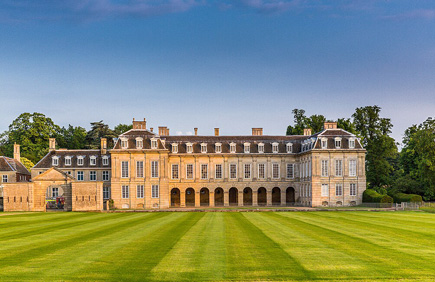
Boughton House, located in Northamptonshire, is a magnificent 17th-century country house often referred to as the "English Versailles" due to its distinctive French-inspired architecture. Built by Ralph Montagu, 1st Duke of Montagu, the house showcases a unique blend of English and Continental design elements, with its impressive façade and formal gardens reflecting the grand style of Louis XIV's court. Set within 11,000 acres of parkland and gardens, the estate features extensive collections of furniture, paintings, and decorative arts that span several centuries. Currently owned by the Duke of Buccleuch, Boughton House opens its doors to visitors during select periods throughout the year, offering guided tours of the state rooms and access to the beautifully maintained grounds and adventure playground, making it a notable destination for those interested in English heritage and aristocratic history.
Interesting Facts about Boughton House
- Boughton House is often called "The English Versailles" because Ralph Montagu, 1st Duke of Montagu, transformed it using French architectural influences after serving as British ambassador to France in the 1670s.
- The house began life as a monastery before Sir Edward Montagu purchased it from St Edmundsbury Abbey in 1528 and converted it into a manor house.
- Boughton House "slept" for two centuries after the 2nd Duke of Montagu's death, with no changes made during the Victorian era, preserving it as a remarkable time capsule.
- The estate covers an impressive 11,000 acres in Northamptonshire, making it one of Britain's largest private estates.
- The house contains one of the finest private armouries in the country, housed in what was once the servants' hall and greatly enhanced by John, 2nd Duke of Montagu.
- Boughton's formal gardens were designed using the golden ratio and feature an intellectually meditative landscape that reflects Age of Enlightenment ideals.
- The Grand Étang, a nearly one-acre lake with a 75-foot tall water jet, was recreated in 2015 to reflect the main frontage of the house, restoring an early 18th-century feature.
- The house featured in the Oscar-winning film "Les Misérables" and has appeared in various history programmes including "Treasure Houses of Britain".
- Boughton houses part of the world-renowned Buccleuch Collection, including paintings by El Greco, Van Dyck, and Gainsborough, alongside exceptional French furniture by master cabinetmaker André-Charles Boulle.
- The 2nd Duke of Montagu, nicknamed "John The Planter," created a 100-acre landscape with water features, tree-lined avenues, and swept away the previous ornamental parterres.
- The house has been in the same family for nearly 500 years, currently owned by Richard Scott, 10th Duke of Buccleuch and 12th Duke of Queensberry, a descendant of the original Montagu builders.
- Landscape designer Kim Wilkie created a striking modern addition called "Orpheus" in 2009, featuring an immense inverted pyramid and spiral rill that continues the garden's intellectual dialogue.
History
The Tudor Origins
Boughton House in Northamptonshire has served as the ancestral home of the Montagu family and their descendants since 1528, when Sir Edward Montagu, Lord Chief Justice to King Henry VIII, purchased what was originally a monastic building just prior to the Dissolution of the Monasteries. Starting life as a simple Tudor manor with a Great Hall at its heart, the estate began its transformation into one of Britain's most magnificent stately homes. The early house provided the foundation for what would become a palatial residence that has remained within the same family line for nearly five centuries, making it one of England's most enduring aristocratic seats.
The 'English Versailles'
The house as it stands today is largely the magnificent work of Ralph Montagu, 1st Duke of Montagu, who inherited the estate in 1683 and embarked upon an ambitious reconstruction project that would define Boughton's character for centuries to come. Having served as English ambassador to France, Montagu was deeply influenced by French architectural styles, particularly the Palace of Versailles, and he employed contemporary French influences to transform his Tudor inheritance into what became known as "The English Versailles". The resulting masterpiece features seven courtyards, twelve entrances, fifty-two chimneystacks, and 365 windows, making it a so-called "calendar house". As a patron of Huguenot craftspeople, Montagu created state rooms of exceptional baroque grandeur that remain amongst the best preserved in the British Isles. His son, John, 2nd Duke of Montagu, continued the family's vision by focusing on the landscape, creating sweeping changes to the gardens that covered 100 acres with grand water features, splendid vistas, and tree-lined avenues.
Preservation and The Buccleuch Legacy
Following the death of George, 3rd Duke of Montagu in 1790, the house passed through marriage to Henry Scott, 3rd Duke of Buccleuch, connecting it permanently to the Buccleuch family line. Remarkably, the extinction of the Dukedom of Montagu led to the house being little used for two centuries, during which time it essentially "slept," preserving its contents and interiors as an extraordinary time capsule with no Victorian alterations. In the 20th century, Boughton once again became a beloved family home under the Duke of Buccleuch and Queensberry, descendants of the original Montagus, and is currently owned by Richard Montagu Douglas Scott, 10th Duke of Buccleuch and 12th Duke of Queensberry. Today, the house is managed by the Buccleuch Living Heritage Trust and houses several centuries' worth of the internationally renowned Buccleuch Collection, including works by El Greco, Van Dyck, and Gainsborough, alongside exceptional French furniture by André-Charles Boulle, Sèvres porcelain, and Mortlake tapestries.
Description
The House
Architectural Splendour
Boughton House presents a breathtaking example of English Baroque architecture, transformed from a simple Tudor manor into a palatial residence that rivals the most splendid homes in the country. The façade is adorned with intricate carvings and elegant symmetry, exuding timeless beauty that immediately captures the eye.
The house is characterised by its plethora of courtyards, staircases, chimney stacks and roof levels, creating a complex and visually striking silhouette against the Northamptonshire landscape. The French architectural influences are evident throughout, reflecting the vision of creating a masterpiece that would bring continental sophistication to the English countryside.
Interior Magnificence
The Great Hall and Central Spaces
The Great Hall serves as the magnificent heart of Boughton House, with its lofty ceilings and ornate embellishments that serve as a testament to the craftsmanship of bygone eras. This vast space features a magnificent high painted ceiling, a masterpiece crafted by the renowned artist Verio. The intricate details and vibrant colours of the ceiling artwork seem to come alive, adding a sense of grandiosity and sophistication to the hall.
The Egyptian Hall represents one of the oldest parts of the original Tudor house. Formerly the family dining room, the Hall's peculiar name refers not to its décor, but to its former use by the Egyptian Society, a club for antiquaries that sometimes held meetings here in the 1740s. The ceiling of this chamber features a magnificent painting depicting the Triumph of Bacchus and Ariadne, with richly drawn characters from classical mythology. Among the Old Master paintings hung in this room is The Adoration of the Magi by El Greco.
The State Rooms
The State Rooms represent the pinnacle of baroque interior design, originally built to impress royalty and inspired by the French Court. These internationally renowned rooms showcase centuries of artistic excellence and craftsmanship. The State Rooms were specifically designed to impress the King and Queen, William and Mary.
The First State Room (The King's Dining Room)
From the head of the Grand Staircase, visitors enter the first of the State Rooms, where the walls are dominated by two huge tapestry cartoons attributed to Tommaso Vincidor, a pupil of Raphael created circa 1521. On the East wall hangs 'The Vision of Ezekiel' and on the West wall 'The Holy Family' with St. Elizabeth and the infant John the Baptist.
Above the central fireplace is a 'Madonna and Child' by Van Dyck, flanked by a 'Madonna and Child' by Puligo (c.1520) and a painting by Alessandro Tiarini of 'Angelica and Medoro with Cupid'. The room also features family portraits and flower paintings by Jean Baptiste Monnoyer.
On the floor, in front of the fireplace, lies the Buccleuch Sanguszko, one of the most magnificent Safavid rugs to be found in Britain. The ceiling depicts the scene from Greek mythology 'Venus interceding for Aeneas'.
The Second State Room (The State Drawing Room)
The second State Room displays pieces of tapestry from 'The Acts of the Apostles' set, made at the Mortlake works in the reign of Charles II from cartoons by Raphael. The room showcases 'The Death of Ananias' and 'The Sacrifice of Lystra' tapestries, whilst the ceiling depicts the 'Fall of Pyranaeus'. Contemporary William and Mary chairs stand alongside gilt gesso furniture, including a coffer by James Moore and centre table by Jean Pelletier.
The Fourth State Room
The fourth State Room served as the formal Withdrawing Room, a more private retreat for the King. The room contains numerous objets d'art including French Tapestries from the Gombaut and Macée series dating from circa 1650-60. The ceiling features a Chéron painting depicting 'Jupiter restraining Arcas' from shooting at the Bear Calisto, his mother - they would become the constellations Ursa Major and Ursa Minor.
The room features a set of eight William and Mary period armchairs covered with contemporary cross stitch needlework covers in a striking colourful, geometric "Hungarian pattern". There is also a Louis XIV Boulle tortoiseshell and brass-inlaid longcase clock attributed to André-Charles Boulle.
The State Dining Room
The State Dining Room exemplifies the grandeur of the era, where lavish banquets were once held in magnificent style. This space, resplendent with its lavish décor, whispers tales of extravagant banquets and illustrious guests. Each room flows seamlessly into the next, creating a journey through some of the finest examples of baroque interior architecture in Britain.
Additional Interior Spaces
The house features numerous other significant rooms including The Staircase Hall, The Little Hall, The Audit Room, and The High Pavilion Ante-Room. Each space offers visitors a unique glimpse into the sophisticated lifestyle of the aristocratic families who resided here.
The Art Collection
The house contains an outstanding collection of fine art displayed across over 30 rooms. Visitors can admire:
- Paintings by El Greco, Van Dyck and Gainsborough
- Exceptional French furniture by master cabinetmaker André-Charles Boulle
- Delicate Sèvres porcelain
- Mortlake Factory Tapestries
- 16th century rugs from the Middle East
The house also boasts a remarkable collection of ceramics, including pieces from the renowned Delft and Meissen factories. From the magnificent State Rooms to the atmospheric Armoury, each space offers a unique glimpse into centuries of artistic patronage and cultural refinement.
The Gardens and Landscape
Formal Garden Design
The gardens at Boughton House span 150 acres of stunning landscapes, representing one of the finest examples of 18th-century formal garden design in Britain. The landscape follows strict geometry designed on the golden ratio, creating an intellectually meditative environment that reflects the Age of Enlightenment philosophy.
The garden features vast swathes of turf, planes of reflecting water, strong lines of trees and linear earth forms, all carefully orchestrated to create a journey of the mind whilst acknowledging the natural world. The design demonstrates how a garden can be both a work of art and a space for contemplation.
Historical Development
The Vision of the Dukes of Montagu
Boughton's gardens were laid out to impress the eye, and for decades the landscape was carefully shaped by the 1st and 2nd Dukes of Montagu into a series of stunning vistas, tree-lined avenues and bold water features. The 2nd Duke, who had been nicknamed 'John The Planter', swept away the previous ornamental parterres, multiplied the avenues of elms and planes, and developed the role of water which structures the garden.
A contemporary account from this period describes a garden of parterres, Basins, Jet d'Eaus, trees and a Canal. The 2nd Duke's new landscape covered 100 acres, with water features, splendid vistas and tree-lined avenues. It was his ambitious vision to plant an avenue from Boughton to London.
Charles Bridgeman's Contributions
Later, Charles Bridgeman, the landscaper of the garden at Stowe who was under the Duke's employ, is believed to have created the sculptural earth forms. The garden was simplified in at least 3 phases according to plans by Colen Campbell, Delahaye and possibly Charles Bridgeman. This led to the eventual grassing of the parterres, extension of the Broadwater and the construction of a trapezoid mount.
Key Garden Features
The Grand Étang
The magnificent Grand Étang serves as the centrepiece of the water features. This impressive reflecting pool, covering almost one acre, was designed as a mirror for the house's main frontage. The lake features a spectacular 75-foot tall water jet that creates a dramatic focal point visible from the house and surrounding gardens.
The Grand Étang is one of the earliest surviving features from the original gardens and designed landscape. It was created in the early 18th century as a reflecting pool for the house and was also used for ice-skating in the winter. This long-vanished lake was recreated in 2015 and restored in 2014 to reflect once again the main frontage of Boughton.
Tree-Lined Avenues
The landscape is structured by grand tree-lined avenues that extend the garden's formal geometry into the surrounding parkland. These avenues of elms and planes create magnificent vistas and frame views both towards and away from the house, demonstrating the ambitious scale of the original design.
The restoration programme has included replanting hundreds of avenue trees (including a mile of limes) to restore the original grandeur of these impressive landscape features.
The Walled Garden
The historic Walled Garden offers a more intimate garden experience. Here visitors can explore herbaceous borders, carefully tended flowerbeds, and the popular Sensory Garden, which provides a delightful contrast to the formal grandeur of the main landscape. The Walled Garden features a herbaceous border, flowerbeds and newly created Sensory Garden.
Rose Garden and Lily Pond
The Rose Garden provides a peaceful retreat, whilst the ancient Lily Pond offers moments of quiet reflection. These features demonstrate the garden's ability to provide both grand spectacle and intimate beauty. The peace and beauty of the Rose Garden and the ancient Lily Pond are well worth seeking out.
The Mount and Viewing Points
The landscape includes a man-made Mount that has been uncovered during restoration work, freeing up commanding views of the revitalised landscape. This trapezoid mount was constructed with spoil from other garden works and provides spectacular vantage points across the estate.
Contemporary Additions
Orpheus
The garden's dialogue between past and present is exemplified by Orpheus, a striking contemporary landform created by landscape designer Kim Wilkie in 2009. This remarkable feature takes the form of an immense inverted pyramid and spiral rill, both set within a golden ratio.
Named after the Greek mythological musician who descended into the underworld, Orpheus creates a seamless continuation of the garden's intellectual dialogue. The inverted grass pyramid descends approximately 7 metres to a reflecting pool fed by springs, inviting visitors to experience the tranquillity of this unique space.
Orpheus takes the form of an inverted pyramid, sunk into the earth and open to the elements, reflecting the mound on the opposite side of the lake. It seems to invite visitors to descend into its depths and enjoy the tranquillity. On the terrace is an artwork based on the Golden Section - a single large rectangle formed by a square and another rectangle. This pattern can be repeated perfectly within each section, united by a Golden Spiral or Fibonacci curve in the form of a rill.
The whole feature is placed to align on the axis from the Lily Pond in the upper garden, thus uniting several very different ages of garden designs.
Water Features and Restoration
The River Ise and Waterways
The restoration work has included returning the River Ise to its 18th-century width, requiring two miles of green oak boarding fixed by coach bolts. This meticulous attention to historical accuracy ensures that visitors experience the landscape much as it was originally conceived.
The restoration programme has restored the spellbinding series of waterways, lakes and reflecting pools created when the River Ise was first canalised. The restoration has also uncovered long-lost waterways and lakes dating back over 300 years, revealing the full scope of the original garden design.
The Canal
The gardens feature a 200-metre canal resembling those found in French water gardens, which forms part of the formal water features that structure the landscape design.
Parkland and Broader Landscape
The estate encompasses over 11,000 acres of meticulously maintained gardens, parkland, and lakes. The expansive parkland is dotted with ancient trees and serene lakes, witnessing the beauty of nature in its full glory.
The gardens were designed in a French style with contributions from various landscape architects over the centuries. The parkland features well-groomed lawns, elaborate parterres, and the formal gardens where geometric pathways lead past vibrant flowerbeds, ornate fountains, and meticulously sculpted hedges.
Getting There
Boughton House, located near Kettering in Northamptonshire, is easily accessible by various means of transport.
By car, the house is approximately 75 miles north of London via the A43, with ample parking available on the grounds (parking fees typically apply). Rail travellers can take a train from London St Pancras to Kettering station, with services running regularly throughout the day at around £30-50 for a standard return ticket, then catch a local bus or taxi for the final few miles to the estate. The X4 bus service connects Kettering to nearby villages, though checking current timetables is advisable as services can be limited, particularly at weekends. For those preferring a more direct approach, several taxi companies operate from Kettering station, with the journey to Boughton House taking approximately 15 minutes and costing around £15-20. The house is well-signposted from major roads, and visitors should note that the estate is only open to the public on specific days during the summer months, so advance booking is strongly recommended to avoid disappointment.
Best Time to Visit
The best time to visit Boughton House is during its limited opening periods, which typically occur during Easter weekend, the May Bank Holiday weekends, and throughout August. The house and gardens are generally open from 1:00 PM to 5:00 PM during these periods, with tours beginning at 1:00 PM. Spring visits during Easter and May offer the advantage of experiencing the gardens as they come to life, with opportunities to see early flowering bulbs like snowdrops and aconites in February, followed by the full splendour of the restored 18th-century landscaped gardens. August provides the most extensive opening schedule with multiple weeks available, though this coincides with peak summer tourist season. For those seeking a quieter experience, the Easter and May openings offer a more intimate atmosphere whilst still providing access to the magnificent State Rooms, the recently restored Great Hall, and the stunning parkland with its grand water features. The house also opens for special events throughout the year, and private group visits can be arranged by appointment, making it possible to experience this "English Versailles" at times when it's not open to the general public.