


 Ireland Guide
 Scotland Guide
 Wales Guide
| Contents |
|---|
Introduction
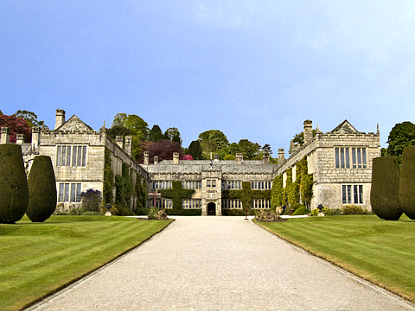
Set in a superb 364-hectare park between Bodmin and the River Fowey, Lanhydrock House is one of the greatest late-Victorian country houses in England.
In 1881, the original 16th-century manor was destroyed by a fire and rebuilt with all the modern comfort of the time, including central heating and all the most up-to-date kitchen utensils. The 17th-century Gatehouse and North Wing, have survived the conflagration, including the 32m Long Gallery with its artistic plaster scenes from the Old Testament.
Interesting Facts about Lanhydrock House
- Lanhydrock House was almost completely destroyed by a devastating fire on 4th April 1881, with only the north wing containing the 116-foot Long Gallery and the front porch surviving intact.
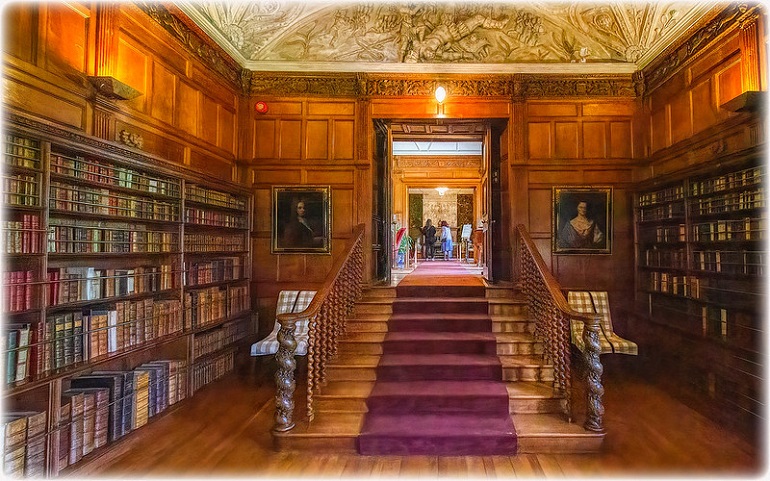
- The magnificent Long Gallery that survived the fire features original Jacobean plasterwork depicting scenes from the Old Testament, considered to be the finest of its type in the west of England.
- The house stands on an extensive estate of 890 acres above the River Fowey in Cornwall and has been owned and managed by the National Trust since 1953.
- Originally built in the 1620s-1640s by the wealthy Robartes family, the house was reconstructed as a state-of-the-art Victorian country seat following the 1881 fire.
- During the English Civil War, the house was garrisoned by Parliamentary forces in August 1644, as the owner John Robartes was a staunch Parliamentarian who fought against King Charles I.
- The estate originally belonged to the Augustinian Priory of St Petroc at Bodmin until Henry VIII's Dissolution of the Monasteries in the 1530s.
- Thomas Charles Reginald Robartes, known as "Tommy" and described as "the best dressed man in Parliament," tragically died at the Battle of Loos in 1915 whilst attempting to save another soldier.
- During the Second World War, Lanhydrock served as a home for evacuee children from cities, whilst the wooded estate was used to store ammunition hidden from enemy aircraft.
- The rebuilt Victorian house incorporated modern fire safety features including thick concrete ceilings, fire extinguishers, and even its own fire engine.
- Lanhydrock was the main filming location for Trevor Nunn's 1996 adaptation of Twelfth Night, starring Helena Bonham Carter as Olivia.
- The house offers one of the longest public tours of any National Trust property, featuring 54 rooms including extensive kitchens, nurseries, servants' quarters, and opulent family rooms.
- The estate houses the National Trust's most important theological library, comprising the scholarly working collection of the 1st Earl of Radnor from the 17th century.
History
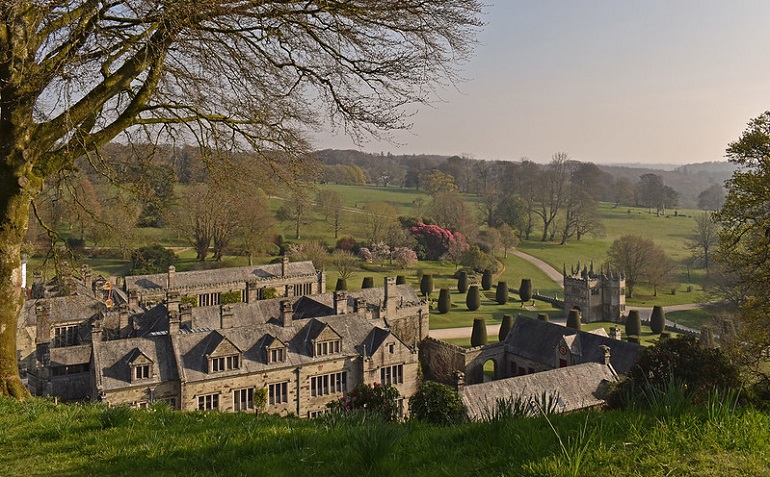
Lanhydrock House stands majestically in the Cornish countryside, its origins tracing back to the 1620s when wealthy merchant Sir Richard Robartes acquired the estate from the dissolved Augustinian priory of St Petroc at Bodmin. Robartes, known as "the wealthiest in the west," began constructing the grand manor house using local grey granite in a four-sided layout around a central courtyard. Following his death in 1624, his son John Robartes, 1st Earl of Radnor, continued the building work, completing the house by 1651. The younger Robartes became a notable political figure, serving as Lord Privy Seal and Lord President of the Council, and during the English Civil War, he supported Parliament against King Charles I. The house itself played a role in the conflict when Parliamentary forces were garrisoned there in August 1644, though it was later briefly captured by Royalist forces under Sir Richard Grenville.
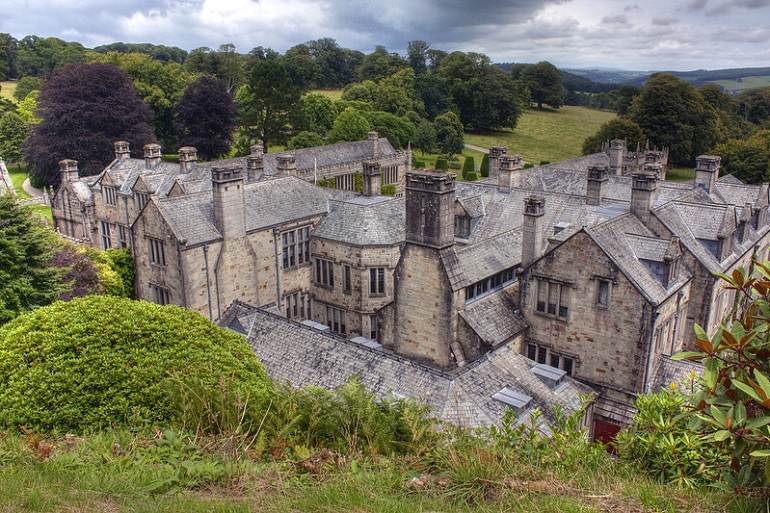
The most dramatic chapter in Lanhydrock's history unfolded on 4th April 1881, when a devastating fire swept through the building, starting in the kitchen and fanned by near gale-force winds. The blaze destroyed the south wing and caused extensive damage to the central section, with only the north wing containing the magnificent 116-foot Long Gallery, the front porch, and the original 17th-century gatehouse surviving intact. Lady Juliana Agar-Robartes tragically died five days after the fire from smoke inhalation, whilst her husband Thomas died twelve months later, reportedly of a broken heart. The family's heir, Thomas Charles Agar-Robartes, commissioned architect Richard Coad to rebuild the house, incorporating innovative Victorian fire safety features including thick concrete ceilings, fire extinguishers, and even the house's own fire engine. The reconstruction, completed by 1885, cost approximately £50,000 and created the impressive Victorian country house visitors see today.
The 20th century brought both triumph and tragedy to Lanhydrock, as the Agar-Robartes family experienced the social changes of the era whilst maintaining their grand estate. During the First World War, the family's eldest son Tommy, a fashionable Liberal MP known as "the best dressed man in Parliament," served with the Coldstream Guards and died heroically at the Battle of Loos in 1915 whilst trying to save another soldier. The house served the community during the Second World War by providing refuge for evacuees from bombed cities, with the extensive woodland also used to store ammunition away from enemy reconnaissance. Faced with crippling death duties and lacking direct heirs, the 7th Viscount Clifden transferred the house and 160 hectares of parkland to the National Trust in 1953, ensuring its preservation for future generations. Today, Lanhydrock remains one of the finest examples of high-Victorian country house planning, with its interiors largely unchanged since 1885, including the spectacular Long Gallery ceiling featuring intricate Jacobean plasterwork depicting scenes from the Old Testament Book of Genesis.
Description
Lanhydrock House
Lanhydrock House stands majestically in a sheltered valley above the River Fowey, its U-shaped granite façades rising from manicured lawns and formal terraces. The surviving Jacobean gatehouse and north wing, with their embattled parapets and mullioned windows, contrast elegantly with the high-Victorian service wing and richly ornamented interiors conceived by Sir George Gilbert Scott and Richard Coad after the 1881 fire.
Exterior and Setting
The house is built of local grey granite, laid in massive blocks that give a sense of solidity and permanence. Its two projecting wings frame a central courtyard open to the east, while a low battlemented wall links the gatehouse to the main building. Broad steps descend from the entrance porch to terraces edged with clipped yew hedges and urns, beyond which formal parterres unfold in symmetrical patterns. From the higher garden, sweeping lawns slope down through drifts of camellias, rhododendrons and magnolias into ancient woodlands that carpet the valley with bluebells in spring.
Interior Highlights
Visitors enter through the gatehouse into an inner hall whose Victorian mosaic flooring and plaster-coved ceiling evoke late-nineteenth-century grandeur.
- Long Gallery
A spectacular barrel-vaulted chamber, 35 metres in length, its Jacobean plasterwork ceiling richly modelled with biblical scenes. Tall mullioned windows flood the space with light, while oak panelling and the National Trust’s principal library line the walls. - Formal Reception Rooms
The Drawing Room and Smoking Room display elegant Victorian furnishings: deep chesterfields upholstered in jewel-toned velvets, marble-topped tables, and display cabinets of Chinese porcelain. Portraits of the Agar-Robartes family hang above marble fireplaces, lending atmosphere to these intimate spaces. - Dining Room
Appointed with a long polished oak table set with porcelain and silver, this room links to the central heating iron cupboard—an early warming cabinet designed to keep dishes at table temperature. - Servants’ Quarters and Kitchens
The north wing houses a remarkable suite of working rooms: a vast coal-fired kitchen with high roof beams; adjacent scullery, bakehouse, pastry room, dairy scullery and cold dairy, each arranged in sequence around the central cooking block. Clerestory windows, stone-flagged floors and original cast-iron ranges reveal the ingenuity of Victorian country-house service design. - Family Bedrooms and Nurseries
On the first floor, family and children’s rooms retain original wallpaper, furnishings and toys. The nursery corridor leads past the nurse’s apartment into a bright bathroom, while the master suites offer leafy views over the terraces.
Gardens and Estate
Encircling the house are twenty-two acres of formal gardens. The parterre immediately in front is woven into gravel walks and clipped hedging, while the herbaceous circle—a semi-circular border of perennials—provides a riot of colour from early summer onwards. Above the house, the higher garden’s informal beds showcase spring-flowering magnolias in tunnels of blossom, underplanted with narcissi.
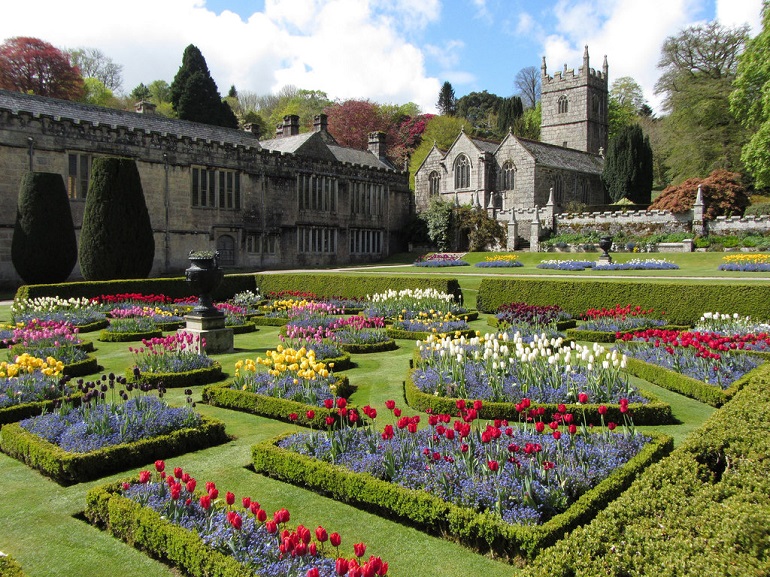
Beyond the formal gardens, 890 acres of parkland and ancient woodland invite exploration. Well-waymarked footpaths and off-road cycle trails wind along riverside banks, across gently undulating pasture and through rhododendron glades. Occasional viewpoints afford panoramic vistas of the valley and distant moorland.
Getting There
By train, the nearest railway station is Bodmin Parkway, located just 1.75 miles from Lanhydrock House via the original carriage-drive or 3 miles by road. The station is served by Great Western Railway services, including direct trains from London Paddington which take approximately four hours.
By coach, organised tours and group visits are available from various operators, with coaches able to access designated parking areas at the property, though advance booking is typically required.
By car, Lanhydrock House is situated 2.5 miles south-east of Bodmin and is easily accessible by following signposts from either the A30 or A38 Bodmin to Liskeard route, or alternatively via the B3268 off the A390 at Lostwithiel. The postcode for satellite navigation is PL30 4AB, which directs visitors to the main car park where ample parking is available.
Best Time to Visit
The ideal time to visit Lanhydrock House largely depends on what you wish to see, though spring is often considered the most spectacular season. During spring, the extensive gardens burst into life, with over 120 varieties of magnolias in glorious bloom, along with vibrant azaleas creating an overwhelming sight and scent. Summer is also an excellent choice, offering the perfect weather for exploring the wider estate, including its ancient woodlands and tranquil riverside paths. To enjoy a more peaceful visit, it is advisable to arrive after 2 pm, as the estate is typically at its busiest between 11 am and 2 pm. The house and main gardens are usually open from March until October, so it is always best to check the opening times before you travel.