


 Ireland Guide
 Scotland Guide
 Wales Guide
| Contents |
|---|

Introduction
King's Lynn (pop. 47,000) or just Lynn, as the locals call it, is a market town and port located near the estuary of the River Grear Ouse. Lynn was part of the manor of the Bishop of Norwich in the 12th century, and developed into the country's 3rd largest port in the 14th century, thriving on the wool trade with the Low Countries, a status reflected in its membership of the mediaeval Hanseatic League, a powerful European trading federation. This rich maritime past is evident throughout the town's architecture, which includes the 17th-century Custom House, two surviving mediaeval guildhalls, and a well-preserved historic quarter along the riverfront, showcasing buildings from its prosperous trading history.
The town is well-known for its Festival of Music and the Arts (King's Lynn Festival), which takes place the second half of July. It features classical music, literature and theatre events, and is Norfolk's prime cultural gathering.
Interesting Facts about King's Lynn
- King's Lynn derives its name from the Celtic word 'Linn', meaning a lake or pool, as a large tidal lake originally covered the area.
- The town was founded in 1101 by Bishop Herbert de Losinga of Thetford, who built St Margaret's Church and authorised the first market.
- During the 14th century, King's Lynn ranked as England's third most important port, behind only London and Southampton.
- Captain George Vancouver, the explorer who sailed with Captain Cook and charted the north-west coast of North America, was born in King's Lynn in 1757.
- William Shakespeare is believed to have performed at St George's Guildhall in 1593, whilst his leading comic actor Robert Armin was born in the town in 1565.
- The town is home to Britain's oldest working theatre, the Grade I listed St George's Guildhall, which has been staging performances since 1445.
- Roger Taylor, drummer for the rock band Queen, was born in King's Lynn, whilst actor Michael Caine was evacuated there during the Second World War.
- The famous Mart fair has been entertaining visitors for more than 800 years, opening traditionally on Valentine's Day and granted a Royal Charter by King Henry VIII in 1537.
- Frederick Savage, the Victorian fairground manufacturer who built carousels and switchbacks exported worldwide, operated from King's Lynn during the 19th century.
- King's Lynn was one of the first British towns to be bombed from the air during the First World War when a German airship attacked in 1915.
- The town still houses two of England's only remaining Hanseatic League warehouses, Hanse House (built 1475) and Marriott's Warehouse, testament to its medieval trading links with Northern Europe.
- Saturday Market Place has hosted markets since 1104, making it one of England's oldest continuously operating market locations.
- Archaeologists discovered the bones of a 'Monster Cod' measuring 51 inches in length in the town centre, compared to today's average 18-inch cod.
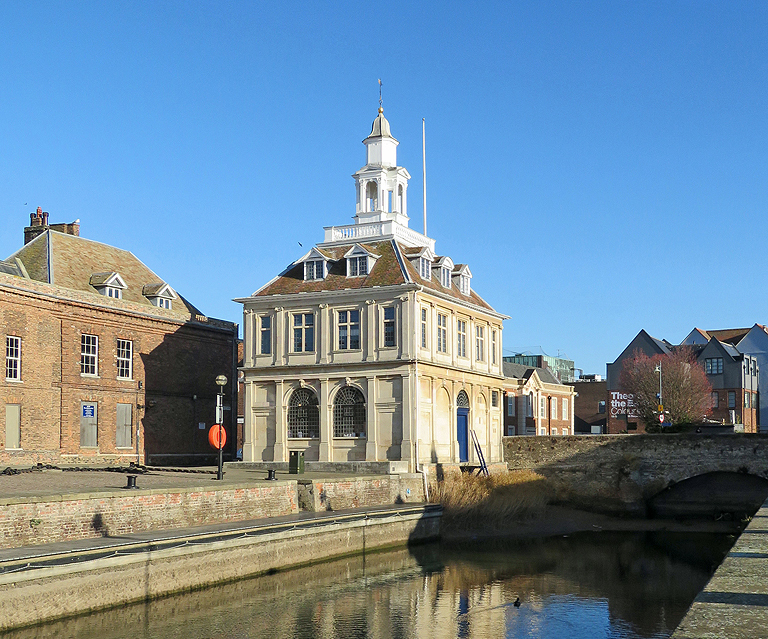
- The elegant Custom House overlooking the medieval harbour was designed in 1683 by Henry Bell, who served as the town's mayor.
- St Margaret's Church (now King's Lynn Minster) features a unique tide clock, one of only a handful remaining in England.
History
Medieval Origins and Golden Age
King's Lynn, originally known as 'Linn' and later 'Bishop's Lynn', derives its name from the Celtic word for a lake or pool, referring to a large tidal lake that originally covered the area. The town was founded in 1101 when Bishop Herbert de Losinga of Thetford built St. Margaret's Church (now King's Lynn Minster) and authorised a Saturday market. By 1204, following a charter from King John, the settlement became Bishop's Lynn and was established as a free borough. The medieval town flourished spectacularly, growing between the Purfleet and Mill Fleet waterways, and by the 14th century boasted a population of 5,500-6,000, making it remarkably large and important by the standards of the time. From as early as the 12th century, King's Lynn was one of England's foremost ports, perhaps as important in the Middle Ages as Liverpool would become during the Industrial Revolution. The town's prosperity was built on its membership in the Hanseatic League, a powerful German trading organisation, with merchants importing fish from Scandinavia, timber from the Baltics, and wine from France, whilst exporting wool, salt, and corn. This golden age produced magnificent buildings including St. George's Guildhall in 1406, one of the largest and oldest merchant guildhalls in England, and the Hanseatic Warehouse in 1475.
Tudor Transformation and Royal Recognition
The 16th century marked a pivotal transformation for Bishop's Lynn. In 1524, Henry VIII granted the town a mayor and corporation, followed by a second charter in 1537 that transferred control from the Bishop of Norwich to the Crown and renamed the settlement King's Lynn, or Lynn Regis. This period saw significant urban development, including the founding of a grammar school in 1534, though Henry VIII's dissolution of the monasteries led to the closure of the Benedictine Priory and three friaries in 1538. The town modernised with practical improvements such as a piped water supply using elm pipes under the streets, and fire prevention measures including the banning of thatched roofs in 1572. However, the town's economic focus shifted during this era from wool exports, which had been the mainstay for centuries, to grain as the principal export. Like other east coast ports, King's Lynn began to suffer from the discovery of the Americas, which benefited western ports, and from London's growing dominance in trade.
Wars, Railways, and Modern Revival
King's Lynn's later history was marked by dramatic events and gradual transformation. During the English Civil War, the town initially supported Parliament but switched allegiance to the King in August 1643, resulting in a three-week parliamentary siege before surrender. The late 17th century brought architectural distinction with Henry Bell, a former mayor, designing the elegant Custom House in 1683, along with the Duke's Head Inn. The town's decline was reversed with the arrival of railways in 1847, primarily through the Great Eastern Railway, which connected King's Lynn to Hunstanton, Dereham, and Cambridge. During the First World War, King's Lynn gained the unfortunate distinction of being among the first towns in Britain to suffer aerial bombing when the German Zeppelin L4 dropped eleven bombs on 19 January 1915, killing two people in Bentinck Street. The 20th century brought urban renewal, including a museum in 1904, a public library in 1905, and the Majestic cinema in 1928. In 1962, King's Lynn was designated as an overspill town for London, spurring population growth and new housing developments, whilst modern industries including food canning, Campbell's soup production, and fertilizer manufacturing helped sustain the local economy.
Main Attractions
Customs House
Standing proudly on Purfleet Quay, the Customs House is King's Lynn's most iconic building and a masterpiece of 17th-century architecture. Built in 1683 by local architect Henry Bell, this Grade I listed structure showcases classical Dutch merchant exchange style with Doric columns on the ground floor, Ionic columns on the upper level, and a distinctive statue of Charles II above the main door. Originally designed as a merchants' exchange, the building served HM Customs and Excise until 1989 and today houses the town's tourist information centre, marking the town as "open for international business" with its revolutionary classical design.
Town Hall and Trinity Guildhall

The Town Hall complex represents a fascinating architectural journey through nearly 600 years of civic history, with the Guildhall of the Holy Trinity at its heart, built between 1422 and 1428. The guildhall's distinctive facade features a striking chequered pattern of knapped flint squares alternating with stone squares, characteristic of East Anglian flushwork, whilst the Stone Hall on the upper floor is lit by a magnificent seven-light Perpendicular window. A Jacobean porch was added in 1624, and the Victorian extension of 1895 maintains the same chequered pattern, providing the modern council chamber where local government meetings still take place.
St George's Guildhall
St George's Guildhall holds the extraordinary distinction of being England's oldest working theatre and the only surviving theatre where William Shakespeare is believed to have performed. Built between 1410 and 1420, it is the largest surviving medieval guildhall in England and has been in continuous use as a theatre since 1445. During 1592-1593, when London's theatres were closed due to plague, Shakespeare and his company performed here, and recent archaeological discoveries have uncovered the original medieval stage flooring from 1417-1430 and a 600-year-old doorway believed to be the entrance to Shakespeare's dressing room.
Old Gaol House
The Old Gaol House, dating from 1784, stands as a compelling reminder of King's Lynn's judicial history, designed by William Tuck in the style of London's Newgate Prison. This Grade II* listed building served as the town's courthouse and prison for over a century, with its facade featuring rusticated quoins and iron shackles as a stark reminder of its original purpose. The building contained four 18th-century cells with groin-vaulted interiors and held up to 50 prisoners before closing as a prison in 1866, now housing the "Stories of Lynn" museum where visitors can explore the dark cells and learn about the town's most notorious prisoners.
St Margaret's Church (King's Lynn Minster)
King's Lynn Minster, known for 900 years as St Margaret's Church, represents the spiritual and historical heart of the town, founded in 1101 by Herbert de Losinga as a Benedictine priory dedicated to St Margaret of Antioch. Granted the honorary title of King's Lynn Minster in 2011, the building showcases multiple architectural periods with twin towers - the slender 12th-century south-west tower and the larger 15th-century north-west tower. The church contains remarkable treasures including the two largest memorial brasses in England, a magnificent Snetzler organ, and is particularly associated with Margery Kempe, author of the first autobiography in English.

St Nicholas' Chapel
St Nicholas' Chapel stands as England's largest chapel-of-ease, measuring approximately 200 feet in length and founded in 1146 to serve the northern part of St Margaret's parish. The present building results from major 15th-century rebuilding in the Perpendicular style, with a Victorian spire by Sir George Gilbert Scott replacing the original medieval spire blown down in 1741. The chapel's most spectacular feature is its 15th-century oak timber roof containing carved angels with outstretched wings, forty percent of which play musical instruments, alongside magnificent stained glass and an exceptional collection of monuments celebrating King's Lynn's merchants, mayors, and mariners.
Clifton House
Clifton House represents the finest surviving example of a medieval merchant's townhouse in England, continuously occupied since the 13th century with its current facade constructed in 1708 by architect Henry Bell. This Grade I listed building on Queen Street contains extraordinary historic interiors including two 13th-century tiled floors described as the largest in-situ tiled floors in any secular building in Britain, a magnificent 14th-century vaulted undercroft, and a unique five-storey Elizabethan tower built in the 1580s. Henry Bell's early 18th-century remodelling added the impressive street frontage with twisted mahogany barley sugar columns and a magnificent central staircase.
Tudor Rose Hotel
The Tudor Rose Hotel occupies one of King's Lynn's most historically significant sites, with continuous habitation since the 12th century and incorporating structures from different periods, including a timber-framed upper storey from 1645 representing some of the finest surviving Tudor architecture in the town. This Grade II listed building on St Nicholas Street has served as an inn for centuries, featuring a jetted facade characteristic of Tudor construction and reputedly haunted by the ghost of a bride allegedly murdered on her wedding day. Located just off Tuesday Market Place, the hotel provides an authentic historical accommodation experience in the heart of King's Lynn's medieval quarter, maintaining its character as one of Norfolk's most atmospheric historic inns.
South Gate
The South Gate represents one of King's Lynn's surviving medieval fortifications, constructed in the 15th century to control access to the prosperous trading town. This imposing stone structure historically marked the southern entrance to King's Lynn and served as both a defensive feature and a symbol of the town's importance. Whilst the gate is not open for public entry, it remains easily accessible for viewing and photography, standing as a tangible reminder of the town's medieval defences and strategic importance during the late medieval period.
Greyfriars Tower
Greyfriars Tower stands as the sole remaining section of a 13th-century Franciscan friary that once played a significant role in King's Lynn's religious life. This medieval tower has become one of the town's most recognisable landmarks, visible from numerous vantage points throughout King's Lynn. The structure serves as an important reminder of the town's monastic heritage and the significant influence of religious orders in medieval England. Its prominent position makes it a natural focal point for visitors exploring the town's historical development.
The Walks
The Walks encompasses 17 hectares of historic public parkland situated in the heart of King's Lynn, providing both residents and visitors with extensive green space for recreation and relaxation. This well-maintained park features formal gardens, open grassland areas, designated children's play facilities, a convenient café, and numerous walking paths suitable for leisurely strolls. Within the park boundaries stands the Red Mount Chapel, a Grade II-listed 15th-century pilgrimage chapel that, whilst generally not open to the public, can be appreciated from the exterior and adds historical significance to the park's attractions.
Tower Gardens
Tower Gardens provides a complementary green space adjacent to The Walks, distinguished by its inclusion of the historic Greyfriars Tower within landscaped garden settings. The gardens offer carefully designed areas for quiet contemplation and relaxation, with the medieval tower serving as a dramatic focal point. This combination of horticultural design and historical architecture creates a unique environment where visitors can appreciate both natural beauty and medieval heritage in a single location.
Historic Waterfront and Quayside
King's Lynn's historic waterfront along the Great Ouse reflects the town's former status as one of England's most important medieval ports. The quayside area, particularly near the Custom House, features a collection of historic warehouses and merchant houses that demonstrate the architectural legacy of the town's prosperous trading period. These buildings provide visitors with a tangible connection to King's Lynn's maritime heritage and offer insight into the commercial activities that shaped the town's development over several centuries.
Lynn Lumière
Lynn Lumière presents a contemporary approach to celebrating King's Lynn's historical heritage through animated light shows projected onto the town's key historic buildings during the darker months of the year. These illuminations depict scenes from local history and provide a modern interpretation of traditional storytelling methods. The light shows are freely accessible to the public after dusk, offering visitors an innovative way to engage with the town's heritage whilst experiencing its historic architecture in a dramatically different context.
Alive Corn Exchange Theatre and Cinema
The Alive Corn Exchange occupies a historic corn exchange building constructed in 1854, representing the town's 19th-century commercial development whilst serving contemporary cultural needs. This multipurpose venue maintains its historical character whilst hosting a diverse programme of concerts, dance performances, theatrical productions, cinema screenings, and community events throughout the year. The building demonstrates successful adaptive reuse of Victorian commercial architecture and provides visitors with both historical interest and contemporary entertainment options.
Pilgrimage Trail
The Pilgrimage Trail offers a self-guided walking route through King's Lynn that highlights the town's significant religious heritage sites, including various chapels and churches that played important roles in medieval spiritual life. This signed trail provides visitors with a structured approach to exploring the town's ecclesiastical history, with maps available from the local tourist information centre. The trail connects various religious sites throughout the town, offering insight into the role of faith and pilgrimage in King's Lynn's historical development.
Watatunga Wildlife Reserve
Located in the countryside surrounding King's Lynn, Watatunga Wildlife Reserve encompasses 170 acres of carefully managed habitat designed to support rare species of deer, antelope, and birds. The reserve operates guided buggy tours that allow visitors to observe free-roaming animals in naturalistic settings whilst learning about conservation efforts and animal behaviour. This attraction provides a contrast to King's Lynn's urban and historical sites, offering visitors the opportunity to experience wildlife conservation in the Norfolk countryside whilst remaining within easy reach of the town centre.
Top Museums
Lynn Museum
Situated in the heart of the town, Lynn Museum offers a fascinating journey through the diverse history of West Norfolk. Housed in a former Victorian chapel, the museum’s collections span from prehistory to the present day.
Highlights:
- The world-famous Seahenge: a Bronze Age timber circle discovered on a Norfolk beach, painstakingly reconstructed within the museum. This remarkable find sheds light on ancient ritual practices and the region’s prehistoric communities.
- Exhibits on Egyptian artefacts, including actual shabti figures.
- A Victorian fairground galloper horse, capturing the atmosphere of seaside holidays past.
- The skeleton of an Anglo-Saxon warrior and medieval pilgrim badges, providing glimpses into the area’s colourful history.
- Social history exhibits covering the maritime, industrial, and community life of King’s Lynn.
The museum regularly hosts temporary exhibitions and interactive displays, making it engaging for visitors of all ages.
True’s Yard Fisherfolk Museum
A unique and atmospheric museum, True’s Yard preserves the last surviving cottages of King’s Lynn’s old fishing community, known as the North End.
Highlights:
- Restored fishermen’s cottages show how local families lived and worked in the 19th and early 20th centuries.
- The museum tells the story of a tight-knit community known for their resilience, traditions, and seafaring skills. Visitors can discover the hardships faced by the fisherfolk, their customs, and the distinct identity developed in this quarter of the town.
- Features a historic smokehouse, original fishing boats, and a comprehensive archive, offering a rare insight into a vanishing way of life.
- The Grade II listed buildings themselves form a distinctive part of the collection, immersing visitors in the sights and sounds of King’s Lynn’s fishing past.
Captain Fawcett’s Marvellous Barbershop Museum
This quirky, speciality museum combines nostalgia, style, and history in one eclectic collection.
Highlights:
- Celebrates the art and culture of male grooming, showcasing vintage barbershop equipment, shaving memorabilia, and curiosities related to the history of facial hair.
- Perfect for those intrigued by gentlemen’s grooming traditions and eccentric British collections.
- The museum has a loyal following and offers a truly distinctive, humorous experience in the heart of King’s Lynn.
Other Notable Mentions
- RAF Marham Aviation Heritage Centre: Located nearby, this centre is dedicated to the history of military aviation, showcasing aircraft, artefacts, and stories of the Royal Air Force in Norfolk.
- Tales of the Old Gaol House: Focuses on law and order in historic King’s Lynn, set in an old police station and gaol; features city regalia and local treasures.
Local Cuisine
The historic port town takes full advantage of its proximity to the North Sea, with local restaurants proudly featuring Cromer crab, renowned for its sweet flavour and tender flesh, and Brancaster mussels harvested from the nearby mudflats. Diners can also sample samphire, the salty sea vegetable that grows wild along the Norfolk coast, and Binham Blue cheese produced by local artisans. Traditional pub grub remains popular, with establishments serving hearty Sunday roasts complete with Yorkshire puddings, whilst the town's riverside restaurants like Marriott's Warehouse offer atmospheric dining with views over the Great Ouse. From fresh seafood platters to classic carvery meals, King's Lynn provides an authentic taste of Norfolk's culinary heritage in settings that range from historic merchant warehouses to cosy country-style pubs.
Getting There & Around
King's Lynn is on the A47 motorway between Peterborough and Norwich, and at the end of the A10 from Cambridge and Ely.
By train, King's Lynn is easily accessible with direct services from London King's Cross taking approximately 1 hour 48 minutes, operated by Great Northern with hourly departures throughout the day. Alternative rail routes include travelling via Cambridge, with services from London Liverpool Street to Cambridge and then onward to King's Lynn, though this takes around 2 hours 46 minutes in total.
By coach, National Express operates services to King's Lynn from London's Victoria Coach Station, typically requiring one transfer and taking around 4 to 6 hours depending on the specific route and connection times.
By car, King's Lynn lies approximately 103 miles from London and is well-connected via the A road network, with popular routes including the A47 from the west and the A10 from the south, making for a comfortable 2-hour drive in normal traffic conditions.