


 Ireland Guide
 Scotland Guide
 Wales Guide
| Contents |
|---|
Introduction
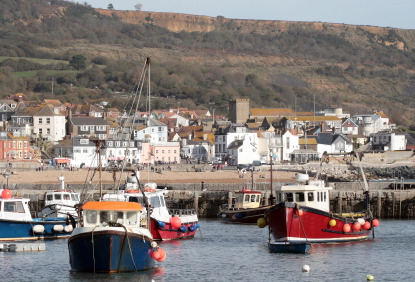
Lyme Regis (pop. 4000) is a typical postcard picture village battered by the waters of the English Channel. The town is known for the fossils found in its cliffs and on its beaches.
The village's 180m long jetty is known as the Cobb. It dates from the 13th century and marks the boundary between Dorset, and Devon on the other side. The town's geology consists of limestone and shale, which contributes to the frequent landslips that reveal fossils from the Jurassic period.
Lyme Regis has made a few appearances in British literature, such as in Jane Austen's Persuasion. It is also here that the Duke of Monmouth went ashore in his attempt to overthrow James II in 1685.
Interesting Facts about Lyme Regis
- Lyme Regis is sometimes dubbed the "Pearl of Dorset" and sits on the English Channel at the Dorset-Devon border.
- The town received its Royal Charter from King Edward I in 1284, transforming it from simply "Lyme" to "Lyme Regis".
- Lyme Regis forms part of the Jurassic Coast World Heritage Site, which stretches for 153 kilometres and showcases 185 million years of Earth's geological history.
- The famous harbour wall known as The Cobb appears in Jane Austen's novel Persuasion and the 1981 film The French Lieutenant's Woman.
- Mary Anning discovered the world's first ichthyosaur fossil on the beaches of Lyme Regis when she was just 12 years old in the 19th century.
- Admiral Sir George Somers, a former mayor of Lyme Regis, founded the English colonial settlement of Bermuda, which is now twinned with the town.
- The Town Mill, dating from 1340, has been restored to working order and still produces flour using water power from the River Lim.
- Jane Austen stayed at Hiscott's Boarding House (now the Three Cups Hotel site) in 1804, and the building later accommodated literary figures including J.R.R. Tolkien.
- General Eisenhower delivered an important briefing to senior Allied officers before D-Day in 1944 at the Three Cups Hotel.
- A new statue of Mary Anning was unveiled on 21st May 2022 at the junction of Long Entry and Gun Cliff Walk, marking what would have been her 223rd birthday.
- The town was first mentioned in historical records in 774 in connection with a manor granted by West Saxon King Cynewulf to Sherborne Abbey.
- The prominent stone steps on The Cobb are known locally as "Granny's Teeth".
History
Lyme Regis's origins can be traced to 774 CE, when the West Saxon King Cynewulf granted land along the river to the monks of Sherborne Abbey for salt production. The settlement's name derives from the Celtic word "Lym," meaning stream or torrent of water, linking it to its pre-Saxon inhabitants. Known to the Romans as "Lym Supra Mare," the area shows evidence of Roman activity through scattered pottery and coins found within the town. By the time of the Domesday Book in 1086, Lyme was recorded as three separate manors, with salt-working remaining a crucial industry. The town's growth accelerated dramatically in the 13th century, transforming from a modest settlement into one of Britain's major ports, with Edward I granting it a royal charter in 1284 that added "Regis" to its name, making it a free borough with a merchant guild.
The medieval period marked Lyme Regis's golden age as a prosperous trading port, particularly renowned for its commerce with France and substantial wine imports. The town's maritime importance is exemplified by the construction of The Cobb, the massive curved breakwater first mentioned in 1294, which protected the harbour and remains one of Lyme's most iconic features. Edward I commissioned the town to build a galley of 120 oars for his wars against the French, though ultimately a 54-oar vessel was constructed between 1294-1296, demonstrating the town's well-developed shipbuilding industry. Lyme's strategic and political significance continued through the centuries, most notably during the English Civil War in 1644, when Parliamentarian forces successfully withstood an eight-week siege by Royalist troops under Prince Maurice. The town's radical reputation was further cemented in 1685 when the Duke of Monmouth chose Lyme Regis as his landing point for his ill-fated rebellion against King James II, selecting it partly for its strong anti-papist sympathies and accessibility to West Country supporters.
By the 18th century, Lyme Regis had undergone a remarkable transformation from a declining port to a fashionable seaside resort. The town's maritime trade had largely ceased by 1760 due to the reduction of the west country cloth trade, increasingly large merchant ships that couldn't navigate the shallow Cobb, and poor land accessibility. However, the rising popularity of sea bathing from the mid-18th century saw Lyme quickly reinvent itself as a watering-place, with a bathing house established near the Buddle by 1755. The radical philanthropist Thomas Hollis played a crucial role in this transformation, purchasing much property, building the first promenade in 1771, and establishing the town's first Assembly Rooms. The town's new identity as a resort attracted distinguished visitors, most famously Jane Austen, who owned a seafront cottage around 1804 and set part of her novel Persuasion in Lyme Regis. The town also became renowned for its fossils, with Mary Anning becoming the most celebrated fossil collector, contributing significantly to the development of geology and palaeontology. Today, Lyme Regis is twinned with St George in Bermuda, honouring one of its most famous sons, Admiral Sir George Somers (1554-1610), the Elizabethan seafarer who founded Bermuda and whose pickled body was returned to Lyme Regis in 1618.
Main Attractions
The Cobb
The Cobb stands as Lyme Regis's most iconic landmark, a historic curved stone harbour wall that has protected the town from the sea for centuries. This distinctive structure offers excellent walking routes with panoramic views across Lyme Bay and back towards the town itself. The harbour wall gained literary fame through its appearance in Jane Austen's Persuasion and has since featured in numerous films and television productions. Several local boat operators run fishing trips and sightseeing excursions from Cobb Harbour, making it both a scenic attraction and a functional departure point for maritime activities.
Town Beach and Marine Parade
The main Town Beach comprises a mixture of sand and shingle, making it particularly popular with families for swimming and traditional seaside activities. Running parallel to the beach, Marine Parade serves as the town's principal seafront promenade, offering uninterrupted views of the sea whilst providing access to numerous cafés, shops, and traditional seaside amenities. The promenade frequently hosts seasonal events and gatherings, creating a vibrant atmosphere throughout the warmer months.
Monmouth Beach
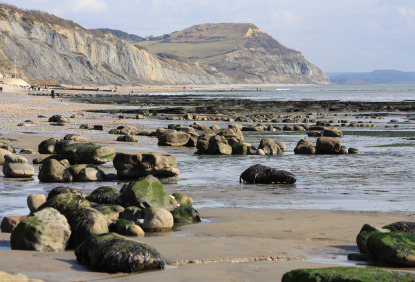
Located west of the Cobb, Monmouth Beach presents a pebble and shingle shoreline renowned for fossil hunting opportunities. The beach's most notable feature is the Ammonite Pavement, where visitors can observe large ammonites preserved within limestone rocks. This geological showcase provides an accessible introduction to the area's rich prehistoric heritage without requiring extensive fossil hunting experience.
Fossil Hunting Locations
Lyme Regis sits within the Jurassic Coast, a designated World Heritage Site that offers exceptional fossil hunting opportunities across its various beaches. The town's fossil-rich shores allow visitors to discover ammonites and other Jurassic-era specimens, with guided fossil walks available throughout the year for participants of all experience levels. The combination of accessible beaches and expert guidance makes fossil hunting one of the area's most distinctive attractions.
South West Coast Path and Walking Routes
The South West Coast Path provides extensive walking opportunities, with well-maintained routes extending east towards Charmouth or west into Devon. The Undercliff Nature Reserve, situated west of the town, features woodland trails winding through a fascinating landslip landscape created by coastal erosion. For those preferring inland routes, the River Lym Walk follows the river through countryside dotted with historic mills and natural scenery.
Langmoor and Lister Gardens
These seafront gardens, positioned above Marine Parade, offer elevated coastal views combined with carefully landscaped areas featuring subtropical plants and seasonal flowers. The gardens include recreational facilities such as mini-golf and walking paths, whilst also hosting the Lyme Regis Sculpture Trail, which showcases contemporary works from local artists throughout the landscaped areas.
Marine Activities and Water Sports
The town's maritime location supports various water-based activities, with boat trips ranging from leisurely sightseeing tours to more adventurous fishing expeditions and high-speed RIB rides. Local suppliers offer kayaking, paddleboarding, and sailing opportunities, with both equipment rental and instruction available for visitors of varying skill levels.
Marine Theatre
This historic seafront theatre, established over a century ago in a converted drill hall, continues to serve as a cultural venue hosting live performances, film screenings, and community events throughout the year. The theatre's seaside location and historic character make it a distinctive entertainment venue that complements the town's broader cultural offerings.
Top Museums
Lyme Regis Museum (Philpot Museum)
Location: Situated in the heart of the town, right on the seafront, and built on the site of pioneering fossil hunter Mary Anning’s former home.
Overview: The museum is an architectural gem and a delightful showcase of the town’s vibrant heritage. Inside, visitors find galleries brimming with geological treasures, awe-inspiring fossils from the Jurassic period, and a deep dive into the local area’s maritime traditions.
Collections:
- Fossils & Geology: Displays feature extraordinary finds from the surrounding cliffs, including ammonites, ichthyosaurs, and other prehistoric marine life. Interactive geology installations reveal the secrets of 200 million years of earth’s history.
- Mary Anning: The museum pays homage to Mary Anning, giving insights into her life and legacy as one of history’s most important fossil collectors.
- Local History: Exhibits tell the story of Lyme’s evolution as a fishing village, highlight its maritime artefacts, and show how writers such as Jane Austen and John Fowles were inspired by the town.
- Literary Connections: A dedicated Writers’ Gallery explores the impact of Lyme Regis on literary figures, with paintings, prints, and personal memorabilia.
Atmosphere: Visitors regularly praise the museum’s stunning views of Lyme Bay, its charm, and its friendly, informative staff. The Mary Anning Wing offers modern facilities and an engaging learning centre for families and school groups.
Special Features: The museum organises expert-led fossil hunting walks along the coast, a must for curious minds of all ages.
Dinosaurland Fossil Museum
Location: Housed in a striking Grade I listed former church building in central Lyme Regis.
Overview: This independently run museum is a treasure trove for lovers of palaeontology, devoted to the wonders of fossils and the ancient world.
Collections:
- Jurassic Fossils: Home to over 12,000 fossil specimens, including local finds from the Jurassic Coast such as ammonites, belemnites, sea lilies, and the impressive ichthyosaur. Exhibits range from the microscopic to vast skeletons, vividly illustrating the diversity of prehistoric marine life.
- Time Gallery: An engaging timeline invites visitors to contemplate the immensity of geological time, from the age of dinosaurs to the present day.
- Natural History Room: Present-day shells, skeletons, and taxidermy relate modern life to its ancient counterparts, fostering a connection between past and present.
- Specialist Collections: Alongside local fossils, the museum also features specimens from farther afield, including Russian trilobites and rarer finds.
Mary Anning Connection: The building was where Mary Anning was baptised, and exhibits acknowledge her enduring contribution to science.
Experience: The museum’s traditional style, passionate expertise, and hands-on approach make it especially appealing for families and fossil enthusiasts. Many visitors are also inspired to try their own fossil hunting following a visit.
Lyme Regis Marine Aquarium
Location: Situated on The Cobb, Lyme Regis’s historic harbour wall.
Overview: While technically more of an aquarium than a traditional museum, this site offers a compelling, interactive look at the marine ecology of the Jurassic Coast.
Highlights:
- Hands-on exhibits: Children and adults alike can handle local sea life, such as crabs and starfish, and learn about the rich aquatic creatures gracing the shores of Lyme Bay.
- Local maritime heritage: Displays explore the harbour’s history and the area’s connection to the sea, making it a favourite stop for families.
Local Cuisine
Lyme Regis's restaurants showcase the freshest local seafood, with Lyme Bay scallops, locally caught crab and lobster, and fresh fish brought in daily by local fishermen forming the backbone of many menus. Visitors can indulge in traditional fish and chips by the seaside, sample locally sourced oysters with spectacular bay views, or enjoy the famous Dorset Blue Vinney cheese paired with Dorset Knobs—the county's distinctive hard, crumbly biscuits that have become a local institution. The dining scene ranges from award-winning establishments like Tom's Lyme Regis, which specialises in boat-to-plate seafood, to charming cafés and traditional pubs serving hearty Sunday roasts and seasonal local produce. Many restaurants take advantage of the town's coastal setting, offering outdoor terraces where diners can savour their meals whilst taking in the beautiful views across Lyme Bay, making the dining experience as memorable as the food itself.
Getting There & Around
By train, the nearest railway station is Axminster, which is served by regular South Western Railway services on the London Waterloo to Exeter line. From Axminster station, you can catch the X51 or X53 bus services that run directly to Lyme Regis, or take a taxi for the final stretch of your journey.
By coach, National Express operates direct coach services to Lyme Regis throughout the summer season, whilst the X51 and X53 buses provide year-round connections along the coast from destinations such as Exeter and Poole.
By car, there are several scenic routes to choose from: drivers from the north can take the M5, followed by the A31 and A35, then the B3165 into Lyme Regis, whilst those approaching from the west or east should follow the A30, then the A35, and finally the A3052. The town is situated on the Devon-Dorset border in the heart of Lyme Bay, making it easily accessible from major cities across the South West and beyond.