


 Ireland Guide
 Scotland Guide
 Wales Guide
| Contents |
|---|
Introduction
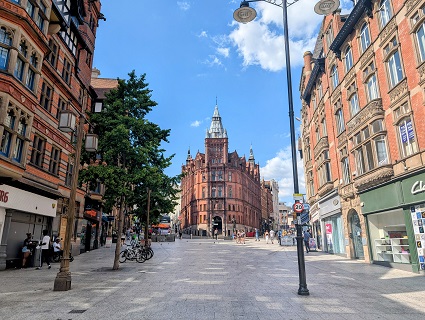
Nottingham (pop. 330,000; urban 920,000) is a historic city renowned for its association with the legend of Robin Hood and its heritage in lace-making and industry. As the county town of Nottinghamshire, the city sits on the north bank of the River Trent and has a population of over 320,000. Nottingham’s compact city centre is anchored by Old Market Square, the largest public space of its kind in England, and is home to notable landmarks such as the 17th-century Nottingham Castle, the Council House with its iconic stone lions, and a network of over 800 man-made caves beneath the streets. The city also offers a vibrant cultural scene, with attractions including the Lace Market, several theatres, contemporary art galleries, and a lively music and nightlife environment. Green spaces like the Arboretum and nearby Sherwood Forest provide opportunities for outdoor activities, while historic pubs, such as Ye Olde Trip to Jerusalem, and a range of independent shops and eateries reflect Nottingham’s blend of tradition and modernity.
Interesting Facts about Nottingham
- Nottingham was originally called Snotengaham, named after an Anglo-Saxon chief called Snot, with the name translating to "the homestead of Snot's people".
- The city boasts the UK's largest network of over 800 subterranean caves carved from soft sandstone, which have served as tanneries, pub cellars, and WWII air raid shelters.
- It has been illegal to rent out Nottingham's caves since the creation of the Nottingham Inclosure Act in 1845.
- The Great Cheese Riot broke out at Nottingham's Goose Fair in 1764, where large cheeses were stolen and rolled down Wheeler Gate and Peck Lane, knocking down the Mayor.
- Nottingham's Goose Fair is one of the UK's largest and oldest fairs, dating back to the 13th century, and originally involved thousands of geese being driven on foot from Lincolnshire, Cambridgeshire and Norfolk to be sold in the Market Square.
- Wollaton Hall served as Wayne Manor in Christopher Nolan's The Dark Knight Rises, which increased visitor numbers by more than 100,000 people.
- The Old Market Square is one of the UK's oldest public squares with an 800-year history and is the second largest in Britain after London's Trafalgar Square.
- Notts County is the world's oldest professional football club.
- The city is home to Major Oak in Sherwood Forest, which was voted England's Tree of the Year in 2014 and is said to have been a hideout for Robin Hood's merry men.
- Nottingham was the centre of the world's lace manufacturing industry during the 19th century, with the Lace Market area still standing as a testament to this industrial heritage.
- The cave passageway known as Mortimer's Hole that runs underneath Nottingham Castle is said to be haunted by local nobleman Roger Mortimer.
- Despite having an estimated population of just 306,000 due to its very small official city boundary, the wider Nottingham Urban Area has a population of 733,000, making it the 9th largest urban area in the UK.
History
Nottingham's history stretches back over 1,400 years, beginning in the 6th century when the Saxons established a settlement originally known as "Snotingham" or "Tigguo Cobauc," meaning "place of cave dwellings". The town's strategic position on sandstone hills overlooking the River Trent, where the river could be forded and was navigable, made it an important centre for trade and commerce. In 867, Danish Vikings captured the settlement and transformed it into one of the Five Burghs of The Danelaw, creating a fortified town with defensive ditches and ramparts. The English recaptured Nottingham in 918-920 under Edward the Elder, who built a fortress on the south bank of the Trent, and by this time the settlement had grown into a busy market town with its own mint.
The Norman Conquest brought dramatic changes to Nottingham's landscape and governance. In 1067, William the Conqueror constructed a castle on a sandstone outcrop, initially built from wood in a typical motte-and-bailey design, later replaced with stone in the 12th century. The settlement developed into two distinct areas: the "English Borough" around the original Saxon settlement in what is now the Lace Market, and the "French Borough" around the castle on the opposite hill. By 1086, Nottingham was significant enough to be recorded in the Domesday Book as "Snotingeham" and "Snotingham". The town received its charter in 1155, and by 1284 had its first mayor. However, the Black Death in 1348-49 devastated the population, killing approximately 60% of the estimated 3,000 residents.
Nottingham's importance continued to grow through the medieval period and beyond, achieving county corporate status in 1449, which granted it effective self-government "for eternity". The city played a pivotal role in English history when King Charles I raised the Royal Standard here on 22 August 1642, marking the start of the English Civil War. Following the king's defeat, Nottingham Castle was destroyed in 1651 to prevent it from falling into Royalist hands. The 18th century saw significant economic development with the establishment of the hosiery industry after 1730, which, along with lace production, came to dominate the local economy. Infrastructure improvements included the formation of the Trent Navigation Company in 1783 and the opening of the Nottingham Canal in 1796, which halved the price of coal in the city.
Main Attractions
The Old Market Square
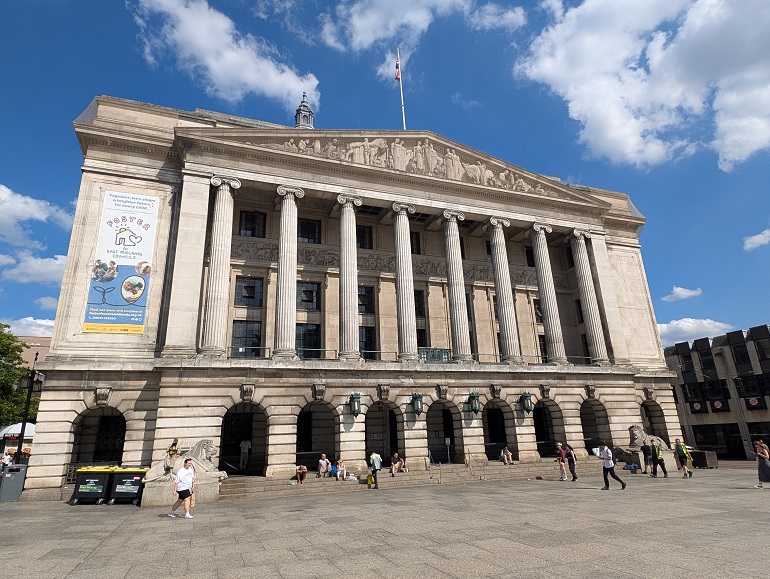
Nottingham's Old Market Square, reputedly one of Europe's largest market squares, serves as the city's central hub and has been integral to Nottingham's life for approximately a thousand years. The square is dominated by the Council House, a grand early 20th-century building with a distinctive dome, in front of which stand two stone lions that have become iconic symbols of the city. The Left Lion, in particular, has been adopted by locals as a famous meeting place, with the phrase "See you by the Left Lion" being a common arrangement for dates and social gatherings. The square also features Speakers' Corner, officially opened in 2009 by Jack Straw, which was the first official Speakers' Corner established outside London, located on an extension at the junction of King Street and Queen Street. Additionally, visitors can find a memorial statue of Brian Clough, the legendary football manager, and the Nottingham Tourism Centre for visitor information. The square regularly hosts markets and events throughout the year, including a German Christmas market in December and various concerts and celebrations, whilst water fountains, added during the 1927 design and updated in the 2007 redesign, provide an attractive focal point for this bustling civic space.
Wollaton Hall, Gardens and Deer Park
Wollaton Hall stands as one of England's most spectacular Elizabethan mansions, constructed between 1580 and 1588 for Sir Francis Willoughby. The hall exemplifies the architectural grandeur of the late 16th century, featuring ornate stonework, elaborate chimneys, and distinctive towers that create a dramatic silhouette against the Nottinghamshire skyline. The building's design incorporates Renaissance influences with traditional English elements, making it a masterpiece of Elizabethan architecture. The mansion now houses Nottingham's Natural History Museum, which contains extensive collections of minerals, fossils, and wildlife specimens from around the world.
The surrounding parkland spans 500 acres and has been home to red and fallow deer for over 400 years. The deer roam freely across the grasslands, creating a unique urban wildlife experience. The formal gardens feature Victorian-era landscaping with ornamental lakes, woodland walks, and seasonal flower displays. The park also includes an industrial museum housed in the original stable block, showcasing Nottingham's manufacturing heritage through working steam engines and period machinery.

Nottingham Castle
Nottingham Castle occupies a commanding position on Castle Rock, a sandstone outcrop that has been fortified since Anglo-Saxon times. The original medieval castle was largely demolished after the English Civil War, and the current mansion was built in the 1670s as a ducal residence. The building served various purposes over the centuries, including as a military depot and art gallery, before becoming the comprehensive museum and art gallery it is today.
The castle's collections span centuries of local and international art, including works by renowned artists and extensive displays of decorative arts. The museum tells the story of Nottingham from prehistoric times through to the present day, with particular emphasis on the city's role in the English Civil War and its industrial development. The castle grounds offer panoramic views across the city and surrounding countryside, while the Robin Hood statue commemorates the legendary outlaw most associated with Nottingham's folklore.
City of Caves
Beneath Nottingham's bustling streets lies one of Britain's most extensive networks of man-made caves, carved into the soft sandstone that underlies the city. These caves have been excavated and used continuously for over 1,000 years, serving various purposes from Anglo-Saxon times through to the 20th century. The caves were originally created as storage spaces, cellars, and workshops, taking advantage of the sandstone's natural properties for maintaining consistent temperatures.
During the medieval period, the caves expanded significantly as the city's population grew and commercial activity increased. Many were used by tanners, brewers, and other craftsmen who required cool, stable environments for their work. The caves also served as air raid shelters during World War II, protecting thousands of Nottingham residents during bombing raids. Today, guided tours reveal the fascinating history of these subterranean spaces, including tales of their use by smugglers and their role in the city's industrial development.
The Arboretum
The Arboretum holds the distinction of being Britain's first public park specifically designed for the recreation and education of working-class people. Opened in 1852, it was created as part of the Victorian movement to provide green spaces for urban populations, reflecting contemporary beliefs about the moral and physical benefits of contact with nature. The park's design incorporated educational elements, with trees and plants labelled for public learning, making it both a recreational space and an outdoor classroom.
The park's collection of over 800 trees includes many original specimens planted at its opening, creating a living museum of Victorian horticulture. The mature trees represent species from around the world, including rare and unusual varieties that demonstrate the Victorian enthusiasm for botanical collecting. The park's layout follows Victorian design principles, with winding paths, ornamental flower beds, and carefully planned vistas that create a sense of natural beauty within an urban setting.
Highfields Park
Highfields Park encompasses 121 acres of diverse landscapes, from formal gardens and sports facilities to natural woodland and wetland areas. The park was developed in the early 20th century around the University of Nottingham campus, creating a green corridor that connects the city centre with suburban areas. The park's design reflects the garden city movement's ideals, combining recreational facilities with natural beauty to enhance urban living.
The park's boating lake serves as a focal point for leisure activities and wildlife observation, supporting populations of waterfowl and other aquatic species. The surrounding parkland includes areas of ancient woodland that predate the park's formal development, providing habitat for native wildlife and preserving remnants of the area's natural heritage. The park's facilities cater to diverse interests, from competitive sports and children's play to quiet contemplation and nature study.
Colwick Country Park
Colwick Country Park occupies a former gravel extraction site that has been transformed into a thriving wetland ecosystem and recreational facility. The park's creation demonstrates successful environmental restoration, turning industrial wasteland into valuable wildlife habitat and public amenity. The park's lakes and wetlands now support diverse bird populations, including both resident species and seasonal migrants, making it an important site for wildlife conservation in the Nottingham area.
The park's network of paths and trails provides opportunities for walking, cycling, and nature observation, connecting different habitats and offering varied experiences for visitors. The park's design balances recreational use with wildlife conservation, creating zones for different activities while protecting sensitive areas. Educational programmes and guided walks help visitors understand the park's ecological significance and the processes involved in habitat restoration.
Top Museums
National Justice Museum
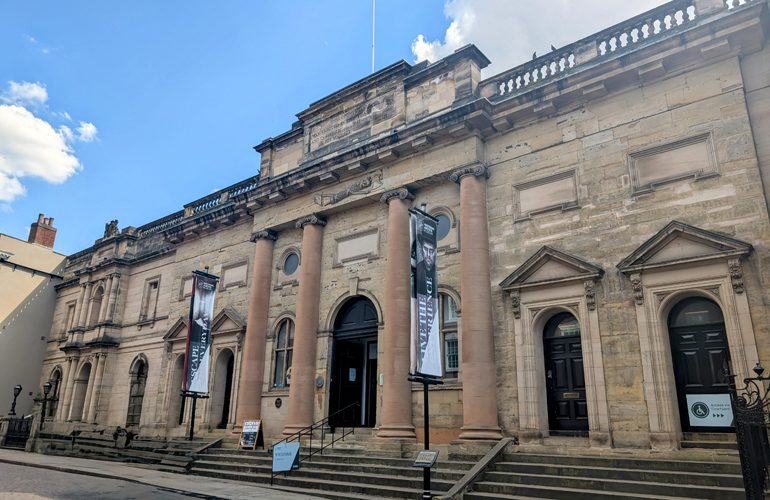
The National Justice Museum, located in Nottingham's historic Lace Market area on High Pavement, is housed in a Grade II* listed building that formerly served as the Shire Hall and County Gaol, where courts have operated since at least 1375. This unique museum offers visitors an immersive experience exploring crime, punishment, and social justice across five floors, featuring a Victorian courtroom where real trials once took place, a Georgian gaol, and ancient underground cells dating back hundreds of years. Costumed characters bring history to life through daily performances, including mock trials and public execution demonstrations in the exercise yard, whilst visitors can explore exhibitions covering themes from historical justice to contemporary social issues. The museum also manages the nearby City of Caves, offering joint tickets for those wishing to explore Nottingham's underground network of medieval caves, making it a comprehensive historical experience that combines education with interactive entertainment.
Nottingham Industrial Museum
The Industrial Museum chronicles Nottingham's transformation from a medieval market town into a major manufacturing centre. The museum occupies the former stable block of Wollaton Hall and houses an impressive collection of steam engines, textile machinery, and other industrial equipment that powered the city's economic growth. The exhibits demonstrate how Nottingham became renowned for lace-making, hosiery, and bicycle manufacturing, industries that brought prosperity and international recognition to the city.
The museum's working steam engines operate on selected days, providing visitors with an authentic experience of Victorian-era industrial power. The collection includes examples of the beam engines that once powered Nottingham's factories, along with smaller engines used in various manufacturing processes. Interactive displays explain the social and economic impact of industrialisation on Nottingham's population, including the working conditions in factories and the development of workers' housing estates.
Nottingham Contemporary
Nottingham Contemporary represents the city's commitment to modern artistic expression and cultural innovation. The building itself is an architectural statement, featuring a distinctive façade covered in golden tiles that create shifting patterns of light and shadow throughout the day. Opened in 2009, the gallery was designed to be a catalyst for cultural regeneration in Nottingham's Creative Quarter, bringing together contemporary art, education, and community engagement.
The gallery's exhibition programme features work by established and emerging artists from Britain and internationally, with a particular focus on contemporary issues and experimental art forms. The building includes flexible gallery spaces that can accommodate large-scale installations, video art, and interactive exhibits. The venue also hosts live performances, talks, and workshops, making it a dynamic cultural hub that connects contemporary art with diverse audiences.
Museum of Nottingham Life
The Museum of Nottingham Life offers an immersive journey through three centuries of the city's social history, recreating the domestic and commercial environments that shaped ordinary people's lives. The museum's galleries feature authentic period rooms, including Victorian parlours, Edwardian shops, and 1940s kitchens, each meticulously furnished with original objects and period details. These reconstructions provide insight into how Nottingham's residents lived, worked, and entertained themselves across different social classes and historical periods.
The museum's collection includes thousands of objects that tell the story of daily life in Nottingham, from children's toys and household implements to shop fittings and advertising materials. Special exhibitions explore themes such as childhood, work, leisure, and community life, drawing on oral histories and personal memories to create a comprehensive picture of the city's social development. The museum also houses significant collections related to Nottingham's role in major historical events, including both world wars and social movements.
Nottingham Transport Heritage Centre
The Transport Heritage Centre preserves and celebrates the history of public transport in Nottingham and the surrounding region. The centre operates historic steam and diesel locomotives on a section of the former Great Central Railway, providing authentic travel experiences on restored rolling stock. The collection includes vehicles that once served Nottingham's transport network, from early steam engines to modern diesel units, illustrating the evolution of rail technology over more than a century.
The centre's bus collection showcases the development of urban public transport, featuring vehicles that operated on Nottingham's streets from the early 20th century onwards. These restored buses represent different eras of public transport design and technology, from early motor buses to modern low-floor vehicles. The centre also maintains extensive model railway layouts that recreate historical railway scenes, providing detailed representations of past transport operations and infrastructure.
Local Cuisine
The city is especially proud of its Nottinghamshire Pie, a hearty dish combining beef, leeks, potatoes, and Stilton cheese—a blue cheese with protected status, produced locally and shared with neighbouring counties. Another celebrated local ingredient is the Bramley apple, originally cultivated in nearby Southwell, which stars in classic British desserts and even has its own annual festival. Visitors should also try the region’s pork pies and Nottinghamshire sausages, both renowned for their rich flavour and quality ingredients. For cheese lovers, Stilton is a must, while those with a sweet tooth will find plenty to enjoy in the city’s independent bakeries and pudding shops. Nottingham’s vibrant markets and farm shops provide the perfect places to sample these local delicacies, making the city a true destination for food enthusiasts.
Getting There & Around
By train, Nottingham is excellently connected to the rest of Britain, with direct services from major cities including London, Birmingham, Manchester, and Leeds. The fastest journey from London St Pancras International takes around 1 hour 32 minutes, with East Midlands Railway operating frequent direct services throughout the day to Nottingham's main railway station.
By coach, National Express provides regular services from across the UK, with journeys from London taking approximately 3 hours and arriving at the modern Broad Marsh Bus Station in the city centre. Up to 20 daily services operate from London Victoria Coach Station, with additional operators like FlixBus also serving the city.
By car, Nottingham is easily accessible via the motorway network, with the city sitting just 13 miles from East Midlands Airport via the A453, taking around 24 minutes to drive. The city centre is well-signposted from major routes, making it straightforward for drivers to navigate to their destination.