


 Ireland Guide
 Scotland Guide
 Wales Guide
| Contents |
|---|

Introduction
Dubbed 'the loveliest castle in the world', Leeds Castle has everything to please. Set on a lake and surrounded by beautiful gardens, Leeds is one of the oldest castle in England, dating back to 857. It served as Saxon and Norman stronghold, then as a Royal residence from 1278 to the 17th century Civil War, and was a favourite with several Queens of England, as well as with Henry VIII.
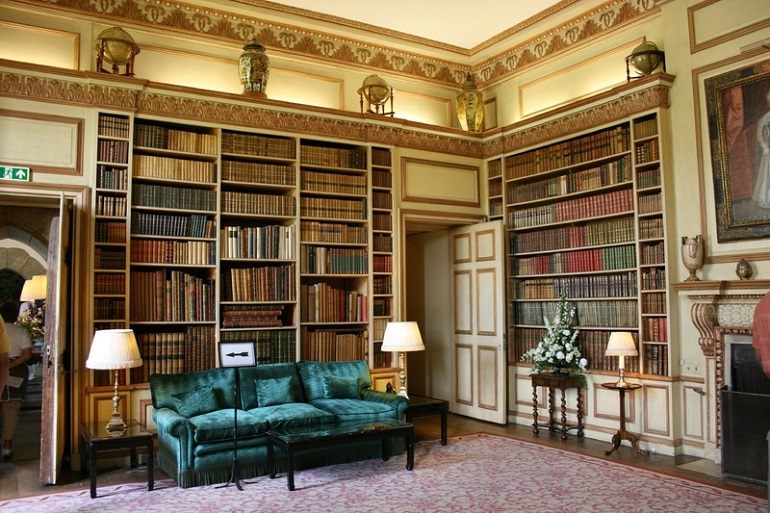
The castle's romantic image is reinforced by its delightful interior, decorated with paintings and pieces of furniture from the last eight centuries.
Leeds Castle was first opened to the public when Lady Baillie, the last owner of the castle, died in 1974. It quickly developed as one of Britain's top tourist attraction, its proximity from London helping bring half a million visitors annually.
Lady Baillie introduced the first black swans to Britain in the 1930 and started collecting live birds in 1957. The aviary she created now counts over 100 (exotic) species, including parrots, parakeets, softbills and waders. The most unusual are probably the Toucans and von der Decken Hornbills.
In 1988, Leeds Castle opened a maze, made of 2,400 yews, leading to spiralling path up to a raised viewpoint, which commands great views on the park. There is also a grotto representing the underworld with mythical beasts made of shells, minerals and wood, and lightening up as the tunnel exit approaches.
Another side attraction is the Dog Collar Museum, with a collection of metallic collars from the 15th to 18h centuries used for hunting or simply as decoration.
Leeds Castle also caters for wedding receptions, conferences and meetings, and some rooms may not be open to tourists on these occasions.
Interesting Facts about Leeds Castle
- Leeds Castle rests on two islands in a lake created by the River Len.
- The first stone stronghold here was built in 1119 by the Norman baron Robert de Crevecoeur.
- King Edward I bought the castle for Queen Eleanor of Castile in 1278, cementing its role as a residence for royal consorts.
- In all, six medieval queens of England lived at Leeds Castle.
- Henry VIII lavishly remodelled the castle for Catherine of Aragon and stayed here en route to the Field of the Cloth of Gold in 1520.
- During the Second World War the castle served as a hospital for soldiers evacuated from Dunkirk.
- Visitors can attempt a maze of 2,400 yew trees that hides an underground grotto at its centre.
- The estate contains what is said to be the world’s only museum dedicated to historic dog collars.
- Despite its name, Leeds Castle is near Maidstone in Kent, not in the city of Leeds.
- It is often dubbed “the loveliest castle in the world,” a title popularised in the 20th century.
- The site appears in the Domesday Book of 1086 as “Esledes”.
- Black swans introduced in the 1970s have become a distinctive symbol of the castle’s lake.
- Much of the present Tudor-style exterior dates from a 19th-century rebuild by the Wykeham Martin family.

History
Leeds Castle traces its origins to 857 CE when a Saxon chief named Led constructed a wooden stronghold on two islands within the River Len. In 1119 Robert de Crevecoeur replaced this timber fortification with a stone castle featuring a keep and surrounding curtain walls. During the civil war known as The Anarchy (1135–1154), the castle endured a siege by King Stephen after its owners supported Empress Matilda’s claim to the throne. Under the de Crevecoeur family, only fragments of the original 12th-century structure remain today, including a two-light window in the Salon and the vaulted cellar beneath the Servants’ Hall.
In 1278 Queen Eleanor of Castile acquired Leeds Castle, marking the start of its royal era. Her husband, King Edward I, fortified the site with bastion towers, a barbican spanning three islands and likely created the surrounding lake as a defensive feature. During the 14th century the castle passed through various royal hands: it was granted to Queen Philippa of Hainault, then held by Richard II’s queen Anne of Bohemia, before becoming the dower house for successive queens including Joan of Navarre. In 1519 King Henry VIII remodelled the Gloriette to accommodate Catherine of Aragon, adding a private chamber, bathroom and the Maiden’s Tower for her ladies-in-waiting.
After Henry VIII’s reign the castle entered private ownership and survived the English Civil War largely intact, despite being used as a prison for Dutch and French captives. In the 17th century the Culpeper and Fairfax families oversaw repairs and improvements, yet significant decay prompted Fiennes Wykeham Martin in 1821 to rebuild the main house in Tudoresque style and restore the moat and Gloriette by 1823. Remaining a private estate through the 19th century, Leeds Castle opened to the public in the 20th century and today stands as a major visitor attraction renowned for its picturesque setting, medieval architecture and expansive gardens.
Description
External Façades

The castle’s external façades display a harmonious blend of medieval battlements, Tudor-style mullioned windows and flattened arches, and early 19th-century Gothic revival details. Kentish ragstone gives the outer walls a subtle, warm grey hue, while Caen stone dressings accentuate doorways and window frames. A single stone bridge links the shore to the gatehouse, whose twin towers and portcullis recall the castle’s defensive origins even as they welcome modern visitors.
Interior Ambience
Inside, Leeds Castle unfolds as an elegant 20th-century retreat. Lady Baillie’s extensive 1920s refurbishments introduced sumptuous fabrics, lacquered panelling and sprung, ebony dance floors. Decorative fireplaces bear her personal monogram alongside Tudor emblems, and each grand room is furnished with artefacts and antiques that evoke the ambience of an aristocratic weekend party. Sunlight streams through tall bay windows onto polished parquet floors, imparting a sense of gracious conviviality rather than austere fortification.
Gardens and Grounds
Beyond the castle itself, the grounds extend across 500 acres of parkland.
The Culpeper Garden
The Culpeper Garden offers a quintessential English cottage-garden experience, with billowing herbaceous borders, clipped yew hedges and herb beds scented with lavender.
The Lady Baillie Mediterranean Garden
The Lady Baillie Mediterranean Garden presents terracotta pots, citrus trees and scented pittosporum under pleached limes—an unexpected southern charm in the Kent countryside.
The Island Garden
The lakeside Island Garden is a peaceful enclave of water lilies, weeping willows and arranged stones, perfect for quiet reflection.
Leisure and Discovery
Leisure and discovery abound throughout the estate. The Heritage Maze, carved into manicured lawns, leads adventurers to a hidden underground grotto adorned with glistening shells and twisted roots. Nearby, the Dog Collar Museum displays a curious collection of collars from the 15th century onwards, illustrating the castle’s role as a repository of unusual treasures. Families can enjoy the Knights’ Stronghold and Squires’ Courtyard playgrounds, while thrill-seekers may test their putting skills on the Adventure Golf course, its fairways winding among yew tunnels and water hazards.
Wildlife and Transport
Wildlife is ever present: colonies of waterfowl glide across the moat, and free-flying birds of prey perform daily demonstrations above the lawn, their silent wingbeats drawing captivated crowds. A vintage Black Swan ferry plys the lake’s waters, offering a serene alternative route to the castle entrance, while a charming miniature train provides an easy ride from the visitor centre for those preferring wheels to foot.
Getting There
By train Take a Great Western Railway service to Chippenham or Bath Spa — both lie on the main line between London Paddington and Bristol — then hop on the half-hourly Faresaver X31 bus (or a short taxi ride) which drops you in Corsham’s High Street, a five-minute walk from the Court.
By coach National Express coaches run to the Corsham bus stop on Newlands Road; from there it is an easy stroll through the town centre to the estate gates.
By car Leave the M4 at Junction 17, follow the A350 towards Chippenham, then pick up the A4 westbound and the B3353 into Corsham, where brown heritage signs guide you to Church Square and the visitor car park beside the house.
Best Time to Visit
The best time to visit Leeds Castle is during the late spring and early summer months, particularly from May to July, when the gardens are in full bloom and the weather is pleasantly mild. During this period, visitors can enjoy the extensive grounds, picturesque parkland, and vibrant floral displays at their finest. The longer daylight hours also allow more time to explore the historical interiors, scenic walking paths, and frequent outdoor events hosted at the castle. While the autumn months offer beautiful foliage and a quieter atmosphere, the summer season generally provides the most enjoyable overall experience for travellers.