


 Ireland Guide
 Scotland Guide
 Wales Guide
| Contents |
|---|
Introduction
A UNESCO World Heritage Site on the Thames, the Royal Botanic Gardens, Kew offers a tranquil escape where soaring Victorian glasshouses, sweeping lawns and world-class plant collections invite unhurried exploration. Drift from the steamy Palm House to the gleaming Temperate House, climb the Treetop Walkway for leafy views, and wander themed gardens that blaze with seasonal colour, from spring blossom to autumn reds. Art and science meet in galleries and exhibitions, while Kew Palace and the Arboretum add texture to a day that can be as leisurely or as in-depth as you wish. Family-friendly trails, cafés and picnic spots simplify planning, and with year-round events and a calm, car-free feel, Kew suits first-time visitors and seasoned Londoners alike.
Activities and Attractions
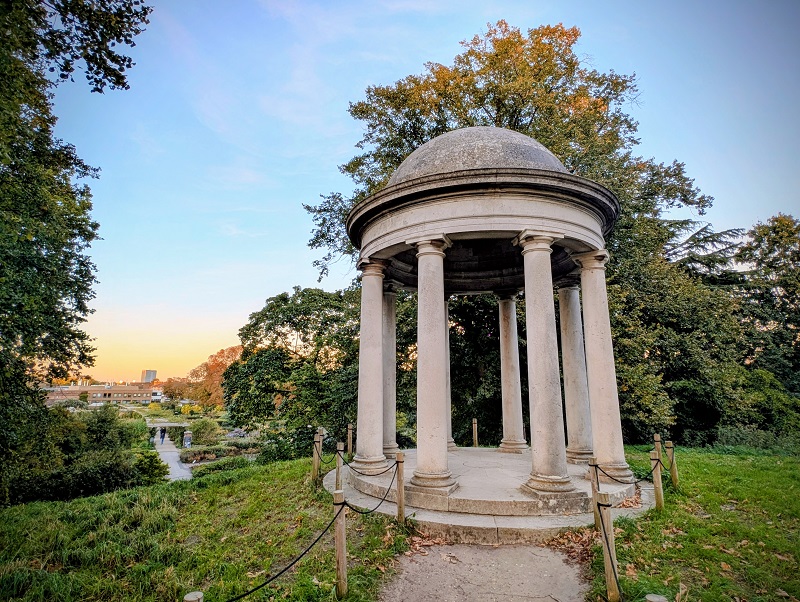
Spanning an impressive 300 acres in the London Borough of Richmond upon Thames, the Royal Botanic Gardens at Kew stands as one of the world's most magnificent botanical institutions, boasting an extraordinary collection of over 50,000 living plant species alongside 44 historically significant buildings. Recognised as a UNESCO World Heritage Site since 2003, Kew represents centuries of botanical excellence, scientific discovery, and horticultural artistry in an incomparably beautiful setting.
Historical Legacy and Royal Origins
The gardens' distinguished history began in 1759 when Princess Augusta of Saxe-Gotha-Altenburg, mother of King George III, established a modest nine-acre botanic garden within the existing pleasure grounds of the royal estate at Kew. This marked the formal beginning of what would become the world's most biodiverse botanical garden. The transformation accelerated under the visionary guidance of Sir Joseph Banks, the renowned naturalist who had accompanied Captain Cook on his voyages to the South Seas. Banks returned with seeds and specimens that formed the foundation of Kew's international reputation.
Between 1768 and 1788, Kew's plant collectors travelled to the furthest corners of the globe, bringing back thousands of exotic species from South Africa, the Falkland Islands, and beyond. The famous HMS Bounty expedition in 1788 attempted to transport breadfruit plants from Tahiti to Jamaica using two Kew gardeners, though the mission was famously interrupted by the crew's mutiny. In 1802, King George III unified the Richmond and Kew estates, creating the expansive grounds visitors enjoy today.
The gardens underwent their most significant transformation in 1840 when they were transferred from the Crown to the government and opened to the public under the directorship of Sir William Hooker. Under his leadership and that of his son Joseph Dalton Hooker, Kew evolved from a royal pleasure garden into a world-leading centre for botanical research, education, and conservation.
Architectural Marvels and Historic Glasshouses
The Palm House stands as Kew's most iconic structure, a masterpiece of Victorian engineering completed in 1848. Designed by Decimus Burton and constructed from wrought iron and curved glass, this stunning glasshouse creates a steamy tropical environment where towering palms, exotic ferns, and rare cycads thrive in carefully controlled conditions. The building's elegant curves and soaring central dome create an almost cathedral-like atmosphere, enhanced by the gentle sound of water features and the verdant canopy overhead.
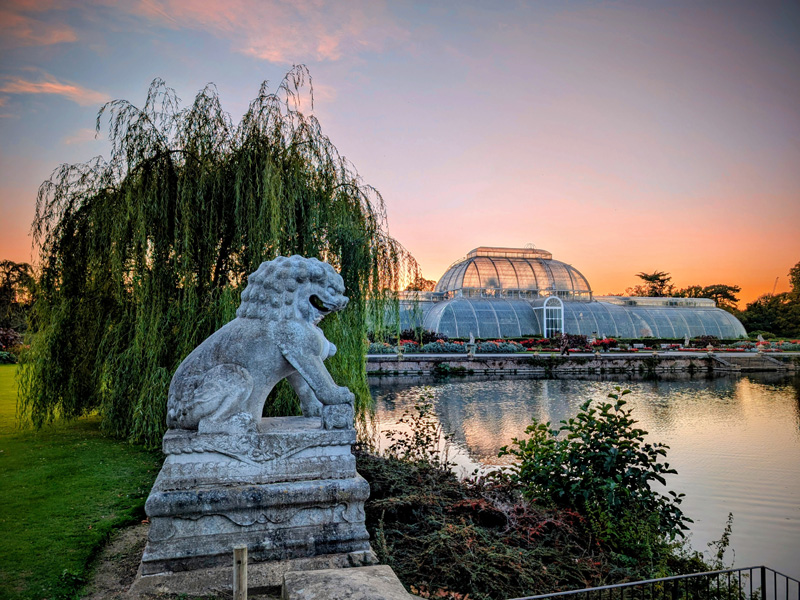
The Temperate House, the world's largest surviving Victorian glasshouse, underwent extensive restoration between 2013 and 2018, emerging as a spectacular showcase for rare and endangered plants from temperate climates around the globe. Its five interconnected pavilions house precious specimens including ancient cycads, endangered Chilean wine palms, and rare flowering trees that visitors might never encounter elsewhere.
The Princess of Wales Conservatory, opened in 1987, represents modern botanical architecture at its finest. This innovative structure contains ten distinct climate zones within a single building, allowing desert cacti and succulents to flourish alongside humid rainforest species and delicate orchids. The conservatory's computer-controlled environment systems maintain precise temperature and humidity levels, creating authentic habitats for carnivorous plants from bog environments, Mediterranean shrubs, and tropical water plants including the giant Amazonian water lilies.
Gardens and Landscapes
Kew's living collections extend far beyond its glasshouses into magnificently designed outdoor spaces. The Arboretum encompasses over 14,000 trees representing species from across the globe, some of which are centuries old and of immense scientific value. Ancient oaks stand alongside rare specimens like the maidenhair trees and towering redwoods, creating a living library of global forestry.
The Rock Garden showcases alpine and Mediterranean plants in naturalistic settings, whilst the Rose Garden displays hundreds of varieties in formal beds that reach peak magnificence during the summer months. The Waterlily House, a smaller but equally enchanting glasshouse, provides an intimate setting for giant Amazonian water lilies, whose enormous circular leaves can support the weight of a small child.
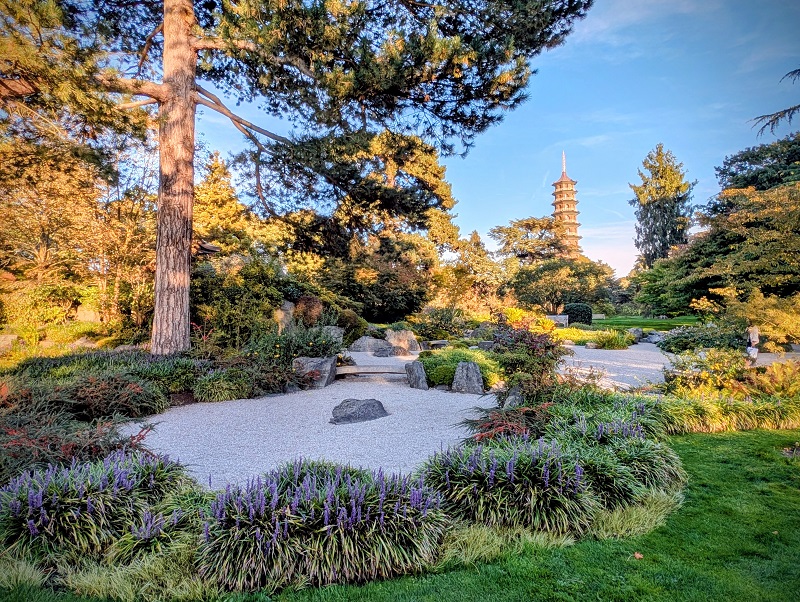
Kew's Japanese landscape offers a serene contrast with its traditional pagoda, ornamental lake, and carefully composed plantings that change dramatically with the seasons. The Bamboo Garden creates tunnel-like walkways through towering groves, whilst the Mediterranean Garden demonstrates how plants from warm, dry climates can thrive in the British environment.
Innovation and Unique Experiences
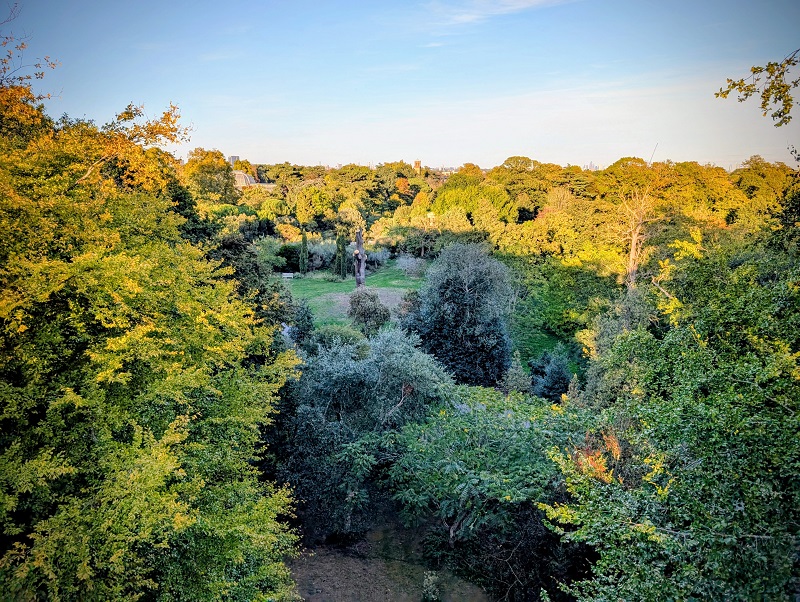
The Treetop Walkway, opened in 2008, elevates visitors 18 metres above the ground, providing unprecedented views through the forest canopy and offering a unique perspective on woodland ecology. The 200-metre steel walkway winds through the crowns of lime, sweet chestnut, and oak trees, revealing the hidden world of epiphytes, nesting birds, and seasonal changes in the tree crowns.
The Hive, an extraordinary 17-metre-tall aluminium lattice structure, provides an immersive experience inspired by scientific research into bee communication and behaviour. LED lights and sounds respond in real-time to the activity of a live beehive, creating a multisensory installation that highlights the crucial role of pollinators in maintaining healthy ecosystems.
The Great Pagoda, William Chambers' architectural masterpiece completed in 1762, towers ten storeys above the gardens. Following extensive restoration, its 80 wooden dragons were recreated and gilded according to the original 18th-century design, making it once again a spectacular focal point visible across the gardens and surrounding area.
Heritage Buildings and Royal Connections
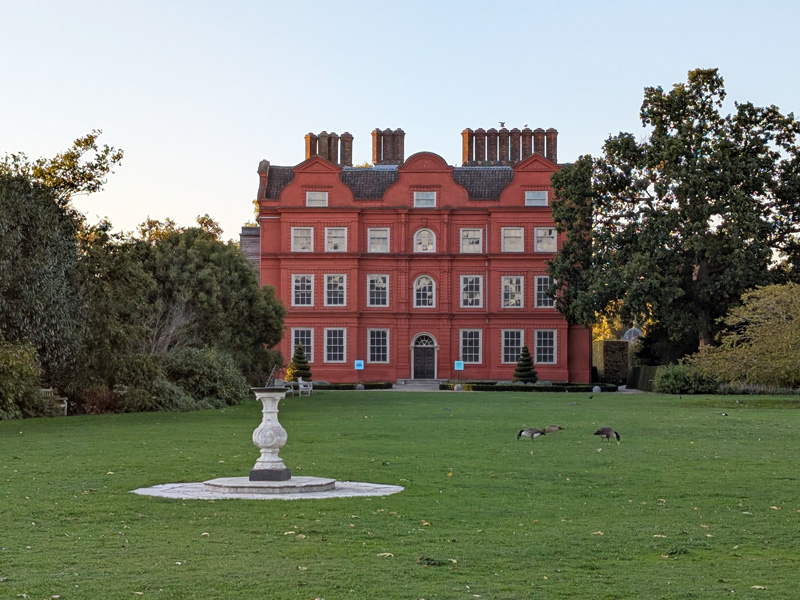
Kew Palace, the smallest of Britain's royal palaces, provides intimate glimpses into 18th-century royal life. This red-brick Dutch-style house served as a country retreat for King George III and Queen Charlotte, and its restored rooms display period furnishings, royal memorabilia, and medicinal plants that reflect the king's interests in botany and agriculture.
Queen Charlotte's Cottage, tucked away in a more wild corner of the gardens, exemplifies the 18th-century taste for rustic retreats. This thatched cottage, surrounded by bluebells and native woodland plants, demonstrates the romantic movement's influence on garden design and royal leisure pursuits.
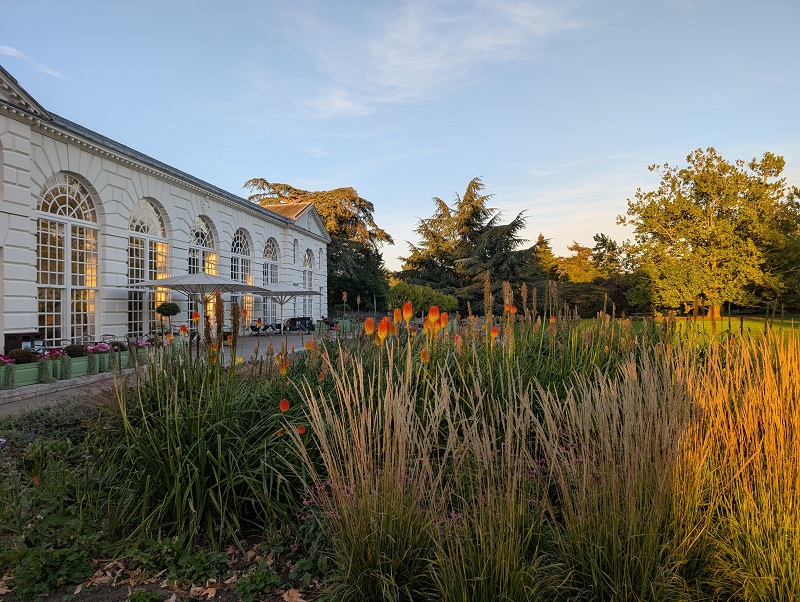
The Nash Conservatory, designed by John Nash in the 1820s, now serves as a venue for special events and exhibitions. The elegant Orangery, dating from 1761, houses temporary art exhibitions and provides a magnificent setting for Kew's cultural programmes.
Scientific Excellence and Conservation
Kew's reputation extends far beyond horticulture into groundbreaking scientific research and global conservation efforts. The institution houses one of the world's largest herbaria, containing over seven million preserved plant specimens that serve as crucial references for botanists worldwide. The Millennium Seed Bank, located at Kew's satellite site at Wakehurst in Sussex, safeguards seeds from over 40,000 species, representing the most diverse seed collection on Earth and serving as an insurance policy against plant extinction.
Research programmes at Kew influence global agriculture, medicine, and environmental policy. Scientists work on projects ranging from identifying new species and understanding plant evolution to developing sustainable crops and combating invasive species. The DNA barcoding initiative helps identify plants and fungi using genetic signatures, whilst conservation programmes work to protect endangered species both in cultivation and in their natural habitats.
Seasonal Splendour and Special Exhibitions
Throughout the year, Kew transforms with the seasons, offering constantly changing displays that reward repeated visits. Spring brings carpets of bluebells in the woodland areas, masses of daffodils across the lawns, and the spectacular flowering of ornamental cherries and magnolias. Summer showcases the Rose Garden at its peak, vibrant herbaceous borders, and the full glory of the outdoor tropical displays.
Autumn transforms the Arboretum into a blaze of colour as maples, tupelos, and sweet gums display brilliant foliage, whilst the autumn crocus meadows provide unexpected late-season colour. Winter reveals the architectural bones of the gardens, with evergreens providing structure and early-flowering plants like witch hazels and winter-flowering cherries offering subtle beauty.
Kew regularly hosts major art installations and exhibitions that complement its botanical collections. The Shirley Sherwood Gallery of Botanical Art displays contemporary works alongside historical illustrations, whilst temporary exhibitions in various venues throughout the gardens explore themes connecting art, science, and nature.
Visitor Amenities and Accessibility
Modern Kew caters to visitors of all ages and abilities with extensive facilities including accessible pathways, family-friendly trails, picnic areas, and play spaces. The Kew Explorer hop-on hop-off train provides easy transport around the expansive grounds, whilst guided tours led by expert volunteers offer in-depth insights into the collections and conservation work.
Educational programmes range from children's workshops and school visits to adult learning courses covering botany, horticulture, and conservation. The gardens' restaurants and cafes provide refreshment in beautiful settings, with menus featuring produce grown in Kew's own kitchen gardens.
Whether seeking botanical knowledge, artistic inspiration, peaceful contemplation, or family entertainment, the Royal Botanic Gardens at Kew offers an unparalleled experience that celebrates the diversity, beauty, and critical importance of plant life on our planet. This living laboratory continues to expand human understanding of the natural world whilst providing a sanctuary of tranquillity and wonder in the heart of one of the world's great cities.
Getting There
The Royal Botanic Gardens, Kew is well connected by public transport: the District Line (Richmond branch) and London Overground serve Kew Gardens station, which is about a 5–10 minute walk to Victoria Gate depending on pace. From central London, South Western Railway trains from Waterloo call at Kew Bridge; from there it’s roughly an 800 m (10–15 minute) walk to Elizabeth Gate via Kew Bridge. Several buses stop near the gates, notably route 65 for Victoria, Elizabeth and Lion gates, plus 110 near Kew Gardens station and Elizabeth Gate, and 237/267 by Kew Bridge station. If you’re cycling, bike racks are provided at all four entrances (inside the gates at Victoria and Elizabeth), though bicycles and scooters aren’t permitted inside the Gardens. For step-free planning, note Kew Gardens station lacks level access westbound (use Richmond to re-route to the eastbound platform), while Richmond station has lift and level access with onward bus 65 to the gates.
Best Time to Visit
The Royal Botanic Gardens, Kew is a year-round delight, but late spring to early summer (April to June) is often the sweet spot for abundant blossom, vibrant borders and mild weather; summer brings full-bloom displays, long opening hours and outdoor events; autumn rewards with rich foliage around the Arboretum, Japanese Landscape and Treetop Walkway; and winter, while quieter, offers serene walks and spectacular glasshouse collections, plus the festive Christmas at Kew light trail—so the “best time” depends on whether you prefer peak blooms, golden colour, or peaceful greenhouse escapes.