


 Ireland Guide
 Scotland Guide
 Wales Guide
| Contents |
|---|
Introduction
Kensington Gardens offers a gracious sweep of lawns, fountains and tree-shaded avenues where London slows to an elegant stroll, linking Hyde Park to the doorstep of Kensington Palace. Wander past the Italian Gardens and the glassy Round Pond, pause by the gilded Albert Memorial, and detour to the Serpentine Galleries for a dose of contemporary art, all while parakeets chatter overhead and seasonal borders brighten the vistas. This is a space for unhurried mornings and golden-hour wanders, for families bound for the Diana Memorial Playground, runners tracing quiet paths, and picnickers who favour broad skies and stately views—an evergreen escape that feels quintessentially Royal Park, yet warmly welcoming in every season.
Activities and Attractions
Kensington Gardens stands as one of London's most magnificent Royal Parks, an extraordinary blend of history, architecture, and natural splendour that has captivated visitors for over three centuries. This 265-acre oasis of tranquillity in West London represents a living tapestry of royal heritage, artistic achievement, and horticultural excellence that continues to evolve whilst maintaining its timeless elegance.
Royal Heritage and Historical Evolution
The gardens' origins trace back to Henry VIII's expansive hunting grounds in the 1500s, when the land formed part of the vast Hyde Park estate. The transformation began in earnest in 1689, when King William III and Queen Mary purchased Nottingham House on the park's edge, rechristening it Kensington Palace and carving out a private royal garden from Hyde Park's western section. Queen Mary, with her discerning eye for garden design, commissioned formal flower beds and intricate box hedges in the Dutch style, creating geometric patterns that reflected the King's homeland and established the garden's first sophisticated landscape.
Queen Anne, Mary's sister, inherited the gardens and immediately set about transformation, extending the garden by annexing a further 30 acres from Hyde Park. Despising the scent of box hedging, she commissioned her favourite landscape gardeners, Henry Wise and George Loudon, to create an English-style garden that included a sunken Dutch garden and the elegant Orangery near the palace, which became her preferred venue for entertaining distinguished guests.
The most dramatic transformation occurred under Queen Caroline, wife of George II, who in 1728 annexed an additional 300 acres from Hyde Park and commissioned the innovative garden designer Charles Bridgeman to create the landscape we recognise today. Bridgeman's revolutionary design included the Round Pond, with tree-lined avenues radiating from the palace like spokes on a wheel, offering varied perspectives of the royal residence from different vantage points throughout the gardens.
The Serpentine and Water Features
The creation of the Serpentine between 1726 and 1731 represents one of the most significant achievements in English landscape design. Bridgeman dammed the eastern outflow of the River Westbourne, creating one of the first artificial lakes in Britain designed to appear natural rather than formal—a revolutionary concept that influenced landscape gardening across the country. Within Kensington Gardens, this waterway is known as "The Long Water," stretching gracefully through the northern section and providing habitat for swans, waterfowl, and countless other species.
The Italian Gardens, located at the north-western end of the Long Water, showcase classical design at its finest. These ornamental gardens, commissioned by Queen Victoria and gifted by Prince Albert, feature four elaborate fountains surrounded by marble statuary and meticulously maintained flower beds that bloom in seasonal succession. At the gardens' heart stands a parish boundary marker, marking the exact boundary between Paddington and St George Hanover Square parishes on the precise centre of the ancient Westbourne river.
Kensington Palace and Formal Gardens
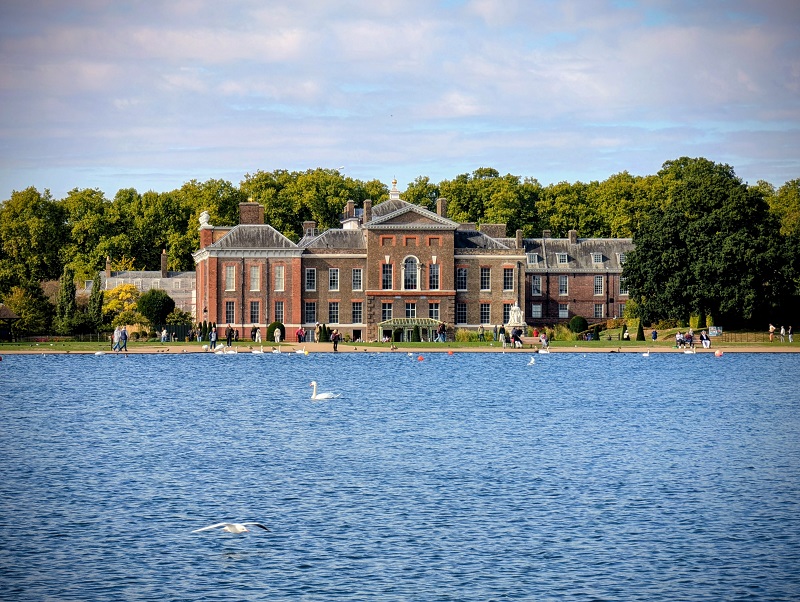
Kensington Palace dominates the gardens' eastern boundary, its red brick façade and elegant proportions reflecting centuries of royal residence and architectural evolution. The palace has witnessed the lives of numerous monarchs, from Queen Victoria's childhood years to Princess Diana's residence in the late twentieth century, making it a focal point of both historical significance and contemporary royal interest.
Surrounding the palace, the formal gardens showcase horticultural artistry through the seasons. The Sunken Garden, framed by the graceful arches of the Cradle Walk, presents symmetrical beds filled with seasonal plantings that create stunning displays from spring bulbs to autumn colours. The garden's geometric precision, with its carefully maintained lawns and topiary, provides an intimate setting for quiet contemplation whilst offering glimpses of the palace's historic windows and doorways.
Monuments and Memorials
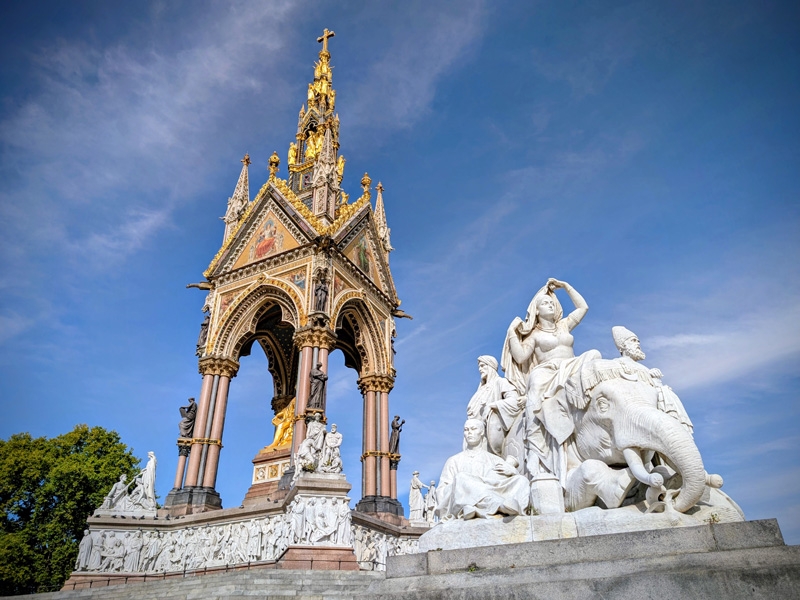
The Albert Memorial stands as one of London's most elaborate Victorian monuments, its gilded Gothic Revival spires reaching skyward at the gardens' south-eastern corner. This intricate masterpiece, built in the late 19th century to commemorate Prince Albert's contributions to arts, sciences, and public life, features detailed sculptures, mosaics, and ornamental metalwork that exemplify Victorian craftsmanship and royal devotion.
Queen Caroline's Temple, an 18th-century classical folly, offers visitors a peaceful retreat amongst mature trees. This elegant structure, with its Palladian proportions and classical details, serves as both architectural ornament and contemplative space, reflecting the Georgian era's appreciation for classical antiquity.
The bronze statue of Peter Pan by George Frampton captures the magic of childhood imagination. Standing on a pedestal adorned with climbing squirrels, rabbits, and mice, this beloved sculpture commemorates J.M. Barrie's literary creation whilst celebrating the gardens' long association with children's stories and adventures.
Wildlife and Natural Habitats
Throughout the gardens, ancient trees create a canopy that supports diverse wildlife populations. Centuries-old oaks, planes, and limes provide nesting sites for numerous bird species, whilst the understory supports smaller mammals and countless insects. Wildflower meadows burst with colour during spring and summer, supporting pollinators and creating natural corridors that connect different areas of the park.
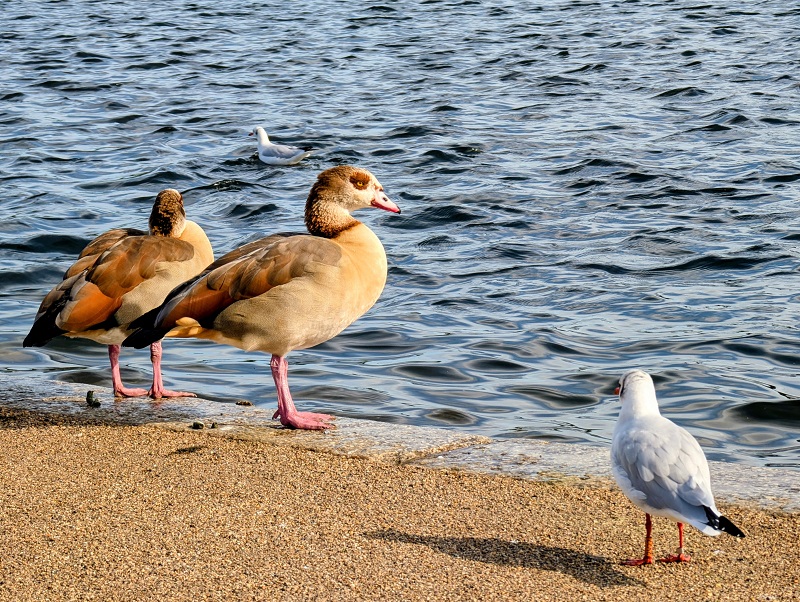
The Round Pond serves as a focal point for waterfowl, with resident populations of swans, geese, and ducks that have become accustomed to human visitors. The pond's edges provide habitat for aquatic plants and insects, whilst the surrounding grassland offers excellent picnic spots with views across the water to the palace beyond.
The Elfin Oak and Folklore
The Elfin Oak represents one of London's most enchanting curiosities—a 900-year-old tree stump elaborately carved with figures from British folklore. This ancient oak, transformed by artist Ivor Innes in the 1930s, features gnomes, elves, fairies, and woodland creatures that seem to emerge from the wood itself, creating a magical focal point that delights children and adults alike whilst connecting visitors to Britain's rich tradition of woodland mythology.
Contemporary Art and Culture
The Serpentine Galleries have established Kensington Gardens as a leading destination for contemporary art. The original gallery, housed in a 1930s tea pavilion, presents cutting-edge exhibitions from international artists, whilst the newer Serpentine Sackler Gallery expands the venue's capacity for large-scale installations and architectural projects. Each summer, the internationally renowned Serpentine Pavilion program commissions a distinguished architect to create a temporary structure that serves as both artwork and functional space, cementing the gardens' reputation as a crucible for creative innovation.
Family Attractions and Accessibility
The Diana, Princess of Wales Memorial Playground near Kensington Palace offers one of London's most imaginative children's spaces. Inspired by Peter Pan's adventures, this extensive playground features an enormous wooden pirate ship complete with rigging and sails, a beach area with sand play, sensory trails for children with disabilities, Native American teepees, and interactive sculptures that encourage creative play. The playground's inclusive design ensures accessibility for children of all abilities, with wheelchair-accessible paths, tactile elements, and quiet spaces for those who need sensory breaks.
Seasonal Splendour
Each season transforms Kensington Gardens into a different landscape. Spring brings carpets of daffodils and crocuses, followed by cherry blossoms and magnolias that frame the palace and pathways in delicate pink and white. Summer sees the formal gardens at their peak, with rose beds, herbaceous borders, and annual displays creating vibrant colour combinations, whilst the tree canopy provides welcome shade for visitors seeking respite from London's bustle.
Autumn transforms the gardens into a golden wonderland, as centuries-old trees display spectacular foliage in shades of amber, crimson, and bronze. The falling leaves create natural carpets along the pathways, whilst the crisp air and slanting light create perfect conditions for photography and peaceful walks.
Winter reveals the gardens' architectural bones, with the formal structure of pathways, monuments, and garden rooms becoming more prominent. Even in the coldest months, the gardens retain their appeal, with evergreen plantings providing colour and structure whilst frost and occasional snow transform familiar landscapes into magical winter scenes.
Kensington Gardens remains freely accessible to the public year-round, welcoming millions of visitors who come to experience this unique combination of royal history, natural beauty, and cultural richness that continues to evolve whilst honouring its magnificent heritage.
Getting There
Kensington Gardens sits between Hyde Park and Kensington, and it’s easy to reach by public transport: the nearest Tube stations are Lancaster Gate and Queensway on the Central line, each about a 5–10-minute walk to the park, while High Street Kensington on the Circle and District lines is roughly a 10-minute walk to the palace side via the Broad Walk entrances; you can also use Notting Hill Gate or Paddington for pleasant 15–25-minute walks, and numerous buses including routes 9, 52, 70, 94, 148 and 452 serve the perimeter with stops such as Bayswater, Queensway and “Kensington Palace”; for cyclists, follow signed routes into the Royal Parks and enter via gates like Black Lion Gate, and if you prefer to stroll, waymarked paths link from Hyde Park, Bayswater and South Kensington, with step-free access at several gates.
Best Time to Visit
The best time to visit Kensington Gardens is largely down to what you want to experience, as the park is a year-round delight: in spring, the Sunken Garden and avenues burst into bloom with tulips, daffodils and cherry blossom; summer brings long, warm days perfect for picnics by the Round Pond and leisurely walks to the Italian Gardens; autumn offers crisp air and rich foliage in golden tones with fewer crowds; and winter is serene and atmospheric, especially on clear frosty mornings. For a quieter visit, aim for early mornings or the hour before dusk on weekdays, and outside school holidays; opening is from early morning until dusk, with the most tranquil light at golden hour. If you plan to combine the gardens with Kensington Palace, consider off-peak months or mid-afternoon entry to the palace to dodge tour groups, then enjoy a peaceful late stroll in the grounds.