


| Contents |
|---|

Introduction
Perched dramatically on a rocky promontory overlooking the sparkling Ionian Sea, Taormina is a captivating jewel of Sicily that has enchanted visitors for centuries. This elegant resort town harmoniously blends ancient Greek and Roman ruins with medieval charm and modern sophistication, whilst offering breathtaking views of Mount Etna's majestic silhouette. The town's crowning glory is its ancient Greco-Roman theatre, which continues to host performances against a stunning backdrop of sea and sky. Meandering through Taormina's perfectly preserved medieval streets, visitors will discover charming boutiques, traditional trattorias, and elegant palazzos, all perfumed by the sweet scent of jasmine and bougainvillea that cascades from wrought-iron balconies.
Interesting Facts about Taormina
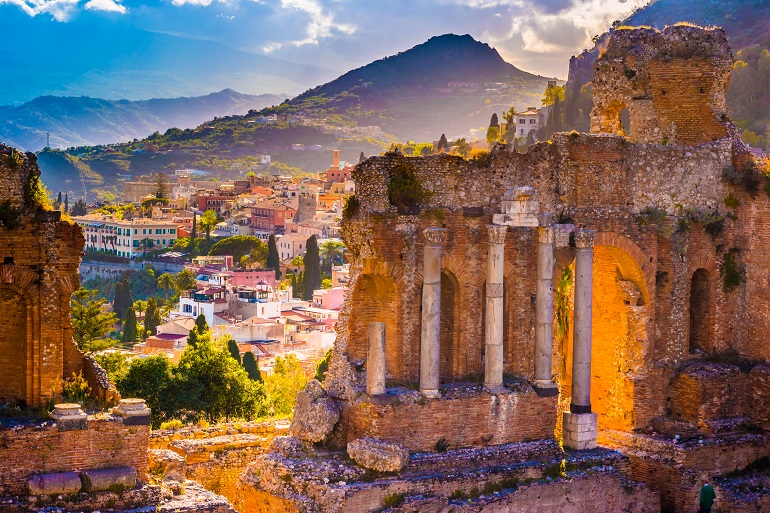
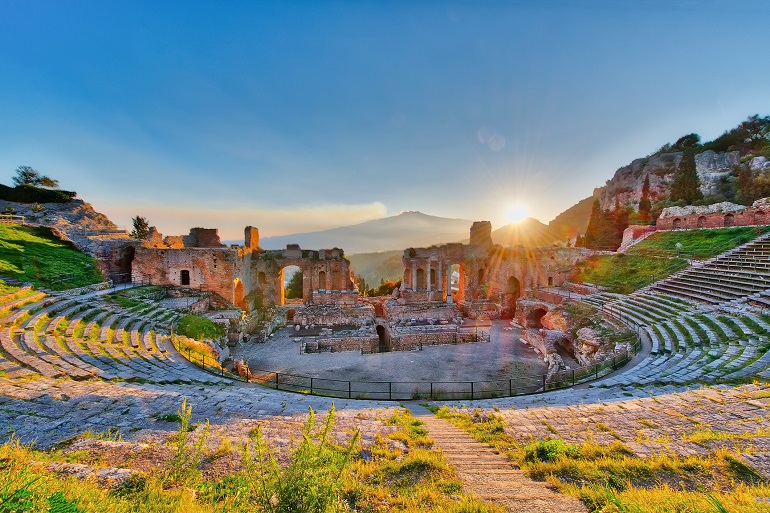
- Taormina's ancient Greek Theatre, built in the 3rd century BCE, offers breathtaking views of Mount Etna and the Ionian Sea from its hillside position.
- The town's iconic Isola Bella beach became a protected nature reserve in 1998 due to its unique pebble beach and miniature island ecosystem.
- Taormina's annual summer arts festival transforms the Greek Theatre into a spectacular venue for opera, ballet and contemporary performances.
- The medieval Palazzo Corvaja showcases three distinct architectural styles: Arab, Norman and Gothic, reflecting Sicily's layered history.
- Visitors can walk the original Roman pavement stones along Corso Umberto I, the main thoroughfare unchanged since its 2nd-century BCE construction.
- Taormina's botanical gardens at Villa Comunale feature exotic plants collected by English aristocrat Florence Trevelyan during her 19th-century exile.
- The town's traditional almond-based desserts like frutta martorana originated from Arab-influenced Sicilian pastry-making traditions.
History
Taormina's history stretches back to ancient times, when it was founded by Greeks around 396 BCE after the destruction of nearby Naxos. The settlement, originally called Tauromenium, quickly rose to prominence under the wise governance of Andromachus, whose equitable rule stood in stark contrast to other Sicilian tyrants of the time. The Romans later conquered the town in 212 BCE, transforming it into a favoured holiday destination for patricians and senators, thus beginning its long history as a resort town.
Following the fall of the Roman Empire, Taormina remained one of Sicily's most significant settlements, experiencing a succession of rulers who each left their distinctive mark. The Arabs seized control in 962 CE after a 30-week siege, renaming it Al-Mu'izziyya and introducing revolutionary agricultural practices, including irrigation systems and citrus farming. They also established the town as a centre for mathematics, pharmacy and science. The Norman conquest in 1079 ushered in a new era of transformation, followed by periods of Swabian, French, and Spanish rule, during which the town's medieval palace, Palazzo Corvaja, became the seat of the Sicilian Parliament.
The 18th century marked the beginning of Taormina's modern tourism industry, as it became a essential stop on the Grand Tour for wealthy Northern Europeans. Notable literary figures including D.H. Lawrence, Oscar Wilde, and Truman Capote found inspiration within its ancient walls. The town's international reputation grew significantly after Italian unification, particularly when German landscape painter Otto Geleng's exhibitions in Berlin and Paris showcased Sicily's beauty to the world. Today, Taormina continues to enchant visitors with its perfectly preserved medieval streets, dramatic views of Mount Etna, and its remarkable Greek-Roman theatre, which stands as a testament to its rich historical heritage.
Main Attractions
Ancient Landmarks
Teatro Antico (Greek Theatre)
The Teatro Antico stands as Taormina's crowning glory, a magnificent Greek-Roman amphitheatre carved into Mount Taurus in the 3rd century BCE. This architectural marvel features a horseshoe-shaped structure with a diameter of 120 metres, making it Sicily's second-largest ancient theatre. The theatre comprises three distinct areas: the stage, orchestra, and cavea, with the stage area adorned with Corinthian columns and arched openings. Its remarkable preservation allows visitors to admire the original walls surrounding the cavea and the intact proscenium.
Porta Messina
Porta Messina, constructed in the 12th century, marks the eastern entrance to Corso Umberto. This historic gateway served as a crucial checkpoint during Arab rule and later as a defensive structure during the Norman period. The gate features intricate decorative elements, including a Celtic cross and an eight-pointed star, reflecting its Norman heritage.
Porta Catania
Porta Catania, built in 1440, stands as the western gateway to Taormina. This architectural masterpiece showcases a blend of Arab, Norman, Gothic, and Spanish elements. Above its arched entrance, a bas-relief plaque displays the Aragonese coat of arms, commemorating its most recent restoration.
Main Thoroughfare
Corso Umberto
Corso Umberto, Taormina's principal street, serves as the town's vibrant heart. This pedestrian thoroughfare stretches between Porta Messina and Porta Catania, lined with an enchanting mix of boutiques, artisan shops, and traditional cafés. The street showcases a harmonious blend of medieval and modern architecture, creating a picturesque promenade that captures the essence of Sicilian life.
Piazza IX Aprile
Piazza IX Aprile, situated along Corso Umberto, stands as Taormina's most beautiful square. Named to commemorate a historical event from 1860, this elegant plaza features several notable monuments, including the Church of San Giuseppe, a stunning example of Sicilian Baroque architecture, and the medieval Clock Tower. The square's terrace offers breathtaking views of Mount Etna and the Bay of Naxos.

Religious Sites
Duomo di Taormina
The Duomo di Taormina, dating back to the 13th century, resembles a fortress more than a cathedral. Built with massive stone blocks and crowned with battlements, its façade features an impressive rose window crafted from Siracusa stone. The interior displays a Latin cross design with three naves supported by pink marble columns, possibly sourced from the ancient theatre.
Chiesa Madonna della Rocca
The Chiesa Madonna della Rocca, built around 1640, sits dramatically atop the mountain overlooking Taormina. This modest sanctuary, constructed within a natural cave, is steeped in local legend involving a shepherd boy's miraculous encounter. The church offers not only spiritual significance but also panoramic views of the surrounding landscape.
Top Museums
Casa Cuseni Museum
Casa Cuseni, the oldest house-museum in Sicily dating back to 1948, has been officially designated as the Museum Centre of the City of Taormina since 2015. Its full name, "Casa Cuseni, Museum of Fine Arts and the Grand Tour of the City of Taormina", reflects its significance in preserving Taormina's artistic and cultural legacy.
This museum offers visitors a unique journey through time, showcasing:
- Art Collection: The museum houses an impressive collection of fine arts, reflecting Taormina's significance in the Grand Tour tradition.
- Historical Significance: In 2023, the history of Casa Cuseni was recognised as UNESCO Intangible Cultural Heritage.
- Monumental Gardens: The garden of Casa Cuseni is part of the Great Italian Gardens network, featuring nine trees classified as "Monumental Trees of Italy".
Casa Cuseni's rich history includes hosting numerous notable figures. Ernest Hemingway wrote his first short story here, while Lord Bertrand Russell won the Nobel Prize for literature during his stay. The house has also welcomed renowned artists such as Pablo Picasso and Tennessee Williams, contributing significantly to Sicily's global recognition.
Fondazione Mazzullo
Housed in the 15th-century Palazzo Duchi di Santo Stefano, the Fondazione Mazzullo is a testament to Sicilian architectural heritage and contemporary art. The palace itself is a fascinating blend of Gothic and Norman architectural styles.
Key features include:
- Sculpture Collection: Since the 1980s, the palace has been home to the works of renowned sculptor Giuseppe Mazzullo, born in 1913 in Graniti and passed away in Taormina in 1988.
- Architectural Marvel: The palace's design offers visitors a unique opportunity to appreciate the diverse cultural influences that have shaped Sicilian architecture over the centuries.
- Cultural Events: The foundation's garden hosts important cultural events during the summer, making it a vibrant centre for contemporary arts.
Sicilian Museum of Art and Folk Traditions
Located in the historic Palazzo Corvaja, this museum offers a deep dive into Sicilian culture and traditions. The museum's collection primarily comes from private sources, particularly the Giovanni Panarello collection.
Visitors can explore:
- Thematic Sections: The museum's itinerary is divided into 14 sections, each organised around specific themes of Sicilian life and culture.
- Traditional Crafts: Exhibits feature examples of Sicilian craftsmen's art, providing insight into the region's rich artisanal heritage. These include devotional wooden sculptures, cribs, and anthropomorphic ceramics.
- Sicilian Cart Art: The museum showcases elaborate pieces of Sicilian cart art, a unique and colourful tradition of the island.
- Puppet Opera: Placards from the puppet opera, another distinctive Sicilian cultural tradition, are also on display.
Local Cuisine
Taormina's culinary scene brilliantly showcases Sicily's rich gastronomic heritage, offering an array of delectable local specialities. The city's restaurants serve traditional dishes like pasta alla norma, featuring aubergine and tomato sauce, whilst fresh seafood features prominently with delicacies such as swordfish skewers and sardines prepared in various ways. For a quick bite, visitors can savour authentic arancini or crispy bruschetta from local eateries, whilst those with a sweet tooth shouldn't miss the refreshing Sicilian granita or classic cannoli. The dining experience is enhanced by excellent local wines, particularly those from the nearby Etna vineyards, which perfectly complement the Mediterranean flavours.
Shopping
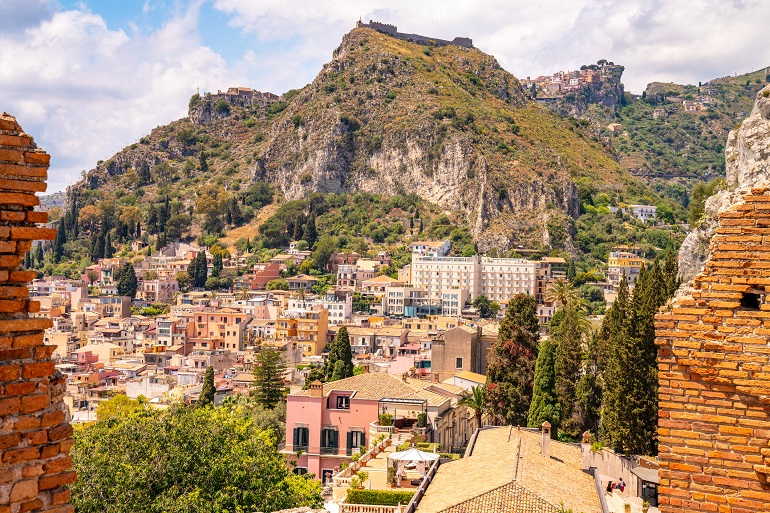
Taormina's main shopping area is concentrated along Corso Umberto, the pedestrianised main street that runs between Porta Catania and Porta Messina. The street features a diverse mix of high-end boutiques, luxury fashion stores, jewellers, and antique shops. Notable establishments include Musumeci, an elegant fashion boutique with leather sofas and stone columns, and Parisi, a traditional family-run shop specialising in men's, women's and children's fashion. Beyond fashion, visitors can find traditional Sicilian pottery, particularly the distinctive ceramic heads that are characteristic of the region. For local delicacies, La Bottega del Buongustaio offers traditional marzipan fruits, whilst Saro, the town's most famous antiques shop, sells traditional straw-woven bags and Sicilian puppet theatre characters.
Nature in and around Taormina
Taormina offers several remarkable natural attractions, with Mount Etna, Europe's largest active volcano at 3,329 metres, dominating the landscape. The town's crown jewel is Isola Bella, a small nature reserve island connected to the mainland by a narrow strip of beach that submerges during high tide, featuring crystal-clear waters ideal for swimming and snorkelling. The Public Gardens (Villa Comunale), gifted to the city in 1922 by Lady Florence Trevelyan, showcase Mediterranean and exotic plants whilst providing panoramic views of the Ionian Sea. The fertile volcanic soil around Taormina supports lush vegetation, including vineyards and vibrant flora.
Public Gardens (Villa Comunale)
The Public Gardens, created between 1897 and 1898 by Lady Florence Trevelyan, offer a peaceful retreat within the town. These meticulously designed gardens feature unique architectural elements known as 'beehives' and provide stunning vistas of Mount Etna and the Bay of Giardini-Naxos. The gardens showcase a diverse collection of tropical plants and serve as a testament to Lady Trevelyan's horticultural passion.
Isola Bella
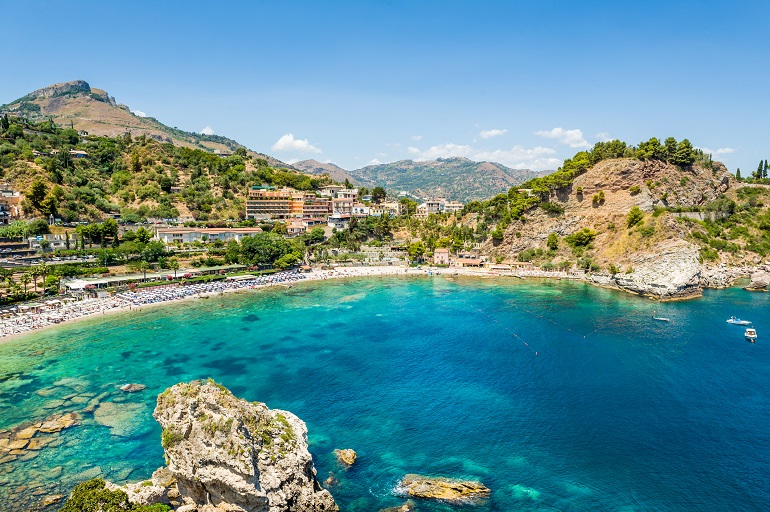
Isola Bella, known as "The Beautiful Island," lies connected to the mainland by a narrow path. This small island, once owned by Lady Florence Trevelyan, features exotic plants and a historic villa. In 1984, it was declared a historical and artistic heritage site, and in 2011, it became the Regional Nature Museum of Isola Bella. The surrounding beach area, though pebbly, offers crystal-clear waters perfect for swimming. The protected inlet creates ideal conditions for families, with crystal-clear waters and stunning views of the islet. The beach offers both serviced areas through lidos and free public sections.
Belvedere di Via Pirandello
The Belvedere di Via Pirandello provides one of Taormina's most spectacular viewpoints. Dating back to Roman times, this neo-Gothic structure offers panoramic vistas of Mount Etna and the Ionian Sea. The belvedere has served various purposes throughout history, from a Roman vacation spot to a medieval fortress against Saracen invasions.
Lido La Pigna
Lido La Pigna, nestled in the stunning Mazzarò Bay, provides a fully equipped beach experience with spacious terraces and high-quality Sicilian cuisine. Connected to Taormina's center via cable car, this beach club offers the perfect combination of comfort and natural beauty.
Getting There & Around
Getting to and around Taormina is straightforward, with several convenient transport options from Catania. Regular buses run by Interbus and Etna Transporti depart from Catania Airport and city centre, taking roughly 85 minutes to reach Taormina's bus terminal on Via Luigi Pirandello for €5-8. Alternatively, trains from Catania Centrale arrive at Taormina-Giardini station every 30 minutes, with tickets costing €5.50 for the scenic 40-60 minute coastal journey. However, do note that the train station sits at the bottom of the hill, requiring either a steep 1.5km walk uphill to the town centre, a short bus ride, or a taxi (approximately €20). Once in Taormina proper, the compact town centre is best explored on foot, though a local cable car service helps visitors navigate the steeper sections, particularly useful when heading to and from the beaches below.
Best Time to Visit
The best time to visit Taormina in Sicily is during the late spring and early summer months, particularly from May to June. During this period, the weather is splendid, with comfortable temperatures ranging from 21°C to 25°C, making it ideal for exploring the town and enjoying outdoor activities. The sea becomes warm enough for swimming, and the lush Mediterranean landscape is in full bloom. Whilst the peak tourist season hasn't yet begun, you'll still find most attractions and amenities open. September is also an excellent time to visit, as the summer crowds have thinned out, but the weather remains pleasantly warm. It's worth noting that August is the hottest and busiest month, coinciding with the main Italian holidays, so it's best avoided if you prefer a less crowded experience.